
Colombia Real Estate Visa: Minimum Investment and Paperwork in 2026

Colombia is probably the best-value residency-by-property play in Latin America, and almost nobody talks about it. While Portugal made headlines killing its Golden Visa and Panama keeps marketing its Friendly Nations program, Colombia has quietly run a Migrant Visa (Visa tipo M) for real estate investors at a threshold that, in US dollars, has actually gotten cheaper as the Colombian peso weakened.
The real-estate route requires an investment of 350 times the Colombian monthly minimum wage (SMMLV, salario mínimo mensual legal vigente). In 2026 that's approximately 516 million Colombian pesos, which translates to roughly $120,000-$130,000 USD depending on the day's exchange rate. That's the same threshold that costs you a studio in bad parts of Greece and a closet in Malta, and it buys you a three-bedroom apartment in Medellín's El Poblado or Laureles.
This post walks through exactly how the Colombian Migrant Real Estate Visa works, what the paperwork actually looks like for Americans, why the COP-based threshold is a feature and not a bug, and the specific due-diligence issues Colombian property has that Americans routinely miss.
What the Migrant (M) Real Estate Visa Is
Colombia's visa system was overhauled by Resolución 5477 of 2022 from the Ministerio de Relaciones Exteriores, which consolidated the previous 20+ visa types into three categories: Visitor (V), Migrant (M), and Resident (R). The M visa is the medium-term category, valid for up to three years at a time.
Within the M category, there are multiple subtypes. The one that matters for property buyers is M-6 (Inversionista / Investor), sub-category for real estate investment. The qualifying threshold is investment in Colombian real estate worth at least 350 SMMLV.
SMMLV is the Colombian monthly minimum wage, set annually by presidential decree. For 2026 it is 1,473,500 COP per month (Decree 2310 of December 2024). Times 350 gives 515,725,000 COP, which at a ~4,100 COP/USD exchange rate in early 2026 is approximately $125,800 USD. The official threshold is fixed in pesos, so the USD figure moves with the exchange rate — when the peso weakens (which it has for most of 2023-2025), Americans get a cheaper entry point.
The official Cancillería (Foreign Ministry) page is at cancilleria.gov.co/tramites_servicios/visa, and the actual application happens through their online portal at visas.cancilleria.gov.co. Attorneys we've seen repeatedly recommended on the forums: Langon Law Group, Philippi Prietocarrizosa Ferrero DU & Uría, and for Medellín specifically, Beltran Pardo Abogados. Budget 4-8 million COP (~$1,000-2,000 USD) for visa attorney fees.

What You Actually Need to Register the Investment
The tricky part of Colombia's real estate visa isn't the property purchase — it's the investment registration with the Banco de la República, Colombia's central bank.
Foreign direct investment in Colombian real estate must be registered via Form 4 (Declaración de Registro de Inversión Extranjera Directa) with the Banco de la República under Circular Reglamentaria Externa DCIN-83. This is the document that proves your dollars came from overseas and were legally converted into pesos for the property purchase. Without it, you cannot use the property to qualify for the visa, and you will have problems repatriating funds when you eventually sell.
The process:
- Open a Colombian bank account as a non-resident. Bancolombia, Davivienda, and BBVA Colombia are the three most foreigner-friendly banks. You'll need your passport, proof of US address, a Colombian RUT (tax ID — see below), and sometimes an in-person visit.
- Obtain a RUT (Registro Único Tributario) from DIAN, Colombia's tax authority. Non-residents can get one via the DIAN online portal or through their attorney. Takes 1-3 days.
- Transfer USD from a US bank to your Colombian bank account. The transfer must come in as foreign currency and be converted by the Colombian bank (or a licensed cambio). The bank will issue a declaración de cambio (exchange declaration) — this is the document that feeds into Form 4.
- Pay the seller in pesos from the account that received the converted USD. The chain of declaraciones de cambio must connect the inbound USD to the property purchase.
- File Form 4 with Banco de la República within 6 months of the purchase. Missing this deadline voids your foreign investor registration and creates major headaches for both the visa and for selling later.
- Receive the investment certificate from Banco de la República. This is the document you submit with your visa application.
The whole chain is a banking compliance process, not a real estate process, and it's the source of most American horror stories. The r/Colombia foreign investment megathread and Medellin Guru's visa walkthrough (Jeff Paschke's site, best English-language source for Medellín-specific logistics) both describe the landmines. The most important: do NOT wire money directly to the seller. Route it through your own Colombian account so the declaración de cambio ties to you, not to the seller.
What $125K Actually Buys in Colombia
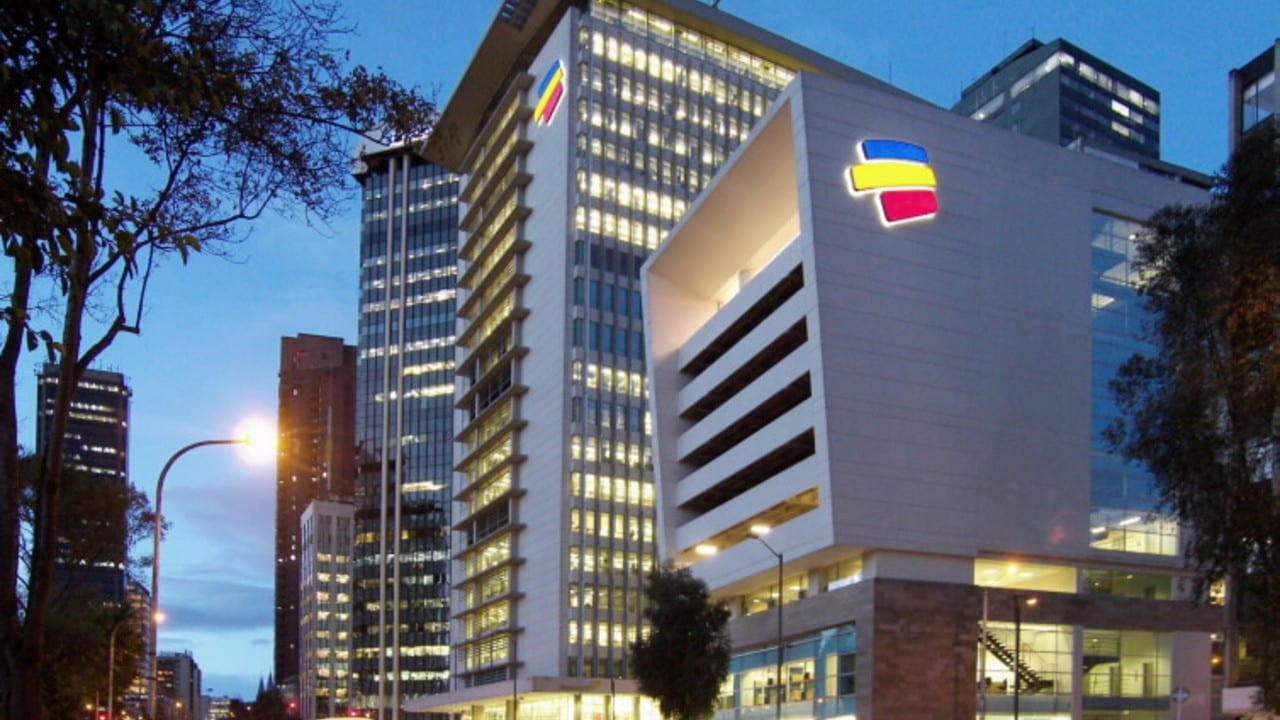
The 350 SMMLV threshold is $125K at current exchange rates. That's genuinely middle-class housing in Colombia's three most expat-friendly cities.
Medellín (most popular American destination in Colombia):
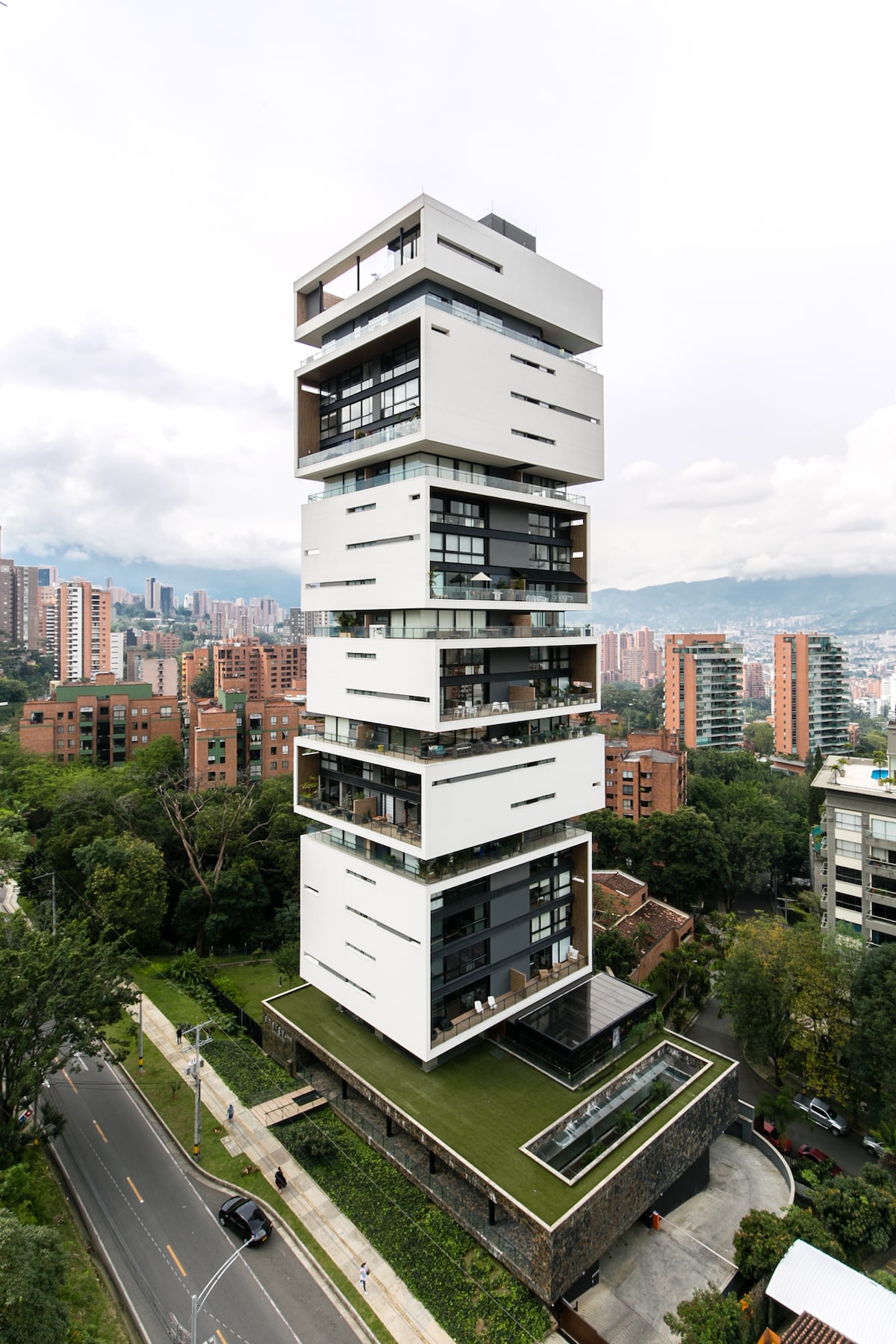
- El Poblado (the prime American expat neighborhood): small 1-bedroom apartments start around $90K-110K; a standard 2-bedroom in a decent building runs $130-200K. Meeting the visa threshold requires a reasonable but not luxury unit.
- Laureles (hipster neighborhood, walkable, better food scene than El Poblado): 2-bedroom apartments $110-160K. Also meets threshold comfortably.
- Envigado (suburb, quieter, families): 2-3 bedroom apartments $100-180K.
- El Centro (downtown, cheaper, rougher): under $80K, but American expats largely don't live there.
Bogotá:
- Chapinero Alto, Chicó, Usaquén: 2-bedroom apartments $130-250K. Meets threshold.
- La Candelaria (historic center): cheaper but not where expats typically settle.
Cartagena:
- Bocagrande, Castillogrande (beachfront): $180-400K+ for waterfront views.
- Centro Histórico (walled city): $200-500K for character properties.
- Getsemaní (hip, touristy): $150-300K.
The Finca Raíz real estate portal is Colombia's dominant listing site and our cost of living in Colombia post has neighborhood-by-neighborhood data.
One thing that trips up Americans: Colombian property listings are usually priced in millones of pesos. "350M" means 350 million COP, roughly $85K. Not 350 thousand dollars. The r/medellin housing threads occasionally feature confused Americans who thought they were buying something at 10x the actual price.

The Paperwork for the Visa Itself
Once you have the property, the RUT, and the Form 4 investment certificate from Banco de la República, the actual visa application is fairly mechanical. You apply online at the Cancillería visa portal and upload:
- Passport (valid for 6+ months) and passport-style photo
- Completed visa application form
- Property purchase deed (escritura pública), registered with the Oficina de Registro de Instrumentos Públicos
- Form 4 investment certificate from Banco de la República (the critical document)
- Certificate of Tradition and Liberty (certificado de tradición y libertad) for the property, obtained from the registry, showing clean title
- Bank statements showing ability to support yourself (no hard minimum, but expect questions under ~$1,000/month equivalent)
- Criminal background check from the FBI (apostilled, translated to Spanish by an official translator)
- Health insurance valid in Colombia — either a local Colombian plan (EPS or prepagada) or an international plan explicitly covering Colombia
- Visa fee: ~$230 USD study fee + ~$250 USD issuance fee (exact amounts set in COP)
Processing time is typically 5-15 business days when the application is complete. Initial visas are issued for 3 years, renewable, and convert to Resident Visa (R) after 5 years of M-visa residency. You can then apply for Colombian citizenship after 2 more years as a permanent resident, total 7 years — or 5 years total if you marry a Colombian or have a Colombian child.
The Cancillería issues the visa as a PDF. Within 15 business days of arriving in Colombia, you must register the visa with Migración Colombia and obtain your cédula de extranjería — the foreign resident ID card. This is the physical card you'll use for everything: opening bank accounts, registering for health insurance, buying property, getting a driver's license.
Due Diligence: What Americans Miss on Colombian Property
Colombia's property system has real-title deeds and a functional public registry, but there are specific patterns that US buyers consistently miss.
1. Certificate of Tradition and Liberty (certificado de tradición y libertad). This is the Colombian equivalent of a title report. Pull one from the Superintendencia de Notariado y Registro or VUR portal before making any offer. It shows every transfer, mortgage, and encumbrance on the property. If the current owner doesn't appear as the registered owner, walk away — you're dealing with a chain-of-title problem that Colombian courts take years to resolve.
2. Paz y salvo (tax clearance certificates). Before closing, obtain paz y salvo certificates for: property tax (impuesto predial), HOA fees (cuotas de administración), and any Valorización (infrastructure improvement) assessments. Unpaid HOA fees attach to the property, not the seller, in many Colombian condominiums — and you inherit them on closing.
3. Floor area discrepancies. Colombian developer marketing often lists "total" square meters that include parking spaces, storage, and common-area allocation. The deeded área privada (private area) is typically 15-30% smaller. Check the deed, not the brochure.
4. Estrato system. Colombian utilities (water, gas, electricity) charge different rates by estrato — a neighborhood-level socioeconomic classification from 1 (poorest) to 6 (wealthiest). A high-estrato property has high utility bills because wealthy neighborhoods subsidize poorer ones. Estrato 6 in Medellín pays roughly 3-4x the utility cost of estrato 2 for the same consumption. Check the estrato before buying.
5. POT (Plan de Ordenamiento Territorial) restrictions. Some neighborhoods have building-use restrictions that prevent short-term rentals or commercial use. Colombia has been tightening Airbnb rules in Cartagena and Medellín since 2023. The Medellin Guru Airbnb regulations coverage is the cleanest English-language explainer.
6. Notary fees and IVA. Closing costs in Colombia include notary fees (0.54% of sale price), registration fees (1%), and a withholding tax (retención en la fuente) of 1% of the sale price — typically paid by the seller but negotiated. Total closing costs run 2.5-4% of the purchase price, lower than most of Europe but higher than buyers expect.
For a broader Latin American comparison, our buying process in Mexico and due diligence in Costa Rica posts cover the recurring landmines across the region.
Taxes: Colombia's (Mostly) Friendly Regime for Non-Residents
Colombia taxes individuals on worldwide income if they are tax residents, and on Colombian-source income only if they are not. Tax residency is triggered by spending 183+ days in Colombia in any rolling 365-day period, or by having your primary economic activity or family base there.
As an M visa holder, you can arrange your time to stay under 183 days and avoid Colombian tax residency, which means Colombia only taxes your Colombian rental income and Colombian capital gains — not your US dividends, pensions, or wages. Rental income is taxed at standard progressive rates (0-39%) after allowing deductions for HOA fees, repairs, and depreciation. Capital gains on property held over 2 years are taxed at 15% ("ganancia ocasional").
If you do become a Colombian tax resident, the math gets more complicated. Colombia has a progressive income tax from 0% to 39%, plus a wealth tax (impuesto al patrimonio) on net assets over 3 billion COP ($700K USD) at rates from 0.5% to 1.5%. The DIAN official tax guide and KPMG Colombia's annual tax summary are the authoritative sources. US-Colombia tax relations are not governed by a full tax treaty (Colombia doesn't have one with the US), but they have a tax information exchange agreement (TIEA) and FATCA reporting — so don't assume anything is invisible to the IRS.
For the US side, see our Form 8938 and foreign real estate post (you'll need to report the property) and how the US taxes rental income from property in Mexico (Colombian rental income works similarly on the US side).
Reddit and Forum Reality Checks
Colombia's expat forums are smaller than Portugal's or Mexico's but genuinely useful. The three I'd start with:
- r/medellin — active, lots of US expats, decent housing discussions. Search "investor visa" for recent threads.
- r/Colombia — broader, mixed English and Spanish. The M visa real-estate threads are where applicants compare paperwork gotchas.
- r/ExpatFIRE — has several Colombia-focused FIRE threads, most recently this one on the real total cost from 2024.
Common themes across these:
- Medellín is not cheap anymore, especially El Poblado. Rent has roughly doubled since 2019 in dollar terms. Food and services remain cheap.
- The Form 4 registration is the biggest single screw-up — multiple applicants describe having to re-do paperwork because they wired directly to the seller.
- Attorneys matter. DIY visa applications fail at 2-3x the rate of attorney-supported ones, mostly because of paperwork errors on the investment registration side.
- Safety has improved but is not uniform. El Poblado and Laureles feel safe; some central Bogotá and peripheral Cartagena neighborhoods still don't.
- Healthcare is genuinely excellent and cheap. Colombia's private healthcare (via prepagadas like Sura, Colsanitas, or Coomeva) costs $60-150/month for a mid-30s American and is rated among the best in Latin America.
For a broader regional comparison of quality-of-life and cost, International Living Colombia and Expat Focus Colombia are both updated regularly, and our moving to Colombia guide pulls the main threads together.
Bottom Line
Colombia's Migrant Real Estate Visa is the cheapest serious Latin American path to residency in 2026, and the threshold ($120-130K in most of Medellín or Bogotá) buys you genuine middle-class housing rather than a "visa-qualifying" stub.
The friction is entirely on the banking-compliance side: Form 4 registration with Banco de la República, proper declaración de cambio paperwork from the Colombian bank, and the need to route money through your own Colombian account rather than directly to the seller. None of it is hard if you have a competent Colombian attorney and a Colombian banker who has done foreign-investor registrations before. All of it will blow up in your face if you try to DIY it.
For an American who wants to live in a major Latin American city, pay less than $150K to get a 2-3 bedroom apartment plus legal residency, and not be forced into a wealthy-retiree tax bracket, Colombia is hard to beat. The trade-offs are lack of a US tax treaty, a weaker currency (which is both a feature and a risk), and the still-real perception issue that American friends and family have about safety. Read our cost of living in Colombia and moving to Colombia guide before you commit.
Ready to explore?
Browse Destinations