Cost of Living in New Zealand for Americans (2026) — Real Monthly Budgets
New Zealand sits in a paradox that confounds American expats: it's one of the most beautiful countries in the world and one of the hardest to afford. Auckland's housing costs have made global headlines for their absurdity, and the country's geographic isolation means imported goods carry serious price premiums. Yet outside Auckland, New Zealand reveals a completely different financial reality — Christchurch offers European-quality city living at prices below many American metros, Tauranga has become one of the country's fastest-growing cities with genuinely manageable costs, and Wellington punches above its weight on culture at a significant discount to Auckland. This guide covers real costs in five cities, the [ACC](https://www.acc.co.nz/) injury compensation system that eliminates personal injury lawsuits (and most of their associated insurance costs), [KiwiSaver](https://www.kiwisaver.govt.nz/) retirement savings, and the foreign buyer restrictions every American considering New Zealand property needs to understand. All prices in USD at April 2026 rates (1 NZD ≈ 0.60 USD). Data sourced from [Numbeo's New Zealand database](https://www.numbeo.com/cost-of-living/country_result.jsp?country=New+Zealand), [r/newzealand](https://www.reddit.com/r/newzealand/), and Statistics New Zealand.
The Five Destinations: Quick Cost Snapshot
New Zealand is a long, thin country — 1,600 km from tip to tip — with five cities that represent genuinely distinct lifestyle and cost propositions.
Auckland — $3,200–$5,500/month. New Zealand's largest city (35% of the total population). Beautiful harbors, excellent food, diverse population, and prices that rival Sydney. Auckland's median house price of ~$800,000 NZD ($480,000 USD) is the headline number that drives migration to other cities. The rental market is similarly punishing. But Auckland has direct international flights to the US and the country's deepest job market — it's where most career-driven expats land first.
Wellington — $2,800–$4,500/month. New Zealand's capital and cultural heart. Smaller (about 215,000 people in the urban area), consistently windy (locals call it "Windy Welly" with resigned affection), and packed with museums, a world-class Te Papa museum, great cafés, and a surprisingly robust live music and arts scene. Home to Weta Workshop (Lord of the Rings effects company) and a significant government employment sector. Rents are 20-25% lower than Auckland. r/newzealand expat threads consistently rate Wellington as the best lifestyle-to-cost ratio in New Zealand.
Christchurch — $2,200–$3,700/month. The rebuilt city. Christchurch was devastated by earthquakes in 2010-2011 and has spent the past decade rebuilding — including substantial investment in modern infrastructure, cycling networks, and urban amenity. The result is a surprisingly contemporary city with lower costs than any comparably sized Australasian city. Prices are 35-40% lower than Auckland. The city's flat terrain makes it extremely bikeable, reducing transport costs. It's 90 minutes from Mount Hutt ski area.
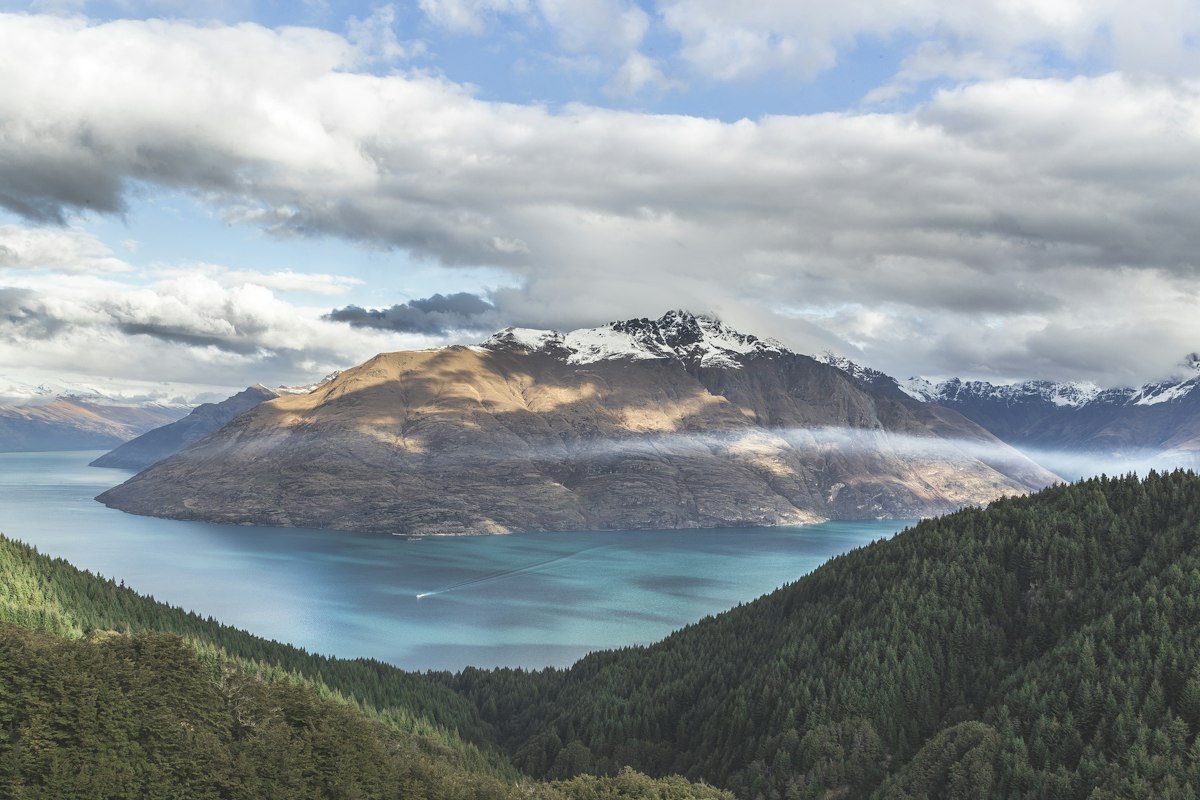
Queenstown — $2,800–$4,500/month. The adventure capital. Queenstown is simultaneously New Zealand's premium resort destination and a viable year-round lifestyle city. The scenery — Lake Wakatipu surrounded by the Remarkables mountain range — is genuinely exceptional. The cost structure is resort-distorted: accommodation is more expensive than the city's size would suggest (because tourism demand inflates both rentals and eating/drinking), but the outdoor activities that define life here are often free or low-cost. Remote workers have discovered Queenstown in large numbers since 2020.
Tauranga — $2,000–$3,200/month. The sunny city. New Zealand's fastest-growing city sits on the Bay of Plenty — warm climate, excellent beaches, and a more relaxed pace than Auckland or Wellington. Te Puke (the "kiwifruit capital of the world") is 20 minutes away, and Mount Maunganui's beach lifestyle rivals anything in the country. Prices are 30-35% below Auckland. The main caveat: Tauranga is relatively car-dependent and has limited public transit.
Rent: Foreign Buyer Restrictions and the Rental Market
Before discussing rent, the most important piece of information for American expats considering New Zealand property: foreigners generally cannot buy existing homes in New Zealand.
The Overseas Investment Amendment Act 2018 effectively banned most overseas persons from purchasing existing residential property. As a non-resident American, you typically cannot buy an existing home — you may only:
- Purchase new developments (off-plan or newly completed)
- Purchase rural land > 5 hectares with Overseas Investment Office (OIO) approval
- Purchase after obtaining New Zealand permanent residency
This makes renting the default for most American expats, at least until residency is secured.
Auckland rent (April 2026):
- Studio (CBD fringe: Ponsonby, Parnell): $1,400–$2,000/month
- 1BR apartment (inner Auckland): $1,700–$2,400/month
- 2BR apartment (inner: Grey Lynn, Mt Eden): $2,200–$3,200/month
- 2BR apartment (middle ring suburbs): $1,700–$2,400/month
- 3BR house (inner suburbs): $2,800–$4,500/month
Wellington rent:
- Studio (Te Aro, CBD): $1,000–$1,500/month
- 1BR apartment (Thorndon, Mt Victoria): $1,300–$1,900/month
- 2BR apartment (inner Wellington): $1,700–$2,500/month
- House (3BR, Karori, Northland): $2,200–$3,200/month
Christchurch rent:
- 1BR apartment (inner city): $1,000–$1,500/month
- 2BR apartment: $1,300–$1,900/month
- House (3BR, Cashmere, Merivale): $1,700–$2,600/month
Queenstown rent:
- 1BR apartment: $1,500–$2,200/month (resort premium in effect)
- 2BR apartment or unit: $2,000–$2,800/month
- House (3BR): $2,500–$3,800/month
Tauranga rent:
- 1BR apartment: $900–$1,400/month
- 2BR apartment: $1,200–$1,800/month
- House (3BR): $1,600–$2,400/month
New Zealand rental market notes:
- Bonds (security deposit): maximum 4 weeks' rent, lodged with Tenancy Services / Tenancy Tribunal
- New Zealand has strong tenant protections — landlords cannot deny rent based on nationality
- 3-week advance notice required to enter premises; fixed-term leases are common (12 months)
- Most New Zealand rentals include a section (backyard) — houses with gardens are genuinely more common than apartments in most cities outside Auckland's CBD
Groceries and Dining: Small Market, Premium Prices
New Zealand's small population (5.1 million) and geographic isolation mean limited competition in grocery retail, high shipping costs for imports, and consistently higher food prices than the US. Countdown (Woolworths NZ) and Pak'nSave dominate retail; New World is the premium option; Aldi does not operate in New Zealand.
Supermarket prices (April 2026):
- Chicken breast (1 lb): $5.00–$7.00
- Lamb chops (1 lb): $7.00–$11.00. New Zealand lamb is world-famous and excellent value for quality compared to US imported lamb.
- Ground beef (1 lb): $6.00–$9.00
- Eggs (12, free-range standard): $5.00–$8.00
- Milk (1 liter): $1.70–$2.50
- Butter (250g): $3.00–$4.50 (New Zealand dairy exports to the world but local prices are still elevated)
- Local beer (6-pack, Speight's or Tui): $12.00–$18.00
- Marlborough Sauvignon Blanc (bottle): $10.00–$18.00. New Zealand wine is exceptional and affordable domestically — the best food budget decision you'll make.
- Pak'nSave, New Zealand's discount chain, is typically 20-30% cheaper than New World; shopping Pak'nSave is the primary grocery cost-saving strategy
Dining out:
- Café breakfast (eggs + toast + flat white): $20.00–$32.00. New Zealand has excellent café culture at Australian prices.
- Flat white: $4.50–$6.50
- Pub meal (fish and chips or burger): $20.00–$32.00
- Mid-range restaurant dinner: $28.00–$50.00 per person without wine
- BYO restaurant (bring your own wine, common in NZ): significantly cheaper per-head than licensed restaurants; corkage typically $3–$8/bottle
- Takeaways (fish and chips, the classic NZ meal): $12.00–$20.00
- Sushi train restaurants (surprisingly common in NZ cities, especially Auckland): $2.50–$4.00 per plate — among the cheapest meal options available
Monthly grocery estimates:
- Cooking mostly at home, Pak'nSave: $380–$520/month for one person
- Mix of cooking and dining out: $650–$950/month
- Regular restaurant dining: $900–$1,400/month
What's cheap: New Zealand lamb and beef, local wine, dairy products, local seafood (green-lipped mussels, crayfish in season), seasonal produce. What's expensive: Imported goods, pork products, chicken at premium outlets, imported beer and spirits.

ACC: New Zealand's No-Fault Injury Compensation Scheme
The Accident Compensation Corporation (ACC) is one of New Zealand's most distinctive institutions and a genuine financial advantage for residents — though it works very differently from US insurance and requires explanation.
What ACC is: ACC is a government-run, universal, no-fault injury compensation scheme. If you're injured in New Zealand — in a car accident, a workplace incident, a sporting injury, a fall at home, anything — ACC covers:
- All treatment costs (GP, specialist, hospital, physiotherapy, surgery)
- 80% of lost earnings (if you can't work due to the injury)
- Rehabilitation costs
- Home help and modifications if seriously injured
The key words are "no-fault" — you don't need to prove anyone was negligent to receive compensation. And in exchange for this coverage, New Zealand has almost entirely abolished the right to sue for personal injury. You cannot sue a driver for a car accident, sue a surgeon for malpractice (for injury), or sue a company for workplace injury in the personal injury sense. ACC handles it.
What this means for expats:
- If you're a New Zealand resident or working here on a visa, you're covered by ACC from day one — including for injuries that have nothing to do with work
- ACC is funded through levies on wages (employees pay ~1.39% of earnings up to a threshold), employers, and fuel levies — you contribute automatically if employed
- If you're a tourist or visitor, you're also covered for injuries in New Zealand — a genuine benefit
What ACC does NOT cover:
- Illness (disease, cancer, heart disease — this is healthcare, not ACC)
- Gradual process injuries (repetitive strain, hearing loss from chronic noise)
- Mental health conditions unless directly caused by a physical injury
Healthcare costs for ACC non-covered conditions: New Zealand has public healthcare funded by taxes, available to residents and citizens. GP visits are subsidized but not free (unlike Australia's bulk-billing): $18–$45 per visit depending on your Community Services Card status. Prescription medications have a standard co-payment of NZD $5 each.
For non-residents or those without adequate public healthcare access, private healthcare insurance (nib New Zealand, Southern Cross) costs $100–$250 NZD/month depending on age and coverage.
The US Embassy in Wellington provides physician referral lists for US citizens across New Zealand cities.
KiwiSaver: New Zealand's Retirement Savings Scheme
If you're employed in New Zealand, you'll be automatically enrolled in KiwiSaver — New Zealand's workplace retirement savings scheme, similar in structure to a US 401(k) but with some important differences.
How KiwiSaver works:
- Automatic enrollment for new employees (you can opt out within 8 weeks)
- Employee contribution: 3%, 4%, 6%, 8%, or 10% of gross salary (you choose; 3% is the default)
- Employer contribution: mandatory 3% of gross salary (same as employee's elected rate, up to 3%)
- Government member tax credit: up to NZD $521/year if you contribute at least NZD $1,042/year
- Funds are locked until age 65 or first home purchase (for eligible buyers)
For Americans specifically: KiwiSaver creates similar complications to Australian superannuation for US tax purposes. The IRS does not treat KiwiSaver as a pension plan under the US-NZ tax treaty in the same way it treats US 401(k) plans. The growth inside a KiwiSaver account may be reportable annually to the IRS under PFIC (Passive Foreign Investment Company) rules, which is administratively burdensome. Many US expat tax specialists recommend:
- Opting out of KiwiSaver unless you're planning to stay permanently and gain NZ residency/citizenship
- If you must participate (some employers don't allow opt-out for certain visa categories), keeping it in a simple fund and documenting it meticulously for your US return
The employer's 3% contribution is effectively a 3% salary bonus — whether this is worth the US tax reporting complexity is a personal calculation.
First home buyer assistance (if you gain residency): KiwiSaver members who have contributed for 3+ years can withdraw their balance for a first home purchase in New Zealand. Given the ban on foreigners buying existing homes, this is primarily relevant after obtaining permanent residency and deciding to stay long-term.
Transportation: Cars Are Mostly Necessary
New Zealand's public transit is functional in its larger cities but significantly behind Australia's, and outside Auckland and Wellington, car ownership is nearly essential for a comfortable lifestyle.
Auckland public transit:
- AT HOP card (integrated transit card): trains, buses, and ferries
- Monthly transit pass: $200–$280 NZD/month ($120–$168 USD) depending on zones
- Auckland's transit network has improved significantly under the City Rail Link project (completing 2025-2026), but the city's sprawling, car-oriented layout means transit doesn't serve everywhere
- Uber and Ola operate; short ride (3 miles): $15–$25 NZD ($9–$15 USD)
Wellington public transit:
- Metlink (buses, trains, and ferries): excellent for a city of its size
- Monthly all-zones pass: $175–$240 NZD ($105–$144 USD)
- Wellington is flat enough in the central area to be very bikeable; the council has invested heavily in cycling infrastructure
- Many Wellington residents live car-free
Christchurch:
- Bus network (Metro Christchurch); flat terrain makes cycling practical
- Monthly bus pass: $130–$190 NZD ($78–$114 USD)
- Car-dependent for outer suburbs; central areas manageable without
Queenstown:
- Limited public transit; Orbus local buses
- Car or bicycle essentially required for anything outside the town center
- Short distances but steep terrain
Car ownership costs:
- Used Toyota Corolla or Honda Jazz (2017-2020): $15,000–$25,000 NZD ($9,000–$15,000 USD)
- Petrol (per liter): $2.30–$2.60 NZD ($1.38–$1.56 USD) — fuel prices are driven by import costs
- Monthly fuel (typical driving): $150–$250 NZD ($90–$150 USD)
- WOF (Warrant of Fitness, mandatory vehicle inspection): $50–$90 NZD every 6 months
- Annual registration: $100–$130 NZD
- Third-party insurance: $300–$600 NZD/year; comprehensive: $800–$1,800 NZD/year
Intercity travel:
- Auckland to Wellington by plane (1.5 hrs): $70–$180 NZD one way (Air New Zealand, Jetstar)
- Auckland to Wellington by bus (Intercity): $30–$80 NZD, 8-9 hours
- Christchurch to Queenstown by plane: $60–$150 NZD one way
- The Interislander or Bluebridge ferries (Wellington to Picton, South Island): $50–$120 NZD one way
EV infrastructure: New Zealand has invested significantly in EV charging infrastructure. Electric vehicles are increasingly common and practical outside Northland and Southland.
Utilities, Internet, and the New Zealand Power Grid
New Zealand generates over 80% of its electricity from renewable sources (hydro, wind, geothermal), yet retail power prices are still relatively high due to network transmission costs and the small market.
Electricity:
- Average New Zealand residential electricity rate: $0.30–$0.40 NZD/kWh ($0.18–$0.24 USD)
- 1BR apartment (moderate use, no electric heating): $80–$150 NZD/month ($48–$90 USD)
- 1BR with heat pump (the standard New Zealand heating method): $120–$200 NZD/month in winter ($72–$120 USD)
- House (3BR, family use): $200–$400 NZD/month ($120–$240 USD)
- Heat pumps (reverse-cycle air conditioners) are the dominant heating and cooling technology in New Zealand homes; they're much more efficient than resistive heating
- New Zealand homes are famously cold and damp in winter — insulation standards improved significantly after 2008 changes to the Building Code but many older rentals still retain the cold. Landlords are now legally required to have working heating and adequate ceiling/underfloor insulation.
Gas:
- Not available in all areas; Wellington and Christchurch have gas networks
- Monthly gas bill: $60–$120 NZD ($36–$72 USD) where available
Water: Included in rates (property tax) for homeowners; for renters, typically included in rent or $30–$60 NZD/month separately
Internet:
- Fibre broadband (200–1,000 Mbps): $75–$110 NZD/month ($45–$66 USD)
- Spark, 2degrees, Vodafone NZ, and Slingshot are main ISPs
- Fibre coverage is excellent in all five cities on this list — 87% of New Zealand premises have fibre access as of 2026
- Rural coverage varies significantly; if considering a rural lifestyle, check Crown Infrastructure Partners' coverage map
Mobile phone:
- Spark, One NZ (formerly Vodafone), and 2degrees postpaid plans: $45–$65 NZD/month for unlimited NZ calls + 20-50 GB data
- Prepaid: $15–$30 NZD/month for moderate data
- New Zealand SIM registration is straightforward with a passport
Total utilities + internet + phone: $250–$450 NZD/month ($150–$270 USD) for a 1BR apartment.
Entertainment and the New Zealand Outdoor Lifestyle
New Zealand's greatest competitive advantage over every other country on this list is its outdoor environment. The country that inspired Lord of the Rings and is consistently ranked among the world's most spectacular natural environments provides lifestyle value that's nearly impossible to quantify.
Outdoor activities (New Zealand's defining advantage):
- Tongariro Alpine Crossing (one of the world's great day hikes): $0 entry + shuttle ($35–$45 NZD return from Whakapapa)
- Abel Tasman Coast Track (Great Walk): $20–$35 NZD/night in huts; free tent sites
- Milford Sound day cruise from Queenstown: $80–$150 NZD
- Skiing: Mt Hutt (Christchurch), Treble Cone (Wanaka), Coronet Peak (Queenstown) — day pass $100–$160 NZD ($60–$96 USD). Cheaper than comparable US resorts but not cheap.
- Mountain biking (Queenstown, Rotorua): $15–$50 NZD/day trail access; epic trails often free in national parks
- Surf lessons (Raglan, Mount Maunganui): $60–$100 NZD
- Bungee jumping (Queenstown): $150–$230 NZD — a one-time splurge rather than a monthly expense
Urban entertainment:
- Beer at a pub (pint, local craft): $10–$16 NZD ($6–$9.60 USD)
- Glass of Marlborough Sauvignon Blanc at a restaurant: $12–$20 NZD
- Movie ticket (Reading Cinemas, Event Cinemas): $18–$25 NZD ($11–$15 USD)
- Museum entry: Te Papa Tongarewa (Wellington national museum): Free; most other major museums: Free–$20 NZD
- Gym membership (Les Mills, Jetts): $50–$85 NZD/month ($30–$51 USD)
- Concerts and live events: $40–$150 NZD, depending on artist
Monthly entertainment budget: $300–$500 NZD ($180–$300 USD) for an active urban and outdoor lifestyle; more in Queenstown where resort pricing inflates costs.
The r/newzealand subreddit has active expat discussion threads with detailed city-by-city cost breakdowns and regular cost-of-living check-ins from American expats.
Taxes: The US-NZ Treaty and What Expats Owe
New Zealand and the US have a tax treaty that, while not eliminating all complexity, provides a reasonable framework for preventing double taxation.
New Zealand income tax:
- $0–$14,000 NZD: 10.5%
- $14,001–$48,000 NZD: 17.5%
- $48,001–$70,000 NZD: 30%
- $70,001–$180,000 NZD: 33%
- $180,001+: 39%
New Zealand does not have capital gains tax on most investment property (though new 'bright-line' rules introduced since 2015 do tax gains on property sold within 2-10 years of purchase, depending on the circumstances). This is a meaningful difference from Australia.
US tax obligations:
- US citizens file on worldwide income regardless of residence
- Foreign Earned Income Exclusion (up to $126,500 in 2024) applies to NZ wages if you pass the Physical Presence or Bona Fide Residence test
- The US-NZ tax treaty (full text via IRS) covers most income categories; the Foreign Tax Credit prevents most double taxation
- FBAR and FATCA reporting apply for NZ bank accounts > $10,000
Practical impact: Most expats employed in New Zealand at salaries of $60,000–$120,000 NZD ($36,000–$72,000 USD) find they owe New Zealand taxes at 28-33% effective rates. The Foreign Tax Credit typically eliminates US liability entirely, since NZ rates exceed US rates for most income levels. Passive income (dividends, US rental income, Social Security) requires careful analysis of treaty provisions.
Goods and Services Tax (GST): New Zealand's GST is 15% — included in all displayed prices. Unlike the US, there's no tax-at-checkout surprise; the price on the shelf is what you pay. This doesn't affect your tax return but affects psychological adjustment to prices.
International Living's New Zealand coverage discusses tax implications for retirees specifically. A combined NZ tax agent ($200–$400 NZD) plus US expat tax specialist (H&R Block Expat, Greenback Tax, or similar) is recommended for your first year.

Banking and Money in New Zealand
New Zealand's banking system is modern, well-regulated, and Australian-bank dominated — ANZ, ASB (owned by Commonwealth Bank Australia), BNZ (Bank of New Zealand, owned by NAB), and Westpac NZ are the four largest. There's also Kiwibank, which is New Zealand-owned.
Opening a bank account:
- New Zealand allows foreign nationals to open accounts before arrival at ANZ NZ and ASB with passport and visa documentation
- In-person verification required on arrival (typically within 90 days)
- No minimum balance required for basic accounts; monthly fees: $0–$5 NZD
- All major banks have well-designed apps and online banking
Best accounts for expats:
- Kiwibank: 100% New Zealand-owned; good app; competitive rates
- ASB: Strong for personal banking; easy digital setup
- ANZ NZ: Most branches and ATMs; good for those arriving from Australia (ASB and ANZ NZ share some systems with their parent banks)
ATMs:
- ANZ, ASB, BNZ, and Westpac ATMs are widely distributed in all cities and most towns
- Foreign card withdrawal fees: $3–$5 per transaction, plus home bank international fee
- Charles Schwab's global card works fee-free at any ATM in New Zealand
- New Zealand is increasingly cashless — contactless payment is ubiquitous
Money transfers:
- Wise is the standard expat tool for USD-to-NZD transfers. The NZD spread is slightly wider than major currencies but still dramatically better than bank rates.
- Revolut works well for smaller amounts
- Bank SWIFT transfers: $15–$25 NZD fee + typically 2-4% exchange rate markup (expensive)
- XE Money Transfer for larger amounts ($5,000+) at competitive rates
Practical note — Wise verification in NZ: Wise operates fully in New Zealand; verification is straightforward with a passport. First transfer typically takes 1-2 business days; subsequent transfers are faster.
The US Embassy in Wellington provides American Citizen Services including financial emergency assistance, notarial services, and the embassy's local resources page lists banks and financial services for US citizens.
Comparing New Zealand to US Cities
The New Zealand cost comparison has changed significantly since 2020 — the pandemic-driven property price surge and post-pandemic inflation reset both countries' prices, and the NZD/USD exchange rate fluctuation affects the comparison meaningfully.
Scenario 1: Single professional, Wellington
- 1BR apartment (Mt Victoria): $1,400/month + groceries: $450 + dining out: $550 + transit (Metlink monthly): $150 + utilities/internet: $210 + health (subsidized GP + private dental): $80 + entertainment: $280 = $3,120/month
- Boston, MA equivalent: 1BR $2,800 + groceries $600 + dining $700 + transit $90 + utilities/internet $250 + health insurance $450 + entertainment $350 = $5,240/month
- Monthly savings: $2,120 (40% less in Wellington)
Scenario 2: Single professional, Auckland (inner suburbs)
- 1BR apartment (Ponsonby): $1,800/month + groceries: $480 + dining: $600 + transit: $160 + utilities/internet: $250 + health: $100 + entertainment: $300 = $3,690/month
- Los Angeles equivalent: 1BR $2,400 + car $600 + groceries $650 + dining $700 + utilities/internet $250 + health $500 + entertainment $400 = $5,500/month
- Monthly savings: $1,810 (33% less in Auckland)
Scenario 3: Couple, Christchurch
- 2BR apartment (inner): $1,500/month + groceries: $600 + dining out: $700 + car: $400 + utilities/internet: $280 + health (both): $150 + entertainment: $350 = $3,980/month combined
- Denver, CO equivalent: 2BR $2,600 + 2 cars $1,400 + groceries $800 + dining $800 + utilities/internet $300 + health insurance $1,400 + entertainment $500 = $7,800/month combined
- Monthly savings: $3,820 (49% less in Christchurch)
Scenario 4: Retiree, Tauranga
- 1BR apartment (Mount Maunganui): $1,100/month + groceries (mostly cooking): $350 + dining out: $300 + car: $350 + utilities/internet: $220 + healthcare: $80 + entertainment: $200 = $2,600/month
- Social Security average ($1,907/month) doesn't fully cover this — Tauranga requires a modest supplement of ~$700/month, or a 2BR house with a second person sharing costs
Numbeo's Auckland vs Los Angeles comparison shows Auckland is approximately 7% cheaper overall, with healthcare dramatically cheaper and rent more expensive.
Complete Monthly Budget Templates
Budget A: Frugal — Christchurch or Tauranga
- Rent (modest 1BR): $900–$1,200
- Groceries (Pak'nSave, cooking at home): $300–$420
- Dining out (minimal): $150–$250
- Transportation (car, older vehicle): $300–$430 (includes fuel + insurance + WOF)
- Utilities + internet: $200–$290
- Phone: $35
- Entertainment + outdoor activities (mostly free): $120–$200
- Health (subsidized GP + ACC coverage): $50–$100
- Total: $2,055–$2,925/month
Budget B: Comfortable — Wellington or Christchurch
- Rent (1BR, good area): $1,300–$1,700
- Groceries: $420–$560
- Dining out (regular, mix of café + restaurant): $500–$700
- Transportation (transit + occasional Uber): $160–$260
- Utilities + internet: $250–$360
- Phone: $40
- Entertainment + gym: $280–$420
- Health (GP + private dental insurance): $100–$170
- Misc/buffer: $200–$300
- Total: $3,250–$4,510/month
Budget C: Premium — Auckland inner suburbs or Queenstown
- Rent (1BR, desirable area): $1,900–$2,600
- Groceries (New World + specialty): $500–$700
- Dining out (regular restaurant meals): $700–$1,000
- Transportation (Uber + transit or own car): $300–$500
- Utilities + internet: $280–$420
- Phone: $50
- Entertainment + activities: $400–$650
- Health (private hospital insurance): $150–$250
- Misc/weekend travel: $300–$500
- Total: $4,580–$6,670/month
Budget D: Family of 4 — Wellington (Karori or Khandallah)
- Rent (3BR house): $2,000–$2,800
- Groceries: $700–$1,000
- Dining out: $500–$750
- Transportation (1 car): $450–$650
- Utilities + internet: $300–$460
- Phones (2): $80
- State school (2 children): Free (New Zealand state schools are free for residents)
- Or international school: $10,000–$20,000 NZD/year per child ($6,000–$12,000 USD)
- Health (family private dental + hospital): $200–$380
- Entertainment/activities: $350–$550
- Total (state school): $4,580–$6,670/month
State school is free for New Zealand residents — one of the most significant family cost advantages New Zealand offers over Australia, where state school is free but many expat families choose private schools for English-medium quality assurance.
For first-hand American expat experiences in New Zealand, r/newzealand's moving guide and the r/IWantOut country guide for New Zealand are the best community-maintained resources.

Practical Tips and What Catches Expats Off Guard
The visa challenge: New Zealand's immigration system is points-based and skills-focused. Unlike Australia, New Zealand does not have a Working Holiday Visa for Americans over 35. Options for Americans:
- Working Holiday Visa (WHS): Ages 18-30 (or 35 for some occupations); 12 months.
- Skilled Migrant Category (SMC): Points-based permanent residency; requires a job offer from a New Zealand employer in a skilled occupation, or significant points from qualifications and experience.
- Accredited Employer Work Visa (AEWV): Employer-sponsored temporary visa — the primary pathway for skilled workers without enough SMC points.
- Partner/Family: If in a genuine relationship with a New Zealand citizen or resident.
- Investor Visas: For those with NZD $3–5 million or NZD $15 million+ to invest.
For current, authoritative visa information, the US Embassy in Wellington visa page and New Zealand's Immigration New Zealand (INZ) website are the primary resources.
Startup costs: New Zealand rental bonds (4 weeks' rent) plus 2 weeks' advance plus furniture for an unfurnished rental means arriving with NZD $8,000–$15,000 ($4,800–$9,000 USD) in liquid funds before rent payments begin is prudent. Shipping from the US: a 20-foot container from the US West Coast to Auckland costs $4,000–$8,000 USD plus import duties on new goods.
The driving test: You can drive on a US license in New Zealand for up to 12 months. After that, you must convert to a New Zealand license — a written test and sometimes a driving assessment. New Zealand drives on the left (British system). The most dangerous road situation for US drivers: country roads with sheep, cattle, or unexpected sharp curves. Take it slow.
Weather reality: New Zealand's weather is more variable and wetter than postcards suggest. Wellington is genuinely very windy — storm-force winds are not uncommon several times a year. Auckland is subtropical and humid. Christchurch has more sun than either but cold winters. Queenstown has dramatic alpine weather including significant snow in winter. Pack a proper rain jacket regardless of destination.
"The tyranny of distance": New Zealand is far from everywhere. A flight to Los Angeles from Auckland is 13 hours. A flight to London is 24+ hours. This is not abstract — if you have family emergencies, the trip home is significant in both time and cost. Budget $1,500–$3,000/year for US flights in your long-term financial planning.
International Living's New Zealand guide provides comprehensive coverage of the visa, lifestyle, and financial considerations for American retirees specifically, with regular updated content from expats currently living there.
Ready to explore?
Browse Destinations