Cost of Living in the Philippines for Americans (2026) — Real Monthly Budgets
The Philippines is the only country in Southeast Asia where English is an official language, where Catholicism is the dominant faith, and where American cultural influence is so pervasive that the transition from US life feels less like moving abroad and more like moving to a very warm, very friendly American city that happens to have better food and lower prices. Monthly costs for a single American range from $1,100 in Dumaguete or Davao to $2,500 in Makati or BGC — and that upper end still includes things like a modern air-conditioned condo, regular restaurant meals, and comprehensive health coverage that would cost $5,000–$6,000/month in Los Angeles. This guide breaks down every cost category across five distinct expat destinations, with real prices from [Numbeo's Philippines data](https://www.numbeo.com/cost-of-living/country_result.jsp?country=Philippines), community reports from [r/Philippines](https://www.reddit.com/r/Philippines/), and the lived experience of American expats on the ground. All prices are in USD at April 2026 exchange rates (1 USD ≈ 57 PHP).
The Five Destinations: Quick Cost Snapshot
The Philippines has over 7,600 islands and several million expat-worthy cities. These five represent the full range of what Americans actually choose:
Manila (Makati/BGC) — $1,800–$3,500/month. The urban expat experience. Makati is Manila's financial district — gleaming malls, rooftop bars, five-star hotels, and Manila's highest concentration of multinational offices. BGC (Bonifacio Global City) is newer, cleaner, and increasingly preferred. Both offer air-conditioned walkability, excellent dining, and every international brand you might miss. The tradeoff: Manila traffic is legendary, air quality is poor, and it's unquestionably the most expensive option on this list.
Cebu City — $1,200–$2,200/month. The second city. Cebu combines big-city infrastructure — international airport, major hospitals, a growing BPO industry, malls — with lower prices than Manila and beach access within an hour. IT Park and Lahug are the expat-heavy neighborhoods. r/Philippines expat threads consistently rate Cebu as the best overall value on the island chain.
Davao City — $1,100–$1,900/month. The boom city. Mindanao's largest city has transformed over the past decade into one of the Philippines' safest and fastest-growing urban centers. Lower cost than Cebu, excellent healthcare (Davao Doctors Hospital and Southern Philippines Medical Center), and direct flights to Manila, Cebu, and Singapore. The region's durian farms and Mt. Apo trekking add lifestyle dimensions other cities lack.
Clark/Angeles City — $1,000–$1,800/month. The retirement hub. Angeles City, adjacent to Clark Freeport Zone, has the largest concentration of American retirees in the Philippines. Hundreds of American-owned restaurants, bars, and businesses. Clark's international airport has expanded significantly. This is the most "Americanized" expat scene in the country — comfortable for new arrivals, claustrophobic for those seeking genuine cultural immersion.
Dumaguete — $900–$1,500/month. The slow life. A university town on Negros Oriental island with a manageable size (150,000 people), genuine small-city feel, proximity to Siquijor and Apo Island (world-class diving), and a well-established expat community. The least cosmopolitan on this list — hospital quality is lower, flight connections are indirect — but genuinely one of the most affordable comfortable cities in Southeast Asia.
Rent: Condos, Houses, and the Foreign Ownership Rule
The most important fact about Philippine real estate for Americans: you cannot own land. The Philippine Constitution prohibits foreign nationals from owning land. You can own a condo unit outright (subject to a 40% foreign ownership cap per building), or you can lease land for up to 50 years (renewable for 25 more). For most expats, this means two paths: buy a condo or rent long-term.
Manila (Makati/BGC) rent:
- Studio condo (25–35 sqm), Makati: $550–$900/month furnished
- 1BR condo, BGC, newer building: $900–$1,400/month
- 2BR condo, Rockwell or Ayala Center area: $1,400–$2,200/month
- 3BR house, Forbes Park or Dasmarinas Village (gated): $2,500–$5,000/month
Cebu City rent:
- Studio condo, IT Park: $350–$600/month
- 1BR condo, Lahug or Banilad: $500–$900/month
- 2BR condo, Cebu Business Park: $700–$1,200/month
- Houses in Talamban or Banawa (suburban): $500–$900/month
Davao City rent:
- Studio/1BR condo: $300–$600/month
- 2BR house or condo: $450–$850/month
- Houses in Matina or Lanang: $400–$800/month
Clark/Angeles rent:
- 1BR apartment near Clark: $300–$600/month
- House with garden (very common here): $500–$900/month
- Most expats prefer houses; the area is more suburban than urban
Dumaguete rent:
- 1BR apartment or small house: $200–$450/month
- 2BR house in a good neighborhood: $300–$600/month
- Properties near Valencia (hillside town 30 min away): even cheaper
Key rental considerations:
- Most landlords in expat-heavy areas accept USD or quote in USD
- Typical lease: 1 year, 1-2 months deposit, 1 month advance
- Air conditioning is essential — budget $50–$100/month in extra electricity for AC use
- Power outages (brownouts) still occur in some areas outside Makati/BGC — an inverter or generator is worth having in Cebu, Davao, and provincial areas
- Airbnb is 50–80% more expensive than direct landlord agreements for stays longer than a month
For the SRRV (Special Resident Retiree's Visa), a Philippine Retirement Authority program, a $20,000 deposit (ages 50+) into a Philippine bank grants permanent residency — after which many expats buy condos outright.
Groceries and Dining: The Filipino Food Advantage
The Philippines is one of the best countries in the world for cheap, high-quality fresh produce, seafood, and tropical fruit. Combine that with an American fast-food landscape that's somehow even more pervasive than in the US (Jollibee, McDonald's, KFC on every block), and you have remarkable food flexibility at any budget.
Wet market prices (the cheapest way to shop):
- Fresh tilapia (1 lb): $0.70–$1.20
- Bangus/milkfish (1 lb): $1.00–$1.50
- Chicken thighs (1 lb): $1.20–$1.80
- Pork (1 lb): $1.50–$2.20
- Mangoes (1 lb, in season): $0.40–$0.70
- Tomatoes (1 lb): $0.40–$0.80
- Rice (5 lbs): $2.50–$4.00
- Eggs (12): $1.50–$2.00
Supermarket prices (SM, Robinsons, S&R/Costco-equivalent):
- Local beer (San Miguel, Red Horse, 6-pack): $3.50–$5.00
- Imported wine (Chile or Australia, bottle): $7.00–$14.00
- Cheese (local processed): $3.00–$6.00
- Imported cheddar (1 lb block): $6.00–$10.00
- Breakfast cereal (local brand): $2.50–$4.00
Dining out:
- Carinderia (local eatery, rice + 2 viands): $1.50–$3.00. The Filipino equivalent of Colombia's menú del día.
- Jollibee (Filipino fast-food staple) meal: $2.50–$4.00
- Mid-range Filipino restaurant: $5.00–$12.00 per person
- BGC/Makati upscale restaurant: $20.00–$50.00 per person
- Pizza or pasta (mid-range): $8.00–$15.00
- Coffee at a café (Bo's Coffee, Starbucks Philippines): $2.00–$4.50 (Starbucks slightly cheaper than US)
Monthly grocery estimates:
- Cooking at home with wet market and local supermarket: $120–$200
- Mixed cooking/dining out (typical expat): $250–$450
- Heavy restaurant use + imported products: $450–$700
S&R Membership Shopping (Philippines' Costco equivalent, available in Manila and Cebu) stocks American brands including Kirkland-equivalent bulk items. Membership: $25/year. Great for imported goods, cheese, wine, and bulk proteins. r/Philippines expat threads have detailed S&R product lists and price comparisons.

Healthcare: PhilHealth, Private Insurance, and World-Class Medical Tourism
Healthcare in the Philippines is a tale of two systems: the excellent private hospital network serving Makati, BGC, Cebu, and Davao — and the strained public health system that most expats will never use.
PhilHealth (Philippine Health Insurance Corporation): PhilHealth is the government's universal health insurance program. Foreigners with permanent residency or work permits can enroll. Monthly contribution: approximately $20–$40 depending on income. PhilHealth covers significant portions of hospitalization costs at accredited public and private hospitals, but most expats use it as a secondary payer behind private insurance rather than as a primary coverage mechanism.
Private healthcare costs:
- GP consultation (private clinic, Makati): $20–$50
- Specialist consultation (cardiologist, orthopedic): $40–$90
- Blood panel (comprehensive at The Medical City or St. Luke's): $40–$80
- Dental cleaning: $20–$40
- Dental crown (all-ceramic): $150–$350
- Minor surgery (outpatient): $200–$600
Private health insurance:
- Maxicare, Medicard, PhilCare: $80–$200/month for a single adult, depending on age and coverage tier
- An international health plan (Cigna, AXA Global): $150–$350/month with better evacuation coverage
- Many expats combine a Philippine private insurance card (for everyday care) with a global evacuation policy (for worst-case scenarios)
Flagship hospitals:
- St. Luke's Medical Center (BGC): JCI-accredited, closest thing to a US-level facility. Many US-trained or US-board-certified specialists.
- The Medical City (Pasig): Excellent reputation, modern facilities
- Asian Hospital (Muntinlupa): Strong for cardiac and orthopedic
- Chong Hua Hospital (Cebu): The best in Visayas
- Davao Doctors Hospital: Best in Mindanao
Medical tourism to the Philippines is growing: hip replacements, cardiac surgery, and dental work at 20-40% of US prices, with JCI-accredited facilities. The US Embassy in Manila maintains a physician and hospital list for US citizens.
One real risk to budget for: emergency medical evacuation. If you need to be flown to Singapore or back to the US for specialized care, the bill without coverage can exceed $50,000. An evac-focused policy from Medjet or Global Rescue ($300–$500/year) covers this risk specifically.
Transportation: Jeepneys, Grab, and Getting Around
Getting around the Philippines ranges from charming to infuriating, depending on where you are and whether it's raining.
Metro Manila transportation:
- Grab (Southeast Asia's Uber) short ride (3 miles): $2.50–$5.00
- LRT/MRT (light rail): $0.30–$0.75 per trip; extensive network but frequently overcrowded
- Jeepney (iconic public transit): $0.15–$0.30. Colorful, cheap, culturally essential. Modern "modernized jeepneys" are AC-equipped.
- EDSA Carousel (BRT-style): $0.40–$0.70
- Monthly transit budget (car-free Makati/BGC): $60–$120 (mostly Grab)
- Manila traffic note: Grab rides that should take 15 minutes can take 45–60 during rush hour. Makati and BGC are the only areas where walking is truly practical.
Cebu, Davao, Angeles:
- Grab operates in Cebu and Davao; rates are 20-30% cheaper than Manila
- Multicabs (small passenger vans) and jeepneys: $0.20–$0.50 for local trips
- Habal-habal (motorcycle taxis): $0.50–$2.00 for short rides; unavoidable in smaller cities
Dumaguete:
- Tricycles are the primary transport: $0.50–$1.50
- Renting a scooter: $5–$8/day; $80–$120/month
Domestic flights:
- Manila to Cebu: $15–$60 (Cebu Pacific, AirAsia Philippines)
- Manila to Davao: $25–$80
- Manila to Dumaguete: $30–$90 (often via Cebu connection)
- Budget 1–3 weeks advance booking for best fares
Car ownership:
- Used Toyota Vios (2016–2019): $8,000–$14,000
- Monthly fuel (regular driving): $60–$100 (gas is $0.85–$1.00/liter)
- Monthly parking in BGC or Makati: $80–$150
- Car ownership is useful in Davao, Clark, and Dumaguete; a questionable value in central Manila where traffic makes it more burden than convenience
Inter-island ferries:
- Cebu Pacific Fast Craft (Cebu–Bohol): $8–$15
- RORO ferries between islands: $5–$30 depending on distance and class
- The Philippines' geography means regular travelers should budget $100–$200/month for domestic flights and ferries
Utilities, Internet, and the Brownout Reality
Utilities in the Philippines have some important quirks that Americans — accustomed to near-100% electricity reliability — should know upfront.
Electricity:
- The Philippines has some of the highest electricity rates in Asia (Meralco in Metro Manila charges $0.20–$0.25/kWh; comparable to US average)
- Air conditioning dominates the electricity bill. In a tropical climate, running even one split-type AC unit 8-10 hours/day adds $50–$100/month
- 1BR apartment without heavy AC (Baguio or highland areas): $20–$40/month
- 1BR apartment with moderate AC (Manila, Cebu): $60–$120/month
- 2BR with heavy AC use: $120–$200/month
- Brownouts (scheduled power outages): In provinces and smaller cities, brownouts of 2–8 hours are not uncommon during dry season. BGC and Makati have underground power infrastructure that's essentially brownout-proof. Cebu and Davao are reliable in major barangays. Dumaguete and Clark have occasional outages.
Water:
- Monthly water bill: $8–$20/month for a typical expat apartment
- Tap water is generally not safe to drink. Bottled water (5-gallon jug, refill): $0.50–$1.00 every few days; $10–$20/month
Internet:
- Fiber internet (PLDT, Converge, Globe): 100–200 Mbps plans cost $18–$35/month in urban areas
- Converge ICT has expanded rapidly and generally offers the most reliable fiber in Luzon
- Provincial areas: DSL may be the only option; 5–20 Mbps for $15–$25/month
- Mobile data: Globe or Smart prepaid plans; $10–$20/month for a workable data plan
- Note for remote workers: Internet reliability in the Philippines has improved dramatically since 2020, but it's not uniformly excellent. BGC and IT Park Cebu are the most reliable. Always have a mobile hotspot as backup.
Mobile phone:
- Globe or Smart SIM: Free at major malls with registration
- Monthly prepaid load for calls + data: $10–$20
- Postpaid plans (more reliable): $20–$35/month
Total utilities + internet + phone: $100–$200/month in urban areas with moderate AC use; $150–$250 in Manila with heavy AC.
Entertainment and Filipino Island Life
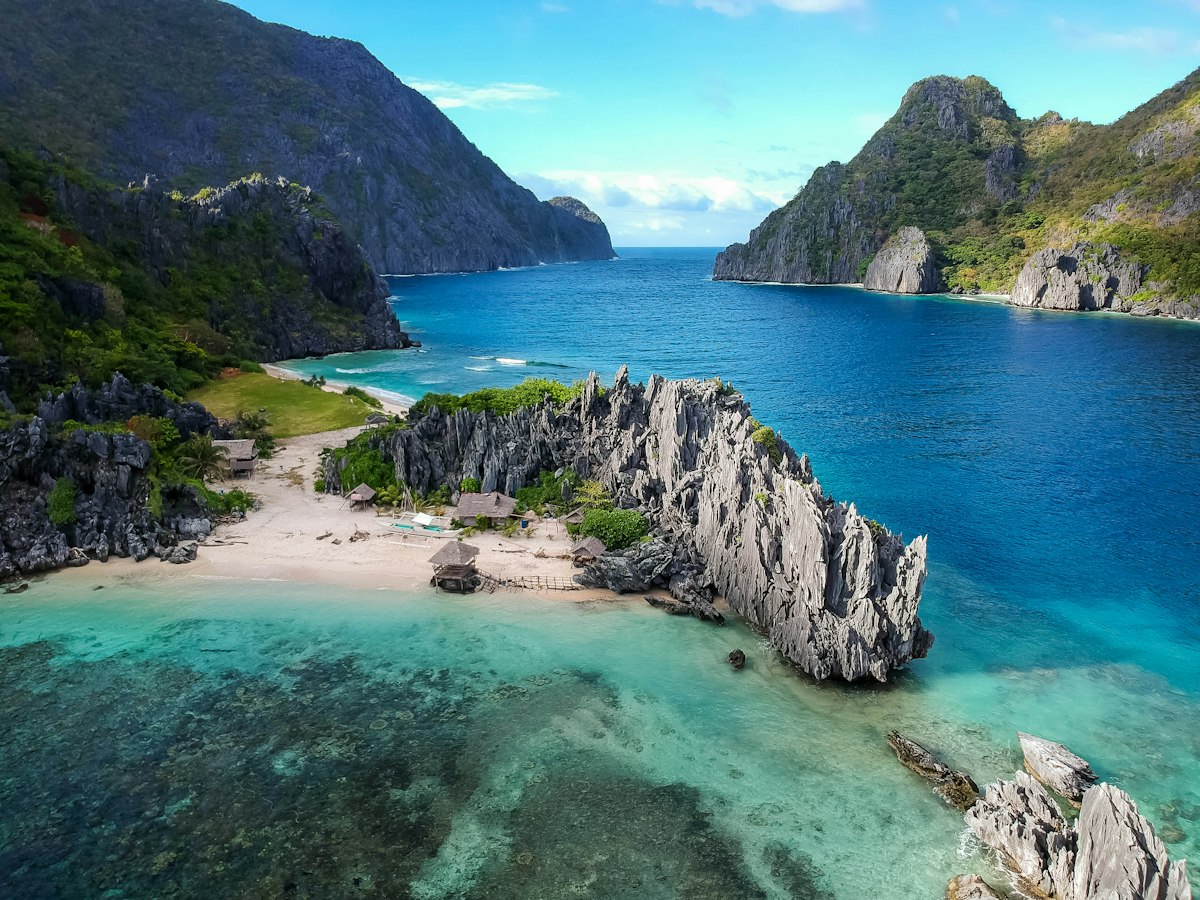
The Philippines' greatest lifestyle asset isn't the low prices — it's the geography. You're never more than a few hours from a pristine beach, world-class dive site, or uninhabited island. This adds an outdoor adventure dimension to daily life that no other country on this list can match.
Diving and beach access:
- Tubbataha Reef (one of the world's top 5 dive sites): liveaboard trips $800–$1,500 for 4-5 days
- Apo Island day trip from Dumaguete: $15–$25 including boat and basic guide
- El Nido island hopping (Palawan): $15–$25 per person
- 3-day Palawan trip from Makati including flight: $150–$250 all-in
- Boracay weekend (flight + accommodation + food): $120–$200
Urban entertainment:
- Beer at a local bar (San Miguel): $1.00–$2.00
- Cocktail at a BGC rooftop bar: $5.00–$9.00
- Movie ticket (SM Cinema, Ayala Cinemas): $3.50–$6.00
- Gym membership (Anytime Fitness, Gold's): $35–$60/month
- Karaoke (a national institution, private KTV room): $10–$30 for 2–3 hours
- Manila or Cebu nightclub: $5–$15 cover; $3–$6 beers
Cultural and day activities:
- Intramuros walking tour (Manila's historic walled city): $5–$15 with guide
- Chocolate Hills Bohol day trip: $30–$60 with transport
- Taal Volcano Tagaytay day trip from Manila: $30–$50
- Philippine folk dance show: $15–$25
Monthly entertainment budget: $200–$400 in urban areas; $100–$200 in Dumaguete or Clark. Add $100–$300 if you dive regularly or travel between islands monthly.
The Jollibee factor: Jollibee, the Filipino fast-food chain that outsells McDonald's locally, is practically a cultural experience. A Chickenjoy meal for $3–$4 is a rite of passage for every new expat. r/Philippines has hundreds of threads where longtime expats share monthly budget breakdowns — an invaluable resource for first-time movers.
Taxes for American Expats in the Philippines
The US-Philippines tax relationship is more complex than most expats realize, and there's a specific wrinkle that catches American retirees off guard.
US tax obligations (applies everywhere):
- US citizens must file federal returns annually on worldwide income
- The Foreign Earned Income Exclusion (FEIE) excludes up to $126,500 (2024) of foreign-earned income for qualifying expats
- Social Security income is not covered by FEIE — it's always taxed by the US (though may not create actual liability depending on your overall income level)
- FBAR required if Philippine bank accounts exceed $10,000 at any point
Philippine tax obligations: The Philippines taxes residents on income sourced within the Philippines. Foreign-sourced income (remote work for US companies, US pension, Social Security, passive investment income from US sources) is generally not taxed in the Philippines for most visa categories. This is a significant difference from countries like Australia or Germany that tax worldwide income after establishing residency.
- Philippine income tax rates: 0% on first ~$3,600/year, scaling to 35% on income over ~$87,000
- If you're on a retiree visa (SRRV) receiving US retirement income, you typically owe no Philippine income tax
- If you work locally for a Philippine employer, standard Philippine income tax applies
No tax treaty: The US and Philippines do not have a comprehensive income tax treaty. This means potential double taxation on Philippine-sourced income. In practice, the Foreign Tax Credit usually prevents actual double taxation, but professional tax advice is strongly recommended.
The US Embassy in Manila maintains a list of local attorneys familiar with expat tax matters. International Living's Philippines coverage also covers the tax angle for retirees specifically.
Banking and Money in the Philippines
The Philippines has a reasonably functional banking system, but navigating it as a foreigner requires some patience and the right approach to minimizing fees.
Philippine bank accounts:
- BDO (Banco de Oro), BPI (Bank of the Philippine Islands), and Metrobank are the three largest
- Foreign nationals can open accounts with a valid passport + visa (tourist visas may be insufficient at some banks — ACR I-Card or long-stay visa simplifies the process)
- BDO and BPI have English-language interfaces and the most ATMs nationwide
- Monthly maintaining balance required: typically $100–$200 (accounts fall dormant/incur fees if balance drops below minimums)
- Monthly fee: $0–$5 if balance maintained
ATM access:
- ATMs are everywhere in major cities (SM malls alone have dozens)
- Foreign card fee: $3–$5 per withdrawal, plus home bank's international fee
- Maximum single withdrawal typically $200–$400
- Strategy: withdraw larger amounts less frequently to minimize fees
Money transfers:
- Wise transfers to BDO or BPI accounts typically arrive within 24 hours. Exchange rate is near mid-market; fees on $2,000 transfer: ~$10–$15.
- Revolut for smaller amounts or when traveling between Philippine cities
- Western Union has thousands of locations across the Philippines (useful for sending money to rural areas where expat spouses' families may live)
- XE Money Transfer: competitive for larger amounts ($5,000+)
- Cash dollars can be exchanged at Bangko Sentral-accredited exchange centers in malls at good rates
Digital wallets:
- GCash and Maya (previously PayMaya) are the dominant Philippine digital wallets
- GCash is accepted at almost every merchant, including wet markets and tricycle drivers in smaller cities
- Foreign nationals can create a GCash account with a Philippine mobile number; fully verified "GCash" requires a Philippine ID
- These are useful for everyday small transactions and transferring money locally
The US Embassy in Manila provides emergency financial assistance to US citizens in genuine distress, and their American Citizen Services page has current guidance on financial resources in the Philippines.
Comparing the Philippines to US Cities
Let's make this concrete with direct lifestyle comparisons.
Scenario 1: Single retiree, comfortable lifestyle
- Cebu City (IT Park area): 1BR condo $600/month + food $350 (mostly restaurants, mix of local and mid-range) + transportation $80 + utilities/internet $140 + health insurance (PhilHealth + Maxicare) $100 + entertainment $150 = $1,420/month
- Phoenix, AZ equivalent: 1BR apartment $1,500 + food $700 + car expenses $450 + utilities/internet $250 + Medicare supplement $350 + entertainment $300 = $3,550/month
- Monthly savings: $2,130 (60% less in Cebu)
Scenario 2: Remote worker, mid-range lifestyle
- BGC, Manila: 1BR condo $1,000 + food $500 + transportation/Grab $120 + utilities/internet $180 + private health insurance $150 + entertainment $250 + gym $50 = $2,250/month
- Seattle, WA equivalent: 1BR apartment $2,100 + food $900 + transportation $500 + utilities/internet $250 + health insurance $500 + entertainment $400 + gym $50 = $4,700/month
- Monthly savings: $2,450 (52% less in BGC)
Scenario 3: Budget retiree, genuine savings
- Dumaguete: Small house $350 + food (mostly cooking + local restaurants) $220 + transportation (scooter) $80 + utilities/internet $90 + health (PhilHealth + co-pays) $80 + entertainment $100 = $920/month
- Average US Social Security benefit ($1,907/month) covers Dumaguete living twice over, with $987/month to spare for savings or travel
Scenario 4: Couple, good lifestyle
- Davao City: 2BR apartment $650 + food/dining $550 + transportation $120 + utilities/internet $180 + dual health insurance $200 + entertainment/travel $250 = $1,950/month combined
- Compare to the US couples benchmark: $6,000–$8,000/month for a comparable lifestyle in most mid-tier US cities
Numbeo's comparison of Manila vs Los Angeles shows Manila is 47% cheaper overall — and that's comparing to one of the more expensive options in the Philippines.
Complete Monthly Budget Templates
Budget A: Frugal — Dumaguete or Davao
- Rent (modest 1BR or room): $250–$400
- Groceries (wet market + local): $100–$160
- Dining out (mix of carinderias and mid-range): $100–$180
- Transportation (tricycles + occasional Grab): $40–$80
- Utilities + internet: $70–$110
- Phone: $15
- Entertainment + activities: $80–$130
- Health (PhilHealth + out-of-pocket): $50–$100
- Total: $705–$1,175/month
Budget B: Comfortable — Cebu or Davao
- Rent (furnished 1BR condo): $450–$750
- Groceries: $180–$280
- Dining out (regular, mix of local/Western): $200–$350
- Transportation (Grab-heavy): $70–$110
- Utilities + internet: $110–$170
- Phone: $20
- Entertainment + gym: $150–$250
- Health insurance (private): $100–$160
- Misc/buffer: $100–$150
- Total: $1,380–$2,240/month
Budget C: Premium — Makati or BGC
- Rent (furnished 1BR, decent building): $900–$1,400
- Groceries (S&R + supermarket): $250–$400
- Dining out (regular restaurant meals, some upscale): $400–$600
- Transportation (Grab + occasional taxi): $100–$150
- Utilities + internet: $150–$220
- Phone: $25
- Entertainment + gym + activities: $250–$400
- Health insurance (private comprehensive): $150–$220
- Misc/travel + weekend trips: $200–$350
- Total: $2,425–$3,765/month
Budget D: Family of 4 — Cebu IT Park
- Rent (3BR condo or house): $900–$1,400
- Groceries: $400–$600
- Dining out: $350–$550
- Transportation (car): $200–$300
- Utilities + internet: $180–$260
- Phone (2 lines): $35
- International school (2 children): $400–$1,200 (huge range based on school quality)
- Health insurance (family): $200–$350
- Entertainment/activities: $200–$350
- Total: $2,865–$5,045/month (school cost is the major variable)
For expat community input on these budgets, r/Philippines and the expat Facebook groups "Americans Living in the Philippines" and "Expats in Cebu" are the most active resources.
Practical Tips and What Catches Expats Off Guard
The 'Last Entry' tourist visa trap: Most Americans arrive on a 30-day tourist visa, extendable to 59 days at any Bureau of Immigration office for ~$20, then extendable further (up to 3 years total with regular extensions). The SRRV (Special Resident Retiree's Visa) from the Philippine Retirement Authority is the gold standard for retirees 50+: $20,000 deposit into a Philippine bank (returnably upon departure), gives permanent residency. The US Embassy in Manila notes that long-term retiree visa arrangements require active status maintenance.
Internet backup: Every serious expat — especially remote workers — has a secondary internet connection. Globe 4G LTE mobile router ($30–$50 device, $15–$25/month data plan) as a backup to fiber is the standard setup. Don't rely on a single ISP, especially outside BGC/Makati.
Typhoon season: The Philippines sits squarely in the Pacific typhoon belt. Typhoon season runs June–November, peaking August–October. Most major cities are built to handle this (though flooding in Manila is a genuine issue). Mindanao (Davao) is largely outside the main typhoon track. Budget for occasional travel disruption and stock 3–5 days of supplies before storm season peaks.
Startup costs: First-month-in-country costs always run higher: flight ($800–$1,500 from US West Coast), initial accommodation before securing a long-term rental (Airbnb/hotel: $1,500–$3,000 for 2–4 weeks), visa extension fees, SIM card and initial setup. Budget $5,000–$8,000 landing fund on top of first month's estimated living costs.
English everywhere: The Philippines is genuinely English-fluent — not English-tourist-functional, but English as a medium of everyday communication in cities. This dramatically lowers the cultural adjustment barrier for Americans. Government offices, banks, hospitals, landlords, and strangers on the street will speak English. It's one of the Philippines' most underrated assets for American expats.
The r/Philippines expat community maintains a wiki with visa guidance, city comparisons, and long-form expat experience reports that's among the most comprehensive resources available for researching the Philippines move.
Ready to explore?
Browse Destinations