Cost of Living in Switzerland for Americans (2026) — Real Monthly Budgets
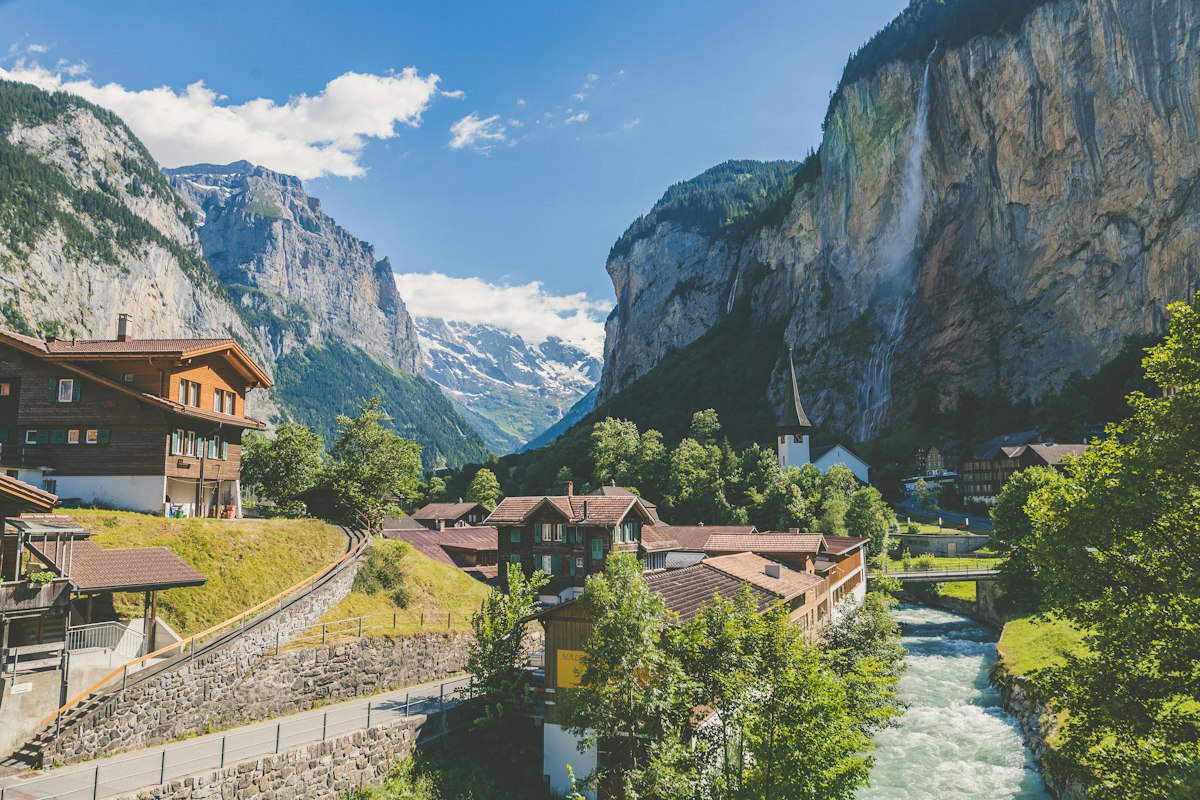
Switzerland has a reputation for being stupidly expensive, and that reputation is earned — but it's also incomplete. Yes, a beer in Zürich costs $8, a haircut runs $60, and a one-bedroom apartment in Geneva will set you back more than Manhattan. But Swiss salaries match those prices, the public infrastructure is world-class, the healthcare system actually works, and the country consistently ranks as one of the happiest places on earth. The question isn't whether Switzerland is expensive. It's whether your income — American salary, remote work income, pension, or investments — is compatible with Swiss costs. This guide gives you the real numbers, city by city, category by category, so you can do the math yourself. About 20,000 Americans live in Switzerland, concentrated in Geneva (international organizations, NGOs, multinationals), Zürich (finance, tech, pharma), and Basel (pharmaceutical industry — Novartis, Roche, and hundreds of biotech firms). They're not all bankers. They're teachers at international schools, software engineers at Google and Microsoft, researchers at CERN and ETH Zurich, and remote workers who moved here for a Swiss partner and decided to stay. The common thread: they all had to figure out how to make the numbers work in one of the most expensive countries on earth.
The Swiss Cost Reality: Why Everything Costs What It Costs
Before the budget breakdown, understanding why Switzerland is expensive saves you from the wrong mental model. Switzerland is not expensive because of waste or inefficiency — it's expensive because Swiss wages are the highest in Europe. The median gross salary is approximately CHF 6,500/month (~$7,400 USD). Workers expect to be paid for genuine productivity, employers comply, and prices reflect those labor costs throughout the economy. A barista earns $25/hour. A checkout cashier earns $22/hour. That cup of coffee isn't expensive because Switzerland is ripping you off — it's expensive because everyone involved in making and selling it earns a living wage.
For Americans earning US salaries remotely, this creates a real tension: you earn at American rates but pay at Swiss rates. For Americans who land Swiss-market jobs, the higher salaries make the costs more manageable than they first appear.
The exchange rate matters enormously: 1 CHF ≈ $1.14 USD as of early 2026. The Swiss franc is a safe-haven currency that tends to strengthen in global uncertainty — budget conservatively.
Cantons and fiscal variation: Switzerland is a confederation of 26 cantons, each with its own tax rates, and sometimes dramatically different costs. Zug and Schwyz have the lowest income taxes in the country (used by wealthy individuals and companies). Geneva and Vaud (Lausanne) have the highest. This matters: moving from the Zürich suburbs to Zug can save you 10-15% of income in cantonal taxes alone.
For data on actual living costs, Numbeo's Switzerland page aggregates user-reported prices across all major Swiss cities and lets you do city-to-city comparisons.
The expat community on r/askswitzerland is remarkably helpful and specific — search for "American" or "expat salary" threads for firsthand budget reality checks. The broader r/Switzerland subreddit covers current events, housing market updates, and cultural adjustments.
Rent by City: Zürich, Geneva, Basel, Bern, and Lausanne
Housing is the single largest budget line in Switzerland and varies more than most people expect across the five main cities.
Zürich — Switzerland's largest city and financial hub. Home to UBS, Credit Suisse remnants, Google, and dozens of tech companies. Rents are the highest in the country.
- Studio (30-45 sqm): CHF 1,600-2,200/month (~$1,820-2,510)
- 1BR (50-65 sqm), Kreis 4/5 (trendy): CHF 2,200-2,800/month (~$2,510-3,190)
- 1BR (50-65 sqm), Kreis 7/8 (quiet residential): CHF 2,400-3,000/month (~$2,740-3,420)
- 2BR family apartment, good neighborhood: CHF 3,000-4,200/month (~$3,420-4,790)
- Outlying suburbs (Winterthur, Aarau, Zug): CHF 1,600-2,400/month for 1BR — train commute is 20-40 min
Zürich's vacancy rate hovers around 0.5-0.8% — one of the tightest rental markets in the world. Expect to submit 10-15 applications before landing an apartment. You'll need: passport, residence permit (or job contract for initial applications), Swiss credit check (Betreibungsregisterauszug, about CHF 17), and often 3 months' gross salary as a deposit. Online portals: Homegate.ch, Immoscout24.ch, and ImmoStreet.ch.
Geneva — Switzerland's second city and international capital. Home to the UN, WHO, ICRC, WTO, and hundreds of NGOs. Expat density is very high.
- 1BR, city (Eaux-Vives, Paquis): CHF 2,000-2,700/month (~$2,280-3,080)
- 1BR, Carouge or Plan-les-Ouates: CHF 1,700-2,300/month (~$1,940-2,620)
- 2BR, family-friendly: CHF 2,800-3,800/month (~$3,190-4,330)
- Note: Many Geneva workers live in French border towns (Ferney-Voltaire, Gex, Divonne-les-Bains) where rents are 30-40% lower in euros, and commute 15-30 min into Geneva. French health insurance is required, and Swiss taxes still apply on Swiss income — the cross-border worker setup (frontalier) has its own tax rules.
Basel — Pharmaceutical capital. Novartis and Roche are headquartered here. More affordable than Geneva or Zürich, German-speaking, convenient for work at the Rhine-side campuses.
- 1BR, city center: CHF 1,500-2,100/month (~$1,710-2,390)
- 1BR, suburbs (Allschwil, Binningen): CHF 1,300-1,800/month (~$1,480-2,050)
- 2BR family apartment: CHF 2,200-3,200/month (~$2,510-3,650)
- Basel's tri-national location (CH/DE/FR) opens border housing options in Germany and Alsace at significantly lower prices
Bern — The federal capital. Government town with a more moderate pace. The Zytglogge clock tower medieval old town is genuinely beautiful.
- 1BR, central: CHF 1,500-2,000/month (~$1,710-2,280)
- 1BR, suburbs: CHF 1,200-1,700/month (~$1,370-1,940)
- More affordable than Zürich or Geneva; vacancy rates slightly higher
Lausanne — The Olympic capital (IOC headquarters). Beautiful lakeside setting on Lake Geneva. Home to EPFL (Europe's top engineering school), international schools, and a growing startup scene.
- 1BR, city: CHF 1,600-2,200/month (~$1,820-2,510)
- 1BR, Ouchy (lakefront): CHF 1,900-2,500/month (~$2,170-2,850)
- Good option for those working in Geneva — 45 min by train, meaningfully cheaper
Deposits: 2-3 months' rent, held in a blocked bank account. You get it back at departure (with interest) if the apartment is in good condition.
Mandatory Health Insurance (LAMal): How It Works
Switzerland has mandatory private health insurance under the LAMal system (Loi sur l'assurance-maladie). It is not free, not employer-provided, and not optional. Every resident — including foreigners with permits — must enroll within 3 months of arrival.
How it works: You choose a private insurer and a plan. The government sets the minimum benefits package (basic KVG/LAMal coverage) — all insurers must cover the same basket of services: GP visits, specialist care, hospital (semi-private ward), emergency, maternity, most prescription drugs. Insurers compete only on price and supplementary plans.
Monthly premiums (Prämien) in 2026:
- Single adult, Zürich, high deductible (CHF 2,500/year franchise): CHF 380-520/month (~$430-595)
- Single adult, Zürich, lowest deductible (CHF 300/year franchise): CHF 500-680/month (~$570-775)
- Single adult, Bern/Basel, mid-deductible: CHF 330-450/month (~$376-513)
- Premiums vary by canton (up to 40% difference between cantons), age, deductible level, and insurer
The deductible (Franchise): Ranges from CHF 300 to CHF 2,500/year. After you hit your franchise, you pay a 10% copay on remaining costs up to a maximum of CHF 700/year. Total maximum out-of-pocket per year: franchise + CHF 700 = CHF 3,200 max (CHF 2,500 franchise + CHF 700).
Strategy for healthy young adults: Choose the maximum CHF 2,500 franchise. You save CHF 100-180/month in premium, and if you have a good year health-wise, you pocket the savings. This is the rational choice for expats without chronic conditions.
Supplementary insurance (Zusatzversicherung): Optional add-ons for private hospital room, alternative medicine, dental (rarely covered by basic), vision, and treatment abroad. Add CHF 50-200/month for meaningful supplementary coverage.
Official LAMal information: The Swiss government's health insurance portal is at bag.admin.ch. Comparison site Priminfo.ch is the government-backed premium comparison tool — always start here before going to a broker.
Dental: Not covered by basic LAMal. A routine cleaning costs CHF 180-280 ($205-320). Filling: CHF 150-350. Root canal: CHF 800-2,000. Many expats do dental work in Germany or during US visits — prices are 30-60% lower.
The comparison to the US: You pay more in premiums but your maximum out-of-pocket is capped at CHF 3,200/year (~$3,650). No surprise billing. No fighting with insurance over coverage. Specialist care is excellent and relatively fast. The LAMal system frustrates Swiss people but is a genuine improvement over the US for most Americans.
Groceries and Dining: The Weekly Shop and Eating Out
Food costs are where Switzerland's reputation for expense is most justified — and also where smart shopping makes the biggest difference.
Supermarkets:
- Migros and Coop are the two main chains. Comparable to Kroger or Safeway but everything costs 2-3x US prices in dollar terms.
- Aldi and Lidl are the budget options — entering aggressively, now in most cities. About 20-30% cheaper than Migros/Coop for basics.
- Denner (owned by Migros) is the discount chain for staples.
Weekly grocery cost (one person, cooking most meals):
- Budget shopping (Aldi/Lidl/Denner): CHF 80-100/week (~$91-114)
- Mid-range (Coop/Migros): CHF 120-160/week (~$137-182)
- Premium/organic (Coop Naturaline, Migros Bio): CHF 170-220/week (~$194-251)
Specific prices to calibrate:
- Milk (1 liter): CHF 1.55-1.80
- Bread (500g loaf): CHF 2.50-4.50
- Eggs (10-pack): CHF 3.80-5.50
- Chicken breast (500g): CHF 8-12
- Pasta (500g): CHF 1.20-2.20
- Beer (6-pack, Feldschlösschen): CHF 8-10
- Wine (decent bottle, Provins Valais): CHF 8-14
The cross-border grocery run: Many Swiss residents near the French, German, or Italian borders regularly shop across the border. Konstanz (Germany) from Kreuzlingen: wine, cheese, meat 30-40% cheaper. Annemasse (France) from Geneva: same. Weekly shopping in Germany or France saves CHF 50-100/trip for a couple. You're allowed to import CHF 300/person duty-free into Switzerland.
Dining out:
- Coffee (espresso at café): CHF 4-5 (~$4.55-5.70)
- Beer (0.5L at a bar): CHF 6-8 (~$6.85-9.10)
- Lunch special (Tagesmenu) at a work canteen or neighborhood restaurant: CHF 18-26 (~$20.50-29.60) — this is how working Swiss people eat out affordably
- Dinner at a casual restaurant, two courses: CHF 35-55 per person (~$40-63)
- Sushi restaurant, mid-range: CHF 45-75 per person
- Fine dining (one Michelin star): CHF 150-250 per person with wine
The Tagesmenu lunch culture: Most Swiss restaurants and work canteens offer a fixed-price lunch special (Tagesmenu in German, Menu du jour in French) for CHF 18-26 that includes a main course and often a starter or dessert. This is how you eat restaurant-quality food without destroying your budget. Learning this one fact saves most new expats CHF 15-25/meal.
Transportation: Trains, Bikes, and the SBB Half-Fare Card
Switzerland has arguably the best public transportation system in the world. Trains run on time to a degree that seems algorithmic — the SBB (Schweizerische Bundesbahnen) consistently achieves >92% on-time performance. The network is comprehensive: 5,200 km of railway, 24,000 buses, trams, and boats, integrated into a single ticketing system.
Key passes:
- GA Travelcard (Generalabonnement): Unlimited travel on all SBB trains, trams, buses, and boats in Switzerland. 2nd class: CHF 3,860/year (~$4,400) or CHF 322/month. 1st class: CHF 6,300/year. For heavy commuters or remote workers who travel frequently, this is exceptional value.
- Half-Fare Card (Halbtax): A CHF 185/year card that cuts all SBB ticket prices in half. If you take more than 3-4 longer train trips per year, it pays for itself. The single best value purchase in Switzerland — nearly every resident has one.
- City monthly pass: Zürich's ZVV pass for all city zones: CHF 95-120/month depending on zones. Geneva's TPG pass: CHF 70-90/month.
- Day pass: CHF 52 (full price) or CHF 26 (half-fare) for unlimited travel on all SBB for one day.
Biking: Swiss cities have excellent cycling infrastructure. A decent used bike: CHF 300-600. New city bike: CHF 700-1,200. PubliBike (bike-sharing, available in most cities): CHF 99/year for 30-minute unlimited rides.
Car ownership: Possible but expensive and often unnecessary in cities.
- Parking in Zürich city: CHF 3-8/hour, or CHF 150-350/month for a residential permit
- Vehicle registration and mandatory liability insurance: CHF 600-1,200/year
- Swiss highways require a Vignette: CHF 40/year for unlimited motorway access
- Gas: CHF 1.80-2.00/liter (~$7.80-8.70/gallon)
- Car-sharing services (Mobility, Zipcar): CHF 2.80-4.50/hour — many Zürich residents use these instead of owning
Flying: Zürich Airport is one of Europe's best, with Ryanair and EasyJet offering flights to European cities from CHF 30-100 roundtrip if booked in advance. For weekend trips to Paris, Rome, Barcelona, or Amsterdam, Geneva and Zürich airports make Switzerland a remarkably convenient base.
Utilities, Internet, and Phone
Utilities in Switzerland are typically not included in rent — you'll pay separately for:
- Electricity: Swiss electricity is expensive (large hydroelectric infrastructure, but end-user prices high). Average 1BR apartment: CHF 60-100/month. Radiator-heated larger apartment in winter: CHF 150-250/month. Many Swiss buildings use district heating (Fernwärme), which is billed separately.
- Gas/central heating: Often included in building ancillary costs (Nebenkosten) of CHF 150-300/month for a 2BR apartment.
- Total utilities (electricity + heating + hot water + building maintenance) for a 1BR: CHF 150-250/month (~$170-285)
Internet:
- Swisscom (monopoly legacy provider): CHF 79-99/month for 1 Gbps fiber, adequate TV package included
- Sunrise (second-largest): CHF 59-79/month for comparable fiber speeds
- Salt: CHF 39-59/month for fiber — the budget option with solid speeds
- Cable (UPC/Sunrise): CHF 49-69/month
- Fiber is available in most Swiss buildings; speeds are genuinely fast
Mobile phone plans:
- Swisscom: CHF 55-80/month for unlimited calls/SMS + 10-50GB data
- Sunrise: CHF 35-55/month for similar plans
- Salt: CHF 25-40/month — solid coverage, cheapest option
- Prepaid: CHF 15-30/month for basic plans
- Switzerland is one country where eSIM from your US carrier works as a short-term solution, but long-term a Swiss SIM is necessary for local calls and banking SMS verification
Television: Swiss public TV (SRF, RTS, RSI) costs every resident a mandatory CHF 335/year (Billag fee, now called Serafe) regardless of whether you own a TV — it funds public broadcasting. You'll be billed automatically as a registered resident. Netflix costs CHF 18-22/month (same plans as US, slight price difference).
Total utilities budget for a single person in a 1BR: CHF 380-530/month (~$430-605), including electricity, heating, internet, and mobile.
Swiss Taxes: Cantonal Differences and the US Filing Obligation
Swiss taxation is genuinely complicated for Americans, and getting it wrong is expensive.
Swiss tax structure: You pay three layers of income tax:
- Federal tax: Progressive, topping at 11.5% on income above CHF 755,200. Lower-income earners pay much less — under CHF 100,000: roughly 3-7%.
- Cantonal tax: The big variable. Ranges from ~3-5% (Zug, Nidwalden, Schwyz) to ~14-18% (Geneva, Vaud, Berne) on the same income.
- Municipal tax: A multiplier on cantonal tax, typically 100-130% of cantonal tax.
Effective total tax rates on CHF 100,000 (~$114,000) by canton (married, no children):
- Zug: ~12-15% effective
- Schwyz: ~13-16% effective
- Zürich: ~22-25% effective
- Bern: ~25-28% effective
- Geneva: ~26-30% effective
This isn't theoretical — it's why international companies and wealthy individuals specifically choose Zug or Schwyz. A single worker earning CHF 150,000 saves CHF 15,000-25,000/year in Zug versus Geneva.
Withholding tax (Quellensteuer): Most foreign employees (non-C-permit holders) pay taxes via automatic employer withholding. You may still need to file a regular return if income exceeds CHF 120,000/year or you have significant assets. The cantonal tax offices provide guidance — Federal Tax Administration at estv.admin.ch.
The American double-filing problem: You still file US taxes every year. Key points:
- The FEIE (Foreign Earned Income Exclusion) lets you exclude $126,500 of earned income from US federal tax in 2026
- The US-Switzerland Tax Treaty helps with certain income types (dividends, pensions) but doesn't eliminate filing obligations
- Pillar 2 and 3a (Swiss pension accounts) have different treaty treatment — consult a specialist
- FBAR applies if Swiss accounts exceed $10,000 at any point
- A qualified cross-border tax professional costs CHF 2,000-5,000/year but is non-negotiable
The lump-sum taxation option (forfait fiscal): Available in some cantons for wealthy foreigners who don't work in Switzerland. Tax is assessed on 5x your annual rent rather than income. Not relevant for working expats but worth knowing if you retire here with investment income.
For more on US tax obligations abroad, see our FEIE guide.
Banking and Moving Money
Banking in Switzerland is easier than the reputation suggests — the challenge is specifically for Americans, thanks to FATCA.
FATCA reality: Swiss banks are required to report American account holders to the IRS. After 2010-era enforcement actions (UBS paid $780M in fines), Swiss banks became cautious about American clients. Some refuse Americans entirely. Others accept Americans but require extensive documentation. This has improved in recent years as the reporting infrastructure matured.
Banks that reliably accept Americans:
- UBS: Accepts American clients. Swiss icon, post-Credit Suisse acquisition it's now enormous. Personal banking account with Debit Mastercard: CHF 6/month (base), CHF 15-20/month with premium card. Requires passport, residence permit, employer confirmation.
- Credit Suisse (now UBS): Absorbed into UBS in 2023 — existing CS clients now UBS.
- PostFinance: The postal bank, owned by Swiss Post. Accepts non-Americans more easily, but American policy varies. Good for basics.
- Raiffeisen: Cooperative bank network, strong in smaller towns. Regional policies vary on Americans.
- Neon / Yuh / Zak: New fintech banks with simpler onboarding. Neon is CHF 0/month with a free Mastercard. No branches, app-only. These are the easiest to open as a newcomer and fine for daily banking.
Opening an account: Bring passport, B or L residence permit (or signed employment contract if permit not yet issued), and a registered Swiss address. Processing takes 3-10 business days.
Transferring money from the US:
- Wise (formerly TransferWise): 0.4-0.7% fee, mid-market exchange rate. A $5,000 USD → CHF transfer costs about $25-35. Best option for regular transfers under $50,000.
- Revolut: Free up to £1,000/month, then 0.5%. Works in 150+ currencies. Useful for European travel as well.
- SWIFT bank wire: CHF 15-30/transfer from Swiss bank side, plus sender fees and spread. Use for large amounts where percentage fees exceed flat fees.
- Physical cash import: Amounts over CHF 10,000 must be declared at the border but are not taxed.
Swiss Pillars (pension system):
- Pillar 1 (AHV/AVS): Mandatory state pension. You and employer each contribute ~5.3% of salary.
- Pillar 2 (BVG): Mandatory occupational pension, employer-based. Contributions split employer/employee, vested after 2 years of employment.
- Pillar 3a: Voluntary private pension with tax deductibility up to CHF 7,258/year (2026 limit for employed persons). Use it — it's the best tax deduction available to working residents.
The US Embassy in Bern provides American Citizens Services for tax, notarial, and legal documentation needs. Emergency services, passport renewal, and consular reports of birth abroad are handled there for all of Switzerland.
Monthly Budget Breakdown by Lifestyle
All figures in USD (CHF × 1.14).
Budget Living — Basel or Bern ($3,800-4,800/month)
This is a real, functional life without luxuries:
- Rent (1BR, outer zone): $1,600-1,900
- Groceries (Aldi/Lidl, cooking at home): $350-450
- Eating out (2-3x/week, Tagesmenu lunches): $250-350
- Transport (Half-Fare card amortized + city pass): $150-200
- Mandatory health insurance (max deductible): $490-570
- Utilities (electricity, heating, internet): $380-450
- Mobile: $45-65
- Personal care, household: $100-150
- Entertainment (streaming, culture): $120-180
- Total: $3,485-4,315
This is a modest but comfortable life. No overseas trips, no car, minimal dining at nice restaurants.
Comfortable Living — Zürich ($5,500-7,500/month)
The typical professional expat budget:
- Rent (1BR, central Zürich): $2,500-3,000
- Groceries (Coop/Migros, some organic): $450-600
- Eating out (4-5x/week, mix of Tagesmenu and casual dinners): $450-650
- Transport (ZVV city pass + train travel): $200-280
- Health insurance (mid-deductible): $530-640
- Utilities: $410-520
- Mobile: $55-75
- Gym: $70-100
- Entertainment, events, culture: $200-350
- Clothing, personal care: $150-250
- Total: $5,015-6,465
Expat Professional Living — Geneva ($7,500-10,000+/month)
For those with Geneva-caliber salaries (international organizations, finance, pharma):
- Rent (2BR, city center or Carouge): $3,700-4,700
- Groceries (mix, including French cross-border): $550-700
- Dining (regular restaurant lunches, dinners out): $700-1,000
- Transport (TPG + occasional car rental): $250-380
- Health insurance: $560-680
- Utilities: $450-600
- Travel (4-6 European weekends/year, amortized): $300-500
- Entertainment, sports: $350-500
- Total: $6,860-9,060
The Swiss salary context: A software engineer at Google Zürich earns CHF 180,000-280,000/year in total compensation — competitive with Silicon Valley. A senior researcher at Novartis Basel: CHF 120,000-180,000. A project manager at an international organization in Geneva: CHF 100,000-160,000 tax-free (UN and international orgs pay tax-free salaries). These salaries make the costs workable. Remote work at a US $90-100K salary is genuinely tight in Zürich.
Switzerland vs. US Cities: Where You Come Out Ahead
Americans from expensive US cities often find Switzerland less shocking than Americans from affordable metros.
Zürich vs. San Francisco:
- Rent: Comparable (SF 1BR: $3,000-4,200, Zürich 1BR: $2,510-3,420)
- Healthcare: Zürich dramatically better — capped at $3,650/year max OOP vs. SF's uncapped surprise bills
- Transportation: Zürich dramatically better — world-class transit vs. notoriously bad Bay Area options
- Groceries: Switzerland 30-50% more expensive
- Overall: For a tech worker, Zürich quality of life exceeds SF with similar net costs after healthcare savings
Basel vs. Boston:
- Rent: Basel modestly cheaper (Basel 1BR: $1,710-2,390 vs. Boston: $2,500-3,500)
- Commuting: Basel easily walkable/bikeable; Boston requires paid transit or parking
- Groceries: Switzerland notably more expensive
- Healthcare: Switzerland offers more predictability and lower max OOP
- Overall: Lateral cost move, significant quality-of-life upgrade
Bern vs. Chicago:
- Rent: Bern slightly cheaper than Lincoln Park/River North
- Switzerland more expensive in groceries, dining, and utilities
- Healthcare certainty worth more than dollar-for-dollar comparison implies
- Overall: Switzerland costs more but delivers more in safety, transit, and quality of public services
The actual advantage Switzerland delivers: It's not savings. It's what you get for what you spend. Trains run on time. Streets are clean. Healthcare doesn't bankrupt you. Crime is genuinely low. Hiking, skiing, and cycling are at your doorstep. The quality of daily life is exceptionally high if your income supports it.
For a full comparison of property costs across countries, see our median home prices guide.
Practical Tips for Americans Moving to Switzerland
Register immediately: Within 14 days of arrival, register with your local Einwohnerkontrolle (residents' registration office). Bring your passport, rental contract, and passport photos. You'll receive a residence permit (B permit for employment, L for short-term). This triggers your right to enroll in LAMal health insurance and the municipal tax rolls.
Learn the national language of your region — it matters:
- Zürich/Basel/Bern: German (Hochdeutsch in writing, Schweizerdeutsch spoken)
- Geneva/Lausanne: French
- Lugano: Italian
- Expats at multinationals often function in English professionally, but German or French integration is essential for daily life, social integration, and long-term residency or citizenship prospects. Evening language courses at Migros Klubschule: CHF 400-800/semester.
Housing: apply in volume, apply fast: Zürich's vacancy rate of 0.5% means good apartments receive 50-100 applications within hours. Use all portals simultaneously (Homegate, Immoscout24, Anibis for cheaper listings, and Comparis.ch for aggregated search). Have your documents packet ready to send immediately. A Swiss guarantor (bürgschaft) helps but isn't required for employed foreigners.
Nebenkosten (ancillary costs): Rental contracts quote a net rent (Nettomiete) plus Nebenkosten (heating, water, building maintenance) of CHF 100-300/month. Budget the total (Bruttomiete) when comparing apartments — Nebenkosten are real, recurring costs.
Sundays: Switzerland respects Sunday. Most shops are closed. Grocery stores at train stations (Migros, Coop) and highway rest stops are open. Plan your week accordingly.
Bring prescription medications: Switching prescriptions requires a Swiss doctor's prescription. Get a generous supply before arriving, and bring written documentation of your current prescriptions.
The US Embassy in Bern: For Americans needing consular services — passport renewal, notarization, CRBA, emergency assistance — the US Embassy Bern handles all Switzerland. The consular section also maintains an emergency contact line for urgent citizen services. Book appointments online well in advance.
Communities and resources:
- r/askswitzerland — genuinely helpful subreddit for newcomer questions
- r/digitalnomad — for remote workers evaluating visa options
- r/IWantOut — for Americans in the research phase
- Internations Zürich/Geneva chapters — professional expat networking
- International Living's Switzerland coverage — retirement and lifestyle perspectives
- Expatica Switzerland guide — practical settlement information
Switzerland rewards preparation. The system is orderly, the rules are real, and the infrastructure genuinely works. Arrive organized, and you'll find the Swiss bureaucracy surprisingly efficient.
Is Switzerland Right for You? The Honest Assessment
Switzerland is not a budget destination, a retirement haven for those on fixed incomes, or a place you move to save money. It is one of the finest places in the world to live if — and only if — your income can support Swiss prices.
Switzerland is for you if:
- You have a Swiss job offer with a Swiss-market salary. The largest American employers: Google, Microsoft, and IBM in Zürich; Novartis, Roche, and Johnson & Johnson in Basel; international organizations (UN, WHO, ICRC, WTO) in Geneva
- You're a remote worker earning at least $120,000/year and willing to live in Basel, Bern, or the Zürich suburbs rather than the city center
- Your partner has a Swiss position and you're joining them — the trailing spouse can work on a family reunification permit
- You're drawn by the outdoor lifestyle: skiing (world-class, 30-90 min from every major city), hiking (2,000+ marked trails), and cycling on some of Europe's best infrastructure
- Quality of life — safety, cleanliness, infrastructure, healthcare certainty — matters more than maximizing savings
Switzerland is NOT for you if:
- You're pursuing dramatic cost-of-living reduction. Ecuador offers a $1,500-2,000/month comfortable life; Switzerland requires 3-5x that
- You want easy, accessible immigration. Switzerland's immigration is employment-driven — without a Swiss job offer, your pathways are limited to family reunification, L-permit short stays, or intra-company transfers
- German/French language acquisition isn't something you're prepared to invest in for long-term integration
- You're retired on Social Security alone — the monthly benefit covers perhaps one-third of a modest Swiss budget
The expat reality: Most Americans in Switzerland arrived via multinational transfer, academic position, or international organization job. Those who come deliberately and independently tend to be remote workers with strong dollar income or entrepreneurs. The ones who stay long-term consistently describe the quality of life as incomparable — but they all acknowledge the entry ticket is expensive.
For a broader look at where American money goes furthest abroad, see our cheapest cities abroad guide and digital nomad visas guide. Switzerland is extraordinary; it just demands extraordinary preparation.
Ready to explore?
Browse Destinations