
Medellin Real Estate in 2026: Cost of Buying a 3-Bed Condo in El Poblado

El Poblado is the American expat capital of South America, and it is also the most politically contested neighborhood on the continent's real estate map. The peso has moved roughly 30 percent against the dollar since 2022, the city government has passed foreign-buyer measures aimed directly at Airbnb operators, and a vocal share of paisas (Medellin natives) have made it clear that they resent the displacement of locals by dollar-wielding outsiders. Any honest post about buying in El Poblado has to cover all three facts.
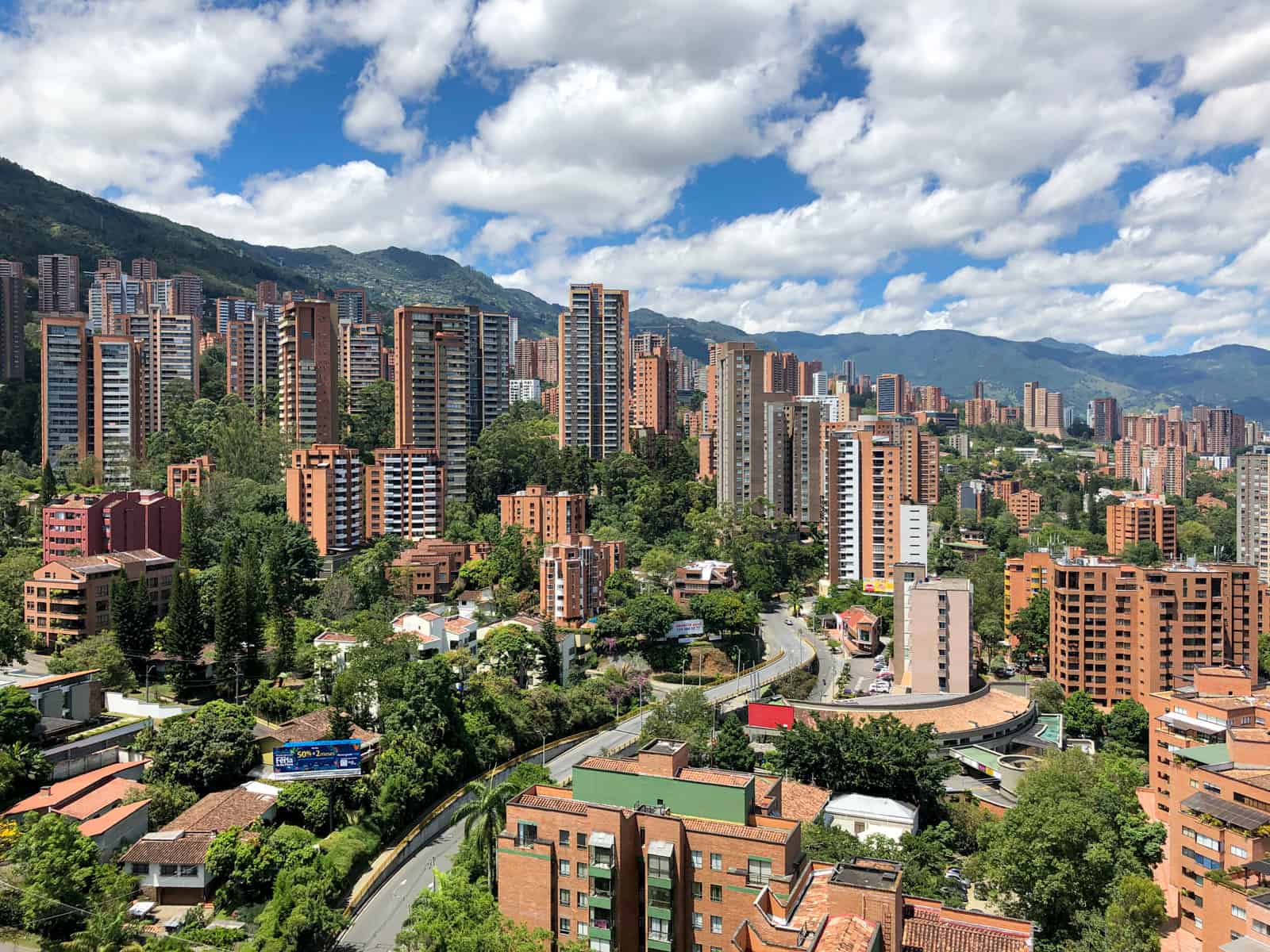
This breakdown walks through what a 3-bedroom condo in El Poblado actually costs in 2026, what the closing-cost stack looks like, how the dollar-peso conversion shifts the math, and the gentrification backlash you need to factor into any purchase decision. I cross-checked prices against FincaRaiz Colombia and Metrocuadrado, pulled tax rates from DIAN, and followed the El Colombiano local coverage of the Medellin STR regulations. For the deeper country picture, pair this with our cost of living in Colombia post and our moving to Colombia guide.
The Peso Math: Why Medellin Feels 30 Percent Cheaper
As of early 2026, USD 1 buys approximately COP 4,100. In 2022 it bought roughly COP 3,800; in 2019 it bought roughly COP 3,200. The peso has depreciated meaningfully against the dollar over that span, and almost all Medellin real estate is listed in pesos. An El Poblado apartment listed at COP 850 million (which was USD $266,000 at 2019 rates) is now USD $207,000. Your same US salary has gained roughly 20-25 percent of purchasing power in Medellin terms over the last 6 years.
Local paisa wages, by contrast, are paid in pesos and have risen only modestly. The implication is mathematically simple and politically charged: Americans have gotten wealthier in Medellin while locals have not, and that asymmetry is the core grievance behind the anti-gringo sentiment you read about.
The Banco de la Republica exchange rate history is the definitive reference. Stress-test your purchase math at COP 3,500 per USD in case the peso strengthens.
For currency transfers, Wise dominates. Direct bank wires from US banks cost 2-4 percent in FX spread; Wise is closer to 0.4 percent. On a USD $200,000 purchase the savings are USD $4,000-$8,000.
What a 3-Bedroom El Poblado Condo Costs in 2026
El Poblado is not a single neighborhood. It is officially Comuna 14 and contains several distinct sub-areas with different prices and character.

Provenza (the epicenter): Narrow streets, cafes, bars, restaurants, and the highest density of Americans. 3-bedroom, 110-140 sqm, renovated condo: COP 900M to COP 1,500M (USD $220,000 to $365,000).
Manila: Quieter residential pocket north of Provenza, still walkable. 3-bedroom, 120-150 sqm: COP 750M to COP 1,200M (USD $183,000 to $293,000).
Castropol / Lalinde / Las Lomas: Mid-Poblado residential areas, family-oriented, quieter. 3-bedroom, 130-170 sqm: COP 700M to COP 1,100M (USD $171,000 to $268,000).
El Tesoro / Los Balsos: Upper-Poblado luxury corridor, mountain views, gated communities. 3-bedroom, 140-200 sqm: COP 900M to COP 1,800M (USD $220,000 to $439,000).
Alejandria / Patio Bonito / San Lucas (outer Poblado): More Colombian, less expat, typically larger units. 3-bedroom, 130-180 sqm: COP 550M to COP 900M (USD $134,000 to $220,000).
As a rough benchmark, USD $250,000 in 2026 buys a solid 3-bedroom condo in mid-Poblado in a well-maintained 15-30-year-old building with parking and basic amenities. USD $350,000 buys a premium unit in Provenza or El Tesoro with modernized finishes and a concierge.
FincaRaiz's Medellin market reports and Metrocuadrado's per-sqm data publish quarterly numbers. Threads on r/medellin and r/Colombia contain regular price-reality-check discussions; the El Poblado premium has compressed versus nearby Laureles and Envigado since 2023 as Americans have pushed into those alternatives.
Can Americans Even Buy Property in Colombia?
Yes, freely. Colombia does not restrict foreign ownership of real estate the way Mexico does in its restricted zone. An American non-resident can hold fee-simple title directly, with the same rights as a Colombian citizen. No trust structure, no corporation needed, no ministry approval.
What you do need:
- Cedula de extranjeria if you are resident, or a pasaporte if you are non-resident. Both work for holding title.
- NIT (Numero de Identificacion Tributaria) or RUT: The Colombian tax ID, required for formal contracts including real estate deeds. The DIAN RUT portal handles this.
- Colombian bank account (cuenta bancaria): Bancolombia, Davivienda, BBVA Colombia, and Banco de Bogota all accept non-residents for savings accounts. Onboarding has tightened since 2022 due to anti-money-laundering rules and typically requires a cedula, an in-person visit, and proof of income.
- Registration of foreign investment: If you wire USD in to purchase the property, you are required to register the capital inflow with Banco de la Republica's foreign investment regime. This is how you preserve the right to repatriate the capital in USD when you eventually sell. Skipping this step means your capital is trapped in pesos. Your lawyer or a comisionista de bolsa (broker-dealer) handles the filing for a fee of roughly USD $300-$600.
The foreign investment registration is the single most important technical detail American buyers miss. Every Colombian lawyer will handle it, but not every US-based gringo advisor will remember to warn you about it. See the Banco de la Republica foreign investment FAQ for the current rules.

Closing Costs in Medellin
Colombia's closing cost stack is moderate and predictable.
Notario fees: Colombian notaries charge fees set by national decree. For a COP 1 billion purchase (roughly USD $244,000), notary fees run approximately COP 3-5 million (USD $730-$1,220).
Beneficencia (departmental / beneficiencia tax): Varies by department. For Antioquia (which contains Medellin), roughly 1 percent of purchase price.
Registro (registration fee): Approximately 1 percent of purchase price.
Retencion en la fuente: The buyer often withholds and remits a 1 percent income tax retention on behalf of the seller. This is a flow-through; you pay it to DIAN, and the seller effectively nets 1 percent less. Structurally this is a seller cost but it flows through the buyer's wire.
Lawyer fees: COP 4-8 million (USD $975-$1,950) flat for a standard El Poblado purchase from an English-speaking firm. Recommended firms that handle expat buyers include Medellin Advisors and local boutique practices listed on the expat Facebook groups.
Real estate agent commission: Typically 3 percent plus IVA, paid by the seller. Baked into the asking price.
Avaluo (appraisal): COP 800,000 to 1.5 million (USD $195-$365).
Foreign investment registration: USD $300-$600 through a comisionista.
Wire/FX: Use Wise; budget USD $200-$700 total.
Total closing costs for a COP 1 billion (USD $244,000) Medellin condo: approximately USD $7,000 to $11,000, or 2.9 to 4.5 percent of purchase price.
This is significantly cheaper than Mexico (9-11 percent), Spain (12-14 percent), or Portugal (7-9 percent). Colombia's low closing friction is one of its underappreciated advantages.
Annual Carrying Costs
Predial (annual property tax): Medellin calculates predial on the avaluo catastral, typically 60-80 percent of market value, at progressive rates running roughly 0.6 to 1.4 per mil per year. For a USD $244,000 apartment, predial typically lands at USD $600 to $1,800 per year. This is higher than Cuenca or CDMX but still well below US equivalents. Medellin's alcaldia website handles online predial payments.
Administracion (condo / HOA fees): For an El Poblado building with elevator, doorman, gym, and pool, budget COP 600,000 to COP 1,400,000 per month (USD $145 to $340). Older buildings without amenities can be as low as COP 300,000 (USD $75).
Home insurance: USD $200-$400 per year.
Utilities: Electricity, gas, water, internet: USD $100-$200 per month for a 3-bed. Colombia subsidizes utilities for lower-income neighborhoods (stratum 1-3) and Poblado is stratum 5-6, so you pay the full unsubsidized rate.
Rental income tax: Non-residents pay 35 percent on gross rental income under current Colombian law, though deductions are allowed for documented expenses. See PwC Colombia tax summary for current rules.
Total annual carry for a USD $244,000 Poblado condo: approximately USD $3,000 to $5,500 per year, or roughly 1.5-2.3 percent of purchase price. Comparable to Lisbon and Barcelona on an absolute-dollar basis.
The Short-Term Rental Crackdown
Until 2023, Airbnb was the default investment thesis for El Poblado buyers. Occupancy over 75 percent, ADRs pushing USD $80-$120 for a nice 2-bedroom, and net yields north of 8 percent attracted an entire cohort of American and European investors who bought Provenza apartments purely to rent on Airbnb.
That thesis is under active political assault. As of 2024-2025, the Medellin city government and the Ministerio de Turismo de Colombia have:
- Raised registration requirements for short-term rental operators, including a Registro Nacional de Turismo (RNT) number for any unit renting under 30 days.
- Imposed property-use classification enforcement: residential buildings (uso residencial) are technically not allowed to operate as short-term rentals, and this has been sporadically enforced with fines.
- Empowered building administraciones to ban STRs: most El Poblado condominio assemblies have now voted (or are voting) to restrict or prohibit short-term rentals in common areas.
- Raised taxes: STR operators pay 19 percent IVA, the regular income tax, and a specific tourism contribution.
The net effect is that Provenza Airbnb returns in 2026 are materially worse than in 2022, and the regulatory direction is one-way. Any purchase underwritten on STR cash flows is taking substantial political risk. El Colombiano coverage of STR regulation and The Bogota Post English-language reporting track these policy shifts.
Threads on r/medellin document actual operator experiences with the new rules.
The Worked Example: COP 900M El Poblado 3-Bed
Concrete numbers for a 130 sqm, 3-bedroom, 2-bath condo in mid-Poblado purchased for COP 900 million (USD $220,000) with cash.
Pre-offer:
- Scout trip: USD $1,800-$3,000
- RUT and Colombian bank account setup: USD $200
Offer to closing:
- Lawyer retainer: USD $800
- Earnest money (typically 10 percent, held by lawyer or seller attorney): USD $22,000 (capital)
Closing day:
- Beneficencia (1 percent): COP 9,000,000 (USD $2,200)
- Registro (1 percent): COP 9,000,000 (USD $2,200)
- Notario fees: COP 4,000,000 (USD $975)
- Avaluo: COP 1,200,000 (USD $290)
- Lawyer final: COP 4,000,000 (USD $975)
- Foreign investment registration via comisionista: USD $400
- Wire/FX via Wise: USD $880
Post-closing first 90 days:
- First admin fee installment: USD $250
- Predial prorated: USD $200
- Utility deposits: USD $150
- Furnishings (if unfurnished): USD $2,000-$6,000
Grand total closing-all-in (excluding furnishings):
Approximately USD $8,500 to $9,200, or 3.9 to 4.2 percent of purchase price. Call it USD $229,000 all in for a USD $220,000 Poblado condo.
The Gentrification Conversation (Again, Honestly)
El Poblado's American moment has been a full-on cultural collision since 2020. Rents in Provenza have doubled. Colombian restaurants have been replaced by specialty coffee and natural wine bars. The vocabulary in Parque Lleras is half English. Paisa residents who lived in the neighborhood for 20 years have been pushed to Envigado and Laureles. The backlash has been loud, occasionally performative (anti-gringo graffiti), occasionally policy-shaping (the STR crackdown described above), and it is not going to subside.
The honest stance for an American buyer in 2026: you are not personally the cause, but you are a participant in the macro pattern. The things that reduce the harm are the same things that make you a better expat: learn Spanish to actual fluency, support local businesses rather than the gringo-targeted copycats, do not convert a long-term rental into an Airbnb, pay Colombian taxes if you are resident, and consider whether Laureles, Envigado, or Sabaneta might be a better fit than the Provenza pressure cooker.
Alternatives within Medellin:
- Laureles: Flat, walkable, more Colombian, 20-30 percent cheaper than Poblado on a per-sqm basis. 3-bed condos in the USD $150,000-$230,000 range.
- Envigado: Technically a separate municipality but continuous with Poblado. Residential, family-oriented, even cheaper.
- El Retiro / La Ceja: Small towns 45 minutes east, traditional highland character, rural.
For the broader take, see our cost of living in Colombia and moving to Colombia guide. Reddit's r/medellin gentrification threads are the rawest form of the local sentiment.
Should You Buy in El Poblado?
Buy in El Poblado if:
- You have spent at least 60-90 days in Medellin across more than one season
- You speak functional Spanish or are committed to reaching fluency
- You are buying to live, with any rental revenue as pure upside
- You can absorb a 20 percent peso strengthening without stress
- You have a Colombian tax plan and a cross-border CPA
Skip El Poblado (or consider alternatives) if:
- Your investment thesis is Airbnb cash flow
- You do not speak Spanish and are unwilling to learn
- You are comparing on pure yield to US rental markets (US usually wins on pure yield)
- You are philosophically uncomfortable with the gentrification dynamics
The sequencing: visit twice, rent for 3-6 months in the specific sub-area you are considering, apply for residency if you plan to stay long-term (the Visa M-11 for investors requires approximately USD $50,000 in real estate investment), set up Colombian banking and tax ID, use Wise for the wire, and hire a local Colombian lawyer before you make any offer.
For live Medellin inventory, see our Medellin page. For the broader Colombian picture, our moving to Colombia guide is the next read.
Ready to explore?
Browse Destinations