
Mortgages in Mexico for Foreigners: The 2026 Playbook

Americans have been quietly buying homes in Mexico for decades — and for most of that time the default answer to 'can I get a mortgage?' was 'no, pay cash.' That changed around 2018 when a handful of cross-border lenders started offering USD-denominated mortgages to US and Canadian citizens buying in Mexican coastal markets. In 2026 the menu is broader than ever, and it is very possible — if your profile and property are right — to close a 30-year fixed mortgage on a house in Puerto Vallarta or Playa del Carmen without ever becoming a Mexican resident, without speaking Spanish, and without converting a dollar into pesos. It's also possible to get a 'normal' peso mortgage from BBVA or Scotiabank Mexico if you have Mexican residency, and that path has its own math.

This guide walks through every real 2026 financing path, the fideicomiso (bank trust) requirement for coastal buyers, realistic rates and down payments, the lender list, and the tax traps that trip up first-time American buyers in Mexico.
The Fideicomiso: Before You Can Borrow, You Need the Structure
Mexico's constitution — specifically Article 27 of the 1917 Mexican Constitution — prohibits foreigners from directly owning land within 50 kilometers of any coastline or 100 kilometers of any land border. This is the 'restricted zone' (zona restringida) and it contains almost every American-favorite location: Cabo San Lucas, Puerto Vallarta, Playa del Carmen, Tulum, Cancún, Mazatlán, Rosarito, Ensenada, and Isla Mujeres. Inland properties — Mexico City, Guadalajara, San Miguel de Allende, Oaxaca, Mérida — fall outside the restricted zone and can be directly titled to a foreigner.

For restricted-zone properties, the legal workaround — blessed by the Mexican government since 1973 — is the fideicomiso, a real estate bank trust. A Mexican bank holds the legal title to the property, with the foreign buyer named as the sole beneficiary with full rights to use, rent, renovate, mortgage, sell, or inherit the property. The trust runs 50 years and is renewable indefinitely. It is the legal mechanism that allows the entire Los Cabos, Riviera Maya, and Puerto Vallarta markets to exist for American buyers.
Fideicomiso costs break down as follows, per the Baja Properties fideicomiso guide and Mexico Relocation Guide's primer:
- Setup fee: $500–$1,500 USD (one-time, paid at closing).
- Permit from the Secretaría de Relaciones Exteriores (SRE): $1,000–$2,000 USD one-time, embedded in closing costs.
- Annual trustee fee: $500–$800 USD per year, paid to the bank that holds the trust.
- Renewal fee every 50 years: comparable to setup.
The four Mexican banks that dominate the fideicomiso trust business in 2026 are Banamex (now Citibanamex), Banorte, Scotiabank Mexico, and Intercam. Most US buyers end up at Intercam or Scotiabank because both have dedicated foreign-client desks and English-speaking trust administrators. The fideicomiso is not optional for coastal properties — trying to buy without one, or via a 'Mexican friend as nominee,' is illegal under Article 27 enforcement and has caused buyers to lose entire investments when nominee relationships soured. There are multiple r/expats Mexico threads and long MexLaw analysis pieces documenting this.
Option 1: Cross-Border USD Mortgage (The American Default)
The single most common path for American buyers in 2026 is a USD-denominated mortgage from a cross-border specialty lender. These are boutique operations that underwrite in the US (using your US credit score, US tax returns, US employment) but lend against Mexican property, with the loan serviced in US dollars from your US checking account. The five players who actually lend money in this category right now are Global Mortgage, Mexlend, MoXi, CrossBorderInvestment.com partner lenders, and a handful of private credit funds that work through brokers.

Typical 2026 terms from these lenders:
- Loan amounts: $100,000 USD minimum, usually up to $1.5M, occasionally $3M+ for ultra-prime borrowers.
- Down payment: 30–35 percent. Lower than a peso mortgage from a Mexican bank (which demands 35–50 percent), higher than a US conventional loan.
- Interest rate: 8.5–11.5 percent fixed in 2026, depending on term and credit profile. This is much higher than US mortgage rates because the lender is absorbing country risk; much lower than peso mortgages which run 12–14 percent.
- Term: 15, 20, 25, or 30 years. Most US borrowers pick 25 or 30.
- Eligibility: US or Canadian citizen or permanent resident, minimum credit score 650 (often 700+ for best rates), verifiable US income, and the subject property must be in an approved city/market (most lenders cover Los Cabos, Puerto Vallarta, Riviera Nayarit, Riviera Maya, San Miguel de Allende, Mérida, and select interior markets; they do not lend on rural or raw-land properties).
- Closing timeline: 60–90 days, comparable to a US refi.
The pitch and the catch are both the same number: 8.5–11.5 percent. That's expensive compared to a US mortgage. But it is the only way, as a non-resident American, to avoid tying up $400K–$600K of your US investment capital in Mexican real estate. Wise's US mortgage guide has a clean summary of the trade-offs and the Baja Properties Americans buying guide has current rate quotes from multiple cross-border lenders.
One surprising upside of the USD loan: your mortgage service goes through US mail/email/autopay like any normal US mortgage. No Mexican bank visits, no Spanish paperwork, no currency conversion for your monthly payment. For a lot of American buyers, that operational simplicity is worth the rate premium alone.
Option 2: Peso Mortgage From a Mexican Bank
If you are a Mexican resident — Residente Temporal or Residente Permanente — you can apply for a peso-denominated mortgage from one of the major Mexican commercial banks: BBVA México, Santander México, Banorte, Scotiabank México, or HSBC México. Without residency, most of these banks will decline a pure non-resident applicant, though BBVA has been the most flexible for high-income Americans with a Mexican bank account history.

Typical peso mortgage terms in 2026:
- Interest rate: 11.5–14 percent fixed for 20 years, or variable TIIE (Mexican interbank rate) + 3–5 points. Current TIIE is around 10 percent per the Banco de México rate feed.
- Down payment: 30–50 percent for residents; most foreign applicants get quoted 40–50 percent.
- Term: Up to 20 years standard, 25 years for strong profiles.
- Max age at payoff: 70 or 75 depending on bank.
- Currency risk: You pay in pesos, so if the peso weakens against the dollar (as it did sharply in 2024–2025), your effective dollar cost goes down. If it strengthens, your cost goes up.
The honest answer on peso mortgages is that the math almost never works for US-income buyers. An 11–14 percent rate on a 20-year note is expensive enough that cash-plus-HELOC or a cross-border USD mortgage at 9 percent will usually beat it handily. The peso mortgage only makes sense if (a) you have Mexican-peso income, or (b) you specifically want the currency hedge of peso debt against peso rent from Mexican tenants. The My Casa Mexico 2025 financing guide and the Cross Border Investment financing breakdown both come to similar conclusions.
The other wrinkle: Mexican banks' documentation standards for foreigners are notoriously inconsistent. Reddit's r/MexicoCity buying threads and r/expats Mexico discussions are full of stories from Americans who submitted everything correctly and still got denied for reasons like 'the name on your W-2 is slightly different from the name on your passport.' The Cross Border Investment blog also documents these denials. Bring a Mexican-side attorney or broker if you pursue this path.

Option 3: HELOC or Cash-Out Refinance on Your US Home
The stealth winner for a lot of 2026 American buyers in Mexico is not a Mexican mortgage at all — it's a HELOC or cash-out refi on an existing US home. US HELOCs in 2026 are priced at roughly Prime plus 0.25 to 0.75 — so about 7.75–8.5 percent. That's roughly the same rate you'd get on a cross-border USD mortgage, but with two enormous advantages: (1) your US home is the collateral, not the Mexican property, so if the Mexican purchase ever goes sideways you haven't pledged the Mexican asset to a lender who might be hard to work with; and (2) a HELOC can be drawn as cash to fund an all-cash Mexican purchase, which makes you a more attractive offer in a market where most sellers strongly prefer cash.
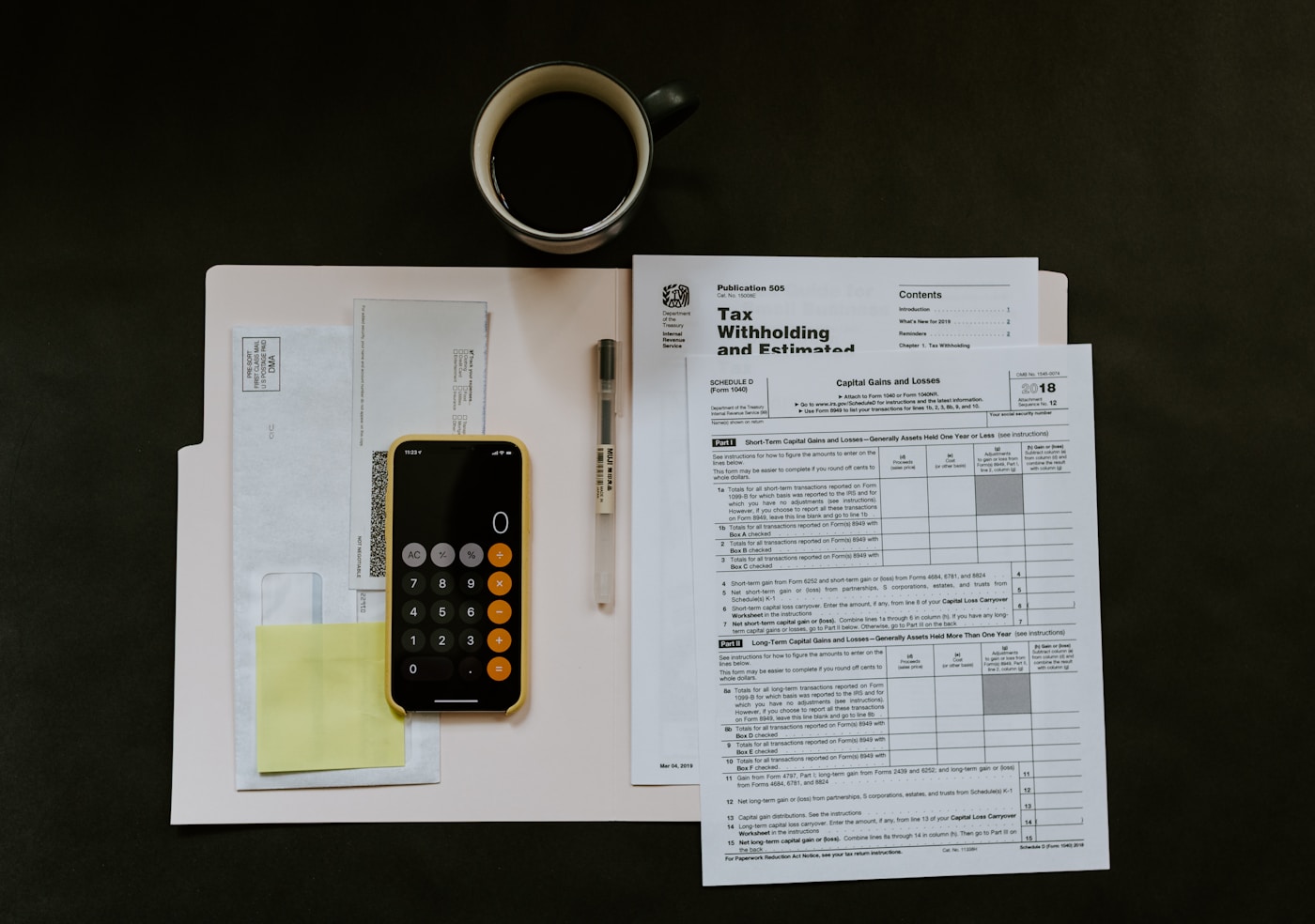
The all-cash HELOC approach is the most-discussed strategy in r/ExpatFIRE Mexico threads and the answer most commonly recommended by professional cross-border accountants like H&R Block's expat services and Greenback Expat Tax. It works for buyers whose US equity exceeds the Mexican purchase price.
A realistic example. You own a US home worth $650K with a $200K mortgage balance, so $450K of equity. You open a HELOC for $300K at 8.25 percent. You draw the full $300K, buy a $290K fideicomiso-titled house in Puerto Vallarta for cash (with $10K left for closing and fees), and rent your US home for enough to cover both the original mortgage and the HELOC debt service. Your monthly cash outflow is roughly $2,000 on the HELOC. The Mexican house generates $1,800/month on Airbnb net of management fees for eight months of the year and you live in it the other four. Net annual carrying cost: under $12K.
That kind of structure is how a lot of the 'I moved to Mexico with $2,000/month in expenses' stories actually work. It requires US equity, discipline, and a willingness to manage two properties across a border. For current US HELOC rates, Bankrate's HELOC tracker is the best daily-updated free resource.
Closing Costs and the Real Price of Entry
Mexican closing costs sit between Spanish (high) and American (low) levels. Budget 6–9 percent on top of the purchase price for a non-resident buyer, with the fideicomiso adding another 1–2 percent for coastal properties. Full breakdown, from the TaxesforExpats 2026 Mexico buying guide and the Breeze Real Estate financing guide:

Transaction taxes:
- Impuesto Sobre Adquisición de Inmuebles (ISAI) — the acquisition tax — runs 2–5 percent depending on state. Jalisco (PV, Lake Chapala, Guadalajara) is 2 percent. Quintana Roo (Cancún, Tulum, Playa) is 3 percent. Baja California Sur (Los Cabos) is 2 percent. Mexico City is 5 percent.
- IVA (VAT) — only applies to commercial properties or new-build developments sold by registered developers. Residential resales are exempt.
Professional and registration fees:
- Notary fee (notario público): 0.5–1.5 percent of purchase price. The notario público is a far more powerful legal figure in Mexico than a US notary — they verify title, handle taxes, and notarize the entire transaction.
- Attorney fee: optional but recommended, $1,500–$3,000 USD flat.
- Public registry recording fee: 0.5–1 percent.
- Title search and insurance: $1,000–$2,500 USD. Title insurance is not mandatory in Mexico but any cross-border lender will require it.
- Appraisal (avalúo): $500–$1,000 USD.
Fideicomiso-specific (coastal only):
- Fideicomiso setup: $500–$1,500 USD.
- SRE permit: $1,000–$2,000 USD.
- Annual trustee fee: $500–$800 USD (ongoing).
All-in example: On a $300,000 USD fideicomiso-titled house in Puerto Vallarta, you are looking at roughly $21,000–$27,000 in closing costs plus the annual trustee fee. Add another $500–$800 per year forever. Fold that into your per-year cost of ownership and you'll understand why most Mexican-property spreadsheets show the first two years as cost-heavy.
Taxes After You Own: Predial, ISR, and US Overlap
Ongoing Mexican taxes on foreign-owned property are blessedly simple compared to Spain or France. There are basically three:

Predial (property tax). Municipal property tax, paid annually. The rates are astonishingly low by US standards — typically 0.1–0.3 percent of assessed value, and the assessed value is often only 30–60 percent of market value. For a $300K Puerto Vallarta house, predial typically runs $200–$600 per year total. Many municipalities offer a 10–15 percent discount if you pay the full year in January. Jalisco's state property tax portal and Quintana Roo's equivalent handle payments online.
Impuesto Sobre la Renta (ISR) on rental income. If you rent the property out, you owe Mexican income tax on net rental income. The simplified flat rate for foreigners in most situations is 25 percent of gross rental income with no deductions, or you can elect to be taxed on net (after deductions) at a progressive rate up to 35 percent. The flat 25 percent is simpler and what most American AirBnB hosts use. Collection and remittance is done through your property manager, who is legally required to withhold. If you're renting yourself, you file quarterly with the Mexican tax authority SAT.
IVA on short-term rentals. Short-term rental income (under 30 days) is subject to 16 percent IVA, which platforms like Airbnb collect and remit automatically in Mexico as of 2020. Airbnb's Mexico tax policy page explains the collection mechanics.
US tax overlap. The US-Mexico tax treaty allows you to claim a foreign tax credit on your US Form 1040 for Mexican ISR paid on rental income. You still have to report the property income on US Schedule E. The capital gains calculation at sale time can be ugly — Mexico gives primary-residence exemptions to Mexican tax residents but taxes non-residents on a flat 25 percent of gross sale price or 35 percent of net gain (whichever is lower), and the US taxes you again separately. Talk to a cross-border CPA before selling. Firms like Greenback Tax and Bright!Tax specialize in this.
The Hidden Risks: Ejido Land, Title Fraud, and 'Friends of Friends' Schemes
Mexico has a property-fraud pattern that American buyers walk into every year, and almost all of it is avoidable with a competent notario and a real attorney.

Ejido land. Roughly half of Mexico's land is — or was — held communally under the ejido system, a revolutionary-era land redistribution mechanism. Ejido land technically cannot be sold to private owners, let alone foreigners. Many coastal developments were built on former ejido land that was 'regularized' through a process called dominio pleno, but not all the regularization was clean. If the property you're looking at has a chain of title that traces back to ejido, have your notario and attorney verify the regularization paperwork completely. Any 'discount' or 'insider' property in Mexico that doesn't have standard escritura title is almost always some flavor of ejido problem. MexLaw's title guide and the Mexico Life FAQ on restricted zones walk through the red flags.
Nominee schemes. Some sellers and agents will suggest having a 'Mexican friend' or a 'Mexican corporation you control' hold the title on your behalf, skipping the fideicomiso. This is illegal, the Mexican government has started prosecuting some cases, and the downstream risk — your 'friend' legally owns the property — is enormous. There are multiple reddit threads in r/AmerExit and r/expats where Americans tell horror stories about losing properties this way. Use the fideicomiso. It costs a few hundred dollars a year and it protects you.
Pre-construction sales with no escrow. Mexican developers routinely sell pre-construction units without escrowing buyer deposits. The protection most US buyers assume (a neutral escrow agent holding funds until closing) simply doesn't exist by default. If you're buying pre-construction, insist on an international escrow — Stewart Title and First American Title México both offer Mexican escrow services. If a developer refuses, walk away.
The 2026 Decision Matrix: Which Financing Path For Which Buyer
Here is the cheat sheet the veteran American-in-Mexico brokers and Mexico Relocation Guide effectively use when pre-qualifying clients.

You have significant US home equity and no urgent need to move. → Use a HELOC or cash-out refinance, buy in cash, skip Mexican financing entirely. Simplest, cheapest, fastest. Cash buyers in Mexico also get 2–5 percent price discounts from sellers who want to skip financing contingencies.
You have a US W-2 income, good credit, and want to preserve your US investment portfolio. → Use a cross-border USD mortgage from Global Mortgage, MoXi, Mexlend, or similar. Rates are 8.5–11.5 percent, but the operational simplicity (USD payments, English support, US-style underwriting) is worth the premium versus peso mortgages.
You are already a Mexican Residente Permanente with peso-denominated income (teaching English, remote work paid in pesos, retirement with a local hedge). → A peso mortgage from BBVA or Scotiabank México genuinely makes sense. Your debt and income are in the same currency.
You are an American retiree with $300K+ in cash, no urgent liquidity needs, and you want the simplest life possible. → Pay cash and skip all of this. The amortization of closing costs + the opportunity cost of the cash against the peace of mind of zero debt is a good trade for a lot of 60+ retirees.
You're buying in the coastal restricted zone (Puerto Vallarta, Cabo, Playa del Carmen, Tulum, Cancún, Rosarito, Ensenada). → You must use a fideicomiso regardless of the financing path. Budget an extra $1,500–$3,000 at closing plus ongoing fees.
You're buying in Mexico City, San Miguel de Allende, Guadalajara, Mérida, Oaxaca, Querétaro, or other inland markets. → No fideicomiso needed. You get direct escritura title in your own name.
For more on the full Mexico move, see our complete moving-to-Mexico guide covering visas, banking, and healthcare; our comparison of median home prices across 20 countries to see where Mexico ranks; and our breakdown of the home buying process for Americans in Mexico. Our Mexico property search has live listings from the major Mexican portals updated nightly, filtered by state, price tier, and bedroom count.
Ready to explore?
Browse Destinations