The Complete Guide to Moving to Canada as an American

Canada is the obvious choice. It's right there, it speaks English (mostly), it has universal healthcare, and the border is a drive away from wherever you currently live. About 400,000 Americans currently live in Canada, making it one of the largest US diaspora communities in the world. They're in Toronto tech offices, Vancouver film sets, Montreal startups, and Alberta oil fields. Some moved for love, some for work, some because they watched one too many election nights and thought, "That's it, I'm going to Canada" — and then actually did it. But here's the thing nobody tells you at the dinner party: moving to Canada is significantly harder than most Americans assume. This isn't Mexico or Ecuador, where you can show up with savings and a pension and figure things out over cerveza. Canada runs one of the most selective immigration systems on earth — a points-based system that evaluates your age, education, language skills, and work experience with cold mathematical precision. A 45-year-old with a bachelor's degree and no Canadian job offer may not qualify at all. The Express Entry system doesn't care about your feelings about the current US political climate. It cares about your Comprehensive Ranking System score. This guide breaks down exactly what it takes, what it costs, and whether Canada is actually the right move for you — or just a comforting fantasy.
Immigration: The Points System Reality Check
Canada's immigration system is built around Express Entry, managed by Immigration, Refugees and Citizenship Canada (IRCC). If you've heard that Canada "wants immigrants," that's true — Canada admits over 400,000 new permanent residents per year. But it wants specific immigrants. Young, highly educated, bilingual professionals with Canadian work experience score highest. Everyone else faces an uphill climb.
Express Entry (Federal Skilled Worker Program) You're scored on the Comprehensive Ranking System (CRS), which awards points for:
- Age: Maximum points at 20-29, declining sharply after 35, minimal points after 44
- Education: Bachelor's (120 pts), master's (135 pts), PhD (150 pts). Foreign credentials must be assessed by a designated organization — budget $200-350 CAD and 4-8 weeks
- Language: English and/or French via IELTS or CELPIP ($300-400 CAD). A CLB 9+ in English is practically required to be competitive
- Work experience: 1-5+ years of skilled work in NOC TEER 0, 1, 2, or 3 occupations
- Canadian connections: Job offer (+50-200 pts), Canadian education (+15-30 pts), sibling in Canada (+15 pts)
The maximum CRS score is 1,200. Recent draws have invited candidates scoring 480-530+, though this fluctuates by category. Without a provincial nomination (+600 points) or a valid Canadian job offer, you need a near-perfect profile to score above 480.
Let's be real about the math. A 38-year-old American with a bachelor's degree, 5 years of work experience, and strong English (CLB 10) scores roughly 430-450 points. That's below most cutoffs. A master's degree, French proficiency, or a job offer from a Canadian employer can push you over — but the base case for many Americans is uncomfortable: you may not qualify through Express Entry alone.
Provincial Nominee Programs (PNP) This is where it gets interesting. Each province runs its own immigration stream targeting specific skills or demographics. A provincial nomination adds 600 points to your CRS score — an automatic invitation.
- Ontario (OINP): Tech draws target software engineers and data scientists. Human Capital Priorities for Express Entry candidates with Ontario job offers.
- British Columbia PNP: Tech Pilot targets 29 in-demand occupations. Healthcare stream for nurses and physicians.
- Alberta Advantage Immigration Program: Lower CRS thresholds, targets trades and healthcare workers.
- Atlantic Immigration Program: New Brunswick, Nova Scotia, PEI, Newfoundland — employer-driven, lower requirements, smaller cities. An excellent backdoor if you're flexible on location.
- Saskatchewan (SINP): Broader In-Demand Occupation list than most provinces.
Start-Up Visa For entrepreneurs who secure a commitment from a designated Canadian VC fund (min $200,000 CAD), angel investor group ($75,000 CAD), or business incubator. Requires CLB 5+ in English/French and settlement funds. Processing: 12-24 months.
Intra-Company Transfer (ICT) If you work for a company with a Canadian office (or willing to open one), this LMIA-exempt work permit allows transfers for up to 3 years. Not permanent residency, but gets you Canadian work experience — the single most valuable asset for a future Express Entry application.
TN Visa (CUSMA/USMCA) Americans in 63 listed professions (engineers, accountants, scientists, IT professionals — full list here) can get a work permit at the border with a job offer letter. Valid 3 years, renewable indefinitely. No points required. The catch: it's temporary, and transitioning TN to PR requires careful "dual intent" navigation.
Spousal/Family Sponsorship Married to or common-law with a Canadian citizen or PR? They can sponsor you. Processing: approximately 12 months for inland applications. The simplest path if it applies.
Application portal: canada.ca/en/immigration-refugees-citizenship/services/immigrate-canada.html
Check real-time processing times at IRCC's tracker. The US Embassy Ottawa handles American Citizens Services for Canadians and cross-border matters. Community: r/ImmigrationCanada is one of Reddit's most active immigration forums — Express Entry draw results, PR timelines, and practical guides. International Living's Canada page covers quality of life comparisons.
Banking and Taxes: Easier Than Expected, More Expensive Than You'd Like
Banking in Canada as an American is relatively straightforward — certainly easier than in Latin America or Europe. Several Canadian banks operate in both countries, and the regulatory systems are familiar cousins.
Opening an account: You can open a basic account at most major banks with just your passport, even before PR status. The Big Five:
- RBC (Royal Bank of Canada): Largest bank. Newcomer package with no monthly fees for 12 months, a credit card with no Canadian credit history required, and dedicated newcomer advisors.
- TD (Toronto-Dominion): Has branches in the northeastern US (TD Bank America), enabling true cross-border banking. Solid mobile app.
- BMO (Bank of Montreal): Also operates in the US as BMO Harris. Cross-border services available.
- Scotiabank: Strong newcomer programs and international presence.
- CIBC: Newcomer banking bundle with fee waivers.
Monthly fees range $0-17 CAD depending on account type; newcomer packages waive fees for 12 months.
Credit history: Your US credit score does not transfer. You start from zero. American Express offers a Global Transfer program — apply for a Canadian Amex based on your US account history. RBC also considers US credit for initial applications. Do both immediately on arrival.
Moving money:
- Wise: Best for regular transfers. Fees are 0.4-0.6% using the mid-market rate. A $3,000 transfer costs about $15-20.
- Norbert's Gambit: A brokerage technique using dual-listed ETFs (like DLR/DLR.U) to convert large sums at near-zero cost. Takes 2-3 business days. Worth learning for amounts over $10,000.
- Bank wires: Expensive ($25-45 per transfer) with a 1.5-3% exchange rate markup. Last resort.
The tax situation — the big one: You'll file in both countries. Key points:
- The FEIE can exclude up to $126,500 of earned income from US tax, but Canada's rates are high enough that the Foreign Tax Credit (claiming Canadian taxes paid on your US return) usually works better
- Canadian marginal rates: 15-33% federal + 4-25.75% provincial = roughly 20-54% combined, depending on income and province
- RRSP (Canada's 401k equivalent) is recognized by the US-Canada tax treaty — contributions are deductible in Canada, growth is tax-deferred for US purposes
- TFSA (Tax-Free Savings Account) is NOT recognized by the IRS. The US taxes TFSA income and gains annually. Most cross-border advisors say Americans should avoid TFSAs entirely
- FBAR requirement: File if your Canadian accounts exceed $10,000 USD at any point during the year. Canadian banks report American account holders to the IRS under FATCA.
- Budget $1,000-3,000 CAD/year for a cross-border tax specialist. Don't try to DIY this.
For more on US tax obligations abroad, read our FEIE tax guide and Social Security abroad guide.
Healthcare: Universal Coverage, Real Wait Times
Canadian healthcare is the feature Americans romanticize most — and the one that generates the most complicated feelings once you live with it. The honest truth: it's excellent for emergencies and serious conditions, genuinely frustrating for routine and elective care, and varies wildly by province.
How it works: Each province runs its own plan — OHIP (Ontario), MSP (British Columbia), RAMQ (Quebec), AHCIP (Alberta). As a permanent resident, you're eligible for provincial coverage that pays for doctor visits, hospital stays, emergency care, surgeries, and diagnostic tests. Free at point of service — no copays, no deductibles, no surprise bills.
The waiting period: Most provinces impose a 3-month wait before coverage kicks in. BC eliminated this in 2020 (coverage starts immediately). Ontario and Alberta still enforce it. During the gap, buy temporary private insurance: $100-200 CAD/month.
What's NOT covered (this surprises many Americans):
- Prescription drugs (outside hospital)
- Dental care
- Vision care
- Physiotherapy
- Mental health counseling (beyond basic psychiatric referrals)
- Ambulance rides in some provinces ($45-850 CAD depending on province — yes, really)
A month of common medications costs $50-300 CAD without supplementary insurance. Dental cleaning: $200-400 CAD. Glasses: $200-600 CAD.
Supplementary insurance: Most employed Canadians get this through their employer. Self-employed or retired, you'll buy private plans at $150-400 CAD/month for a single person. Major insurers: Manulife, Sun Life, Green Shield, Blue Cross.
The wait time reality — the part nobody sugarcoats:
- Family doctor: Over 6.5 million Canadians don't have one. Wait lists for new patients run 1-3 years in many cities. Walk-in clinics fill the gap but lack continuity.
- Specialist referral: Median wait from GP referral to specialist: 12-15 weeks nationally. Orthopedics and dermatology: 6-12 months.
- Elective surgery: Median wait from specialist to treatment: 12-16 weeks. Knee replacements average 6-9 months total.
- Emergency care: Truly urgent cases are seen immediately. But your definition of urgent and triage's may differ. A broken wrist: 4-8 hours in the ER.
- Cancer treatment: World-class and timely. Urgent cases are fast-tracked effectively.
Compared to the US: You'll wait longer for non-urgent care. You'll never receive a surprise $50,000 hospital bill. For Americans paying out of pocket or on high-deductible plans, the trade is overwhelmingly worth it. For Americans with premium employer insurance, the downgrade in speed is real and annoying.
Private options: Unlike the US, Canada doesn't have a robust parallel private system. Some provinces allow private surgical clinics, and you can pay $500-900 CAD for a private MRI to skip the queue. But you generally can't pay more to see a specialist faster.
For broader healthcare planning, see our health insurance abroad guide. Numbeo's Canada healthcare index shows quality and wait time perceptions by city. r/ImmigrationCanada and r/canada have honest healthcare experience threads from new arrivals.

Where to Live: Six Cities, Six Different Canadas
Canada is the second-largest country on Earth, and living in Toronto is about as similar to living in Halifax as New York is to Boise. Here's the honest breakdown of where Americans actually end up.
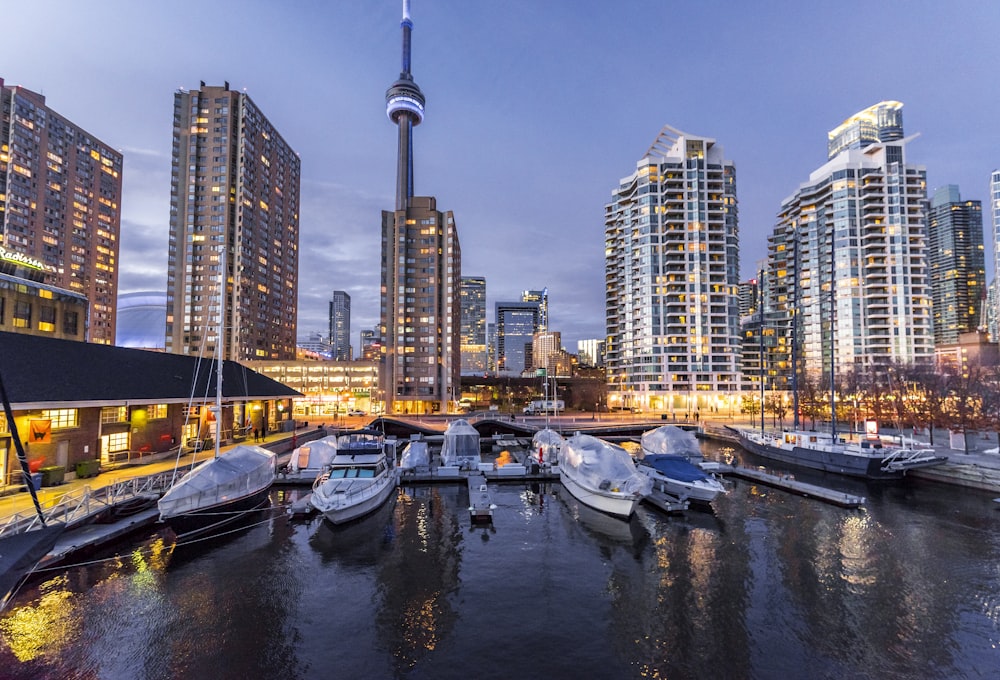
Toronto, Ontario Canada's biggest city (6.2M metro) and economic engine. Over 50% of residents were born outside Canada — one of the most multicultural cities on the planet.
- 1BR rent downtown: $2,200-2,800 CAD ($1,600-2,050 USD)
- 1BR rent midtown/suburbs: $1,600-2,200 CAD ($1,170-1,600 USD)
- Home prices: Average $1.05 million CAD
- Character: King West and the Entertainment District for young professionals. The Annex and Leslieville for families. Yorkville for luxury.
- Pros: World-class dining and arts. Massive job market. Incredible diversity. Direct flights everywhere. NBA, NHL, MLB, MLS.
- Cons: Housing costs are punishing. Winters are cold but survivable (avg January: -4C/25F). Commute times rival LA.
Vancouver, British Columbia Mountains meet ocean in Canada's Pacific jewel. Tech hub, film industry, and the country's mildest climate.
- 1BR rent downtown: $2,400-3,000 CAD ($1,750-2,200 USD)
- Home prices: Average $1.15 million CAD
- Character: Yaletown and Coal Harbour for waterfront high-rises. Kitsilano for beach vibes. East Van for arts/affordability.
- Pros: Mildest winters in Canada (avg January: 3C/37F). Mountains and ocean minutes apart. Outdoor lifestyle paradise.
- Cons: Most expensive city in Canada. 167 rainy days/year from November to March. The "gray ceiling" triggers real seasonal depression. Wages lag the cost of living.
Montreal, Quebec The most European city in North America. Bilingual, culturally electric, and genuinely affordable.
- 1BR rent downtown: $1,400-1,900 CAD ($1,025-1,390 USD)
- 1BR Plateau/Mile End: $1,200-1,700 CAD ($880-1,245 USD)
- Home prices: Average $530,000 CAD — roughly half of Toronto
- Pros: Affordable. World-class food, nightlife, and arts. Beautiful summers with festivals every weekend. Strong tech scene.
- Cons: You need French. Provincial law requires French in workplaces with 25+ employees. Winter is brutal (avg January: -10C/14F, wind chill to -25C regularly). Quebec has the highest taxes in North America. Immigration requires a separate CSQ process.
Calgary, Alberta Oil capital going tech. Conservative culture, low taxes, gateway to the Rockies (Banff is 90 minutes away).
- 1BR rent: $1,500-2,000 CAD ($1,100-1,460 USD)
- Home prices: Average $550,000 CAD
- Pros: No provincial sales tax. Lower income tax than other provinces. Affordable housing relative to the coasts. 333 days of sunshine per year. Strong economy.
- Cons: Winter is harsh (-15C/5F January average, wind chill to -35C). Very car-dependent. Economy still tied to energy cycles. Cultural scene lags bigger cities.
Ottawa, Ontario The capital. Government town with a bilingual population and surprisingly good quality of life.
- 1BR rent: $1,600-2,100 CAD ($1,170-1,535 USD)
- Pros: Government jobs = stability and benefits. More affordable than Toronto. Great for families.
- Cons: Can feel like a company town where the company is bureaucracy. Cold.
Halifax, Nova Scotia Atlantic Canada's biggest city. Ocean culture, craft beer, affordable real estate, and the Atlantic Immigration Program makes it an accessible entry point.
- 1BR rent: $1,400-1,800 CAD ($1,025-1,320 USD)
- Home prices: Average $450,000 CAD
- Pros: Affordable. Genuinely friendly people. Ocean lifestyle. Growing tech scene. Lower immigration competition.
- Cons: Smaller job market. Healthcare wait times among Canada's worst. Atlantic winter storms. Far from everything.
Safety: The Short Version
This will be brief because the answer is straightforward: Canada is very safe.
The national homicide rate is approximately 2.0 per 100,000 — roughly one-third the US rate of ~6. Gun violence is rare by American standards. Mass shootings are exceptionally uncommon. You will never see someone open-carrying a firearm in a grocery store.
By city:
- Toronto: ~2.5 per 100,000 homicide rate. For 6+ million people, that's remarkable. Gun violence has ticked up recently but remains a fraction of comparable US cities.
- Vancouver: Property crime (car break-ins, bike theft) is the main issue. The Downtown Eastside's opioid crisis is visible and shocking but doesn't spill into neighboring areas.
- Montreal: Safe overall. Some gang activity in the north end; expat neighborhoods are very secure.
- Calgary: Low crime. Downtown is safe even at night.
- Halifax/Ottawa: Very safe.
What to actually worry about:
- Winter driving: Black ice, whiteouts, and poor visibility kill more newcomers than crime ever will. Get winter tires ($600-1,200 CAD). Mandatory in BC and Quebec.
- Wildlife: Bears, moose, and coyotes in BC, Alberta, and rural areas. A moose collision can total your car and seriously injure you.
- Rental scams: Fake listings and deposit theft are epidemic in Toronto and Vancouver's overheated markets. Always view in person before wiring money.
- Opioid crisis: Vancouver's Downtown Eastside, parts of Edmonton, and other western cities have visible homelessness and addiction. Similar to what you'd see in San Francisco or Portland — startling if you're from the suburbs, familiar if you're from a major US city.
Safety is not a reason to hesitate about Canada.
Cost of Living: The Real Monthly Budget
Canada is not cheap. If you're moving to Toronto or Vancouver expecting dramatic savings versus the US, recalibrate now. The cost advantage over the US exists mainly in healthcare (no premiums or copays for covered services) and in specific cities (Montreal, Calgary, Halifax). All figures in USD at approximately 1 CAD = 0.73 USD.
Budget Living — Montreal or Calgary ($2,000-2,600/month)
- Rent (1BR, good neighborhood): $900-1,200
- Utilities (heat, electricity, internet): $100-150
- Groceries (cooking at home): $300-400
- Eating out (casual, 2x/week): $100-150
- Transportation (monthly transit pass): $65-90
- Provincial healthcare: $0 for covered services
- Supplementary insurance (drugs, dental): $100-150
- Phone: $30-50
- Entertainment: $100-150
- Total: $1,695-2,340
This is a real, comfortable life in a great city. Not luxurious — you're cooking most meals and taking transit — but genuinely good.
Comfortable Living — Toronto ($3,500-4,800/month)
- Rent (1BR downtown): $1,600-2,050
- Utilities + fast internet: $120-170
- Groceries: $350-500
- Eating out (3-4x/week): $250-400
- Transportation (transit + Uber): $120-180
- Healthcare: $0 base
- Supplementary insurance: $120-180
- Phone: $40-60
- Gym: $40-70
- Entertainment/social: $200-350
- Total: $2,840-3,960
Luxury Living — Vancouver ($6,000-9,000/month)
- Rent (2BR, Coal Harbour or Yaletown, view): $2,600-3,700
- Utilities + premium internet: $150-220
- Groceries (organic, specialty): $500-700
- Dining (high-end): $500-800
- Transportation (car, insurance, gas, parking): $500-800
- Ski pass (Whistler season): $150/month amortized
- Entertainment/travel: $400-700
- Total: $5,000-7,120
The tax comparison: A worker earning $100,000 CAD (~$73,000 USD) in Ontario pays approximately $27,000 in combined income tax plus $3,800 in CPP/EI. That's ~31% effective before the 13% HST sales tax. The US equivalent on the same income: roughly 22-26% in most states.
What you get for those taxes: Universal healthcare, 12-18 months parental leave, $10/day childcare (Quebec now, rolling out nationally), strong public schools, safe cities, and a safety net that actually catches people. Whether the math works depends on your income, family situation, and values.
For context on how Canadian housing compares globally, see our median home prices analysis. Numbeo's Canada cost of living tracks city-level costs. r/PersonalFinanceCanada and r/canadahousing have budget and real estate threads. For property listings, Realtor.ca is the national MLS portal, and Redfin tracks cross-border comparisons. TripAdvisor Canada travel forum covers practical newcomer questions.
Buying Property: Foreign Buyer Rules and Market Reality
Can Americans buy? Yes — with one major caveat.
The foreign buyer ban: Since January 2023, Canada has banned foreign buyers from purchasing residential property, extended through December 2026. But the exceptions swallow the rule:
- Permanent residents are fully exempt — buy freely once you have PR
- Work permit holders who've filed Canadian tax returns can buy
- Rural and recreational properties are exempt
- Only residential property is restricted — commercial and mixed-use are fine
If you're immigrating through Express Entry or PNP, you'll have PR before you're ready to buy. The ban targets speculators, not immigrants.
The buying process:
- Mortgage pre-approval: Banks lend to PRs with Canadian income/credit history. New PRs may need 35% down with foreign income proof. Rates (early 2026): 4.5-5.5% for 5-year fixed. Canadian mortgages typically renew every 5 years, unlike US 30-year fixed — this means rate exposure.
- Real estate agent: Buyer's agents are traditionally seller-paid. Standard commission: 5% split between agents (changing gradually).
- Offer: Can be conditional (financing, inspection) or firm. Toronto and Vancouver sellers prefer unconditional — risky for buyers.
- Inspection: $400-600 CAD. Not mandatory. Do it anyway.
- Close: Handled by lawyers, not title companies. Legal fees: $1,500-2,500 CAD.
Closing costs:
- Land transfer tax: Ontario: 0.5-2.5% (Toronto adds a municipal tax of 0.5-2.5% on top). BC: 1-5% plus a 20% foreign buyer tax for non-PR/citizens. Alberta: flat fee, much lower.
- Legal fees: $1,500-2,500 CAD
- Title insurance: $250-400 CAD
- Total: Approximately 3-5% in most provinces, 7-8% in Toronto/Vancouver
Property taxes: Annual rates of 0.25-1.5% of assessed value depending on municipality. Vancouver: ~0.25% (yes, that low — offset by million-dollar assessments). Toronto: ~0.6%. Calgary: ~0.65%.
Market reality (2026): National average home price sits at approximately $680,000 CAD ($500K USD). Toronto and Vancouver exceed $1 million CAD. Calgary, Montreal, Ottawa, and Halifax offer meaningfully more value. The market cooled from 2022's pandemic peaks after aggressive rate hikes, but remains expensive by any global standard.
For more on international property purchases, see our property buying rules guide.
Practical Stuff: Phones, Driving, Winter, Pets, and the Rest
Cell phones: Brace yourself. Canadian mobile plans are among the most expensive in the developed world. A plan with unlimited talk/text and 20-30GB data costs $45-65 CAD/month with budget carriers (Koodo, Fido, Public Mobile). The Big Three (Rogers, Bell, Telus) charge $65-90 CAD. Coming from a $25-35/month US plan for similar service? Welcome to the Canadian telecom oligopoly.
Internet: $60-100 CAD/month for 100-300 Mbps. Fiber is widespread in cities. Speeds are good. Pricing is not.
Driving: Your US license is valid for 60-90 days depending on province. After that, exchange it for a Canadian license — most provinces do a straight swap without a road test. Bring your valid US license, proof of driving experience, and $75-150 CAD. Car insurance is mandatory and pricey: $1,500-3,000 CAD/year with a clean record, much more in Toronto, Vancouver, and for new drivers.
Winter — the part Americans underestimate: Don't let anyone tell you "you'll get used to it" before you've survived your first February. Toronto: 4-5 months of cold (Nov-Mar). Montreal/Ottawa: 5-6 months. Calgary: sudden chinook warm spells punctuating -30C wind chills. Vancouver: rain, not snow (but 5 months of gray). Winnipeg and Edmonton: genuinely arctic for half the year.
Practically, winter means:
- A proper wardrobe: $500-1,500 for a quality parka, insulated boots, layers, gloves
- Winter tires: $600-1,200 (mandatory in BC and Quebec)
- Higher heating: $100-300/month depending on home size
- A mental health strategy: vitamin D supplements, a SAD lamp ($40-80), and commitments that get you out of the house when every instinct says don't
Language: English everywhere except Quebec, where French is official and legally required in the workplace. New Brunswick is officially bilingual. You can function in English in Montreal daily life, but professional and social integration requires French. Adult classes through school boards: $200-500 CAD per session.
Shipping your stuff: International movers charge $3,000-8,000 USD for a full household. Personal effects owned 6+ months are duty-free. File a BSF186 form at the border.
Pets: Dogs need a rabies vaccination certificate dated 30+ days before entry. Cats face minimal requirements. No quarantine. CFIA inspects at the border — usually quick.
Tipping: Identical to the US. 15-20% at restaurants, $1-2/drink, 15-20% for services. Canadians tip exactly like Americans.
SIN (Social Insurance Number): Canada's SSN equivalent. Apply at a Service Canada office immediately on arrival — free, and you need it to work, open accounts, and file taxes.
Healthcare card: Apply for provincial coverage the day you arrive. Even with a 3-month wait, the clock starts at application, not when you get around to it.
The Honest Assessment: Is Canada Actually Right for You?
Canada is the most comfortable international move an American can make. The culture shock is minimal, the institutions work, the safety is excellent, and you can drive home for Thanksgiving. But "comfortable" doesn't mean "easy" or "cheap" or "better in every way."
Canada is for you if:
- You value universal healthcare and a strong social safety net — and accept higher taxes as the price
- You're in a profession that scores well on Express Entry (tech, healthcare, skilled trades, finance) or you qualify through PNP, TN, or family sponsorship
- You want genuine multiculturalism where immigration is celebrated, not weaponized
- You can tolerate or even enjoy winter. This isn't optional.
- You're comfortable with housing costs comparable to or exceeding major US cities
- Proximity to the US matters — Toronto is 1 hour from New York by air, Vancouver is 2.5 from San Francisco
Canada is NOT for you if:
- You're chasing a dramatic cost-of-living reduction. This isn't Southeast Asia or Latin America. Read our cheapest cities abroad guide if that's the priority.
- You can't qualify through the immigration system. Unlike countries where a $1,000/month pension buys residency, Canada demands genuine qualifications. The points system is merciless.
- Fast access to elective healthcare is non-negotiable. Wait times will frustrate anyone used to "pay and get seen today" medicine.
- Tax optimization is the primary goal. Canada's burden exceeds the US at most income levels. Look at Panama or Ecuador instead.
After one year: The people who stay report lower anxiety, better work-life balance, and a sense of civic sanity. The people who leave cite weather, cost, and the career ceiling — Canadian salaries in many fields run 15-30% below US equivalents.
Canada isn't paradise. It's a lateral move to a country that does some things meaningfully better (healthcare access, public safety, social safety net) and some things meaningfully worse (housing, compensation, weather, consumer costs). Whether the trade works depends entirely on what you're optimizing for.
For the full picture on all 20 countries, see our comprehensive guide. And before any move, read our pre-departure checklist — there are things you need to handle stateside that are much harder from abroad.
Ready to explore?
Browse Destinations