The Complete Guide to Moving to France as an American

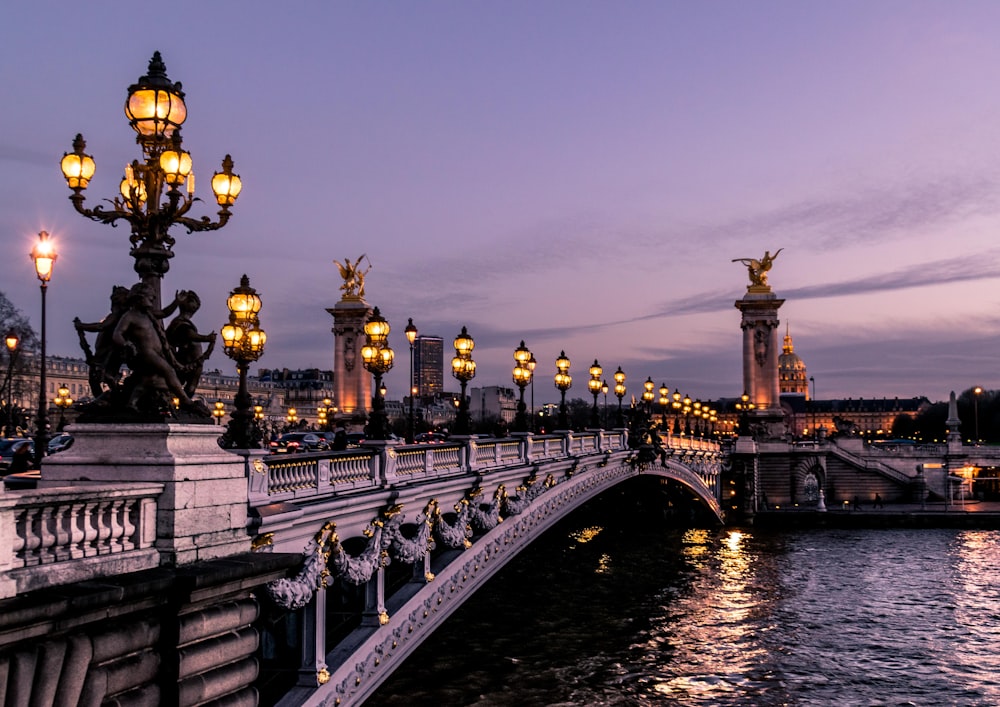
France seduces Americans with its cliches -- the baguettes, the wine, the light over the Seine at dusk -- and then punishes them with its bureaucracy. Moving to France is not a vacation extended indefinitely. It is a commitment to a country that does things its own way, at its own pace, with its own paperwork, and genuinely does not care whether you find that charming or maddening. But here is what the frustrated expat forums rarely mention: France is one of the best deals in Western Europe for Americans who actually do their homework. The median home price is $276,000 -- 34% below the US median of $420,000. The healthcare system is ranked among the best in the world and costs a fraction of what Americans pay. Outside Paris, your dollar stretches further than in Germany, the Netherlands, or the UK. And as of 2024, France offers a digital nomad visa that did not exist three years ago. This guide covers the real mechanics of moving to France: which visas you can actually get, how to open a bank account when you have no French credit history, where to live if you are not a millionaire, and what it actually costs month to month. No romance, no sugarcoating -- just the information you need to make this work. The [US Embassy in Paris](https://fr.usembassy.gov/) is the official resource for American citizens in France. The [r/france](https://www.reddit.com/r/france/) and [r/expats](https://www.reddit.com/r/expats/) subreddits have active threads on moving from the US.
Visa Options for Americans
Americans can stay in France for 90 days without a visa under the Schengen agreement. After that, you need a long-stay visa (visa de long sejour), which you apply for at the French consulate in the US before you move. Full details on the process are at France-Visas. Once in France, the service-public.fr portal is the official government guide to residence permits and administrative procedures. You cannot switch from tourist to resident status while inside France. This is non-negotiable.
The Visitor Visa (Visa de Long Sejour - Visiteur) is the most common path for Americans who are not employed by a French company. It requires proof of sufficient financial resources -- typically around $1,800-$2,200/month in passive income or savings -- and comprehensive health insurance. You cannot work on this visa. It is initially granted for one year and renewable. Cost: approximately $120 for the visa application plus a $275 OFII tax upon arrival. Processing time: 2-4 months.
The Talent Passport (Passeport Talent) is France's umbrella work visa for skilled professionals, entrepreneurs, investors, and researchers. There are multiple subcategories:
- Salaried worker: Requires a French employer paying at least 1.5x the French minimum wage (roughly $3,200/month gross in 2026)
- Company creator: Requires a viable business plan and at least $35,000 in investment capital
- Investor: Requires a direct investment of at least $330,000 in a French company. For a broader overview of investment-based residency, see our golden visa programs guide
- Researcher/academic: Requires a hosting agreement from a French research institution
The Talent Passport is valid for up to 4 years and allows your spouse to work. It is the best long-term visa if you qualify.
The Digital Nomad Visa, introduced in 2024, targets remote workers employed by non-French companies. Requirements include proof of employment or freelance contracts, minimum income of approximately $2,800/month, and health insurance. Valid for one year, renewable once. This is relatively new and processing times vary -- budget 3-5 months.
The Student Visa (VLS-TS Etudiant) allows enrollment in French universities. Tuition at public universities is remarkably cheap: $180-$400/year for EU rates (non-EU students pay $3,000-$4,000/year at most schools, still a fraction of US costs). Students can work up to 964 hours per year (roughly 20 hours/week).
The Retirement Visa does not exist as a separate category in France. Retirees use the Visitor Visa and must show sufficient pension income or savings. Social Security payments count.
Path to permanent residency: After 5 years of continuous legal residence, you can apply for a carte de resident (10-year renewable residence permit). French citizenship requires 5 years of residence plus demonstrated French language proficiency (typically B1 level on the CEFR scale) and knowledge of French culture and values. Dual citizenship is permitted -- France does not require you to renounce US citizenship. For community discussion and real-world advice, r/IWantOut is a useful starting point alongside InterNations France.
Banking and Money
Opening a French bank account is your first real encounter with French bureaucracy, and it sets the tone for everything that follows. You will need: your passport, proof of address in France (justificatif de domicile -- a utility bill or rental agreement), your visa or residence permit, and sometimes proof of income.
The major French banks are BNP Paribas, Societe Generale, Credit Agricole, La Banque Postale, and CIC/Credit Mutuel. Of these, BNP Paribas and Societe Generale have the most experience with foreign clients and English-speaking staff in major cities. La Banque Postale (the postal bank) is often recommended for newcomers because it is legally required to open an account for anyone with a French address -- the droit au compte law means they cannot refuse you.
Expect the process to take 1-3 weeks from application to receiving your card and online banking access. French debit cards are Carte Bancaire (CB) and work on the Visa or Mastercard network. Monthly account fees range from $5-$15/month for a standard checking account -- free checking is not the norm in France.
Online banks have simplified things considerably. Boursorama, Fortuneo, and Hello Bank (BNP Paribas's digital arm) offer free or low-cost accounts that can be opened more quickly, but most require an existing French bank account or French tax ID to start. N26 and Revolut work as bridge accounts while you get established.
Moving money from the US: Wire transfers through your US bank work but are expensive ($25-$50 per transfer plus unfavorable exchange rates). Wise (formerly TransferWise) is the expat standard -- fees are typically 0.5-1% with mid-market exchange rates. For large transfers (property purchases), your notary will handle the transfer directly, but Wise can save you thousands on the exchange rate compared to bank wires.
Cash culture: France is increasingly cashless, especially in cities. Most shops, restaurants, and even market vendors accept cards. However, smaller businesses in rural areas and some bakeries still prefer cash. ATM withdrawals from French banks are free at their own machines; using another bank's ATM may incur a $1-$2 fee.
Tax implications: As a US citizen, you must file US taxes regardless of where you live. France and the US have a tax treaty that prevents double taxation, but navigating it requires a tax professional who understands both systems. The FEIE (Foreign Earned Income Exclusion) allows you to exclude up to $126,500 (2026) of foreign-earned income from US taxes. For tips on managing exchange rate fluctuations, see our foreign currency risk guide. French income tax rates are progressive, ranging from 0% to 45%, with most middle-income earners paying 30%. France also has a wealth tax on real estate (IFI) that kicks in when your French property holdings exceed $1.4 million. The Direction générale des Finances publiques (DGFiP) is the French tax authority where you'll file annual returns. The IRS FEIE publication explains how to exclude foreign income from US taxes.
Healthcare: Better and Cheaper Than You Think
The French healthcare system, Protection Universelle Maladie (PUMA), consistently ranks among the best in the world. For a cross-country comparison of expat healthcare options, see our health insurance abroad guide. After three months of legal residence, you are eligible to enroll in the Assurance Maladie (ameli.fr) system, which is where you'll register and manage your coverage. Once enrolled, the government covers 70% of most medical costs, and most residents top up with a private supplemental plan called a mutuelle that covers the remaining 30%.
A mutuelle costs $40-$150/month depending on age and coverage level. For a healthy person under 50, expect to pay $50-$80/month for solid coverage. Major providers include Alan (popular with expats for its English-language app), Harmonie Mutuelle, and MGEN.
What things actually cost (with PUMA + mutuelle, your out-of-pocket):
- GP visit: $0-$5 (the standard GP fee is $28, PUMA covers 70%, mutuelle covers the rest)
- Specialist visit: $0-$15
- Emergency room visit: $0 for serious emergencies
- MRI: $0-$50 (wait time: 1-4 weeks; private clinics are faster at $200-$400 out of pocket)
- Prescription medications: $0-$5 for most common drugs (France negotiates drug prices nationally)
- Childbirth (hospital): $0 -- fully covered including prenatal care
- Dental cleaning: $15-$30 after reimbursement
- Dental crown: $100-$300 after reimbursement (dental is the weakest link in French coverage)
Before PUMA enrollment (your first 3 months): You need private international health insurance. Cigna Global, Allianz Care, and April International are commonly used. Budget $200-$500/month depending on age and coverage.
Prescription transfers: French doctors will not honor US prescriptions. You will need to see a French doctor (medecin traitant -- your designated GP, required for the referral system) to get new prescriptions. Most common medications are available, often at much lower prices. Bring a letter from your US doctor detailing your medications and dosages.
Mental health: France covers psychologist visits (8 sessions/year reimbursed since 2022, with a doctor's referral). Psychiatrists are covered as specialists. English-speaking therapists exist in major cities but are harder to find outside Paris, Lyon, and Bordeaux.
Quality: French hospitals range from excellent to outstanding. The system emphasizes medecine de ville (outpatient care) -- you will see your GP frequently and be referred to specialists as needed. Wait times for non-urgent specialist appointments are 2-6 weeks, shorter than the UK's NHS but longer than paying cash in the US. For genuine emergencies, care is immediate and excellent.
Where to Live: 6 Places That Are Not (Just) Paris
Paris gets all the attention, but France has some of the most diverse regional offerings in Europe. Here is where Americans actually settle, and what it costs.
Paris -- The obvious choice, and the most expensive. A 1-bedroom apartment in a central arrondissement (1st-6th, parts of the 11th) rents for $1,400-$2,200/month. A 2-bedroom in the outer arrondissements (13th, 15th, 19th, 20th) runs $1,600-$2,500. To buy, expect $12,000-$16,000 per square meter in central Paris -- a 50sqm (540sqft) apartment costs $600,000-$800,000. The 10th and 11th arrondissements offer the best value for younger expats: vibrant nightlife, good restaurants, and Metro access everywhere. The 5th and 6th are classic Left Bank -- beautiful, expensive, and quieter. Paris is walkable, has world-class public transit, and does not require a car. The downside: apartments are small, old buildings mean quirky plumbing, and competition for rentals is fierce -- expect to provide extensive documentation (pay stubs, tax returns, guarantor letters).
Lyon -- France's gastronomic capital and a genuine alternative to Paris. A 1-bedroom in Presqu'ile or Croix-Rousse rents for $700-$1,100/month. To buy: $4,500-$6,500 per square meter. Lyon has two rivers, a UNESCO-listed old town, TGV trains to Paris in 2 hours, and a food scene that arguably surpasses the capital. The expat community is smaller than Paris but growing, especially in tech. Winters are colder and foggier than the south, but summers are warm and dry.
Toulouse -- The "Pink City" in southwestern France, home to Airbus and a massive aerospace industry. Rents: $600-$900/month for a 1-bedroom in the center. Purchase prices: $3,500-$5,000 per square meter. Toulouse has over 300 days of sunshine per year, easy access to the Pyrenees for skiing, proximity to Spain, and a large student population (over 100,000) that keeps the city young and affordable. English is more widely spoken here than you might expect, thanks to the international aerospace workforce.
Montpellier -- Mediterranean climate without the Riviera prices. A 1-bedroom in the Ecusson (historic center) or Antigone district rents for $600-$950/month. Purchase prices: $3,000-$4,500 per square meter. Montpellier is 10 minutes from the beach by tram, has a young population (median age under 30), excellent public transit, and a growing tech scene. It is one of the fastest-growing cities in France and still undervalued compared to Nice or Marseille.
Bordeaux -- Wine, architecture, and the Atlantic coast. Rents have risen significantly since the TGV connection to Paris opened (now 2 hours). A 1-bedroom: $700-$1,100/month. Purchase prices: $4,000-$6,000 per square meter. Bordeaux's Chartrons district is the expat favorite -- former wine merchant warehouses converted into apartments, walkable to the river. The city is beautiful, the food is excellent, and the beach is 45 minutes away. Downsides: it rains more than the south, and the summer heat can be intense.
Rural Provence/Occitanie -- For the Americans who want the stone farmhouse dream. A renovated 3-bedroom mas (farmhouse) costs $250,000-$450,000 in villages like Uzes, Lourmarin, or the Luberon area. Rents for a similar property: $800-$1,400/month. The lifestyle is extraordinary -- markets, vineyards, medieval villages -- but the trade-offs are real: limited public transit (you need a car), seasonal tourism crowds, fewer English speakers, and limited job opportunities. This is a retiree or remote-worker play, not a career move.
Safety
France is a safe country by any reasonable measure. The homicide rate is 1.2 per 100,000 -- roughly one-fifth of the US rate (6.3 per 100,000). Violent crime against foreigners is rare. You are statistically safer walking through central Paris at 2 AM than through most mid-sized American cities.
That said, France has specific safety considerations Americans should understand:
Petty theft and pickpocketing are the primary concerns, especially in Paris, Marseille, and Nice. Tourist-heavy areas -- the Metro, Eiffel Tower surroundings, Sacre-Coeur, train stations -- have organized pickpocket rings. The standard precautions apply: front pockets, zipped bags, awareness in crowds. This is an annoyance, not a danger.
Strikes and protests are a regular feature of French life. The French protest with a frequency and enthusiasm that startles Americans. Transport strikes can shut down trains and Metro lines with limited notice. Manifestations (demonstrations) occasionally turn confrontational, especially in Paris around Place de la Republique and Bastille. The practical advice: check for planned strikes before traveling, avoid protest routes, and do not stand near the front of any demonstration.
Terrorism has been a concern since the 2015 attacks. France maintains a high security posture with visible military patrols (Operation Sentinelle) at major landmarks, train stations, and tourist sites. The Vigipirate alert system is permanently at elevated levels. The practical risk to any individual is extremely low, but the security presence is noticeable.
Scams targeting foreigners: The petition scam (someone asks you to sign a petition, then demands money), the friendship bracelet scam (Sacre-Coeur), and rental scams (fake apartments listed on Le Bon Coin or even legitimate platforms). For rentals, never pay a deposit before viewing the property in person.
Regional differences: Marseille has a higher crime rate than other French cities, concentrated in the northern suburbs (quartiers nord). Central Marseille and the Vieux-Port area are fine. Rural France is extremely safe -- property crime is low, violent crime is near zero.
Cost of Living: Three Budgets
All figures are monthly, for a single person, outside Paris. Paris costs should be increased by 40-60%. Numbeo's France cost-of-living data gives city-by-city breakdowns including Paris, Lyon, and Bordeaux.
Budget Tier ($1,800-$2,200/month) This is tight but doable in a smaller city like Toulouse, Montpellier, or a rural area:
- Rent (studio/1-bed, non-central): $550-$700
- Groceries: $300-$350 (markets and Lidl/Aldi, cooking at home)
- Health insurance (mutuelle): $50-$70
- Transportation (transit pass): $40-$60
- Utilities (electric, water, internet): $120-$150
- Phone plan: $10-$20 (Free Mobile offers unlimited data for $22/month)
- Dining out: $100-$150 (lunch menus at $14-$18 are the best deal in France)
- Miscellaneous: $150-$200 Total: $1,320-$1,700 + rent
This works if you cook most meals, take advantage of France's excellent public markets, and limit dining out. The food quality at this budget is dramatically better than what $300/month buys in the US, because French grocery stores and markets simply have better produce, cheese, bread, and wine at lower prices.
Comfortable Tier ($2,800-$3,500/month) A normal, pleasant life in Lyon, Bordeaux, or Toulouse:
- Rent (1-2 bed, decent neighborhood): $800-$1,200
- Groceries: $400-$500 (mix of markets, Monoprix, and the occasional fromagerie splurge)
- Health insurance (mutuelle): $60-$90
- Transportation: $50-$80 (transit + occasional BlaBlaCar or SNCF train)
- Utilities: $140-$170
- Phone plan: $15-$25
- Dining out: $250-$400 (2-3 restaurant meals per week, wine included)
- Entertainment/culture: $100-$150 (museums are often free or $10-$15, cinema is $10-$13)
- Travel within France: $150-$250 (TGV weekend trips, Ouigo budget trains from $12)
- Miscellaneous: $200-$300 Total: $2,165-$2,985 + rent
This is the sweet spot. You eat well, travel regularly, and enjoy the French lifestyle without counting every euro.
Luxury Tier ($5,000-$8,000/month) The good life in any French city:
- Rent (2-3 bed, premium neighborhood): $1,500-$2,500
- Groceries + gourmet food: $600-$900
- Health insurance (premium mutuelle): $100-$150
- Car (lease, insurance, fuel, parking): $500-$700
- Utilities: $180-$220
- Dining out: $600-$1,000 (Michelin-starred meals, wine bars, brasseries)
- Domestic travel: $300-$500 (first-class TGV, weekend in Chamonix)
- Household help: $400-$600 (cleaner, occasional babysitter)
- Miscellaneous: $300-$500 Total: $4,480-$7,070 + rent
At this level, you are living better than most French professionals. France's luxury is accessible at prices that would buy you a comfortable-but-not-luxurious life in a major US city.

Buying Property in France
Can Americans buy property in France? Yes. There are no restrictions on foreign property ownership. As we detail in our property buying rules guide, France is fully open to foreign buyers. You do not need residency or a visa to purchase. Many Americans buy property before moving, using it as vacation homes or rental investments.
The buying process is highly regulated and notary-driven. Here is how it works:
-
Find a property: Most listings are on SeLoger.com, Le Bon Coin (Immobilier), Bien'ici, and PAP.fr (private sales, no agent). Agents (agents immobiliers) charge 3-8% commission, typically paid by the seller (but priced into the sale).
-
Make an offer (offre d'achat): Written, specifying price and conditions. Verbal offers mean nothing.
-
Sign the compromis de vente: The preliminary contract, signed with a notaire (notary). You pay a deposit of 5-10% of the purchase price, held in escrow. After signing, you have a 10-day cooling-off period during which you can withdraw for any reason with full deposit return.
-
Conditions suspensives: Standard clauses that protect you. The most important: mortgage clause (if your loan is denied, the sale is voided). Also: lead/asbestos inspections, termite reports, energy performance certificates. These diagnostics (diagnostics immobiliers) are the seller's responsibility.
-
Final signing (acte de vente): At the notary's office, typically 2-3 months after the compromis. The notary handles the title search, tax calculations, and registration.
Closing costs in France are among the highest in Europe:
- Notary fees (frais de notaire): 7-8% for existing properties, 2-3% for new builds. This is the big one. On a $300,000 property, notary fees alone are $21,000-$24,000.
- Agent commission: 3-8% if applicable (usually seller-paid)
- Registration taxes: Included in notary fees
- Mortgage costs: If financing, add $1,000-$2,000 for bank and guarantee fees
Total buyer costs: approximately 8-10% of purchase price for existing properties.
Property taxes: France has two property taxes:
- Taxe fonciere: Annual tax paid by the owner, based on cadastral value. Ranges from $800-$3,000/year for a typical apartment, $1,500-$5,000 for a house. Varies enormously by commune.
- Taxe d'habitation: Abolished for primary residences as of 2023. Still applies to secondary residences.
Mortgages for Americans: French banks will lend to non-residents, but terms are stricter. Expect 60-70% LTV (meaning 30-40% down payment), fixed rates of 3.5-4.5% (2026 rates), and a maximum debt-to-income ratio of 35%. French mortgages are recourse loans -- the bank can pursue your other assets if you default. Popular banks for foreign buyers: Credit Agricole, BNP Paribas, and CIC.
Capital gains tax: If you sell a property that is not your primary residence, France charges capital gains tax of 19% + 17.2% social charges = 36.2%. This reduces with holding period -- after 22 years, the capital gains portion is exempt; after 30 years, fully exempt. Primary residence sales are completely exempt from capital gains tax.
The Practical Stuff
Language: French is essential for daily life outside Paris and major tourist areas. Even in Paris, speaking some French transforms your experience from tolerated tourist to respected resident. The French appreciate effort -- even bad French is better than assuming everyone speaks English. Budget 6-12 months of study before moving. Alliance Francaise courses are available worldwide and in most French cities. Duolingo is a starting point, not an endpoint. B1 level (intermediate) is the minimum for comfortable daily life; B2 opens up real friendships and bureaucratic independence.
Phones: The French mobile market is a pleasant shock after American carrier prices. Free Mobile offers unlimited calls/texts and 350GB of data for $22/month -- no contract. Bouygues, SFR, and Orange have competitive plans at $10-$30/month. You will need a French bank account for most plans (they debit monthly). Prepaid SIMs from Orange or SFR are available at tabacs (tobacco shops) if you need a number immediately.
Internet: Fiber is widely available in French cities. Orange Livebox and Free (Freebox) offer fiber packages at $30-$45/month with speeds of 1-8 Gbps. Rural areas may still be on DSL (15-30 Mbps), though France's Plan France Tres Haut Debit has massively expanded fiber coverage.
Driving: Your US license is valid for the first year of residence. After that, you must exchange it for a French license. The US-France driving license exchange agreement covers most but not all US states -- check whether your state has a reciprocal agreement. If it does, the exchange is paperwork only. If not, you must pass the French driving test, which is notoriously difficult (40-50% pass rate). Getting a French license from scratch costs $1,500-$2,500 in driving school fees. Driving in France is generally straightforward -- highways are excellent (and tolled), city driving is aggressive but not chaotic, and parking is a nightmare in old city centers.
Shipping belongings: A 20-foot container from the US East Coast to Le Havre costs $3,000-$5,000 (2026 rates), plus $1,000-$2,000 for customs clearance and delivery. Door-to-door transit time: 4-6 weeks. Used personal effects are exempt from customs duties if you have owned them for more than 6 months and are establishing primary residence in France. New items and electronics may be assessed 20% VAT. Companies: AGS Movers, International Van Lines, 1st Move International.
Pets: France allows cats and dogs with an ISO microchip, current rabies vaccination (at least 21 days before travel), and an EU health certificate issued by a USDA-accredited vet within 10 days of departure. No quarantine. France is extremely pet-friendly -- dogs are welcome in most restaurants, cafes, and many shops. Breed restrictions: certain breeds classified as Category 1 (attack dogs) require special permits.
Bureaucracy (the real challenge): French administration is legendarily difficult. The prefecture is where you renew your residence permit, and appointments can take weeks to months to secure. Many processes that are online in the US require in-person visits with paper documents in France. The website service-public.fr is your official guide. Key documents to keep multiple copies of: passport, visa, proof of address, birth certificate (with apostille and sworn translation). The French acronym you will learn to dread: CPAM (health insurance office), URSSAF (social charges), impots.gouv.fr (taxes).
The cultural adjustment: France runs on a different social operating system. Lunch is sacred (12-2 PM, many shops close). Sundays are quiet -- most stores are closed. Greetings matter -- always say bonjour when entering a shop, au revoir when leaving. The pace of service is slower because meals are social events, not fuel stops. August is when France goes on vacation -- entire businesses shut down. This is not inefficiency; it is a deliberate cultural choice that prioritizes quality of life over productivity. Whether you find this liberating or infuriating will determine whether France is right for you.
For expat community connections, InterNations France and ExpatFocus France organize regular events in Paris, Lyon, Bordeaux, and other cities. International Living France is another useful resource.
Ready to explore?
Browse Destinations