The Complete Guide to Moving to Germany as an American
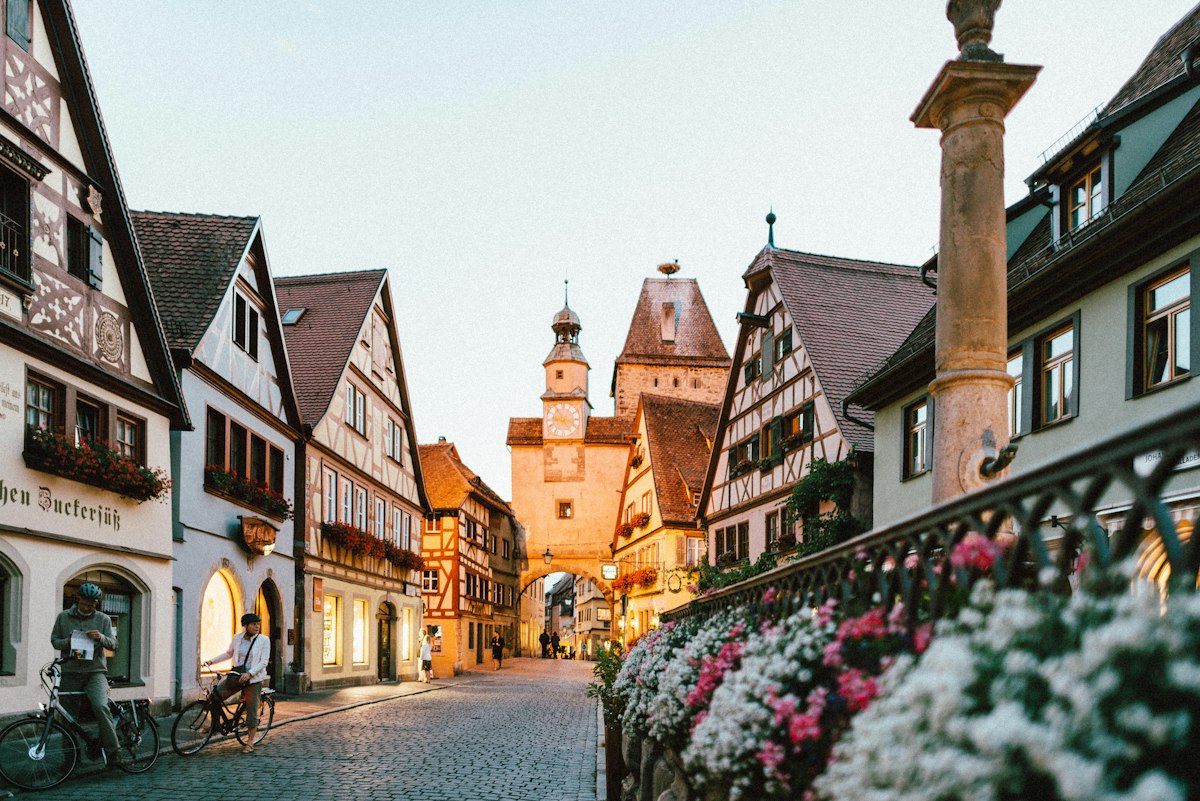
Germany is not the country Americans imagine when they dream about moving to Europe. There are no sun-drenched terraces with €3 wine. Nobody is eating three-hour lunches in a piazza. The weather is gray for seven months of the year, and the bureaucracy makes the IRS look like a lemonade stand. But here is what Germany does offer: the strongest economy in Europe, a healthcare system that actually works, free university education (even for foreigners), tenant protections that would make a New York renter weep with envy, and a social safety net so comprehensive that the concept of medical bankruptcy literally does not translate into German. There's a reason 1.2 million Americans live in Germany — more than in any other European country. Germany runs on systems. Everything has a process, a form, a queue, and a rule. If you're the kind of person who finds comfort in structure and predictability, you'll thrive here. If you're the kind who likes to wing it, improvise, and figure things out as you go — Germany will grind you down. This guide is about understanding those systems before you arrive, because in Germany, preparation isn't optional. It's the national sport. The [US Embassy in Berlin](https://de.usembassy.gov/) is your official resource for citizen services. The [r/germany](https://www.reddit.com/r/germany/) subreddit is an excellent peer resource — it's large, well-moderated, and full of Americans who've already navigated the system.
Visa Options for Americans
Germany has one of the more pragmatic immigration systems in Europe. They need skilled workers (demographics are not kind to Germany — the workforce is shrinking), and the visa system increasingly reflects that reality. Americans get 90 days visa-free in the Schengen Area, and you can technically apply for a residence permit after arriving in Germany — one of the few European countries that allows this.
Job Seeker Visa (Aufenthaltserlaubnis zur Arbeitsplatzsuche) A 6-month visa that lets you come to Germany and look for a job. Requirements: a recognized university degree (German or foreign — use the Anabin database to check if yours is recognized), proof of $1,100/month in savings or a blocked account, and health insurance. You cannot work on this visa — only search. Once you find a job, you convert it to a work permit without leaving the country.
EU Blue Card
Germany's fast track for skilled workers. Requirements: a recognized university degree and a job offer with a minimum salary of €45,300/year ($49,400) — or €41,000 ($44,700) for shortage occupations (IT, engineering, medicine, natural sciences). Grants 4 years of residency, and you can apply for permanent residency after just 21 months if you speak German at B1 level (or 27 months with A1). This is one of the fastest paths to permanent residency in Europe. Apply at the local Ausländerbehörde (foreigners' authority) after arriving.
Freelancer Visa (Freiberufler Aufenthaltserlaubnis) This is the visa Americans love, and for good reason. Germany specifically allows freelancers to obtain residence permits if their work serves the "economic interest or regional need" of Germany. In practice, this covers a wide range: software developers, designers, writers, translators, consultants, musicians, artists, and yoga teachers (really). You need a business plan, client letters or contracts (ideally from German clients), proof of financial sustainability, and a portfolio. No minimum income threshold is specified in the law, but showing €2,000-3,000/month in projected income helps. Processing varies wildly by city — Berlin is the most generous, Munich is stricter.
Self-Employment Visa (Selbständige) For non-freelance businesses (e.g., opening a restaurant, starting a company). Requirements include a viable business plan, evidence of $22,000+ in startup capital, and demonstration of local economic benefit. More complex than the freelancer visa.
Student Visa Tuition at German public universities is free (yes, even for international students — you pay only a semester fee of €150-350 that includes a public transit pass). You need university admission, a blocked account with €11,904/year ($12,980), and health insurance. Allows 120 full working days or 240 half days per year. After graduation, you get an 18-month job-seeking extension.
Family Reunification Spouses of German citizens or residents can obtain a residence permit. Basic German (A1 level) is required before arrival for most cases.
Permanent Residency (Niederlassungserlaubnis) After 5 years of legal residence (21-27 months with EU Blue Card), sufficient German language skills (B1), stable income, and adequate pension contributions. Germany's permanent residence permit is genuinely secure.
All immigration information is available at the Federal Office for Migration and Refugees (BAMF). The Make it in Germany portal is the federal government's official guide specifically designed for skilled workers and immigrants. For a comparison with other countries' visa options, see our top 20 countries guide.
Banking and Money
German banking is stuck somewhere between 1995 and the future. The country that invented the printing press still hasn't fully embraced digital payments. Cash is king — or rather, Bargeld ist König — and you'll need to adjust.
The Anmeldung comes first. Before you can open a German bank account, you need to complete your Anmeldung (address registration — more on this later). Without it, you cannot get a bank account, a phone contract, or basically anything. It's a piece of paper, but it's the piece of paper that makes you exist in Germany.
Opening a bank account:
- N26 — the easiest option for newcomers. Open entirely online (or via app) with just a passport and Anmeldung. Free basic account, no monthly fees, instant IBAN. Many Americans open this before arriving.
- DKB (Deutsche Kreditbank) — excellent free checking account with free worldwide ATM withdrawals. German-language only. Harder to open initially but worth it long-term.
- ING — Dutch bank with strong German presence. Free account with conditions (€700/month minimum deposit). Good app, some English support.
- Sparkasse — Germany's savings bank network. Branch in every neighborhood. Conservative, reliable, German-only interface. Opening an account requires an in-person visit. Monthly fees of €3-10. The advantage: Sparkasse ATMs are everywhere, and some landlords and institutions specifically want a Sparkasse account.
- Deutsche Bank — Germany's largest. English-speaking staff at major branches. Monthly fees €6-12. International wire capability.
The Schufa problem: Germany has a private credit scoring system called Schufa that affects everything — apartment applications, phone contracts, and even internet service. As a new arrival, you have no Schufa score, which landlords and providers treat as suspicious. Open a German bank account immediately, get a phone contract (not prepaid), and pay all bills on time. Your Schufa builds over time. Some Americans use Bonify (free) or Schufa BonitätsAuskunft ($30) to check their score.
Cash culture: Germany uses cash for roughly 35-40% of transactions — far higher than the US, UK, or Scandinavia. Many bakeries, small restaurants, and market stalls are cash-only (Nur Barzahlung). Always carry €50-100 in cash. EC-Karte (German debit card) is accepted more widely than credit cards — some places accept EC but not Visa or Mastercard.
Moving money:
- Wise — the standard for USD-to-EUR transfers. 0.4-0.6% fees, mid-market rate. Set up recurring transfers.
- Revolut — good for daily spending, free ATM withdrawals up to a limit.
Tax implications: Germany taxes residents on worldwide income at progressive rates from 14% to 45% (plus solidarity surcharge of 5.5% of your tax). The FEIE applies to your US obligations. Germany's tax system is complex — church tax (8-9% of income tax) applies if you're registered with a church (opt out during Anmeldung if you're not). Get a Steuerberater (tax advisor, $500-2,000/year) — German taxes are not something you wing. The Bundeszentralamt für Steuern (BZSt) is Germany's federal tax authority.
For managing exchange rate exposure over time, see our foreign currency risk guide.
Healthcare
German healthcare is comprehensive, efficient, and mandatory. There is no opting out. If you live in Germany, you have health insurance. Period. The system is structured around two tracks.
Public Health Insurance (Gesetzliche Krankenversicherung / GKV) The default for employed people earning under €69,300/year (2025 threshold). Your employer deducts roughly 14.6% of gross salary (split 50/50 between you and your employer — you pay ~7.3%), plus a supplemental rate of 0.5-1.7% depending on the insurer. Total employee cost: roughly 8-9% of gross salary, capped at around €420/month for the employee portion.
What you get:
- GP visits: free (no copay since 2013)
- Specialist visits: free with referral
- Hospital stays: €10/day copay, maximum 28 days/year
- Prescriptions: €5-10 copay per medication
- Dental: basic coverage included, major work at 50-65% coverage (increases to 75% after 10 years of continuous membership with annual checkups)
- Mental health: fully covered, including psychotherapy — Germany takes mental health seriously
- Maternity: fully covered, including 6 weeks paid leave before birth and 8 weeks after
- Sick leave: employer pays 100% for 6 weeks, then insurance pays 70% for up to 78 weeks. Let that sink in. Seventy-eight weeks.
Major public insurers: TK (Techniker Krankenkasse) — most popular, good English support, excellent app; AOK — largest by membership, strong regional networks; Barmer — good nationwide coverage.
Private Health Insurance (Private Krankenversicherung / PKV) Available to employees earning above €69,300/year, self-employed, freelancers, and civil servants. Premiums are based on age and health at entry, not income. A healthy 30-year-old might pay €250-350/month. A 50-year-old: €500-800/month. The catch: once you go private, returning to public is very difficult (essentially requires employment below the threshold before age 55). Private gets you:
- Faster specialist appointments
- Single/double hospital rooms
- Full dental coverage
- Alternative medicine coverage
- Chief physician treatment (Chefarztbehandlung)
The honest assessment: German healthcare is excellent but not glamorous. Wait times for specialists can be 2-6 weeks in the public system (private patients get seen in days — this is the system's dirty secret). Emergency care is outstanding. Bureaucracy is manageable — your insurance card (Gesundheitskarte) works at any doctor's office, no pre-authorization needed for most things.
Warning for freelancers: If you're on a freelancer visa, you must arrange your own health insurance before applying. Public insurance is available to freelancers, but you'll pay the full 14.6% yourself (no employer to split with), based on assumed minimum income of roughly €1,178/month. Minimum public insurance for the self-employed: roughly €200-220/month. Many young freelancers opt for private initially because it's cheaper — but this decision has lifetime implications that a Steuerberater should walk you through.
For a global comparison of expat health insurance options, see our health insurance abroad guide.
Where to Live
Germany's rental market is unlike anything Americans have experienced. Tenants have extraordinary protections (you essentially can't be evicted from a permanent contract unless you stop paying rent or commit a crime), but getting a lease in the first place — especially in Berlin or Munich — feels like competing for a job. Landlords receive 50-200 applications for a single apartment in popular cities. Your application packet should include: Schufa report, proof of income (3 months of pay stubs), Anmeldung, and a personal cover letter. Yes, you write a cover letter for an apartment.
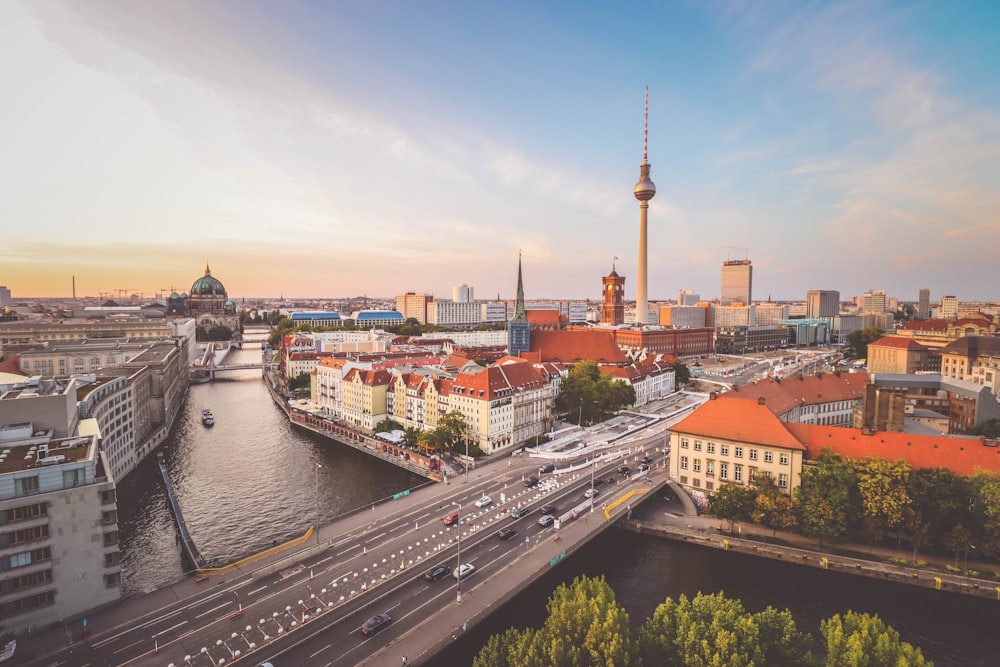
Berlin — The Creative Capital Monthly rent, 1-bedroom: $700-1,200 (Mitte, Prenzlauer Berg, Friedrichshain), $500-800 (Neukölln, Wedding, Lichtenberg). Berlin is Germany's cheapest major city (though no longer cheap by historical standards — rents have doubled since 2015). The startup and creative scene is massive, English is widely spoken, and the nightlife is legendary. Berlin feels less "German" than other German cities — it's international, messy, and resistant to authority. The economy is weaker than Munich or Frankfurt, but the quality of life-to-cost ratio is unbeatable. Downsides: gray winters, apartment hunting is brutal, and the city's infrastructure is aging.
Munich (München) — The Expensive One Monthly rent, 1-bedroom: $1,100-1,800 (center), $800-1,200 (outer areas like Sendling, Laim, Moosach). Munich is Germany's wealthiest city, with the strongest job market (BMW, Siemens, Allianz, SAP nearby). The Alps are visible from the city on clear days, beer gardens are a way of life, and everything works with Swiss-like precision. The trade-off: it's Germany's most expensive city, and the housing market is ferociously competitive. Locals and long-term residents who locked in affordable rents years ago live well; newcomers paying market rates feel the squeeze.
Hamburg — The Port City Monthly rent, 1-bedroom: $700-1,200 (Schanze, Ottensen, St. Georg), $500-800 (Barmbek, Wandsbek, Bergedorf). Hamburg has the highest per-capita income in Germany, a thriving media and logistics industry, and a maritime character that sets it apart. The Speicherstadt (warehouse district) is stunning, the fish market is legendary, and the Reeperbahn is... an experience. More rain than Berlin, but more prosperity too. Strong English proficiency.
Frankfurt — Finance Central Monthly rent, 1-bedroom: $800-1,400 (center), $600-900 (Bornheim, Sachsenhausen, Nordend). Germany's financial capital, home to the ECB and Deutsche Börse. Small for a financial hub (750,000 people), but cosmopolitan — 30% of residents are foreign nationals. The job market for finance and tech is strong. The city itself is functional rather than beautiful (heavily rebuilt after WWII), but the quality of life is high. Close to wine country (Rheingau) and good hiking.
Leipzig — The Value Play Monthly rent, 1-bedroom: $400-700. Leipzig has been called "the new Berlin" for a decade, and the comparison holds: creative scene, cheap rent, emerging startup ecosystem, and a young population drawn by the university and cultural offerings. Bach composed here, the Berlin Wall fell here (the Monday demonstrations started in Leipzig). It's small (600,000 people) and less international than Berlin, but if your budget matters and you speak some German, Leipzig offers extraordinary value.
Cologne (Köln) — The Friendly One Monthly rent, 1-bedroom: $650-1,000. Cologne is Germany's most laid-back major city. The people are friendlier (by German standards), the carnival culture is exuberant, and the Kölsch beer must be experienced. The media industry is strong, English is common, and the city straddles the Rhine beautifully. Close to the Netherlands and Belgium for weekend trips.
As our cheapest cities abroad guide notes, German cities outside Munich offer remarkable value for a Western European economy.
Safety
Germany is very safe by international standards, and dramatically safer than the United States.
Germany's homicide rate is 0.8 per 100,000 — about 8 times lower than the US. Violent crime is rare and concentrated in specific circumstances (domestic disputes, gang-related activity in a few neighborhoods of major cities). Random violence against strangers is extremely uncommon.
What to watch for:
- Bicycle theft is the most common property crime. Germany is a cycling country, and bikes get stolen constantly. Invest in a €40-80 lock (Kryptonite or Abus) and register your bike. Insurance is available for €5-10/month.
- Apartment break-ins occur, particularly on ground floors during vacation periods. Standard renter's insurance (Hausratversicherung, €5-15/month) covers theft.
- Pickpocketing at train stations, Christmas markets, and tourist areas (especially Alexanderplatz in Berlin, Hauptbahnhof areas in major cities). Less prevalent than Southern Europe but still present.
- Drunk-related incidents — Germany has a liberal alcohol culture. Public drinking is legal. Weekend nights near Reeperbahn (Hamburg), Kottbusser Tor (Berlin), and the Altstadt (Düsseldorf) can get rowdy. Common sense applies.
- Far-right activity has increased in some eastern German cities (Dresden, parts of Saxony). Visible minorities may experience hostile stares or verbal harassment in these areas, though physical attacks are rare. Most of urban Germany is cosmopolitan and welcoming.
What you don't need to worry about:
- Walking alone at night — safe in virtually all urban neighborhoods
- Gun violence — Germany has strict gun control; mass shootings are extraordinarily rare
- Natural disasters — Germany has minimal earthquake, hurricane, or serious flood risk (though river flooding occurred in 2021 in the Ahr Valley, it's geographically limited)
- Public transit safety — clean, well-lit, monitored. Safe at all hours in most cities.
Honest assessment: Germany is one of the safest countries in the world for daily life. The biggest risk for Americans is the adjustment to a culture where personal responsibility for behavior (rather than rules and enforcement) is the primary social mechanism.
Cost of Living
Germany is mid-range for Western Europe — more expensive than Spain or Portugal, cheaper than Switzerland or Scandinavia. Numbeo's Germany cost-of-living data breaks down expenses city by city., and roughly comparable to the Netherlands or Austria. The variation between cities is significant, with Munich at the top and Leipzig or Dresden at the bottom.
Budget Tier — $1,600-2,200/month A careful but comfortable life in a mid-tier city (Leipzig, Dresden, Cologne, Düsseldorf) or in the outer neighborhoods of Berlin.
- Rent (1BR, reasonable neighborhood): $450-700
- Utilities (Nebenkosten — heating, water, trash, building maintenance): $100-180
- Internet (fiber or cable, 100-250 Mbps): $30-40
- Groceries (Aldi, Lidl, Rewe, Edeka): $200-280
- Eating out (döner $5-7, lunch menu $10-14, 2-3x/week): $80-130
- Transportation (monthly transit pass): $50-90 (the €49 Deutschlandticket covers ALL local/regional transit nationwide)
- Phone (Aldi Talk, Lidl Connect, congstar): $10-20
- Health insurance (public, employee share): $200-350
- Entertainment/misc: $80-120
- Total: $1,200-1,910
Comfortable Tier — $2,800-3,800/month Berlin or Hamburg proper, Munich suburbs. A nice apartment, eating out regularly, cultural activities, weekend trips.
- Rent (1BR, desirable area): $800-1,300
- Utilities: $130-200
- Internet: $30-40
- Groceries + eating out: $400-550
- Transportation: $49-90
- Phone: $15-25
- Health insurance: $250-420
- Gym: $25-50
- Entertainment/travel (cheap Flixbus and Deutsche Bahn): $150-300
- Total: $1,849-2,975
Luxury Tier — $5,000-7,000+/month Prime Munich or central Berlin, high-end dining, frequent travel, premium everything.
- Rent (2BR, premium location): $1,800-3,000
- Utilities + internet: $180-250
- Food: $600-900
- Transportation (transit + occasional car sharing): $100-200
- Health insurance (private comprehensive): $350-600
- Travel/entertainment: $400-800
- Total: $3,430-5,750
Germany-specific cost notes:
- The €49 Deutschlandticket is a game-changer. For €49/month, you can ride every bus, tram, metro, and regional train in the entire country. Berlin to Hamburg by regional train? Covered. Munich S-Bahn to the Alps? Covered. It doesn't include ICE (high-speed) trains, but it's the best public transit deal in Europe.
- Warm vs. cold rent: German rental listings show "Kaltmiete" (cold rent, just the apartment) and "Warmmiete" (warm rent, including Nebenkosten/utilities). Always check which one you're looking at. Nebenkosten add €100-250/month.
- GEZ broadcasting fee: Every household pays €18.36/month for public broadcasting, whether you watch it or not. It's mandatory and non-negotiable.
- Pfand (deposit) system: Bottles have deposits (€0.08-0.25). Return them at supermarket machines. Germans take this seriously.
- Eating out is moderately expensive by European standards, but Turkish/Middle Eastern food (döner, falafel, pide) is excellent and cheap ($5-8). German beer at a Kneipe: $3-5.

Buying Property in Germany
Americans can buy property in Germany without restrictions. No residency, no visa, no special permit required. Germany has one of Europe's lowest homeownership rates (~50% vs. 65% in the US) — renting is the cultural norm, not a sign of failure. The rental market is heavily regulated and tenant-friendly, which is part of why buying is less common.
Market overview: German property prices surged from 2010-2022, then corrected 10-15% in 2022-2024 as interest rates rose. Prices have stabilized but vary enormously by city.
- Munich: €7,000-12,000/sqm ($7,600-13,100). Germany's most expensive market by far.
- Frankfurt: €4,500-7,500/sqm ($4,900-8,200).
- Hamburg: €4,000-7,000/sqm ($4,400-7,600).
- Berlin: €3,500-6,000/sqm ($3,800-6,500). Still cheap relative to other European capitals.
- Cologne/Düsseldorf: €3,000-5,500/sqm ($3,300-6,000).
- Leipzig/Dresden: €2,000-3,500/sqm ($2,200-3,800). Genuine value.
The buying process:
- Find a property — ImmobilienScout24.de is the dominant portal. Immowelt.de and Kleinanzeigen.de are alternatives.
- Secure financing (if needed) — talk to banks before making offers. German mortgage approval takes 4-8 weeks.
- Make an offer — there's no formal process. Verbal or email offers, negotiated directly with the seller's agent or the seller.
- The notary (Notar) drafts a purchase contract. Both buyer and seller review it (you have 2 weeks by law before signing). The notary is neutral — they represent neither party.
- Sign the contract at the notary's office.
- Pay the purchase price into an escrow account.
- The notary handles title transfer (Grundbuch registration).
Closing costs: 7-12% of purchase price (high by European standards)
- Real estate transfer tax (Grunderwerbsteuer): 3.5-6.5% depending on the federal state (Berlin: 6%, Bavaria: 3.5%, NRW: 6.5%)
- Notary fees: 1.5-2%
- Land registry (Grundbuch): 0.5%
- Agent commission: 3-6% + VAT, typically split between buyer and seller since 2020 reform (previously buyer paid all). In Berlin and Brandenburg, it's now 3.57% each side.
Ongoing costs:
- Property tax (Grundsteuer): Being reformed as of 2025. Currently €500-2,000/year for a typical apartment, depending on municipality.
- Hausgeld (condo fees): €200-400/month for apartment buildings, covering maintenance, heating, reserves.
- Home insurance: €100-300/year (building insurance + Hausratversicherung for contents).
Mortgage for Americans: German banks lend to non-residents at 70-80% LTV. Interest rates as of 2025-2026: 3.5-4.5% for 10-year fixed (Germans favor very long fixed-rate periods). You'll need 20-30% down, proof of income, and a Schufa report (or foreign credit history). German mortgage terms are typically 10-15-20 year fixed rates — none of the 30-year US-style mortgages. The remaining balance is refinanced at the prevailing rate when the fixed period expires.
For the global property buying landscape, see our property buying rules guide and median home prices comparison.
Practical Stuff: Phones, Internet, Driving, and the Anmeldung
The Anmeldung — Do This First Within 14 days of moving into your apartment, you must register your address at the local Bürgeramt (citizen's office). This is the single most important bureaucratic step in Germany. Without your Anmeldung confirmation (Meldebescheinigung), you cannot: open a bank account, get a phone contract, register for health insurance, get a tax ID, apply for a residence permit, or sign up for internet. Bring your passport, a completed Anmeldeformular (registration form), and a Wohnungsgeberbestätigung (landlord confirmation — your landlord must sign this). Book the appointment online immediately — in Berlin, wait times can be 4-8 weeks. In smaller cities, walk-ins are possible.
The Ausländerbehörde (Foreigners Office) If you're staying beyond 90 days, you'll visit the Ausländerbehörde to apply for your residence permit. In Berlin, this is notoriously overwhelmed — appointments are scarce, wait times are months, and the process tests your resolve. In Munich, Frankfurt, and smaller cities, it's more manageable. Bring everything: passport, Anmeldung, health insurance proof, employment contract or freelancer documents, financial statements, biometric photos. Missing one document means coming back.
Phone: Germany's mobile market is competitive. Aldi Talk (O2 network, €8-15/month for 7-20GB) is the budget champion. Congstar (Telekom network): €10-25/month. Fraenk (Telekom): €10/month for 12GB. For contract plans: Telekom has the best coverage (especially rural), Vodafone is second, O2 is cheapest but weakest outside cities. Prepaid SIMs require passport + Anmeldung for registration (German anti-terrorism law).
Internet: Germany's broadband infrastructure is... not great by European standards. Fiber-to-the-home (FTTH) coverage is only ~30% (compared to Spain's 83%). Many apartments have cable (100-500 Mbps via Vodafone) or VDSL (50-250 Mbps via Telekom). Plans cost €30-50/month. Installation appointments take 2-6 weeks. In new buildings and some cities, fiber delivers 1 Gbps for €40-50/month. Always check coverage at your specific address before signing a lease.
Driving: Your US license is valid for 6 months after establishing residency. Conversion to a German license depends on your US state — some have reciprocal agreements (no test needed). Without reciprocity, you take the German driving test: theory (available in English, €22.49 fee) and practical (in German, €100-150 fee). Driving schools charge €2,000-3,500 for the full course, which is mandatory without reciprocity. German Autobahn has no speed limit on many sections — but city driving is strict. Speed cameras are everywhere, and fines are steep.
Language: More Germans speak English than in Southern Europe, especially under 40 and in major cities. You can survive in Berlin or Munich with English. But you can't truly live here without German. Government offices, landlords, doctors in smaller cities, and the vast majority of daily interactions outside expat bubbles require German. The FSI rates German as a Category II language (30 weeks/750 hours for proficiency) — easier than Japanese but harder than Spanish. Start learning before you arrive. Volkshochschule (community college) courses cost €200-400 per level and are excellent value. Integration courses (for visa holders) are €2.29/hour (subsidized) or free for some visa categories.
Shipping: Most Americans ship 3-5 boxes of personal items via sea freight ($1,500-3,000, 4-6 weeks). Furniture is usually not worth shipping — IKEA is cheaper in Germany than the US, and Kleinanzeigen.de (Germany's Craigslist) is full of quality used furniture. Germans moving out often sell entire kitchen setups (Küche) to incoming tenants — this is standard practice. Note: many German apartments come without a kitchen (no cabinets, no counters, no appliances). You buy or inherit the previous tenant's kitchen. Budget €2,000-5,000 for a basic new kitchen if needed.
Pets: Germany requires a microchip and rabies vaccination (at least 21 days before travel). EU health certificate from USDA-accredited vet within 10 days of travel. No quarantine. Germany is extremely dog-friendly — dogs are taxed (Hundesteuer, €60-180/year depending on city and breed), but they're welcome in most restaurants, shops, and public transit.
Weather: Cold and gray from November through March. Berlin averages 1°C (34°F) in January. Munich gets colder with more snow (Alpine influence). Summer is pleasant — 20-30°C (68-86°F) — but AC is rare in homes (most Germans consider it unnecessary, which global warming is starting to challenge). Hamburg is rainy year-round. Southern Bavaria gets the most sun.
Tipping: Round up to the nearest euro or add 5-10% at restaurants. You tell the server the total amount you want to pay when they come to collect — don't leave cash on the table. "Stimmt so" means "keep the change."
Sundays: Almost everything is closed on Sundays. Supermarkets, most shops, hardware stores — closed. This is legally enforced (Ladenschlussgesetz). Gas stations and train station shops are the exceptions. Plan your grocery shopping accordingly. For Americans used to 24/7 convenience, this is one of the biggest cultural adjustments.
For our complete pre-move checklist, see the before moving abroad guide.
For expat community connections, InterNations Germany hosts regular events in Berlin, Munich, Hamburg, and Frankfurt. ExpatFocus Germany and International Living Germany are additional resources.
Ready to explore?
Browse Destinations