The Complete Guide to Moving to Ireland as an American
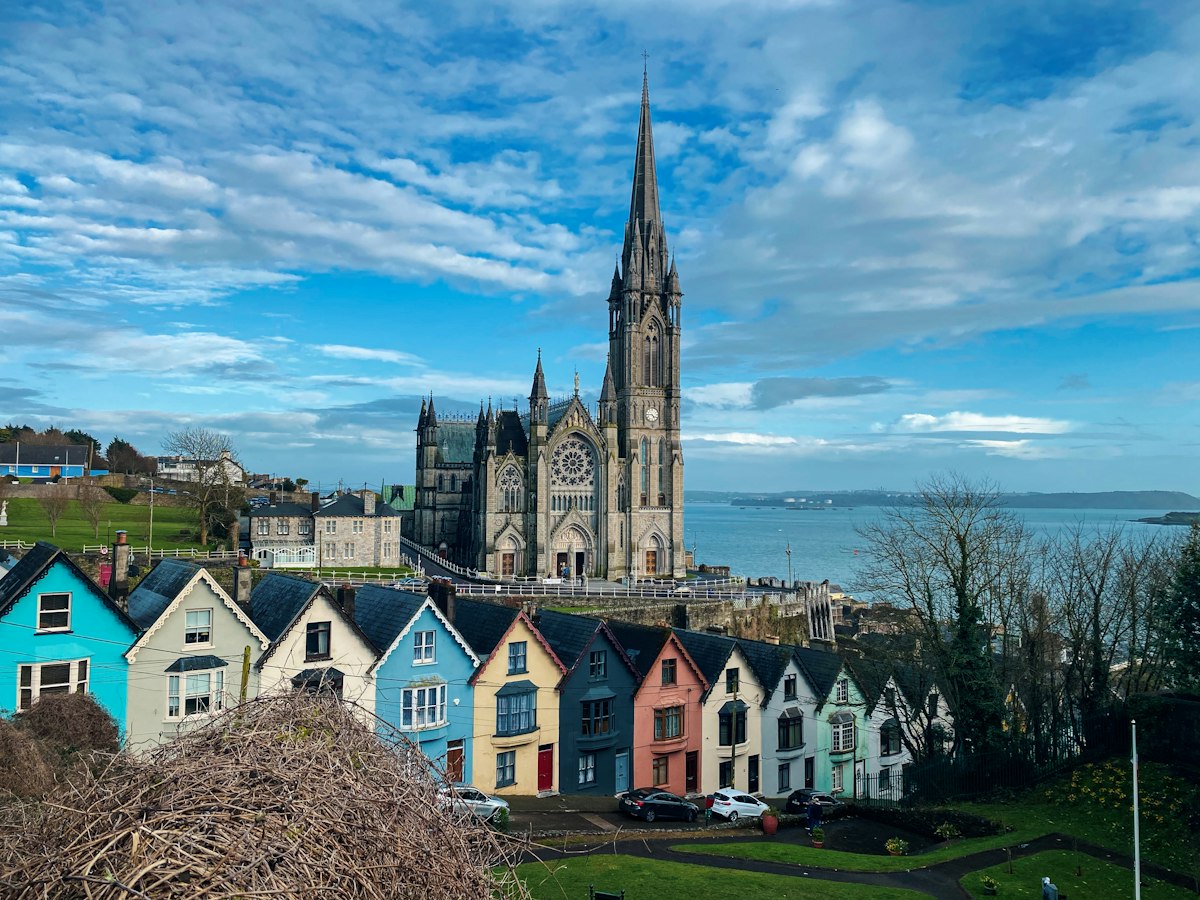
Ireland has a gravitational pull on Americans that goes beyond ancestry, though ancestry helps — an estimated 33 million Americans claim Irish heritage, and Ireland knows it. The country has built an entire visa category around it. But the modern draw is broader than genealogy. Ireland is English-speaking, culturally familiar enough to feel comfortable on day one, and economically booming thanks to a tech sector that has turned Dublin into a European Silicon Valley. Apple, Google, Meta, Salesforce, and dozens of other American companies have their European headquarters here, which means the path from American expat to Irish resident is often paved by a corporate transfer. That said, Ireland in 2026 is not the affordable, undiscovered gem it was twenty years ago. Dublin is now one of the most expensive cities in Europe, with a housing crisis that makes San Francisco look well-supplied. Rent is brutal, buying is competitive, and the weather is exactly as grey and damp as you've heard. But outside Dublin, Ireland opens up: Galway's bohemian energy, Cork's food scene, the wild beauty of Kerry and Donegal, and a quality of life that consistently ranks among the highest in the world. If you can solve the housing equation, Ireland delivers on nearly everything else. The [US Embassy in Dublin](https://ie.usembassy.gov/) is a good first stop for Americans planning the move — they maintain resources on local services and citizen support. The [r/ireland](https://www.reddit.com/r/ireland/) and [r/IWantOut](https://www.reddit.com/r/IWantOut/) communities on Reddit have active threads from Americans navigating the process.
Visas: How Americans Can Actually Live in Ireland
Americans can visit Ireland visa-free for up to 90 days, but there is no way to extend a tourist stay or convert it to residency from within the country. You must have a visa or permission sorted before you arrive if you plan to stay longer. Ireland's immigration system is managed by the Department of Justice and the Immigration Service Delivery (ISD), and it is notably more rigid than southern European systems.
Critical Employment Permit (Work Visa) The most common route for Americans. Your employer applies on your behalf. Two main types:
- Critical Skills Employment Permit: For occupations on Ireland's Critical Skills list (IT, engineering, healthcare, finance, science). Salary must be at least EUR 38,000/year (
$41,000) for listed occupations, or EUR 64,000/year ($69,000) for unlisted occupations. Valid for 2 years, after which you can apply for Stamp 4 (general residency permission allowing any employment). Processing time: 8-12 weeks. Cost: EUR 1,000 (~$1,080). Full details and the Critical Skills list are on the Department of Enterprise, Trade and Employment website. - General Employment Permit: For occupations not on the Critical Skills list and not on the Ineligible list. Minimum salary EUR 34,000/year (~$37,000). Valid for 2 years, renewable for 3 more. More restrictive: you must do a labor market needs test (prove no EU citizen can fill the role). Cost: EUR 1,000.
Stamp 0 — Retiree/Person of Independent Means Ireland has no formal retiree visa, but Stamp 0 permission covers financially independent people. Requirements:
- Annual income of at least EUR 50,000 (~$54,000) from pensions, investments, or other passive sources
- Access to a lump sum of approximately EUR 100,000 (~$108,000)
- Private health insurance (mandatory — you cannot rely on the public system)
- No recourse to public funds (you agree not to use Irish social welfare)
Stamp 0 is granted at the discretion of an immigration officer. There is no formal application form online. You must write to the local immigration office or the Burgh Quay Registration Office in Dublin with supporting documents. It is renewable annually. Stamp 0 holders cannot work in Ireland.
Working Holiday Authorization If you're 18-30, you can apply for a 12-month working holiday visa. For a broader overview of temporary work-abroad options, see our guide to digital nomad visas in 2026. Limited to 200 spots per year for Americans. Opens annually, usually fills within days. Cost: $310 USD (non-refundable). No extensions.
Stamp 4 — Long-Term Residency After 5 years of legal residency on qualifying stamps (including Critical Skills after 2 years + Stamp 4), you can apply for long-term residency or Irish citizenship. Ireland allows dual citizenship, so you won't have to give up your US passport. Expats navigating this process frequently share tips on r/expats and the r/ireland subreddit.
Irish Citizenship by Descent If you have an Irish-born parent, you are automatically an Irish citizen (register with the Foreign Births Register). If you have an Irish-born grandparent, you can register as an Irish citizen through the Foreign Births Register — no residency requirement. Cost: EUR 278 (~$300). Processing time: 12-18 months currently due to a massive backlog. This is by far the easiest path to living in Ireland, and if you qualify, it bypasses the entire visa system.
Start-up Entrepreneur Programme (STEP) For entrepreneurs with a business idea backed by EUR 50,000 (~$54,000) in funding. The business must be in innovation, technology, or a high-potential sector. Grants Stamp 4 permission for 2 years, renewable. No job creation requirement in year one, but you must demonstrate progress. This is a genuine pathway, not a golden visa — the evaluation panel actually reviews your business plan.
Banking: Getting Your Money into the Irish System
Opening an Irish bank account is straightforward if you have proof of address. The problem is getting proof of address when you've just arrived and don't have an address yet. This is Ireland's version of the chicken-and-egg problem that plagues every expat destination.
The big banks:
- AIB (Allied Irish Banks): The largest retail bank. Generally the most recommended for newcomers. Has an online account opening process that sometimes works for foreign nationals with Irish addresses. Branch network across the country.
- Bank of Ireland: The other major player. Similar services, similar frustrations. Their app has improved significantly in recent years.
- Permanent TSB: Smaller, sometimes more willing to work with new arrivals. Worth trying if AIB and BOI give you trouble.
- An Post Money (via Bank of Ireland): Available through post offices. Lower barriers to entry for basic accounts.
Note: Ulster Bank closed its Irish operations in 2024, and KBC Bank Ireland also exited. The market has consolidated, which means less competition and less flexibility.
What you need to open an account:
- Passport
- Proof of Irish address (utility bill, lease agreement, or a letter from your employer/university). Some banks accept a letter from an Irish-based employer confirming your address.
- Your PPSN (Personal Public Service Number — Ireland's equivalent of a Social Security number). You'll need this for employment and tax purposes anyway. Apply at your local Intreo Centre; processing takes 2-4 weeks.
Digital alternatives while you wait:
- Revolut: Extremely popular in Ireland. Lithuanian banking license, but functions like a local bank. IBAN starting with LT, which is accepted for most Irish direct debits and salary payments. You can open an account from your phone with just a passport. Many expats use Revolut as their primary account for months or permanently.
- N26: German digital bank, also popular. Similar to Revolut.
- Wise Multi-Currency Account: Good for holding EUR and USD simultaneously. Wise has an Irish license, so your IBAN starts with BE (Belgium) which works for SEPA payments.
Moving money: Wise remains the gold standard for USD-to-EUR transfers. A $5,000 transfer costs approximately $25-30 versus $45-65 through a bank wire. SEPA transfers within Europe (EUR to EUR) are typically free or cost EUR 0.20.
Cash culture: Ireland is largely cashless. Contactless payment (tap to pay) is ubiquitous — even small pubs and market stalls usually accept cards. ATMs (called "holes in the wall" locally) are widely available but you'll use them less than in most countries. Apple Pay and Google Pay are accepted almost everywhere.
Tax note: Ireland's tax year runs January to December. If you're employed, your employer handles PAYE (Pay As You Earn) tax deductions automatically. Ireland's income tax rates are 20% on income up to EUR 42,000 (~$45,000) and 40% on everything above that, plus USC (Universal Social Charge) of 0.5-8% and PRSI (social insurance) of 4%. Full details are on the Revenue.ie website. Effective tax rates for a salary of EUR 60,000 are approximately 30-32%. The US-Ireland tax treaty prevents double taxation. Americans working in Ireland may qualify for the Foreign Earned Income Exclusion, which excludes up to $126,500 from US federal taxes.
Healthcare: The HSE, Long Waits, and Why Everyone Gets Private Insurance
Ireland has a two-tier healthcare system, and understanding how it works will save you frustration and potentially a lot of money. The HSE (Health Service Executive) is the public health authority, and its website covers everything from medical cards to GP lists.
The Public System (HSE — Health Service Executive) Ireland's public healthcare is available to all residents. If you earn under EUR 184/week as a single person, you qualify for a Medical Card, which gives you free GP visits, prescriptions (EUR 1.50 per item, capped at EUR 15/month), and hospital care. Above that threshold, you get a GP Visit Card if you earn under certain limits, or you pay out of pocket.
The catch: the public system is severely strained. Ireland has among the lowest hospital bed counts per capita in Europe. Emergency department waits of 12-24 hours are not unusual. Waiting lists for specialist appointments and elective procedures routinely exceed 12-18 months. In 2025, over 900,000 people were on hospital waiting lists in a country of 5.1 million.
Public healthcare costs (without a Medical Card):
- GP visit: EUR 55-70 (~$60-75)
- Emergency department (without GP referral): EUR 100 (~$108)
- Hospital stay (public ward): EUR 80/night, capped at EUR 800/year (~$864)
- Prescriptions: market price, but the Drug Payment Scheme caps costs at EUR 80/month (~$86) per family
Private Healthcare This is what most expats and a significant portion of the Irish population use. Approximately 46% of the population has private health insurance, one of the highest rates in Europe. Private insurance gets you:
- Direct access to consultants (specialists) without GP referral delays
- Private or semi-private hospital rooms
- Dramatically shorter wait times — days or weeks instead of months
- Access to private hospitals (Beacon Hospital, Blackrock Clinic, Mater Private, Hermitage Medical Clinic)
Private insurance providers:
- VHI (Voluntary Health Insurance): The largest insurer, semi-state owned. Plans range from EUR 1,000-4,000/year (~$1,080-4,320) per adult depending on coverage level.
- Laya Healthcare: Second largest. Similar pricing. Good corporate plans.
- Irish Life Health: Third major insurer. Competitive on price for younger members.
A mid-tier plan covering semi-private rooms, consultants, and day-to-day expenses runs approximately EUR 1,500-2,500/year ($1,620-2,700) per adult. Entry-level plans start around EUR 800/year ($864) but have significant excesses (deductibles) and limitations.
Important: Private insurers apply waiting periods for pre-existing conditions. The standard waiting period for pre-existing conditions is 5 years for those over 65 and 5 years for conditions arising in the 6 months before joining at any age. If you're under 35, there are no late-entry loadings. Over 35, premiums increase by 2% for every year over 34 that you delay purchasing insurance — this is a lifetime community rating system designed to encourage people to buy young.
Dental: Not covered by the public system for adults (except emergency extractions). Private dental insurance is usually a separate add-on. A routine dental checkup and cleaning costs EUR 80-150 (~$86-162) out of pocket.
Prescriptions: Ireland has a strong pharmaceutical infrastructure. Most US medications are available, though sometimes under different brand names. Prices are generally lower than the US but higher than southern Europe.
Our recommendation: Get private health insurance immediately upon arrival. For a cross-country comparison of expat health coverage options, see our health insurance abroad guide. The public system works as a safety net for emergencies, but for day-to-day healthcare, you'll want private coverage. Budget EUR 150-250/month (~$162-270) for a good plan. Stamp 0 visa holders are required to have private insurance anyway.
Where to Live: Cities and Neighborhoods Americans Choose
Ireland is small — you can drive from Dublin to Galway in under 3 hours — but the character of each city and region is remarkably distinct.
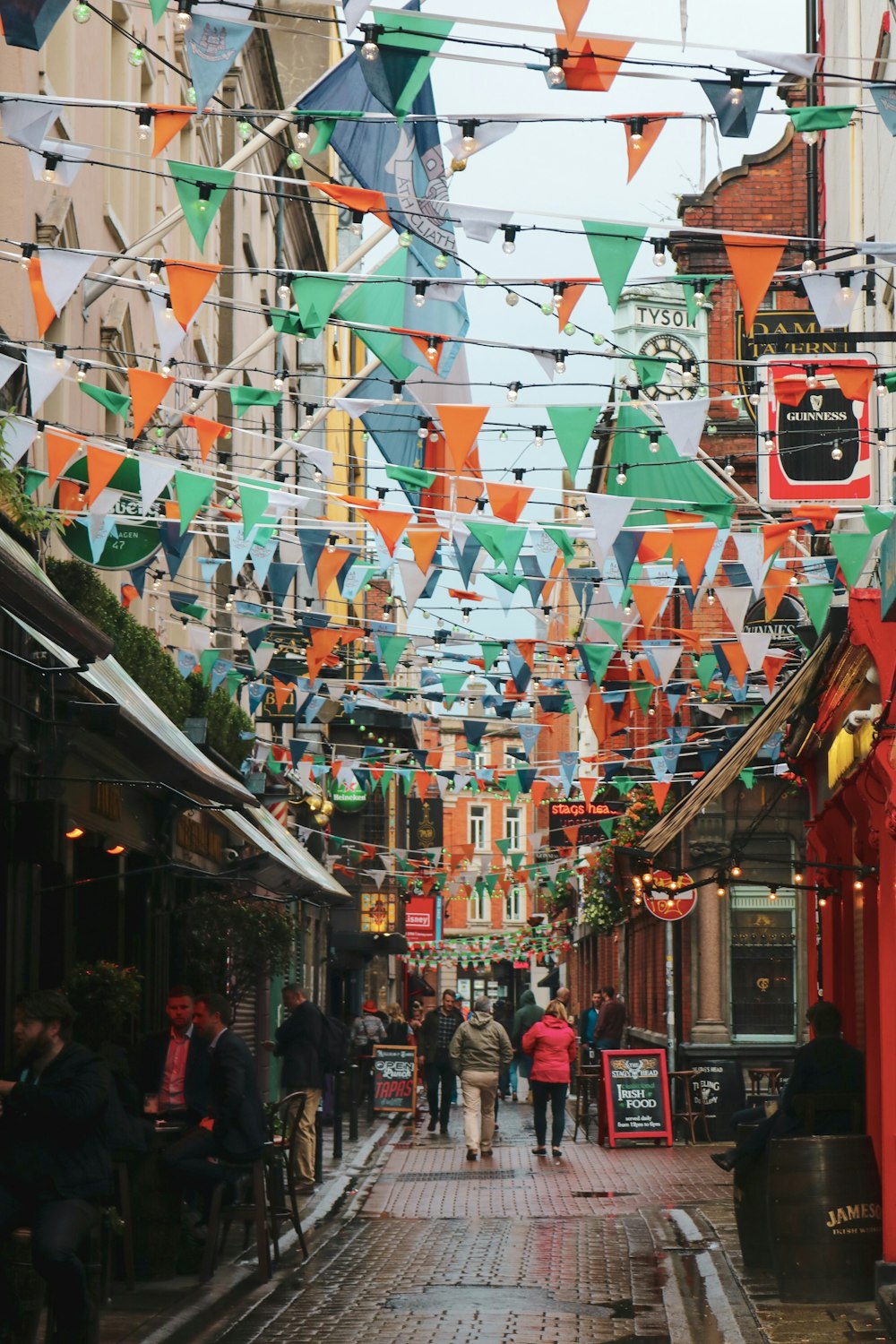
Dublin Population: 1.4 million metro area. Ireland's capital, economic engine, and cultural center. This is where most American expats end up, primarily because this is where the jobs are. Dublin is expensive, congested, and occasionally frustrating — but it's also lively, walkable, and packed with history.
- Dublin 2/4 (Grand Canal, Ballsbridge): The tech corridor. Google, Facebook/Meta, and dozens of startups are here. Modern apartments, good restaurants, the canal for walks. One-bedroom rent: EUR 2,000-2,600/month (~$2,160-2,810). Very popular with American tech workers.
- Dublin 6/6W (Ranelagh, Rathmines, Rathgar): Tree-lined Victorian neighborhoods south of the city center. Pubs, cafes, Portobello's canal-side charm. One-bedroom rent: EUR 1,800-2,400 (~$1,940-2,590). Feels more like a neighborhood than the newer docklands developments.
- Dublin 8 (Portobello, The Liberties): Up-and-coming. Guinness Storehouse territory. More affordable than D2/D4 but gentrifying fast. One-bedroom: EUR 1,600-2,100 (~$1,730-2,270). Good for younger expats who want character.
- Dublin 1/7 (North Side, Smithfield, Stoneybatter): Historically less fashionable than the south side (Dubliners are fiercely tribal about this), but Stoneybatter has become one of the city's best neighborhoods. Genuine community feel, excellent pubs, independent shops. One-bedroom: EUR 1,500-2,000 (~$1,620-2,160).
Galway Population: 85,000. Ireland's cultural capital, on the west coast facing the Atlantic. Bohemian, artistic, and genuinely fun. The city center is compact, walkable, and full of traditional music sessions, independent bookshops, and excellent restaurants. The Galway International Arts Festival and Galway Film Fleadh are world-class.
- One-bedroom rent: EUR 1,200-1,700 (~$1,296-1,836)
- The vibe: If Dublin is Ireland's New York, Galway is its Austin or Portland. Younger, more creative, less corporate. Strong university presence (University of Galway).
- Downsides: Limited job market outside academia, healthcare, and tourism. Rain — Galway gets approximately 1,200mm of rainfall per year, making it one of the wettest cities in Europe.
Cork Population: 210,000 metro area. Ireland's second city and self-proclaimed "real capital." Known for its food scene (the English Market is legendary), a thriving tech and pharma sector (Apple's European HQ is in nearby Hollyhill, Pfizer and Eli Lilly have major plants in the region), and a locals-first attitude that can feel impenetrable but rewards persistence.
- One-bedroom rent: EUR 1,300-1,800 (~$1,404-1,944)
- Neighborhoods: The city center (compact, walkable), Douglas (suburban, family-friendly), Ballincollig (affordable, growing). Kinsale (30 minutes south, a stunning coastal town popular with affluent expats).
- Downsides: Public transport is poor. You'll likely need a car if you live outside the city center.
Limerick Population: 100,000 metro. Long overshadowed by Dublin, Cork, and Galway, Limerick has undergone a genuine renaissance. Significant investment in the city center, a strong university (University of Limerick), and growing tech presence. It's Ireland's most affordable city.
- One-bedroom rent: EUR 1,000-1,500 (~$1,080-1,620)
- The appeal: Real value. A house that costs EUR 600,000 in Dublin might cost EUR 250,000 in Limerick. Shannon Airport is 20 minutes away with direct US flights.
Rural Ireland Some Americans dream of the stone cottage in Connemara or a farmhouse in West Cork. This is genuinely possible and genuinely affordable (houses for EUR 150,000-300,000). But be honest with yourself: rural Ireland is remote, wet, and quiet. The nearest supermarket might be 30 minutes away. Internet can be unreliable (though the National Broadband Plan is slowly improving this). Winter days have less than 8 hours of daylight. It's beautiful and peaceful, but it's not for everyone.
Safety: One of the Safest Countries in the World
Ireland is genuinely one of the safest countries you can live in. The intentional homicide rate is approximately 0.7 per 100,000 — compared to 6.3 in the US. Gun violence is virtually nonexistent (firearms are tightly controlled and gun ownership is rare). You will not worry about mass shootings, armed robberies, or the kind of random violence that Americans have normalized.
What crime exists:
- Petty theft and pickpocketing: Concentrated in Dublin city center, particularly around O'Connell Street, Temple Bar, and the Luas (tram) lines. Standard big-city awareness applies.
- Burglary: Ireland has a relatively high burglary rate compared to other European countries, particularly in rural areas. Home security (alarm systems, good locks) is worth investing in.
- Anti-social behavior: Alcohol-fueled incidents on weekend nights in city centers. Groups of teenagers (locally known for causing trouble in some areas) can be intimidating but rarely dangerous.
- Drug-related crime: Ireland has a significant drug problem, particularly heroin and crack cocaine in Dublin's inner city and some parts of Cork and Limerick. This violence is almost entirely gang-on-gang and does not affect the general population.
- Road safety: Irish roads outside major cities are narrow, winding, and often poorly lit. Driving on the left side adds a learning curve. Road traffic fatalities, while declining, remain a concern on rural roads.
Scams to watch for:
- Rental scams are rampant due to the housing crisis. Never pay a deposit without viewing a property in person. If a listing seems too good to be true (cheap rent, beautiful photos, landlord is "abroad"), it's a scam. Use only verified platforms (Daft.ie is the primary rental site).
- Phone/text scams impersonating Revenue (Ireland's tax authority), An Post (postal service), or banks are common.
The bottom line: You will feel safe in Ireland. Women walk alone at night in most neighborhoods without significant concern. Children play outdoors unsupervised. The baseline anxiety that many Americans carry about personal safety simply doesn't apply here. The most dangerous thing you'll encounter is probably the M50 motorway at rush hour.
Cost of Living: The Real Monthly Budget
Ireland is expensive. Let's not sugarcoat it. Numbeo's Ireland cost of living data lets you compare specific expenses to your current US city. Dublin regularly appears in the top 10-15 most expensive cities globally. Outside Dublin, costs drop meaningfully but Ireland is still pricier than most of Europe. All figures are monthly, in USD.
Budget Living ($2,200-2,800/month) Shared accommodation or a studio in a less central area. Galway, Limerick, or Dublin outskirts:
- Rent (room in shared house or small studio): $1,100-1,500
- Utilities (electricity, gas, internet — often included in shares): $100-150
- Groceries (cooking at home, shopping at Aldi/Lidl): $300-400
- Eating out (pubs and casual spots 1-2x/week): $100-150
- Transportation (Leap Card for bus/tram, or bike): $80-120
- Phone (prepaid, Three or Vodafone): $20-30
- Healthcare (GP visits as needed, no private insurance): $30-60
- Entertainment/pubs: $150-200
- Total: $1,880-2,610
This is tight but doable, especially outside Dublin. You're living like a young Irish professional — which is to say, spending a disproportionate amount of income on rent.
Comfortable Living ($3,500-4,500/month) Your own one-bedroom apartment in a good neighborhood. Dublin or Cork:
- Rent (1BR apartment, decent neighborhood): $1,800-2,400
- Utilities (electricity, gas, internet): $180-250
- Groceries (mix of Aldi/Lidl and Tesco/SuperValu): $350-450
- Eating out (restaurants 2-3x/week, pub meals): $250-400
- Transportation (Leap Card + occasional taxi): $100-160
- Phone (contract, 30GB+): $30-45
- Private health insurance: $135-225
- Gym: $45-70
- Entertainment/travel: $200-350
- Total: $3,090-4,350
This is the typical American expat budget in Dublin. You're comfortable but not extravagant. You notice prices. You wince at the EUR 7 pint sometimes.
Luxury Living ($6,000-9,000/month) Premium apartment in Dublin 4 or Ballsbridge. Fine dining. Weekend trips to the countryside:
- Rent (2BR in premium Dublin location or Cork city penthouse): $3,200-4,500
- Utilities: $250-350
- Groceries (Avoca, Donnybrook Fair, organic markets): $500-700
- Dining (Michelin-starred restaurants, wine bars): $600-900
- Car (payment + insurance + fuel + parking): $600-900
- Private health insurance (top tier VHI plan): $270-360
- Gym (premium club): $100-150
- Travel/entertainment: $500-800
- Total: $6,020-8,660
Key price points:
- Pint of beer in a pub: $6.50-8.00
- Cappuccino: $4.00-5.00
- Lunch (sandwich + coffee): $12-16
- Dinner for two (mid-range restaurant, wine): $90-130
- Monthly public transport pass (Dublin): $110
- Liter of gasoline: $1.90
- Childcare (full-time creche): $1,000-1,400/month
The comparison: Ireland's cost of living is closer to the US Northeast than to southern Europe. If you're coming from New York, San Francisco, or Boston, prices will feel comparable. If you're coming from Texas or the Midwest, you'll experience sticker shock, especially on rent and dining.

Buying Property: What Americans Need to Know
Can Americans buy property in Ireland? Yes, with no restrictions. As we cover in our property buying rules guide, Ireland is one of the most open countries for foreign buyers. Non-residents, non-citizens, and non-EU nationals can all buy residential property in Ireland. There are no special permits, no government approvals, and no limitations on the type or location of property.
The market in 2026: Ireland's housing market is undersupplied and overpriced, particularly in Dublin. The average house price nationally is approximately EUR 340,000 ($367,000). In Dublin, it's EUR 450,000-500,000 ($486,000-540,000). Outside the major cities, you can still find three-bedroom houses for EUR 200,000-300,000 (~$216,000-324,000).
The buying process:
- Get mortgage approval in principle (if financing). Irish banks will lend to non-residents, but terms are stricter. Expect a maximum loan-to-value of 70-80% for non-first-time buyers. Interest rates in 2026 are approximately 3.5-4.5% fixed.
- Find a property. Daft.ie and MyHome.ie are the primary listing sites. Estate agents (realtors) represent the seller in Ireland, not the buyer. You don't typically have a buyer's agent.
- Bid. Ireland uses a bidding system — the asking price is a starting point, not a fixed price. In competitive areas, properties regularly sell for 10-20% over asking. Bidding wars are common and stressful.
- Go sale agreed. Once your bid is accepted, you're "sale agreed" but this is NOT legally binding. Either party can pull out until contracts are exchanged. Gazumping (a seller accepting a higher bid after going sale agreed with you) happens.
- Hire a solicitor. This is mandatory. Your solicitor handles title searches, contract review, and the legal transfer. Solicitor fees: EUR 2,000-4,000 (~$2,160-4,320) plus VAT.
- Survey. Get an independent structural survey (EUR 300-500 / ~$324-540). The seller provides a BER (Building Energy Rating) certificate.
- Exchange contracts and close. You pay the balance, the solicitor registers the deed. Typical timeline from sale agreed to closing: 6-12 weeks.
Closing costs:
- Stamp duty: 1% on properties up to EUR 1 million; 2% on the portion above EUR 1 million
- Solicitor fees: EUR 2,000-4,000 + VAT (23%)
- Valuation fee (if getting a mortgage): EUR 150-300
- Surveyor: EUR 300-500
- Land Registry fee: EUR 500-800
- Total closing costs: approximately 2-4% of the purchase price
Property tax: Ireland's Local Property Tax (LPT) is based on the property's valuation band — details are on the Revenue LPT page. For a property valued at EUR 350,000, the annual LPT is approximately EUR 490 (~$530). It's modest by US standards — you'll pay more on property tax for a modest home in New Jersey than for a nice house in Dublin.
Rental income: If you buy to rent, rental income is taxed at your marginal rate (20% or 40%). Non-resident landlords must appoint a tax agent in Ireland to manage withholding. The rental market is extremely tight, so yields in Dublin are typically 3-5%.
The honest assessment: Buying property in Ireland is straightforward legally but challenging practically. The housing shortage means competition is fierce, quality varies wildly, and many properties (especially older ones) have issues with damp, poor insulation, or outdated wiring. Always get an independent survey, even if the BER rating looks acceptable.
The Practical Stuff: Phones, Internet, Driving, and Daily Life
Cell phone: Irish mobile networks are Three (best coverage and value), Vodafone (reliable, more expensive), and Eir (decent). Prepaid SIM cards are available at any convenience store. A good prepaid plan with unlimited calls, texts, and 30GB data runs EUR 20/month (~$22). Contract plans with a handset start at EUR 40-60/month. Port your US number to Google Voice before you leave.
Internet: Ireland's broadband is good in urban areas and improving in rural ones. Fiber broadband (SIRO, Eir Fibre, Virgin Media) offers 500Mbps-1Gbps in cities for EUR 40-60/month (~$43-65). The National Broadband Plan is rolling out to rural areas but progress is slow. If you're moving to a rural area, check broadband availability before committing.
Driving: You can drive on your US license for up to 12 months after becoming resident. After that, you must exchange it for an Irish driving license. The NDLS (National Driver Licence Service) handles all license applications. The US and Ireland have a license exchange agreement — you don't need to take the Irish driving test, just apply for the exchange (with some paperwork and a fee of EUR 55). You drive on the left side of the road. This takes 2-3 weeks to feel natural and about 2 months before you stop panicking at roundabouts. Roundabouts are everywhere.
Car costs are significant: insurance for a new driver in Ireland averages EUR 1,500-3,000/year ($1,620-3,240). Motor tax (annual registration) is EUR 200-800 depending on emissions. Fuel is approximately EUR 1.75/liter ($7.25/gallon). Parking in Dublin is EUR 3-6/hour.
Language: English. Irish (Gaeilge) is the first official language and appears on all road signs and government documents, but daily life is conducted entirely in English. Some areas in the west (Gaeltacht regions) are Irish-speaking, but everyone there speaks English too. You won't have a language barrier, though Irish slang and accents take some adjusting. "Grand" means fine. "Your man" means that guy. "The craic" means fun/entertainment. You'll pick it up.
Shipping belongings: A full container (20ft) from the US East Coast to Dublin port costs approximately $3,000-5,000. A shared container or LCL (less than container load) runs $1,500-3,000 depending on volume. Transit time is 10-14 days. Irish customs is straightforward for personal effects — you'll need a Transfer of Residence (TOR) form to import your belongings duty-free. Tip: Irish apartments are significantly smaller than American ones. Measure everything before shipping a houseful of furniture that won't fit.
Pets: Ireland has strict pet import rules due to its rabies-free status. The citizens.ie website has detailed guidance for Americans bringing dogs and cats. Your dog or cat needs:
- Microchip (ISO 15-digit)
- Rabies vaccination (at least 21 days before travel)
- EU-format health certificate from a USDA-accredited vet, endorsed by USDA APHIS
- Tapeworm treatment for dogs (1-5 days before entry) There is no quarantine if all documents are correct. Pets must enter through Dublin, Shannon, or Cork airports. Direct flights from the US to Ireland are available on Aer Lingus (Dublin), Delta (Dublin, Shannon), and United (Dublin, Shannon). For expat community discussions, InterNations Ireland and ExpatFocus Ireland are worth exploring — most allow pets in cabin (under 8kg/17.6lbs) or cargo.
The weather: Let's be real. Ireland averages 150-225 rainy days per year depending on location. Summer (June-August) is genuinely lovely — long days (sunset after 10pm in June), temperatures of 15-22C (59-72F), occasional stretches of sunshine that make the entire country euphoric. Winter is dark (sunset at 4:15pm in December), wet, and grey. Temperatures rarely drop below 0C (32F) thanks to the Gulf Stream, so it's not cold by Midwest standards, but the persistent dampness gets into your bones. Invest in a good waterproof jacket, layer everything, and accept that your relationship with the sun will change fundamentally.
Tipping: Ireland does not have American tipping culture. A 10% tip at a sit-down restaurant is generous. Pubs: you don't tip for drinks at the bar. Taxi drivers: round up to the nearest euro. Hairdressers: EUR 5-10. Nobody will chase you down for not tipping. Service charge is sometimes included on the bill — check before adding more.
Ready to explore?
Browse Destinations