The Complete Guide to Moving to South Korea as an American
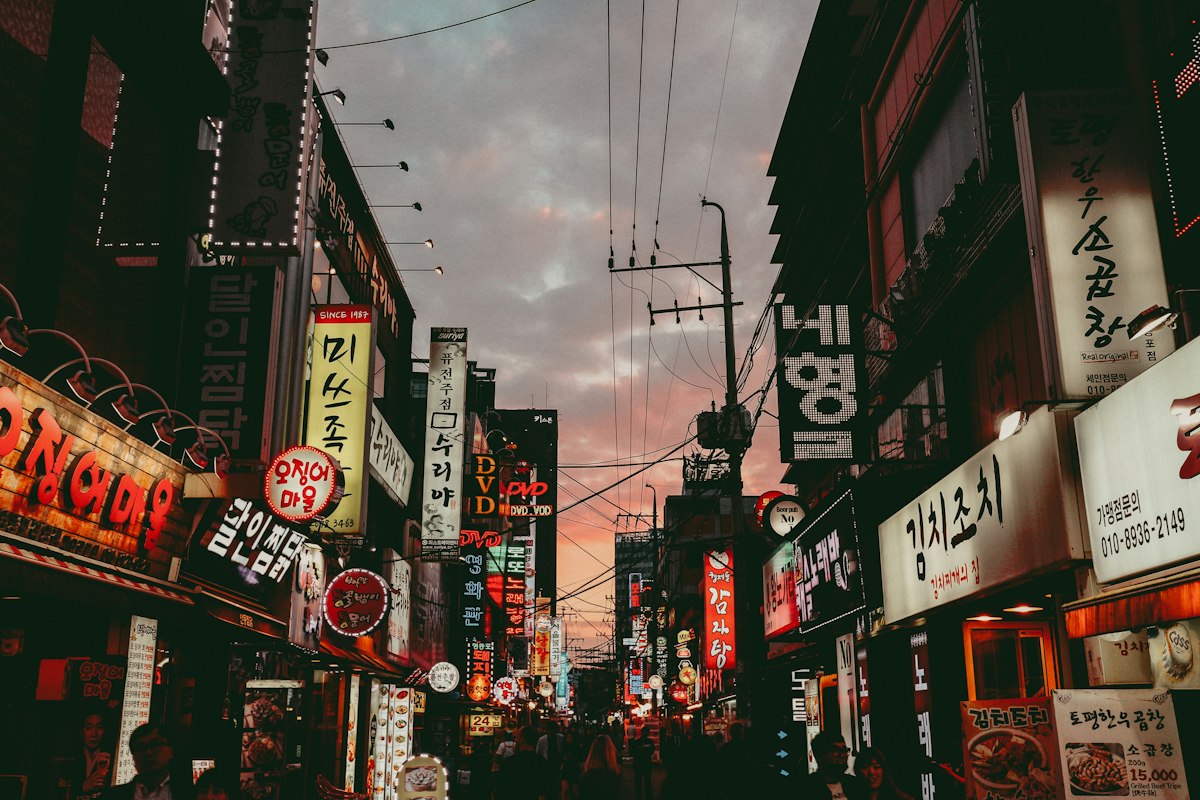
South Korea is the most technologically advanced country most Americans have never seriously considered moving to. The internet is faster than anywhere you've lived. The public transit makes New York look like a developing country. The food is extraordinary. The healthcare system is universal, high-quality, and cheap. And Seoul — a city of 10 million people — is one of the safest major cities on the planet. But Korea is not an easy place to be a foreigner. The work culture is intense in ways that make American hustle culture look relaxed. The language barrier is steeper than most Asian countries because far fewer Koreans speak conversational English than people assume. The housing system has a uniquely Korean quirk called jeonse that will confuse you. And the social structures — hierarchical, age-conscious, group-oriented — can feel impenetrable to Americans raised on individualism. About 150,000 Americans live in South Korea. Some are military-connected (the US has 28,500 troops stationed there). Many are English teachers who came for a year and stayed for a decade. A growing number are tech workers, entrepreneurs, and remote workers drawn by the infrastructure and the cost of living, which is significantly lower than comparable cities like Tokyo, Hong Kong, or Singapore. This guide is the unvarnished version of what it takes to actually build a life here. For a broader look at how Korea stacks up, start with our [top 20 countries overview](/blog/top-20-countries).
Visas: Korea's Points, Permits, and Paperwork
South Korea's visa system is structured, bureaucratic, and — once you understand it — reasonably logical. The key player in your life will be the Alien Registration Card (ARC), which every foreigner staying longer than 90 days must obtain. It's your Korean ID. You need it for everything: phone contracts, bank accounts, hospital visits, even signing up for delivery apps.
Official information: Korea Immigration Service and Korean Visa Portal. The US Embassy Seoul provides notarized documents and maintains an ACS Unit for American Citizens Services. Community resources: r/korea and r/Living_in_Korea have extensive visa and daily life threads from Americans and other expats.
Visa-Free Entry (B-1/B-2) Americans can enter South Korea visa-free for up to 90 days for tourism or business meetings. You cannot work on this status. No extensions possible — you must leave and re-enter. Unlike Thailand, Korea does not have a "visa run" culture, and immigration officers will flag repeated short entries.
E-2 Visa (Foreign Language Instructor) The most common visa for Americans in Korea. Requirements:
- Bachelor's degree from an accredited university (any field)
- Clean FBI criminal background check with apostille
- Sealed official transcripts
- Job offer from a Korean school, hagwon (private academy), or university
- Health check upon arrival in Korea
- Processing time: 2-4 weeks at a Korean consulate in the US
- Fee: $45
The E-2 is tied to your employer. If you quit or get fired, you have 14 days to find a new sponsor or leave the country. This gives employers leverage, and some abuse it. Choose your school carefully.
E-7 Visa (Specially Designated Activities / Skilled Worker) For professionals in designated fields: IT, engineering, finance, design, marketing, natural sciences, and more. Requirements:
- Relevant bachelor's degree + 1 year of experience, OR master's degree
- Job offer from a Korean company
- The company must demonstrate they couldn't fill the position with a Korean national
- Salary must meet minimum thresholds (varies by field, generally $30,000+/year)
- Processing: 3-6 weeks
This is the main path for tech workers and other professionals. Your employer handles most paperwork, but you remain tied to that employer unless you get permission from immigration to change jobs.
D-10 Visa (Job Seeking) A genuinely useful visa for people who want to look for work in Korea. Available to:
- Graduates of Korean universities
- Former E-7 or D-8 visa holders
- People recommended by Korean government agencies
- Valid for 6 months, extendable to 1 year
- Allows part-time work up to 20 hours/week
F-2 Visa (Points-Based Residency) Korea's points system grants long-term residency based on a scoring rubric. You need 80+ points out of 120 across categories including:
- Age (25-34 gets maximum points)
- Education (master's/PhD from Korean university scores highest)
- Korean language proficiency (TOPIK level 5-6 is a major boost)
- Income level
- Duration of stay in Korea
- Voluntary activities and tax payment record
The F-2 is powerful — it allows you to work for any employer without restriction and is valid for 3-5 years. It's the stepping stone to permanent residency.
F-5 Visa (Permanent Residency) Requirements:
- 5+ years on an F-2 or qualifying visa
- TOPIK Level 3+ Korean proficiency (or equivalent)
- Annual income of 2x the per capita GNI (~$70,000+)
- Clean criminal record
- Basic knowledge of Korean customs and law
Alternatively: investment ($500,000+ in a Korean business employing 5+ Koreans) or marriage to a Korean national (after 2 years of marriage and 1 year of F-6 visa).
F-6 Visa (Marriage to Korean National) Valid for 1-3 years, renewable. Allows unrestricted employment. After 2 years, you can apply for F-5 permanent residency.
SOFA Status (Military-Connected) Active duty military, civilian employees, or dependents enter under the Status of Forces Agreement. About half of all Americans in Korea are SOFA-connected.
H-1 Visa (Working Holiday) Available to Americans aged 18-30. Valid for 1 year, allows part-time work. Fee: $45. For more on working holiday programs worldwide, see our digital nomad visas guide.
Banking: Navigating the Most Cashless Society on Earth
South Korea is arguably the most digitally advanced economy in the world when it comes to payments. Cash usage has dropped below 20% of all transactions. Koreans pay for everything with cards, phones, and apps. The catch: most of this digital infrastructure requires a Korean bank account and an ARC, which creates a chicken-and-egg problem for newly arrived foreigners.
Opening a bank account: You need your ARC (Alien Registration Card) — which takes 2-3 weeks after applying at immigration. Until then, you're stuck with cash and your US card.
Major banks for foreigners:
- KEB Hana Bank: Most foreigner-friendly, with English-speaking staff at major branches. The Global Branch in Itaewon (Seoul) specializes in foreign clients.
- Shinhan Bank: Good online banking in English. Popular with tech workers.
- Woori Bank: Reasonable English support at Seoul branches.
- KB Kookmin Bank: Largest Korean bank. English support is limited.
What you'll need:
- ARC (Alien Registration Card)
- Passport
- Korean phone number
- Proof of employment or enrollment (some banks require this)
- Minimum deposit: 10,000-50,000 KRW ($7-35)
Important quirk: Korean banks sometimes refuse to open accounts for newly arrived foreigners, citing "know your customer" regulations. If rejected, try a different branch. The Hana Global Branch in Itaewon is the most reliable option.
Moving money: Wise works well for USD-to-KRW transfers at 0.5-1% cost. Revolut and Remitly are alternatives. For large transfers (apartment deposits), Korean banks charge $20-40 per incoming international wire. For deeper analysis of managing currency exposure, read our foreign currency risk guide.
Digital payments: Once you have a Korean bank account, you'll set up:
- KakaoPay: Integrated into KakaoTalk (Korea's WhatsApp). Works at most merchants. Essential.
- Samsung Pay / Apple Pay: Apple Pay launched in Korea in 2023 via Hyundai Card. Samsung Pay has been dominant for years.
- Naver Pay: For online shopping.
- T-money card: For public transit. Rechargeable, works on all buses and subways nationwide.
The jeonse deposit system: This is the single most confusing financial concept for Americans in Korea. Instead of paying monthly rent, many Korean apartments use jeonse — you give the landlord a massive lump-sum deposit (typically 50-80% of the property's value), live rent-free for 2 years, and get the full deposit back when you leave. A jeonse deposit on a modest Seoul apartment might be $150,000-300,000. The landlord invests the deposit and keeps the returns.
Most foreigners can't afford jeonse deposits, so you'll likely rent on a wolse (monthly rent) basis instead, with a smaller deposit of $5,000-15,000 plus monthly rent.
Tax note: US citizens must file US taxes on worldwide income regardless of where they live. The US-Korea tax treaty prevents double taxation, and the FEIE tax exclusion can exclude up to $126,500 of foreign earned income. Korean income tax rates range from 6% to 45%.
Healthcare: Universal Coverage That Actually Works
South Korea's healthcare system is one of the best arguments for moving there. It's universal, high-quality, technologically advanced, and — compared to the US — absurdly cheap. The WHO consistently ranks it among the top 20 healthcare systems globally.
National Health Insurance (NHI) Every legal resident, including foreigners with an ARC, is mandatory enrolled in the National Health Insurance system. If you have a visa longer than 6 months, you're in.
- Premiums: Employed foreigners pay approximately 3.545% of salary, with employers covering the other half. Self-employed foreigners pay a flat rate starting around 130,000-140,000 KRW/month (~$95-100).
- Coverage: NHI covers approximately 60-70% of medical costs. You pay the remaining 30-40% as copay.
- Wait to activate: Coverage begins 6 months after ARC registration for new foreign residents. Get private insurance for those first 6 months.
What NHI covers:
- Doctor visits (copay: $10-25 at clinics, $15-40 at hospitals)
- Specialist referrals
- Surgery and hospitalization (copay: 20-30%)
- Prescription medications (copay: $3-15 per prescription)
- Dental (basic cleaning, fillings, extractions — not cosmetic)
- Mental health (partially, 30-50% copay)
- Free annual health screenings for everyone over 40
Sample out-of-pocket costs (with NHI):
- GP visit at local clinic: $5-15
- Specialist consultation: $15-30
- ER visit at major hospital: $50-150
- Dental cleaning: $30-60
- MRI scan: $150-400
- Comprehensive health checkup: $200-500 (premium packages at Samsung Medical Center run $1,000-2,000 but are extraordinarily thorough)
Private insurance: Many expats supplement NHI with private insurance. Korean insurers like Samsung Life, Kyobo Life, and DB Insurance offer supplemental plans for 50,000-200,000 KRW/month ($35-140). International plans from Cigna Global or Allianz cost $150-400/month but cover you globally. See our health insurance abroad guide for comparisons. Numbeo's South Korea healthcare data shows quality index scores and cost benchmarks.
Hospital quality: Korea's top hospitals are world-class. Samsung Medical Center, Asan Medical Center, Severance Hospital (Yonsei University), and Seoul National University Hospital are JCI-accredited and rival any US teaching hospital. English-speaking doctors are common at major hospitals. Korea is a global leader in medical tourism — particularly cosmetic surgery, dental work, and cancer treatment.
The honest assessment: Korean healthcare is phenomenal for the price. You'll never face medical bankruptcy. Downsides: wait times at popular hospitals (book 1-2 weeks for specialists), the 6-month activation gap, and limited English-speaking mental health professionals.
Where to Live: Seoul and Beyond
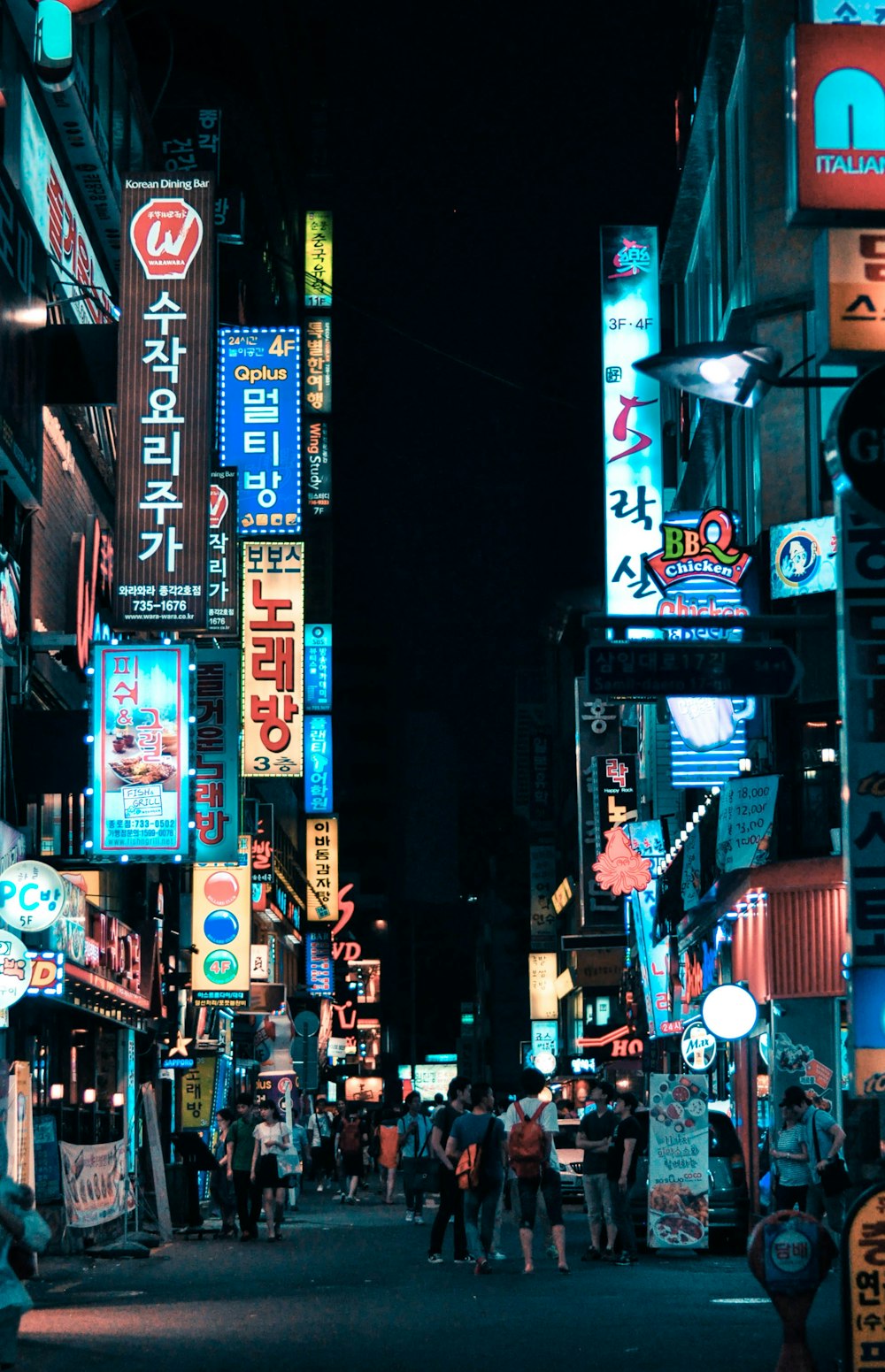
Let's be real: about 85% of Americans in Korea live in the Seoul metropolitan area. Half the national population lives within 25 miles of downtown Seoul. The job market, international community, English-friendly infrastructure — it's all concentrated in the capital. That said, there are reasons to look elsewhere.
Seoul — Itaewon/Yongsan-gu The traditional expat neighborhood, adjacent to the US military base. International restaurants, English menus, Western grocery stores. Easiest landing spot for newcomers.
- 1BR apartment (wolse): $700-1,200/month
- Character: Diverse, international, nightlife-heavy. Has gentrified significantly.
- Downside: Can feel like an expat bubble.
Seoul — Gangnam/Seocho South of the river — corporate Korea. Gleaming towers, luxury shopping, Samsung headquarters.
- 1BR apartment: $900-1,800/month
- Character: Modern, affluent, professional. Excellent subway access.
- Downside: Expensive. Competitive. Can feel sterile.
Seoul — Mapo-gu (Hongdae/Hapjeong/Mangwon) The creative heart of Seoul. Indie music, street art, small cafes, young energy.
- 1BR apartment: $600-1,100/month
- Character: Artsy, youthful, great food scene. Walkable. Lots of coworking spaces.
- Downside: Noisy weekends in Hongdae. Smaller apartments.
Seoul — Songpa-gu (Jamsil) Family-friendly, modern. Home to Lotte World Tower, Olympic Park, and several international schools.
- 1BR apartment: $700-1,300/month
- Character: Clean, modern, family-oriented. Good parks.
- Downside: Farther from the expat social scene.
Busan Korea's second city (3.4 million). Coastal, more laid-back, significantly cheaper than Seoul. Famous for beaches (Haeundae, Gwangalli) and seafood. Growing tech scene.
- 1BR apartment: $400-800/month
- Character: Beach city energy. Milder winters than Seoul.
- Downside: Fewer English-speaking services. Smaller job market.
Daejeon Korea's "science city" — home to KAIST (Korea's MIT) and the Daedeok research complex.
- 1BR apartment: $300-600/month
- Character: Quiet, academic, affordable. 1 hour to Seoul by KTX.
- Downside: Limited nightlife and international community.
Jeju Island Korea's tropical(ish) island. Special autonomous status. Attracting digital nomads and remote workers.
- 1BR apartment: $400-700/month
- Character: Relaxed island life, nature-focused. Growing cafe scene.
- Downside: Limited job market. Can feel isolated in winter.
Safety: One of the Safest Countries on Earth
South Korea is extraordinarily safe. If you're moving from any major American city, the drop in personal safety anxiety is immediate and dramatic.
The numbers:
- Homicide rate: 0.6 per 100,000 — one of the lowest in the world. The US rate is approximately 6 per 100,000 — literally ten times higher.
- You can walk anywhere in Seoul at 3 AM without fear. Women routinely walk home alone late at night. This is not bravado; it's statistics.
- Korea has strict gun control — civilian gun ownership is essentially prohibited.
What you do need to watch for:
-
Scams targeting foreigners. Taxi drivers occasionally overcharge. Always use Kakao T (Korea's ride-hailing app) for transparent pricing. Rental scams exist — never wire a deposit without verifying the landlord.
-
Petty theft. Remarkably rare. Koreans routinely leave laptops in cafes and bags on restaurant chairs. Pickpocketing exists in tourist areas but is uncommon by global standards.
-
Traffic. Korean drivers are aggressive. Pedestrian crossings are not always respected. Delivery riders on motorbikes are the biggest hazard — they ride on sidewalks, against traffic, and through red lights.
-
Natural hazards. Not a major earthquake zone, but minor quakes occur. Typhoons hit the southern coast in late summer. Yellow dust storms from China/Mongolia affect air quality in spring (March-May).
-
North Korea. The elephant in the room. Let's be direct: the Korean War never officially ended, and North Korea periodically threatens nuclear annihilation. The practical reality is that South Koreans largely ignore this. Seoul is 35 miles from the DMZ, and its 10 million residents go about their lives without daily dread. The US military presence is a deterrent. The risk is real but not something that affects daily life. Register with STEP for embassy alerts and monitor US Embassy Seoul security notices.
-
Discrimination. Don't let anyone tell you Korea is colorblind. It's an ethnically homogeneous society, and racism — both overt and systemic — exists. Some bars refuse entry to foreigners. Landlords may refuse to rent to non-Koreans. Most Americans report daily interactions are friendly, but being perpetually "foreign" wears on some people over time.
Drug laws: Korean drug laws are extremely strict. Cannabis possession can result in 5+ years in prison. Korean authorities have prosecuted citizens for cannabis use in countries where it's legal, using hair follicle tests upon return. Don't test this.
The bottom line: South Korea is one of the safest countries an American can live in. The adjustment isn't about safety — it's about cultural navigation.
Cost of Living: Cheaper Than You Think (Mostly)
Korea occupies an interesting sweet spot: a fully developed, high-tech economy with a cost of living 30-40% lower than comparable US cities. Seoul is expensive by Asian standards but cheaper than Tokyo, Hong Kong, or Singapore.
Budget Living ($1,200-1,800/month) — Seoul, modest lifestyle
- Rent (studio/1BR, outer neighborhood): $400-700
- Utilities (heating is the big winter expense): $60-120
- Groceries (local markets, Korean ingredients): $150-250
- Eating out (gimbap shops, campus restaurants): $100-200
- Transportation (subway/bus T-money): $50-80
- Phone (budget MVNO, unlimited data): $20-35
- Internet (often included, or $20-30): $0-30
- Healthcare (NHI premiums + copays): $100-150
- Miscellaneous: $50-100
At this level, you're eating bibimbap for $5, drinking soju for $2 a bottle, and taking the world's best subway everywhere. Korean budget food is genuinely delicious.
Comfortable Living ($2,200-3,500/month) — Seoul, good neighborhoods
- Rent (1BR, Mapo-gu or Yongsan-gu): $700-1,200
- Utilities: $80-150
- Groceries (local + imports from Costco Korea): $200-350
- Eating out (Korean + international restaurants): $250-400
- Transportation (subway + Kakao T): $70-120
- Phone (postpaid, unlimited): $30-50
- Healthcare (NHI + supplemental): $120-200
- Gym: $40-80
- Entertainment: $150-300
- Weekend trips (KTX to Busan, Jeju flights): $100-200
Luxury Living ($4,500-7,000/month) — Gangnam or Hannam-dong
- Rent (2BR premium apartment): $2,000-3,500
- Fine dining: $500-800
- Premium transport: $300-500
- International school (monthly): $1,500-2,500
What Korea is cheap for: Public transit ($1.30 per ride), street food ($2-5 for a meal), convenience store meals ($3-6), healthcare, internet ($20-30 for gigabit fiber), soju ($2 a bottle), domestic flights ($50-80 round trip to Jeju).
What Korea is NOT cheap for: Rent in central Seoul, imported Western food (cheese, wine — all expensive), Korean beef ($40-70/lb for hanwoo), coffee shop lattes ($5-7), and international schools ($15,000-30,000/year).
Hidden cost — social spending: Korean culture involves frequent group dining and drinking. Work dinners (hoesik) are common, and refusing them can be career-limiting. Budget for this. See our cheapest cities abroad guide for how Seoul compares globally. Numbeo's Seoul cost of living and International Living's Korea page offer current data points. r/Living_in_Korea has monthly budget threads from Americans living there. TripAdvisor's Korea Travel Forum covers practical costs for newcomers.
Buying Property: Jeonse, Wolse, and the Apartment Republic
South Korea is an apartment society. About 60% of the housing stock is apartments, and owning one in a good Seoul school district is the Korean dream. For Americans, the property market is accessible.
Can Americans buy? Yes. There are no restrictions on foreign ownership of real estate in South Korea. You can buy apartments, houses, commercial property, and land. You need to report the purchase and comply with foreign exchange regulations if transferring funds from abroad. For a comparison with other countries, see our property buying rules guide.
Buying process:
- Find property through a licensed agent (gonginjoongaesa) — required by law
- Sign preliminary contract, pay 10% deposit
- Due diligence: check the deunggibu (property registry) for liens and disputes
- Sign final contract, pay remaining balance
- Register transfer at local government office
- Timeline: 1-3 months
Closing costs (buyer):
- Acquisition tax: 1-3% for standard properties. 8% in regulated zones (central Seoul) or for multiple property owners. 12% for corporate buyers.
- Registration tax: 0.8-2%
- Agent commission: 0.3-0.9% (capped by law)
- Legal fees: $500-1,500
- Total: approximately 3-6% standard, up to 12%+ in regulated zones
Annual property tax:
- Property tax: 0.1-0.4% of assessed value
- Comprehensive real estate tax: Additional 0.5-2.7% on properties above 1.1 billion KRW (~$790,000)
Seoul apartment prices (2025-2026):
- Gangnam/Seocho (1BR, 20-30 pyeong): $400,000-800,000. Premium units exceed $1 million.
- Mapo/Yongsan: $250,000-500,000
- Outer Seoul (Nowon, Gwanak): $150,000-300,000
- Busan (Haeundae): $150,000-350,000
- Daejeon/Daegu: $100,000-200,000
For broader context, see our median home prices by country.
Jeonse risk: If buying to rent out, understand that many Korean tenants expect jeonse arrangements. Jeonse fraud has been a growing problem — landlords absconding with deposits. The government has introduced protections but the risk remains.
Mortgage access: Foreigners with an ARC and proof of income can generally access Korean mortgages, though terms may be less favorable than for nationals. Rates: 3.5-5% (2025-2026). The Korean government heavily regulates the housing market — loan limits, tax rates, and zoning rules change frequently with each administration.
Practical Stuff: Phones, Internet, Language, and the Tech-Utopia Details
Internet: South Korea has the fastest average internet speeds in the world. Home fiber delivers 500 Mbps to 10 Gbps for $10-30/month. Many apartments include internet in maintenance fees. Public WiFi blankets subways, buses, parks, and cafes. 5G coverage is mature across all major cities.
Cell phones: Big three: SK Telecom, KT, LG U+. Postpaid with unlimited data: $35-50/month. Budget MVNOs (Tplus, HelloMobile): $14-25 unlimited. You need an ARC for postpaid. Airport tourist SIMs: $30-50 for 30 days. Keep your US number via Google Voice for two-factor auth.
Language: Let's be honest: Korean is hard. The FSI ranks it Category IV — 2,200+ hours to proficiency, same as Arabic and Chinese. The alphabet (Hangul) is easy — learn it in an afternoon. Grammar, honorifics, and vocabulary are the real challenge.
Good news: KIIP (Korea Immigration and Integration Program) offers free Korean classes with credit toward residency visas. University language programs: $1,500-2,000/semester (10 weeks, 4 hours/day). italki tutors: $15-30/hour. Survival Korean: 2-3 months. Workplace Korean: 1-2 years. Fluency: 3-5 years.
Driving: US licenses convert through a simplified written test (no road test). Process: 1-2 hours at a license agency. You'll need ARC, passport photos, and a $5 medical exam.
But you probably don't need a car in Seoul. The subway has 23 lines, 730+ stations. Buses are comprehensive. Kakao T fills the gaps. Parking costs $200-400/month in Seoul. Outside Seoul, used cars are affordable — a 3-year-old Hyundai Tucson: $15,000-20,000.
Shipping: Don't ship furniture. Korean apartments come fully equipped — appliances included, furniture often available from previous tenants. Ship personal items only. A 20-foot container from the US West Coast to Busan: $2,500-4,500.
Weather: Four dramatic seasons. Summers (June-August): 85-95°F, humid, monsoon rains in July. Winters (December-February): 10-15°F with wind chill, snow common. Spring has yellow dust from Chinese deserts. Autumn (September-November) is perfect — clear skies, stunning foliage.
Winter heating costs surge. Ondol (heated floors) is wonderfully comfortable but expensive: $70-140/month for gas, December through February.
Pets: Requirements: microchip (ISO 11784/11785), rabies vaccination (30+ days before travel), USDA-endorsed health certificate. No quarantine if paperwork is complete. Korea is increasingly pet-friendly. Vet visits: $14-28.
Cultural adaptation: Korea runs on hierarchy. Age matters — you'll be asked yours early to establish the dynamic. Pouring drinks for elders with two hands, formal language with seniors, deference to seniority — these are daily realities. Shoes off at the door. Don't write names in red ink (signifies death). No tipping.
The biggest adjustment: the collectivist mindset. Korean society prioritizes group harmony over individual expression. Long work hours, deference to bosses, conformity in appearance, indirect communication. It's genuinely different from American individualism, and adapting takes time.
For real estate listings, Naver Real Estate (Korean) and Zigbang are the dominant portals. TripAdvisor Korea Forum has practical newcomer threads. Before making the leap, review our complete checklist for moving abroad and understand how Social Security works overseas if retirement is part of your plan.
Ready to explore?
Browse Destinations