The Complete Guide to Moving to Switzerland as an American
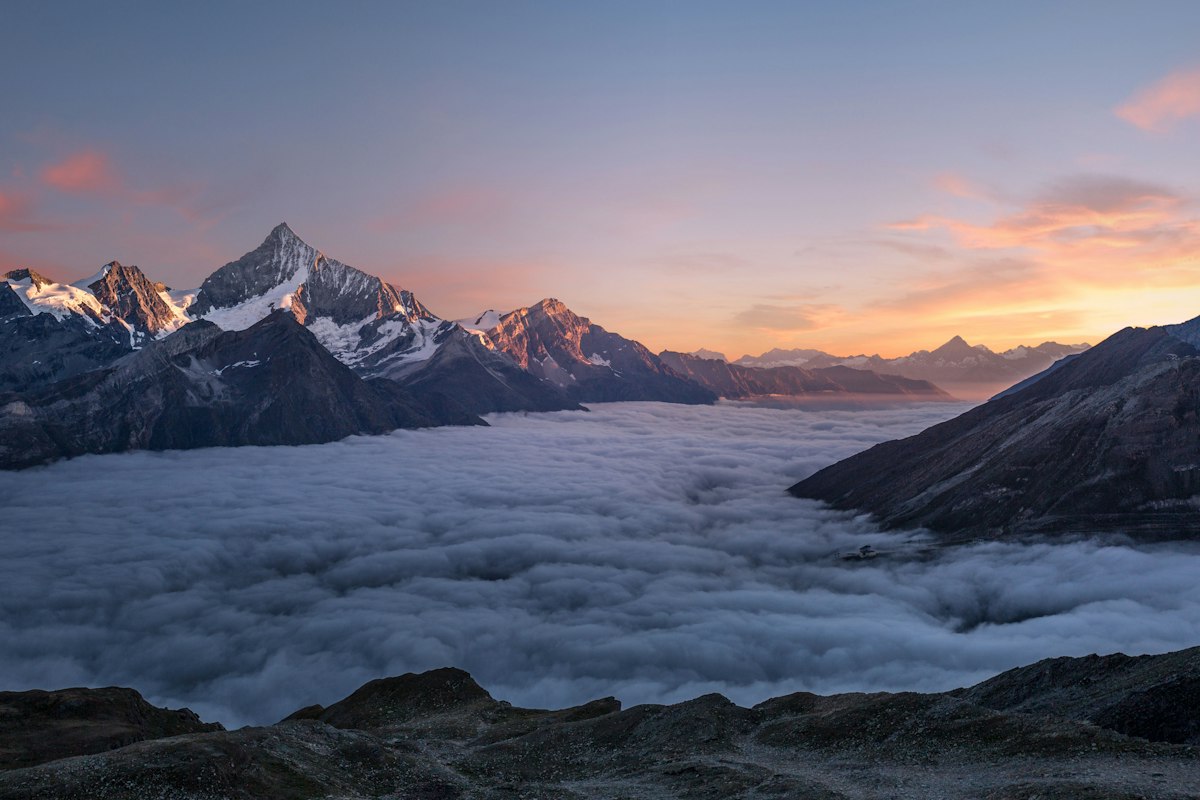
Switzerland is the country Americans fantasize about when they imagine European quality of life at its absolute peak: snow-capped Alps, precision trains, spotless cities, direct democracy, neutrality, chocolate, watches, and bank accounts. It's also the most expensive country in Europe by a wide margin, with a bureaucracy that makes the DMV look nimble and a social culture that can feel impenetrable to outsiders. The Swiss don't hate foreigners — 25% of the population is foreign-born — but they don't go out of their way to make you feel included, either. About 22,000 Americans live in Switzerland, most of them drawn by corporate transfers (Google, Procter & Gamble, Philip Morris International, and dozens of pharma companies have major operations here), the financial sector, or marriage to a Swiss citizen. Very few Americans "just move" to Switzerland on a whim. The immigration system is restrictive, the cost of living is staggering, and the cultural adjustment is steeper than most English speakers expect. But for those who make it work — particularly families with dual incomes and outdoor lifestyles — Switzerland delivers a quality of life that's hard to match anywhere on Earth. Here's the unvarnished guide. The [US Embassy in Bern](https://ch.usembassy.gov/) provides citizen services for Americans throughout Switzerland. [r/Switzerland](https://www.reddit.com/r/Switzerland/) has active expat discussion, and [r/zurich](https://www.reddit.com/r/zurich/) and [r/geneva](https://www.reddit.com/r/geneva/) are useful for city-specific questions.
Visas and Permits: The Corporate Transfer Pipeline
Switzerland is not in the European Union, which means it has its own immigration system. Details are available from the State Secretariat for Migration (SEM). The ch.ch guide on living in Switzerland is the official multilingual portal for residents. For Americans, the pathways are narrow and almost always require employer sponsorship.
B Permit (Residence Permit) This is the standard permit for foreigners employed in Switzerland. Your Swiss employer applies on your behalf, and you receive a permit tied to that specific job in that specific canton. Key details:
- Valid for 1 year, renewable annually (5 years for EU/EFTA citizens, but Americans get 1-year terms)
- Requires proof that no suitable Swiss or EU/EFTA candidate was available for the role (the labor market test). This means your employer must demonstrate they tried to hire locally first.
- Switzerland has an annual quota for non-EU/EFTA work permits. The federal government allocates permits to cantons, and once a canton's quota is filled, no more permits are issued that year. For 2025, the total quota for non-EU/EFTA workers is approximately 4,000 B permits and 4,000 short-stay L permits nationwide.
- Your qualifications must be recognized. Switzerland prioritizes highly qualified specialists — managers, engineers, IT professionals, scientists, senior finance roles.
- Processing time: 4-8 weeks after employer submission. Cost: CHF 65-150 (~$72-167 USD) depending on canton.
C Permit (Settlement Permit / Permanent Residency) After 10 years of continuous residence on a B permit (or 5 years if you qualify under certain bilateral agreements, which don't apply to Americans), you can apply for a C permit. This grants:
- Indefinite residence
- No employer tie — you can change jobs, start a business, or not work at all
- No renewal required (though the physical card needs replacement periodically)
- Path to Swiss citizenship (after 10 years total residence, with cantonal requirements varying)
10 years is a long road. Some cantons allow Americans to apply for a C permit after 5 years if they demonstrate "successful integration" — meaning fluency in a national language, community involvement, financial self-sufficiency, and knowledge of Swiss customs and laws.
L Permit (Short-Stay) For assignments under 1 year. Tied to a specific employer and project. Cannot be renewed into a B permit directly — you'd need to leave and re-enter. Used mainly for corporate project assignments.
Self-Employment Extremely difficult for Americans. You must prove your business will benefit the Swiss economy, create jobs, and be financially viable. The cantonal authorities evaluate each case individually. Getting a self-employment B permit without an established Swiss client base or business track record is nearly impossible.
Family Reunification If your spouse is Swiss or holds a C permit, they can sponsor you for a B permit. If your spouse holds a B permit, they can bring you — but the family income must be sufficient to support everyone without public assistance. Processing: 2-4 months.
The honest truth: If you don't have a job offer from a Swiss employer willing to navigate the permit process and prove you're more qualified than any available European candidate, you're not moving to Switzerland. This is the most employer-dependent immigration system among popular American expat destinations. Start your job search 6-12 months before you want to move, focusing on multinational companies with Swiss offices.
Banking: Precision Financial Infrastructure
Swiss banking is legendary for a reason. The system is stable, efficient, and built for a country where financial services are a core industry. Opening a personal account as a new resident is straightforward — the days of secret numbered accounts for foreigners are long over.
Opening an account: You'll need:
- Your residence permit (B or C)
- Valid passport
- Proof of Swiss address (rental contract)
- Employment contract or proof of income
- AHV/AVS number (Swiss social security number — you receive this when you register with your commune)
Most banks allow you to start the process online and complete it in-branch.
The major banks:
- UBS: The largest bank. Full-service, excellent digital banking, extensive branch network. Monthly account fee: CHF 3-5 (~$3.30-5.55 USD). Good for international clients.
- Credit Suisse / UBS (merged 2023): Previously separate, now consolidated under UBS.
- PostFinance: The postal bank. No-frills, low fees, excellent for daily banking. Monthly fee: CHF 5 (~$5.55 USD). ATMs at every post office. Popular with residents.
- Zuercher Kantonalbank (ZKB): Zurich's cantonal bank. State-guaranteed. Excellent if you live in Zurich canton. Other cantons have their own Kantonalbanks.
- Raiffeisen: Cooperative bank with branches in smaller towns. Good for non-urban residents.
- Neon / Yuh: Digital-only banks. No monthly fees. Good for basic banking and budgeting. Neon has a free account with a Swiss IBAN.
Moving money: Switzerland uses the Swiss franc (CHF), one of the world's strongest and most stable currencies. For USD-to-CHF transfers, Wise costs approximately $20-30 per $5,000 transfer. For large transfers (property purchases, relocation funds), CurrencyFair or OFX offer competitive rates on amounts over $10,000.
The CHF/USD rate has been relatively stable at 0.87-0.93 (1 CHF = $1.08-1.15 USD). The Swiss franc is a safe-haven currency — it tends to strengthen during global crises, which is great if you're holding CHF savings.
The Swiss salary system: Salaries are paid monthly (usually on the 25th). The 13th-month salary is standard in Switzerland — most employment contracts include a 13th monthly payment at the end of the year. Some companies split it (half in June, half in December). Factor this into your annual income calculations.
Cash vs. cashless: Switzerland is increasingly cashless, with contactless payment widely accepted. However, Switzerland still uses cash more than Scandinavia or the UK. Smaller shops, markets, and restaurants in rural areas may be cash-preferred. The largest banknote in circulation is the CHF 1,000 note (~$1,110 USD) — a reflection of Swiss comfort with cash and high prices.
FATCA compliance: As a US citizen, you must declare your Swiss bank accounts to the IRS via FBAR (FinCEN 114) if the aggregate balance exceeds $10,000 at any point during the year. Swiss banks are FATCA-compliant and report American account holders to the IRS. Americans working in Switzerland may qualify for the Foreign Earned Income Exclusion. For tips on managing the CHF/USD exchange rate, see our foreign currency risk guide. This is not optional and not theoretical — Switzerland ended its banking secrecy for US persons years ago.
Healthcare: Mandatory Insurance, Excellent Care
Switzerland does not have a government-run healthcare system like the UK or Canada. For a cross-country comparison of expat healthcare costs, see our health insurance abroad guide. Instead, it has a mandatory private insurance model — everyone living in Switzerland must purchase basic health insurance (Grundversicherung / assurance de base) from a private insurer within 3 months of registering as a resident.
The basic insurance (KVG/LAMal): Basic health insurance covers:
- Doctor visits (GP and specialist)
- Hospital stays (general ward)
- Maternity care
- Prescriptions (from an approved list)
- Lab work and diagnostics
- Mental health (with GP referral)
- Emergency care
- Rehabilitation
Insurers cannot refuse basic coverage based on health status or pre-existing conditions. Premiums vary by:
- Canton of residence: Geneva and Basel are the most expensive; Appenzell Innerrhoden and Nidwalden are the cheapest.
- Age: Children, young adults (19-25), and adults have different premium bands.
- Deductible chosen: You pick an annual deductible from CHF 300 to CHF 2,500. Higher deductible = lower monthly premium.
- Model chosen: Standard (free choice of doctor), HMO (must use a specific group practice), Telmed (phone consultation first), or GP model (must see GP before specialist). Restricted models cost 10-25% less.
Monthly premiums (adult, standard model, CHF 300 deductible):
- Zurich: CHF 370-480 (~$410-530 USD)
- Geneva: CHF 420-550 (~$465-610 USD)
- Basel: CHF 380-490 (~$420-540 USD)
- Lucerne: CHF 340-430 (~$377-477 USD)
- National average: approximately CHF 380 (~$420 USD)
With a CHF 2,500 deductible, premiums drop to approximately CHF 220-350/month depending on canton. Young, healthy people often choose the high deductible to save CHF 1,500-2,000/year on premiums.
Out-of-pocket costs: Beyond the deductible, you pay a 10% co-payment (Selbstbehalt) on all covered services, capped at CHF 700/year for adults. So your maximum annual out-of-pocket for covered services is: deductible + CHF 700 = CHF 1,000-3,200 depending on your deductible choice.
What's NOT covered by basic insurance:
- Dental care: Not covered at all for adults (except accident-related). A routine cleaning costs CHF 150-300 (~$166-333 USD). A filling: CHF 200-500. Swiss dental costs are among the highest in the world. Many Swiss residents cross the border to Germany, France, or Hungary for dental work.
- Vision care: Eye exams are partially covered; glasses and contacts are not.
- Complementary medicine (acupuncture, homeopathy, etc.): Partially covered under basic insurance since 2017, with conditions.
Supplementary insurance (Zusatzversicherung): Optional plans covering private/semi-private hospital rooms, dental, alternative medicine, international coverage, and broader prescription access. Unlike basic insurance, supplementary insurers can reject you based on health status. Monthly cost: CHF 30-200+ depending on coverage.
Quality: Swiss healthcare quality is among the best in the world. Wait times are short — you can typically see a GP within 1-3 days and a specialist within 1-4 weeks. Hospitals are modern, well-staffed, and clean. The pharmaceutical industry's presence means cutting-edge treatments are often available here before other countries.
Premium subsidies: Low-income residents qualify for cantonal premium subsidies (Praemienverbilligung). The threshold varies by canton but generally covers households earning below approximately CHF 55,000-75,000/year ($61,000-83,000 USD). As an American professional on a B permit, you're unlikely to qualify — but it's worth checking if your family income is in the lower range.
Where to Live: City by City
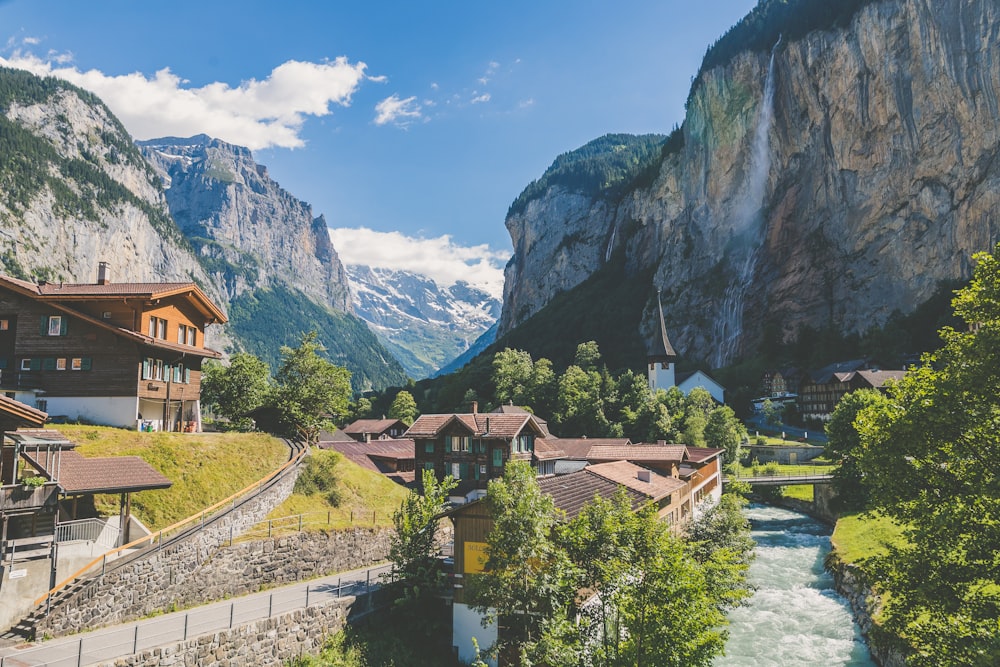
Switzerland is tiny — 41,285 square kilometers, smaller than West Virginia — but geographically and culturally diverse. The country has four official languages (German, French, Italian, Romansh), and the region you choose determines not just your commute but your linguistic and cultural reality.
Zurich (population 440,000 city / 1.4 million metro) The financial capital and largest city. Corporate headquarters, banking, tech (Google's largest European office is here), and a thriving startup scene. German-speaking. Clean, efficient, and expensive even by Swiss standards.
- Kreis 1 (Altstadt/Old Town): Historic center, along the Limmat River. Beautiful but touristy. One-bedroom: CHF 2,200-3,200/month (~$2,440-3,550 USD)
- Kreis 3 (Wiedikon) / Kreis 4 (Langstrasse): The "hip" districts. Bars, restaurants, multicultural. One-bedroom: CHF 1,800-2,600 (~$2,000-2,880 USD)
- Kreis 5 (Zurich-West): Former industrial area, now trendy with galleries and restaurants. One-bedroom: CHF 2,000-2,800 (~$2,220-3,100 USD)
- Winterthur / Zug (commuter towns, 20-30 min by train): One-bedroom: CHF 1,400-2,000 (~$1,550-2,220 USD). Zug is the low-tax canton (cantonal income tax rates are roughly half of Zurich's).
- Average apartment purchase price (Zurich city): CHF 12,000-18,000/sqm (~$1,240-1,860 USD/sqft)
Geneva (population 205,000 city / 600,000 metro) The international city. United Nations, World Health Organization, CERN, Red Cross, and hundreds of NGOs and international organizations. French-speaking. Cosmopolitan and expensive.
- Eaux-Vives / Plainpalais: Central, lively, close to the lake. One-bedroom: CHF 2,000-3,000 (~$2,220-3,330 USD)
- Carouge: Bohemian quarter just south of the city center. Italian-influenced architecture. One-bedroom: CHF 1,800-2,500 (~$2,000-2,770 USD)
- France (Annemasse, Ferney-Voltaire): Many Geneva workers live across the border in France for dramatically lower rents and cost of living. One-bedroom in Annemasse: EUR 800-1,200 (~$870-1,300 USD). 20-minute commute. You pay French income tax instead of Swiss (generally lower), but lose Swiss social benefits.
Basel (population 180,000 city / 840,000 tri-national metro) Pharma capital of the world. Novartis, Roche, and hundreds of biotech/chemical companies. Sits where Switzerland, Germany, and France meet (the "Dreilandereck"). German-speaking with strong French influence.
- Kleinbasel: Across the Rhine, more diverse, younger, cheaper. One-bedroom: CHF 1,400-2,000 (~$1,550-2,220 USD)
- Grossbasel (Gundeldingen, St. Johann): Central, family-friendly. One-bedroom: CHF 1,600-2,400 (~$1,770-2,660 USD)
- Like Geneva, many workers live in nearby Germany (Lorrach, Weil am Rhein) or France (Saint-Louis) for lower costs.
Bern (population 135,000 city / 410,000 metro) The federal capital. Government town with a UNESCO World Heritage old town. German-speaking. Quieter, more affordable, genuinely charming.
- One-bedroom (central): CHF 1,300-1,900 (~$1,440-2,110 USD)
- Average apartment purchase price: CHF 8,000-12,000/sqm (~$825-1,240 USD/sqft)
- Downside: Smaller job market outside government and diplomacy. Less international than Zurich or Geneva.
Lausanne (population 140,000) On Lake Geneva between Geneva and Bern. Home to EPFL (one of Europe's top tech universities), the International Olympic Committee, and a growing tech scene. French-speaking. Hilly, beautiful, and more affordable than Geneva.
- One-bedroom (central): CHF 1,500-2,200 (~$1,660-2,440 USD)
- Notable for: University town energy, stunning lakeside setting, wine country (Lavaux terraces are UNESCO-listed).
Lugano (population 65,000) The Italian-speaking gem in Ticino canton. Mediterranean climate, palm trees, lake views. Lower cost of living than the German/French regions.
- One-bedroom (central): CHF 1,200-1,800 (~$1,330-2,000 USD)
- Downside: Smaller job market. Can feel isolated from the rest of Switzerland (physically separated by the Alps).
A note about finding apartments: The Swiss rental market is extremely tight in Zurich and Geneva. Vacancy rates hover around 0.5-1%. You'll compete against dozens of applicants for each listing. Landlords require: a copy of your residence permit, a debt enforcement extract (Betreibungsauszug), proof of income, and references from previous landlords. Apply for everything, respond immediately to listings on Homegate.ch, ImmoScout24.ch, and Comparis.ch, and be prepared to visit apartments with a folder full of documentation.
Safety: Among the Safest on Earth
Switzerland is one of the safest countries in the world. The homicide rate is approximately 0.5 per 100,000 — one of the lowest globally and roughly one-twelfth of the US rate. Violent crime is rare. You can walk alone at night in any major Swiss city without meaningful concern.
The paradox of Swiss gun culture: Switzerland has one of the highest gun ownership rates in Europe — approximately 27 guns per 100 residents. This is largely because of the militia system: Swiss men are required to serve in the military, and after service, many keep their service weapons at home. However, ammunition storage rules are strict, and carrying a loaded weapon in public is essentially prohibited without special permit. The result: high gun ownership, extremely low gun violence.
What crime exists:
- Property crime: Bicycle theft is the most common crime expats encounter. Lock your bike — and not with a cheap lock. Car break-ins happen in tourist parking areas (mountain trailheads, ski resorts).
- Pickpocketing: Rare but present in Zurich's Langstrasse area, Geneva's train station, and tourist zones. Standard urban precautions.
- Scams: Minimal. Switzerland has low corruption (consistently ranked in the top 5 globally for transparency).
- Drug scene: Zurich's Langstrasse and some areas of Geneva and Basel have visible drug dealing. This is contained and rarely affects uninvolved residents.
Natural hazards:
- Avalanches: A real risk if you ski or hike off-piste in winter. Stay on marked trails, check the avalanche bulletin (slf.ch), and carry avalanche safety equipment if going backcountry.
- Mountain weather: Changes rapidly. A sunny morning can become a dangerous thunderstorm by afternoon. Check MeteoSwiss before any mountain excursion.
- Flash flooding: Climate change has increased severe weather events. Some lower-altitude areas experience periodic flooding.
The bottom line: Safety is one of Switzerland's greatest selling points. The combination of low crime, excellent infrastructure, strict regulations, and a culture of order means you'll feel safer here on a daily basis than virtually anywhere in the US. The main risks are mountain-related, and those are entirely manageable with common sense and preparation.
Cost of Living: Brace Yourself
Switzerland is the most expensive country in this guide by a significant margin. Numbeo's Switzerland data provides city-level cost breakdowns for Zurich, Geneva, Basel, and Bern. For context on how Swiss property prices compare globally, see our median home prices by country. If cost of living is a concern, explore our cheapest cities abroad guide. Salaries are high to compensate — a software engineer might earn CHF 120,000-180,000 ($133,000-200,000 USD) and a mid-level manager CHF 100,000-150,000 ($111,000-166,000 USD). But the cost of living absorbs much of that income.
Budget Living ($3,500-4,500 USD/month) Smaller city or commuter town (Winterthur, Biel, Aarau), shared apartment, cooking at home, strict budgeting. This is genuinely tight in Switzerland.
- Rent (room in shared apartment): $900-1,200 USD
- Health insurance (high deductible): $250-350 USD
- Groceries (budget shopping at Aldi, Lidl, Denner): $400-550 USD
- Eating out (rarely): $80-150 USD
- Transportation (half-fare card + regional transit pass): $100-180 USD
- Phone (Salt, Wingo, Yallo budget plans): $20-35 USD
- Entertainment/miscellaneous: $150-250 USD
- Total: $1,900-2,715 USD
Note: This does not include savings, travel, or emergencies. Living on a strict budget in Switzerland is possible but leaves little room for the lifestyle that attracts people here in the first place.
Comfortable Living ($5,500-7,500 USD/month) Zurich, Geneva, or Basel. Your own apartment. Eating out regularly. Full Swiss lifestyle with skiing, hiking, and weekend trips.
- Rent (1BR, decent neighborhood): $2,000-2,800 USD
- Health insurance (moderate deductible): $350-500 USD
- Groceries (Migros, Coop): $500-700 USD
- Eating out (2-3x/week): $300-500 USD
- Transportation (GA Travelcard or car): $250-450 USD
- Phone: $25-45 USD
- Gym: $70-100 USD
- Ski pass / outdoor activities: $100-250 USD (amortized annually)
- Weekend trips: $200-400 USD
- Total: $3,795-5,745 USD
Luxury Living ($10,000-15,000 USD/month) Premium Zurich or Geneva apartment, fine dining, international school for kids, full Alpine lifestyle.
- Rent (3BR luxury apartment): $4,000-6,500 USD
- Health insurance (family, low deductible): $1,200-1,800 USD
- Groceries (Globus, Manor, specialty shops): $700-1,000 USD
- Dining (fine restaurants, 4-5x/week): $800-1,400 USD
- Car (lease + insurance + fuel + parking): $600-1,000 USD
- International school (per child, amortized monthly): $2,000-3,500 USD
- Travel and entertainment: $500-1,000 USD
- Total: $9,800-16,200 USD
Key Swiss prices that will shock Americans:
- A basic lunch (soup + main) at a casual restaurant: CHF 25-35 ($28-39 USD)
- A Big Mac: CHF 7.50 ($8.30 USD) — the most expensive in the world
- A beer at a bar: CHF 7-9 ($7.80-10 USD)
- A cappuccino: CHF 5-7 ($5.55-7.75 USD)
- Grocery bill for one person/week: CHF 100-180 ($111-200 USD)
- Haircut (men's): CHF 40-70 ($44-78 USD)
- Movie ticket: CHF 18-22 ($20-24 USD)
- Monthly gym membership: CHF 60-100 ($67-111 USD)
- Ski day pass (major resort): CHF 75-95 ($83-105 USD)
The saving grace: Aldi, Lidl, and cross-border shopping. The arrival of German discounters Aldi and Lidl in Switzerland brought grocery prices down by 15-25% compared to Swiss chains Migros and Coop. Many Swiss residents near borders also do weekly shopping trips to Germany, France, or Italy, where identical products cost 30-50% less. This is so common that border-town supermarkets in Germany have parking lots full of Swiss-plated cars.
Taxes: Swiss income tax is a combination of federal, cantonal, and communal (municipal) taxes. The total effective rate varies enormously by canton:
- Zug: ~22% effective rate on CHF 150,000 income (one of the lowest)
- Zurich: ~30-33%
- Geneva: ~35-38%
- Schwyz, Nidwalden, Obwalden: ~20-24% (low-tax cantons popular with the wealthy)
Swiss taxes are generally lower than comparable European countries (Germany, France, UK) and broadly in line with US federal + state taxes for most income levels. The key difference: you're getting universal healthcare infrastructure, flawless public transit, and excellent public services for your tax money.
Buying Property: Restrictive for Foreigners
Switzerland has some of the strictest property ownership rules for foreigners in the developed world. As we cover in our property buying rules guide, foreign ownership restrictions vary dramatically by country. The Lex Koller (Federal Act on the Acquisition of Real Estate by Persons Abroad) governs foreign property purchases.
The rules:
- B permit holders (non-EU/EFTA, i.e., Americans): Can buy a primary residence only. Cannot buy investment property, vacation homes, or undeveloped land. Must live in the property. Need cantonal authorization.
- C permit holders (permanent residents): Same rights as Swiss citizens — can buy any property without restriction.
- Non-residents (no Swiss permit): Generally cannot buy property in Switzerland, with very limited exceptions for holiday apartments in designated tourist zones (and these are heavily regulated with annual quotas).
The buying process:
- Mortgage pre-approval. Swiss banks typically require a minimum 20% down payment — at least 10% must be from non-pension savings (the other 10% can come from your second-pillar pension fund). Maximum loan-to-value: 80%. Mortgage rates: 1.5-2.5% for a 10-year fixed rate (Swiss mortgage rates are remarkably low by international standards).
- Affordability test. Swiss banks apply a conservative affordability calculation: your annual housing costs (mortgage interest at a theoretical rate of 5%, plus 1% maintenance, plus amortization) must not exceed one-third of your gross household income. This means a CHF 1 million property requires approximately CHF 175,000/year gross household income to qualify.
- Find a property. Major platforms: Homegate.ch, ImmoScout24.ch, Comparis.ch, Newhome.ch. Real estate agents charge the seller a commission of 2-3%.
- Notary public. All property transactions must go through a cantonal notary. The notary drafts the purchase contract, verifies the transaction's legality, and registers the transfer. This is not optional.
- Registration. The property is registered in the Grundbuch (land registry).
Closing costs:
- Notary fees: 0.1-0.5% of purchase price (varies by canton)
- Land registry fee: 0.1-0.5%
- Property transfer tax: 0-3.3% depending on canton (some cantons have none; Geneva is the highest)
- Mortgage deed fee: 0.1-0.3% if taking out a mortgage
- Total closing costs: approximately 1-5% of purchase price depending on canton
Property prices:
- Zurich (apartment): CHF 12,000-18,000/sqm (~$13,300-20,000/sqm or ~$1,235-1,860/sqft)
- Geneva (apartment): CHF 13,000-20,000/sqm
- Basel (apartment): CHF 7,000-12,000/sqm
- Bern (apartment): CHF 7,000-11,000/sqm
- Lugano (apartment): CHF 5,000-9,000/sqm
- Rural/mountain areas: CHF 3,000-7,000/sqm
A typical 80-sqm (860 sqft) apartment in Zurich costs CHF 960,000-1,440,000 ($1.06-1.6 million USD). This is not a luxury apartment — this is a standard two-bedroom.
Property taxes: Swiss property taxes (Liegenschaftssteuer / impot immobilier) are low by international standards: typically 0.05-0.3% of the assessed (tax) value annually. On a CHF 1 million property, you might pay CHF 500-3,000/year (~$555-3,330 USD). Some cantons (Zurich, Schwyz) don't levy a cantonal property tax at all, though communal taxes may still apply.
Imputed rental value (Eigenmietwert): This is a uniquely Swiss concept. If you own your home, Switzerland adds a "deemed rental income" (typically 60-70% of market rent) to your taxable income. The logic: homeowners benefit from not paying rent, so they're taxed on that benefit. This increases your income tax bill by several thousand francs per year. It's controversial among the Swiss themselves and has been debated for decades.
Renting vs. buying: Switzerland has one of the lowest homeownership rates in the developed world — approximately 36% (compared to 65% in the US). Most Swiss people rent their entire lives, and there's no social stigma attached to it. The rental market is well-regulated with strong tenant protections. Many financial advisors in Switzerland actually recommend renting over buying given the imputed rental income tax, high property prices, and the opportunity cost of tying up 20%+ in a down payment.
The Practical Stuff: Phones, Transit, Language, and Daily Life
Cell phones: The main carriers are Swisscom (premium, best coverage), Sunrise, and Salt (budget-friendly). A standard postpaid plan with unlimited calls and 5-10GB data costs CHF 30-55/month (~$33-61 USD). Budget MVNOs like Wingo (Swisscom network), Yallo (Sunrise), and M-Budget Mobile (Migros/Swisscom) offer plans starting at CHF 15-25/month. Prepaid SIMs are available at train stations and supermarkets.
Public transit (this is where Switzerland shines): The Swiss public transport system is the best in the world. Full stop. Trains run on time. Connections are coordinated nationwide so that buses, trams, and trains connect seamlessly. The SBB (Swiss Federal Railways) app is your lifeline.
- GA Travelcard (General Abonnement): Unlimited travel on virtually all trains, buses, trams, and boats in Switzerland for one year. Cost: CHF 3,860 (~$4,280 USD) for second class. This is expensive but often worth it for daily commuters.
- Half-Fare Card: Half price on all public transport for one year. Cost: CHF 185 (~$205 USD). Almost everyone in Switzerland has one.
- Regional passes (Verbund): Monthly passes for your canton's transit network. Zurich zone pass: CHF 80-200/month depending on zones.
You genuinely do not need a car in most Swiss cities. Many Swiss families are car-free.
Driving: If you choose to drive, your US license is valid for 12 months. After that, you must exchange it for a Swiss license. Americans can exchange directly without a driving test in most cantons (check your specific canton). Swiss license fee: CHF 80-150. Car costs are high: fuel CHF 1.85-2.10/liter (~$7.50-8.50/gallon), annual insurance CHF 800-2,000, mandatory annual road tax CHF 400-800, parking in Zurich CHF 200-350/month, and the motorway vignette CHF 40/year.
Language: This is where it gets complicated. Switzerland has four national languages:
- German (spoken by 63% of the population): Zurich, Bern, Basel, Lucerne, central and eastern Switzerland. But Swiss German (Schwizerduetsch) is the actual spoken language — it's significantly different from standard German (Hochdeutsch). Think of it as the difference between Scots English and standard English, except more extreme. You'll learn Hochdeutsch in language classes, and Swiss people will switch to it for you, but conversations between locals will be in Swiss German, which you may not understand for years.
- French (23%): Geneva, Lausanne, Neuchatel, western Switzerland. Standard French, easier for language learners.
- Italian (8%): Lugano, Ticino canton.
- Romansh (<1%): Parts of Graubunden canton.
In international workplaces (especially in Zurich and Geneva), English is the working language. You can function day-to-day in English in most urban areas. But for social integration, bureaucracy, and eventually permanent residency or citizenship, learning the local language is essential. The C permit and citizenship both require B1 level in a national language (spoken) and A2 (written). Language courses: CHF 500-1,500 per semester at institutions like Migros Klubschule or VOX Sprachschule.
Commune registration (Anmeldung): Within 14 days of moving to Switzerland, you must register at your local Einwohnerkontrolle (residents' registration office). Bring your passport, residence permit, rental contract, and passport photos. This is mandatory, not optional. You'll receive your AHV number and be enrolled in the local tax system.
Recycling and waste: Switzerland takes recycling extremely seriously. Household waste must be disposed of in official taxed garbage bags (CHF 1-2 per 35-liter bag in most communes). Everything else — glass, paper, cardboard, plastic bottles, aluminum, batteries, electronics — has specific collection points and schedules. Putting non-taxed garbage in regular bins can result in fines. Your commune will provide a recycling calendar. Follow it.
Sundays and quiet hours: Switzerland has strict noise regulations. Doing laundry, vacuuming, mowing the lawn, or making excessive noise on Sundays and public holidays can result in complaints from neighbors and potentially fines. Most shops are closed on Sundays (train station shops and some gas stations are exceptions). Quiet hours typically run from 10 PM to 7 AM on weekdays and all day Sunday. This is taken seriously — your neighbors will let you know if you violate it.
For community connections, InterNations Switzerland and ExpatFocus Switzerland organize regular events for international residents.
The Honest Assessment: Who Switzerland Is (and Isn't) For
Switzerland is not a country you move to casually. It requires financial resources, professional qualifications, and a temperament that thrives on order, structure, and a certain emotional reserve.
Switzerland is for you if:
- You have a job offer from a Swiss employer or work for a multinational with Swiss operations. Without this, immigration is effectively impossible for most Americans.
- You earn a high professional salary and want the combination of safety, natural beauty, excellent public services, and central European location. Switzerland rewards high earners — the tax rates are moderate by European standards, and the quality of life for dual-income professional households is extraordinary.
- You love the outdoors. Skiing, hiking, mountain biking, paragliding, swimming in Alpine lakes — Switzerland's landscape is its greatest asset, and it's accessible from every city in under an hour.
- You value stability and order above spontaneity and social warmth. Swiss society functions like Swiss engineering: precise, reliable, quiet, and not particularly interested in entertaining you.
- You plan to stay long-term. Switzerland rewards commitment. The first 2-3 years can feel isolating; years 5+ are when the quality of life compounds — you speak the language, you have your routines, you know the mountains, and you've built genuine friendships.
Switzerland is NOT for you if:
- You're looking for affordable living. Even with a six-figure salary, you'll be surprised at how fast money disappears. If cost of living is a primary concern, look elsewhere.
- You want instant social integration. The Swiss are private, reserved, and take years to warm up. They have their friend groups from school and military service, and they're not eagerly looking for new additions. Expat social life often revolves around other expats, which can feel like an international bubble rather than genuine Swiss life.
- You're a freelancer or remote worker without employer sponsorship. There's no easy visa for this.
- You need sunshine. The Swiss Mittelland (the plateau between the Alps and Jura where most people live) is foggy and gray from November to March. Zurich gets roughly 1,500 hours of sunshine per year — comparable to Seattle. Geneva and Ticino are sunnier, but the winter gloom is real.
- You expect American-style customer service. Swiss shops close early, restaurants may have limited hours, and the concept of "the customer is always right" does not exist. Services are professional but not effusively friendly.
The Swiss integration curve: Year one is exciting — everything works, the views are incredible, the cheese is transcendent. Year two is hard — the language is frustrating, making Swiss friends is slower than expected, and the cost of everything grates. Year three is the decision point — either the structured, nature-rich, high-functioning Swiss life clicks for you, or it doesn't. Those who stay past year three overwhelmingly stay for good. They discover that Switzerland's reserve conceals a deep reliability — your neighbors may not invite you to dinner for three years, but they'll shovel your walkway without being asked. That's the Swiss deal: less warmth, more dependability. For certain Americans, especially those exhausted by instability, it's exactly right.
Ready to explore?
Browse Destinations