The Complete Guide to Moving to the UK as an American

The UK is the easy choice, and that is both its greatest strength and its most dangerous trap. Americans move to Britain thinking the shared language means shared culture, and then spend their first year learning that the two countries are separated by far more than an ocean. The plugs are different. The tax year starts in April. The ground floor is not the first floor. You will be told something is "quite good" and need months to determine whether that means excellent or mediocre. But the fundamentals are genuinely compelling. The UK median home price is $360,000 -- 14% below the US median -- and outside London, prices drop dramatically. Manchester, Leeds, Birmingham, and Edinburgh offer world-class cities at prices that would barely buy a studio apartment in most US coastal metros. The NHS, for all its problems, means you will never receive a surprise medical bill. The legal system is familiar and transparent. And the UK remains one of the most connected countries on earth -- direct flights to everywhere, English as the business language, and a timezone that overlaps with both American and Asian business hours. The catch, post-Brexit, is that moving to the UK has gotten harder. The days of just showing up are over. You need a visa, and the visa system has become more selective. This guide covers the real options, the real costs, and the real experience of building a life in a country that Americans find simultaneously familiar and bewildering. The [US Embassy in London](https://uk.usembassy.gov/) is the official resource for American citizens in the UK. The [r/ukvisa](https://www.reddit.com/r/ukvisa/) subreddit is invaluable for visa questions, and [r/expats](https://www.reddit.com/r/expats/) has active UK threads.
Visa Options for Americans
Americans can visit the UK for up to 6 months without a visa (this is separate from the Schengen 90-day limit -- the UK is not in the EU or Schengen). You cannot work, study long-term, or access public services during this period. To live in the UK, you need a visa, and post-Brexit, the system is points-based. Full details on visa categories are available at UK Visas and Immigration. The gov.uk points calculator helps you check if your role meets the salary and skill requirements.
The Skilled Worker Visa is the main route for employed Americans. Requirements: a job offer from a UK employer who holds a sponsor licence, a role at RQF Level 3 or above (roughly A-level equivalent -- most professional jobs qualify), and a minimum salary of $31,200/year (general threshold) or the "going rate" for your specific occupation, whichever is higher. The visa costs $800-$1,500 depending on duration, plus the Immigration Health Surcharge (IHS) of $1,290/year -- this gives you full NHS access. Processing time: 3-8 weeks. Valid for up to 5 years, renewable. Your dependents (spouse and children) can accompany you and work without restriction.
The Global Talent Visa is for people with recognized exceptional talent or promise in science, engineering, humanities, digital technology, arts, or culture. You need an endorsement from a designated body (e.g., Tech Nation for tech, UKRI for science, Arts Council England for arts). No job offer required, no salary minimum, and it leads to settlement in 3 years instead of 5. This is the premium route if you qualify.
The Innovator Founder Visa replaced the old Tier 1 Entrepreneur route. You need a genuine, innovative business idea endorsed by an approved body, at least $63,000 in investment funds (not required if endorsed by certain accelerators), and a viable business plan. Valid for 3 years, renewable, with settlement possible after 3 years.
For a broader comparison of work-abroad options, see our digital nomad visas guide.
The High Potential Individual (HPI) Visa is for graduates of top global universities (updated list published annually by the UK government). If you graduated from a qualifying institution within the last 5 years, you can get a 2-year visa (3 years for PhD holders) with no job offer needed. This is a golden ticket for recent graduates of places like MIT, Stanford, Harvard, Berkeley, and about 50 other US universities.
The Ancestry Visa applies if you have a grandparent born in the UK, Channel Islands, or Isle of Man. This grants a 5-year visa with full work rights and a path to settlement. It is one of the most generous visas available and is underutilized by Americans with British heritage.
The Youth Mobility Scheme is available to US citizens aged 18-35 (the US was added in 2024). It allows you to live and work in the UK for 2 years with no job offer required. There is an annual quota of 30,000 places for Americans. Cost: approximately $370 plus the IHS. This is the simplest route for younger Americans.
Student visas: UK university tuition for international students runs $15,000-$40,000/year depending on the institution and program. You can work up to 20 hours/week during term and full-time during holidays.
Path to settlement (Indefinite Leave to Remain / ILR): After 5 years on most work visas (3 years on Global Talent), you can apply for ILR. Costs: approximately $3,100 plus the Life in the UK test ($63) and proof of B1 English (Americans are exempt from the English requirement). British citizenship is available 1 year after ILR, with a ceremony and oath. The UK allows dual citizenship.
Banking and Money
Opening a UK bank account is easier than in most European countries, but still involves more paperwork than Americans expect. You need: your passport, proof of UK address (a utility bill, council tax bill, or tenancy agreement), and sometimes proof of employment or a visa.
Major high street banks: HSBC, Barclays, NatWest, Lloyds, and Santander UK. Of these, HSBC is generally the most accommodating for newcomers, partly because of its international operations. Barclays and Lloyds are widely used and have good mobile apps. Most standard current accounts are free -- the UK does not have the monthly account fee culture of continental Europe.
The address problem: Many landlords want a UK bank account for rent payments, but banks want a UK address. The solution: digital banks. Monzo and Starling Bank can open accounts with just your passport and a UK phone number -- no proof of address needed initially. These are fully regulated UK banks with excellent apps, free domestic transactions, and good exchange rates. Use Monzo or Starling as your bridge account, then open a high street bank account once you have utility bills.
Moving money from the US: Wise is the standard. Transfer fees are 0.4-0.6% with mid-market GBP/USD rates. For property purchases, solicitors handle the transfer, but using Wise for the exchange (then sending GBP to the solicitor) can save 1-3% compared to bank wire exchange rates. On a $300,000 property, that is $3,000-$9,000 in savings.
Credit history: The UK has its own credit scoring system (primarily Experian, Equifax, and TransUnion UK). Your US credit history does not transfer. You start from zero. This affects your ability to get credit cards, phone contracts, and mortgages. HSBC offers a credit builder card for newcomers. Being on the electoral roll (if you are a Commonwealth citizen or have ILR) significantly boosts your credit score -- this does not apply to most Americans initially.
Tax: UK income tax rates are 0% on the first $15,800 (personal allowance), 20% on $15,801-$63,000, 40% on $63,001-$189,000, and 45% above $189,000 (2026 thresholds in GBP converted to approximate USD). National Insurance contributions (the UK equivalent of Social Security + Medicare) add 8-12% depending on income level. The US-UK tax treaty prevents double taxation, and the FEIE applies. UK tax returns are simpler than US ones -- most employed people have tax deducted at source through PAYE (Pay As You Earn) and never file a return. The HMRC website is where you'll manage your UK tax obligations, including self-assessment for freelancers.
Healthcare: The NHS and Beyond
The National Health Service (NHS) is the UK's universal healthcare system, funded through taxation. If you have a visa and have paid the Immigration Health Surcharge (IHS) -- currently $1,290/year, paid upfront with your visa application -- you have full access to the NHS on the same basis as a UK citizen.
What the NHS covers for free (at the point of use):
- GP (general practitioner) visits: $0
- Hospital treatment, including surgery: $0
- Emergency care (A&E): $0
- Cancer treatment: $0
- Mental health services: $0 (though wait times are long)
- Maternity care, including childbirth: $0
- Ambulance services: $0
What the NHS charges or does not cover well:
- Prescriptions: $12.50 per item in England (free in Scotland, Wales, and Northern Ireland). If you take multiple medications, a Prescription Prepayment Certificate (PPC) caps costs at $130/year
- Dental: NHS dental treatment exists but is scarce. Costs: $30 for a checkup/cleaning (Band 1), $80 for fillings (Band 2), $320 for crowns/bridges (Band 3). The challenge is finding an NHS dentist accepting new patients -- many areas have years-long waiting lists
- Eye tests: $30-$40 (free if over 60 or on certain benefits)
- Glasses/contacts: Not covered
The honest truth about the NHS: It is a marvel that you will never go bankrupt from a medical bill. It is also a system under severe strain. GP wait times are typically 1-3 weeks for non-urgent appointments (same-day for urgent issues). Specialist referral wait times are 4-18 weeks depending on the specialty and region. Elective surgery can have wait times of several months to over a year. Emergency care is excellent -- A&E departments triage effectively and treat genuine emergencies immediately.
Private healthcare: Many expats supplement the NHS with private insurance. For a cross-country comparison of expat healthcare options, see our health insurance abroad guide. Bupa, AXA Health, Aviva, and Vitality are the major providers. Premiums: $100-$300/month for comprehensive coverage, depending on age. Private insurance gets you faster specialist access (days instead of weeks), private hospital rooms, and choice of consultant. Many employers offer private health insurance as a benefit.
Prescriptions from the US: UK doctors will not honor US prescriptions. Register with a local GP surgery (this is your primary care "home" in the NHS) and bring documentation of your medications. Most common medications are available, often under different brand names. The NHS negotiates drug prices nationally, so even without insurance, medications are far cheaper than in the US.
Mental health: The NHS provides mental health services through the IAPT (Improving Access to Psychological Therapies) program -- self-referral via NHS Talking Therapies, no GP needed. Wait times for talking therapies: 6-18 weeks. For urgent mental health needs, NHS crisis teams respond within 4 hours. Private therapy costs $60-$120 per session and has minimal wait times.
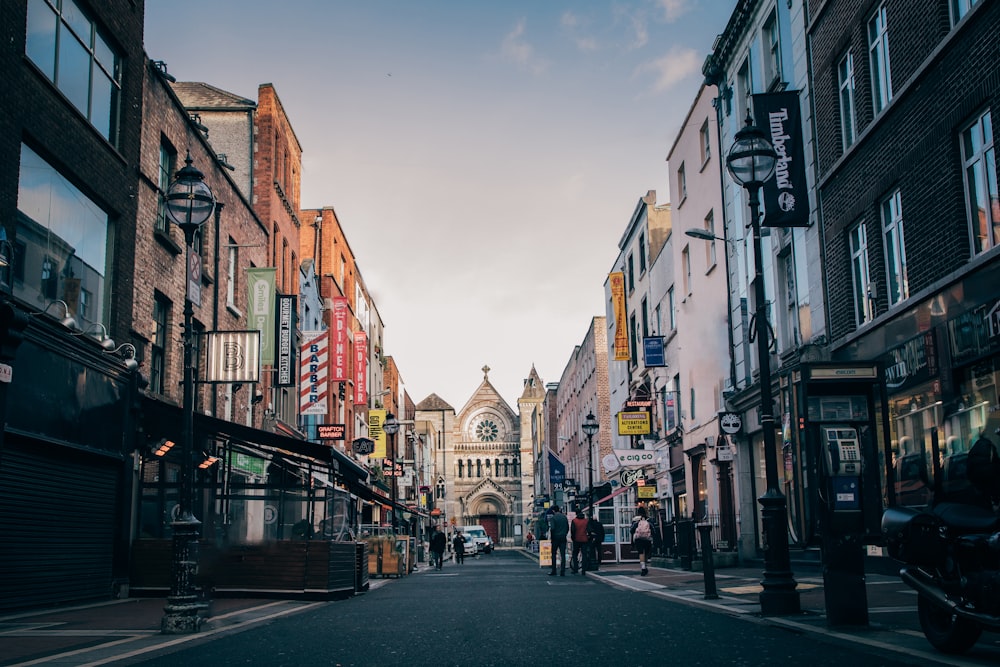
Where to Live: 6 Places Beyond the London Bubble
London dominates the American imagination of the UK, but the smartest expats are increasingly looking elsewhere. Here is where your money goes furthest without sacrificing quality of life.
London -- Still the financial and cultural capital. A 1-bedroom in Zone 1-2 (central London: Islington, Shoreditch, Southwark, Battersea) rents for $1,800-$2,800/month. Zone 3-4 (Brixton, Hackney outskirts, Ealing, Greenwich): $1,300-$1,900. To buy in central London: $10,000-$15,000 per square meter. London is an extraordinary city -- world-class culture, restaurants, parks, and professional opportunities. It is also exhausting and expensive. The Tube is efficient but crowded. Council tax adds $1,200-$2,500/year. The social scene is unmatched but the cost of everything -- pints ($7-$9), coffee ($4-$5), a restaurant meal ($20-$40) -- adds up. Americans working in finance, tech, law, or media will find London's job market the most accessible in Europe.
Manchester -- The UK's unofficial second city and arguably its most exciting. A 1-bedroom in the Northern Quarter, Ancoats, or Didsbury rents for $850-$1,200/month. To buy: $3,000-$5,000 per square meter. Manchester has the UK's best music scene (Joy Division, Oasis, The Smiths all came from here), a growing tech sector (the BBC moved major operations to MediaCityUK in Salford), Premier League football, and a food scene that rivals London at half the price. Direct flights to New York and several US cities. The downside: it rains. A lot. Mancunians joke about it, but 150+ days of rain per year is a genuine lifestyle factor.
Edinburgh -- Scotland's capital is one of the most beautiful cities in Europe. A 1-bedroom in the New Town, Stockbridge, or Bruntsfield rents for $900-$1,400/month. To buy: $3,500-$5,500 per square meter. Edinburgh has a thriving financial sector, the world's largest arts festival (the Fringe), free prescriptions (Scotland-wide policy), and free university tuition for Scottish residents (though not international students initially). The Old Town and Arthur's Seat give you medieval architecture and dramatic landscape within walking distance of a cosmopolitan city. Downsides: winter daylight is limited (sunrise at 8:45 AM, sunset at 3:40 PM in December), and Edinburgh is expensive by Scottish standards.
Bristol -- A creative, progressive city in southwest England. A 1-bedroom in Clifton, Stokes Croft, or Bedminster rents for $850-$1,200/month. To buy: $3,500-$5,500 per square meter. Bristol has a strong tech sector, excellent food (it was named a UNESCO City of Film), and easy access to the Cotswolds and Welsh coast. The aerospace industry (Airbus, Rolls-Royce) provides high-paying jobs. Bristol feels like Portland, Oregon, with better architecture. The train to London is 90 minutes.
Leeds -- The quiet overachiever. A 1-bedroom in the city center, Headingley, or Chapel Allerton rents for $650-$950/month. To buy: $2,000-$3,500 per square meter -- some of the best value in England. Leeds has a financial services sector second only to London, two major universities, excellent shopping (the Victoria Quarter is genuinely beautiful), and the Yorkshire Dales on its doorstep. It is less flashy than Manchester but more affordable, with a genuine local culture that has not been homogenized by London transplants.
Glasgow -- Scotland's largest city and its cultural engine. A 1-bedroom in the West End, Finnieston, or Merchant City rents for $650-$1,000/month. To buy: $2,000-$3,500 per square meter -- remarkably cheap for a city of its caliber. Glasgow has world-class museums (free admission at the Kelvingrove, Riverside Museum, and Gallery of Modern Art), the best live music scene in the UK outside London, legendary friendliness, and a food scene that has transformed in the last decade. Like all of Scotland: free prescriptions, free personal care for the elderly, and a slightly different political climate than England.
Safety
The UK is a safe country. The homicide rate is approximately 1.0 per 100,000 in England and Wales -- one-sixth of the US rate. Gun violence is essentially nonexistent for civilians -- the UK has some of the strictest gun laws in the world, and police in England and Wales are routinely unarmed.
Knife crime is the UK's primary violent crime concern and receives extensive media coverage. It is concentrated in specific areas of London, Birmingham, and Manchester, primarily affects young men in gang-affiliated contexts, and is statistically unlikely to affect an expat going about their daily life. Context: the UK knife crime rate, while high by European standards, is lower than the US knife crime rate -- and obviously far lower than the US rate when gun violence is included.
Petty crime: Pickpocketing in London's tourist areas (Oxford Street, Westminster, Camden Market) and on the Tube. Phone snatching by moped riders in London has increased -- keep your phone in your pocket on busy streets. Bicycle theft is common nationwide.
Areas to be aware of: Every UK city has neighborhoods with higher crime rates, but few areas are genuinely dangerous for residents going about daily life. In London, areas around certain estates in Hackney, Tottenham, Peckham, and Croydon have higher crime statistics, but gentrification has transformed many of these areas. The UK does not have the sort of "no-go zones" that some American media suggests.
Football (soccer) matches: Match days bring large crowds, heavy drinking, and occasionally confrontational atmospheres, particularly around rivalry matches. This is noisy rather than dangerous. Avoid wearing the wrong team's colors in the wrong pub.
Terrorism: The UK maintains a threat level system (currently "substantial" -- an attack is likely). Major transport hubs and tourist landmarks have visible security. The practical risk to individuals is very low, but the security posture is noticeable.
Scams: Rental scams on platforms like Rightmove and SpareRoom (fake listings designed to collect deposits) are the most common issue targeting newcomers. Never transfer money without viewing the property in person.
Cost of Living: Three Budgets
All figures are monthly, for a single person. Numbeo's UK cost-of-living data compares London, Manchester, Edinburgh, and other cities. London costs should be increased by 40-60% above these figures. For context on how UK property prices compare globally, see our median home prices by country.
Budget Tier ($1,800-$2,200/month) Tight but possible in Manchester, Leeds, Glasgow, or a smaller city:
- Rent (1-bed, decent area): $650-$900
- Groceries: $250-$350 (Aldi, Lidl, Tesco, Asda -- the UK supermarket price war keeps costs down)
- NHS healthcare: $0 (covered by IHS paid with visa)
- Transportation: $80-$130 (bus pass or monthly metro/tram pass)
- Utilities (gas, electric, water, internet): $180-$250 (UK energy costs remain higher than pre-2022)
- Phone plan: $12-$25 (Giffgaff, Voxi, and Three offer plans from $12/month)
- Council tax: $100-$170/month (varies by property band and location -- this is not optional)
- Dining out: $80-$150 (pub lunches at $10-$15 are the best value; Wetherspoons is the budget king)
- Miscellaneous: $100-$200 Total: $1,452-$2,175 + rent
Comfortable Tier ($2,800-$3,500/month) A solid life in Manchester, Edinburgh, Bristol, or outer London:
- Rent (1-2 bed, good neighborhood): $900-$1,400
- Groceries: $350-$450 (Waitrose for treats, farmers markets, M&S food hall)
- NHS + optional private dental: $30-$60/month
- Transportation: $80-$150 (transit pass + occasional train)
- Utilities: $200-$280
- Phone: $15-$30
- Council tax: $120-$200
- Dining out: $250-$400 (pub dinners, curry houses, Sunday roasts -- the UK food scene has improved enormously)
- Entertainment: $100-$200 (cinema $12-$15, theatre $15-$60, museum entry often free)
- Travel: $100-$250 (Trainline advance fares are cheap; Ryanair/EasyJet flights to Europe from $30)
- Miscellaneous: $200-$300 Total: $2,345-$3,520 + rent
Luxury Tier ($5,000-$8,000/month) The good life in London or premium areas elsewhere:
- Rent (2-3 bed, prime area): $2,000-$3,500
- Groceries + fine food: $500-$700
- Private health insurance: $150-$300
- Car (insurance, fuel, congestion charge if London): $400-$700 (London's congestion charge is $19/day)
- Utilities: $250-$350
- Council tax: $200-$350
- Dining out: $500-$800 (the UK has 74 Michelin-starred restaurants; London's restaurant scene is now world-class)
- Travel: $300-$500 (first-class train, European weekends)
- Gym/wellness: $60-$120 (David Lloyd, Virgin Active, Third Space in London)
- Miscellaneous: $300-$500 Total: $4,660-$7,320 + rent
A note on energy costs: UK energy bills spiked in 2022-2023 and have only partially recovered. The Energy Price Guarantee keeps bills capped, but expect $150-$300/month for a 1-2 bedroom flat (gas + electric), depending on the season and how well-insulated your property is. British housing is notoriously poorly insulated compared to Scandinavian or German standards. Check the EPC (Energy Performance Certificate) rating before renting or buying -- aim for C or above.

Buying Property in the UK
Can Americans buy property in the UK? Yes. There are no restrictions on foreign property ownership. As we cover in our property buying rules guide, the UK is fully open to foreign buyers. You do not need a visa or residency. Non-residents pay a 2% stamp duty surcharge on top of normal rates.
The buying process in England and Wales (Scotland has a different system, covered below):
-
Find a property: Major portals are Rightmove.co.uk (the dominant platform -- virtually every property listed in the UK appears here), Zoopla, and OnTheMarket. Estate agents (not "realtors" -- never use that word) typically act for the seller and are paid by the seller (1-3% commission).
-
Make an offer: Through the estate agent, verbally. Offers are not legally binding in England and Wales until contracts are exchanged. This creates the risk of gazumping (seller accepts a higher offer from someone else after accepting yours) and gazundering (buyer lowers their offer at the last minute). Both are legal, both are infuriating, both happen.
-
Instruct a solicitor/conveyancer: Your solicitor handles the legal work -- title searches, local authority searches, environmental searches, drafting the contract. Budget $1,000-$2,500 in legal fees.
-
Survey: Get a survey done. The basic Condition Report costs $400-$600. A full Building Survey for older or unusual properties costs $800-$1,500. Mortgage lenders require at least a basic valuation ($300-$500, sometimes included in the mortgage fee).
-
Exchange of contracts: This is when the sale becomes legally binding. You pay a deposit of 5-10%. If you pull out after exchange, you lose the deposit.
-
Completion: Typically 1-4 weeks after exchange. You get the keys. Total time from offer to completion: 8-16 weeks (can be faster or much slower).
Stamp Duty Land Tax (SDLT) in England and Northern Ireland (Scotland and Wales have separate systems):
- $0-$250,000: 0% (first-time buyers: $0-$425,000 at 0%)
- $250,001-$925,000: 5%
- $925,001-$1,500,000: 10%
- Above $1,500,000: 12%
- Non-resident surcharge: +2% on all bands
- Second home surcharge: +5% if you own property elsewhere
On a $350,000 property, a non-resident American buying their first UK property pays approximately $7,000 in stamp duty.
Scotland's system is different: Scotland uses a sealed-bid system where buyers submit their best offer by a deadline. No gazumping. The process is faster and more transparent. The Land and Buildings Transaction Tax (LBTT) replaces stamp duty with slightly different bands.
Other closing costs:
- Solicitor/conveyancer: $1,000-$2,500
- Survey: $400-$1,500
- HM Land Registry fee: $100-$500
- Mortgage arrangement fee: $0-$2,500 (varies by lender)
Total buyer costs: approximately 3-8% of purchase price, depending on stamp duty bracket.
Mortgages for Americans: UK lenders will lend to non-residents, but expect 25-40% down payment, interest rates of 4-5.5% (2026 rates), and maximum terms of 25-30 years. Fixed-rate periods in the UK are typically 2 or 5 years (not 30 years as in the US) -- after the fix expires, you remortgage or move to the lender's standard variable rate. Specialist international mortgage brokers like Liquid Expat Mortgages and Offshoreonline cater to non-resident buyers.
Council tax: This is the UK's annual property tax, set by the local authority based on property value bands (from A to H, with 1991 valuations). Typical annual council tax: $1,500-$3,500 for a Band C-D property. This funds local services including waste collection, police, and fire services.
Capital gains tax: Non-residents pay 18% (basic rate) or 24% (higher rate) on gains from UK residential property sales. You must report and pay within 60 days of completion. Primary residence relief applies if the property is your main home.
The Practical Stuff
Language: You already speak it, but you do not speak British. Prepare for genuinely different vocabulary that matters: "let" means rent (not "allow"), "estate agent" not "realtor", "solicitor" not "lawyer" (in most contexts), "chemist" or "pharmacy" not "drugstore", "trousers" not "pants" (pants means underwear). Floor numbering: the ground floor is what Americans call the first floor; the first floor is the second floor. Dates: day/month/year. These seem trivial until you show up at the wrong floor on the wrong date.
Phones: The UK mobile market is excellent. Three offers unlimited data for $25/month. Giffgaff (runs on O2's network) offers 25GB for $12/month with no contract. Voxi (Vodafone) targets younger users with social media data that does not count against your allowance. EE has the best coverage but costs more ($25-$40/month). SIM-only, no-contract deals are the norm -- do not sign a 24-month phone contract as you might in the US.
Internet: Fibre broadband is widely available. BT, Sky, Virgin Media (O2), and Hyperoptic (FTTP in select cities) are the main providers. Speeds range from 36 Mbps (basic fibre) to 1 Gbps+ (full fibre). Prices: $30-$55/month. Most plans include line rental. Installation: free to 1 week.
Driving: Your US license is valid for 12 months after becoming resident. After that, you must pass the UK driving test -- there is no exchange agreement between the US and UK. The UK test is significantly harder than most US tests: a rigorous theory test (50 multiple choice + hazard perception video clips) and a practical test with a pass rate of about 47%. You must also get comfortable driving on the left side of the road with a manual transmission (automatics exist but are less common). The practical advice: take professional lessons ($35-$50/hour) even if you have decades of US driving experience. Many Americans need 10-20 lessons to pass.
The NHS number: Register with a GP surgery as soon as you have an address. You will receive an NHS number -- this is your key to the entire healthcare system. Registration is free and does not require proof of immigration status (GP practices should not refuse you). You can register before your IHS-linked visa is fully processed.
National Insurance number: Apply for a National Insurance (NI) number -- the UK equivalent of a Social Security number. You need this for employment, but you can start working before receiving it (your employer can use a temporary number). Apply by calling the National Insurance helpline or through your Jobcentre Plus.
Shipping belongings: A 20-foot container from the US East Coast to the UK costs $3,000-$5,000. Transit: 2-4 weeks. Personal effects (owned 6+ months) are exempt from customs duties if you are transferring your residence. New items may attract 20% VAT. Companies: Britannia Movers, John Mason International, International Van Lines.
Pets: The UK requires an ISO microchip, rabies vaccination (at least 21 days before travel), a rabies blood titer test (taken at least 30 days after vaccination, with results at least 3 months before travel -- plan ahead), and an Animal Health Certificate from a USDA-accredited vet. There is no quarantine if paperwork is correct, but the rabies titer test timing makes this a 4-month minimum planning process. The UK is extremely pet-friendly -- dogs are welcome in most pubs (a wonderful British tradition).
Weather: The UK's weather is its running joke, but it is less extreme than American weather -- no hurricanes, rare severe heat, rare severe cold. What it does have is persistent gray drizzle for much of October through March. London actually gets less annual rainfall than New York, but it is spread over more days. Seasonal Affective Disorder (SAD) is real in northern UK cities where winter days are very short. A daylight lamp ($30-$60) is a worthwhile investment.
Cultural adjustment: The British communicate through understatement, irony, and indirectness. When someone says "that's an interesting idea," they may mean it is a terrible idea. "Not bad" means good. "I'll bear it in mind" means they will forget about it immediately. Americans are perceived as loud, overly friendly, and too direct -- this is not necessarily negative, but it takes adjustment. The pub is the center of British social life: learn to buy rounds, never skip your round, and accept that conversations improve after the second pint.
For expat community connections, InterNations UK holds events across London, Manchester, and Edinburgh. ExpatFocus UK and International Living UK are worth bookmarking.
Ready to explore?
Browse Destinations