
San Jose, Costa Rica: Cost of Buying a House in the Central Valley

Costa Rica's Central Valley, anchored by San Jose and surrounded by the cooler suburbs of Escazu, Santa Ana, Heredia, and Alajuela, is where most American expats actually end up. The beaches get the marketing, but the Valley gets the population. 1,200 meters of altitude gives you perpetual spring weather, the country's best hospitals are here, CIMA and Clinica Biblica are world-class, the international airport is 20 minutes from most of the desirable neighborhoods, and the rentista and pensionado visa programs make long-term residency genuinely accessible.
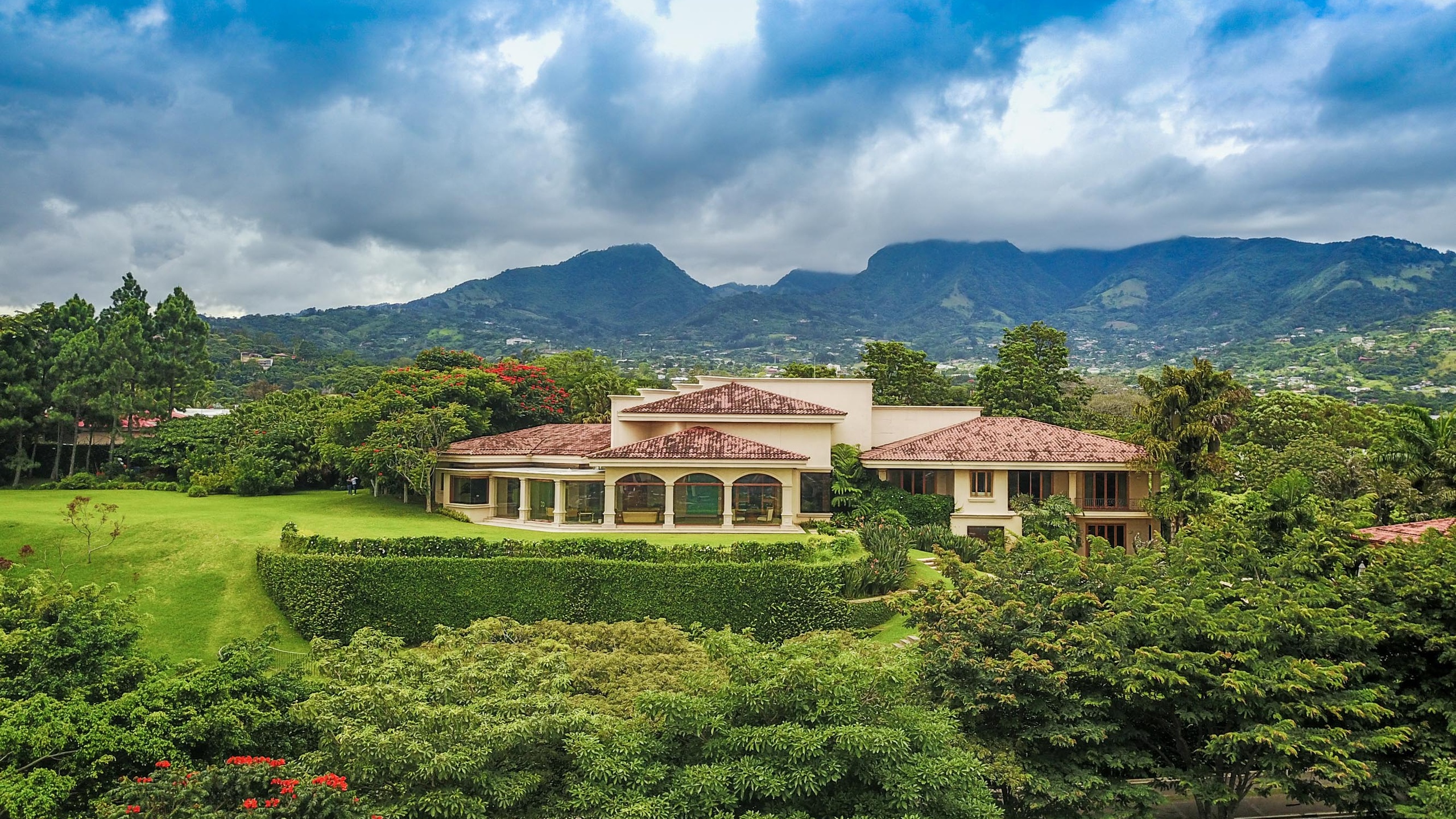
This post breaks down what a house in the Central Valley actually costs in 2026, what the closing cost stack looks like, how the Inversionista visa interacts with a property purchase, and the real monthly carry for an American owner. Prices cross-checked against Encuentra24 Costa Rica and local broker listings. For the broader country context, pair this with our cost of living in Costa Rica post and moving to Costa Rica guide.
Central Valley Geography for American Buyers
San Jose is the capital but almost no American buyers actually target San Jose proper (the downtown is congested, polluted, and safety-variable). The desirable Central Valley real estate sits in the suburban cantones around San Jose:
- Escazu: Wealthy western suburb, international school zone, embassy-adjacent, CIMA hospital, Multiplaza mall. The default American pick.
- Santa Ana: Newer Escazu alternative, slightly further west, quieter, many gated communities, newer construction.
- Heredia: North of San Jose, university town, cooler climate, mix of Costa Rican middle-class and expat families.
- Alajuela: Airport-adjacent, lower elevation than Heredia, mix of older Costa Rican neighborhoods and newer gated developments.
- Cartago: East of San Jose, cooler and more traditional, much cheaper but less expat infrastructure.
- Rohrmoser / Sabana: Inside San Jose proper but the safer west-central residential areas, walkable to Parque La Sabana.
Costa Rica has no foreign ownership restrictions for inland residential property (beach and coastal zones have some restrictions on the first 50 meters of shore, but that doesn't apply in the Valley). You can hold fee-simple title (titulo de propiedad) directly in your name. Registro Nacional de Costa Rica is the title registry.
r/costa_rica and r/IWantOut have expat experiences on which specific neighborhoods work for which budgets.
What Houses Cost in 2026

Costa Rica prices in USD (frequently listed directly, given the large foreign buyer share).
Escazu:
- 2-3 bedroom condo in a gated high-rise: USD $180,000-$400,000
- 3-4 bedroom detached house on 400-800 sqm lot: USD $350,000-$800,000
- Luxury homes with views (Escazu hills): USD $800,000-$2M+
Santa Ana:
- 3-bedroom house in a modern gated community: USD $280,000-$500,000
- Larger 4-bedroom custom homes: USD $450,000-$900,000
Heredia / San Rafael de Heredia:
- 3-bedroom detached house: USD $180,000-$350,000
- Gated community in San Antonio de Belen area: USD $250,000-$450,000
Alajuela (outer areas like La Garita, Atenas):
- 3-bedroom detached house with garden: USD $150,000-$320,000
- Country-style house with land: USD $200,000-$500,000
Cartago / Tres Rios / Curridabat:
- 3-bedroom house: USD $140,000-$280,000
For USD $300,000 specifically: the sweet spot is a 3-bedroom detached house in Santa Ana or outer Escazu in a gated community, or a larger 4-bedroom home in Heredia or Alajuela if you're willing to trade proximity to the CIMA-Multiplaza corridor for more space. The Atenas area (45 minutes west of San Jose) is popular with American retirees specifically for offering single-family homes with views for USD $200,000-$350,000.
Encuentra24 Costa Rica is the dominant local portal. Century21 Costa Rica and The Costa Rican Real Estate are broker aggregators.
Closing Costs in Costa Rica
Costa Rica's closing cost stack is moderate, split between government fees and lawyer/notary services.
Transfer tax (impuesto de traspaso): 1.5 percent of the declared value or registered value (whichever is higher). On a USD $300,000 home, that is USD $4,500. Customarily paid by the buyer but negotiable.
Registration stamps: Approximately 0.5-0.8 percent of purchase price combined (multiple small stamps for notary, registry, agrarian, fiscal, colegio de abogados). On USD $300,000, USD $1,500-$2,400.
Notary/lawyer fees: Costa Rican notaries are attorneys, and the same person handles both the legal due diligence and the deed drafting. Fees are set by the Bar Association's arancel (fee schedule) and are approximately 1.25 percent of the first USD $16,000, then 1 percent above that. For USD $300,000 that is approximately USD $3,000-$4,000. Plus typical out-of-scope legal services (title search, due diligence) at USD $500-$1,500.
Real estate agent commission: Typically 5-6 percent paid by seller, baked into the asking price.
Title insurance (optional but strongly recommended for foreign buyers): USD $500-$1,500 one-time. Stewart Title Costa Rica is the dominant provider.
Wire/FX: Use Wise or a specialist broker for the large transfer.
Total buyer closing costs on a USD $300,000 Costa Rica house: approximately USD $10,000-$14,000, or 3.3 to 4.7 percent of purchase price.
That is moderate by regional standards, cheaper than Mexico but slightly higher than Panama. The PwC Costa Rica tax summary and Ministerio de Hacienda Costa Rica publish the current rates.

The Visa Link: Pensionado, Rentista, Inversionista
Costa Rica has a well-established residency framework for American expats, and owning property can directly support several paths.
Pensionado Visa: For retirees with at least USD $1,000 per month in guaranteed, lifetime pension income (US Social Security qualifies). Two-year initial permit, renewable. Converts to permanent residency after 3 years.
Rentista Visa: For non-retirees with USD $2,500 per month in stable unearned income for 2 years (guaranteed by a bank letter) or a USD $60,000 deposit in a Costa Rican bank. Same path as pensionado.
Inversionista Visa: Recently updated - formerly USD $200,000 minimum real estate investment, currently USD $150,000 under the 2022-2024 reforms intended to attract remote investors. Purchase of a titled property above the threshold qualifies. DGME Costa Rica (Direccion General de Migracion y Extranjeria) and Ley 9996 reforms are the authoritative sources.
Benefits of Inversionista: Temporary residency, renewable, convertible to permanent after 3 years, no minimum physical presence requirement beyond what's needed for renewal. Spouses and dependents included.
Costs: Approximately USD $3,000-$6,000 in attorney, government fees, apostilled documents, medical exams, and translation. Panama, Costa Rica, and Mexico all have broadly similar immigration attorney cost structures for these programs.
For currently-practicing English-speaking immigration attorneys in Costa Rica, CRIE (Costa Rica Immigration Experts), Residency in Costa Rica, and Outlier Legal Services are commonly cited. Threads on r/costa_rica residency and Expat.com Costa Rica forum document current processing times (typically 8-14 months in 2025-2026, though recently improving).
Annual Carrying Costs
Property tax (Impuesto Solidario): Costa Rica's annual property tax is 0.25 percent of registered value for most properties. For a USD $300,000 house, that is USD $750 per year. An additional luxury home tax (impuesto solidario para el fortalecimiento de programas de vivienda) applies to properties with construction value above approximately USD $260,000, at progressive rates starting at 0.25 percent. Total combined property tax on a USD $300,000 property usually lands between USD $750-$1,500 per year.
HOA / homeowner fees (in gated communities): USD $80-$350 per month depending on amenities. Santa Ana gated communities with pool and gym: USD $150-$280. Escazu luxury condos: USD $300-$600.
Home insurance: USD $300-$800 per year. Costa Rica is seismically active and earthquake insurance should be specifically included.
Utilities: Electricity (ICE), water (AyA), internet, and propane for cooking. The Central Valley climate (spring-like year-round, 18-25C) means no heating or air conditioning in most homes, which keeps utility bills remarkably low. Budget USD $100-$250 per month for a typical 3-bedroom Valley house.
Security: Most Valley homes in gated communities have 24/7 guard service included in HOA. Free-standing homes in Alajuela or Heredia may want to add USD $50-$150 per month for alarm monitoring.
Private health insurance: USD $60-$220 per month per person for INS Medical or international plans. Most American retirees on Pensionado also enroll in CAJA (the national health system) for approximately USD $70-$150 per month, giving comprehensive coverage.
Total annual carry for a USD $300,000 Central Valley home in a gated Santa Ana community: approximately USD $4,500-$8,000 per year in pure housing costs. Add USD $2,000-$4,000 per person for health insurance, and total annual cost of comfortable Valley retirement living is in the USD $8,000-$15,000 per person range.
See INS Costa Rica for insurance options, CAJA CCSS for the public health system, and the International Living Costa Rica retirement costs guide for broader context.
Should You Buy in the Central Valley?
Buy in the Central Valley if:
- You prioritize climate stability (spring-like year-round) over beach access
- You have medical needs and value proximity to CIMA, Clinica Biblica, or Hospital La Catolica
- You want the highest-quality expat infrastructure in Latin America (international schools, English-speaking doctors, Costco, Walmart, Whole Foods-adjacent grocery options in Escazu/Santa Ana)
- You are buying to live, not to flip
- You are on a Pensionado or Inversionista visa path
Skip the Central Valley if:
- You wanted the beach (consider Guanacaste or the Nicoya Peninsula instead)
- Your budget is under USD $150,000 (the Valley's expat-favored areas have compressed and cheaper Guanacaste or Cartago alternatives offer better value at that level)
- You cannot tolerate Costa Rica's extreme bureaucratic slowness (everything takes longer than expected)
- You depend on fast internet and reliable infrastructure (some Valley neighborhoods still have patchy fiber coverage)
The sequencing: visit in both the dry season (December-April) and the rainy season (May-November) to see the honest climate picture; rent a furnished home in your target neighborhood for 2-3 months; apply for your residency visa before purchase to avoid real estate-only investor visa pitfalls; hire a Costa Rican lawyer before any commitment; and use Wise for currency transfer.
For the broader Costa Rica picture, our moving to Costa Rica guide and cost of living in Costa Rica are the natural next reads. For a comparison with Panama's regional competitor, our Panama City post is worth reading side-by-side. For live inventory, see our San Jose page.
Ready to explore?
Browse Destinations