Things To Do in Australia: The Ultimate Guide for 2025
Australia is the sixth-largest country on earth, and it contains more wildly different landscapes, ecosystems, and experiences than most continents. Within a single country you can snorkel the world's largest living structure (the Great Barrier Reef), stand at the center of the world's most ancient living culture (Uluru), drink excellent Shiraz in a 170-year-old stone cellar (Barossa Valley), eat world-class Vietnamese food in a suburb of Melbourne, and walk a rainforest boardwalk where the trees are older than European civilization. The distances are enormous — flying from Sydney to Perth takes 5 hours — but the rewards at every stop justify them. This guide covers the best of it, with real prices, practical transport advice, and the local knowledge that makes the difference.
Sydney: The Harbour, Bondi, and the Inner Neighbourhoods
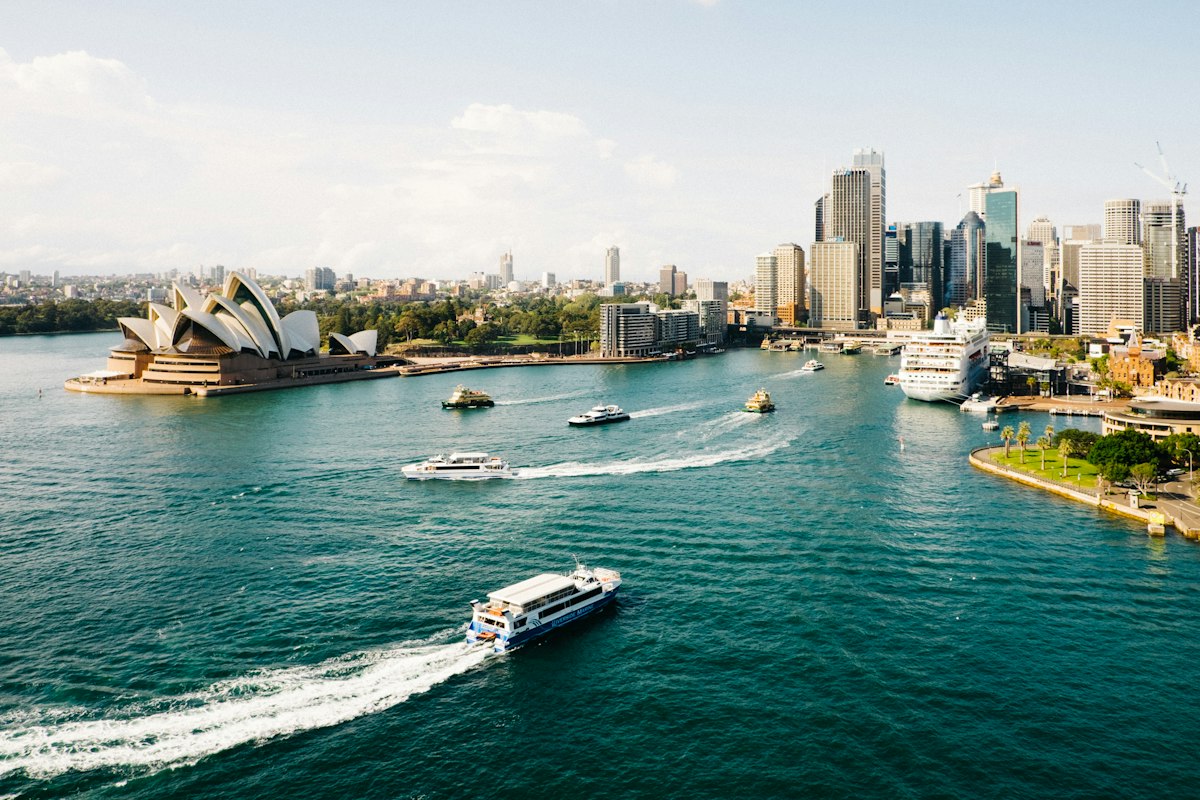
Sydney is one of the world's great harbor cities, and the combination of the Opera House (designed by Jørn Utzon and completed in 1973, now a UNESCO World Heritage Site), the Harbour Bridge, and the blue water of Port Jackson creates a waterfront tableau that has no real rival anywhere. The BridgeClimb Sydney — a 3.5-hour guided climb to the bridge's summit arch 134 meters above the harbor — runs from $148 to $403 AUD ($97–$264 USD) depending on time of day and day of week. Dawn and dusk climbs sell out weeks ahead; book online. For Sydney tips and neighborhood recommendations, the r/australia subreddit has active threads from locals.
The Sydney Harbour National Park contains a network of walking tracks on both the north and south sides of the harbor, with free access to headlands and beaches that offer the same views as expensive harbor cruises. The Spit to Manly Walk (10 km, 4 hours, free) on the north shore is the finest urban hike in Australia — through bushy headlands, past secluded harbor beaches, with the city skyline visible in the distance.
Bondi Beach is Sydney's most famous beach, and deservedly so — the 1 km arc of golden sand backed by the Art Deco pavilion and the cafes of Campbell Parade has an energy that's hard to replicate anywhere. The Bondi to Coogee Coastal Walk (6 km, 2 hours, free) follows the sandstone cliffs south through Tamarama, Bronte, Clovelly, and Gordon's Bay before reaching Coogee — passing sea pools carved from the rock (the tidal pool at Mahon Pool near Maroubra is magnificent), coastal gardens, and cemetery views. Go at sunrise when it's quiet.
For eating, Surry Hills and Newtown are Sydney's best food neighborhoods. Surry Hills has the density — every second shopfront seems to be a wine bar, a brunch spot, or a serious restaurant — while Newtown on King Street is more eclectic, with excellent Thai, Vietnamese, Ethiopian, and Indian restaurants alongside vintage clothing stores and bookshops. Mary's Newtown does a famous double cheeseburger; Hartsyard is excellent for serious American-influenced cooking. Chinatown in Haymarket, centered on Dixon Street and the Paddy's Markets, is reliable for dim sum at all hours.
Neighborhood coffee culture in Sydney is intense and competitive — Sample Coffee in Newtown, Paramount Coffee Project in Surry Hills, and Single O in Surry Hills are among the best.
The Great Barrier Reef: Snorkeling, Diving, and Liveaboards
The Great Barrier Reef stretches 2,300 km along Queensland's northeast coast — it's the world's largest coral reef system and one of the seven natural wonders of the world. Despite the well-documented bleaching events caused by rising sea temperatures (which have affected roughly 50% of the reef's coral coverage), significant sections remain extraordinary, and the diversity of marine life in the healthy areas is genuinely overwhelming. Tourism Australia's reef page has a helpful overview of access options.
Cairns is the main gateway, and the full-day reef trips departing from the Cairns Esplanade Cruise Terminal represent good value: Reef Magic Cruises and Passions of Paradise run 8-hour trips to outer reef platforms (Agincourt Reef, Norman Reef) for AUD $200–$240 ($131–$157 USD) including snorkel gear, wetsuit, and guided snorkel tour. The outer reef platforms sit on healthier coral than the closer pontoon reef, and visibility routinely exceeds 15 meters. Scuba diving add-ons (1 dive for certified divers: AUD $40–$50/$26–$33 USD) are available on most trips.
Port Douglas, 70 km north of Cairns (a beautiful 1-hour drive along the coastal Captain Cook Highway), accesses the reef's Agincourt section — widely considered the healthiest and most colorful outer reef. Quicksilver Cruises operates a high-speed catamaran to a large underwater observatory here; the snorkeling platforms are less crowded than Cairns options.
Liveaboard diving is the way serious divers access the reef's remoter and healthier sections. Mike Ball Expeditions runs 4-day/3-night trips to the Coral Sea (including the Osprey Reef bommie where grey reef sharks, hammerheads, and silvertips patrol the coral wall in large numbers) for AUD $1,600–$1,900 ($1,048–$1,244 USD) including all dives and meals. Spirit of Freedom does similar Coral Sea expeditions.
Whitsundays: The 74 islands of the Whitsunday group sit in the middle of the reef region and offer sailing that's hard to beat anywhere in the world. Whitehaven Beach — a 7 km stretch of 98% pure silica sand so white it doesn't absorb heat, on Whitsunday Island — is accessible only by boat or seaplane. Day tours from Airlie Beach run AUD $130–$200 ($85–$131 USD); bareboat yacht charter (no skipper required if you hold a recreational license) from AUD $500–$800/day for a 35-foot yacht, sleeping 6.
Melbourne: Laneways, Coffee, and the World's Most Liveable City
Melbourne is routinely ranked among the world's most liveable cities, and after a day navigating its compact CBD grid, ducking through laneways covered in world-class street art, and eating your way through its extraordinary restaurant scene, the ranking makes sense. It's also the most European-feeling of Australia's cities — a quality that Melburnians attribute to its large Italian and Greek immigrant communities, its tram network, its weather (four seasons in one day, genuinely), and its deep investment in arts and culture.
The laneways are Melbourne's signature feature. Hosier Lane is the most famous — a double-sided canyon of rotating street art that changes constantly, where works by artists like Banksy, Rone, and HA-HA have appeared over the years. Degraves Street is the archetypal Melbourne laneway cafe experience: narrow, cobblestoned, packed with tables and umbrellas, with excellent espresso ($4–$5 AUD/$2.62–$3.28 USD) and all-day brunch. AC/DC Lane is dedicated to the Melbourne band who changed rock and roll. The Centre Place laneway between Collins and Flinders Lane has several of Melbourne's best wine bars.
The Yarra Valley (about 1 hour east of Melbourne) and the Mornington Peninsula (1 hour south) are Melbourne's wine regions. The Yarra Valley specializes in cool-climate Pinot Noir and Chardonnay — Yering Station (established 1838, the first winery in Victoria) and De Bortoli offer excellent cellar door experiences with restaurant lunch. Mornington Peninsula is known for Pinot Noir and Pinot Gris, with good cellar door experiences at Ten Minutes by Tractor and Stonier.
Food neighborhoods: Fitzroy (smith street and Brunswick Street) for the full bohemian Melbourne experience — brunch spots, independent bookshops, Vietnamese banh mi, record stores; Collingwood for emerging restaurants and rooftop bars; Richmond for Vietnamese food (Victoria Street is 'Little Saigon,' 500 meters of pho, banh mi, and com suon rice dishes, all under $15 AUD/$9.83 USD); Carlton for Italian — Tiamo and Brunetti Classico have been local institutions for decades.
Free Melbourne: the National Gallery of Victoria (NGV International) on St Kilda Road holds the Southern Hemisphere's largest and most comprehensive art collection, with entry to the permanent collection always free. The Royal Botanic Gardens Melbourne (38 hectares of Victorian-era plantings, free) and the Ian Potter Centre: NGV Australia in Federation Square (free for Australian art) are both excellent.
Uluru: The Sacred Heart of Australia
Uluru — also known as Ayers Rock — rises 348 meters from the flat red plain of Australia's Red Centre, and the experience of watching it change color at sunrise or sunset (from orange to purple to deep crimson to something that seems to glow from within as the light fades) is one of those rare travel experiences that genuinely exceeds expectation. It's also one of the world's most sacred Indigenous sites — the spiritual home of the Anangu people, who have lived in this landscape for at least 60,000 years.
The climbing of Uluru was permanently closed in October 2019, respecting long-held Anangu requests. The base walk (10.6 km, 3.5 hours, free with Uluru-Kata Tjuta National Park pass — AUD $38/$24.90 USD for 3 days) circumnavigates the entire rock and is far more rewarding than the climb was — the base reveals the geology, the water-carved grooves and caves, the ancient art sites, and the Anangu cultural sites inaccessible from above. The Mala Walk section (2 km of the base walk) has ranger-led interpretive walks at 8 AM that explain Anangu law and the Mala (hare-wallaby) dreaming stories associated with specific rock formations. Free with park pass.
Sunrise and sunset viewpoints: the Talinguru Nyakunytjaku sunrise viewing area east of the rock and the Sunset Viewing Area to the west are both within the national park. Several operators also offer sunrise or sunset dining experiences — table-set dinners in the desert with Uluru glowing in the background, typically AUD $250–$350 ($163.80–$229.30 USD) per person including drinks.
Kata Tjuta (the Olgas) — 36 dome-shaped rock formations about 40 km west of Uluru — contains the Valley of the Winds walk (7.4 km, 3–4 hours), which weaves through the dramatic gaps between the domes and provides views of the formations that are in some ways more intimate and impressive than Uluru itself. The Walpa Gorge walk (2.6 km return, 1 hour) is a gentler alternative that still passes between rock walls 200 meters high.
Uluru is remote: the nearest city is Alice Springs, 450 km away (a 5-hour drive across the desert). Fly direct to Ayers Rock Airport (Connellan Airport) from Sydney (3 hours) or Melbourne (2.5 hours) — Qantas and Jetstar serve the route. Stay at Ayers Rock Resort (the only accommodation within the national park area), which ranges from the Sails in the Desert hotel (AUD $350+/$229+ USD/night) to the Ayers Rock Campground (powered sites from AUD $43/$28.16 USD/night).
Great Ocean Road: Shipwrecks, Surf Towns, and the Twelve Apostles
The Great Ocean Road runs 243 km along Victoria's southwest coast from Torquay to Allansford — it was hand-built by returned World War I soldiers as a memorial between 1919 and 1932, making it the world's largest war memorial. The combination of rugged sea cliffs, surf breaks that have shaped global surfing culture, wild koala sightings, and the dramatic limestone stacks of the Twelve Apostles makes it Australia's most iconic road trip.
Torquay is the surf capital — the home of Bells Beach (which hosts the Rip Curl Pro, the world's longest-running professional surf competition, each Easter) and the spiritual birthplace of both Rip Curl and Quiksilver. For trip reports from fellow travelers, r/australia and r/travel's Australia threads are useful resources. The Surf World Museum in Torquay (free) has an impressive collection of surfboard evolution and Australian surf culture history.
Lorne (45 km from Torquay) is the Great Ocean Road's most charming small town — cafes, galleries, a good beach, and access to the Otway Ranges inland. The Lorne Falls in the Angahook-Lorne State Park (Erskine Falls, free, 20-minute walk from the carpark) are impressive after winter rains.
Apollo Bay is the last major town before the road enters Great Otway National Park — stop at the Otway Fly Treetop Adventures ($31 AUD/$20.30 USD adult entry) for a treetop walk through temperate rainforest 30 meters above the forest floor, or simply drive the Turton's Track through the fern gullies and old-growth forest.
The Twelve Apostles (actually eight — the ninth collapsed in 2005, the first in 1990, and the geological forces that created them continue to erode the coast) are the road trip's centerpiece. The viewing platform off the Great Ocean Road near Port Campbell provides direct sightlines to the most dramatic stacks; arrive at sunrise (free, open 24 hours) when the orange limestone glows and the car parks are empty. Helicopter flights over the Apostles run AUD $145–$195 ($94.97–$127.80 USD) for 15 minutes with 12 Apostles Helicopters — extravagant but spectacular.
Loch Ard Gorge, 3 km east of the Apostles, is the site of a famous 1878 shipwreck — the Loch Ard ran aground killing 52 people, with only two survivors. The gorge itself (free) is enclosed and photogenic with a small beach accessible via a short walk.
Blue Mountains: Canyons, Waterfalls, and the Three Sisters
The Blue Mountains begin about 80 km west of Sydney — close enough for a day trip (the Blue Mountains line from Central Station takes 2 hours and costs AUD $7.70/$5.05 USD each way on an Opal card), but deserving of at least two nights to properly explore. The haze that gives the mountains their blue appearance comes from vaporized eucalyptus oil diffusing light — a chemistry that happens nowhere else on earth at this scale.
Katoomba is the main town, perched on the edge of the Jamison Valley with direct access to the cliff walks and lookouts. The Three Sisters at Echo Point — three sandstone pillars rising from the valley floor — are the region's signature formation, best photographed from Echo Point Lookout (free, accessible from Katoomba town center) at sunrise when the light is gold and the valley floor is in shadow. The Giant Stairway descends 800 steps from Echo Point to the valley floor (free, count on 1.5 hours down and 2 hours back up).
The Scenic World complex at the cliff edge just west of the Three Sisters offers the Scenic Railway (the world's steepest railway, built in 1945 for coal mining, now dropping tourists 52° into the Jamison Valley, AUD $40/$26.21 USD for all-day access to all rides), the Scenic Cableway gondola (270-degree glass floor, spectacular views), and a 2.4 km elevated boardwalk through temperate rainforest.
Wentworth Falls (10 km east of Katoomba) has a lookout and trail system that's among the Blue Mountains' finest — the National Pass track descends from Wentworth Falls Lookout around the base of the cliffs via a series of narrow ledge paths carved into the sandstone face in the 1900s, past Valley of the Waters waterfall, and returns up through a canyon gorge. Allow 4 hours; no technical skill required but significant stairs.
Leura (3 km east of Katoomba, walkable or by train) is a gentler, more boutique version of the mountains experience — a main street of antique shops, excellent cafes (Bygone Beautys Vintage Tearooms, established 1934), and manicured gardens. The Leura Cascades picnic area (free, 20-minute walk) is lovely for a cold water paddle on a hot day.
Barossa Valley and South Australian Wine
The Barossa Valley, 70 km north of Adelaide in South Australia, is among the world's great wine regions — and unlike Napa or Bordeaux, it maintains a scale and accessibility that allows genuine connection with the people who make the wine. Vine cuttings brought from Germany and Prussia by Lutheran settlers in the 1840s established a winemaking tradition that now produces some of the world's most sought-after Shiraz.
Penfolds Grange — Australia's most iconic wine — is made from Barossa Shiraz blended with Cabernet Sauvignon from other regions. Penfolds Magill Estate near Adelaide offers the 'Make Your Own Blend' experience (AUD $225/$147.44 USD, 3 hours) where you blend different Shiraz vintages and take home a bottle with your name on the label. The cellar door at Nuriootpa in the Barossa runs more traditional tastings.
Henschke's Hill of Grace vineyard near Keyneton contains Shiraz vines planted in the 1860s — single-vineyard wine from 160-year-old vines that sells for AUD $800–$900 ($524.25–$589.78 USD) per bottle. You don't need to buy to visit — the cellar door (book ahead) is intimate and the stories attached to those ancient gnarled vines are worth hearing.
Beyond Shiraz: Eden Valley, immediately east of the Barossa floor, is cooler altitude and produces world-class Riesling. Pewsey Vale and Henschke Julius are benchmark examples. McLaren Vale, 45 km south of Adelaide on the Fleurieu Peninsula, offers a more casual, artisan wine experience with excellent Grenache, Shiraz/Grenache blends, and Cabernet — the d'Arenberg Dead Arm Shiraz is a regional landmark wine.
The Barossa Farmers Market (every Saturday morning, Angaston, 7:30–11:30 AM, free entry) is one of Australia's best food markets — local olive oil, charcuterie from the German smallgoods tradition (Mettwurst, Blutwurst), Barossa Valley cheese, fresh produce, and Apex Bakery's legendary German-style bread.
Staying in the Barossa: the Novotel Barossa Valley (from AUD $280/$183.48 USD/night) is the main resort accommodation; The Louise (from AUD $750/$491.40 USD/night, small luxury vineyard hotel) is extraordinary if budget allows, with the attached Appellation restaurant producing some of the best wine-region dining in Australia.
Kakadu National Park and the Top End
Kakadu National Park — 20,000 square km of monsoon floodplains, sandstone escarpment, and wetlands in the Northern Territory — is one of only two places on earth to be jointly listed as a UNESCO World Heritage Site for both natural and cultural significance. It contains some of the world's oldest and most extensive rock art — the Burrunguy (Nourlangie Rock) and Ubirr sites hold paintings dating back at least 20,000 years — and its wetlands support more bird species than the entire British Isles.
The Yellow Water Wetlands sunrise cruise (AUD $105–$139/$68.78–$91.06 USD) departs from Cooinda Lodge in the park interior and winds through a waterway that, in the dry season (May–October), concentrates extraordinary wildlife: saltwater crocodiles sunning on mud banks, jabiru storks nesting in paperbarks, sea eagles overhead, and buffalo grazing in the distance. This is the single best wildlife experience in the Northern Territory and one of the finest in Australia.
Ubirr rock art site: the overhanging gallery here contains paintings of fish, turtles, animals, and Mimih spirits (tall, thin supernatural beings) dating back 20,000 years and layered over in continuing tradition. The Nadab Lookout trail from Ubirr (1.5 km round trip, free with park pass) climbs to a sandstone summit overlooking the Nadab floodplain — at sunset, the entire horizon is lit in gold and the floodplains below are dotted with flocks of egrets and magpie geese.
Darwin is the gateway to Kakadu (250 km east on the Arnhem Highway). Darwin itself rewards a day or two: the Darwin Waterfront Precinct and its wave pool, the excellent Museum and Art Gallery of Northern Territory (free, outstanding collection of Aboriginal art and a cyclone Tracy memorial exhibit), the Mindil Beach Sunset Market (Thursday and Sunday evenings, May–October, free entry) with 300+ stalls of Southeast Asian food, crafts, and art.
Park entry: Kakadu National Park pass costs AUD $40 ($26.21 USD) per vehicle, valid for 14 days. The best time to visit is May–October (the dry season) when roads are passable and wildlife is concentrated around permanent water. The wet season (November–April) transforms the landscape with flooding and dramatic thunderstorms but closes many roads.
Tasmania: Wilderness, World Heritage, and Dark History
Tasmania — separated from the Australian mainland by the Bass Strait, about a 30-minute flight from Melbourne or a 10-hour overnight ferry on the Spirit of Tasmania (from AUD $120/$78.62 USD, cabin from AUD $220/$144.14 USD) — is in many ways the best-kept secret in Australian travel. Roughly 42% of the island is protected in national parks and World Heritage wilderness, the food and wine scene rivals any mainland city, and the population (about 570,000) creates a human scale that feels refreshingly different from Sydney or Melbourne.
The Overland Track (65 km, 6–8 days of walking through the Cradle Mountain-Lake St Clair National Park) is one of the great long-distance walks in the world — crossing alpine moorlands, glacial lakes, dolerite peaks, and temperate rainforest. Season: October to May. Booking (required, AUD $200/$131.04 USD permit for the 60-day season) through the Parks and Wildlife Service, which issues limited permits per day to protect the environment. Tourism Australia's Tasmania guide covers the full island's highlights.
Cradle Mountain itself (the iconic jagged peak reflected in Dove Lake) can be experienced without the multi-day walk: the Dove Lake Circuit (6 km, 2.5 hours, free with park pass — AUD $22.20/$14.54 USD) circumnavigates the lake with the mountain as a constant backdrop. The Enchanted Walk (1 km, 20 minutes) through ancient myrtle rainforest near the Cradle Mountain Visitor Centre is accessible year-round.
MONA (Museum of Old and New Art) in Hobart is arguably Australia's most extraordinary museum — an underground labyrinth of contemporary and ancient art built by reclusive gambler and art collector David Walsh into the sandstone cliffs of a Berriedale peninsula. Entry: AUD $40/$26.21 USD (Tassie residents free). Arrive by ferry from the Hobart waterfront (AUD $30/$19.65 USD return) for the full experience. Budget 3–4 hours.
Hobart's Salamanca Market (every Saturday, 8:30 AM–3 PM, free) on Salamanca Place is Tasmania's best food and craft market — fresh salmon from Tasmanian aquaculture operations, excellent local cheeses (Bruny Island Cheese is a standout), leatherwood honey from wild rainforest hives, cool-climate wines, and handmade crafts from one of Australia's most creative artistic communities.
Ready to explore?
Browse Destinations