Things to Do in Ireland: The Ultimate Travel Guide for 2026
Ireland is a country that rewards slow travel. Official tourism resources: [Ireland.com](https://www.ireland.com/) (Tourism Ireland's official site) covers itineraries, accommodations, and seasonal events. [r/irishtourism](https://www.reddit.com/r/irishtourism/) and [r/ireland](https://www.reddit.com/r/ireland/) have current traveler reports. [Lonely Planet's Ireland guide](https://www.lonelyplanet.com/ireland) has detailed destination coverage. You can race from Dublin to Killarney to Galway in three days and return home thinking you've seen it — but you haven't. You've seen the surface. Ireland's real texture is found in the unhurried pint with a stranger at a rural pub, the spontaneous trad session that breaks out in a Galway bar at 11pm, the way a Connemara bog at dusk looks like the end of the world in the best possible sense. This guide is built for people who want to experience Ireland properly — not just tick the Cliffs of Moher off a list. You'll find the obvious things here (yes, the Cliffs are worth seeing), but you'll also find the neighborhood pubs that don't appear on tourist maps, the food markets that feed Cork locals rather than Instagram, and the driving routes that most American visitors never take because they're not in any brochure. Whether you're visiting for two weeks or already living here and still discovering the country, here's what actually deserves your time.
Dublin: Beyond Temple Bar and the Tourist Trail
Dublin is a city that tourists often get wrong. They stay in Temple Bar, drink in the same three over-lit pubs that play live music at 2pm for American tours, eat a €16 Irish stew, and leave thinking they understand Dublin. They don't. The real city is a 15-minute walk in any direction from that circus.
Start with the neighborhoods. Portobello — south of the Grand Canal — is where Dubliners actually drink. The Long Stone on Townsend Street, Grogan's on South William Street (cash only, no music, no nonsense, perfect), and Kehoe's on South Anne Street are institutions. Kehoe's hasn't changed since the 1900s and that's the point: small rooms, wooden partitions, and no televisions showing sports.
Smithfield and Stoneybatter on the north side have become the most interesting parts of the city for food and nightlife without feeling performatively hip. The Cobblestone in Smithfield is arguably Dublin's best trad pub — sessions happen Tuesday through Sunday, musicians arrive organically around 9:30pm, there is no stage and no PA system. It's the real thing. Around the corner, Mulligan Grocer on Manor Street serves proper food alongside its craft beer selection.
Museums worth your time: The National Museum of Ireland — Archaeology on Kildare Street houses the Bog Bodies (Iron Age corpses preserved for 2,000 years — genuinely unsettling and unmissable), the Tara Brooch, and the Ardagh Chalice, all free. The Chester Beatty Library in Dublin Castle is free and underrated — one of the world's great manuscript collections, including 7th-century Quranic texts and medieval European Books of Hours. The Irish Writers Museum on Parnell Square is worth an hour if you care about Joyce, Beckett, Yeats, or O'Casey.
Food in Dublin: The city's food scene has improved dramatically since 2015. Lunch at the Farmer's Market on Cow's Lane (Thursday-Saturday) or the much larger Temple Bar Market on Saturdays. For breakfast, Brother Hubbard on Capel Street is excellent — Middle Eastern-influenced, excellent coffee, opens at 8am. For dinner without blowing your budget, Cornucopia on Wicklow Street is a vegetarian institution serving enormous portions for under €15. For a proper splurge, Chapter One in the Dublin Writers Museum building has a Michelin star and a six-course tasting menu around €110 per person — worth it once.
Day trip from Dublin: The Boyne Valley — Newgrange, Knowth, and Dowth megalithic passage tombs — is 45 minutes north by car or bus. Newgrange predates Stonehenge and the Egyptian pyramids. On the winter solstice, the rising sun illuminates the inner chamber through a precisely engineered roof box. Book the guided tour well in advance. The site is managed by the OPW (Office of Public Works) and costs €13-26 depending on your package. Book at heritageireland.ie. TripAdvisor's Newgrange reviews have practical visitor tips. Admission includes the visitor center and bus to the mounds.
The Cliffs of Moher and the Burren: County Clare Done Right
The Cliffs of Moher need no introduction — 8km of 200-meter sheer Atlantic sea cliffs, and on a clear day you can see the Aran Islands in the bay and, on exceptionally clear days, the mountains of Connemara to the north. The official viewing area near the visitor center is fine. The less crowded secret is to park at Hag's Head, 3km south of the main entrance, and walk north along the coastal path. You'll have the same cliffs with a fraction of the crowds and a perspective most visitors never see. The round trip to O'Brien's Tower and back is about 10km on well-maintained paths. Wear waterproof boots regardless of the forecast — this is Clare, and forecasts here are optimistic fiction.
Entry to the main visitor center costs €8-10 per adult. The walk itself is free. Arrive before 9am or after 4pm to avoid tour buses. The cliffs are open year-round and genuinely dramatic in winter when the Atlantic swells are enormous.
The Burren is one of the most alien landscapes in Europe — a limestone plateau covering 250 square kilometers of northern Clare, with practically no topsoil, no trees, and an improbable riot of Mediterranean, Alpine, and Arctic plant species that coexist here and nowhere else on earth. In late spring (May-June), the grey limestone is carpeted with orchids, bloody cranesbill, and mountain avens simultaneously. The Burren is best explored on foot. The Burren Way is a 123km walking route, but even a 2-hour walk around Mullaghmore Mountain gives you a sense of why botanists from across Europe visit specifically to stare at weeds.
Base yourself in Doolin for the Cliffs and the Burren. It's a tiny village (perhaps 500 year-round residents) that punches well above its weight on traditional music — Gus O'Connor's Pub has been hosting sessions since 1832 and continues nightly in summer. The ferry from Doolin to the Aran Islands runs approximately April to October (€25-30 return), giving you a way to combine two of Clare's highlights in one day.
Aran Islands: Three islands — Inis Mór, Inis Meáin, and Inis Oírr — in Galway Bay, where the Atlantic has been hammering limestone for millennia. The most dramatic site is Dún Aonghasa on Inis Mór: a prehistoric hill fort perched on a 100-meter cliff edge with no railing and no guardrail. You can literally crawl to the edge and look straight down. UNESCO has been making noises about protecting it, but for now, it remains rawly accessible. Rent a bike on Inis Mór (€12/day) and see the whole island in half a day. The ferry from Doolin or Rossaveal (near Galway city) takes 40-90 minutes. Planes from Connemara Regional Airport take 12 minutes if you're in a hurry or want a story.
The Wild Atlantic Way: Driving Ireland's Most Spectacular Coastline
The Wild Atlantic Way is a 2,500km signposted driving route following Ireland's Atlantic coast from Donegal in the north to Cork in the south. You won't drive all of it — that would take two weeks minimum — but the best sections are concentrated in a few key areas worth detailed planning.
The Ring of Kerry (County Kerry): The classic — a 179km circuit around the Iveragh Peninsula from Killarney, passing through Kenmare, Sneem, Caherdaniel, Waterville, and back via Killorglin. The views from Moll's Gap looking north toward Killarney's lakes are justifiably famous. The problem: every tour bus in Ireland runs this circuit clockwise, so you'll spend the day being overtaken and delayed. Drive it counterclockwise to meet traffic head-on rather than tail-end, giving you far more room on the narrow roads.
Better alternative for those with more time: The Dingle Peninsula, 20 minutes north of Tralee. More rugged, far fewer tourists, and containing some of the best early Christian and Bronze Age monuments in Ireland. Gallarus Oratory — a dry-stone structure built around 600 AD that still doesn't leak after 1,400 years of Atlantic storms — is quietly astonishing. The road over Conor Pass (the highest mountain pass in Ireland accessible by car) has views that make the Ring of Kerry look modest. Dingle town has excellent seafood restaurants (Out of the Blue is exceptional but only opens when they've been fishing), good pubs with traditional music, and Fungie the dolphin, a solitary bottlenose who has lived in Dingle Harbour for over 30 years.
Connemara (County Galway): The part of the Wild Atlantic Way that looks most like the Ireland you imagined before you arrived — bogland, bare mountains, scattered lakes, stone walls, and white cottages. The Twelve Bens mountain range is the backdrop. Killary Harbour, Ireland's only fjord, cuts inland 16km at Leenane and is spectacular. Clifden is the region's main town — low-key, good for provisions and a pint, perfectly placed for exploring Connemara National Park.
Drive the Sky Road (a loop west of Clifden, around 11km) for cliff views over the Atlantic and the islands. The Connemara Loop takes 3-4 hours and covers most of the key scenery. In the Gaeltacht villages around Roundstone and Carna, you'll hear people conversing in Irish on the street — the language is genuinely alive here, not a museum piece.
Sligo and Donegal: The northern section of the Wild Atlantic Way is the least-visited and most dramatic. Sligo has some of Ireland's best surf (Strandhill and Mullaghmore are serious waves, but Rosses Point is beginner-friendly) and the best access to WB Yeats country — the poet's grave is at Drumcliffe under the shadow of Benbulben, a flat-topped quartzite mountain that looks like it was designed by a minimalist architect.
Donegal is Ireland's most northerly county and its most underrated. The Sliabh Liag cliffs (Slieve League) are three times the height of the Cliffs of Moher but receive a fraction of the visitors — largely because they're harder to reach. Glenveagh National Park has a Victorian castle on a loch and red deer that have lived here since the Ice Age. Arranmore Island, accessible by ferry, is genuinely remote and serves its own poitín (traditional Irish moonshine).
Galway: Arts, Music, and the Best of Irish Urban Culture
Galway punches well above its population size (85,000 people) as a cultural destination. This is partly because it hosts some of Ireland's best festivals, partly because of the university's influence, and partly because the city center — built on medieval streets that cannot be widened — has maintained a character that Dublin's tech boom has largely erased.
The arts festivals: The Galway International Arts Festival (mid-July, two weeks) is one of the most ambitious arts events in Europe — international theatre, visual art installations, music, and circus that take over the whole city. It draws 200,000+ visitors and transforms Galway's public spaces. Tickets for major performances sell out months in advance; book early. The Galway Film Fleadh (mid-July, same week as the Arts Fest) screens around 200 films including European premieres and Irish-language cinema. Some screenings are free.
Galway Races (late July, five days) is something else entirely — Ireland's most atmospheric horse racing festival, where an enormous percentage of the attendance has never watched a horse race in their life. They're there for the fashion, the socializing, and the communal excess. A day at the races costs €25-30 for general admission. It is loud, chaotic, beautiful, and very Irish.
Traditional music in Galway: Taaffes on Shop Street is the most consistent spot for sessions in the city center — music most nights from around 9:30pm, no charge, genuinely good musicians. Tigh Neachtain on Cross Street has a warren of low-ceilinged rooms and excellent sessions Thursday through Sunday. Monroe's Tavern on Dominick Street crosses into slightly bigger territory — dancing as well as music, full pub atmosphere, nothing pretentious.
For something quieter and more meditative, Tig Coili on Mainguard Street has a reputation for serious musicians who play for the love of the music rather than tips. If you're there on a spontaneous Tuesday night and a session breaks out, you're in luck — it's not guaranteed every night.
Food in Galway: The Saturday market at St. Nicholas' Church (open from 8am-5pm) is the city's food heart — local cheese, artisan bread, smoked fish, crêpes, Thai street food, Mexican wraps, and about 50 stalls of varying quality and authenticity. Ard Bia at Nimmo's by the River Corrib does exceptional brunch and lunch in a 13th-century stone building — expect a queue on weekends. Aniar on Dominick Street has a Michelin star and a tasting menu built entirely on Connacht produce (~€95 per person), and it actually deserves it. McCambridge's on Shop Street is a deli, grocery, and café that does the best sandwiches in the city.
Day trips from Galway: The Aran Islands ferry (Rossaveal, 40 minutes west of Galway, or direct from Galway City dock in summer), the Burren (45 minutes by car), Connemara National Park (1 hour), and the Cliffs of Moher via the coastal road through the Burren (1.5-2 hours). Galway is the logical hub for the entire west of Ireland.
Cork: Ireland's Food Capital and the English Market
Cork will tell you — frequently and without prompting — that it is Ireland's real capital. The joke is old but the pride is real, and when it comes to food, Cork's claim has genuine merit. The city has produced more Michelin-starred chefs per capita than anywhere else in Ireland, a food culture built around Ballymaloe House (the country house hotel and cookery school that essentially founded modern Irish food), and the English Market, one of the most beautiful covered markets in Europe.
The English Market (open Monday-Saturday, 8am-6pm, free entry) is a Victorian covered market that has operated continuously since 1788. The stalls selling tripe and drisheen (blood sausage) in the center represent the old Cork — these are genuinely local products that you won't find in Dublin. The newer stalls around the edges reflect contemporary Ireland: excellent coffee, artisan cheese from West Cork producers, fresh pasta, Middle Eastern spices, and one of the best fishmongers in the country. Former US President Clinton visited in 2011; Pope John Paul II visited in 1979. The food stalls on the upper balcony are good for lunch at around €8-12. Come hungry.
Cork's neighborhoods: Patrick Street is the main shopping street, perfectly ordinary. The real Cork is in the surrounding neighborhoods: McCurtain Street on the north side has become a hub for cocktail bars and independent restaurants. Washington Street has good pubs. The area around Nano Nagle Place (a beautifully restored 18th-century convent now used as a cultural center) on Douglas Street has some interesting galleries and a café that serves excellent food in its herb garden.
The pub culture: Unlike Dublin, Cork's pubs haven't been gentrified into cocktail lounges. The Long Valley Bar on Winthrop Street has been open since 1842 and looks like it. The Hi-B on Oliver Plunkett Street is a gloriously eccentric bar run by Brian O'Donnell, who enforces his own rules (no music, no TV, no nonsense, and he'll tell you to move if you're in his favorite spot). Sin É on Coburg Street has trad sessions every weekend.
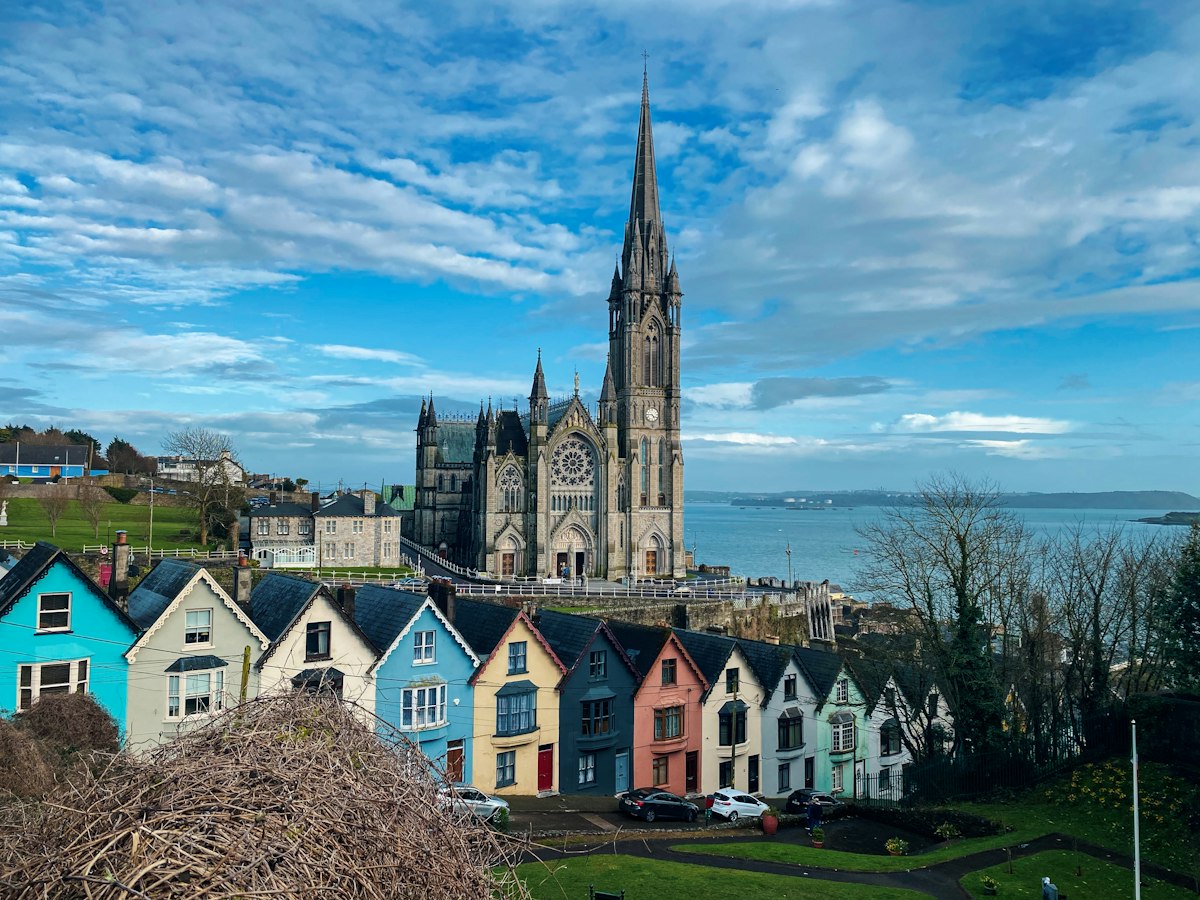
Day trips from Cork: Kinsale is a postcard-perfect harbor town 30km south, known as the gourmet capital of Ireland — it has more Michelin-starred restaurants per head than anywhere else in the country. Walk the Charles Fort (a star-shaped 17th-century military fortification above the harbor, €5 entry, views worth triple that). Cobh (pronounced "Cove") is 20 minutes east by train — the last port of call for the Titanic and the main emigration port for 19th-century Irish famine emigrants. The Titanic Experience Cobh is a good museum (€13.50 entry). West Cork beyond Kinsale takes you into Mizen Head, the southernmost point of Ireland, through the villages of Skibbereen and Bantry, and eventually to the Ring of Beara — a much less-visited alternative to the Ring of Kerry with similar scenery and about one-fifth of the traffic.
Traditional Music Sessions: Where to Find the Real Thing
Traditional Irish music — trad — is not a tourist performance. It is a living, evolving practice that happens in pubs, living rooms, community halls, and festival tents across the country, played by people who learned it from their parents and grandparents. When a session is good, it is one of the most transcendent social experiences in existence. When it's not — when it's a bored musician playing Rocky Road to Dublin for a busload of tourists who won't know the difference — it's just background noise.
Here's how to find the real thing:
What a session actually is: A group of musicians — usually fiddles, flutes, tin whistles, uilleann pipes, and bodhrán (frame drum) — sits around a pub table and plays tunes. Reels, jigs, hornpipes, and polkas follow each other in medleys called sets. There is no set list, no leader, and no payment (usually). The musicians play for each other as much as for the audience. Joining in as a singer is welcome if you know the words; joining with an instrument is usually by implicit invitation. Watching from nearby, buying musicians a round, and applauding between sets is the correct audience behavior.
The best session destinations:
- Doolin (Clare): Ireland's self-proclaimed spiritual home of trad. Gus O'Connor's, McDermott's, and McGann's all run sessions in the summer. Quality varies; busy summer nights mean more tourists and sometimes less inspiring playing. Come in September or October when the tour groups have thinned.
- Ennis (Clare): County Clare has long been considered Ireland's musical heartland. Ennis's pubs (Cruise's, Poet's Corner in the Auburn Lodge) host excellent sessions, and the town hosts the Fleadh Cheoil — the All-Ireland Traditional Music Championships — roughly every decade when it's their turn.
- Miltown Malbay (Clare): Willie Clancy Summer School (first week of July) is the most important week in the trad calendar. Named after a legendary uilleann piper from the town, it draws 10,000 musicians and students from around the world. Every pub in the village hosts sessions from morning to 3am. If you're serious about trad, this week is unmissable.
- Westport (Mayo): Matt Molloy's pub on Bridge Street is owned by the Chieftains flautist. Sessions happen nightly in summer. High quality, regularly attended by serious players, packed most nights but worth the squeeze.
- Dingle (Kerry): John Benny Moriarty's pub on Main Street, Dick Mack's (which also sells leather goods, because why not), and Murphy's all run sessions. Quality is high — Dingle musicians are proud of their tradition.
The comhaltas.ie session finder and thesession.org list verified trad sessions across Ireland updated weekly by local musicians.
When to arrive: Sessions in Ireland start late. If the pub opens at 10:30pm, the music starts at 11. Do not arrive at 9pm expecting music. Arrive at 10pm, get settled, buy your round, and wait. The best nights go until 1:30-2am. Last orders in Irish pubs are typically 11:30pm Monday-Thursday, 12:30am Friday-Saturday. Late bars with 2:30am licenses exist in all major cities.
A note on authenticity: Don't be fooled by session listings on tourist websites — some of these are structured performances by musicians hired to entertain visitors, not organic sessions. The genuine article has no PA system, no microphone, and no tip jar. If there's a microphone, it's probably a concert, not a session.
Irish Whiskey Distilleries: A Trail Worth Doing Properly
Irish whiskey is having a moment that shows no sign of ending. The country went from 2 operating distilleries in 1980 to over 40 today, and the range of styles — single malt, single pot still, blended, peated, unpeated, aged in bourbon barrels, sherry casks, Madeira pipes, and combinations thereof — has expanded dramatically. This is not the same whiskey your grandfather drank.
The key distilleries open to visitors:
Midleton Distillery (County Cork): The home of Jameson (Ireland's best-selling whiskey globally) and a dozen other expressions including the Redbreast, Powers, Green Spot, Yellow Spot, and Midleton Very Rare ranges. The old distillery site has been converted into an excellent visitor experience (€25-35 depending on the tour, book in advance). The Maturation Warehouse Masterclass (€75) is worth the money if you're genuinely interested — you get to sample directly from casks and create your own blend. Midleton itself is 25km east of Cork city.
Jameson Distillery Bow Street (Dublin): The converted historic distillery on Smithfield Square is the brand's showpiece in Dublin. Tours run every 30 minutes, cost €22-28, and include a blending comparison of Irish, Scottish, and American whiskey styles. It's popular (book ahead in summer), polished, and informative. For something less corporate 10 minutes away, the Teeling Whiskey Distillery in the Liberties neighborhood was the first new distillery to open in Dublin in 125 years (opened 2015). Their tours (€18) include five pours and feel considerably less rehearsed.
Slane Distillery (County Meath): In a converted stable block at Slane Castle (the same castle that has hosted outdoor concerts by the Rolling Stones, U2, and Bruce Springsteen over the decades). Tours cost €18-22 and include the castle grounds. The whiskey — triple-casked in virgin American oak, seasoned oak, and oloroso sherry casks — has received significant critical attention since launching in 2017.
Tullamore D.E.W. Distillery (County Offaly): Tullamore town, about 90 minutes from Dublin, has been producing whiskey since 1829. The new distillery opened in 2014. Tours (€15-20) are thorough and the surrounding countryside drive is pleasant. The town itself has good pubs.
Dingle Distillery (County Kerry): The first whiskey distillery in Munster outside Cork in the modern era. Dingle is small-batch, genuinely artisan, and their single malt expressions have won serious awards. Tours (€15) are intimate and the team is knowledgeable. Their gin has also become highly regarded. Worth combining with the Dingle Peninsula driving route.
What to order in a pub: A standard Irish whiskey shot is 35.5ml (compared to a 28ml Scottish dram or US 44ml shot). Ask for it neat or with a small jug of water on the side — Irish whiskey opens up significantly with a few drops of water. Jameson, Bushmills, and Paddy are the supermarket standards. Spend €1-2 more and ask for a Redbreast 12, Powers Gold Label, or Yellow Spot. These are the everyday drinking whiskeys of serious enthusiasts. A dram in a Dublin city center pub costs €5-9 depending on the expression.
Outdoor Activities: Hiking, Surfing, and Cycling
Ireland's weather gets blamed unfairly for limiting outdoor activity. Yes, it rains. But the rain is usually soft rather than torrential, temperatures are mild year-round (rarely below 0°C / 32°F, rarely above 25°C / 77°F), and the landscape — precisely because it gets so much rain — is spectacularly green. The outdoors here reward those who dress for it.
Hiking: The Wicklow Way, beginning in the Dublin suburbs at Marlay Park and running 127km south to Clonegal in County Carlow, is the most popular long-distance walk in Ireland. Many people walk sections of it as day hikes — the stretch through the Wicklow Mountains via Lough Tay ("the Guinness Lake" for its dark peaty water) is particularly beautiful. Campsites along the route cost €8-15/night.
The Lúghnasa Hiking Festival in County Roscommon each August combines traditional pilgrimage routes (the original purpose of climbing Croagh Patrick, Ireland's holy mountain in Mayo, is a very real barefoot pilgrimage on the final Sunday of July) with contemporary walking events.
For serious hikers: the Macgillycuddy's Reeks in Kerry contain Carrauntoohil, Ireland's highest mountain (1,038m). The Devil's Ladder route is the standard ascent — steep scree near the top, excellent views on clear days, 4-5 hours round trip. The Caher route via the connecting ridge to the second-highest peak is more challenging and rewarding. No technical equipment needed in dry conditions; microspikes required after heavy snow (November-March).
Surfing: Ireland is one of the best surfing destinations in Europe, and almost nobody knows it. The west coast from Donegal to Kerry receives long-period Atlantic swells year-round. Key spots:
- Bundoran (Donegal): Ireland's surf capital. The Peak is a world-class reef break; The Tullan Strand is a beach break suitable for learners. Surf schools (€35-50/2hr lesson, equipment included) operate year-round.
- Strandhill (Sligo): Powerful shore break, better for intermediate+ surfers. Surf schools operate here too. After surfing, Shells Café on the strand makes the best seafood chowder in Ireland (€9, worth every cent).
- Inch Strand (Kerry): A 5km beach that catches clean Atlantic swells. More forgiving for beginners, beautiful location at the entry to the Dingle Peninsula.
- Lahinch (Clare): A classic point break near the Cliffs of Moher. Central Beach has a surf school; the reef break at Crab Island is for experienced surfers only.
Cycling: The Greenway network is expanding. The Great Western Greenway in Mayo (42km from Westport to Achill Sound, off-road, following a disused railway line) is the best in the country — flat, scenic, with the Croagh Patrick view on the outbound leg. Bike rental in Westport costs €20-25/day. The Waterford Greenway (46km, Waterford city to Dungarvan) is flat and beautiful, passing through the Comeragh Mountains foothills. Many cyclists do it one-way and return by bus.
Sea swimming: The Irish are obsessed with it, year-round, in water that never rises above 15°C (59°F) in summer. The Forty Foot at Sandycove in south Dublin is a famous sea swimming spot — open 24/7, no charge, briefly men-only (since 1974 it's been mixed). Salthill Promenade in Galway has a traditional diving board into the bay. The ritual of a cold dip followed by a flask of tea is essentially the Irish wellness industry.
Practical Tips: Getting Around, Budget, and Best Times to Visit
When to go: The honest answer is that there is no bad time — Ireland has personality in every season — but there are better and worse times depending on what you want.
- June-August (Peak Season): Longest days (sunset after 10pm in late June), best weather probability, all attractions fully open, all ferries running. Also the most crowded, most expensive, and the time when tourist buses clog the Ring of Kerry and Cliffs of Moher. Book accommodation 3-4 months in advance for the west coast in July. Prices are 30-50% higher than winter.
- May and September (Sweet Spot): Good weather probability, significantly fewer crowds, lower prices, and the landscape is as green as it gets. May has wildflowers across the Burren; September has harvest colors in the forests. This is the best time for hiking and driving routes.
- October-November (Atmospheric): The tourist crowds have evaporated. Galway's Oyster Festival is late September/early October. Samhain (Halloween) has deep Irish roots — the festival originated in the Celtic harvest festival of Samhain, and modern celebrations in Derry are among the best in Europe. Accommodation is cheap. Weather is unpredictable.
- December-February (Quiet and Dark): Pubs are at their warmest (literally — open fires, low lighting, unhurried conversations). Prices are rock-bottom. Days are short (sunset at 4:15pm in December). Weather is wet and grey but rarely freezing. Many smaller tourist attractions are closed or have reduced hours.
Getting around: Ireland has a functioning but limited public transport network. Irish Rail (Iarnród Éireann) connects Dublin to Cork, Galway, Limerick, Waterford, and Belfast — trains are comfortable, on-time about 80% of the time, and journeys from Dublin to Cork cost €20-40 booked in advance on irishrail.ie. Bus Éireann serves more rural routes but is slow; a Dublin-Galway bus takes 3.5 hours versus 2 hours by car.
For anywhere off the main intercity routes — and most of Ireland's best scenery is off those routes — you need a car. Car rental starts at €30-50/day for a compact, but insurance is often mandatory and adds significantly. Driving on the left is required. Rural roads are narrow (genuinely: two cars will need to use passing places). Roundabouts are ubiquitous — yield to traffic already in the roundabout.
Budget breakdown:
- Budget traveler (hostels, cooking some meals, free attractions): $80-110/day
- Mid-range (B&Bs or budget hotels, eating out once daily, paid attractions): $140-200/day
- Comfortable (3-star hotels, dinner out nightly, car rental included): $220-320/day
B&Bs (bed and breakfasts) are one of Ireland's genuine pleasures — €60-100/night for two people, full Irish breakfast included (soda bread, eggs, rashers, sausage, black and white pudding, grilled tomato, baked beans). The Irish full breakfast is calorically sufficient to skip lunch without noticing.
Tipping: Not expected in the same way as the US. 10% at restaurants is generous. You don't tip in pubs for drinks ordered at the bar. Taxis: round up. No one will be offended if you don't tip, but no one will be disappointed if you do.
For more planning resources, TripAdvisor's Ireland travel forum has active threads from recent visitors. Fáilte Ireland's trip planning page covers regional itineraries. r/irishtourism answers specific location questions quickly.
SIM cards: Three Ireland and Vodafone Ireland both have good rural coverage. A prepaid SIM with 30GB data costs €20. Buy at any convenience store or Eir/Three/Vodafone shop in the arrival hall at Dublin Airport.
Ready to explore?
Browse Destinations