Things to Do in Spain: The Ultimate Travel Guide for 2026
Spain has something that most other European countries lack: genuine variety within a reasonable driving distance. Official tourism resources: [Spain.info](https://www.spain.info/en/) (Spain's official tourism portal) has regional guides and event calendars. [r/spain](https://www.reddit.com/r/spain/) and [r/travel](https://www.reddit.com/r/travel/) have active Spain destination threads. [Lonely Planet Spain](https://www.lonelyplanet.com/spain) provides comprehensive coverage. [TripAdvisor Spain](https://www.tripadvisor.com/Attractions-g187427-Activities-Spain.html) covers booking and reviews for major attractions. In the same week, you can eat the finest pintxos in the Basque Country, watch flamenco in a cave in Granada, hike in the Pyrenees, and drink cold Albariño on a Galician beach. The geography ranges from the wet green northwest (more Ireland than Mediterranean) to the desert landscapes of Almería (used as the setting for spaghetti westerns) to the volcanic archipelago of the Canary Islands technically sitting off the coast of Morocco. Spain is also a country where the visitor-to-local ratio has become a source of genuine tension in recent years — Barcelona has seen major protests against overtourism, with residents literally spraying water pistols at tourists eating on terraces. This guide will help you navigate that reality: where the experience is still genuine, where to avoid the tourist industrial complex, and how to spend your time in ways that respect the places you're visiting while actually experiencing them. The golden rule: eat late. Lunch is 2-4pm. Dinner is 9-11pm. If you eat at 6pm, you will be eating alone in a restaurant that opened reluctantly and hasn't started cooking properly yet.
Barcelona: Architecture, Neighborhoods, and Getting Past the Obvious
Barcelona is one of the world's great cities, and it knows it. The result is that significant parts of the experience — Barceloneta beach, La Rambla, most of the Gothic Quarter — have been polished into a tourist experience that bears little relation to how Barcelonins actually live. The city that Gaudí, Picasso, Miró, and Dalí worked in is still entirely accessible, but you need to know where to look.
Gaudí's buildings: The Sagrada Família is genuinely unmissable — the most ambitious cathedral project in human history, under construction since 1882, recently completed enough (the central towers topped out in 2022) to understand the full vision. The interior is extraordinary: stained glass floods the nave with colored light, the forest of stone columns branching above your head is unlike any architecture in existence. Book tickets 4-6 weeks in advance (€26-38 depending on what's included, towers extra). Early morning (9am opening) or late afternoon light in the interior is the most beautiful. La Pedrera (Casa Milà) and Casa Batlló on Passeig de Gràcia are both expensive (€25-35 each) and both worth it, but if you have to choose, La Pedrera's rooftop at dusk (the 'Magic Nights' evening events in summer, €39) is the most memorable.
Park Güell (entry to the central zone €10, book online — the rest of the park is free) is the hilltop garden complex where Gaudí planned a residential community that never got built. The ceramic mosaic terrace with its famous serpentine bench is the main draw. Come at 8am when it opens to have it to yourself for 30 minutes.
Neighborhoods worth your time: El Born/Sant Pere: The neighborhood that replaced the Barri Gòtic as Barcelona's cool center around 2005 and has since gentrified while maintaining more character than the Gothic Quarter. The Born Cultural Centre — built in the shell of a 19th-century iron market hall — has the archaeological remains of Barcelona's 1714 destruction below a glass floor (free to look, small fee for guided tours). El Xampanyet on Carrer de Montcada is a classic cava bar that hasn't changed since the 1920s; cava and tapas for €15-20 per person. Carrer del Parlament in Sant Antoni (just west) has the best concentration of non-tourist bars and restaurants in the city.
Gràcia: The village-inside-the-city that voted repeatedly in the 19th century to remain independent of Barcelona (it didn't succeed). The Plaça del Sol, Plaça de la Virreina, and Plaça de la Vila de Gràcia are its living rooms — local bars and cafés ringing actual squares where actual Barcelonins drink vermouth on Sunday morning. La Pepita on Carrer de Còrsega does excellent tapas and natural wine.
Poblenou: The former industrial zone east of the city is Barcelona's current creative district — studios, co-working spaces, design offices in old factories. The Rambla del Poblenou is a proper neighborhood rambla (nothing like the tourist-trap Las Ramblas) where locals actually walk. Check whether the Palo Alto Market (first weekend of the month) coincides with your visit.
Eating in Barcelona: The Tourist trap is €22 paella on Las Ramblas that contains frozen mussels and undercooked rice. The reality is that Barcelona has outstanding food if you avoid the obvious places. Bar Brutal in El Born for natural wine and pintxos-style snacks (€3-5 each, book a table). La Cova Fumada in Barceloneta for the original bunyols de bacallà (salt cod fritters) and simple grilled fish — no menu, they cook what arrived that morning, cash only, closes when they run out. Quimet & Quimet in Poble Sec — a tiny standing bar packed with people eating montaditos (small open sandwiches) at noon, serves extraordinary combinations for €2.50-4 each.
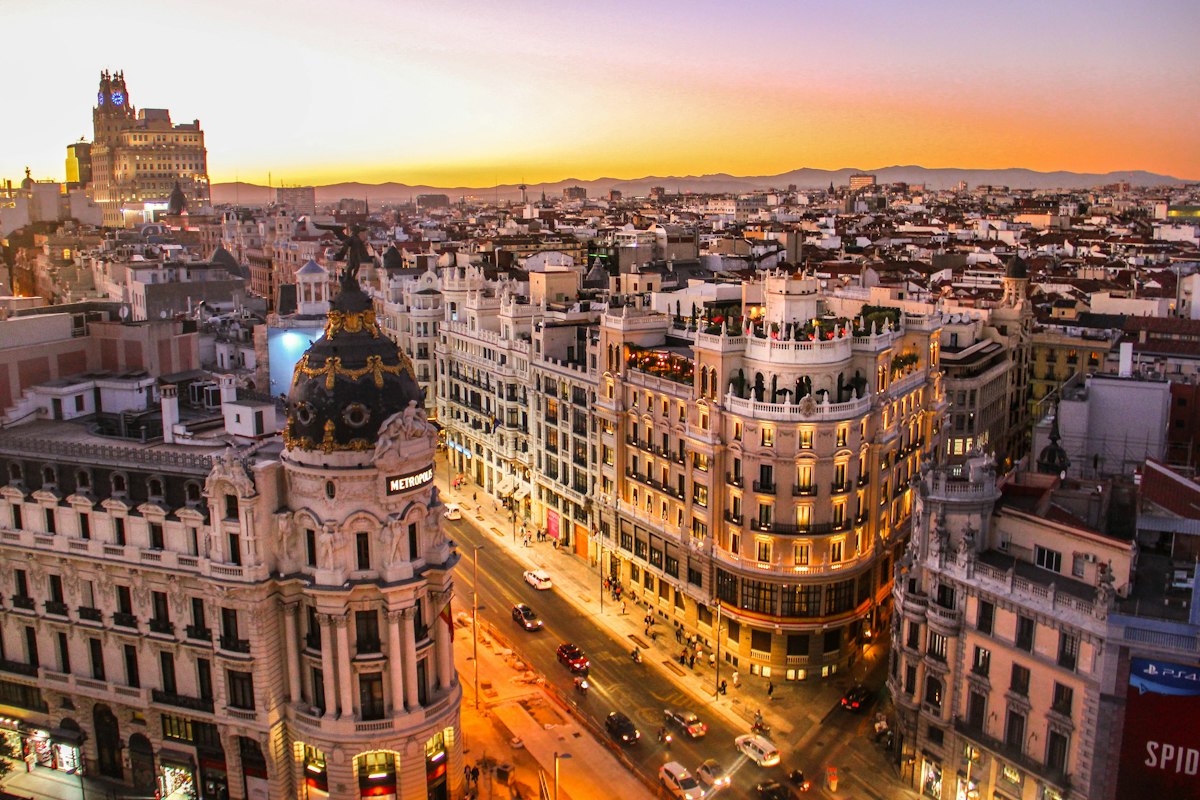
Madrid: The Art Triangle, Tapas Culture, and the Best Nightlife in Europe
Madrid is the capital that most tourists get wrong — they come for the Prado and leave without understanding that this is one of Europe's most livable and enjoyable cities, with a food and nightlife culture that starts later and goes harder than anywhere else in Western Europe. Madrileños regard sleep as optional and dinner before 9:30pm as slightly eccentric.
The Art Triangle: Three world-class museums within walking distance of each other — collectively forming one of the finest concentrations of art anywhere on earth.
The Prado: The greatest collection of Spanish and European Old Master painting in the world. Velázquez (Las Meninas, arguably the most technically sophisticated painting ever made, and the full Las Meninas room dedicated to it), Goya (the Black Paintings — nightmare images he painted directly onto the walls of his house in the last decade of his life, transferred to canvas after his death, one of the most psychologically intense rooms in any museum), El Greco, Hieronymus Bosch (the Garden of Earthly Delights, the triptych that has launched a thousand interpretations, is here). Entry €15; free 6-8pm Monday-Saturday and 5-7pm Sunday — queue from 5:30 for the free entry. Arrive when the doors open (10am) to have the main halls to yourself.
Reina Sofía: The national museum of modern and contemporary art. Picasso's Guernica — the massive monochrome painting made in response to the Nazi bombing of the Basque town in 1937, one of the most powerful political artworks in history — is the centerpiece and deserves 15 minutes of sustained attention. The Dalí collection, the Miró room, and the Arte Povera section are also excellent. Entry €12; free Monday, Wednesday-Saturday 7-9pm, Sunday 12:30-2:30pm.
Thyssen-Bornemisza: The private collection of a German-Hungarian industrialist, donated to Spain in 1993, covering the history of Western art from the 14th century to the 20th. Particularly strong on Dutch and Flemish Golden Age, Impressionism, and American art (the only place in Europe with a comprehensive Edward Hopper collection). Entry €13.
Madrid neighborhoods: Malasaña and Chueca: Madrid's bohemian and LGBTQ+ neighborhoods north of Gran Vía — independent bars, record shops, vintage clothing, and a density of excellent restaurants. Malasaña's Plaza del Dos de Mayo (the square commemorating the 1808 uprising against Napoleon's forces) is ringed with terraces. La Musa in Malasaña for raciones (larger sharing plates, €12-18 each). Bodega de la Ardosa on Calle Colón — a century-old bar with barrels of wine on the walls, excellent vermouth and patatas bravas.
La Latina: The old working-class neighborhood south of the center, best on Sunday morning for the El Rastro flea market (runs along Ribera de Curtidores and surrounding streets, 9am-3pm Sundays — clothes, antiques, junk, and everything in between). The tapas crawl through the bars of La Latina on Sunday after the market is a Madrid institution: Juana la Loca on Plaza de la Paja for elevated pintxos, Taberna Txakolina for traditional Basque pintxos, Casa Lucas for original combinations.
Nightlife: Madrid's reputation for late nights is entirely warranted. Clubs don't fill until 2am and run until 6am on weekends. Sala Kapital (7-story mega-club, various music per floor), Teatro Joy Eslava (former 19th-century theatre, mixed music, famous for never closing in 30+ years), and the jazz bars of La Latina are the main poles. For something less industrial, the rooftop bar at the Círculo de Bellas Artes (€4 entry) has the best skyline view in Madrid and is open until 3am.
Seville: Flamenco, Tapas, and Andalucía's Greatest City
Seville is Spain's fourth-largest city and arguably its most atmospheric — the place where the combination of Moorish architecture, flamenco, April feria culture, and extraordinary food creates something you can't easily find anywhere else. It's also genuinely hot (50°C / 122°F recorded in recent summers — July and August are genuinely brutal), which means timing matters more here than almost anywhere in Spain.
The monuments: The Alcázar (Real Alcázar de Sevilla) is the oldest actively used royal palace in Europe — first constructed as a Moorish fortification in the 10th century, expanded by successive Christian rulers who kept the Mudéjar (Islamic architectural tradition under Christian rule) aesthetic. The Ambassador's Hall, the Hall of the Half Orange, and the gardens are extraordinary. Entry €16; book in advance (queues can be 2+ hours). The adjacent Seville Cathedral is the largest Gothic cathedral in the world by interior volume — it replaced the Grand Mosque in 1401, retaining the 12th-century Giralda minaret as its bell tower (€12 entry, included rooftop access, views worth it).
Flamenco: Seville is flamenco's spiritual home, and seeing it here is categorically different from seeing it in Madrid or Barcelona. The key distinction is between tablaos (formal flamenco shows for tourists) and juergas (spontaneous private performances) and peñas flamencas (flamenco clubs where members gather to sing and dance for themselves). As a visitor, you'll access tablaos — but the quality varies enormously.
The best options: Tablao El Arenal (one of Seville's oldest, professional performers, €45-55 including one drink, book well ahead), La Casa del Flamenco in the Santa Cruz neighborhood (intimate 90-person venue, €20-24, no dinner, pure flamenco focus). For a more authentic experience at higher effort: some peñas flamencas occasionally admit guests on Friday or Saturday nights — ask at the Flamenco Dance Museum (€10 entry, Calle Manuel Rojas Marcos) who will know of any public events.
The Triana neighborhood: Across the Guadalquivir river from the old city, Triana was historically the gypsy (Romani) barrio and remains the area most associated with flamenco's origins. The Mercado de Triana (closed for renovation until late 2026, check status) is the main market. The bars along Calle San Jacinto and Calle Pureza are good for tapas and vermouth. The azulejo (ceramic tile) tradition is also centered here — Cerámica Santa Ana on Calle San Jorge has been producing traditional Triana tiles since 1870.
Tapas culture in Seville: Seville is the most intact tapas culture in Spain — in most bars, a free small tapa comes with every drink ordered (this custom has largely disappeared in Barcelona and Madrid). A round of drinks for two at a traditional bar in Seville costs €8-12 and includes two small plates of food. The Alfalfa neighborhood, around the eponymous plaza, has the best concentration of traditional tapas bars: El Rinconcillo (the oldest bar in Seville, established 1670, the barstaff write your bill in chalk on the wooden bar), Casa Morales on García de Vinuesa, and Bar El Comercio nearby.
The April Feria: The Feria de Abril (April, one week, dates vary by the calendar) is Seville's festival, two weeks after Semana Santa (Holy Week). The fairground (Real de la Feria) fills with hundreds of private casetas (marquee tents) where Sevillano families, clubs, and businesses gather to drink manzanilla sherry, eat fried fish, and dance sevillanas until 6am for six consecutive nights. Most casetas are invitation-only, but a public caseta exists and the paseo (promenade) of women in flamenco dresses and men on horseback through the fairground on Monday-Wednesday afternoon is open to all.
San Sebastián and the Basque Country: Europe's Best Food Scene
San Sebastián (Donostia in Basque) has more Michelin stars per capita than any city in the world except Kyoto. That statistic, while constantly repeated, does not fully capture what makes this city extraordinary as a food destination — it's not just the fine dining, it's the pintxos bars in the Parte Vieja (Old Town) where brilliant, technically sophisticated small bites are sold over the bar for €2.50-4 each, and where a €30 dinner of 10 pintxos and a glass of txakoli (local bone-dry sparkling white wine) at a standing bar is better than a €120 dinner in most other cities in Europe.
The pintxos circuit: The Old Town (Parte Vieja) has approximately 30 pintxos bars within a 5-minute walk of each other. The tradition is to stand, order one or two things, drink one glass, move to the next bar. The best streets are Calle 31 de Agosto, Calle Fermín Calbetón, and the area around the Plaza de la Constitución. Essential stops:
- Bar Txepetxa: Anchovy specialists. The spider crab anchovy pintxo (€4.50) is famous internationally and deserves to be. Closed Sunday.
- Bar Atari: Extensive pintxos selection, excellent jamón ibérico, solid txakoli. Reliable and consistent. Always busy.
- La Cuchara de San Telmo: Pintxos cooked to order rather than cold bar snacks — different league. The foie gras with apple and the braised oxtail with caramelized onion are extraordinary at €3-4.50 each. Gets packed quickly after 7pm.
- Bar Zeruko: One of the most technically creative pintxos bars in the city — some of the preparations border on molecular gastronomy. €3-5 per piece. Fascinating and genuinely delicious.
The beaches: La Concha Bay is one of Europe's most beautiful urban beaches — a perfectly crescent bay with an island (Santa Clara) in the center, framed by Monte Igueldo and Monte Urgull at each end. The beach is in the center of the city; the waterfront promenade is lined with Belle Époque hotels and a traditional lido. Water temperature: 20-22°C in August. The Zurriola beach on the other side of the Kursaal (the contemporary cultural center by Rafael Moneo) is the surfing beach.
Nearby Basque Country: The Basque Country is compact but dense with good destinations. Bilbao (1 hour west by car or 1.5 hours by bus) has the Guggenheim Museum Bilbao (€16, still extraordinary after 27 years — the building and the collection both), a revitalized old town with excellent pintxos bars, and the excellent Mercado de la Ribera on the riverfront. Getaria (30 minutes east) is the fishing village where Cristóbal Balenciaga was born (the Balenciaga Museum is here — €10, excellent) and where the best txakoli wine is produced; the beachside restaurants serve whole grilled turbots and sea bass over charcoal. Hondarribia (45 minutes east, on the French border) is a medieval fortified town with extraordinary seafood and a harbor full of fishing boats.
Granada and the Alhambra: Andalucía's Moorish Legacy
The Alhambra is the single greatest argument that Spain has something no other European country can offer: 800 years of Islamic civilization that left behind architecture, art, and urban planning of extraordinary sophistication. The Nasrid Palaces within the Alhambra complex are the most refined example of Islamic architecture in the world — geometrically perfect tilework, stucco muqarnas (honeycomb vaulting) that appears as if made of frozen stalactites, and reflecting pools that double every visual element. Photography cannot prepare you for the physical experience of the space.
Visiting the Alhambra: Book tickets weeks in advance — this is not optional. The daily visitor limit is 6,800 people, tickets sell out 3-4 weeks ahead in peak season, and the Nasrid Palaces operate on timed entry slots. Tickets cost €19-14 depending on the slot (the General Daytime ticket at €19 includes everything; book at alhambra.org or the official ticketing system). The entry time for the Nasrid Palaces is strict — if you miss your slot by more than 15 minutes, you lose that part of your ticket. Night visits (€8, limited availability) are beautiful in a different way — the lighting transforms the spaces and the crowds are minimal.
Plan for 3-4 hours for the full complex: the Nasrid Palaces (the heart — the Court of the Myrtles, the Hall of the Ambassadors, the Court of the Lions with its 12-lion fountain, the Hall of the Abencerrages), the Alcazaba (the original military fortress, with the watchtower giving the best views over Granada), the Generalife (the summer palace and gardens, with the famous acequia channel garden — the sound of water is everywhere and intentional), and the Palacio de Carlos V (an incongruous Renaissance circular palace built within the complex after the Reconquista — the interior's perfect circular courtyard is architecturally significant in its own right).
The Albaicín: The old Moorish quarter across the Darro river gorge from the Alhambra, a UNESCO Heritage Site of white walls and narrow lanes that climb the hillside. The best view of the Alhambra from outside is from the Mirador de San Nicolás at sunset — arrive 40 minutes before sunset to get position. The Carmen de los Mártires gardens are quieter and have equally good views. The Albaicín is genuinely residential — you'll hear children, smell jasmine from garden walls, and pass old men playing cards outside cave houses.
Flamenco in caves: The Sacromonte neighborhood on the hillside adjacent to the Albaicín is the traditional home of Granada's gitano (Romani) community and the birthplace of the zambra — a particular form of flamenco dance associated with Granada. Cave flamenco shows (most caves have been converted into tablaos for tourists) cost €25-38 and run nightly. The quality varies. The Cueva de la Rocío and Zambra Cueva de la Rocío are generally considered the best; book in advance.
Tapas culture in Granada: Granada is the last major Spanish city where the free tapa with every drink tradition still applies everywhere, not just in traditional bars. A beer (cerveza) or glass of wine costs €2.50-3.50; it comes with a tapa that gradually gets more substantial as you stay longer in the same bar. Regulars report getting a plate of paella or migas (fried breadcrumbs with chorizo) as their third or fourth tapa. This is not a gimmick — it's how Granada has always worked and why it's beloved by students and budget travelers. Bar Bodegas Castañeda on Calle Almireceros, Bar Los Diamantes on Calle Navas, and the tapas crawl along the Calle Navas are the classic circuit.
The Camino de Santiago: Walking Spain's Great Pilgrimage
The Camino de Santiago is a network of medieval pilgrimage routes leading to the Cathedral of Santiago de Compostela in Galicia, where the remains of Saint James (Santiago) are said to be interred. Approximately 400,000 people walk some version of the Camino each year — a mix of devout Catholics, spiritual seekers, adventure hikers, and people working through major life transitions. The experience of walking into the Plaza del Obradoiro in Santiago after weeks on the road is described, by nearly everyone who does it, as profound regardless of their motivation for starting.
The main routes:
The Camino Francés (French Way): The classic route, 780km from Saint-Jean-Pied-de-Port in France over the Pyrenees and across northern Spain (Pamplona, Logroño, Burgos, León, Santiago). Most pilgrims (peregrinos) take 30-35 days walking, though many walk only the final 100km from Sarria to Santiago (the minimum required for the Compostela certificate). The first day over the Pyrenees (Orisson to Roncesvalles, 25km, 1,400m altitude gain) is the hardest single day on the entire Camino. The route through the Meseta (the central plateau of Castile) from Burgos to León — long, flat, exposed — is psychologically the most challenging section.
The Camino Portugués (Portuguese Way): 275km from Porto (or 620km from Lisbon) through Portugal and into Galicia. More manageable than the Francés, less crowded (though rapidly gaining popularity), and the Galician coastal section (from Baiona, the Coastal Portuguese Way) is arguably the most beautiful part of any Camino. Porto itself is worth 2-3 days before you set off.
The Camino del Norte (Northern Way): Along the Cantabrian coast from Irún (on the French border) — 820km, roughly following the coast. More climbing than the Francés, fewer pilgrims, better scenery in the coastal sections, and the fishing towns and cider houses of Asturias are a particular pleasure. Less infrastructure (fewer albergues/pilgrim hostels) means slightly more planning required.
Practical logistics:
- Pilgrim hostels (albergues) cost €8-15/night for a bed in a dormitory. Municipal albergues are cheapest; private ones have smaller dorms and better facilities.
- Private rooms (en route B&Bs and small hotels) cost €40-80/night for two.
- Daily budget walking: €35-50 covering accommodation, meals (the menú del peregrino — 3 courses, wine, water — costs €10-14 at most restaurants along the route), and incidentals.
- The credential (pilgrim passport) is stamped at albergues, churches, and cafés along the route and becomes one of the most meaningful keepsakes of the walk.
- Best months: April-June (variable weather, manageable crowds, wildflowers on the Meseta), September-October (good weather, harvests, crowds dropping after the summer peak). July-August is the busiest, hottest, and most crowded — especially the final 100km from Sarria.
Santiago de Compostela: The destination city is beautiful and surprisingly functional as a city beyond the pilgrim industry. The old city (a UNESCO Heritage Site) centers on the Baroque cathedral — the arrival at the Plaza del Obradoiro is emotionally charged regardless of your faith or lack of it. The Botafumeiro (the enormous incense burner swung dramatically across the transept during the Pilgrim Mass at noon on Sundays and during Holy Years) is worth attending even if you don't believe in anything it represents.
The Balearic Islands and Valencia: Sun, Architecture, and Rice
Mallorca: The largest of the Balearic Islands (Illes Balears) in the Mediterranean, and one of the most misunderstood. The package holiday resorts of Magaluf and Alcudia are genuinely terrible and are not what you should visit Mallorca for. The real island — the Serra de Tramuntana mountain range in the northwest, the medieval stone villages of Fornalutx and Deià, the Deia cliff-walking paths, and the remarkable Palma de Mallorca old city — is one of the most beautiful places in the Mediterranean.
Palma's old city contains the Catedral de Mallorca (La Seu) — a Gothic cathedral built on the site of the main mosque, with an interior modified by Antoni Gaudí in the early 20th century (rose window, hanging baldachin) that is genuinely startling. The Es Baluard contemporary art museum (€6, Fridays free after 5pm) has good Miró works and an excellent terrace. The Mercat de l'Olivar (open Monday-Saturday) is Palma's covered market — pa amb oli (bread rubbed with tomato and olive oil) with jamón or sobrassada (the paprika-spiced Mallorcan pork sausage) is the canonical local snack.
The Serra de Tramuntana — hiking in the mountains, swimming in the small coves (calas) below, staying in stone fincas (rural farms) — is the alternative Mallorca that fills in the gaps between the beach holidays.
Ibiza: The reputation obscures a genuinely interesting island. Yes, the mega-clubs (Pacha, Amnesia, Ushuaïa, Hi Ibiza) are real and are the loudest, most elaborate, and most expensive clubs in the world (entry €40-80 for regular nights, €100+ for headlining DJs, drinks €15-25 each). But the island also has an extraordinary natural environment: the Ses Salines salt flats and marine reserve in the south (flamingos, posidonia seagrass meadows, and the clearest water in the Mediterranean), the UNESCO-listed Dalt Vila (the walled upper town of Ibiza Town, with a Phoenician necropolis below), and the northern half of the island around Santa Gertrudis — quiet, rural, excellent restaurants. Las Dalias market in Sant Carles (Saturday and Sunday) is an Ibiza institution, unchanged since the hippie era.
Valencia and the City of Arts and Sciences: Valencia (Spain's third city, 800,000 people) is frequently overlooked in itineraries that head straight from Barcelona to Seville. This is a mistake. The Ciudad de las Artes y las Ciencias (City of Arts and Sciences) is a 350,000-square-meter complex of Santiago Calatrava-designed buildings — the Hemisfèric planetarium, Palau de les Arts opera house, Museu de les Ciències, and the L'Oceanogràfic (Europe's largest aquarium) — that transformed a former dry riverbed into the city's architectural showpiece. Individual building entry €10-30; a combined ticket runs €36. The complex is stunning at night when lit.
Valencia is the home of paella — the original version, made with chicken, rabbit, green beans, and garrofó (a local white bean), cooked over orange wood in a wide, flat pan. The versions with seafood (arroz a banda) and the mixed paella of tourist menus are all excellent, but the original is the one to seek in Valencia. La Pepica on the Malvarrosa beach has been serving paella since 1898 (former clientele included Hemingway); Casa Roberto on the same beach is considered by many Valencians to be the best. Budget €25-35 per person for a proper paella with wine.
Practical Tips: Getting Around Spain, Budget, and Best Times
Getting around Spain: Spain's high-speed rail network (AVE — Alta Velocidad Española) is one of the world's best. Madrid to Barcelona takes 2.5 hours (€45-80 booked in advance on renfe.com). Madrid to Seville: 2.5 hours (€50-90). Madrid to Valencia: 1 hour 40 minutes (€30-60). Madrid to Málaga: 2.5 hours (€50-85). Book at renfe.com 2-4 weeks in advance for the best fares. The Renfe España Pass (for international travelers — purchase outside Spain) covers unlimited trips for 4-12 days over a period; compare carefully with point-to-point advance fares.
For destinations off the high-speed network — the Basque Country, rural Andalucía, Galicia — the regional train network (also Renfe) is slower but comfortable. The bus network (ALSA is the main national operator) is often competitive with trains for price and sometimes faster for specific routes.
For the Balearic Islands, Canary Islands, and coastal routes: Baleària and Trasmediterránea run ferries from Valencia and Barcelona to Mallorca (7-8 hours or 4-5 hours on fast ferries), Ibiza (3-4 hours), and Menorca. Vueling, Iberia Express, and Ryanair offer cheap flights between Spanish cities when booked in advance (€15-50 for most domestic routes).
Budget:
- Budget: €60-90/day (hostel dorms €18-30, menu del día lunch €12-15, tapas dinner €15-20)
- Mid-range: €130-190/day (2-3 star hotel €70-120, two restaurant meals, entry fees)
- Comfortable: €220-350/day (4-star hotel, full restaurant meals, activities)
Spain is one of the most affordable countries in Western Europe for eating and drinking well. A glass of house wine at a good restaurant costs €3.50-5. A beer at a bar: €2-3. The menú del día (lunch prix-fixe — two courses, bread, wine or water, dessert) is Spain's greatest contribution to daily dining culture: €12-16 for a proper three-course lunch at a restaurant that charges €40-60 for dinner. Use it.
When to go:
- April-June: The best overall time — perfect temperatures (20-25°C), Semana Santa and spring festivals, Seville's April Feria, wildflowers on the meseta. Mallorca and Ibiza are not yet overcrowded.
- September-October: Vendimia (wine harvest) season; beach weather continues in the south and islands until mid-October; crowds thin dramatically after the Spanish school holidays end in September. San Fermín (Running of the Bulls in Pamplona) is July 6-14.
- July-August: Hot (very hot inland — Seville regularly exceeds 40°C), crowded, expensive on the coasts and islands. July and August are when all of Spain is on holiday simultaneously, which creates a particular atmosphere in beach resorts but makes cities like Madrid and Barcelona more pleasant (30% of Madrileños leave in August, making the city quiet and genuinely enjoyable for the remaining 70% and any visitors).
- November-March: Off-season on the coasts, but Seville and Granada are mild (15-18°C) and beautiful with minimal tourist crowds. The Canary Islands have excellent weather year-round (22-25°C).
For attraction booking and reviews, TripAdvisor Spain covers the major sights. r/spain answers current travel and daily life questions. r/solotravel has Spain itinerary threads. Barcelona's city tourism site barcelonaturisme.com has Sagrada Família advance tickets and city passes.
Language: Spanish (Castilian/Castellano) is understood everywhere, but Catalonia has Catalan, the Basque Country has Basque (Euskera — related to no other known language and extremely difficult), Galicia has Galician, and Valencia has Valencian. Speaking even basic Spanish is appreciated everywhere and will open interactions significantly. In Barcelona particularly, greeting in Catalan (bon dia, gràcies) is noticed and appreciated by locals who feel their language is overlooked.
Ready to explore?
Browse Destinations