Things to Do in Switzerland: The Ultimate Travel Guide for 2026
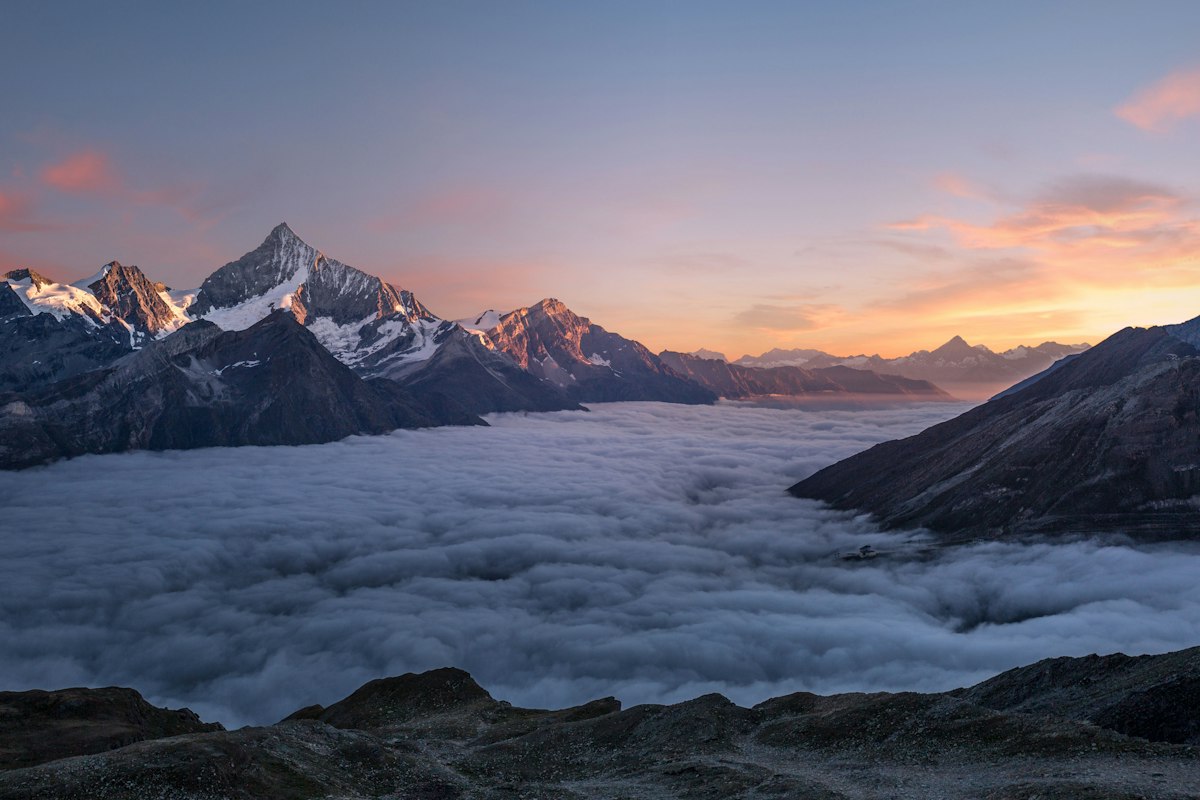
Switzerland is expensive, efficient, and relentlessly beautiful. Official tourism: [MySwitzerland.com](https://www.myswitzerland.com/en-us/) (Switzerland Tourism) is the comprehensive official resource for itineraries, train passes, and events. [r/Switzerland](https://www.reddit.com/r/Switzerland/) has active threads from residents and visitors. [r/travel](https://www.reddit.com/r/travel/) has Switzerland itinerary discussions. [TripAdvisor Switzerland](https://www.tripadvisor.com/Attractions-g188045-Activities-Switzerland.html) covers attraction booking and reviews. [Lonely Planet Switzerland](https://www.lonelyplanet.com/switzerland) provides comprehensive destination coverage. in a way that can feel almost aggressive. The mountains are too tall. The lakes are too blue. The trains run exactly on time. But travel slowly enough and the country reveals something warmer underneath the precision — the Bernese farmer selling raw milk from a roadside honor-system cooler, the 100-year-old café in Lucerne where the same family has served the same coffee for four generations, the hiking trail above Zermatt where you're alone with the Matterhorn at sunrise. This guide covers the Switzerland that rewards effort over expense.
The Swiss Alps: Zermatt, the Matterhorn, and the High Mountain World
Zermatt is car-free — you leave your vehicle at Täsch (4km north) and take the shuttle train into the village. The absence of traffic noise makes the arrival oddly affecting. The Matterhorn (4,478m) is visible from the main street, from your hotel window, from the graveyard of the English Church where the headstones of Victorian climbers who died on the first ascents are a sobering footnote to the mountain's drama.
Klein Matterhorn (Matterhorn Glacier Paradise) at 3,883m is the highest cable car station in Europe, and on a clear day the view extends to the French Alps, the Italian Dolomites, and Mont Blanc. Round-trip cable car: CHF 105 (approximately $115). The glacier here is year-round ski terrain. A summit tunnel cuts through the glacier to an observation terrace on the Italian side. Dress for -10°C regardless of valley temperature.
The Hörnliweg is the hiking path from Schwarzsee station (2,583m, cable car from Zermatt CHF 38) to the Hörnli Hut at 3,260m — the base camp for Matterhorn climbers. No technical climbing required; this is steep but standard hiking. The path gains 680m vertical in about 2 hours. The reward: proximity to the North Face of the Matterhorn and views across the Gorner Glacier. The hut serves soup and hot drinks.
Five Lakes Walk (Fünf-Seenweg): From Blauherd station (cable car from Sunnegga, CHF 38 return), the trail passes five mountain lakes in 9km, each reflecting the Matterhorn at a different angle. The walk takes 2.5-3 hours at an easy pace and is one of the most photographed hikes in Switzerland.
Zermatt budget reality: Accommodation in Zermatt ranges from CHF 80/night (dormitory in mountain hostel) to CHF 600+ (luxury hotel). The most cost-effective approach is staying in Visp or Brig (30-40 minutes by train, CHF 15-20 return) and day-tripping. Meals in Zermatt: pasta or salad at a café CHF 22-28, fondue dinner CHF 35-50, pizza CHF 24-32. The Migros supermarket on the main street is the best budget food option (prepared meals CHF 8-12).
Jungfrau Region: Interlaken, Grindelwald, and the Bernese Oberland
The Bernese Oberland is the most accessible high-alpine experience in Switzerland — Interlaken sits between two lakes (Thun and Brienz) at the base of a mountain chain that includes the Eiger (North Face, 1,800m of vertical rock), Mönch, and Jungfrau (4,158m). The Jungfraujoch — 'Top of Europe' station at 3,454m — is reachable by rack railway in 50 minutes from Kleine Scheidegg.
Jungfraujoch: Round-trip from Interlaken by train via Grindelwald costs CHF 215 (standard, significant discount with Swiss Travel Pass). The summit station has an ice palace carved into the glacier, an observatory, and the Aletsch Glacier (23km long, the largest in the Alps) visible from the terrace. Book first morning trains; afternoon clouds frequently obscure the view. If cloud cover is forecast, don't go — the experience is entirely visual.
Grindelwald is Interlaken's more attractive alternative base — a working farming village with the Eiger's north face dominating the eastern horizon. The First Cliff Walk by Tissot (opened 2018) extends 45m out from a cliff edge at 2,168m on a steel walkway bolted to the rock face. Cable car up to First station: CHF 71 return. The First Flyer zip line (CHF 39 add-on) runs 800m along the cliff. The Bachalpsee lake (30-minute walk from First station) is photographed into cliché but still beautiful.
Harder Kulm above Interlaken (funicular, CHF 36 return) is a 15-minute ride to a viewing terrace at 1,322m with the Two Lakes Bridge — a steel walkway extending over a 700m drop with the two lakes visible simultaneously. Sunset timing is ideal.
Interlaken adventure sports: The town is the undisputed outdoor sports capital of the Alps. Skydiving (CHF 350-450 for tandem), paragliding (CHF 180-220 for tandem from Beatenberg), white-water rafting on the Lütschine river (CHF 95-120), canyon swinging at Grindelwald (CHF 145). Outdoor Interlaken and Alpin Raft are the most established operators. Most activities require advance booking May-September.
Schilthorn and the PIZOL circuit: The Schilthorn (2,970m) above Mürren (car-free village, accessible by cable car from Stechelberg) has the highest revolving restaurant in Switzerland — Piz Gloria, where a James Bond film (On Her Majesty's Secret Service) was filmed. Round-trip cable car from Stechelberg: CHF 102. The mountain faces north and receives direct morning light on the Eiger-Mönch-Jungfrau panorama.
Zürich: Old Town, Lake Swimming, and Europe's Most Livable City
Zürich consistently tops global livability rankings and it's easy to see why — a medieval Old Town (Altstadt) sitting above a clear alpine lake, connected to mountains within an hour by train, with a density of world-class museums, concert halls, and restaurants that punches well above the city's population of 430,000. It's also expensive by any measure, so strategic navigation matters.
Altstadt (Old Town) divides across the Limmat River: Niederdorf on the east bank (narrow medieval lanes, bars, sausage stands) and Lindenhügel on the west bank (Lindenhof hill with free views over the city, guild houses, the twin-towered Grossmünster cathedral). The Grossmünster (free entry, CHF 5 for tower) was where Huldrych Zwingli launched the Swiss Reformation in 1519 — the interior is deliberately spare as a theological statement. The Fraumünster opposite has Chagall windows (CHF 5 entry) that are genuinely extraordinary in late-morning light.
Lake Zürich swimming: The city has 18 lidos (Badis) along the lakefront, all public and most charging CHF 6-8 for a full day with changing rooms and lawn. The Strandbad Mythenquai and Seebad Enge (a wooden structure built over the water) are the most atmospheric. Swimming in the Limmat River through the old city on a warm day — floating downstream from Oberer Letten to Unterer Letten while the city passes above you — is free and specifically Zürich.
Kunsthaus Zürich (CHF 23, closed Monday) is one of the best art museums in Europe — the 2021 Chipperfield extension doubled the floor space and contains a major Monet water lilies series, the world's largest Giacometti collection outside the Fondation Maeght, and the 'dark side of the boom' collection with Francis Bacon, Cindy Sherman, and Louise Bourgeois.
Langstrasse: Zürich's most misunderstood street runs through Kreis 4 and 5 and has long had a reputation as the red-light district. Currently it's the best street in the city for independent restaurants: Tibetan momos, Eritrean injera, Sri Lankan rice and curry, Vietnamese pho, Turkish lahmacun. Dinner for two at most restaurants on the street: CHF 40-60. The neighborhood around it (Zürich West, former industrial district) has the main techno club (Hive), the Löwenbräu art complex (Kunsthalle, Migros Museum), and the most concentrated bar scene in the city.
Swiss National Museum (Landesmuseum, free with Swiss Travel Pass, CHF 10 otherwise) in a pseudo-medieval castle next to the train station covers Swiss history from the Stone Age onward. The medieval room reconstructions are excellent.
Lucerne: Lake, Mountains, and the Switzerland Everyone Imagines
Lucerne is the Switzerland of postcards — the covered wooden Chapel Bridge (Kapellbrücke, 1333, the oldest wooden bridge in Europe) over the turquoise Reuss River, the Lion Monument carved into a cliff face, the 14th-century city walls on the hill, and Lake Lucerne with the Pilatus and Rigi mountains framing it. It's everything the cliché promises and it's genuinely worth it.
Kapellbrücke survived a 1993 fire (only partially — much is rebuilt) and is still the most photographed bridge in Switzerland. Walk across it both at 7am (almost no tourists) and at golden hour (spectacular reflection light on the water). The octagonal water tower attached to it was used as a prison, treasury, and torture chamber at various points in its history.
The Lion Monument (Löwendenkmal) on Löwenplatz is an 1821 sculpture by Bertel Thorvaldsen carved directly into a sandstone cliff — a dying lion with a broken spear, commemorating the Swiss Guards who died defending Louis XVI during the French Revolution. Mark Twain called it 'the most mournful and moving piece of stone in the world.' It's 10 meters long and free to view.
Mount Pilatus: The railway ascending Pilatus (2,132m) is the steepest cogwheel railway in the world (48% gradient). Return by cable car on the other side for a round trip: Lucerne by boat to Alpnachstad, cogwheel railway up, cable car down to Kriens, bus back to Lucerne. Full circuit: CHF 115 standard (significant discount with Swiss Travel Pass or Lucerne Card). Alternative: hike the descent from the summit to Eigental in 3 hours (free, marked trail, saves CHF 40-50).
Mount Rigi: Called the 'Queen of Mountains,' the Rigi (1,797m) is the more accessible summit — cogwheel railway from Vitznau (40 minutes by boat from Lucerne) takes 35 minutes. The summit sunrise and sunset views across the Swiss Mittelland (and on clear days, to the Black Forest and Vosges) are famous. There's an overnight option at the Rigi Kulm Hotel (CHF 180+/night) for the sunrise.
Lake Lucerne boat cruise: SGV Schifffahrtsgesellschaft runs regular boat services — covered by the Swiss Travel Pass. The route to Flüelen (2.5 hours each way, through the most dramatic lake scenery) passes the Rütli meadow where the Swiss Confederation was supposedly founded in 1291. Return by train from Flüelen to Lucerne (50 minutes).
Lake Geneva: Geneva, Lausanne, Montreux, and the Lavaux Vineyards
Lake Geneva (Lac Léman) is the largest alpine lake in Western Europe — a crescent 73km long between the Alps and the Jura mountains, with the Valais Alps forming a white wall to the south. The French-speaking shore (la Riviera Vaudoise) between Lausanne and Montreux is the most beautiful, vineyard-draped and overlooked by medieval castles above the water.
Geneva is the seat of international organizations (UN, ICRC, WHO) and the most international city in Switzerland (40% foreign nationals). The Old Town (Vieille Ville) is compact and hilly — the Cathedral of St. Pierre (free, 76 steps to tower for CHF 5, Calvin preached here), the Maison Tavel (oldest house in Geneva, free museum), and the Place du Bourg-de-Four (oldest square in Geneva, café terrace essential). The Jet d'Eau, a 140m water jet in the lake visible from the city, is a civic symbol since 1891 and genuinely impressive up close (boat access CHF 10).
Lausanne has the best medieval Old Town on the lake — a cathedral (Cathédrale de Notre-Dame, 13th century) so large it required an official night watchman to call the hours until 1940 (the tradition continues symbolically). The quartier du Flon (converted industrial district) has the contemporary arts scene. The Olympic Museum (CHF 18) is better than it sounds — the actual Olympic flame relics and a serious sports history collection. Take the funicular from the lakefront up to the city (CHF 2 with local transit pass).
Lavaux Vineyards: Between Lausanne and Montreux, 800 hectares of UNESCO-listed terraced vineyards drop 400 vertical meters to the lake — terraces first carved by Benedictine monks in the 11th century. The Lavaux Express miniature tourist train runs April-October (CHF 16 return). Walking between the villages (Rivaz, Epesses, St-Saphorin) takes 2-3 hours per direction and passes winery doors — most Lavaux Chasselas wine is only sold locally, so this is the only place to drink it properly (CHF 4-6 per glass at village restaurant terraces).
Château de Chillon near Montreux (15 minutes by boat, CHF 15 entry) is the best-preserved medieval castle in Switzerland — 1,000 years of building, sitting on a rock promontory in the lake. Lord Byron wrote 'The Prisoner of Chillon' about the dungeon here in 1816. The castle interiors are extensive and the wall paintings in the main hall date to the 13th century.
Montreux Jazz Festival (first two weeks of July) is one of the most important music festivals in Europe — started in 1967, initially jazz but now covering everything from soul to electronica. Free outdoor stages run continuously; ticketed hall shows range CHF 60-200. Miles Davis, Marvin Gaye, David Bowie, and Prince all recorded live albums here.
Chocolate, Cheese, and the Swiss Food Culture
Switzerland produces more than 450 varieties of cheese and exports chocolate to 150 countries, but the domestic versions of both are significantly better than what reaches international markets. Swiss regulations on cheese aging and milk sourcing, and the Swiss preference for less sweet chocolate, mean that eating both in context is a revelation.
Fondue: The national dish is not a tourist construction — Swiss people genuinely eat fondue, particularly in autumn and winter. The authentic Fribourgeois version uses Vacherin Fribourgeois (a softer, buttery cow's milk cheese) rather than the more common Gruyère-Emmental mix. The Restaurant Café de Ville in Gruyères village (see below) serves the definitive version at CHF 28 per person. The rules: stir in a figure-8 motion, never lose your bread in the pot (the penalty varies by group — buying a bottle of wine, kissing your neighbor, running around the restaurant), and drink kirsch or hot tea, not cold water.
Gruyères: The medieval village of Gruyères (1 hour from Lausanne, 1.5 hours from Bern by train) is the origin of Gruyère cheese. The Maison du Gruyère at the village entrance has a self-guided tour of the cheese-making process (CHF 7) and a dairy where cheese is produced every morning at 9:30am. The Gruyère caves are available for purchase: the youngest (2 months) is mild; the réserve (10+ months) is crystalline and sharp. Prices at the producer: CHF 12-16/kg versus CHF 25-35 in cities.
Raclette: Less famous than fondue internationally, raclette is the better casual meal — a half-wheel of raclette cheese melted under an electric grill and scraped over boiled potatoes with cornichons and pickled onions. A full plate costs CHF 22-30 at any mountain restaurant. The Valais region (Sion, Sierre) produces the best raclette cheese; the Raclette du Valais AOP designation indicates authentic production.
Chocolate: The Swiss chocolate scene splits between industrial excellence (Lindt, Nestlé, Toblerone — all Swiss, all good at their price points) and artisan makers. Läderach in Glarus and Zürich makes fresh couverture chocolate without preservatives (it lasts three weeks). Teuscher in Zürich (Storchengasse) has been making champagne truffles since 1932. Favarger in Geneva makes dragées (nut-filled chocolates) in a factory that dates to 1826 and offers factory tours (CHF 10). Budget for serious chocolate: CHF 15-25 for 100g of artisan product versus CHF 3-5 for a good Lindt bar.
Swiss Scenic Train Routes: The Most Beautiful Rail Journeys in Europe
Switzerland's train network (SBB + Rhätische Bahn) is one of the most technically impressive in the world — 5,317km of track, 301 tunnels, 1,009 bridges, and an average altitude that required engineering breakthroughs still cited in civil engineering textbooks. Several routes are specifically designed as scenic experiences.
Glacier Express (St. Moritz to Zermatt, 7.5 hours, CHF 152 second class + CHF 43 seat reservation, Swiss Travel Pass covers base fare) is the most marketed but genuinely spectacular — 291 bridges, 91 tunnels, the Landwasser Viaduct (a 65m curved stone arch above a gorge, 1902), the Oberalp Pass at 2,033m. The slow speed (average 36km/h) is intentional. Morning departures from both ends offer the best light. Panorama cars have angled side windows and a glass roof.
Bernina Express (Chur to Tirano in Italy, 4 hours, CHF 66 second class + CHF 16 reservation, Swiss Travel Pass covers base) crosses the Bernina Pass (2,253m) on narrow-gauge track, descending through Val Poschiavo to Italian Lombardy. The Brusio spiral viaduct — a circular stone viaduct where the train loops 360° to lose altitude — is one of the most photographed engineering structures in the world. The UNESCO designation covers this line as a masterpiece of civil engineering.
Golden Pass Line (Montreux to Interlaken to Lucerne, 3-segment journey ~5 hours total, covered by Swiss Travel Pass) is the most varied scenery — from Lake Geneva's Lavaux vineyards through Gruyères cheese country to the pre-Alpine lakes. A new tunnel section completed 2021 now allows through-trains without changing at Zweisimmen.
Rigi-Vitznau cog railway (built 1871, the oldest mountain railway in Europe) is the historic benchmark. The GoldenPass Panoramic (Montreux to Zweisimmen) has historic 'Belle Époque' panorama cars available for reservation at no extra cost — the carriages date to 1931.
Swiss Travel Pass logistics: A 3-day pass (CHF 244/person, second class, continuous days) covers all standard train, bus, and boat connections plus free museum entry in 500 museums. For rail-heavy itineraries covering multiple cities, it's economical. For a single-city focus, buy point-to-point tickets and save the premium for mountain railways.
Practical Switzerland: Navigating the Most Expensive Country in Europe
Switzerland is not just expensive — it is the most expensive country in Europe by average price level and consistently the most expensive in the world. A Big Mac costs CHF 7.30 ($8). A beer in a Zürich bar is CHF 7-9. A basic hotel room in any tourist area starts at CHF 120-160. This is structural (high wages, strong franc, geographic isolation, import tariffs on food) and will not change. The strategies for managing costs are specific.
Supermarkets are the great equalizer: Migros and Coop are the two main chains and their food quality is significantly above what you'd find in equivalent stores elsewhere. Coop has a better prepared food section. Migros has better value for bread, dairy, and produce. A complete picnic lunch (bread, Gruyère from the deli counter, sliced cured meat, fresh fruit, mineral water) costs CHF 12-16 per person and can be eaten anywhere — including mountain viewpoints, lake shores, and train station benches.
Half-Fare Card (Halbtax): If you're spending more than a week in Switzerland and taking more than 2-3 train journeys, the Half-Fare Card (CHF 99 for 30 days, or CHF 30 for one month) gives 50% off all SBB trains, buses, and boats. A Zürich-Zermatt return without it costs CHF 174; with it, CHF 87. The math is clear.
Mountain transport costs: The single biggest expense in Switzerland is the cable cars, gondolas, and mountain railways accessing the peaks. A full day's alpine transport (Grindelwald First circuit, or Zermatt's Klein Matterhorn) easily costs CHF 100-120 per person. The Swiss Travel Pass covers some but not all mountain transport — check the SBB website for current coverage. Some discounts: afternoon departures (after 1pm) are often 20-30% cheaper for cable cars, some mountain railways have free hiking return options if you walk down.
Book rail travel via SBB (Swiss Federal Railways) — the Half-Fare Card and Swiss Travel Pass are available there. TripAdvisor Switzerland has booking options for Jungfraujoch, Schilthorn, and other major sites. r/Switzerland has current cost and timing advice from residents.
Currency: The Swiss franc (CHF) runs approximately CHF 0.91 per USD (confirm current rate), making Switzerland about 10% pricier than dollar calculations suggest. Euros are accepted in many tourist areas but at unfavorable exchange rates — always pay in francs.
Tipping: Switzerland does not have an American-style tipping culture. Service is included in restaurant prices (Inbegriffen) by law. Rounding up is common, 5-10% is generous. Never feel obligated.
Weather and altitude: Alpine weather changes in minutes. Layers are essential year-round above 1,500m — even in July, pack a fleece and a rain shell for any mountain excursion. The Swiss Meteo app (free) gives hyperlocal forecasts and is more accurate than international weather services for mountain conditions.
Ready to explore?
Browse Destinations