
The Complete Guide to Moving to Portugal in 2026
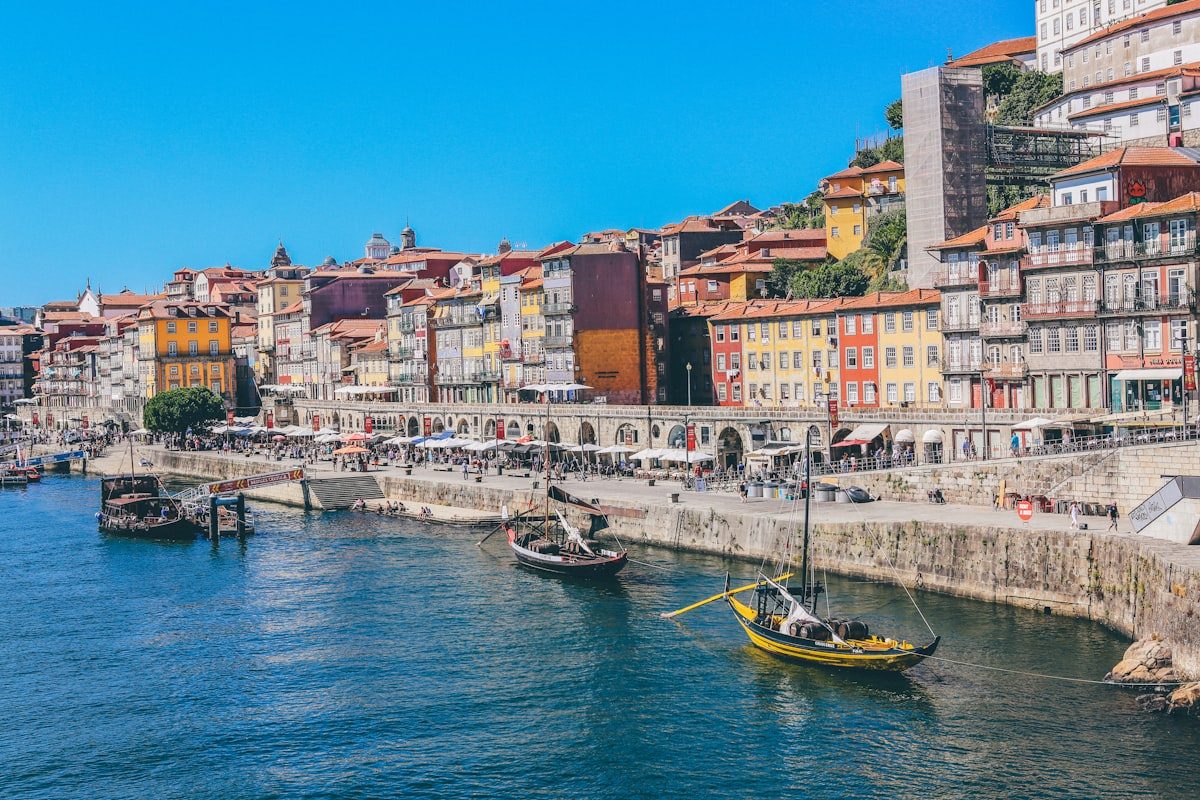
Portugal is the country Americans talk about when they don't want to admit they're leaving. It sounds less dramatic than "moving to Europe," less political than "fleeing the US," less pretentious than "moving to France." And yet, between 2017 and 2024, the number of Americans officially living in Portugal grew roughly 240% — from fewer than 5,000 to nearly 20,000 according to Portugal's official statistics office. American visa applications to Portugal tripled after the 2024 US election, and every Lisbon landlord now takes it for granted that the next person showing up to view the apartment will have a US passport.

The pitch is real. Portugal gives you EU residency, access to the third-safest country in the world (Global Peace Index 2024), universal healthcare that costs a fraction of American premiums, and a path to EU citizenship after five years — the shortest naturalization timeline in Western Europe. Lisbon has sunshine, trams, and rooftop bars. Porto has wine, cobblestones, and prices that still feel like 2014. The Algarve has 300 sunny days a year and beaches that would be national parks anywhere else. And Portuguese bureaucracy, while maddening, is not Italian bureaucracy — it mostly works, eventually, if you're patient.
But the Portugal of 2026 is not the Portugal of 2019. The NHR tax regime that made Portugal famous among American retirees closed to new applicants on January 1, 2024. The Golden Visa's real-estate route was killed in October 2023. The immigration authority, SEF, was dissolved and replaced by AIMA, which is sitting on a backlog of over 400,000 pending cases. Rent in Lisbon has roughly doubled since 2019, partly because of all the Americans who came before you. The locals are not uniformly happy about this, and you will feel it eventually.
This guide is about doing it anyway, with eyes open. Visas, banking, healthcare, where to actually live, what it costs, and the practical stuff nobody talks about until you're in the middle of it. The US Embassy in Lisbon handles American citizen services. Active American expat threads live on r/PortugalExpats, r/AmerExit, and r/ExpatFIRE — the "I left the US for Portugal a few weeks ago" and "Finally sharing my Portugal move story, 8 years later and no regrets" threads are both essential reading.
EscapeFromUSA may earn a commission from links on this page, at no extra cost to you. We only recommend services we'd use ourselves.
Visa Options for Americans
Portugal's visa landscape shifted dramatically between 2023 and 2025. The two routes that mattered most to American retirees and investors — NHR tax treatment and the real-estate Golden Visa — both got killed or narrowed. What's left is still one of Europe's most accessible visa menus for Americans, but the playbook from 2021 is obsolete.

D7 Passive Income Visa — the default choice for most Americans
The D7 is the workhorse. Retirees, people with rental income, dividend-earners, remote workers whose situation doesn't quite fit the D8 — this is their visa. Requirements:
- Passive income of at least €870/month per applicant (100% of Portugal's IAS benchmark of €509.26, scaled — which in practice means the national minimum wage of €870 in 2025, expected to rise to ~€920 in 2026). Add 50% for a spouse (€435) and 30% per child (€261). Most consulates want to see 12 months of bank statements showing that income consistently arriving.
- Proof of accommodation in Portugal — a 12-month lease, a property deed, or a notarized letter from a host.
- Private health insurance valid in Portugal, with minimum €30,000 coverage.
- FBI background check (apostilled), clean criminal record.
- A Portuguese bank account with ~€10,000+ in savings as proof of financial reserves. Banks require a NIF to open this — chicken-and-egg problem solved by getting a NIF remotely via a fiscal representative (typically €100-250 one-time fee from a Portuguese lawyer or service like Bordr or NewCo).
The visa is valid for 2 years initially, then renewable for 3-year increments. After 5 years of legal residency, you can apply for permanent residency or citizenship — Portugal has the shortest naturalization timeline in Western Europe. Apply through your local Portuguese Consulate. One Reddit user documented their D7 timeline from application to Portuguese residence card in roughly 10 months, which is typical for 2025-2026.
D8 Digital Nomad Visa — for remote workers on US payroll
Launched October 2022, the D8 is Portugal's answer to the remote-work boom. Requirements:
- Monthly income of at least €3,480 (4× Portugal's national minimum wage, updated annually).
- Proof of remote employment or freelance contracts with non-Portuguese clients — a letter from your US employer authorizing remote work from Portugal, or 12 months of freelance invoices.
- Tax residency documentation from the US showing you've been paying taxes where you currently work.
- Same accommodation + insurance + FBI check as the D7.
The D8 comes in two flavors: a 1-year temporary stay visa (for those keeping US tax residency) and a 2-year residence visa that's structurally similar to the D7. Most American remote workers want the 2-year version because it counts toward the 5-year citizenship clock. Approval rate is high if your income is well-documented — the issue is usually AIMA appointment timing, not the merits of the application.
Golden Visa — still exists, but real estate is dead
The Golden Visa didn't end — just its most popular route. As of October 2023, you can no longer qualify by buying a €500,000 property. What still works:
- €500,000 in a Portuguese venture-capital or investment fund (the most popular remaining route). See our full breakdown of the fund landscape and what the "eligible fund" universe actually looks like.
- €250,000 in support of Portuguese arts/heritage.
- €500,000 in R&D or scientific research.
- Job creation (10 full-time jobs in Portugal, or 8 in a low-density region).
The Golden Visa still only requires 7-14 days/year in Portugal (vs. 183+ for D7/D8), which is why it remained attractive even after the real-estate door closed. Processing times have gotten ugly — 18 to 36 months from application to residence card as of 2026, due to AIMA backlog.
AIMA: Portugal's new immigration authority you'll deal with for years
In October 2023, Portugal dissolved SEF and replaced it with AIMA (Agência para a Integração, Migrações e Asilo). SEF's functions were split — border control went to the PSP (police), and everything civilian (residence permits, renewals, citizenship) went to AIMA. The handover has been catastrophically slow. AIMA inherited roughly 350,000 pending cases from SEF, and by Q1 2026, the backlog had grown past 400,000 with formal complaints rising 37% year-over-year. Residence-permit renewals that are legally supposed to take 90 days are routinely taking 12-24 months.
The practical impact: your initial D7 or D8 application still happens at a Portuguese consulate in the US (Washington DC, San Francisco, New York, Boston, etc.), which is functional. But once you land in Portugal with your visa sticker, you'll wait 6-18 months for your first AIMA appointment to get the physical residence card. In the meantime, your visa entry stamp plus the AIMA appointment scheduling confirmation serves as legal proof of residency — most banks, landlords, and SNS clinics accept this.
The NIF — your Portuguese tax ID
The Número de Identificação Fiscal is Portugal's version of Italy's codice fiscale or Spain's NIE. You need it for literally everything: opening a bank account, signing a lease, getting a phone contract, buying property, paying utilities. Non-EU residents used to require a fiscal representative (a Portuguese lawyer or service) to get one, but since July 2022, you can opt for electronic correspondence and skip the fiscal rep — though most Americans still use one (Bordr, NewCo, or a Lisbon law firm) because dealing with Portuguese tax authority forms in Portuguese is not recommended. Cost: €100-250 for NIF + fiscal rep registration.
You can get a NIF before you leave the US, which is the standard order of operations: (1) NIF, (2) Portuguese bank account with savings deposit, (3) visa appointment at consulate, (4) fly to Portugal, (5) wait for AIMA appointment.
See our digital nomad visas comparison for how Portugal's D8 stacks up against Spain's, Italy's, and Germany's versions.
Banking and Money
Portuguese banking is more functional than you'd expect for a country this laid-back, and more foreigner-friendly than Italian or Spanish banking. The main friction is the NIF-first rule — no NIF, no account — and the paper-heavy onboarding that feels transplanted from 1997.

Opening an account: You'll need a NIF, passport, proof of address in Portugal (a lease or even a signed letter from a host/landlord works at most banks), and initial deposit — typically €250-1,000 depending on the bank and account type. Most banks require an in-person visit to open an account, though some (Activobank, N26) work entirely remotely.
- Millennium BCP — Portugal's largest private bank. Extensive branch network, decent app ("M App"), English-speaking staff at flagship branches in Lisbon and Porto. Monthly fee €5-7 for most accounts. The go-to bank for Americans on D7/D8 visas.
- Activobank — Millennium BCP's digital-first subsidiary. Free account, good English-language app, can open remotely with NIF + passport uploaded. Popular with digital nomads.
- Novobanco — the restructured ex-BES. Solid digital banking, good branch coverage, foreigner-friendly.
- Caixa Geral de Depósitos (CGD) — Portugal's state-owned bank. Largest branch network, most paper-heavy onboarding. Good for mortgages but bureaucratic for everything else.
- BPI — owned by Spanish CaixaBank. Good foreigner services, strong mortgage department (one of the few banks that will lend to non-resident Americans with a reasonable LTV).
- Santander Totta — the Portuguese arm of Banco Santander. English support, good app, straightforward for expats.
- N26 / Revolut / Wise — fully usable for daily life in Portugal. Many Americans keep Wise as their primary account for the first 6-12 months (no NIF needed to open) and add a Portuguese bank once they have their residency sorted.
Moving money from the US:
- Wise is the gold standard for USD-to-EUR transfers. Fees of 0.4-0.7% on mid-market rate. Set up recurring monthly transfers of your pension, Social Security, or US salary. The Wise multi-currency account works with Portuguese IBAN for direct deposits.
- Revolut — competitive for smaller transfers, has a free tier.
- OFX / CurrencyFair / Currencies Direct — better for large property-purchase transfers ($100K+), where you save 1-2% vs. Wise on the total amount. On a €400,000 Lisbon apartment, that's €4,000-8,000 in your pocket.
Do not use your US bank for wires. Wells Fargo, Chase, and Bank of America charge $25-50 per outgoing wire plus a 2-3% exchange-rate markup that's hidden in the rate they quote you. Compounded over years of monthly transfers, this costs Americans five figures they didn't need to spend.
Taxes — the post-NHR reality
Here's where things got worse for Americans in the last two years. For nearly 15 years, Portugal's Non-Habitual Resident (NHR) regime offered new tax residents 10 years of preferential treatment: most foreign-source income (pensions, dividends, rental income) was tax-free in Portugal, and Portuguese-source professional income was taxed at a flat 20%. For American retirees living on US pensions or investments, this was extraordinary.
NHR closed to new applicants on January 1, 2024, with a transitional window through March 31, 2025. If you established Portuguese tax residency before those cutoffs, you're grandfathered — you keep full NHR benefits for your remaining years in the 10-year program. Everyone arriving after is subject to Portugal's default progressive income tax rates, which top out at 48% (plus 2.5% solidarity surcharge on income above €80,000, and 5% above €250,000).
The replacement — commonly called "NHR 2.0" or IFICI (Tax Incentive for Scientific Research and Innovation) — is much narrower. To qualify you must:
- Not have been a Portuguese tax resident in the prior 5 years
- Work in an eligible sector: scientific research, higher education, highly-qualified jobs certified by IAPMEI/AICEP, startup ecosystem, or specific technology/industrial roles
- Hold a university degree (EQF Level 6+) or PhD
Eligible applicants get 20% flat tax on Portuguese professional income and exemption on most foreign-source income (dividends, capital gains, royalties) for 10 years. But for the typical American retiree or remote worker without a specialized tech/research role, IFICI is out of reach. Most Americans arriving in 2026 will pay regular Portuguese progressive tax on their worldwide income.
US-Portugal tax treaty: The US-Portugal tax treaty (1995) prevents double taxation but doesn't eliminate US tax liability. As a US citizen you'll still file a US return every year regardless of where you live. Key tools:
- Foreign Earned Income Exclusion (FEIE) — excludes up to $126,500 (2025) of earned income from US taxation if you pass the bona fide residence or physical presence test.
- Foreign Tax Credit — offsets US tax dollar-for-dollar against Portuguese tax paid, essential for US citizens in high-tax Portugal.
- FBAR — you must file FinCEN 114 annually if your Portuguese accounts aggregate over $10,000 at any point during the year. Penalties for non-filing are severe.
- Form 8938 (FATCA) — required if foreign assets exceed $200,000 (single, living abroad) or $400,000 (married).
Hire a cross-border tax accountant — someone who does US returns and speaks to a Portuguese contabilista (accountant). Expect $1,500-3,500/year for competent US-PT dual filing. Greenback Expat Tax Services, Taxes for Expats, and MyExpatTaxes are popular among US expats in Portugal.
Healthcare
Portugal's healthcare system is a genuinely good deal — ranked 12th-15th globally by the WHO-adjacent metrics, with a life expectancy of 82.5 years (vs. 76.4 in the US). The catch is that access for new American arrivals is layered: you start on private insurance, eventually qualify for the public SNS, and most long-term expats run a hybrid.

Private health insurance — required for your visa, useful after:
Every D7, D8, and Golden Visa applicant must prove private health insurance valid in Portugal with minimum €30,000 coverage. The cheapest compliant plans from international insurers cost €500-1,200/year for applicants under 55, rising sharply after 65. Common options:
- Médis — Portugal's largest private insurer, owned by Ageas. Plans from €40-120/month depending on age and coverage. Extensive network, English-speaking doctors in Lisbon/Porto/Algarve.
- AdvanceCare / Allianz — pairs Allianz international coverage with Portuguese domestic care. Popular with expats. €50-180/month.
- Multicare — owned by Fidelidade (Portugal's largest insurer). Wide network, good app. €40-100/month.
- Tranquilidade / Lusitania — good budget options starting at €25-60/month.
- Cigna Global / Allianz Care / IMG Global — international plans accepted by Portuguese consulates for visa applications. €100-300/month depending on age, but you keep coverage when you travel back to the US.
What you get with private insurance:
- GP visit same-day or next-day, €0-15 copay
- Specialist appointment within 1-10 days, €20-50 copay
- MRI within a week, €0-80 copay (vs. $1,500-5,000 out-of-pocket in the US)
- Hospital stays at private clinics like Hospital da Luz, CUF, Lusíadas — generally excellent, English-speaking, hotel-like
- Dental: usually separate add-on, €10-30/month extra
Public healthcare — the SNS (Serviço Nacional de Saúde):
Portugal's SNS is the universal public system. It's free at point of use (with small co-pays) for residents. Enrollment requires:
- A valid Portuguese residence permit (the physical card from AIMA — which is why AIMA's backlog hurts so much).
- Registration at your local Centro de Saúde (health center) — bring your residence card, NIF, NISS (social security number), and proof of address.
- Assignment to a médico de família (family doctor) — this can take weeks or months in overwhelmed Lisbon districts, sometimes longer.
Once enrolled:
- GP visits: €4.50 (often waived for pensioners and low-income residents)
- Specialist visit: €7-15 via GP referral
- Hospital emergency: €18 (non-urgent) or free if urgent
- Prescriptions: 30-95% state subsidy on most drugs — common medications cost €2-12/month
- Hospitalization, surgery, maternity, cancer treatment: free
The weakness is wait times. Non-urgent specialists in Lisbon/Porto can have 3-8 month waits. Rural areas have fewer specialists but shorter queues. An ExpatFIRE discussion on 10-year healthcare costs for American retirees in Europe walks through realistic scenarios — Portugal consistently lands in the "best value" tier.

The hybrid strategy most Americans use:
Keep private insurance (€50-150/month) for routine care, quick specialist access, and English-speaking doctors. Use the SNS for emergencies, surgeries, and chronic-condition management once you're eligible. This combination runs €600-2,400/year in total healthcare spending for a 45-year-old American, compared to the US average of $15,000-25,000 in combined premiums + out-of-pocket. See our health insurance abroad guide for how Portugal compares to Mexico, Spain, and Thailand.
Pharmacies (farmácias): Portuguese pharmacists are highly trained and can dispense many medications that require prescriptions in the US. Drug prices are typically 40-80% lower than US prices. The green-cross sign marks every farmácia, and at least one in every town runs 24-hour rotating emergency service (farmácia de serviço).
Medicare note: US Medicare does not cover care outside the United States. If you're on Medicare-eligible age, you'll either (a) pay Part B premiums while living abroad as insurance for US trips, or (b) drop Part B and risk late-enrollment penalties if you ever return. See our retiring abroad Social Security guide for the full analysis.

Where to Live
Portugal is small — you can drive the length of the mainland in 6 hours — but it packs more lifestyle variety than its size suggests. Mediterranean beaches, Atlantic surf towns, wine valleys, volcanic islands, and two genuinely distinct major cities. Here's the honest rundown of where Americans end up.
Lisbon — Expensive, alive, the default choice

Lisbon is where about 40% of American arrivals land, and it's gotten aggressively more expensive because of that. Monthly rent, 1-bedroom: €1,200-2,000 (central), €800-1,200 (outer districts). Where Americans cluster:
- Chiado — central, historic, walkable. Expensive (€1,500-2,400 for 1BR).
- Príncipe Real — the "Brooklyn of Lisbon". Trendy, LGBT-friendly, great restaurants, leafy. €1,400-2,200.
- Alfama — the oldest district, tile-covered, steep, touristy. The character is unbeatable if you can handle the stairs and the fado at 2 AM. €1,100-1,700.
- Estrela / Lapa — residential, embassies, quiet. €1,300-2,000.
- Campo de Ourique — neighborhoody, excellent food market, popular with American families. €1,200-1,800.
- Alvalade / Areeiro — outer but metro-connected, mid-century, great value. €900-1,400.

Lisbon pros: the best job market in Portugal, strongest expat community, daily flights to every US hub, world-class food scene, tram culture that never gets old. Cons: rent has roughly doubled since 2019, the housing crisis has generated real local backlash against foreigners, summer tourism makes central districts unpleasant July-August, and Portuguese people are increasingly vocal about American arrivals driving up prices.

Porto — Cheaper, grittier, arguably better

Monthly rent, 1-bedroom: €800-1,400 (central), €550-900 (outer). Porto is what Lisbon was in 2015 — still cheaper, less touristy, more genuinely Portuguese, with a creative energy that feels earned rather than curated. American neighborhoods:
- Cedofeita / Bonfim — artistic, cafes, grad students. €800-1,200.
- Foz do Douro — where the river meets the Atlantic, beachy, upper-middle-class. €1,100-1,700.
- Vila Nova de Gaia — across the river, port wine cellars, lower rents. €700-1,100.
- Cedofeita — central, bohemian, small-business density. Best overall value for a walkable Porto life.
Porto pros: 30-40% cheaper than Lisbon for equivalent quality, shorter flight to most of Europe, one of Portugal's best food scenes (francesinha, tripas à moda do Porto, port wine), cooler summers. Cons: rainier winters (similar to Seattle), smaller airport with fewer US direct flights, less English in day-to-day transactions. See our Porto vs Portland comparison for a detailed cost breakdown of what $250K buys in each city.
Cascais — Coastal, wealthy, English-friendly
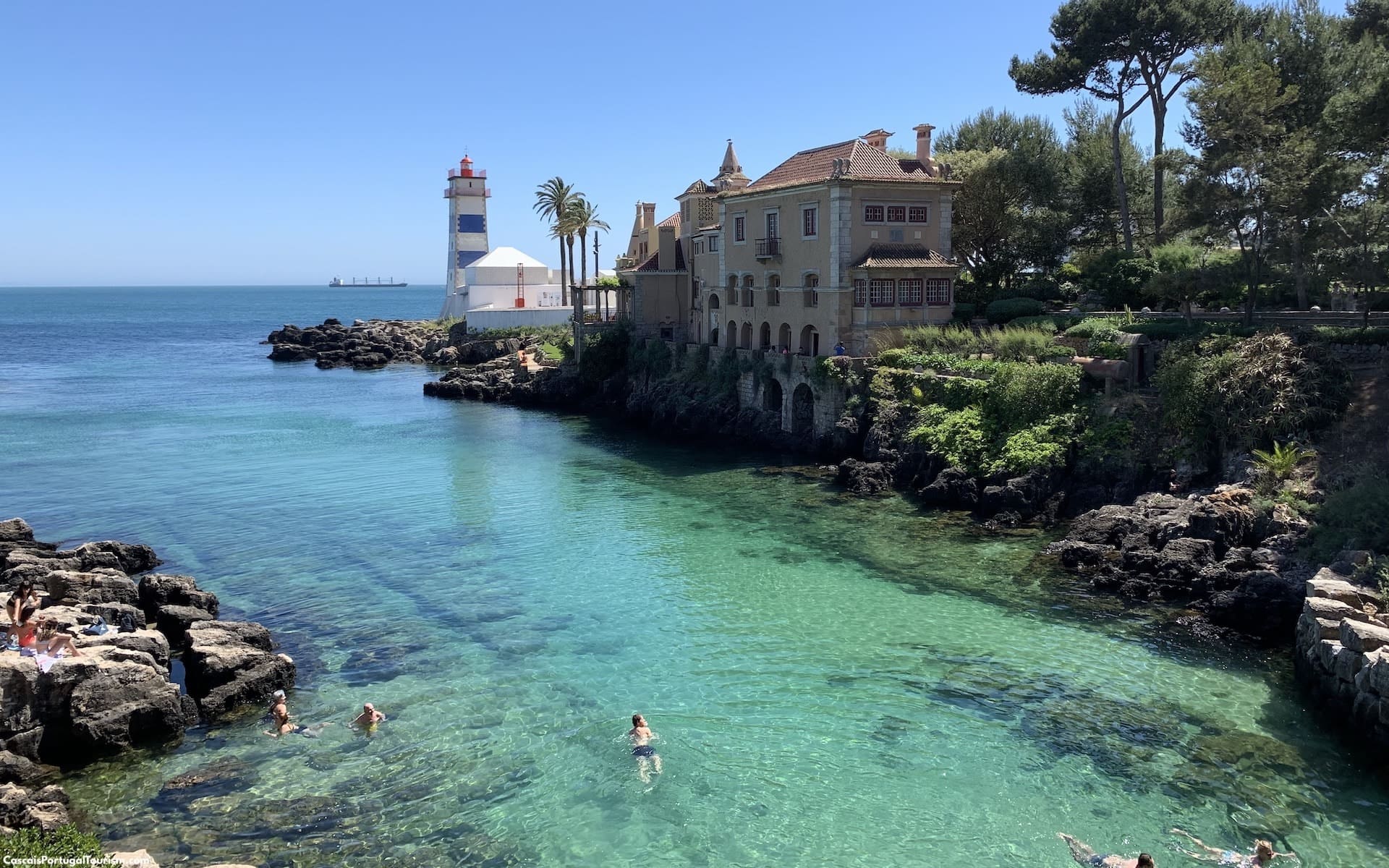
Monthly rent, 1-bedroom: €1,200-2,200. A 40-minute train ride west of Lisbon, Cascais is the Portuguese Riviera — beaches, marinas, golf courses, international schools, and the highest concentration of English-speaking services outside Lisbon proper. Popular with wealthy American retirees, executives on expat packages, and families with kids in St. Julian's School or TASIS Portugal. Quality of life is high, prices are high, and winter weather is genuinely mild (12-16°C). The main trade-off: it's a "nice suburb" rather than a real city, which some Americans love and others find sterile after six months.
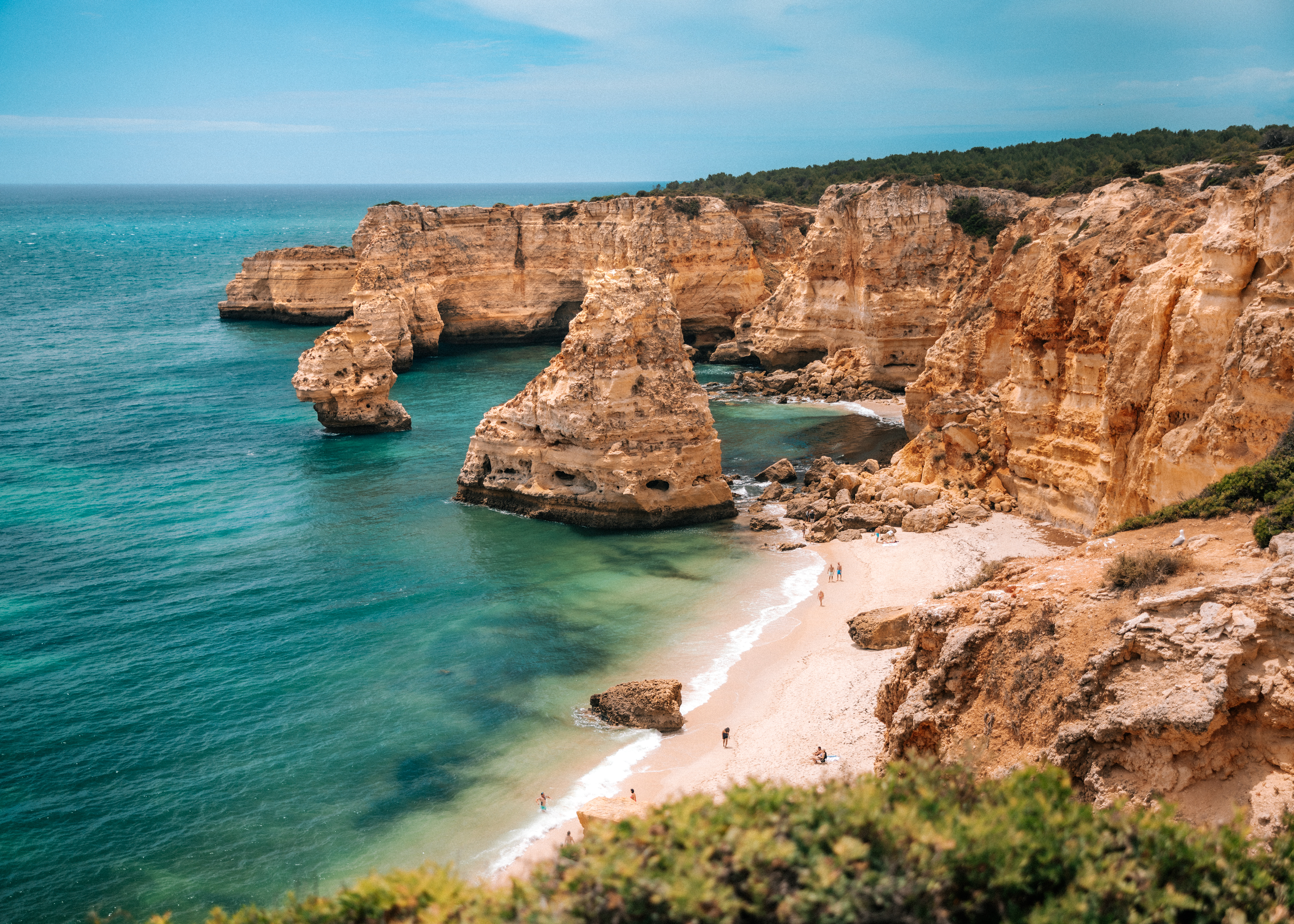
The Algarve — Sun, retirees, and genuine cultural shift
Monthly rent, 1-bedroom: €700-1,400 depending on town and season. The Algarve is Portugal's 150-mile southern coast, and it's the European retirement coast — British, Dutch, German, and increasingly American retirees. Popular bases:
- Faro — regional capital, airport, year-round city amenities. €700-1,200.
- Lagos — smaller, beachy, historic, growing American community. €800-1,300.
- Tavira — quieter, east Algarve, traditional. €600-1,000.
- Albufeira — touristy, party-heavy in summer, very cheap in winter. €500-900.
- Portimão — functional, affordable, less charming. €600-1,000.
Algarve pros: 300+ sunny days/year, mild winters, cheapest coastal European living for Americans, enormous English-speaking expat community (you can live here without learning a word of Portuguese). Cons: summer tourist hordes, the culture is significantly Anglicized to the point that "this doesn't feel like Portugal" is a frequent complaint, limited job market if you're not retired.
Braga — The underrated north

Monthly rent, 1-bedroom: €500-900. Portugal's religious heart, a university city of 190,000 that sits 50km inland from Porto. Historic center, young population, strong tech scene (Bosch and Accenture have offices), cheapest major city in Portugal. Good option for digital nomads who want city amenities without Lisbon/Porto prices.
Madeira — The perpetual-spring island

Monthly rent, 1-bedroom: €700-1,300 in Funchal. A subtropical Portuguese island 900km southwest of Lisbon, Madeira has 17-22°C year-round, excellent fiber internet, a strong "digital nomad village" program in Ponta do Sol, and a pace of life that's slower than the mainland. Stunning landscapes, good hiking, limited urban options (Funchal has 110,000 people and that's the whole show). Works best for remote workers who don't need a big-city social life.
Azores — Remote, cheap, for the self-sufficient

Monthly rent, 1-bedroom: €500-900. Nine volcanic islands in the mid-Atlantic, 1,500km west of Lisbon. São Miguel is the largest and most accessible; Ponta Delgada is the main city. Spectacular scenery, cheapest Portuguese real estate (stone farmhouses for €150-250K), tiny expat community. For Americans who want genuine remoteness and are okay with a 3-4 hour flight to continental Europe.
For how Portugal's major destinations compare to Spanish alternatives, see our Portugal vs Spain breakdown.
Get the Portugal move checklist
- Pick your visa route
- Price a real month of living
- Shortlist two or three cities
- Set a purchase budget
- Sort your US paperwork
Cost of Living
Portugal is the cheapest country in Western Europe with first-world infrastructure. Numbeo's Portugal cost-of-living data puts overall costs 42% below the US and 20-30% below Spain, France, and Italy. But the gap to the US has narrowed considerably since 2019 — the "Portugal is shockingly cheap" posts from five years ago are no longer accurate, especially in Lisbon. Here's what actual monthly life costs now.
Budget Tier — €1,400-1,900/month ($1,500-2,050)
A careful life in Porto, Braga, the east Algarve, or a mid-size Portuguese city. Cooking most meals, using transit, enjoying free pleasures (which Portugal has in abundance).
- Rent (1BR, decent Porto/Braga neighborhood): €550-850
- Utilities (electric, gas, water): €90-130
- Internet (fiber 500 Mbps-1 Gbps): €30-40
- Groceries (Pingo Doce, Continente, Lidl, local markets): €180-260
- Eating out (prato do dia 2-3x/week at €8-12 each): €70-130
- Transportation (Andante pass in Porto, Navegante in Lisbon): €30-45
- Phone (MEO / NOS / Vodafone prepaid): €10-20
- Private health insurance (basic): €40-80
- Entertainment/misc: €70-110
- Total: €1,070-1,665 ($1,150-1,795)
Comfortable Tier — €2,300-3,200/month ($2,500-3,450)
The good life in Lisbon or Porto, or a very good life in Braga or the east Algarve. Nice apartment, eating out regularly, weekend trips, gym, occasional flights.
- Rent (1BR, desirable neighborhood in Lisbon/Porto): €1,000-1,700
- Utilities: €110-160
- Internet: €35-45
- Groceries + eating out: €380-570
- Transportation: €40-70
- Phone: €15-25
- Private health insurance (comprehensive): €80-180
- Gym: €25-45
- Entertainment/travel (Ryanair weekend flights, €40-80 each way): €180-320
- Total: €1,865-3,115 ($2,010-3,360)
Luxury Tier — €4,500-7,000+/month ($4,850-7,550)
A spacious apartment in Príncipe Real, Chiado, or Foz do Douro. Fine dining weekly, golf club membership, international schools for kids, frequent travel.
- Rent (2-3BR, prime Lisbon/Cascais location): €2,000-3,500
- Utilities + internet: €180-250
- Food (premium groceries, restaurants 4-5x/week): €600-900
- Transportation (mix of transit + car lease): €150-400
- Health insurance (international premium): €180-500
- International school (per child): €600-1,700
- Travel/entertainment: €400-800
- Total: €4,110-8,050 ($4,430-8,680)
Portugal-specific cost notes:
- Prato do dia is Portugal's equivalent of Spain's menú del día — a 2-course daily lunch special at neighborhood restaurants for €8-13 including a drink and coffee. Available at thousands of places across the country, typically 12-3 PM. Budget your eating around this.
- Wine is absurdly cheap. A very drinkable bottle of Vinho Verde or Douro red at the supermarket: €3-6. A glass at a neighborhood bar: €2-3.50. Port wine at the source (Porto/Gaia cellars): €15-40 for bottles that cost $80+ in the US.
- Electricity is expensive by European standards. Portugal has the 3rd-highest residential electricity rates in the EU. Winter heating for a poorly insulated apartment (which most are — Portuguese homes are built to release heat, not retain it) can hit €150-250/month in January-February.
- Rental deposits are typically 1-2 months plus 1 month advance rent. Furnished short-term rentals (e.g., for your first 3 months while you find a permanent place) run 30-50% above equivalent long-term rent.
- Meals out are cheaper than Spain/Italy. A full Portuguese dinner with wine for two at a neighborhood tasca: €30-50. The same meal in Barcelona or Rome would be €60-90.
For detailed dollar-for-dollar comparisons, see our Portugal vs USA cost of living guide, and our ExpatFIRE Portugal thread roundup on realistic family expenses.
Buying Property in Portugal
Americans can buy property in Portugal with no restrictions, no residency requirement, and no government approval needed — one of the more welcoming regimes in Europe. You need a NIF and a Portuguese bank account, and that's it. The catch is closing costs, the Cadastral bureaucracy, and the post-Golden-Visa reality that buying doesn't grant you residency anymore.

Market overview (2026):
- Lisbon central (Chiado, Príncipe Real, Estrela): €5,500-8,500/sqm — yes, really. Lisbon is now pricier per sqm than Madrid.
- Lisbon outer (Campo de Ourique, Alvalade): €3,500-5,500/sqm
- Porto central (Baixa, Cedofeita, Foz): €3,200-5,500/sqm
- Porto outer: €2,000-3,500/sqm
- Cascais / Estoril: €4,500-7,000/sqm
- Algarve (Lagos, Vilamoura, Albufeira): €2,800-5,000/sqm
- Braga, Coimbra, Aveiro: €1,500-2,800/sqm
- Rural Portugal, Azores, smaller Alentejo towns: €800-1,800/sqm — genuine bargains, though liquidity is thin.
Portugal's national average residential price hit €2,685/sqm in 2025 according to Portugal's Statistics Institute (INE), up roughly 80% since 2017. The price run-up has slowed but hasn't reversed — and the housing crisis continues generating local resentment toward foreign buyers.
The buying process:
- Get your NIF and a Portuguese bank account. You can do both remotely before arriving.
- Find a property. Idealista.pt, Imovirtual.com, and Casa Sapo are the dominant portals. Real estate agents are typically seller-side; there's no meaningful buyer-side agent culture.
- Hire an independent real estate lawyer (advogado). €1,200-3,500 flat fee or 1% of purchase price. This is not optional — Portuguese property transactions involve an astonishing amount of paperwork (caderneta predial, certidão de registo, planta, licença de utilização, energy certificate), and dodgy properties are common. See our Portugal due diligence checklist.
- Sign the CPCV (Contrato de Promessa de Compra e Venda) — the promissory contract. You pay a 10-30% deposit. If you back out, you lose the deposit. If the seller backs out, they owe you double the deposit (this is genuinely enforced).
- Conduct due diligence — your lawyer checks the property registry (Conservatória do Registo Predial) for mortgages and liens, the cadastral record for the building footprint, outstanding community fees, and — critically — that any renovations/extensions match approved plans. Illegal construction ("obra clandestina") is common and becomes your problem after purchase.
- Arrange financing if applicable (see below).
- Sign the escritura (deed) at a notary. Pay the balance, IMT, and stamp duty. The notary reads the deed aloud in Portuguese (you can bring an interpreter), and ownership transfers immediately. Register the deed at the Conservatória within 60 days.
Closing costs: 6-9% of purchase price
- IMT (Imposto Municipal sobre Transmissões) — transfer tax: Progressive brackets for residential purchases.
- Primary home: 0% under €101,917, rising through bands to 7.5% over €574,323 plus 2% on portions above €1,016,019.
- Secondary home / non-resident: 1% under €101,917, rising through bands to 7.5% over €574,323.
- See Portugal's official IMT calculator at the Autoridade Tributária portal.
- Stamp duty (Imposto do Selo): 0.8% of purchase price, paid at deed signing.
- Notary and deed registration: €600-1,500.
- Lawyer: €1,200-3,500 or 1%.
- Mortgage setup costs (if applicable): 0.5-2% including bank arrangement fee, appraisal, and mortgage stamp duty.
Mortgages for non-resident Americans:
This is harder than in the US but more possible than Italy or Greece. The banks that actively lend to American non-residents:
- BPI — consistently the most foreigner-friendly mortgage lender. Up to 60-70% LTV for non-residents, 80% once you're a Portuguese tax resident. Rates of 3.5-5.2% fixed or Euribor + 1.5-2.5% variable (so ~4.5-5.5% in early 2026). Requires extensive documentation — 2 years US tax returns, employment letter, 6 months bank statements, NIF, proof of deposit source.
- Santander Totta — similar terms to BPI. Strong digital process.
- Caixa Geral de Depósitos (CGD) — state-owned bank, slower process but often best rates for residents.
- Novobanco — occasionally competitive, but patchy appetite for non-residents.
See our detailed Portugal non-resident mortgage guide for rate shopping and the documentation playbook. Most Americans buying sub-€400K properties pay cash and refinance into a Portuguese mortgage 12-24 months after becoming tax resident, which gets them the better 80% LTV and primary-home tax treatment.
Ongoing costs:
- IMI (Imposto Municipal sobre Imóveis) — annual property tax: 0.3-0.8% of the cadastral value (Valor Patrimonial Tributário), which is typically 40-70% of market value. A €400K Lisbon apartment might have a VPT of €200K, generating an annual IMI of €600-1,200.
- AIMI (wealth surcharge): Properties with a VPT over €600,000 incur an additional 0.4-1.0%/year. Most Americans don't hit this threshold.
- Community fees (condomínio): €30-180/month for apartment buildings.
- Home insurance: €200-600/year.
Golden Visa via property is dead. To repeat for clarity: you cannot get Portuguese residency by buying a €500,000 apartment anymore. That route closed October 2023. See our post-property Golden Visa options guide for what still works.
For a broader view of what Americans can and can't buy globally, see our property buying rules by country guide.

Safety, Language, and Daily Life
Portugal is the third-safest country in the world according to the Global Peace Index 2024 — behind only Iceland and Ireland. The transition from American crime-awareness defaults to Portuguese reality is one of the fastest, most obvious quality-of-life upgrades the move delivers.
The numbers: Portugal's homicide rate is 0.8 per 100,000 — 8 times lower than the US rate of 6.3. Violent crime against foreigners is almost unheard of. Guns are strictly regulated; civilian gun ownership is 8.5 per 100 people vs. 120 per 100 in the US. Mass shootings do not happen. School safety drills do not happen. This is the reality most Americans cite as the single biggest adjustment — not having to mentally calculate threat levels in public spaces anymore.
What to actually watch for:
- Pickpocketing in Lisbon (Tram 28, Baixa-Chiado metro station, Alfama on cruise-ship days) and Porto (São Bento station, Ribeira on weekends). Professional teams, not opportunists. Front-pocket wallet, no phones on outdoor tables.
- Apartment rental scams — a constant problem. Never wire a deposit for a property you haven't seen in person or verified via an advocate. Idealista.pt listings get impersonated; fake "landlords" collect deposits from multiple victims.
- Car break-ins at tourist parking in the Algarve and along the Lisbon coast (Cascais, Guincho). Never leave luggage visible.
- Drug dealers around Rossio and Cais do Sodré in Lisbon approaching tourists offering cocaine/hash — it's usually baking soda, flour, or worse. Ignore them. Drug possession for personal use is decriminalized in Portugal, but buying from street dealers is a scam waiting to happen.
What you don't need to worry about: walking alone at night in any Portuguese residential area, public transit safety at any hour, gun violence (essentially zero), terrorism (Portugal has never had a significant attack), natural disasters (minor earthquake risk in the south, mostly small).
Language — learning Portuguese:
English is widely spoken in Lisbon, Porto, Cascais, and most of the Algarve. You can function day-to-day without Portuguese in these places — waiters, shopkeepers, taxi drivers, and most government-facing workers in the expat hubs handle English competently. Outside these zones, you need Portuguese.
Portuguese is deceptively difficult for English speakers. The grammar is similar to Spanish (you can fake-read a newspaper after a month), but European Portuguese pronunciation is brutal — vowels get swallowed, consonants blur, and sentences sound rhythmically different from any Romance language you've studied. If you've learned Brazilian Portuguese, expect to be humbled — the European variant is a different beast. Budget 12-18 months of consistent study for real conversational fluency.
Resources:
- Free community options: municipal Portuguese classes for immigrants (CNE-PNPT program) are free or nearly free, available in most cities.
- Language schools: Portuguese Connection, CIAL, Fast Forward — €400-900/month for intensive programs.
- Apps: Practice Portuguese is the gold standard for European Portuguese (not Brazilian). Duolingo teaches Brazilian. Pimsleur has a solid European Portuguese track.
Language requirement for citizenship: After 5 years of legal residency, citizenship requires an A2-level Portuguese proficiency test (CIPLE), which is genuinely achievable with 300-400 hours of study.
The rhythm of Portuguese daily life:
- Lunch is the main meal — 1-3 PM, often 2 hours. Dinner is later (8-10 PM) and lighter. Restaurants genuinely close between 3 and 7 PM.
- "Amanhã" (tomorrow) is a suggestion, not a commitment. Internet technician says "tomorrow," it means "sometime this week." Americans coming from a productivity-optimized culture find this maddening for 6 months and then stop caring.
- Banks close at 3 PM on weekdays. Everything government-facing closes at lunch and stays closed on weekends.
- Sundays are quiet. Many small shops closed. Restaurants open but slower.
- Saudade is untranslatable but real — a melancholic longing for something absent. Portuguese emotional life has a depth that sometimes catches Americans off-guard.
- Socializing is slower and warmer. Friendships take longer to form than in the US but go deeper once formed. One long-term expat on r/AmerExit wrote that after 8 years they "can count close Portuguese friends on one hand" — integration is genuinely difficult even for patient people.
Expat community:
- Americans & Friends PT — large Facebook and in-person network, especially Lisbon/Cascais.
- InterNations Portugal — monthly events in Lisbon, Porto, Algarve.
- Expats Portugal Forum — long-running forum, active since 2003.
- r/PortugalExpats on Reddit — practical daily-life threads.
- Portugal Resident — English-language news, especially Algarve-focused.
- The Portugal News — national English-language weekly.
- Portugalist — American expat James Cave's blog, widely considered the best practical resource.
One more thing to set up before you fly: a VPN. US banks, brokerages, and streaming services routinely flag or block logins from IP addresses in Portugal, and re-verifying your identity from abroad is a headache you don't want. NordVPN is the standard pick among expats — it keeps Netflix, your US bank, and IRS e-filing working like you never left.
Practical Stuff: Phones, Internet, Driving, Schools, and Logistics
The operational details of daily life in Portugal reward research. Getting phone and internet right in week one saves months of frustration; screwing up driver's license conversion can leave you carless for a year.
Phone: Three main carriers, all competent:
- MEO (Altice) — largest network, best coverage in rural areas, bundles fiber + mobile + TV for €35-55/month.
- NOS — strong second, competitive pricing, good Lisbon/Porto coverage.
- Vodafone Portugal — international roaming strength, good for frequent travelers.
- MVNOs: WOO, NOWO, [Lycamobile] — prepaid plans from €8-15/month for 20-50GB.
A contract plan requires a NIF and Portuguese bank account. For the first week, grab a MEO or NOS prepaid SIM at the airport (€10 for 20GB + calls). For a long-term plan, bundled fiber + mobile + TV at around €45/month is the default.
Internet: Portugal has Western Europe's highest fiber-to-the-home coverage — over 90% of households have FTTH access, with plans ranging from 100 Mbps (€25/month) to 1 Gbps (€45/month). Installation in cities takes 3-10 days, in rural areas 2-4 weeks. MEO, NOS, and Vodafone all offer competitive fiber; contracts are typically 24 months with penalty clauses for early cancellation (though moving house is recognized as a valid reason to break the contract).
Driving and your US license — this is time-sensitive:
You can drive in Portugal on a US license for up to 185 days after establishing legal residency. After that, you must convert to a Portuguese license or stop driving. The conversion process via IMT (Instituto da Mobilidade e dos Transportes):
- Within 90 days of becoming resident, submit the conversion request to IMT with: your US license, a certified translation, a medical fitness certificate (€30-80 from a doctor), proof of residency, and the application fee (€30).
- Depending on your state, you may be eligible for direct conversion (no test) or required to take the Portuguese theory test and possibly the practical driving test.
- If you miss the 185-day window, you'll have to enroll in a full Portuguese driving school program (€800-1,500, 20+ theory hours, 20+ practical hours), take both tests in Portuguese, and pass.
This catches many Americans off-guard because the 185-day clock is not well-advertised and expat forums are full of people stuck without driving privileges for 6+ months. See Portugal's official driving license conversion page for the current procedure.
Driving itself: Portuguese highway network is excellent (A1, A2, A3 — tolled), city driving is aggressive but not insane, parking in Lisbon and Porto old towns is genuinely terrible. Many urban expats skip the car entirely and use transit + occasional Bolt/Uber + car rentals for trips.
Schools for expat families:
Public schools (Portuguese-language) are free and generally decent — particularly in the north. Most American expat families choose international schools in Lisbon, Cascais, or Porto:
- Carlucci American International School of Lisbon (CAISL) — the American school. Pre-K through 12. €14,000-22,000/year per child.
- St. Julian's School (Carcavelos, near Cascais) — British curriculum, A-levels + IB. €16,000-22,000/year.
- Oporto British School — Porto, British curriculum. €10,000-16,000/year.
- TASIS Portugal (Sintra) — American international curriculum. €14,000-20,000/year.
- Lisboan International School, Park International School, United Lisbon International School — newer competitors, similar price points.
For bilingual/semi-private options at lower price points (€4,000-10,000/year), look at Colégio Planalto (Lisbon), Colégio São João de Brito (Lisbon), and Colégio Luso-Francês (Porto).
Shipping your stuff:
Sea freight from the US East Coast to Lisbon/Leixões port takes 3-5 weeks. A 20-foot container (roughly one-bedroom apartment's worth of furniture) costs $2,800-5,500 plus €500-1,200 in Portuguese customs clearance. Most expats ship 4-10 boxes of personal items via UPS/FedEx at $200-500 per box and buy furniture locally at IKEA (Loures, Alfragide, Matosinhos), Conforama, or secondhand on OLX.pt and Custo Justo.
If you're shipping a car — don't. Portuguese import tax on a US-origin car is roughly 35-60% of Blue Book value plus VAT, and the matrícula (registration) process takes 2-6 months. Sell the car in the US, fly, and buy in Portugal. A 3-5 year old used car costs roughly the same as in the US despite Portuguese lower incomes.
Pets:
Portugal accepts the EU pet passport standard. Requirements: ISO microchip, rabies vaccination at least 21 days before arrival, and an EU Health Certificate endorsed by a USDA-accredited vet and signed off by your state's APHIS office within 10 days of travel. No quarantine. Portugal is extremely dog-friendly — dogs are welcome on trains, in most cafes, and in many restaurants.
Weather to expect:

- Lisbon: Mediterranean — mild winters (8-16°C), hot dry summers (20-32°C). 300 sunny days/year.
- Porto: Atlantic — wetter winters (5-13°C, 30+ rainy days in winter), cooler summers (17-26°C). Think Seattle with better light and food.
- Algarve: Semi-arid Mediterranean — 300+ sunny days, mild winters (10-18°C), hot summers (22-33°C).
- Madeira: Subtropical — 17-22°C year-round, minimal temperature swing between seasons.
- Azores: Oceanic — 14-24°C year-round, but wet (São Miguel gets 1,500+mm/year).
- Interior/North: Continental — genuinely cold winters (0-5°C), hot summers (28-35°C). Poorly insulated homes make winter harder than the numbers suggest.
Tipping: Not expected. A round-up or 5-10% at restaurants for exceptional service is generous. Nobody tips at cafes for espresso or pastries. Taxi drivers: round up. Bars: no tipping for drinks. Americans who tip 20% in Portugal are broadly considered to be bad at math.
For the full pre-move preparation sequence, see our American expat checklist. For managing USD-to-EUR exposure through a multi-year move, our foreign currency risk guide walks through hedging strategies that matter when your savings are denominated in a currency that's not the one you're spending. And for a direct comparison between Portugal and its most obvious alternative, see our Portugal vs Spain analysis.
Ready to explore?
Browse Destinations