
The Best Currency Strategy When Buying in Euros as an American

The difference between the best and worst way to convert $500,000 USD into euros for a European property purchase is not abstract. In recent years, Americans have routinely paid anywhere from 0.5% to 6% in combined fees and hidden spread costs on large FX transactions, which on a €450,000 purchase is $2,500 at the low end and $30,000 at the high end. That's real money — enough to cover closing costs, or pay for a year of Spanish property taxes and utilities, or fund a material chunk of your first year of expat living.
The major wire banks (Chase, Citi, Bank of America, Wells Fargo) are among the worst options for large-sum FX conversions despite being the default choice for most first-time buyers. Specialist FX brokers (Wise, Revolut, OFX, Moneycorp, CurrencyFair) and a handful of brokerage-based multi-currency accounts (Interactive Brokers, Schwab Global Investor) routinely beat bank wires by 1-3% on spread and another 0.5-1% on fees — which compounds on large six-figure conversions into genuinely meaningful sums.
This post walks through the actual mechanics of moving large USD sums into euros for property purchases, compares the real-world rates and fees of the five or six most common channels, covers the tax implications of currency timing (yes, the IRS taxes foreign currency gains), and lays out a specific step-by-step playbook for a $500K+ transaction. It's the post we wish we had when we moved money for our first European closing.
Why Bank Wires Are the Worst Option
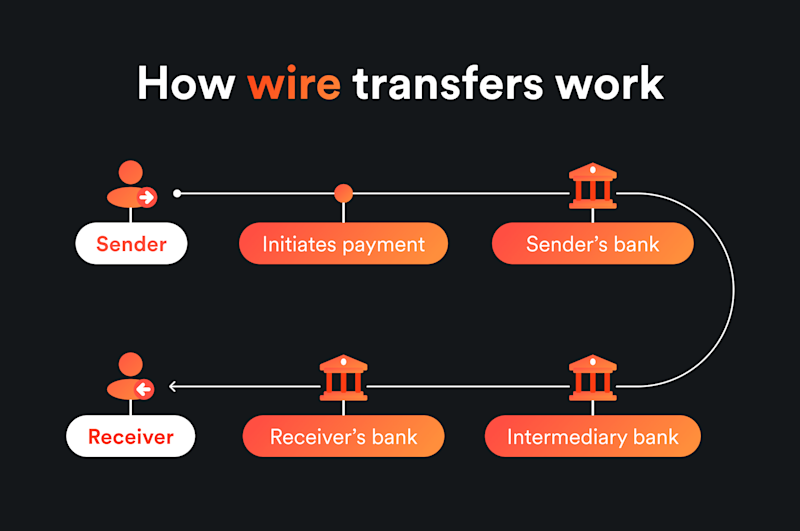
The default move for most Americans sending a large sum overseas is to initiate an international wire from their primary US bank. This is by a significant margin the most expensive way to do it, and the marketing around wire transfers actively obscures why.
A typical US bank international wire has two cost components:
-
Stated fee: $35-$65 outgoing wire fee, plus $15-$50 intermediary bank fees (which may or may not be disclosed upfront). This is small on a large transfer.
-
FX spread: This is the real cost. When your bank converts your USD to EUR for the wire, they don't use the interbank mid-market rate (the "real" exchange rate you see on Google or Bloomberg). They use a retail rate that's typically 2-4% worse than mid-market — and for transfers above $100,000, the markup often widens rather than narrows because the bank has less competition and more leverage.
On a $500,000 transfer at a 3% spread, you pay roughly $15,000 in embedded FX markup, on top of the ~$65 wire fee. Chase Private Client, Bank of America Preferred Rewards, and Wells Fargo Premier Checking all advertise "no wire fees" — which is true, but they make the money back on the spread, which most customers never see because the conversion happens inside the wire's internal pricing.
How to tell: look at the EUR amount credited to the receiving account and divide your USD amount by the EUR amount. That's the effective rate you paid. Compare it to the mid-market rate on Xe.com or Reuters currency for the same day/hour. If your effective rate is 1.09 USD/EUR and mid-market was 1.06 USD/EUR on the same day, you paid a ~2.8% markup.
Banks will tell you their rate is "the current exchange rate" without specifying whose exchange rate. That's the trick. The Consumer Financial Protection Bureau's remittance rule disclosures now require banks to disclose the specific exchange rate being used for transfers under $15,000, but above that threshold the disclosure rules are weaker.
For a detailed comparison, Wise's 2024 bank transfer cost study found that the big four US banks averaged 3.8% total cost on large-sum EUR transfers, while Wise averaged 0.5% for the same route. Over 20 similar studies from NerdWallet, CompareRemit, and Monito arrive at similar conclusions. The ranking from worst to best is consistently: major US banks → regional banks → specialist money transfer services → brokerage-based FX → direct SWIFT through a currency broker.

The Specialist FX Brokers
Several companies specialize in international money transfer for private individuals and routinely undercut bank rates by 2-3 percentage points on large transfers. For €100,000+ transfers, their advantages grow because they have dedicated FX dealing desks that negotiate rates close to interbank.
Wise (formerly TransferWise): The de facto standard for sub-€500,000 transfers. Charges a transparent fee (typically 0.35-0.55% of the transfer amount) and uses the real mid-market exchange rate with no markup. A $500,000 USD → EUR transfer through Wise in 2026 costs approximately $2,000-2,500 all-in, vs. the $15,000+ bank cost. Transfer time: 1-3 business days for most major currencies. Limits: up to $1,000,000 per transfer (higher limits available with verification).
OFX (formerly USForex): Strong for sums above $50,000. Uses a phone-based dealing desk for large transfers, where you can negotiate the rate with an agent. Typical all-in cost: 0.4-0.8% on six-figure transfers. No fixed transfer fee above $10,000. Better than Wise for the $250K-$2M range because of the dedicated dealer service.
Moneycorp: UK-based FX broker popular with Americans buying European property. Similar pricing to OFX. Offers forward contracts (lock in today's rate for a future transaction date), which is genuinely useful if you have a closing date in 3-6 months and want to fix your FX exposure.
CurrencyFair: Peer-to-peer FX marketplace that sometimes delivers rates within 0.1% of interbank. Less common for large sums (most of their volume is consumer-scale), but can be excellent for the $100K-$500K range if their matching is good for your currency pair on the day.
Revolut: Fintech multi-currency app with strong FX. Free up to the monthly limit (~$1,000/month), then 0.5-2% fee above that. Best for small or recurring transfers, not ideal for a one-shot property purchase above $100K because of the monthly fee structure.
Interactive Brokers: If you have a brokerage account at IB, you can convert USD to EUR at near-interbank rates (typically 0.002% markup on the mid-market) with a flat $2 commission. This is the absolute cheapest legal route for large-sum FX conversions for US residents. The catch is that you need to (a) open an IB account in advance, (b) be comfortable using a real trading interface, (c) wire EUR from IB to the seller or escrow account. For $500K+ transfers, the total savings vs. even Wise can be $2,000-3,000, which is material.
For side-by-side comparisons updated frequently, Monito's money transfer comparison and Finder's international transfer reviews are the cleanest resources. The r/eupersonalfinance FX threads and r/expats currency conversion megathreads are where American buyers compare actual effective rates from their own transactions.
Timing: Spot, Forward, or Dollar-Cost Average?
Assuming you've picked a low-cost channel, the next question is when to convert. The options:
Spot (convert all at once, at the current rate): Simplest. You hit the market in one transaction at the prevailing rate. Exposes you to short-term volatility — if EUR weakens 2% between your conversion and your closing, you overpaid; if it strengthens, you underpaid.
Forward contract: Lock in today's exchange rate for a future transaction date (30, 60, 90 days, up to 12 months out). You commit to converting at the agreed rate regardless of where spot moves. Forward contracts are usually available through specialist brokers (OFX, Moneycorp, Corpay FX) for transfers above $25,000 or so, with a small margin requirement (typically 5-10% deposit) and sometimes a small fee. Good if you have a signed contract with a specific closing date.
Dollar-cost averaging (DCA): Split your conversion into 3-6 tranches over 2-6 months. Removes the "worst day" risk at the cost of some mid-market drift.
Which to use:
- Closing date unknown, >6 months out: Wait until you have more clarity; don't convert early.
- Closing date known, 2-6 months out: Forward contract on the full amount, or DCA if you want to smooth the exposure.
- Closing date known, <30 days out: Spot conversion; forward contracts for <30-day horizons offer minimal benefit vs. their complexity.
- No urgency at all: Park in a multi-currency account (IB, Wise, Schwab Global) and convert opportunistically when you see a favorable rate relative to your personal reference point.
The critical mental model shift: you are not trying to "predict" EUR/USD. You are trying to minimize the cost of an execution risk. Paying 0.3% in explicit cost (Wise, IB) to remove a potential 5% adverse move is a good trade even if the expected value of the adverse move is zero. You don't want to be the American who got the "great deal" on a Spanish apartment but accidentally paid 6% more in FX than necessary and wiped out the margin.
The Bank for International Settlements quarterly FX review and Federal Reserve FX reports have the institutional data if you want to understand EUR/USD volatility regimes. For practical discussion, the r/investing forex threads and Bogleheads forum international transfer threads are both useful, though the Bogleheads tend to be more conservative about forward contracts than specialist FX traders are.

The Multi-Currency Account Alternative
A strategy that's become popular in the last 3-4 years is to hold a multi-currency account with USD and EUR balances in the same institution, converting within the account at any time. This decouples the timing of your FX from the timing of your property closing.
Best options for Americans:
-
Interactive Brokers: As noted, offers near-interbank FX conversion. You can hold USD, EUR, GBP, CHF, and many other currencies in the same account, convert at any time, and wire EUR directly to a European recipient. The wire fee from an IB account is typically $10-30.
-
Charles Schwab International Brokerage: Offers USD accounts with some multi-currency functionality for certain clients. Not as clean as IB for large FX but has the advantage of better customer service and US-regulated account protection. The "Schwab Global Account" version is oriented to non-US clients; US residents use the regular brokerage.
-
Wise Multi-Currency Account: Lets US persons hold balances in 40+ currencies, with local account details in 10 (so you can receive a EUR wire directly into your Wise EUR balance). Good for amounts up to a few hundred thousand dollars. Regulated as a US money services business; not FDIC-insured.
-
Revolut US: Multi-currency with in-app FX. Caps on free conversions; tiered fee structure above. Works well for smaller amounts.
The big disadvantage for Americans: Foreign-bank-based multi-currency accounts (HSBC UK, ING, N26, Revolut UK/EU) are typically unavailable to US residents because of FATCA reporting requirements — foreign banks often refuse American customers to avoid the compliance burden. You're limited to US-based or US-regulated providers for practical purposes.
A workaround some Americans use: open a bank account in the destination country after arriving (on a tourist visa or short residency permit), fund it via Wise or IB transfers from your US accounts, and use the local bank for the actual property closing. This gives you a local banking presence without needing one at the start of the process. Our foreign bank accounts for American home buyers post has a deeper walkthrough of the Wise/Revolut/local-bank combination.
The Tax Trap Nobody Mentions
Foreign currency is not just money — under US tax law, it's an asset with its own tax character. IRC §988 governs "foreign currency transactions" and treats gains and losses on foreign currency as ordinary income (not capital gains), with some exceptions.
How this matters for property buyers:
The basic case: You transfer $500,000 to euros on March 1 at 0.92 EUR/USD, receiving €460,000. You close on your Spanish property on June 15, when you use those euros to pay the seller. The EUR has appreciated against USD in the interim, so the €460,000 is now worth $510,000 at the June 15 rate.
Under §988, you have realized a $10,000 foreign currency gain on the appreciation of the EUR you held. This gain is ordinary income, reportable on Schedule 1 of your 1040. It doesn't matter that you used the euros for a property purchase rather than converting back to dollars — the "disposal" of the foreign currency to pay the seller triggers the realization event.
The gotcha: If instead you transferred directly to the seller at the time of closing (so the EUR passed through your hands for less than 24 hours), you don't have a §988 issue on the conversion. The property basis is simply the USD equivalent at the transfer moment. But if you hold EUR for any meaningful period and then spend it, §988 applies.
There's a de minimis exception under §988(e) for "personal transactions" where the currency gain is $200 or less. For large property transfers this is irrelevant — the gains or losses almost always exceed the threshold.
How to handle it:
- Ignore timing arbitrage: Don't try to make a profit on the FX by buying early and spending later. The gains are taxable at ordinary rates.
- Convert at or near the transaction date: Reduces the §988 exposure window to near zero.
- Use a forward contract: Forward contracts can be structured to avoid §988 treatment in some cases, though this is tax-counsel territory.
- Report any material gain or loss: If you hold EUR for 3+ months and then spend it, compute the §988 gain/loss and report it on your return. Losses are deductible as ordinary losses (a rare bright spot in the US tax code).
The IRS authoritative source is Treas. Reg. §1.988-2. For practical interpretation, the Freeman Law §988 explainer and EY International Tax Guide section on §988 are the cleanest professional resources. The r/ExpatTaxes §988 threads are where practitioners discuss specific fact patterns.
One related point: the tax basis of your foreign property, in USD terms, is the amount of USD you spent to acquire the EUR used to purchase it. If you paid EUR 450,000 for a property using euros obtained by converting $490,000, your US tax basis is $490,000 — even if the EUR value at closing is $510,000 at the spot rate. Record your conversion rates and dates carefully; you'll need them when you eventually sell the property and compute capital gains.
The Actual Playbook for a $500K EUR Purchase
Step-by-step, this is how we'd execute a $500,000+ property closing in Europe as of 2026:
-
2-6 months before closing: Open accounts with Wise (free, 5 minutes) and Interactive Brokers (takes 1-2 weeks for approval). If closing in a country where opening a local bank account pre-residency is possible (Portugal and Spain are the easiest), plan a visit to open one in person.
-
At contract signing (~60-90 days before closing): Decide on timing strategy. For most buyers, the recommended play is:
- Move 80% of the target USD amount to IB as USD
- Execute a spot FX conversion to EUR at IB (cheapest rate, minimal delay)
- Wire the EUR from IB to your local European bank account (or directly to the seller's attorney's escrow account if preferred)
- Keep 20% as USD buffer for closing-cost adjustments
-
If you don't want spot exposure: Use Moneycorp or OFX to execute a forward contract at signing for the full EUR amount. Deposit 5-10% margin, lock in the rate for your closing date. Execute on the forward when closing happens.
-
Avoid: Wire directly from your US bank to the European escrow account (worst option). Convert via PayPal or Venmo (don't laugh — people try this; the rates are atrocious). Hold EUR for 6+ months before closing (creates a §988 gain exposure window).
-
Document everything: Keep records of the USD amount transferred, the conversion rate, the conversion date, the destination account, and any broker statement. You will need these for (a) the §988 calculation if applicable, (b) establishing your USD tax basis for the property, and (c) potential regulatory questions from either side.
-
Report correctly on your tax return: If you used Wise/IB/OFX, none of them issue a 1099 — the §988 computation is your responsibility. Schedule 1, Line 8z ("Other income") is typically where §988 gains go. Losses go on the same line as negative amounts.
-
If you have a foreign bank account with >$10,000 balance at any point: File FBAR (FinCEN 114) by April 15 of the following year (with automatic extension to October 15). This includes the Wise EUR account you used for the closing.
For Americans moving really large sums ($2M+), there's a threshold above which specialist forex brokers with bank-desk pricing (Corpay, HIFX, GPS Capital Markets) start to offer enterprise-grade pricing that beats even IB. At that scale, the rate difference between 0.2% and 0.05% is worth a meeting and a custom quote. Our transfer $1M to Europe post goes deeper on the jumbo-transfer playbook.

Bottom Line
For any American buying European property in 2026, the currency conversion is one of the three or four largest non-property line items in the entire transaction. Done well through Wise, Interactive Brokers, or a specialist broker, the total cost is 0.3-0.6% of the transfer amount — on a $500K transaction, that's $1,500-$3,000, which is essentially rounding error relative to the deal size. Done poorly through a major US bank wire, the cost is 2.5-4.5% — $12,500 to $22,500 on the same transaction — and it's invisible in the bank's documentation unless you know to look for the spread.
The practical playbook is: (1) open an Interactive Brokers account or Wise account 2-8 weeks before closing, (2) move USD to that account, (3) convert at spot near the transaction date, (4) wire EUR to the receiving European account, (5) document the conversion rate and date for tax purposes, (6) file FBAR and Form 8938 if your foreign account balances cross thresholds.
The two things to specifically avoid: direct wires from your US bank to a European escrow account (horrible FX spreads), and holding EUR balances for more than a week or two before spending them (§988 gain exposure without any real benefit). The ideal is to minimize the time you hold foreign currency as an asset, while maximizing the rate quality of the conversion itself. Everything else is optimization around the edges.
Ready to explore?
Browse Destinations