
Wiring $500K to Buy a Foreign House: How to Do It Without Getting Flagged

The single most nerve-wracking moment of buying a home abroad for most Americans isn't signing the deed, hiring a lawyer, or dealing with the consulate. It's sending the money. A six-figure international wire feels like exactly the kind of transaction that could go sideways — either at your US bank (which might reject or delay it under anti-money-laundering rules), at the foreign bank (which might refuse to accept large USD inflows from an unknown source), or with the IRS (which has its own informational reporting triggered automatically at the $10,000 threshold). All of these concerns are real and all of them are manageable if you understand what's actually happening behind the scenes.
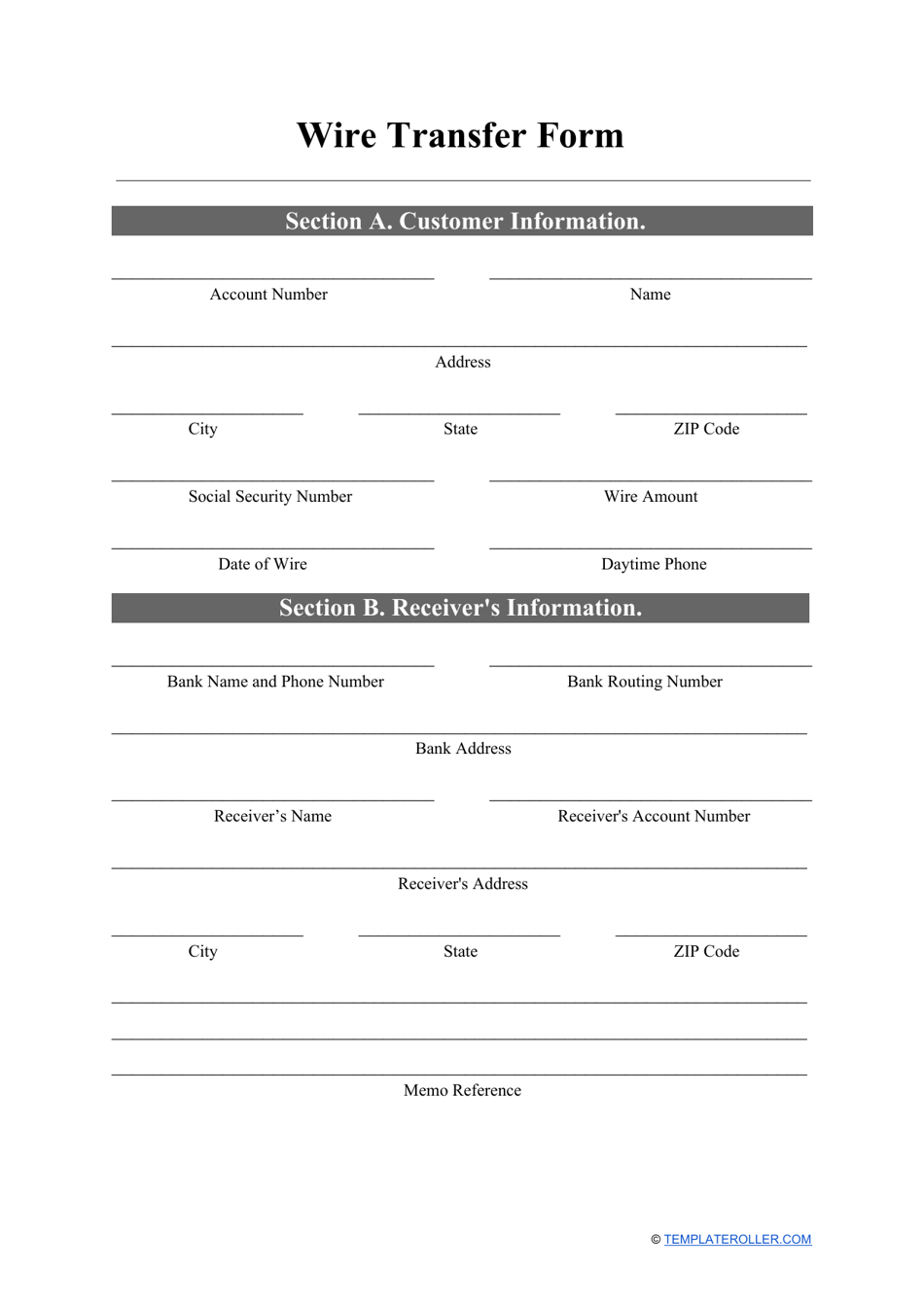
This post walks through the actual mechanics of wiring $100K-$1M internationally to close on a foreign property. What gets reported to whom, what triggers a Suspicious Activity Report vs. a routine Currency Transaction Report, how Wise and OFX differ from a Chase wire, how to document the source of funds so your host-country bank doesn't freeze the incoming wire, and the real-world timeline from "sending the money" to "seller has the money." The authoritative sources are FinCEN, Treasury, and the IRS page on foreign transaction reporting. Peer experience lives on r/personalfinance, r/expats, and country-specific subs like r/SpainFIRE, r/PortugalExpats, and r/mexicoliving.
What Actually Gets Reported, and to Whom
The phrase "gets flagged" covers several completely different things. Let's separate them.
1. Currency Transaction Report (CTR) — automatic, not a red flag. US banks file a CTR with FinCEN for every cash transaction above $10,000. This does NOT apply to wire transfers, which are not cash. Wire transfers generate different records. A $500,000 wire from your Chase checking to a Spanish bank does not trigger a CTR because nothing was in cash. The FinCEN CTR page has the details. CTRs are routine and are filed on millions of transactions a year — they're not a red flag by themselves.
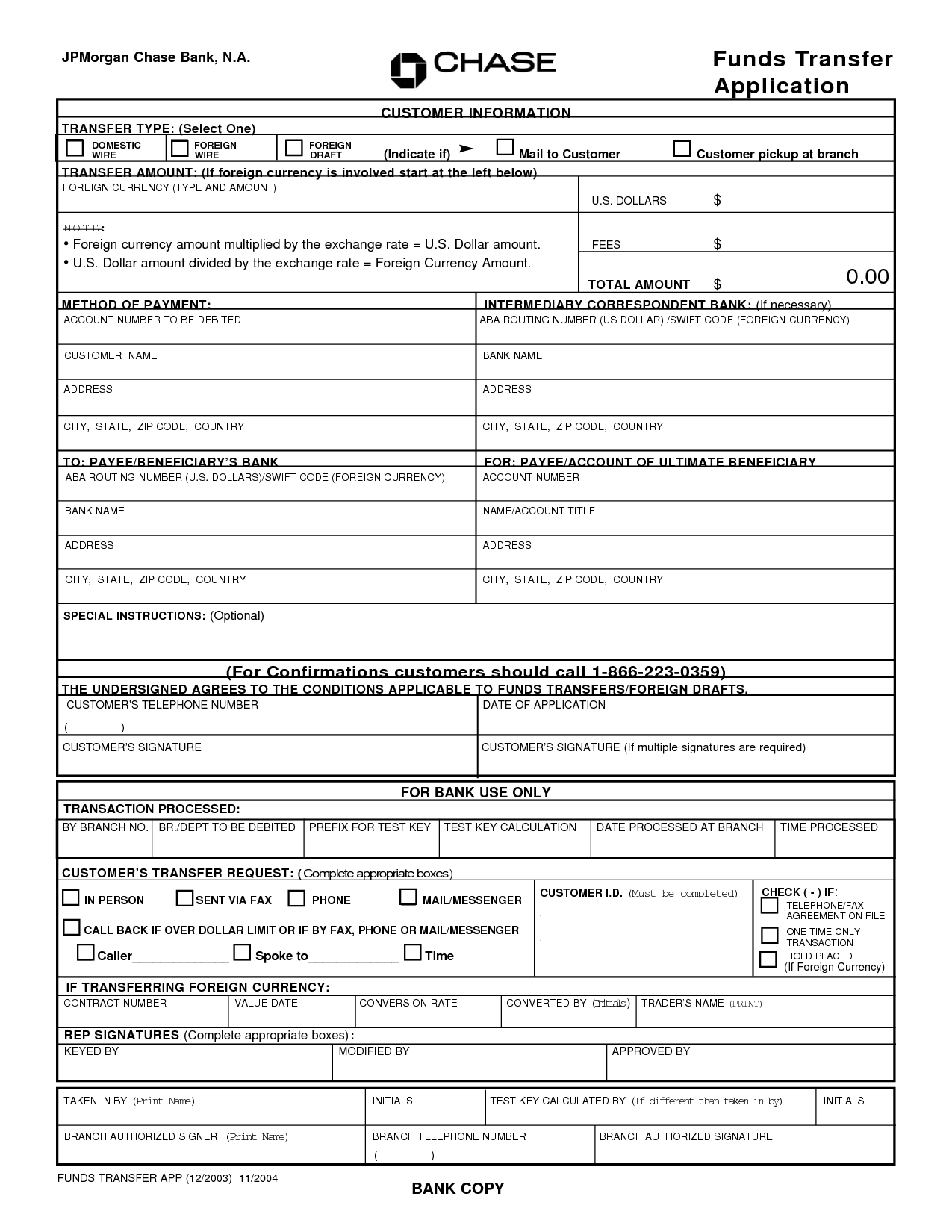
2. FinCEN Funds Transfer Records. Under the Bank Secrecy Act's Funds Transfer Recordkeeping rule, every US bank must keep records of international wire transfers of $3,000 or more — including sender, recipient, amount, and purpose. These records are retained for 5 years and can be pulled by FinCEN or law enforcement with appropriate legal process, but they are not filed or reported to anyone at the time of the transaction. Your wire going through is entirely invisible to regulators in normal operation. The recordkeeping is just a paper trail that exists if anyone ever asks.

3. Suspicious Activity Report (SAR) — banks can file these at any dollar amount. If a US bank's AML compliance system flags your transaction as unusual (large round number, unusual destination, mismatched purpose code, or activity inconsistent with your account history), it can file a SAR with FinCEN. You are not told when a SAR is filed — in fact, banks are prohibited by law from telling customers about SARs. A SAR by itself is not an accusation; it's information law enforcement can review if it's ever investigating something. Most SARs never lead to any action. See the FinCEN SAR page.
4. IRS Form 8300 — only for cash from foreign buyers in specific situations. If you receive more than $10,000 in cash from a foreign person in a real estate transaction, you must file Form 8300. This is almost never relevant to Americans buying property abroad because: (a) you're sending money, not receiving it; (b) it's a wire, not cash. Form 8300 only triggers if physical currency is involved.
5. Form 3520 — only for foreign gifts, not purchases. If you received more than $100,000 from a non-US person as a gift in the year, you must file Form 3520. Buying a house with your own money is not a gift and doesn't trigger this. The IRS Form 3520 page confirms.
What does NOT exist: there is no IRS form for "Americans sending their own money abroad to buy a house." You do not report the wire to the IRS. You do report the foreign bank account where the money ended up (via FBAR if it exceeds $10K) and eventually the property purchase itself (which creates no filing until you sell or earn rental income). The wire itself is invisible to US tax authorities.
The relevant filings around foreign property purchase are all AFTER the fact: FBAR for the foreign bank account, Form 8938 if you cross FATCA thresholds, Schedule E if you rent the property, Schedule D when you eventually sell. Our FBAR foreign real estate guide covers each.
The Three Ways to Move the Money
American buyers have three realistic options for moving six figures internationally. They differ significantly in cost, speed, and documentation quality.
Option 1: Traditional US bank wire (Chase, Bank of America, Wells Fargo, Citi)
- Cost: $30-65 outgoing wire fee + 1.5-3% exchange rate markup (this is the hidden cost — your bank buys euros from you at a rate well below the mid-market rate)
- Speed: 1-3 business days to the foreign bank
- Pros: familiar, supports very large transfers ($1M+), institutional paper trail, easy to document with the host-country bank, wire confirmation from a major US bank is universally accepted as proof of source of funds
- Cons: the FX markup on $500K is $7,500-15,000 that you don't have to pay. On that amount the fee difference alone is more than the cost of a US car down payment.
- When to use: the final closing wire on a property purchase where the receiving bank and seller's notary want an institutional wire confirmation from a major bank. Many European notaries are skeptical of Wise/OFX wires even though they're technically the same transaction.
Option 2: FX specialists (Wise, OFX, Currencies Direct, Moneycorp, Revolut)
- Cost: Wise: 0.4-0.7% all-in on USD/EUR, transparent fees. OFX, Currencies Direct: 0.3-0.7% on large transfers, negotiable on $250K+. All use mid-market rate with a clearly stated spread.
- Speed: Wise — typically 1-2 business days, sometimes same day for major corridors. OFX, Currencies Direct — 1-3 business days, next-day common on big transfers.
- Pros: significant savings. On a $500K USD-to-EUR transfer, Wise saves roughly $7,000-10,000 versus a traditional bank wire. Paper trail is clean and auditable. Wise provides both sender and recipient confirmations.
- Cons: Wise has a maximum single transfer limit that varies by route and currency — $1M for USD/EUR last we checked, lower for some currencies. OFX and Currencies Direct handle unlimited amounts with prior verification. Some foreign notaries and banks are unfamiliar with Wise and prefer a "real bank" wire — you may need to argue for acceptance or split the transfer (e.g., Wise to your European bank account, then traditional domestic euro wire to the seller).
- When to use: most transfers under $1M, especially if your host-country bank account exists and you control the final euro-to-seller wire. See the Wise transfer limits page, OFX pricing, and Currencies Direct.
Option 3: Hybrid (FX specialist for conversion + traditional wire for final settlement)
- Transfer USD to an FX specialist
- FX specialist converts to EUR/GBP/MXN etc. at a favorable rate
- FX specialist sends the foreign-currency amount to your host-country bank account via SWIFT
- You send a domestic wire within the host country from your account to the notary/escrow
- Cost: combines FX specialist fees with a small domestic wire fee — typically still under 1% all-in
- Speed: 2-5 business days total
- Pros: you control the final leg, which means the notary sees a clean domestic wire from a "real" local bank, not an international provider they might be unfamiliar with. This is the approach most experienced expat buyers use for large closings.
- Cons: requires you to already have a host-country bank account, which can be hard to open before you have residency
Option 4 (for very large or unusual cases): Institutional FX desks. For transfers above $1-2 million, talk to your bank's private client FX desk. Most major US banks have FX traders who will quote you a tighter spread than the retail wire desk if you ask. JPMorgan Private Bank, Morgan Stanley Private Client, and Schwab Private Banking all do this for clients with sufficient deposits. The spread can be closer to 0.3-0.5% versus the 1.5-3% retail markup.
Threads on r/personalfinance, r/expatfinance, and r/PortugalExpats have dozens of real-time accounts of recent six-figure transfers with specific provider details.
Source of Funds: What Host-Country Banks Want to See
The biggest non-US source of hassle on large foreign property wires is the host-country bank's own AML compliance. European banks in particular have tightened up dramatically since 2019 under EU AMLD5 and AMLD6 directives. A $500,000 USD wire arriving at a Portuguese bank account held by a person with no account history and no local tax ID will often trigger a hold pending source-of-funds documentation.

Documents your foreign bank will typically ask for on a large inbound wire:
- Proof of source of funds for the amount. This is the big one. Acceptable documents include:
- Proceeds from the sale of a named US property (HUD-1 or closing statement from the sale)
- Retirement account or brokerage statements showing sufficient balance drawn down over time
- Recent tax returns showing income consistent with the wealth level
- A letter from your US CPA or financial advisor confirming the source
- Bank statements showing accumulation over multiple years
- Purchase contract (contrato de compraventa, compromesso di vendita, promessa de compra e venda, depending on country) showing the property you're buying and the purchase price
- Notary's information as the intended recipient of the final payment
- Your passport and tax ID in the host country (NIF, NIE, RFC, etc.)
Best practice: pre-communicate with your host-country bank. Before wiring, email or call your banker and tell them: "I am wiring $X to close on a property purchase on date Y. Here are the source documents. Here is the purchase contract. Please confirm the funds will be available on receipt." This converts what could be a 2-week hold into a one-day confirmation. European banks overwhelmingly prefer advance notice to surprise inbound wires. Threads on r/SpainFIRE and r/expats confirm this consistently.
What NOT to do:
- Don't structure the wire into smaller transfers under $10K to avoid scrutiny. Structuring is itself a federal crime in the US, independent of whether the underlying transaction is legal. $10,000 is not a magic threshold that makes transfers invisible — it's the CTR reporting threshold for cash, not wires, and deliberate structuring triggers its own SAR and can result in criminal charges. See FinCEN's structuring guidance.
- Don't send money from a third party. If your spouse's US account holds half the purchase funds, send from joint accounts or properly transfer internally first. Commingled third-party wires are a huge AML red flag.
- Don't use cash or cryptocurrency as the source of the wire. Funds that appeared in your US account as cash deposits or crypto-to-fiat conversions will generate much more scrutiny than funds that came from a normal paycheck or investment sale. If you have crypto proceeds, convert them to fiat, let them sit in a traditional account for a few months with clean documentation, then wire.
The realistic timeline for a $500K wire to clear for a property closing:
- Day 0: Wire initiated from US bank or FX specialist
- Day 1-2: SWIFT message hits the receiving bank
- Day 2-3: Receiving bank's compliance reviews the inbound wire
- Day 3-5: If documentation is pre-communicated, funds credited to your account
- Day 5-7: Domestic wire from your host-country account to the notary/escrow
- Day 7-10: Closing can proceed
Plan for 10 business days total between initiating the US wire and having funds in the notary's account. Don't schedule a closing with less than 2 weeks of buffer from the wire initiation date. Multiple threads on r/PortugalExpats, r/mexicoliving, and r/IWantOut document closings that nearly fell through because of bank holds on inbound wires.

Currency Strategy: When to Convert
The FX decision is separate from the mechanical transfer decision and is often the biggest cost driver on a large transaction. A 5% move in EUR/USD between the day you decide to buy and the day you actually close on a €500,000 apartment is $28,500 — more than the entire transfer fee, notary fee, and legal fee combined.
The three basic approaches:
1. Convert all at once, close quickly. Minimizes your FX exposure window but requires you to have flexible closing timing. Works when the property is ready to close and the seller is flexible.
2. Forward contracts. Lock in today's rate for delivery on a future date (typically 1-12 months out). Most FX specialists (OFX, Currencies Direct, Moneycorp) offer forward contracts with a small deposit — often 5-10% upfront and the rest on settlement. Useful when you know your closing date but it's 2-4 months out and you want rate certainty. OFX forward contracts and Moneycorp forwards both offer this. Wise does not.

3. Dollar-cost averaging. Convert one-third now, one-third in 30 days, one-third at closing. Reduces volatility but means you're deliberately accepting some bad conversions to avoid risk of all-bad. Makes sense if you're philosophically unsure about the current rate direction.
What doesn't work:
- Trying to time the FX market. Professional FX traders with sophisticated models mostly fail at this over any multi-month horizon. Retail buyers with a closing deadline have no edge. If you need EUR by a specific date and you hold USD, you have currency risk — accept it and hedge if the amount is large enough to matter.
- Paying in USD to the seller. European sellers overwhelmingly want to be paid in local currency through a notary. Offering dollars complicates the transaction and often just shifts the FX cost to the seller's bank at worse rates.
Practical FX math on a $500K USD → EUR conversion:
- Chase wire at bank's wire desk rate: ~$485,000 EUR equivalent after ~3% markup — you lose ~$15,000 to the spread
- Wise: ~$498,000 EUR after 0.4-0.6% markup — you lose $2,000-3,000
- OFX or Currencies Direct negotiated rate on $500K: ~$498,500-499,000 EUR — you lose $1,500-2,500
- Your bank's private client FX desk if you have the relationship: ~$497,000-498,500 EUR after 0.3-0.5%
- Forward contract locking today's rate for closing in 60 days: effectively same as current rate minus a modest spread, removes timing risk
Bottom line on FX: for any transfer over $100K, the difference between your US bank's retail wire and an FX specialist is in the thousands of dollars. Always compare rates on the day of conversion — XE.com shows the mid-market rate you should benchmark against. Then subtract fee + spread to get your effective rate per provider. The Wise currency comparison tool lets you directly compare providers live.
Our best currency strategy when buying in euros post goes deeper on hedging mechanics. See also r/expatfinance for recent forward-contract experiences on property purchases.
Edge Cases and What Actually Goes Wrong
A few scenarios that trip up real buyers.
The receiving bank freezes the wire pending documentation. Most common failure mode. Mitigation: pre-communicate with the bank, email source-of-funds docs 48 hours before the wire arrives, have your host-country attorney available to vouch.
The wire arrives in the wrong currency. Happens when the sending bank interprets "EUR" as "USD" on an ambiguous form or vice versa. Wise is extremely clean on this because the conversion happens at Wise, not at the receiving bank. Traditional bank wires with implicit conversions are the usual offender. Mitigation: always specify both the SWIFT BIC and the exact currency code on the wire instructions, and double-check the confirmation before hitting send.

The US bank blocks the outgoing wire "pending review." Happens on first large wires to new destinations. Your personal banker is your friend here — call them the day before sending a large wire and let them know it's coming, what it's for, and where the money originates. This converts a 2-day hold into a 2-minute internal note. Consistent advice across r/personalfinance threads about large international wires.
The notary demands a specific sending bank. Some European notaries, especially older ones, will only accept wires from a "real bank" and refuse to accept Wise, TransferWise, or OFX wires even though the underlying transactions are identical. Argue politely, escalate to your attorney if needed, or route through your host-country bank as a final domestic wire. You can also request that your attorney's client account serve as the intermediary — most real estate lawyers in Europe will hold closing funds briefly.
Partial wires lost in SWIFT routing. Very rare but occasional: a wire disappears into an intermediary bank and takes 5-10 days to trace and recover. Use providers with clear delivery SLAs and always keep the MT103 reference number from the sending bank. The MT103 is the universal SWIFT message ID for your wire and is what any bank's operations team will ask for when tracing.
Scammed by a fake closing wire request. This is the BIGGEST risk on any international property closing. Criminals spoof email addresses of notaries, attorneys, or agents and send fake wiring instructions to buyers hours before closing. You wire your $500K to the criminal's account; the real seller never gets paid. FBI IC3 and the FTC have specific warnings about real estate wire fraud, which costs Americans hundreds of millions of dollars annually in the US market and has grown in foreign closings.
Mitigation for wire fraud:
- Verify wiring instructions by a voice phone call to a known-good number for your attorney or notary. Not the number in the email — a number from their public website or a previous correspondence.
- Never trust wiring instructions that arrive as email-only, no matter how convincing.
- If wiring instructions change at the last minute, treat it as a massive red flag and call to verify
- For transfers above $250K, use a multi-step verification — wire a small $100-500 test transfer first, confirm receipt with the notary, then wire the balance
See the FBI's business email compromise warning and threads on r/personalfinance where real buyers share their experiences.
Checklist: The Week of Your Wire
A concise pre-flight checklist for a six-figure international property closing:
2 weeks before closing date:
- Lock in the FX mechanism — pick Wise, OFX, Currencies Direct, or traditional bank wire, open the account if needed, get verified
- Confirm purchase contract, notary details, and wiring instructions with your host-country attorney
- Email source-of-funds documentation package to your host-country banker (identity docs, US bank statements, sale contracts or income statements)
- Consider a forward contract to lock the FX rate if you're worried about a currency move
1 week before:
- Call your US bank's wire desk and alert them to the upcoming wire — date, amount, destination
- Verify wiring instructions by voice phone call with your attorney or notary using a known-good phone number (defense against wire fraud)
- Double-check the host-country bank's IBAN, SWIFT BIC, and recipient name on both your attorney's letter and the notary's instructions

Day of wire:
- Initiate from the US end first thing in the morning to maximize same-day credit
- Capture the MT103 / wire reference number and confirmation page — save as PDF, email to yourself
- Notify your host-country attorney the wire is sent, with the MT103 reference
1-3 days after wire:
- Confirm credit to your host-country account (if it's a two-step wire) or directly to notary/escrow (if single-step)
- If funds are held by host-country bank compliance, have your attorney and banker contact each other to clear it
- Do NOT initiate closing until funds are confirmed in the right account
Day of closing:
- Attorney handles the notary's wire to the seller from escrow — typically same day or next day after the notary deed signing
- Obtain a complete copy of the notarized deed (escritura pública / escritura de compraventa) and confirm it is registered with the host-country property registry
For additional depth, our transfer $1M to Europe post walks through larger-scale transfers with forward contracts and private banking relationships, our foreign bank accounts post covers opening the receiving account, and our best currency strategy post covers the FX timing decision in more detail.
Further reading:
Ready to explore?
Browse Destinations