
FBAR and Foreign Real Estate: What You Must Report to the IRS in 2026

Every American considering a foreign property purchase eventually runs into the alphabet soup: FBAR, FATCA, Form 8938, Form 3520, Form 5471. The fear-marketing around these forms is intense — type "FBAR" into Google and you'll be hit with pages warning of $100,000+ penalties for late filings. The reality is more boring and more specific. For most American owners of foreign real estate in 2026, the house itself is not reportable on FBAR or Form 8938. What IS reportable is the foreign bank accounts and certain entity structures that surround the property.

This guide cuts through the noise. What FBAR actually requires, what Form 8938 adds on top, when a Mexican fideicomiso triggers Form 3520, how foreign rental income gets reported on Schedule E, and what the real penalties look like (and don't look like) for late or missed filings. It's a US-citizen-focused piece, written for people who own or are about to own a house outside the United States. The canonical source is the Financial Crimes Enforcement Network (FinCEN) for FBAR and the IRS for everything else. Peer experience lives on r/USExpatTaxes, r/tax, and r/expatfinance.
FBAR in One Paragraph: What It Actually Is
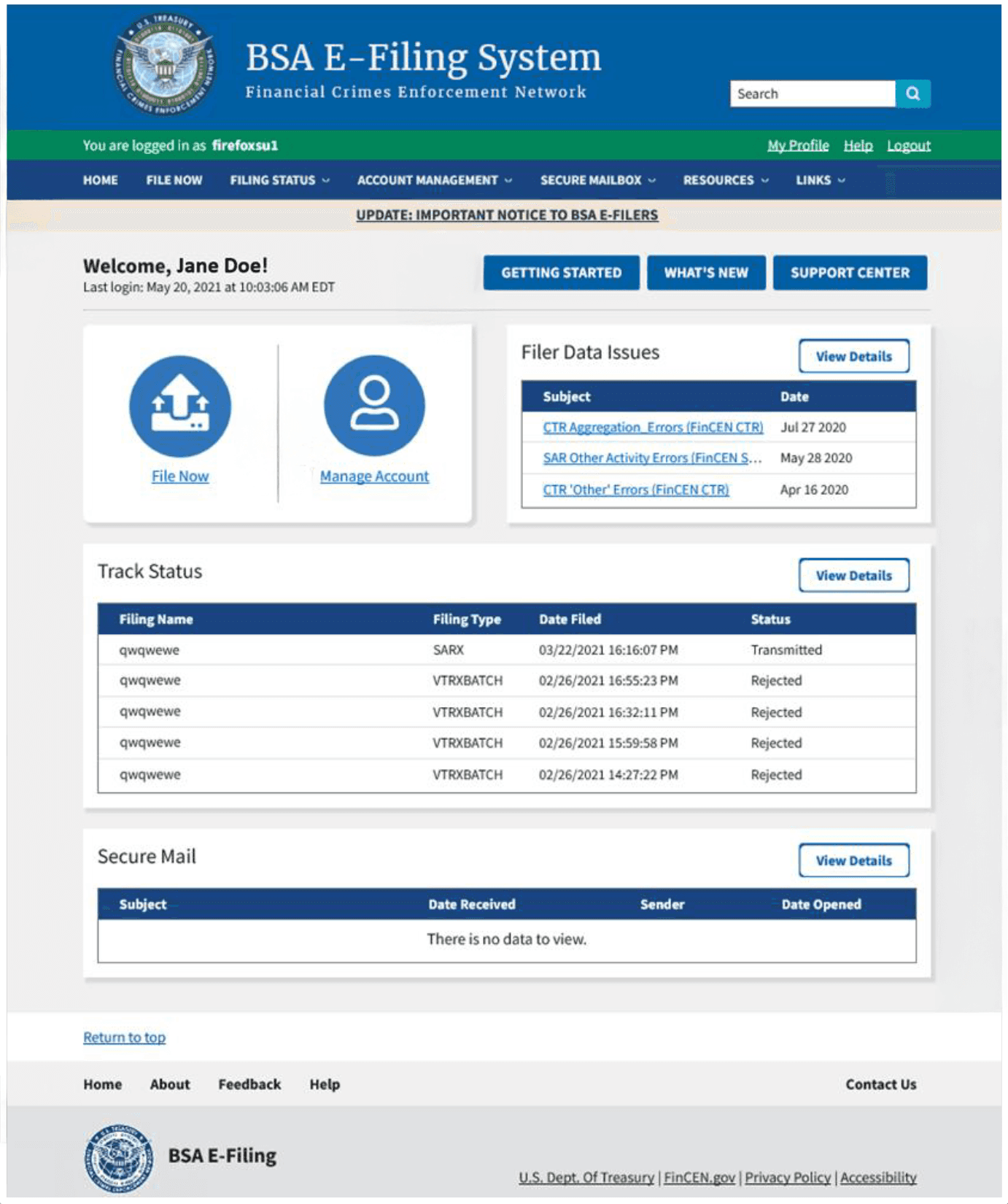
FBAR is FinCEN Form 114, the Report of Foreign Bank and Financial Accounts. It's not an IRS form — it's a Treasury/FinCEN filing, administered separately from your 1040 even though most preparers handle it alongside your tax return. You must file FBAR for a given calendar year if, at any point during that year, the aggregate maximum value of your foreign financial accounts exceeded $10,000 USD. The $10,000 threshold is an aggregate — not per-account — and it's triggered by a single day, not a year-end balance. If you briefly held €15,000 in a Spanish bank account for one week during a property closing and then wired most of it back out, you crossed the FBAR threshold for that calendar year.
What counts as a foreign financial account for FBAR:
- Foreign bank accounts (checking, savings, CDs)
- Foreign brokerage/securities accounts
- Foreign mutual fund accounts
- Foreign pension accounts (complicated — depends on whether you have signature authority and whether the pension is a qualifying retirement plan)
- Foreign life insurance with cash value
- Foreign-held cryptocurrency exchange accounts (as of FinCEN's stated but not yet implemented 2020 announcement, still in limbo as of 2026)
What does NOT count for FBAR:
- Direct ownership of foreign real estate (a house in Portugal, an apartment in Mexico). Real estate is not a financial account.
- Foreign-held physical gold, art, collectibles
- Safe deposit boxes
- Precious metals held directly (not in an account)
So if you own a €500,000 apartment in Lisbon outright, with no Portuguese bank account, there is nothing to file on FBAR for the property itself. The real estate is invisible to FBAR. The moment you open a Portuguese bank account to pay the water bill, and that account briefly exceeds $10,000 equivalent during a month (perhaps because your US wire for the purchase routed through it), FBAR attaches — not because of the property but because of the account.
Where to file. FBAR is filed electronically through the BSA E-Filing System. There is no paper form — you have to file online. It's free. It's also due April 15 each year with an automatic extension to October 15 (the extension is automatic, you don't request it). You're reporting on the prior calendar year — the FBAR filed by October 15, 2026 is the 2025 FBAR. See FinCEN's FBAR reference guide for the canonical rules.
Form 8938: FATCA's Expanded Reporting
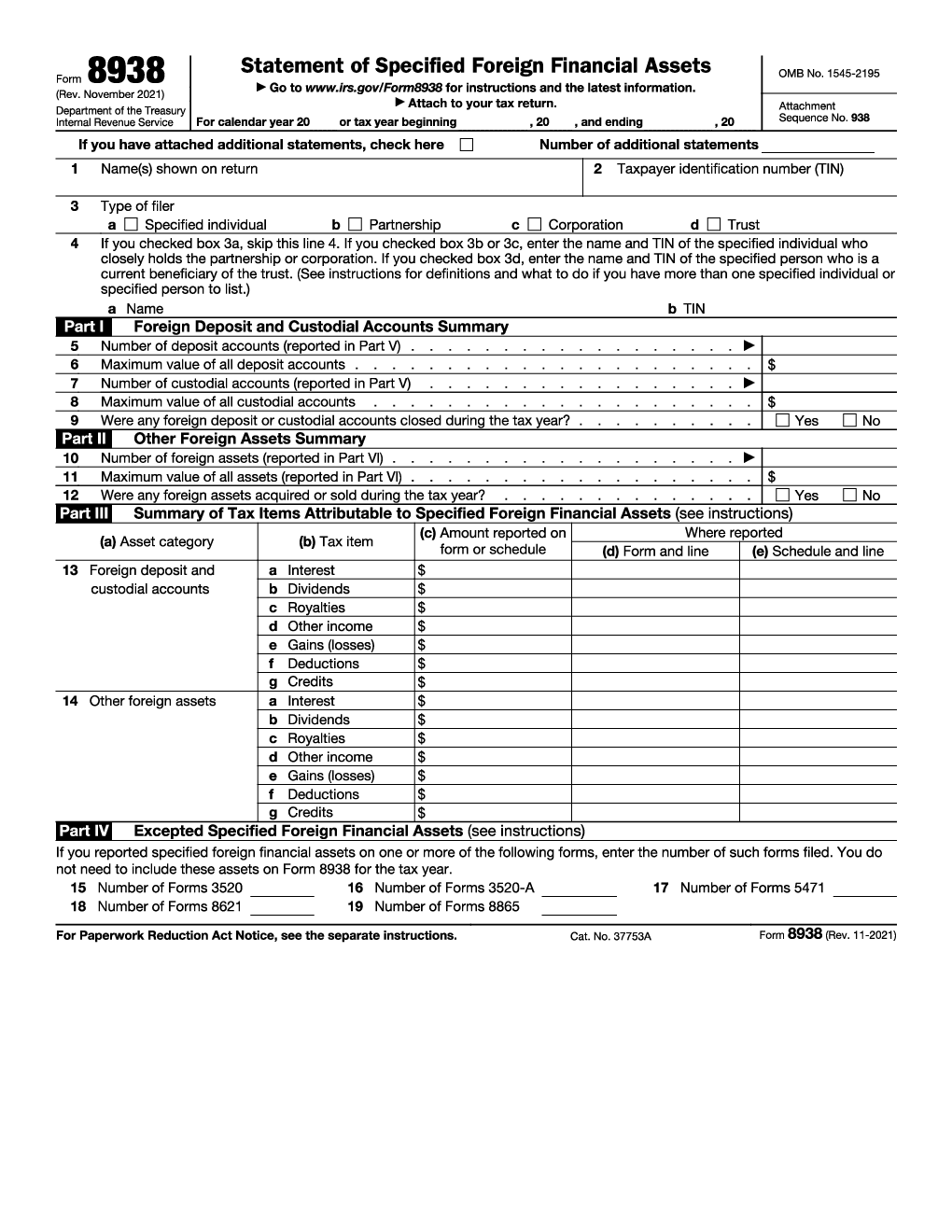
Form 8938 ("Statement of Specified Foreign Financial Assets") is the IRS's separate reporting requirement under FATCA — the Foreign Account Tax Compliance Act enacted in 2010. It's filed WITH your Form 1040, not separately, and it has its own thresholds and its own definitions of what counts as a reportable asset.
Who must file:
| Filing status | US resident threshold | Living abroad threshold |
|---|---|---|
| Single / MFS | $50K year-end or $75K anytime | $200K year-end or $300K anytime |
| Married filing jointly | $100K year-end or $150K anytime | $400K year-end or $600K anytime |
Note the "living abroad" higher thresholds — if you qualify as a bona fide resident of a foreign country (the same test used for the FEIE), the floor is much higher. Most American expats with a single foreign home and a modest bank account fall UNDER the Form 8938 threshold even when they're above the $10K FBAR threshold. The two filings are NOT identical.
What Form 8938 requires:
- Foreign financial accounts (similar to FBAR, but slightly broader)
- Directly held foreign financial assets: foreign stocks, bonds, interests in foreign partnerships, foreign mutual funds held directly (not through a US brokerage)
- Interests in foreign trusts and foreign estates
- Cash-value foreign life insurance
What Form 8938 does NOT require:
- Direct ownership of foreign real estate (same as FBAR — real estate is not a reportable asset)
- Foreign real estate held through a foreign entity is tricky — the entity may itself be reportable, but the real estate underlying the entity is not itemized separately
- Foreign currency held physically (not in an account)
- Artwork, collectibles, vehicles, boats
The key takeaway: if you own a foreign house directly in your own name and you're under the Form 8938 thresholds on everything else, Form 8938 may not apply to you at all. The property itself doesn't create the obligation. See IRS FATCA overview, the Form 8938 filing thresholds page, and the Form 8938 vs FBAR comparison.
Penalty structure. Form 8938 carries a $10,000 initial penalty for failure to file, with additional $10,000/month continuation penalties up to a total of $50,000 plus additional potential criminal penalties for willful violations. The civil penalty structure is in IRC Section 6038D. In practice, first-time late filers who come forward voluntarily through the Streamlined Filing Compliance Procedures often pay zero penalty. The penalty horror stories are largely for willful non-filers caught during an audit, not for filers who quietly catch up.
Rental Income: Schedule E and the Foreign Rental Rules
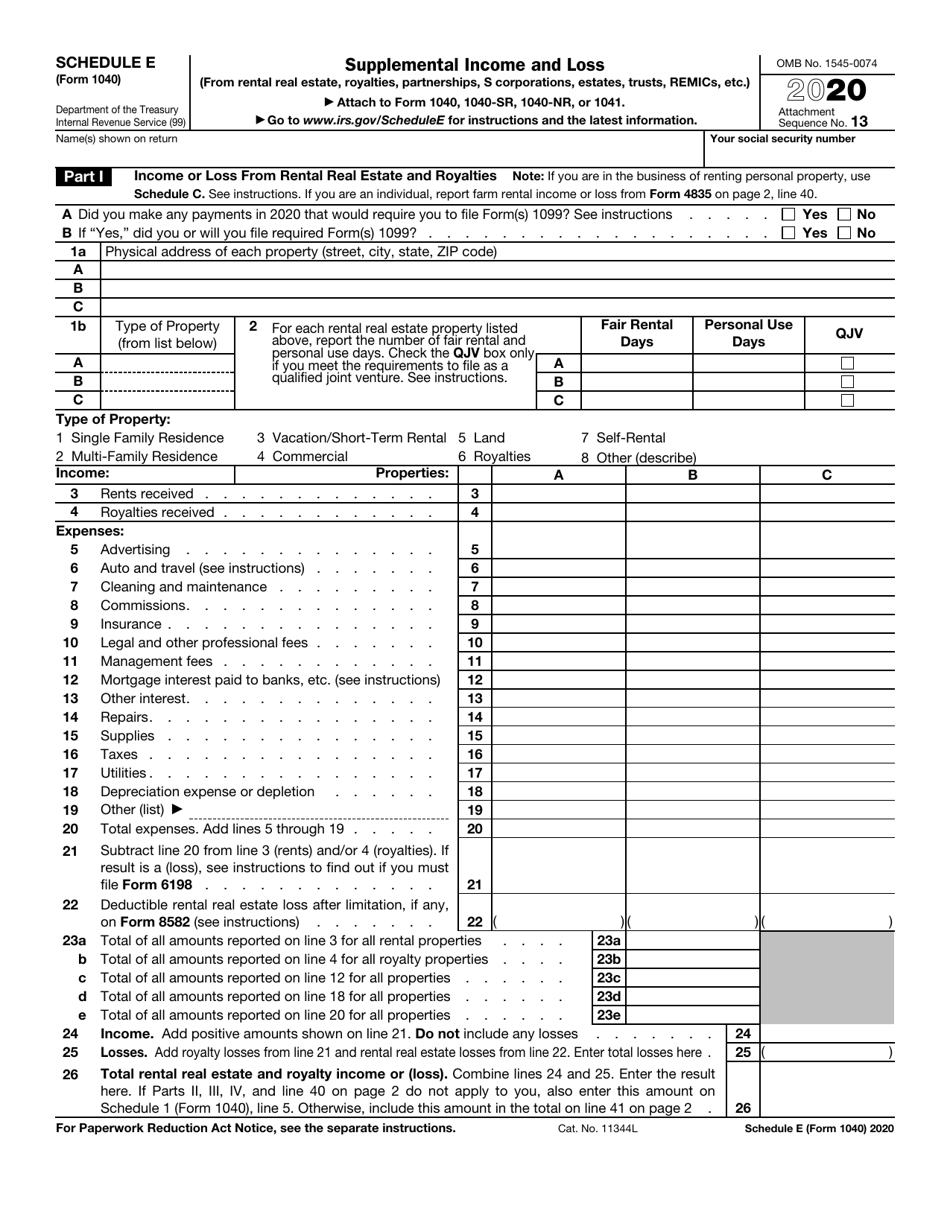
If you rent out your foreign property — to long-term tenants, short-term vacationers, or family members — the rental income is US-taxable and you report it on Schedule E (Supplemental Income and Loss) attached to your Form 1040. This is separate from FBAR and Form 8938; Schedule E is an income tax return component, the others are information returns.
The rules are functionally the same as for US rental property, with a few specific differences:
- Gross rent in USD. Convert each rental payment to USD at the exchange rate on the day received (or use a reasonable average method, documented and consistent). The IRS yearly average exchange rates are the default reference if you don't track daily rates.
- Expenses are deductible (mortgage interest, foreign property taxes, insurance, repairs, property management fees, utilities you pay, HOA/community fees, travel to the property for legitimate management purposes). Same categories as US rental, same Schedule E line items.
- Depreciation is REQUIRED — the property is depreciated on a 40-year straight-line schedule for foreign residential rental, versus 27.5 years for US residential rental. This is a significant difference: a $400K foreign rental generates about $10,000/year of depreciation (vs. $14,500/year for an identical US property). Smaller deduction but also smaller recapture on sale.
- Foreign property tax IS deductible against rental income on Schedule E, even though the 2017 TCJA made foreign property tax non-deductible on Schedule A for personal residences.
- Passive activity loss rules apply. Net rental losses generally can't offset your W-2 or investment income unless you qualify as a real estate professional or fall under the special $25K allowance for actively managed rentals with AGI under $100K. Losses suspend and carry forward.
Foreign tax credit for foreign rental tax. If the host country also taxes the rental income (Spain taxes non-resident rental at 19% on gross; France taxes at 20% plus 17.2% social charges on net; Mexico at roughly 25%), you can claim an FTC on Form 1116 for the foreign tax paid. The rental income is "passive category" income. See the IRS Publication 514 for the FTC mechanics and Bright!Tax's rental income guide for practical walkthroughs.
Short-term vacation rentals (under 14 days / under 15% owner use). If you rent the property for fewer than 15 days a year, rental income is not reportable at all under Section 280A. You also can't deduct rental expenses, but you can still deduct mortgage interest and property taxes as personal-residence items (subject to the SALT cap and the foreign-property-tax exclusion). This is the Augusta Rule — a real tax break for Americans who rent their vacation home one week a year.
FEIE does NOT cover rental income. The Foreign Earned Income Exclusion ($126,500 for 2026, per the IRS FEIE page) applies only to earned income from services you personally perform. Rental income is passive, not earned, and doesn't qualify. Our FEIE tax break guide and FEIE vs foreign rental income post cover why this trips up a lot of digital nomads.

The Fideicomiso, Foreign Trusts, and Form 3520
Americans buying property in Mexico's coastal restricted zone hold the property through a fideicomiso — a 50-year renewable bank trust where a Mexican bank holds legal title and the American is the beneficiary. For years, there was genuine uncertainty about whether the fideicomiso constituted a "foreign trust" that triggered Form 3520 and Form 3520-A filings (with $10,000+ penalties for late filing).
The IRS resolved this in Revenue Procedure 2013-14, confirming that a Mexican fideicomiso that exists solely to hold title to one piece of residential real estate is not considered a foreign trust for Form 3520 purposes. No 3520 filing is required. This is one of the cleanest safe-harbor rulings in the expat tax world.

The safe harbor is narrow. It applies only if:
- The fideicomiso holds a single residential property
- The fideicomiso has no other assets (no bank accounts, no securities, no other real estate)
- The beneficiary is an individual, not a US entity
- The trust exists solely to comply with Mexican constitutional restrictions on foreign ownership in the restricted zone
If your fideicomiso holds more than one property, has a bank account for rental collection, or has any other features, the safe harbor may not apply and Form 3520 may be required. The penalty for late Form 3520 is 5% of the trust value per month up to 25%, which on a $400K property is $100,000 — very nasty. See the IRS Rev Proc 2013-14 for the full text and MexLaw's fideicomiso guide.
Other foreign trust situations that DO trigger Form 3520:
- You receive a distribution from a foreign trust (beneficiary reporting)
- You receive more than $100K in gifts from a non-US individual in a calendar year (aggregate across all foreign donors)
- You create or transfer assets to a foreign trust (grantor reporting)
- You have a beneficial interest in certain foreign pension or savings plans that the IRS treats as foreign trusts (Canadian TFSA, UK ISA, Australian superannuation for some beneficiaries)
Foreign corporation ownership is separate. If you hold foreign real estate through a foreign corporation you control (e.g., a Costa Rican Sociedad Anónima, a UK limited company, a BVI company), Form 5471 likely applies. Form 5471 is one of the most complicated US information returns in existence — filing requirements depend on category of filer, ownership percentages, and whether you're a 10%-plus shareholder. Penalties start at $10,000 per year per form. See the IRS Form 5471 page and discussion on r/USExpatTaxes. If you're considering any foreign entity structure for holding real estate, consult a US international tax CPA before signing anything. The annual cost of owning through a foreign entity often exceeds the tax benefit for individual investors.
Real Penalty Exposure vs. the Marketing Fear
The internet is full of dire warnings about FBAR penalties running to $100,000 or more. The actual penalty structure is less scary than the marketing suggests for non-willful errors, but genuinely severe for willful evasion.
FBAR penalty tiers (as of 2026, per IRM 4.26.16):
- Non-willful violation: up to $10,000 per violation, but in 2023 the Supreme Court confirmed in Bittner v. United States that the penalty is per FBAR form, not per account — capping single-year non-willful exposure at $10,000 even if you missed 10 accounts on one FBAR. This was a huge deal and cut many in-flight penalty cases dramatically.
- Willful violation: the greater of $100,000 or 50% of the account balance, per violation. Willful requires intent — ignorance of the rule is not willful, though deliberate avoidance can be.
- Criminal penalties (for genuinely egregious structuring / evasion cases): up to $250,000 in fines and 5 years imprisonment.

Streamlined Filing Compliance Procedures. The IRS maintains a voluntary disclosure program for taxpayers who were non-willfully non-compliant. Under the Streamlined Foreign Offshore Procedures (for US citizens living abroad):
- File 3 years of delinquent Form 1040 returns
- File 6 years of delinquent FBARs
- Sign a non-willful certification
- Penalty: zero on the information return side (FBAR, 8938, 3520), though any unpaid tax is still owed plus interest
The IRS Streamlined Procedures page is the canonical source. For Americans who catch themselves in non-compliance — late FBARs from past years, missed 8938s, unreported rental income — the Streamlined program is almost always the right move. It has been used by tens of thousands of filers since its 2012 launch.
Delinquent FBAR submission procedures (if no tax is owed, only the FBAR was late): even simpler. File the late FBAR through BSA E-Filing with a brief reason-for-late-filing statement attached, and the IRS has stated it will not impose penalties if no tax loss resulted. Many expats use this for years they were marginally over the $10K threshold without realizing it.
The fear marketing industry. Some tax-prep firms use aggressive FBAR penalty language to upsell expensive "offshore disclosure" services. For a genuinely non-willful filer who is otherwise compliant on US tax returns, these services are usually overkill. Reasonable fees for Streamlined filing through a competent expat CPA run $2,000-5,000, not the $15,000+ figures some firms quote. Our US expat tax preparers comparison covers the reputable firms (Greenback, Bright!Tax, MyExpatTaxes, H&R Block Expat). Threads on r/USExpatTaxes include user reviews of most major prep firms.
Practical Checklist for American Buyers in 2026
If you're about to buy or have just bought foreign real estate, here's the concise reporting checklist:
Before closing:
- Open a foreign bank account if you need one for the purchase. Keep the US wire path documented.
- Save every wire confirmation, purchase agreement, and exchange rate quote. These become your basis documents forever.
- If using any foreign entity structure (Mexican SA, Costa Rican SA, UK Ltd), consult a US international tax CPA BEFORE signing anything. The ongoing reporting cost may exceed the benefit.
At year-end after any year you own the property:
- Did your foreign bank account(s) exceed $10,000 at any point? → FBAR required, file through BSA E-Filing by October 15 of the following year.
- Did your aggregate foreign financial assets exceed Form 8938 thresholds? → Form 8938 attached to Form 1040.
- Did you receive rental income from the property? → Schedule E on Form 1040, depreciation required, FTC if host country also taxed it.
- Did you pay foreign taxes you can credit? → Form 1116 (or 1116 Simplified if eligible).
- Did you receive distributions from a foreign trust or gifts from a foreign person? → Form 3520 if thresholds met.

When you sell:
- Gain calculated in USD using purchase-date and sale-date exchange rates (Treasury or IRS yearly average)
- Report on Schedule D and Form 8949
- Foreign capital gains tax paid creates FTC on Form 1116
- Section 121 exclusion if you lived there 2 of last 5 years as primary residence
- Depreciation recapture at 25% on the portion of gain attributable to prior rental depreciation
Who should prepare the return: for simple cases (single property, no rental, no entity), a US expat CPA is usually enough — budget $400-1,200/year for the full return including FBAR. For cases involving rental income, multiple properties, a fideicomiso or foreign entity, or a recent sale, step up to a specialized firm (Greenback, Bright!Tax, MyExpatTaxes, Expat Tax Professionals) — budget $1,000-3,500/year. For complex cases with multiple foreign entities or suspected past non-compliance, hire a dual-qualified international tax attorney — budget $3,500+.
Canonical references to bookmark:
- FinCEN FBAR guidance
- IRS international taxpayers hub
- IRS Form 8938 FAQs
- IRS Streamlined Filing Compliance
- IRS tax treaties by country
And for peer experience: r/USExpatTaxes, r/tax, r/expatfinance, r/IWantOut. Our related guides: capital gains foreign property, FEIE tax break, wire transfer house purchase, double taxation foreign property.
Ready to explore?
Browse Destinations