
Do Americans Pay Capital Gains Tax on Foreign Property?

The short answer: yes. The US taxes its citizens and green card holders on worldwide capital gains, including gains on foreign real estate, at the same rates and under the same rules as domestic property — with a few specific wrinkles around currency, foreign tax credits, and the Section 121 primary residence exclusion. You don't escape US capital gains tax by owning a house in Lisbon or Playa del Carmen.

This post walks through the actual rules for American owners of foreign real estate in 2026: how the IRS calculates the gain when you sell, how the foreign tax credit prevents double taxation on the same dollar of gain, whether the $250K/$500K primary-residence exclusion applies abroad, the nasty FX-gain problem when currencies move between purchase and sale, and what reporting obligations (Form 8938, FBAR, Form 1040 Schedule D) attach to the whole process. This is a US-citizen-focused guide, not a general international tax guide. The canonical source is the IRS and specifically Publication 523 (Selling Your Home), Publication 514 (Foreign Tax Credit), and the individual country treaties listed on the IRS tax treaties page. Peer discussion lives on r/USExpatTaxes, r/expatfinance, and r/tax.
The Basic Framework: Worldwide Taxation, Same Rates
The United States is one of only two countries (the other is Eritrea) that taxes its citizens on worldwide income regardless of residence. This applies to capital gains just as it applies to earned income. When an American sells a foreign property for more than their adjusted basis, the gain is a US taxable event, reported on Schedule D and Form 8949 of the Form 1040. The rates are the same as for domestic property:
- Short-term capital gains (held one year or less): taxed at ordinary federal income tax rates, which range from 10% to 37% for 2026 per the IRS rate schedule
- Long-term capital gains (held more than one year): taxed at 0%, 15%, or 20% depending on taxable income, plus a 3.8% Net Investment Income Tax (NIIT) on high earners (single filers above $200K, joint above $250K)
- State income tax applies if you are still a resident of a state that taxes capital gains (California, New York, and most states do — Florida, Texas, Washington don't)
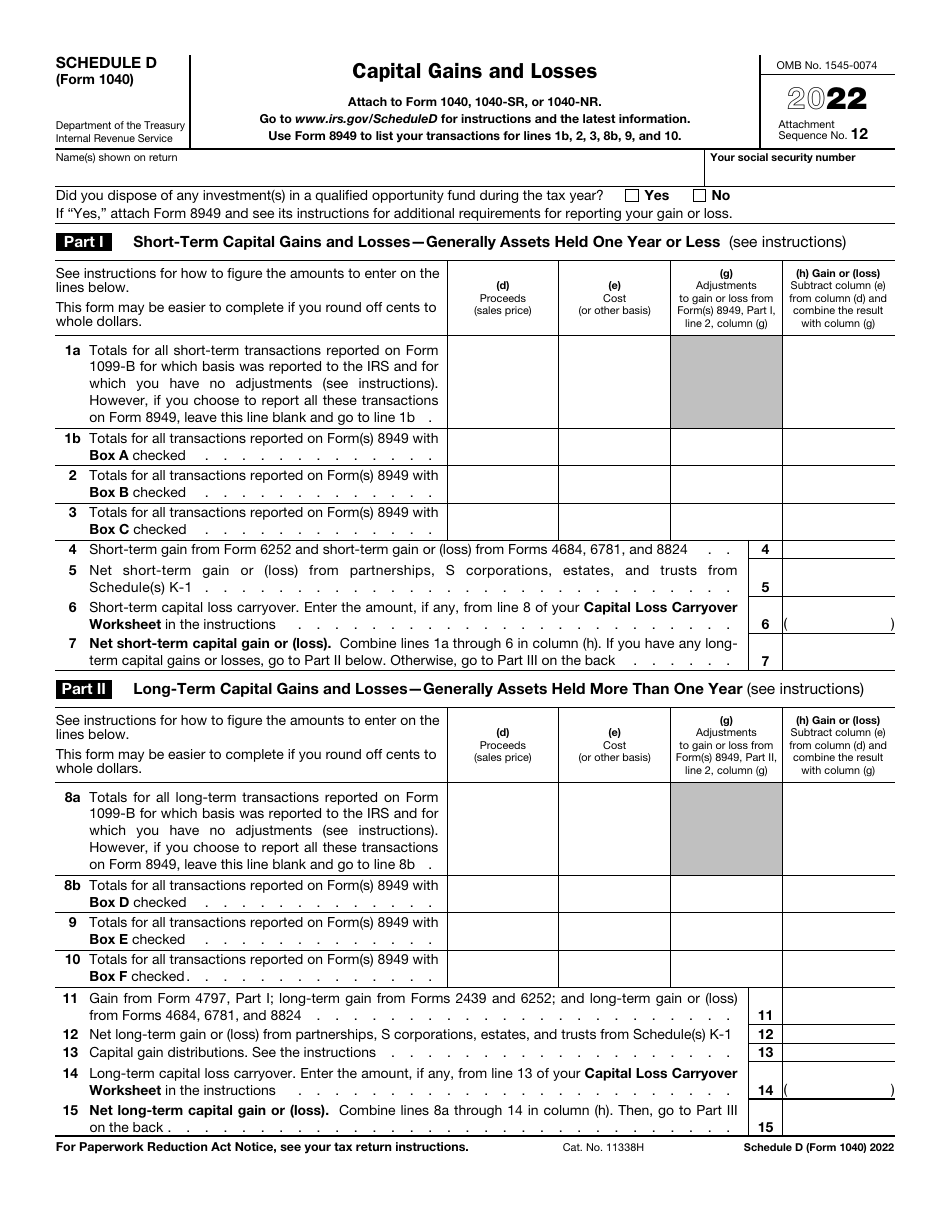
The gain is calculated as sale price minus adjusted basis, where the adjusted basis is what you paid for the property plus capital improvements (new roof, remodeled kitchen, permanent additions) minus any depreciation you took if the property was used as a rental. The calculation is the same as for a US property.
Everything happens in US dollars. Even though you bought a Spanish villa in euros and sold it in euros, the IRS requires you to report both the purchase and the sale converted to USD at the exchange rate on the day of each transaction. This creates the FX-gain problem we cover later — currency movements between the purchase and sale dates can create or destroy paper gain even if the nominal euro price didn't change.
The gain is taxable in the year of sale, regardless of whether the proceeds come back to the US. Leaving the euros in a Portuguese bank account doesn't defer the tax. Reinvesting in a new foreign property doesn't defer the tax (the old Section 1031 like-kind exchange that used to allow foreign-property-to-foreign-property swaps was killed in the 2017 Tax Cuts and Jobs Act — 1031 now only applies to domestic real estate).
Discussion of the general framework on Greenback Tax Services, Bright!Tax's foreign property guide, and H&R Block Expat. Never rely on a single source for tax math — at least two independent CPAs agree on the basics before you file.
Section 121: The $250K/$500K Primary Residence Exclusion
IRC Section 121 lets Americans exclude up to $250,000 (single) or $500,000 (married filing jointly) of capital gain on the sale of a primary residence from federal income tax. The rules are straightforward:
- You must have owned the home for at least 2 of the last 5 years before the sale
- You must have used the home as your primary residence for at least 2 of the last 5 years (does not have to be the same 2 years as the ownership test)
- You cannot have claimed the exclusion on another home sale in the last 2 years
Section 121 applies to foreign real estate. This is the single biggest tax-planning opportunity most American owners of foreign property miss. If you actually live in your Lisbon apartment or your San Miguel colonial for two or more years, and it's your primary residence during that period, the gain on sale up to $250K/$500K is excluded from US federal income tax. The full text of Publication 523 confirms this — the location of the residence doesn't matter.

Primary residence definition is facts-and-circumstances. The IRS looks at which home you lived in most of the time, where you filed taxes from, where your driver's license and vehicle registration were, where your mail went, where your family and social connections were. Americans who maintain a US home while spending most of the year abroad will generally have their foreign home treated as primary if they can document the majority of days spent there.
Coordinating with US residency is tricky. If you want to use Section 121 on the foreign property, you generally need to actually live there as your main home. This often means not maintaining a US primary residence simultaneously. But if you're also trying to stay under a host-country tax residency threshold (say, 183 days in Spain to avoid becoming a Spanish tax resident), the math can pull you in opposite directions. Our Spain non-lucrative visa post and our double taxation foreign property guide cover the coordination problem.
Partial exclusion for short stays. If you lived in the home as primary residence for less than 2 years but sold due to a qualifying hardship (job relocation, health, unforeseen circumstances), a pro-rata exclusion applies. If you lived there 12 months, that's 12/24 of $250K = $125K of exclusion for a single filer. Publication 523 lists the qualifying events.
Nonqualified use reduction. Since a 2008 amendment, any period the home was NOT your primary residence (e.g., used as a rental or second home) after 2009 reduces the excludable portion of the gain. This hits a lot of Americans who bought a foreign vacation home, used it as a rental for several years, then moved in for 2 years before selling. Running the math is essential — sometimes the ratio works out to exclude almost nothing. See the calculator walkthrough on Greenback's Section 121 page and threads on r/USExpatTaxes.
The Foreign Tax Credit: How Double Taxation Actually Works
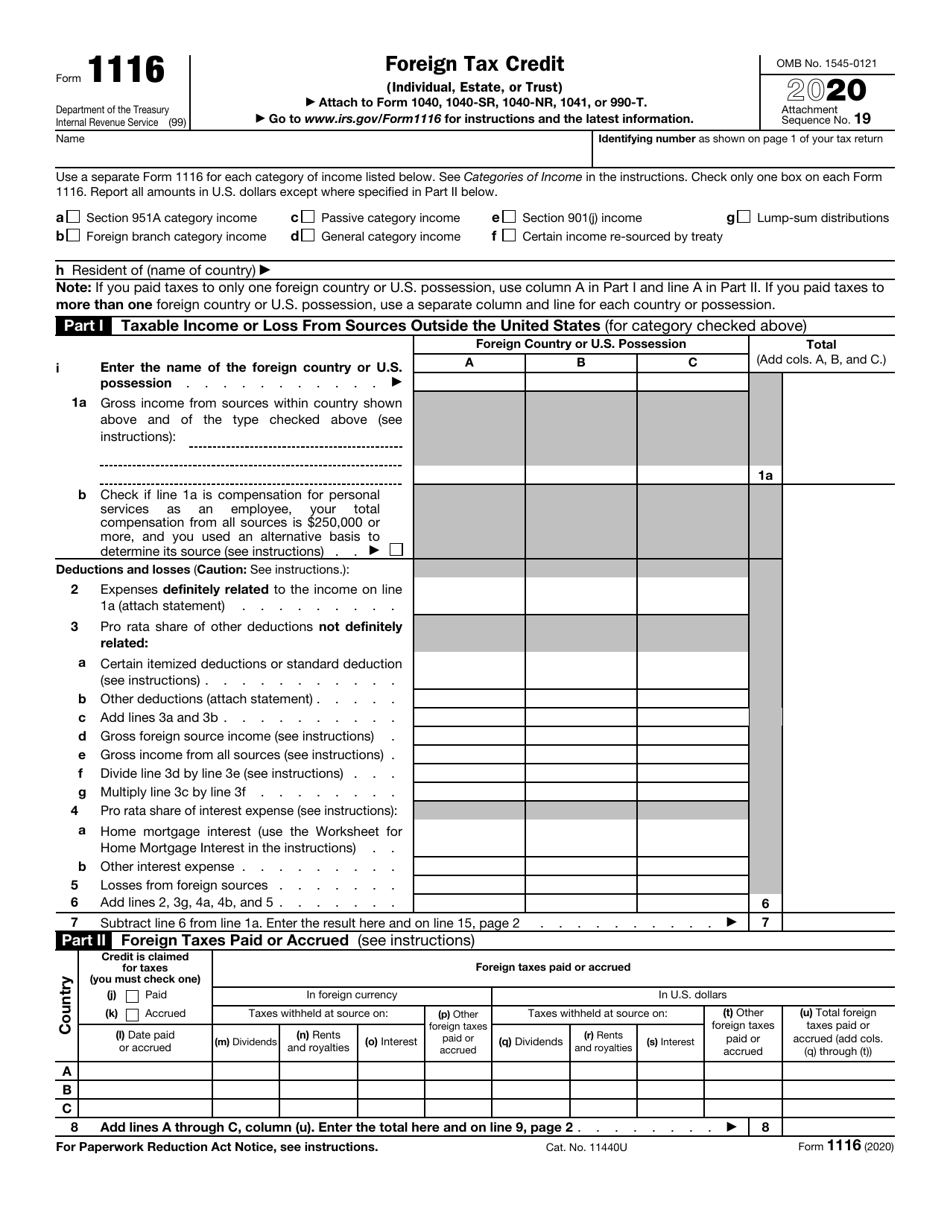
Most countries where Americans own real estate also tax capital gains on real estate sold within their borders. A typical scenario: an American sells a Barcelona apartment, pays Spanish capital gains tax on the gain, then reports the same gain on their US Form 1040. Without some mechanism to offset the two, the gain would be taxed twice. The Foreign Tax Credit (FTC) on Form 1116 is that mechanism.
How the credit works: the foreign tax you paid on the gain becomes a dollar-for-dollar credit against your US tax liability on the same gain, up to the amount of US tax owed on the same dollars. You fill out Form 1116 for passive category income (which is where real estate capital gains usually land), compute the ratio of foreign-source gain to total gain, and apply that ratio to your US tax liability on the gain.
Example walkthrough. Single American, $80K earned income, sells a Spanish apartment for a $150K gain after 5 years of ownership. Spanish capital gains tax on the $150K: Spain taxes non-residents at a flat 19%, so Spain takes $28,500. US long-term capital gains tax on $150K (assuming 15% bracket): $22,500. The $28,500 Spanish tax becomes an FTC that fully offsets the $22,500 US tax — zero additional US federal tax on the gain. The $6,000 excess Spanish credit carries forward up to 10 years and can be used against future foreign-source income.
Example where the credit doesn't cover everything. Same sale, but in Mexico — Mexican capital gains tax is a flat 25% on gross sale price or 35% on net gain, whichever the seller elects. Suppose you elect the 35% net option and pay roughly $52,500 in Mexican tax on the $150K gain. The US FTC caps at the US tax owed on the same dollars, which is $22,500 at 15% — so only $22,500 is creditable immediately. The excess $30,000 carries forward, but you may or may not be able to use it, depending on your future foreign-source income.
The mismatch problem. Countries use different basis rules, different depreciation, different timing. Spain might consider the property sold on the day of escritura signing; the US uses the same date in most cases but the character of the gain (capital vs. ordinary) can differ. Talking to a dual-qualified CPA (someone who files both US and host-country returns) is almost always worth the $1,500-4,000 it costs for a complex sale.
Treaty tie-breakers. If you qualify as a tax resident of both the US and the host country, most US tax treaties have a tie-breaker that assigns primary taxing rights to one side. See the IRS tax treaties page for the specific treaty covering your country, and the Bright!Tax foreign tax credit guide and Greenback's FTC explainer for worked examples. r/USExpatTaxes has many recent threads from filers working through specific country/sale combinations.

The FX-Gain Problem: Currency Moves Can Create Phantom Gain
This is the single biggest tax surprise Americans hit on foreign property sales, and most accountants miss it. The rule: all amounts must be reported in USD, converted at the exchange rate on the day of each transaction. When currencies move between purchase date and sale date, your nominal gain in foreign currency can look very different from your reportable gain in USD.
Worked example. American buys a Paris apartment in 2015 for €500,000. The EUR/USD rate on the purchase date is $1.12, making the USD basis $560,000. Ten years later, the apartment sells for the same €500,000 — zero nominal gain. But by 2026 the euro has strengthened to $1.18, making the USD sale proceeds $590,000. The IRS sees a $30,000 gain even though the French seller made zero profit in euros.

The opposite is also possible — currency moves can erase gains that existed in foreign currency. American buys Mexico City condo for 4 million pesos when the rate is 19 pesos/USD (basis: $210,000). Sells 5 years later for 6 million pesos (50% nominal gain in pesos) when the rate has moved to 21 pesos/USD (USD proceeds: $285,714). USD gain: $75,714, smaller than the 50% nominal peso gain would suggest. If the peso had weakened to 25, the USD proceeds would be $240,000 — a US gain of only $30,000 on a 50% peso gain.
There is no "FX neutralization" for capital gains. Unlike the Section 988 rules for foreign currency transactions inside a non-functional-currency account, real estate gains are computed on a full USD-translation basis. The IRS position is stated in Revenue Ruling 54-105 and reaffirmed in multiple private letter rulings.
Practical implications for American buyers:
- Currency-risk hedge your property exposure separately if the gain matters (complicated for retail investors)
- Understand that a weakening dollar makes your foreign property gain larger in USD terms than it looks in local currency
- Keep careful records of your purchase-date USD exchange rate — the Treasury reporting rate database and the IRS yearly average exchange rates are the authoritative sources
- If you bought in a year with a very weak dollar and sell in a year with a strong dollar, you may owe US tax on a gain that doesn't exist in the foreign currency
Our foreign currency risk post covers the hedging side. White Coat Investor's expat investing guide has more on the practical coordination.
Rental Property: Different Rules, Different Reporting
Foreign property used as a rental carries additional complications beyond the capital gain on sale. The IRS treats foreign rental real estate as Section 1250 property — real property subject to depreciation — with the same basic rules as US rental real estate, plus a few quirks.
Required depreciation. You don't have the option not to depreciate a rental property. Whether or not you actually claim the depreciation deduction, the IRS treats you as having taken it — the depreciation recapture on sale is based on "allowed or allowable." The depreciation life for foreign residential rental property is 40 years (straight-line), longer than the 27.5-year life for US residential rental. This means smaller annual deductions but smaller recapture later.

Depreciation recapture on sale. When you sell, any gain attributable to depreciation you took (or were allowed to take) is recaptured at a maximum 25% federal rate instead of the long-term capital gains rate of 15-20%. If you took $50,000 of depreciation over 10 years and sell for a $150,000 gain, the first $50,000 is recaptured at 25% ($12,500 federal tax) and the remaining $100,000 is taxed at long-term capital gains rates. The IRS Publication 544 walks through the recapture calculation.
Passive activity loss rules still apply. Rental real estate is passive activity for most owners, meaning losses can only offset passive income — not your day-job salary or your investment portfolio — unless you qualify as a real estate professional (750+ hours/year in real estate, more than half your working time). This is hard to qualify for if you have any other full-time job. Losses suspend and carry forward until you sell.
Foreign property tax no longer deductible on Schedule A. The 2017 Tax Cuts and Jobs Act eliminated the deduction for foreign real property taxes as part of the SALT cap changes. If your property is a rental reported on Schedule E, foreign property taxes remain deductible against rental income. If it's a personal residence reported on Schedule A, foreign property tax is no longer deductible — this was a real reduction for Americans with foreign vacation homes. See the IRS instructions for Schedule A and the TCJA summary.
Qualified Business Income deduction (QBI). Section 199A QBI deduction is generally not available for rental real estate held by individual passive investors unless the activity rises to the level of a trade or business. See IRS Pub 535 and threads on r/tax for recent interpretations.
Reporting: Form 8938, FBAR, and What's NOT Reportable
American owners of foreign real estate have specific reporting obligations — but contrary to common misconception, the real estate itself is generally NOT reportable on Form 8938 or FBAR. What IS reportable is the financial accounts and certain ownership structures around the property.
FBAR (FinCEN Form 114): required if your aggregate maximum balance across all foreign financial accounts exceeds $10,000 at any point during the calendar year. Foreign bank accounts, brokerage accounts, and similar financial accounts count. Direct real estate ownership does NOT count — a house is not a financial account. But the Spanish bank account you use to pay your Spanish utilities, escrow funds for the purchase, and receive rental income DOES count. See FinCEN's FBAR page and our FBAR foreign real estate post for the nuances.
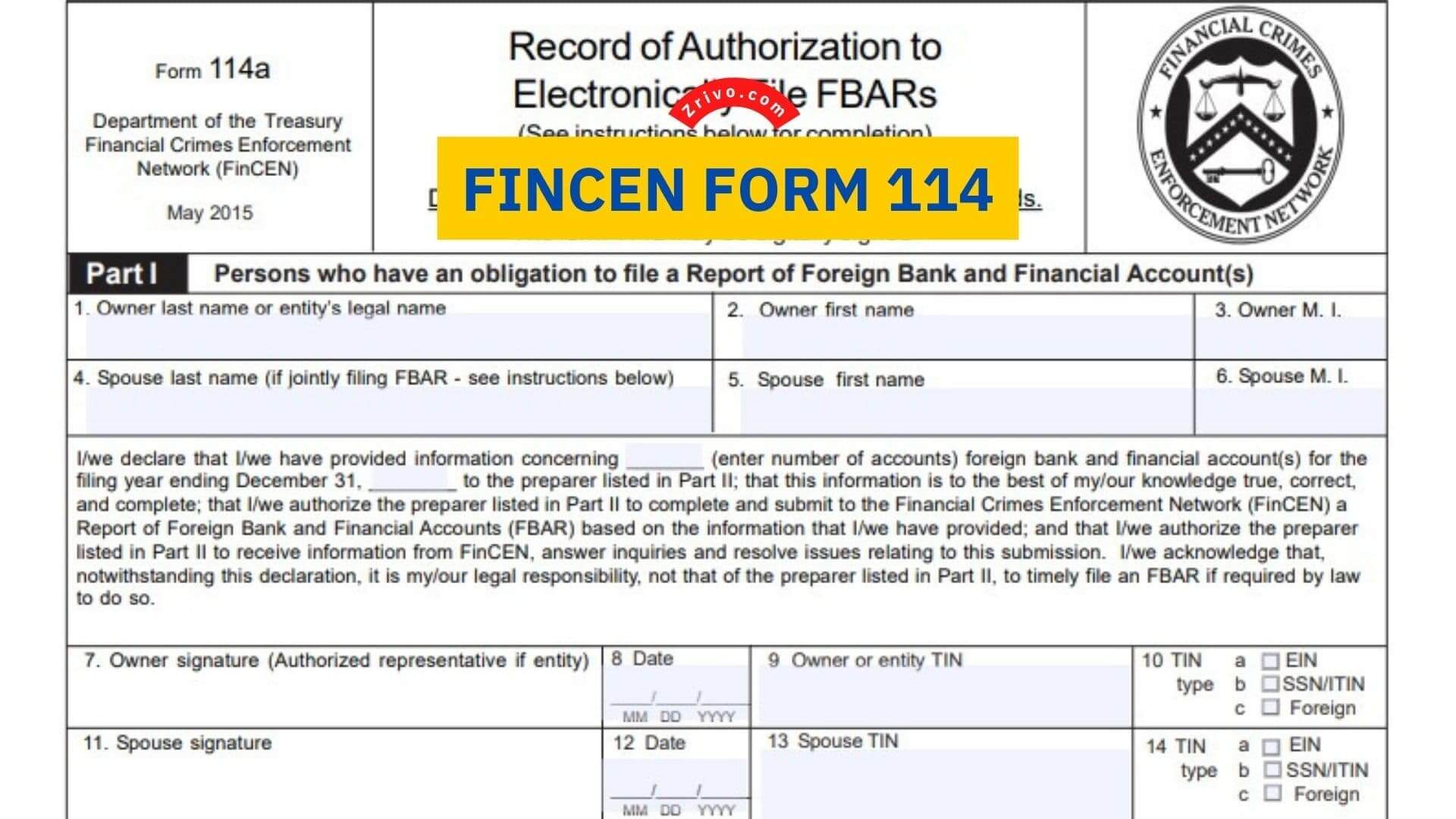
Form 8938 (FATCA): required if your specified foreign financial assets exceed certain thresholds — for US residents, $50K single / $100K joint at year-end or $75K/$150K at any point; for US citizens living abroad, $200K single / $400K joint at year-end or $300K/$600K at any point. Again, direct real estate is NOT a reportable asset. Foreign-pension-plan interests, accounts, and certain financial instruments ARE. The IRS Form 8938 instructions and FATCA and FBAR comparison page are the canonical references.
The exception: foreign entity ownership. If you hold the real estate through a foreign corporation, partnership, or trust (a Costa Rican Sociedad Anónima, a UK limited company, a Mexican fideicomiso with specific trust characteristics), the entity itself may trigger reporting. Form 5471 for foreign corps, Form 8865 for foreign partnerships, Form 3520 / 3520-A for foreign trusts. These are very serious filings — penalties for missed Form 5471 filings start at $10,000 per year and can run much higher. If you own foreign property through any foreign entity, get a CPA who actually knows international tax before you file anything.
Fideicomiso and Form 3520. The Mexican bank trust structure used for coastal property has caused years of filer confusion about whether it creates a Form 3520 obligation. In Revenue Procedure 2013-14, the IRS clarified that Mexican fideicomisos established solely to hold residential real estate are generally not considered foreign trusts for Form 3520 purposes. But the ruling is narrow — if your fideicomiso holds anything other than a single residential property, or has features outside the standard template, Form 3520 may apply. Our Mexico temporary residency post and fideicomiso deep dive cover the structure in more detail. The IRS Rev Proc 2013-14 is the authoritative source.
Other reportable items that connect to foreign property ownership:
- Wire transfers over $10,000 trigger FinCEN CTR reporting automatically by the sending/receiving bank (you don't file anything personally, but the bank does)
- Personal receipt of more than $10,000 in cash from a foreign person requires Form 8300
- Gifts from foreign persons of more than $100,000 (aggregate from all foreign persons in a year) require Form 3520 (not the same trust provision as above)
These rules are why most Americans who own foreign property either hire a CPA who specializes in expat returns (firms like Greenback, Bright!Tax, MyExpatTaxes, or Expat Tax Professionals — budget $500-2,000/year) or spend significant personal time understanding the rules. The penalties for missed reporting are severe enough that DIY is usually false economy above trivial amounts of property value.

Planning Moves: What Actually Reduces Your Tax
Given all of the above, here are the legitimate planning moves that actually reduce total tax on a foreign-property sale, rather than the marketing fantasies that don't.
Moves that work:
-
Live in the property as primary residence for 2+ years before selling. Unlocks the Section 121 $250K/$500K exclusion. The single biggest move available to most Americans with foreign property. Requires actually moving in — the exclusion won't apply to a property you only visit.
-
Time the sale to match foreign tax credit capacity. If you have foreign-source income in a given year that generates excess FTC, or if you can carry back/forward the credit, the year of sale matters. Coordinate with your CPA.
-
Step up basis through appropriate renovations. Genuine capital improvements (new roof, kitchen remodel, permanent additions) increase your adjusted basis and reduce taxable gain. Keep documented receipts in foreign currency converted to USD on the date of payment. Routine repairs and maintenance do not count.

-
Sell in a low-income year. Long-term capital gains rates are 0% for single filers with taxable income below roughly $48,350 (2026 projection) and 15% up to $533K. If you retire, sell in year one before RMDs kick in, or otherwise manage your income, you may be able to sell into the 0% bracket.
-
Gift to heirs strategically. The US estate tax step-up in basis at death applies to foreign real estate — heirs inherit with a new basis equal to fair market value on the date of death. If you plan to hold until death, your heirs pay capital gains only on appreciation after you die, not on your full historical gain. This is a huge advantage for long-term holds. See our retirement accounts abroad post and IRS estate tax page.
-
Coordinate with dual-qualified CPA on host-country exemptions. Some countries have primary-residence exemptions similar to Section 121 — Spain has one for residents over 65 selling a habitual home, Portugal has reinvestment-in-primary-residence rollover, the UK has Private Residence Relief. These reduce the foreign tax, which can interact favorably with FTC calculations.
Moves that DON'T work:
-
"Like-kind exchange" into another foreign property. Section 1031 used to allow this for foreign-to-foreign swaps. The 2017 Tax Cuts and Jobs Act eliminated 1031 for everything except domestic real estate. You cannot 1031 a Mexican condo into a Portuguese condo and defer the gain.
-
Renouncing US citizenship right before the sale. The US has a specific expatriation tax (Section 877A) that treats covered expatriates as having sold all their worldwide assets at fair market value on the day before expatriation. You don't escape gains by renouncing — you accelerate them. Plus, Section 877A covers real estate that would otherwise not have been an immediate taxable event. The IRS expatriation tax page has the full rules.
-
Holding in an LLC or offshore corp to "convert" the gain to ordinary income. Ordinary income rates are HIGHER than long-term capital gains rates for most taxpayers. This is not a real strategy.
-
"Foreign trust" structures marketed by offshore advisors. These almost always trigger additional Form 3520 / 3520-A / 5471 reporting with substantial penalty exposure, and rarely achieve real tax savings. Treat any pitch involving an offshore holding structure with deep skepticism.
Bottom line: the cleanest way for most Americans to minimize tax on foreign real estate gain is to live in the property long enough to qualify for Section 121, coordinate with the foreign tax credit, and not get cute. See our FEIE tax break guide for the related income-side rules, our double taxation foreign property post for the treaty coordination, and threads on r/USExpatTaxes and r/ExpatFIRE for recent real-filer experiences. When in doubt, pay a CPA who specializes in expat returns — the fees are trivial compared to the penalties for getting it wrong.
Ready to explore?
Browse Destinations