
Bank of Mexico Restricted Zone: What American Beachfront Buyers Must Know

Every American buying beachfront property in Mexico has to deal with the same 108-year-old constitutional rule: foreigners cannot directly own land within 50 kilometers of a coastline or 100 kilometers of a land border. It's called the Zona Restringida — the Restricted Zone — and it is not a Bank of Mexico policy, despite the persistent American confusion on this point. It is Article 27 of the Mexican Constitution, adopted in 1917, and it has been reshaped once (in 1973) to create the workaround everyone now uses: the fideicomiso, a Mexican bank trust.
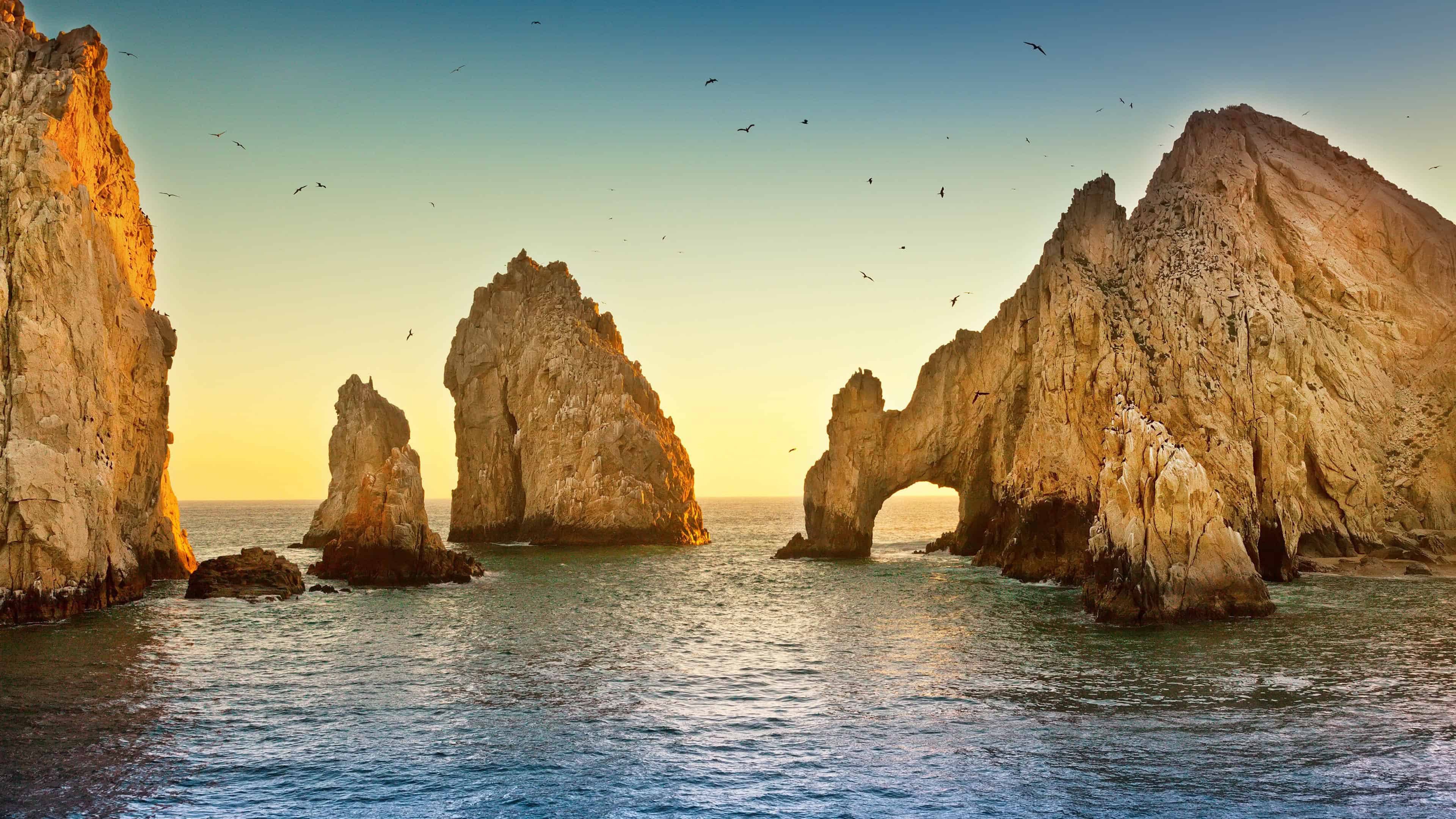
If you are buying anything in Playa del Carmen, Tulum, Akumal, Cabo San Lucas, Puerto Vallarta, Sayulita, Rosarito, Mazatlán, La Paz, Zihuatanejo, Cozumel, Progreso, or basically any beach town you've heard of, you are almost certainly in the restricted zone. Understanding how the zone works — legally, financially, and practically — is the foundation for every other decision you'll make about the transaction. This article is the companion to our step-by-step Mexico buying process guide, our fideicomiso glossary, and our moving to Mexico guide.
Official sources: the Secretaría de Relaciones Exteriores (SRE) is the Mexican ministry that issues fideicomiso permits, and the US Embassy in Mexico City publishes periodic guidance on property matters for Americans. The best English-language technical source is Mexperience's real estate section.
The Constitutional Rule and Why It Exists
Article 27 of the Mexican Constitution, as originally adopted in 1917 after the Mexican Revolution, flatly prohibited foreigners from owning land within certain distances of the border or coast. The rule was a direct response to 19th-century American and European acquisition of huge tracts of Mexican land, and to the general political goal of keeping strategically sensitive territory out of foreign hands. It was non-negotiable for decades.
The distances:
- 100 km (62 miles) from any international border — so all of Baja California's northern strip, most of Sonora and Chihuahua's northern edge, and a band across Tamaulipas and Coahuila.
- 50 km (31 miles) from any coastline — virtually the entire Pacific and Caribbean coast, the Gulf coast, and the Sea of Cortez.
You can see why almost every tourist-facing American destination is inside the zone. Mérida, Yucatán — which Americans often assume is a beach city — is actually about 35 km inland and sits inside the zone because it's within 50 km of Progreso on the coast. San Miguel de Allende, by contrast, sits ~300 km from any coast and is not in the restricted zone, which is part of why it's such an easy American buying market.
The 1973 reform. The Foreign Investment Law of 1973 (and its successor, the 1993 law currently in force) created the workaround that Americans now use daily: the fideicomiso. A Mexican bank acts as trustee and holds legal title to restricted-zone property; a foreign buyer is the beneficiary of the trust. The beneficiary has all the practical rights of ownership — use, rent, improve, sell, will to heirs. The bank's role is purely fiduciary. This is how more than 90% of American beach property in Mexico is actually held. Mexperience's foreigners and Mexican real estate article has the clearest explanation of the constitutional reasoning I've seen in English.
What a Fideicomiso Actually Is
A fideicomiso is not a lease, a rental, a temporary permission, or a second-class form of ownership. It is a legal trust under Mexican law, created for a specific buyer, which holds title to a specific property, with terms that give the foreign beneficiary every practical attribute of ownership short of the raw dominio directo (direct dominion) held by the trustee bank.

Parties to the trust:
- Fideicomitente — the seller of the property, who transfers title to the trust
- Fiduciario — the Mexican bank acting as trustee (common ones: Scotiabank Inverlat, Banorte, BBVA México, Monex, CIBanco, Actinver)
- Fideicomisario — you, the foreign beneficiary, who holds all practical rights
- Sustitutos — the substitute beneficiaries (usually your heirs), who automatically take your place if you die, bypassing Mexican probate
Term: 50 years initially, renewable for another 50 years. The renewal is essentially automatic and costs a modest administrative fee. Trusts have been renewed multiple times over decades with no legal drama.
Your rights as beneficiary:
- Occupy the property
- Rent it out (short-term or long-term)
- Mortgage it
- Remodel or demolish and rebuild, subject to local permitting
- Sell it — either to another foreigner (in which case the buyer takes over your fideicomiso position or creates their own new trust) or to a Mexican (who takes direct title, extinguishing the trust)
- Will it to substitute beneficiaries
You do not, however, 'own' the land in the deed-registered sense that a Mexican national owns their house. That distinction is technical, but it matters in two situations: US tax reporting (we'll cover in a minute), and estate planning.
Baja Properties' fideicomiso explainer is a reasonable primer with pricing tables. Cabo La Estancia's fideicomiso guide is another.
What a Fideicomiso Costs
This is where Americans look for surprises and usually find them. Current pricing as of 2026:
One-time setup costs:
- Bank setup fee — $500 to $1,500 USD, one-time, depending on the bank. Scotiabank and Banorte tend to be on the lower end; CIBanco on the higher end with more customer service. Monex is usually the cheapest.
- SRE permit fee — The Secretaría de Relaciones Exteriores charges MXN 21,650 (~$1,080 USD as of April 2026) to issue the permit authorizing the trust. This is a federal fee, non-negotiable, paid once at the start of the trust.
- Notary fee for the trust instrument — usually bundled into your overall notary closing fees (1.5-2% of purchase price).
- Property appraisal (avalúo) — required for the tax calculation. $300-700 USD.
Recurring cost:
- Annual trustee fee — $500 to $800 USD per year, for life of the trust (50 years), charged by the bank for maintaining the fiduciary relationship. This is the one ongoing number to budget for. Over the 50-year life of the trust, that's $25,000-40,000 in trustee fees — not trivial, but typically far less than the capital appreciation on a Riviera Maya beach property over the same period.

Total up-front cost to establish a fideicomiso: budget $2,500-4,500 USD on top of your normal Mexican closing costs. These costs apply whether the property is worth $150,000 or $3 million — the bank and SRE fees are largely flat, not percentage-based. Which means fideicomiso fees bite hardest on cheap properties. A $120,000 beach condo with $3,000 in fideicomiso fees is paying 2.5% of the property's value just to set up the trust. A $1.2 million villa is paying 0.25%.
For reference on what you can actually buy at these price points, see our Mexico properties under $150K article and the real listings at our Playa del Carmen page and Cabo San Lucas page. And for the complete closing cost picture on top of the fideicomiso fees specifically, see our Mexico closing costs article.

The Common Fideicomiso Myths, Debunked
Americans routinely arrive at Mexican closings carrying one or more of these myths, and they are all either wrong or misleading:
Myth: 'The bank can take your house.' False. The bank is a trustee with a fiduciary duty; it has no economic interest in the property and cannot sell, mortgage, or encumber the property without the beneficiary's explicit instruction. In the 50+ year history of the fideicomiso, there is no documented case of a bank seizing a foreign buyer's fideicomiso property. The structure is airtight. A bank that behaved this way would lose every foreign client and be sued by Mexican regulators into oblivion.
Myth: 'Fideicomisos expire and you lose everything.' False. Fideicomisos are renewable for additional 50-year periods. The renewal process is straightforward and relatively cheap. Some first-generation fideicomisos from the 1970s are already in their second term.
Myth: 'A fideicomiso is a foreign trust for IRS purposes and requires Form 3520.' False — this is specifically addressed in IRS Revenue Ruling 2013-14, which clarified that a Mexican fideicomiso holding real property for a US beneficiary is not a foreign trust for US tax purposes. You do not file Form 3520 or 3520-A on your fideicomiso itself. You may still have FBAR/Form 8938 obligations on Mexican bank accounts tied to rental income, but the trust itself is transparent. This is the single biggest tax misconception and Americans have wasted thousands on unnecessary trust filings because of it. Taxes for Expats' Mexico real estate page explicitly confirms this treatment.
Myth: 'It's like a lease — I don't really own it.' Wrong in every way that matters. You control the property. You can sell it. The market treats it as your asset. Mexican banks, notarios, and courts all treat the beneficiary as the effective owner. The only limitation is the technical title, and that limitation exists because of a constitutional rule you didn't write.
Myth: 'I can avoid the fideicomiso by using a Mexican corporation.' Partially true — a Mexican S.A. can take direct title in the restricted zone, if the corporation's purpose is commercial rather than residential. For a personal vacation home, the corporation route is almost always more expensive and more administratively painful than a fideicomiso. For multiple investment properties operated as a rental business, a corporation can make sense. Talk to a Mexican tax attorney before making this choice. Our article on buying Mexican property through a corporation goes deeper on the tradeoffs.
A popular thread on r/MexicoExpats about fideicomiso misconceptions has dozens of long-term owners patiently debunking these for new arrivals. Worth reading.
The Rules Are Different Outside the Restricted Zone
If you're considering property in interior Mexico — San Miguel de Allende, Guanajuato, Querétaro, Mexico City, Guadalajara, Puebla, Oaxaca city, Morelia, Aguascalientes, Zacatecas — and the property is more than 50 km from any coast and more than 100 km from any border, you can take direct title as a foreigner. No fideicomiso, no SRE permit, no annual trustee fee. You pay slightly different closing costs (no trust setup, but you still pay the ISAI/acquisition tax, notary fees, and registry fees) and your total closing cost runs closer to 5-7% of purchase price rather than the 7-10% you see in the restricted zone.
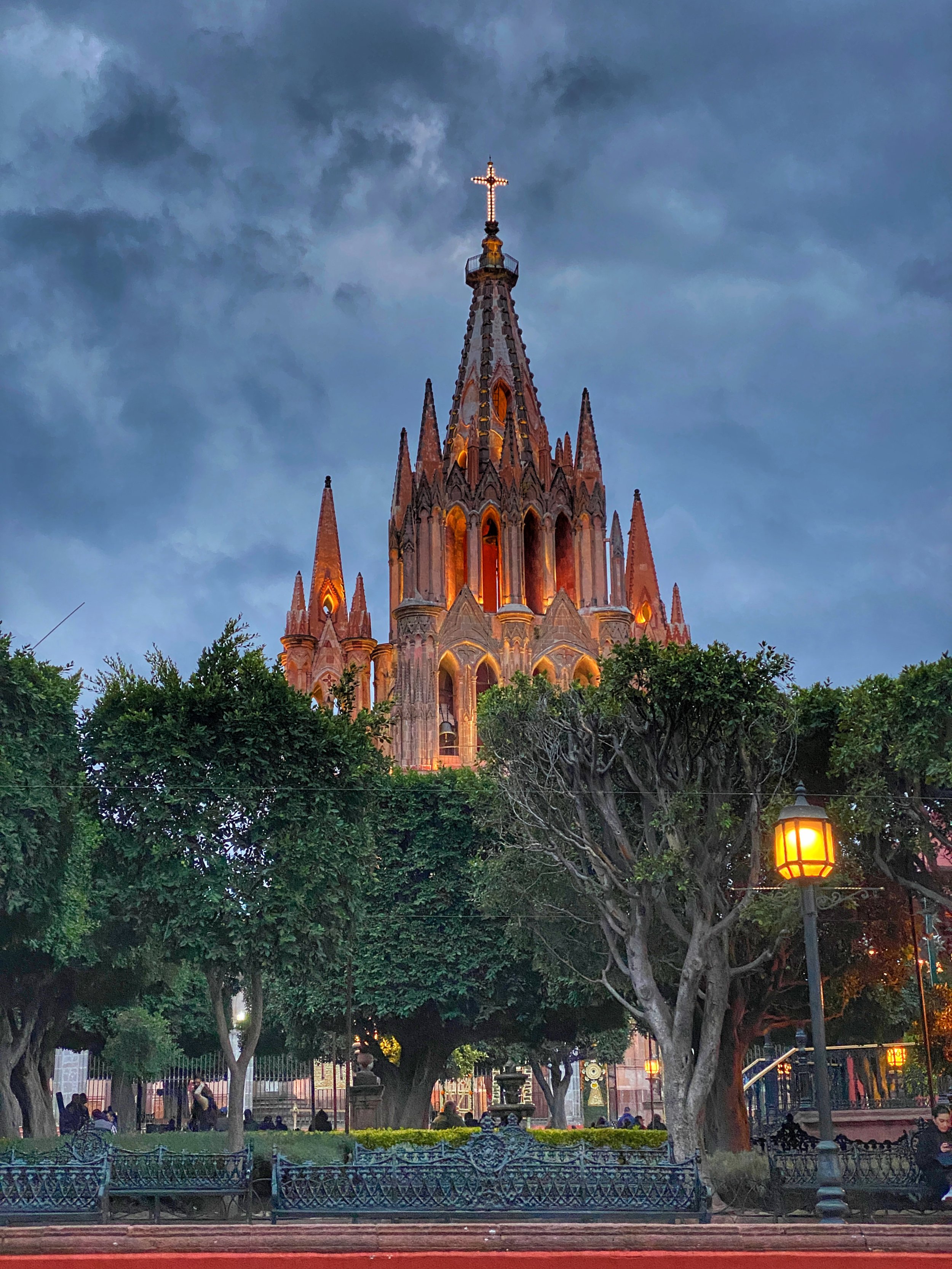
For Americans making purely financial decisions, this is one reason San Miguel de Allende became such a dominant expat market — in addition to the climate, altitude, art scene, and community. The closing is cleaner, the annual trustee fee is zero, and the legal structure is exactly what an American is used to. Our San Miguel de Allende pages show real current listings.
The tradeoff, obviously, is that you're not on the beach. Americans who want both — interior closing simplicity and a beach lifestyle — sometimes buy a primary home in San Miguel or Mexico City and a smaller fideicomiso beach condo in Playa del Carmen or Puerto Vallarta. That combination gives you the best of both legal environments at roughly the total cost of one more expensive single-city purchase.
The Bottom Line
The restricted zone is not an obstacle to buying beachfront property in Mexico as an American — it is a paperwork detour that costs you $2,500-4,500 up front and $500-800 a year forever, in exchange for full economic ownership of a property on some of the most desirable coastline on the planet. The structure has worked for half a century. Tens of thousands of Americans own real estate through fideicomisos right now without any drama.
Where Americans get in trouble is when they:
- Don't realize they're in the restricted zone and miss the fideicomiso requirement entirely
- Accept the seller's attorney's recommendation for 'saving' on fideicomiso fees via dubious legal structures (ejido agreements, informal trusts, private purchase contracts)
- Skip title insurance on top of the fideicomiso because they think the trust is protective enough (it isn't — the trust holds whatever title the seller gave you; if the title was defective, the trust is defective)
- Don't name substitute beneficiaries for their heirs at the time of setup, creating a Mexican probate mess decades later
- Never budget for the annual trustee fee and get surprised every January
None of these are hard to avoid. A competent Mexican real estate attorney, a reputable escrow provider (Stewart Title Mexico or similar), and a notario you chose — not the seller's recommendation — will get you through the restricted zone cleanly.
For the complete transaction walk-through, see our Mexico buying process guide. For the specific phenomenon of foreigners being overcharged, see our article on gringo pricing in Mexico. And for the tax consequences of owning Mexican property as a US citizen, our FBAR and foreign real estate article covers what to report and when.
Active discussion threads on the fideicomiso and restricted zone at r/MexicoExpats, r/IWantOut and r/PlayaDelCarmen are worth browsing before your closing — real experiences with real numbers from people who have actually gone through the process.
Ready to explore?
Browse Destinations