The Real Cost of Buying a Ski Chalet in the French Alps as an American in 2026

A French Alps ski chalet is one of the few European property dreams that is genuinely open to Americans — no residency requirement, no bureaucratic quota, no Swiss- or Austrian-style cantonal ban on foreign second-home ownership. You walk in with a passport, sign in front of a French notaire, and you are the freehold owner of a chalet in the shadow of Mont Blanc. That's the good news. The not-so-good news is that 'the price on the listing' is maybe 70 percent of the real price, that taxes on a second home in France have gotten materially more expensive in the last three years, that mortgage terms for non-residents are nothing like the US market, and that new short-term rental rules passed in late 2024 and 2025 mean your Airbnb income thesis is almost certainly wrong for the flagship resorts.

This is the honest American buyer's guide. Numbers are current to April 2026, priced in euros, and come from a mix of French notary data, local estate agents, tax authority publications, and the long-running expat and ski forums where people who have actually done it compare notes.
Can Americans Legally Buy a Chalet in France? (Yes, Unconditionally)
France is one of the most open property markets in Europe for foreign buyers. There is no nationality restriction, no special permit, no minimum investment, and no requirement to live in France any number of days per year. The official position from Service-Public.fr, the French government portal, is that any foreign national can purchase residential real estate with the same transactional rights as a French citizen. There is no equivalent of a Swiss Lex Koller restriction or the Austrian second-home ban that keeps Americans off much of Tyrol.

The practical point here, which is well covered by Investropa's 2026 Alps foreign ownership update, is that the major legal questions are not 'can I buy?' but 'how will I be taxed, financed, and registered?' — and those three questions have gotten harder, not easier, in the last two years. The French parliament passed legislation in 2023 and 2024 giving resort communes sweeping new powers to regulate second homes, restrict furnished-tourism rentals, and levy supplemental taxe d'habitation surcharges of up to 60 percent. Chamonix-Mont-Blanc applied the maximum surcharge in 2024. Morzine, Méribel, Les Gets and Val d'Isère followed. The takeaway: France still lets you buy anything, but it is making it more expensive to own if you are not living there full-time. Read FrenchEntrée's second home tax filing primer before you put in an offer.
The Six Big Resorts: Real 2026 Price Ranges
Ski chalet pricing in France is less about country averages and more about individual resort micro-markets, which vary by a factor of four or more. Here is a realistic view of 2026 prices by resort, compiled from listings on Leggett French Alps, My French House, Sotheby's France, Athena Advisers buying guides, and recent local-market reports from Investors in Property.

Chamonix-Mont-Blanc. The most famous, most expensive, and most American-friendly. Entry level for a genuine freestanding chalet (not an apartment) starts around €1.2–1.5 million for something old and small in Les Praz or Les Bois; a renovated 4-bedroom in Les Houches or Argentière runs €1.8–3 million; and anything in central Chamonix with Mont Blanc views starts at €3 million and goes to €15 million at the top of the market. Apartments are the value play: a new 2-bedroom in a prestigious residence can be had for €650,000–1.1 million.
Morzine and Les Gets (Portes du Soleil). The American retiree and part-time ski sweet spot. Traditional Savoyard chalets from €900,000–1.8 million for something you'd actually want to live in; new-build 3-bedroom chalets in developments like the ones tracked on SnowOnly Morzine listings run €1.1–1.6 million; renovated village apartments start around €450,000.
Méribel (Three Valleys). Prestige pricing in the heart of the world's largest ski area. Entry for a chalet is €2–3 million; the center of the resort is €4–10 million; top-end chalets sell for €15–25 million. Apartments in Méribel Village or Les Allues are more approachable at €650,000–1.5 million. See Cimalpes' Méribel prestige report.
Courchevel. Even more expensive than Méribel. Courchevel 1850 is the Monaco of the Alps — assume €4 million minimum for a modest apartment in the center and €10–40 million for chalets. Courchevel Village (1550) and Le Praz (1300) are materially cheaper at €1.5–3 million for a nice chalet.
Val Thorens. The highest resort in Europe at 2,300m, almost entirely apartment stock. Studios start around €180,000, 2-bedrooms run €400,000–700,000, and the rare freestanding chalet above the resort fetches €2–4 million. Good snow reliability, weak summer market, limited American buyer community.
Val d'Isère / Tignes (Espace Killy). Mid-point between Chamonix price prestige and Méribel purity. Chalets €2.5–8 million, apartments €500,000–2 million.
If you're picking for value, Morzine and Les Gets are where long-time American expats consistently land — see the conversation on the snowHeads ski forum 'Buying or Building' thread, which has ten years of American, British and Dutch buyers comparing notes across the big resorts.
Closing Costs: Why 7–9% Is the Real Transaction Markup
French transaction costs are famously high compared to the US, and the number people always leave off their spreadsheets. For a resale property — which is most of the chalet market — you should plan on 7 to 9 percent on top of the purchase price for closing costs, most of which is the notaire's fee and the départementale transfer tax.

The breakdown, per FrenchEntrée's closing cost calculator and the Cabinet Roche tax summary:
- Droits de mutation (transfer taxes): 5.80 percent in most départements including Haute-Savoie and Savoie, which covers the Alps. A temporary 0.5 percent surcharge was authorized for 2025-2026 and several départements took it — check with your notaire.
- Notaire fee: Regulated and sliding-scale. On a €1.5 million chalet it works out to roughly 0.8–1.2 percent.
- Land registration: 0.1 percent.
- Mortgage registration fee (if borrowing): roughly 1.5 percent of loan value.
- Agency fee: 3–6 percent, sometimes paid by seller and baked into price, sometimes split.
New builds are much cheaper to transact — frais de notaire on a new-build property are only 2 to 3 percent, because you're paying VAT (20 percent) embedded in the sticker price instead of the transfer tax. Plus you get a two-year taxe foncière exemption on qualifying new builds. For a €1.2 million ski apartment, the closing-cost difference between new and resale can be €80,000+. Worth factoring in.

One more line item Americans always forget: your US tax lawyer and a French notaire-adjacent tax advisor. Budget $3,000–8,000 for professional fees on the US side alone. If you don't have them, you will make a mistake on FBAR (the US Treasury's foreign asset disclosure under FinCEN Form 114) or on IRS Form 8938, and the penalties for getting those wrong are out of proportion to the cost of prevention.

Can Americans Get a French Mortgage? Surprisingly, Yes
Unlike Spain, Portugal, and most of the rest of the Mediterranean, France is genuinely willing to lend to American non-resident buyers — and at rates not far off what domestic French borrowers pay. This comes up regularly on r/ExpatFIRE France threads and on r/AmerExit where it routinely surprises people that the math can work.

Typical 2026 terms for an American non-resident borrower through a specialist mortgage broker like International Private Finance or Athena Advisers' mortgage desk:
- Deposit: 30 percent minimum (occasionally 25 percent for strong profiles), vs. 10–15 percent for French residents.
- Interest rate: 3.3–4.1 percent fixed for 15–20 years as of Q1 2026, per Crédit Agricole's non-resident mortgage product sheet and the lending desks at BNP Paribas International Buyers and CA Indosuez.
- Loan term: Up to 20 years, sometimes 25, capped at age 75 by the end of the loan.
- Life insurance: Required on French mortgages, adds roughly 0.3–0.5 percent to effective rate.
- Debt-to-income test: French lenders legally cannot lend if total debt exceeds 35 percent of gross income, per Haut Conseil de Stabilité Financière (HCSF) rules imposed in 2022.
The reason the deal can make sense even at 3.5–4 percent is the currency and tax arbitrage. Your US income is in dollars; your mortgage is in euros; your property is in euros; and French mortgage interest is deductible against French rental income if you rent the property out. A lot of American buyers deliberately take the largest mortgage they can, so that rental income covers the euro debt service and the dollar they would have used to pay cash stays invested in the US market. Greenback Tax Services has a good primer on how the French and US tax systems interact for second-home owners.
Taxe Foncière and Taxe d'Habitation: The Bill That Arrives Every November
France has two main property taxes that hit second-home owners, and the second one has quietly tripled for ski-resort owners over the last three years.
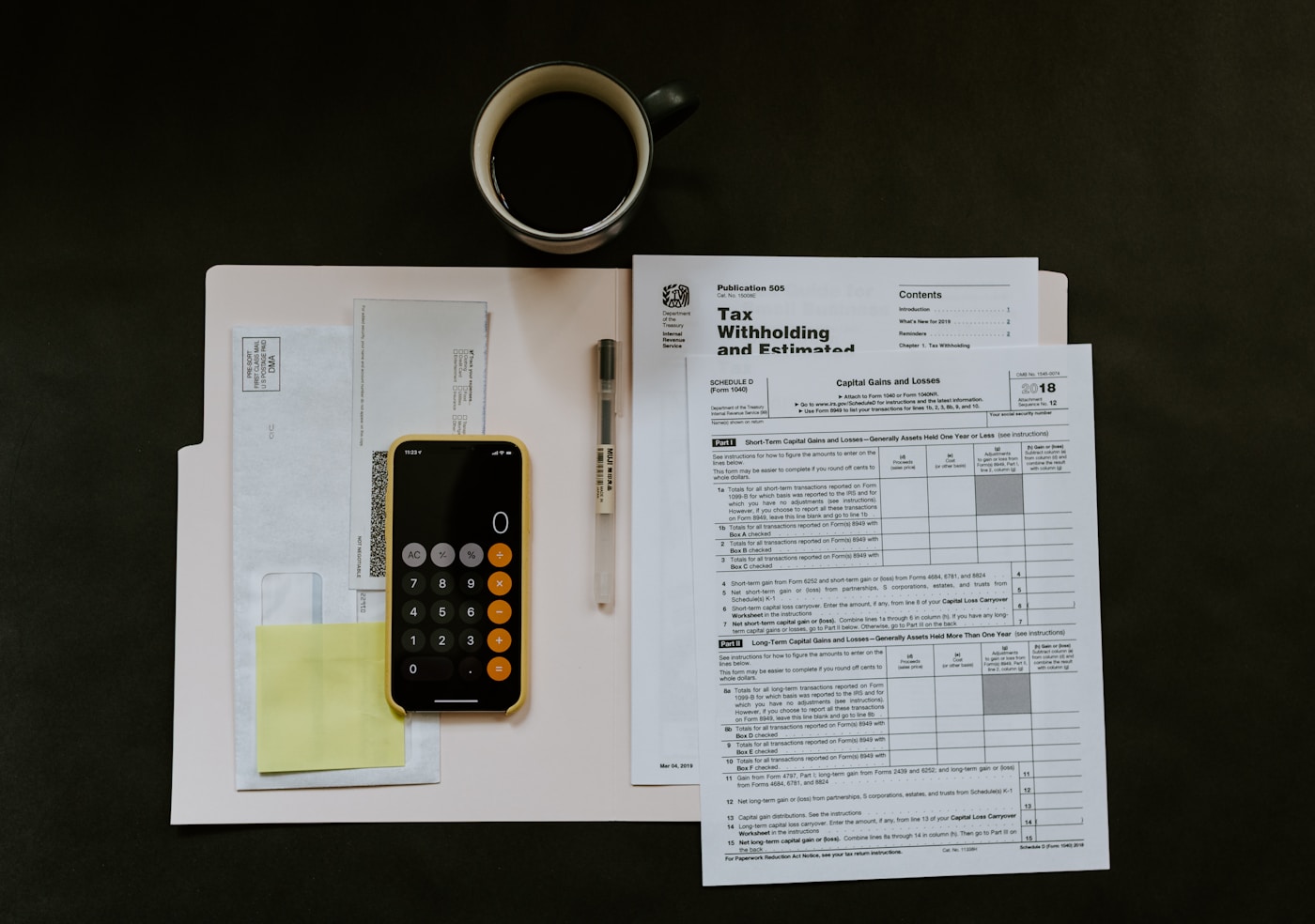
Taxe foncière is the basic annual property tax paid by all owners, regardless of whether they live there. It's set by each commune based on the theoretical rental value (valeur locative cadastrale) of the property and the local rate. For a typical Alpine chalet, figure €1,200–€3,500 per year for a modest property and €4,000–€12,000 for a large chalet in Chamonix or Méribel. French-Property.com's local taxes guide publishes rough ranges. It arrives in October–November every year and is due by mid-November.
Taxe d'habitation used to be paid by everyone but was abolished for primary residences in 2023. It still applies — fully — to secondary residences, which is what most American-owned chalets are. And since 2015, communes in 'tense housing zones' (zones tendues) have been allowed to apply a supplemental surcharge of up to 60 percent on secondary-residence taxe d'habitation. That list of eligible communes was massively expanded in 2023 to cover all the major ski resorts — Chamonix, Morzine, Les Gets, Méribel, Courchevel, Val d'Isère, Tignes, Val Thorens, Megève, and dozens more. Chamonix, Morzine and Val d'Isère all voted the maximum 60 percent surcharge in 2024, and other resorts followed. The practical impact, per Living on the Côte d'Azur's second-home tax guide, is that taxe d'habitation on a €1.5 million chalet in central Chamonix can now run €4,000–€8,000 per year just on its own — a €2,500 base bill plus a €1,500–€5,000 surcharge.

On top of those, there's the IFI (Impôt sur la Fortune Immobilière), France's wealth tax on real estate. It kicks in at €1.3 million of net French real estate holdings and tops out at 1.5 percent. The PTI Returns 2025 French tax guide has a good calculator and the thresholds. A €2 million chalet with no mortgage puts a non-resident American into IFI territory. Taking a 50 percent mortgage against the chalet knocks the net value below €1.3 million and eliminates the IFI exposure — yet another reason American buyers lever up rather than pay cash.
The Short-Term Rental Crackdown: Your Airbnb Math Is Probably Wrong
A lot of Americans walk into the Alps thinking 'I'll ski four weeks a year and Airbnb the other forty-eight.' That plan was already difficult before 2024 and it is now actively illegal or heavily restricted in several of the top resorts.
The legislative arc: the Loi Le Meur passed in November 2024 gave French communes unprecedented authority over meublés de tourisme (furnished tourism rentals), effective 2025. Specifically: communes can cap the number of days per year you are allowed to rent, require a change-of-use permit for secondary residences converted to furnished tourism, restrict the number of rentals a single owner can operate, and require registration in a national SIREN-linked database starting May 2026. Chamonix applied a strict version within six months, Morzine and Méribel followed, and Les Gets now requires a declaration with the town hall plus mandatory change-of-use approval for any non-primary residence rented more than 120 days per year.
The practical implication: if you're buying in 2026 and your pro forma assumes 30 weeks of Airbnb income at €2,500/week, you need to check the current commune rules before you close. In Chamonix, several buildings now cap rental activity to the owner's own primary residence only. In Morzine, the one-property-per-owner rule went into effect in 2025. Meanwhile, traditional agency-managed longer-term winter-season rentals (a full season December–April to a seasonal worker or long-term ski tourist) are typically unaffected by the new rules and remain the legal, boring, reliable income path.
For the current status of each resort, the official commune websites are the only authoritative source — mairie-chamonix.fr, morzine.fr, mairie-meribel.com — and they update faster than the expat-focused blog ecosystem. A good current overview is FrenchEntrée's 2025 furnished rental update. If you want peer stories about the rule change and how American owners are adjusting, there are active r/AmerExit threads and r/expats France threads with recent first-hand reports.
The Visa Question: Owning vs. Living In
Owning French property does not grant you residency — this is the single most-asked question on r/AmerExit France threads. The American property owner in France has three practical visa paths and no auto-pilot option.

Schengen 90/180 (no visa). Americans get 90 days in any rolling 180-day period across the entire Schengen zone without any paperwork. That covers most ski seasons if you're flexible. Your ownership means nothing for visa purposes — owning a chalet doesn't extend your Schengen allowance by a single day.
Visa de long séjour temporaire (VLST) — visitor visa. The standard path for second-home Americans who want more than 90 days. Requires proof of €1,400+/month income and French health insurance. It's a one-year, renewable visa that explicitly prohibits working for a French employer. Application is through a VFS Global center in the US (there are consulates in most major American cities). Detailed requirements are on France-Visas.gouv.fr.
Visa talent passport or other work-based visas. For Americans with a real French job offer or a remote-work/entrepreneur case. Substantial paperwork but gives full residency.
One important tax note: if you become a French tax resident (183+ days per year, or center-of-vital-interests test), your entire worldwide income becomes reportable in France. For most American chalet owners, that is specifically what they are trying to avoid — the visitor visa gives you long stays without tax residency. If you're unsure, the French tax authority's guide for new arrivals is the starting point.
For more on the full France move (not just the chalet), see our full France country guide and our article on how France compares against other European retirement destinations.
A Real-World Cost Example: $1.5 Million Chalet in Morzine, Year One
Let's tie it all together with a single realistic example. You are an American buyer, age 48, buying a €1.4 million ($1.5M at current rates) four-bedroom chalet in central Morzine with a 40 percent down payment and a 20-year mortgage at 3.8 percent from a French non-resident lender.

Purchase transaction:
- Purchase price: €1,400,000
- Closing costs (7.5 percent resale, including notaire, transfer tax, land registration): €105,000
- Furniture and first-year fit-out: €35,000
- Legal/tax setup (French attorney, US tax advisor, FBAR setup): €6,000
- Total cash out at closing: €560,000 down + €146,000 fees = €706,000 (~$760,000)
Year-one carrying costs:
- Mortgage: €840,000 at 3.8% over 20 years = €5,016/month = €60,192/year
- Taxe foncière: ~€2,800
- Taxe d'habitation (secondary residence, no Morzine surcharge yet as of 2026): ~€2,200
- Home insurance: ~€1,500
- Utilities (electric, heating oil, water, internet) for a chalet that is occupied ~60 nights/year and winterized the rest: ~€3,500
- Syndic/management fees if in a copropriété: ~€2,400 (standalone chalets skip this)
- Property manager/caretaker (opens/closes for each visit, handles snow clearance): ~€2,800
- Total year-one carrying cost:
€74,400 ($80,000)
Against that, realistic rental income on an agency-managed part-time ski rental (assuming Morzine's one-property-per-owner rule still applies, you rent 14 weeks at an average €2,200/week, and the agency keeps 20 percent): ~€24,600 net.
Net year-one cost of ownership, assuming you use the chalet yourself for 8 weeks and rent the other 14: roughly €50,000 out of pocket (~$54,000). That number does not include the mortgage principal paydown of ~€29,000, which is equity not expense, so the 'true economic cost' is closer to €21,000/year — essentially the cost of 8 weeks of premium Alps vacation every year, with full kitchen and no hotel bills, in a property appreciating 2–4 percent a year.
That's the honest math. It can work — but only if you understand every line, have US tax advice, and genuinely plan to use the chalet enough to justify the headache. For buyers who won't use it more than 3–4 weeks a year, a hotel in Chamonix or a seasonal rental in Les Gets is cheaper and infinitely simpler. For buyers who want 8+ weeks a year and plan to keep it for a decade, buying wins on almost every axis except the stress of the paperwork. Our Portugal mortgage deep-dive and our Spain mortgage guide cover what the same economics look like in warmer, cheaper European markets, and our comparison of moving costs and real estate across 20 countries puts the Alps in context.
Ready to explore?
Browse Destinations