
Rome vs Florence vs Milan: Cost of Buying Property as an American in 2026

Italy's three headline cities price property on very different logic. Rome is slow, bureaucratic, and surprisingly affordable by Western European standards. Florence is small, tourist-dominated, and painfully expensive per square meter. Milan is the financial capital, the only Italian city that behaves economically like a modern Northern European metro, and the most expensive of the three on almost every axis. For an American trying to decide which Italian city to actually buy in, the tradeoffs are larger than the stereotypes suggest.
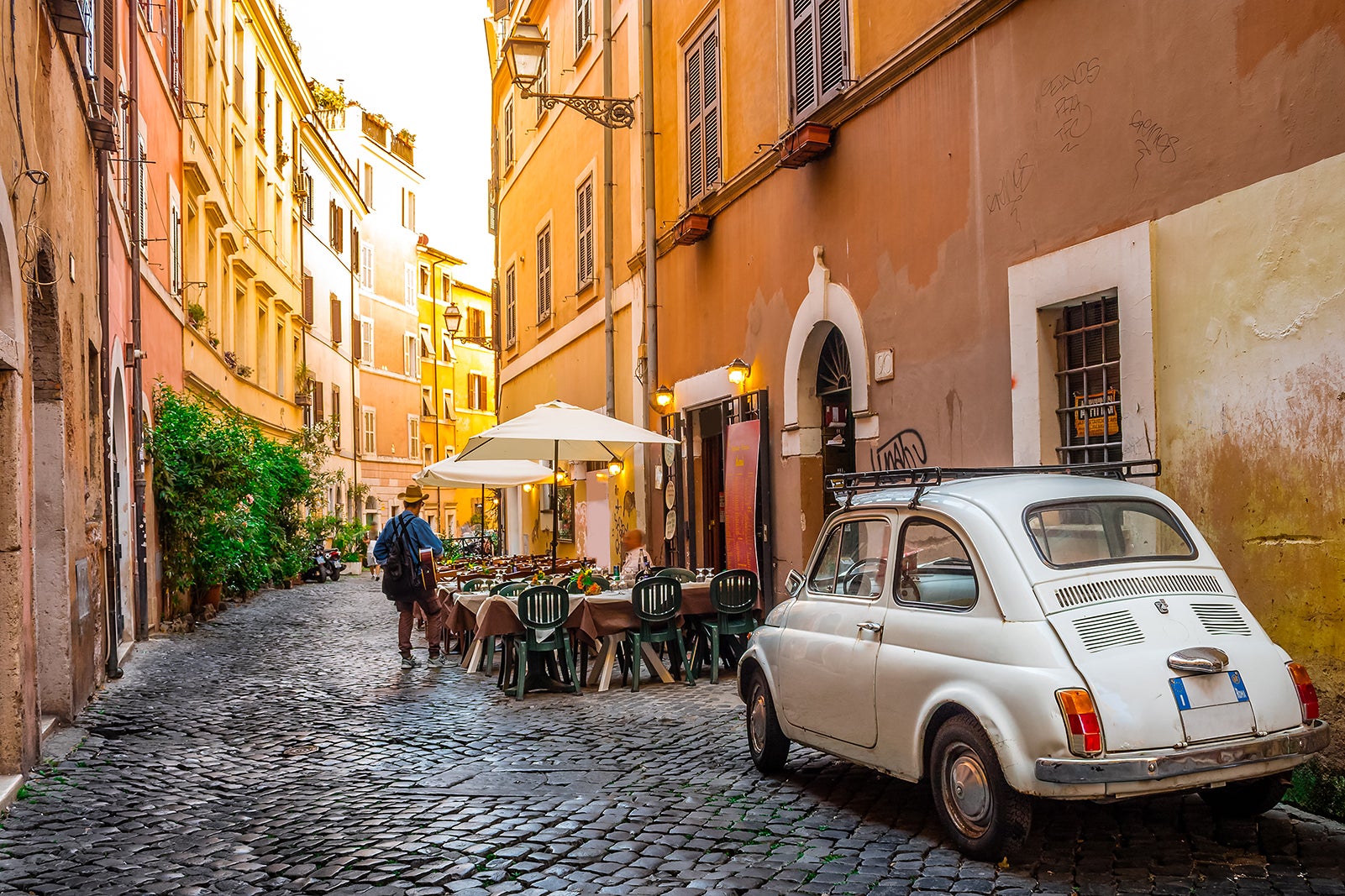
This post compares the three head-to-head on 2026 prices, closing-cost stacks, mortgage availability for non-residents, and annual carrying costs. I cross-checked against Immobiliare.it, Idealista Italy, and Casa.it, pulled registration tax rules from Agenzia delle Entrate, and sourced mortgage context from Italian bank product disclosures. For the deeper picture on Italy generally, pair this with our cost of living in Italy post and our moving to Italy guide.
The Three Cities, Briefly
Before any price comparison, a quick orientation on what makes each city distinct for an American buyer.
Rome is the biggest of the three by population (2.8 million in the Comune, 4.2 million in the metro), the slowest on bureaucracy, and the most structurally unchanged in forty years. Rome's real estate inventory is enormous and old. You can buy a 1930s apartment in a rione (historic district) for numbers that would be laughable in Milan.
Florence is a small city (380,000 in the Comune, 1 million in the metro) dominated by tourism and a tiny domestic buyer pool. The historic center is expensive on a per-sqm basis because supply is genuinely fixed by UNESCO constraints. Florence has the least American expat community of the three, which matters for community and English-language services.
Milan is the economic engine of Italy, the most international, the fastest bureaucratically, and the only Italian city where buying is an investment thesis rather than a lifestyle decision. Prices in central Milan rival Barcelona or Lisbon; outer-ring Milan still offers value.

r/ItalyExpat and r/Italia have honest threads on which city Americans actually end up in, and why.
Rome: What EUR 400,000 Buys
Rome's inventory is vast and neighborhood-specific. A EUR 400,000 budget (roughly USD $432,000 at 1.08) buys a surprising amount in 2026.
- Monti / Trastevere / Testaccio (central historic): 60-80 sqm 2-bedroom, often in a pre-war building, usually renovated. Prime Monti/Trastevere units can push toward EUR 500,000 for 75-90 sqm.
- Prati (near Vatican, elegant residential): 75-100 sqm 2-bedroom, renovated, in classical 1900-1940 buildings.
- San Giovanni / Esquilino / Pigneto: 90-120 sqm 2/3-bedroom apartments. Pigneto is the bohemian/hip neighborhood and priced accordingly; San Giovanni and Esquilino are working-class-to-middle-class and cheaper.
- Flaminio / Ponte Milvio / Vigna Clara (wealthy residential, north): 80-100 sqm 2-bedroom in a doorman building.
- EUR (Esposizione Universale Roma, planned 1930s-1960s district): 100-130 sqm 3-bedroom apartments with parking. One of the best square-meter deals in central Rome.
For EUR 400,000 in Rome specifically, the sweet spot is a renovated 85-100 sqm 2-bedroom in Prati, San Giovanni, or Ostiense. That would cost EUR 650,000+ in Milan or EUR 800,000+ in central Florence.
Idealista's Rome quarterly report and Immobiliare.it Rome market data publish per-neighborhood numbers. Rome's city-wide median is roughly EUR 3,200 per sqm in 2026, with central neighborhoods at EUR 4,500-$6,500.
Florence: What EUR 400,000 Buys (Much Less)
Florence is where your money buys the least.
Central Florence (within the walls, Santa Maria Novella, San Marco, Santa Croce, Oltrarno): EUR 400,000 buys a 45-65 sqm 1-bedroom or small 2-bedroom, often without elevator, often in need of some work. The historic center averages EUR 5,500-$8,500 per square meter, and the genuinely premium blocks near the Ponte Vecchio push EUR 10,000+.
Outer city (Campo di Marte, Rifredi, Isolotto, Gavinana, Novoli): EUR 400,000 buys a 75-100 sqm 2/3-bedroom apartment in a 1960s-1990s building, usually with parking. These are the quieter Florence residential areas where middle-class Florentines actually live.
Hills and outer metro (Fiesole, Bagno a Ripoli, Scandicci): EUR 400,000 buys a modest detached house or a large apartment in a villa conversion. Car-dependent but genuinely scenic.
Idealista Firenze publishes per-neighborhood data.
The Florence pricing problem is structural: the city is small, the historic center has a fixed footprint, UNESCO protections prevent density increases, and short-term rental demand has competed with permanent residents for two decades. Florence has the highest price-to-local-income ratio of the three cities. Threads on r/Florence document the ongoing local frustration with housing costs driven by foreign and Airbnb demand.
If your goal is maximum value per euro, Florence is the worst of the three choices. If your goal is the Renaissance aesthetic that only Florence can deliver, you pay the premium.

Milan: What EUR 400,000 Buys
Milan sits between Rome and Florence in per-sqm pricing but has by far the highest floor — you cannot buy anywhere central for under EUR 450,000 for a serious apartment.

- Centro / Brera / Quadrilatero / Navigli: EUR 400,000 is not enough for anything serious. A tiny 40-50 sqm studio or 1-bedroom is the realistic target in these central zones, where per-sqm pricing averages EUR 8,000-$12,000.
- Porta Romana / Isola / Porta Venezia (fashionable mid-ring): EUR 400,000 buys a 55-70 sqm 1/2-bedroom apartment.
- Citta Studi / Lambrate / Bicocca (university and residential ring): EUR 400,000 buys a 75-90 sqm 2-bedroom.
- Outer Milan (Affori, Bonola, Gratosoglio, Corvetto): EUR 400,000 buys a 85-110 sqm 3-bedroom with parking, 25-40 minutes from Duomo by metro.
- Milan metro suburbs (Sesto San Giovanni, Cinisello Balsamo, Monza): EUR 400,000 buys a proper 90-120 sqm 3-bedroom, sometimes with terrace, in modern buildings.
For EUR 400,000 in Milan specifically, the sweet spot is a 2-bedroom apartment in Citta Studi or Lambrate, or a larger 3-bedroom in Sesto San Giovanni just outside the city boundary.
Immobiliare.it's Milan report is the best current reference. Milan's city-wide median is roughly EUR 5,200 per sqm, with central zones at EUR 8,000-$11,000.
The Italian Closing Cost Stack
Italy's closing cost stack is progressive and complicated. It depends heavily on whether you buy as a primary residence (prima casa) or secondary, and whether you buy from a private seller or a business/developer.
Registration tax (imposta di registro) for private-seller purchases:
- Prima casa (primary residence by a tax resident): 2 percent of the cadastral value (valore catastale, usually well below market value)
- Second home / non-primary residence: 9 percent of the cadastral value
This is the crucial detail: the tax is based on cadastral value, not purchase price. For a property with a market price of EUR 400,000, the cadastral value might be EUR 150,000-$220,000, meaning a 9 percent tax on cadastral value works out to roughly EUR 13,500-$19,800 (approximately 3.4-5 percent of actual purchase price).
If you qualify for prima casa (meaning you are an Italian tax resident and it is your primary residence), the same property would pay 2 percent on cadastral value, or roughly EUR 3,000-$4,400. The prima casa benefit is enormous and is the biggest reason to become an Italian tax resident before buying.
For VAT-liable transactions (buying a new-build from a developer): instead of registration tax, you pay 10 percent IVA (or 4 percent for prima casa) on the purchase price. For a EUR 400,000 new-build as a non-resident, that is EUR 40,000.
Cadastral tax (imposta ipotecaria) and mortgage tax (imposta catastale): Fixed fees of EUR 50 each under prima casa, or 2 percent + 1 percent on cadastral value for secondary purchases. Small numbers.
Notary fees (notaio): EUR 2,000-$4,500 on a EUR 400,000 purchase, regulated by the notarial schedule.
Real estate agent commission: Usually 3 percent plus IVA from the buyer side, paid by both buyer and seller. On a EUR 400,000 purchase that is approximately EUR 14,640 from the buyer. This is one of the highest buyer-side commissions in Europe. Agenzia delle Entrate's buyer's guide has the full current breakdown.
Lawyer fees: Optional but strongly recommended for non-residents. EUR 1,500-$3,500 flat.
Codice fiscale (Italian tax code): Free, obtainable at an Italian consulate or via a power of attorney in Italy.
Wise for the currency transfer: USD $1,500-$2,000 on a USD $430,000 equivalent transfer.
Total closing costs on a EUR 400,000 Rome/Milan/Florence purchase (as a non-resident, no prima casa benefit): approximately EUR 35,000 to EUR 45,000, or 8.8 to 11.3 percent of purchase price.
If you qualify for prima casa: approximately EUR 23,000 to EUR 30,000 (5.8 to 7.5 percent). That is a EUR 12,000+ difference, which is worth the residency setup effort.
Three-Way Head to Head: Same Budget, Different Cities
Let's lock in a comparison. EUR 400,000 (USD $432,000) for a primary residence in each city, non-resident American buyer, no prima casa benefit, standard closing cost stack.
Rome at EUR 400,000:
- Target: 85-100 sqm, 2-bedroom, renovated, Prati or San Giovanni
- Feel: Central historic neighborhood, metro access, walk to major sites
- Monthly utilities + condo: EUR 350-$550
- Trade-off: Slowest bureaucracy, least economic dynamism
Florence at EUR 400,000:
- Target: 55-75 sqm, 1 or small 2-bedroom, Oltrarno or Campo di Marte
- Feel: Smaller space, possibly outside historic center or partial renovation project
- Monthly utilities + condo: EUR 300-$500
- Trade-off: Smallest space for the money, smallest expat community, tourist-dominated daily life
Milan at EUR 400,000:
- Target: 75-90 sqm 2-bedroom in Citta Studi or Lambrate; 85-100 sqm 3-bed in outer ring
- Feel: Modern infrastructure, metro-connected, outside historic center
- Monthly utilities + condo: EUR 400-$700
- Trade-off: Highest carrying costs, you're further from the Duomo and picture-perfect Italy, but the city has real jobs and an international community
The square-meter economics:
- Rome: ~EUR 4,100 per sqm average for a renovated 2-bed in the target neighborhoods
- Florence: ~EUR 6,500 per sqm for central, ~EUR 4,200 for outer
- Milan: ~EUR 5,100 per sqm for Citta Studi/Lambrate, ~EUR 7,500 for central
Rome wins decisively on square meters per euro. Florence loses decisively. Milan sits between them. For a broader context on which Italian cities make sense for which kind of buyer, see our moving to Italy guide.
Mortgages for Americans in Italy
Italian banks lend to non-residents under specific terms, and the lending market is more foreign-friendly than most American buyers assume.
Typical 2026 non-resident mortgage terms:
- Loan-to-value: 50-60 percent for non-residents
- Fixed rate 20-year: 3.5 to 4.5 percent
- Variable Euribor + margin: 1.25-2.0 percent over 3-month Euribor
- Debt-to-income cap: 35 percent
Banks that lend to Americans:
- UniCredit: Broad non-resident product line, strongest in Milan and Rome
- Intesa Sanpaolo: Largest Italian bank, broad mortgage offering
- BNL (BNP Paribas Italy): French-owned, more flexible on non-resident documentation
- Banca Sella: Smaller but active in expat segment
The process is slow: 10-16 weeks from application to approval, and documentation requirements are heavier than in Portugal or Spain (2 years of US tax returns, apostilled, translated; employment letters; US bank statements; US credit report; Italian codice fiscale).
Most Americans who buy in Italy end up paying cash or financing via US collateral (HELOC, margin loan) because the cross-border underwriting friction is substantial. For a Milan investment purchase, the Italian mortgage math is occasionally competitive; for a Rome or Florence lifestyle purchase, cash is usually cleaner. Discussions on r/ItalyExpat confirm this.
Annual Carrying Costs Across the Three
IMU (Imposta Municipale Unica, annual property tax): Italy's municipal property tax applies to secondary residences and non-residents at roughly 0.76 to 1.06 percent of the cadastral-linked value (not market value), depending on the comune. Prima casa is exempt from IMU. For a non-resident American owner of a EUR 400,000 apartment, IMU typically runs EUR 900-$1,800 per year. The Agenzia delle Entrate IMU guide explains the calculation.
TARI (waste/trash tax): EUR 150-$450 per year depending on unit size and comune.
Condominio fees: Vary widely by building:
- Rome central building with elevator and portiere: EUR 1,500-$4,000 per year
- Florence historic center without portiere: EUR 1,000-$2,500 per year
- Milan doorman building: EUR 2,000-$5,500 per year
Home insurance: EUR 250-$500 per year.
Utilities: Electricity, gas, water, internet for a 2-bedroom apartment run EUR 1,800-$3,500 per year. Italian apartments have variable insulation quality, and winter heating in Milan or Florence is a bigger line item than in Rome.
Non-resident rental income tax: Italy has a cedolare secca flat-rate option of 21 percent on residential rental income for registered long-term leases, or 26 percent for short-term rentals (and higher surtaxes applied in tourist cities). The PwC Italy tax summary and Agenzia delle Entrate rental income page have the current rules.
Total annual carry for a EUR 400,000 apartment as a non-resident owner:
- Rome: approximately EUR 4,500-$8,000 per year
- Florence: approximately EUR 4,000-$7,000 per year
- Milan: approximately EUR 5,500-$10,500 per year
Rome and Florence carry is substantially cheaper than Milan. The gap is almost entirely condominio fees and Milan's higher IMU rates.
Which Italian City Should You Actually Buy In?
Buy in Rome if:
- You want maximum square meters and historic character for your budget
- You can tolerate slow bureaucracy and inefficiency
- You are a retiree or remote worker who does not need professional networking
- Your Italian is decent or you accept a year of language learning
- You have already spent 2+ months in Rome across different seasons
Buy in Florence if:
- The Renaissance aesthetic is non-negotiable and worth paying a premium for
- You are comfortable with a smaller apartment in a smaller city
- Tourism does not bother you (you will live inside it)
- You are committed to 10+ years (to amortize Florence's higher per-sqm costs)
Buy in Milan if:
- You have professional reasons to be there (fashion, design, finance, tech)
- You want rental yield from a proper urban market (3-5 percent gross is realistic)
- You value international connectivity and modern infrastructure over historic character
- You accept paying more per sqm for less-central location
Skip Italy entirely and consider elsewhere if:
- You were hoping for Portugal-style tax benefits (Italy's flat-tax regime for new residents is narrower)
- Your budget is USD $300,000 or less (Italy's bureaucratic friction is not worth it at that scale)
- You need English for daily life (Italian English proficiency is notoriously low)
The sequencing that works: apply for codice fiscale early, scout all three cities on a single trip, rent a mid-term furnished place in your top pick for 3-6 months, engage an Italian lawyer before making any offer, and use Wise for the currency transfer. For the broader picture, our moving to Italy guide and cost of living in Italy are the natural next reads.
Ready to explore?
Browse Destinations