
How Much House Does $500K Buy in Dublin Right Now?

Dublin is the English-speaking EU capital every American Googles right after Lisbon, and it is also the one where the sticker prices inflict the most pain. A decade of foreign direct investment, an acute housing shortage that every Irish political party has been promising to fix since 2016, and the Central Bank's mortgage rules combine to make Dublin one of the most expensive real estate markets in the EU relative to local median income. For an American with USD $500,000, the question is not whether you can afford to buy; it is what you actually get for the money, and whether buying makes sense given Dublin's structural tightness.
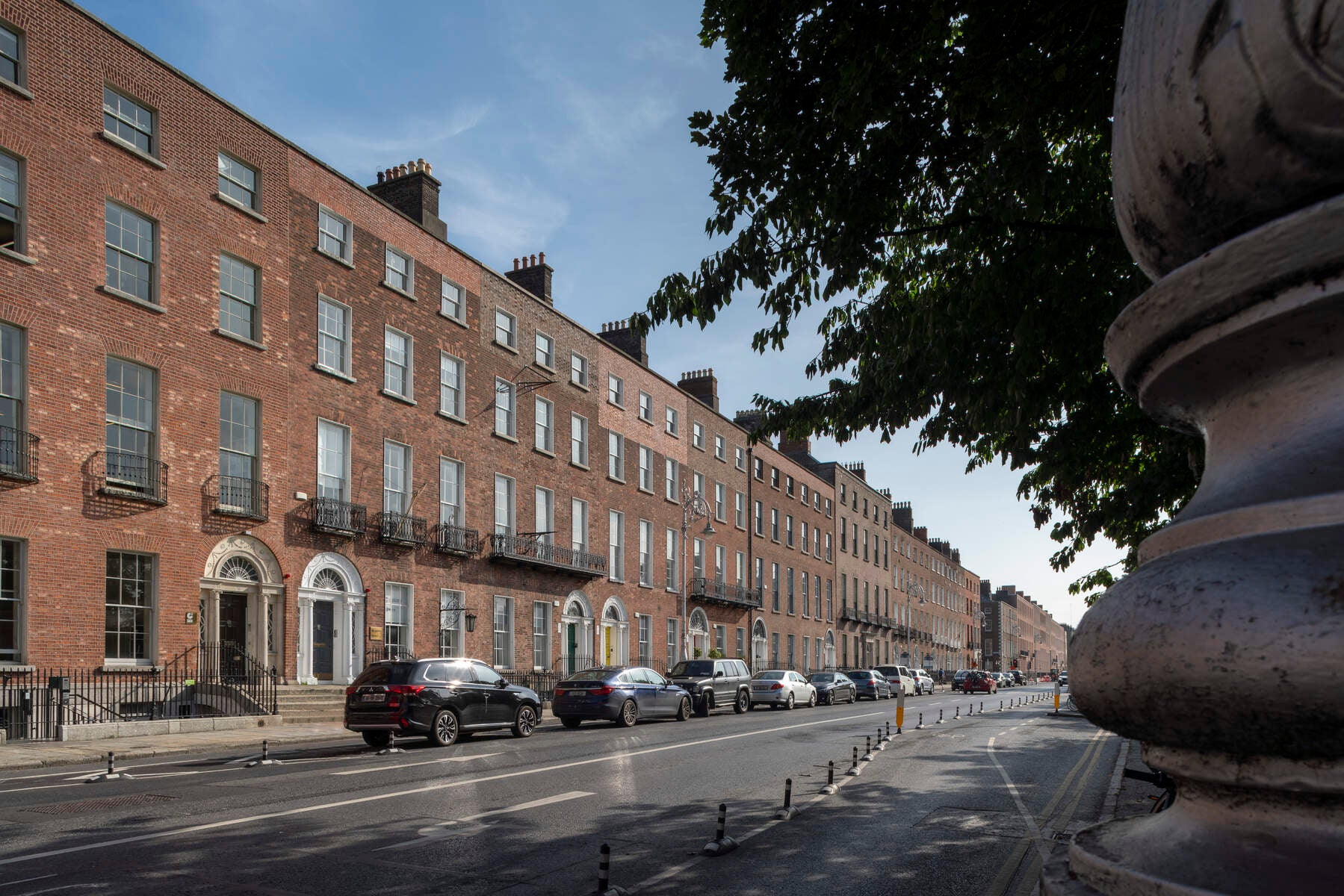
This post walks through what EUR 460,000 (roughly USD $500,000 at early-2026 rates) actually buys in Dublin neighborhoods Americans would realistically consider, what the stamp duty and solicitor stack looks like, whether Irish banks will even lend to a non-resident American, and how the Central Statistics Office numbers compare to the reality on the ground. I cross-checked against Daft.ie and MyHome.ie, pulled stamp duty rules from Revenue.ie, and sourced mortgage criteria from current Central Bank macroprudential rules. For the broader Irish picture, pair this with our cost of living in Ireland post and our moving to Ireland guide.
The Dublin Housing Market, Honestly
Before any neighborhood math, an important reality check: Dublin is in the middle of a multi-year housing crisis that is the single dominant political issue in Ireland. The CSO's Residential Property Price Index shows Dublin prices up roughly 90 percent since 2013 and still rising in 2025-2026. Supply is structurally short: the Housing Agency's pipeline reports consistently show completions running well below household formation.
What this means for an American buyer:
- Competitive bidding is the norm, not the exception. Listing prices in Dublin are often opening prices. Expect to pay 5-15 percent above listing on contested properties.
- Supply is thin. Dublin has roughly 1,500-3,000 active for-sale listings at any given time (compared to 15,000+ in a comparable US metro). You will not find dozens of options in your target neighborhood. You will find two or three.
- Closing timelines are long. Irish sales take 4-8 months from accepted offer to deed, versus 30-45 days in the US.
- Gazumping (seller accepting a higher offer after yours) is legal until contracts are exchanged. This happens.
r/ireland housing threads and thejournal.ie property coverage are essential reading before you commit emotionally to buying.
Exchange rate: EUR 1 = approximately USD 1.08 in early 2026, making a USD $500,000 budget roughly EUR 463,000.
What EUR 463,000 Buys in Dublin
Dublin is divided by postcode (D1-D24). The key dividing line for Americans is not north-south (the old cliche) but close-to-center versus commuter-belt.

Inner city (D1, D2, D7, D8): EUR 463,000 buys a 1-bedroom apartment in a modern building in Grand Canal Dock or Smithfield, or a 2-bedroom apartment in less-fashionable parts of D1 or D8. Forget a house; Dublin city-center houses in the EUR 460,000 range do not exist in any volume.
Inner south (D4, D6, D6W - Ranelagh, Rathmines, Rathgar): The desirable south-side corridor. EUR 463,000 buys a small 2-bedroom apartment or the lowest-priced 2-bedroom terrace cottage that needs serious work. A proper 3-bed Ranelagh terrace starts at EUR 700,000-$900,000.
Inner north (D3, D5, D9 - Clontarf, Drumcondra): Better value than the south side. EUR 463,000 buys a modest 2-bedroom terraced house in Clontarf outskirts or a 3-bedroom terrace in further-out Drumcondra. Not renovated; expect to budget another EUR 30,000-$60,000 for work.
D15, D24, D22 (Blanchardstown, Tallaght, Clondalkin): The commuter suburbs. EUR 463,000 buys a 3-bedroom semi-detached in decent condition within 30-40 minutes of the city by bus or LUAS. This is the sweet spot for an American family prioritizing a house over a central location.
Outer suburbs (Maynooth, Lucan, Swords, Malahide): Outside the M50 ring road, still commuter-accessible. EUR 463,000 buys a 3-bed semi-detached in better condition than the D15/D22 equivalents, often in a newer estate.
For current per-postcode data, Daft.ie's quarterly market report is the authoritative reference, and MyHome.ie's market reports provide a cross-check. The r/ireland Dublin-specific threads regularly discuss which neighborhoods are under- or over-valued in the current cycle.
Bottom line: for USD $500,000, most Americans end up with either a central 1-bed / small 2-bed apartment or a suburban 3-bed semi-detached. The house-and-garden in a fashionable Dublin neighborhood is a EUR 700,000+ conversation.
Stamp Duty and Closing Costs
Ireland's closing cost stack is relatively low by European standards, dominated by stamp duty and solicitor fees.
Stamp duty (Irish Revenue): As of 2026:
- 1 percent on the first EUR 1,000,000 of a residential property purchase
- 2 percent on any portion between EUR 1,000,000 and EUR 1,500,000
- 10 percent on any portion above EUR 1,500,000 (introduced in 2024 to target bulk investor purchases; a single property above this threshold would also trigger it on the marginal portion above EUR 1M-$1.5M depending on structure)
For a EUR 463,000 purchase: stamp duty is EUR 4,630 (1 percent). For a EUR 750,000 purchase: EUR 7,500. The Revenue.ie stamp duty calculator is the authoritative source.
Note: Irish stamp duty is substantially lower than Spain's ITP or Portugal's IMT. This is one area where Dublin closing math is actually favorable.
Solicitor fees: Mandatory in Ireland. Expect EUR 1,800 to EUR 3,500 flat for a standard Dublin apartment or house purchase, plus VAT at 23 percent. Firms commonly used by American buyers include Mason Hayes & Curran, BCM Hanby Wallace, and smaller boutique practices.
Law Society levy and registration fees: EUR 500-$800 in miscellaneous ministerial fees.
Searches: EUR 150-$300 for the standard property searches your solicitor orders.
Survey / valuation: EUR 350-$700. A structural survey is strongly recommended for older Dublin terraces (damp, subsidence, gas pipe issues are common).
Mortgage-related fees (if financing): Valuation EUR 150-$250, lender arrangement fee typically waived by Irish banks for standard mortgages.
BER (Building Energy Rating): Required at purchase by law. Seller pays. Not a buyer cost but mentioned for completeness.
Total closing costs on a EUR 463,000 Dublin purchase: approximately EUR 8,500 to EUR 12,500, or 1.8 to 2.7 percent of purchase price. Dramatically cheaper than Spain or Portugal on percentage terms. Ireland's closing costs are low primarily because there is no progressive transfer tax scaling; stamp duty caps at 1 percent for most residential purchases.

Can Americans Get an Irish Mortgage?
This is where Dublin gets frustrating. Yes, in principle, non-resident Americans can get an Irish mortgage. In practice, the bar is high enough that most Americans pay cash or use a cross-border alternative.
Irish Central Bank macroprudential rules (as of 2026):
- Loan-to-income cap: 4.0x gross income for first-time buyers, 3.5x for second/subsequent buyers
- Loan-to-value cap: 90 percent for first-time buyers, 80 percent for non-first-time buyers, and typically 70 percent for non-residents
- Affordability stress test: Lenders must demonstrate the borrower can afford rates 2 percent above the offered rate
The Central Bank of Ireland macroprudential rules page explains these in detail.
Non-resident lending in practice:
- AIB and Bank of Ireland will occasionally lend to non-residents for a Dublin investment property, but typically require a 30-40 percent deposit, proof of substantial income, and an Irish PPSN (personal public service number).
- Permanent TSB and Finance Ireland have been more flexible historically but tighter since 2023.
- Fixed-rate 4-year mortgages in early 2026 are running at 3.5 to 4.5 percent for residents and 4.5 to 5.5 percent for non-residents.
The PPSN requirement: You cannot get an Irish mortgage (or open most Irish bank accounts, or pay Irish taxes, or do most things in Ireland) without a PPSN. You apply at welfare.ie. Non-residents apply via a Client Identity Service interview or by post, and processing runs 4-10 weeks.
Most Americans pay cash or finance via a US cross-border option (HELOC on a US property, margin loan on a US brokerage, or asset-backed lending from a US private bank). The economics are often better: a 6-7 percent HELOC in the US beats a 5 percent Irish mortgage plus the currency mismatch. Discussions on r/irishpersonalfinance and r/IWantOut confirm this.
The Worked Example: EUR 463,000 Drumcondra Terrace
Concrete numbers: a 3-bedroom, 90 sqm terraced house in Drumcondra (D9), purchased for EUR 463,000 (USD $500,000), cash, as an American non-resident.
Pre-offer:
- Scout trip: USD $2,500-$4,000
- PPSN application and processing: EUR 0 (free) but 4-10 weeks
- Solicitor consultation retainer: EUR 500
Offer to contract exchange:
- Deposit (typically 10 percent at contract exchange): EUR 46,300 (capital)
- Structural survey: EUR 550
- Valuation (if required): EUR 200
Closing:
- Stamp duty (1 percent): EUR 4,630
- Solicitor fees plus VAT: EUR 3,200
- Registration and searches: EUR 700
- Law Society levies: EUR 150
- Wire/FX via Wise: EUR 2,000 (on a USD $500,000 transfer, Wise fees are approximately 0.4 percent)
Post-closing first 90 days:
- Local Property Tax (LPT) prorated: EUR 100-$300
- Home insurance first year: EUR 400-$700
- Utilities setup deposits: EUR 300
- Basic furnishings if unfurnished: EUR 4,000-$12,000
Grand total closing-all-in (excluding furnishings):
Approximately EUR 12,000 to EUR 13,500, or USD $13,000 to $14,600, which is 2.6 to 2.9 percent of purchase price. Irish closings are genuinely cheap by European standards; you get most of your budget into the property rather than into fees.
Call it USD $515,000 all in for a EUR 463,000 Dublin terrace.
Annual Carrying Costs
Dublin's annual carrying costs are moderate by European standards but include some items Americans overlook.
Local Property Tax (LPT): Ireland's annual property tax. Banded by value: a EUR 463,000 home falls into a band paying roughly EUR 400-$550 per year. The Revenue LPT calculator gives exact figures. LPT is substantially lower than comparable US property taxes.
Home insurance: EUR 400-$800 per year for a Dublin terrace. Mandatory with a mortgage, optional otherwise.
Utilities: Electricity, gas, water charges (Irish water is funded through general taxation and does not bill residential users under current rules), internet. Budget EUR 200-$350 per month for a 3-bed house. Irish houses are notoriously badly insulated (older terraces have poor BER ratings), and winter heating is the dominant line item. The SEAI grants for retrofit can cover significant shares of insulation upgrades.
Management fees (for apartments only): EUR 1,500-$3,500 per year in a typical Dublin apartment block.
Bin charges: Private, typically EUR 250-$450 per year.
Property management (if renting out): 8-12 percent of gross rent.
Rental income tax: Non-resident landlords pay a withholding tax regime under the Irish tax code: tenants or letting agents deduct 20 percent of gross rent and remit to Revenue on your behalf, and you file an Irish tax return as a non-resident. Revenue.ie non-resident landlord guide explains the rules.
Total annual carry for a EUR 463,000 Dublin terrace: approximately EUR 2,500 to EUR 4,500 per year, or USD $2,700 to $4,900. That is roughly half what a USD $500,000 US home would cost to carry.

The Traps Americans Walk Into
Dublin has specific failure modes for American buyers.
1. Gazumping. Until contracts are exchanged, the seller can accept a higher offer from another buyer. If you have paid for a survey and legal fees and then lose the house to a higher bidder, you are out the costs. Budget for it and do not get emotionally attached before contract exchange.
2. Structural issues in Georgian/Victorian terraces. Dublin's housing stock is old. Damp, rising wet, subsidence, bad gas installations, and lead plumbing are all common. A structural survey (not just a valuation) is essential. Engineers Ireland maintains a list of qualified surveyors.
3. Management company disputes in apartments. Dublin apartment management companies are notorious for poor governance, reserve-fund shortfalls, and special assessments. Always request the last 3 years of OMC accounts and board minutes before buying an apartment.
4. BER below C1. New buyers often overlook energy ratings. A G or F rated property means brutal winter heating bills and expensive compulsory retrofitting if regulations tighten further. Prefer B1-C1 rated properties or budget the retrofit.
5. The tax residency trap. Spending more than 183 days per year in Ireland (or 280 days across 2 years) makes you an Irish tax resident on worldwide income. This interacts complexly with the US-Ireland tax treaty. See Revenue.ie residency rules and consult a cross-border CPA.
6. The EU immigration trap. US citizens can visit Ireland visa-free for 90 days, but to live there you need a visa (Stamp 0 for passive income, Stamp 4 for work, etc.). Owning property does not confer residency. INIS / Department of Justice immigration page has the current visa framework.
For the full immigration and lifestyle picture, our moving to Ireland guide covers visas, healthcare, schools, and the honest cultural-adjustment reality. For a wider EU comparison, read our Galway vs Cork post to see what the same money does outside the Dublin premium.
Should You Buy in Dublin?
Dublin is the hardest major European capital to buy into on a USD $500,000 budget, and the one where the rent-versus-buy math most often favors renting.
Buy in Dublin if:
- You are on a Stamp 4 or similar long-term visa track (work permit, EU Treaty Rights, etc.)
- You are committing to 5+ years in the city
- You can pay cash or have a Stamp 4 + Irish bank account + PPSN
- You are targeting a commuter-belt house (D15, D22, Swords, Malahide) rather than a central apartment, where your budget actually goes further
Rent in Dublin first if:
- Your employer has not yet firmly committed to Dublin
- You are on a short-term work assignment (under 3 years)
- You are a non-resident still exploring the decision
- You were counting on short-term rental income (Irish STR rules are tightening and Dublin has a particularly strict regime under the Short Term Tourist Letting Register)
The sequencing: apply for PPSN early, scout Dublin for 2+ weeks across seasons, engage an Irish solicitor before you offer, get a proper structural survey, use Wise for the currency transfer, and do not offer without first shopping at least 5-8 properties. Dublin rewards patience; it punishes impulse buyers.
For live Dublin inventory, see our Dublin city page. For the broader Irish comparison, our Galway vs Cork post is the natural cheaper-alternative read. For the full moving-to-Ireland picture, moving to Ireland guide is the next step.
Ready to explore?
Browse Destinations