
Galway vs Cork: Where $400K Goes Further in Ireland

Dublin consumes most of the oxygen in any Irish property conversation, but Americans who actually move to Ireland and want a house rather than a tiny apartment increasingly end up looking at Cork or Galway. Both are proper cities (not large villages), both have universities, hospitals, international airports, and real job markets, and both offer median prices that are a meaningful discount to Dublin's chaos. The question for a USD $400K-equivalent (roughly EUR 370,000 in 2026) American buyer is specific: which city actually offers better value, and which fits your life?
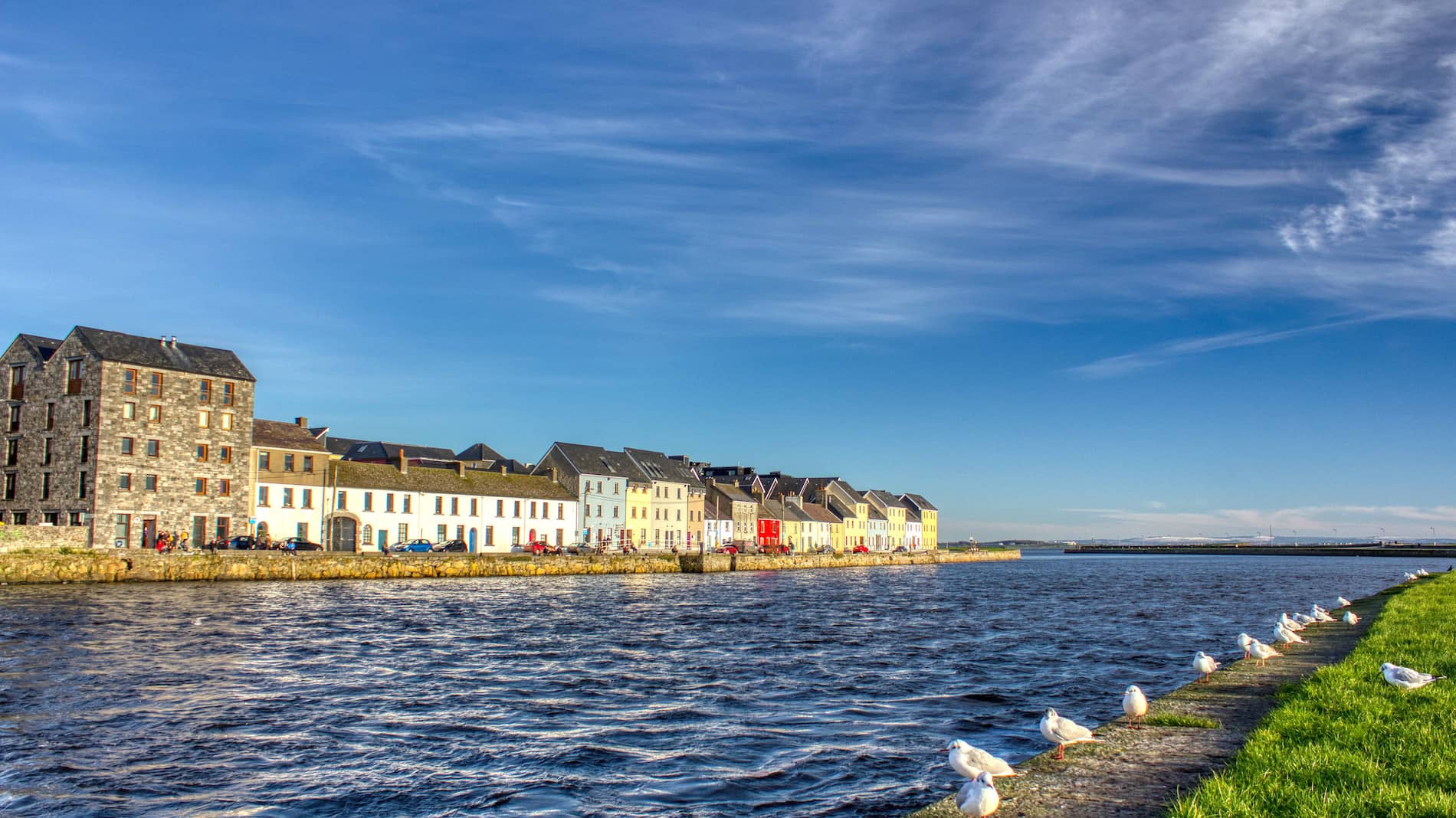
This post runs the direct comparison on 2026 prices, neighborhoods, closing costs, and the practical setup for an American buyer. Prices cross-checked against Daft.ie, MyHome.ie, and Ireland's CSO residential property price index. For the broader Irish picture, pair this with our $500K Dublin house post, cost of living in Ireland, and moving to Ireland guide.
The Two Cities, Briefly
Cork (~220,000 in the city, 360,000+ in the metro): Ireland's second city, on the south coast, with a genuine Georgian and Victorian urban core, a large pharma and tech employment base (Apple, Pfizer, Johnson & Johnson, Stripe), and proximity to the dramatic West Cork coastline. Cork has the country's second-largest airport (direct flights to the UK, continental Europe, and seasonal US routes from 2024-2025 onward), and is a 2.5-hour Irish Rail trip from Dublin.
Galway (~85,000 in the city, 260,000+ in the county): Ireland's cultural capital, on the west coast, with a compact medieval core, NUI Galway (one of Ireland's top universities), a booming med-tech industry base (Medtronic, Boston Scientific), and a legitimate claim to being the most walkable Irish city. Galway is closer to Connemara, the Aran Islands, and the Burren, making it the default pick for anyone drawn to the west of Ireland landscape. Galway airport is limited; most travel runs through Shannon (1 hour) or Dublin (2.5 hours by bus).
The Irish Central Statistics Office's residential property price index tracks county-level price movements, and shows both Cork and Galway have risen approximately 8-12 percent in the 2024-2025 period after a brief 2023 cooling. Threads on r/ireland and r/irishpersonalfinance track real buyer experiences.
Prices: Galway vs Cork in 2026

Cork neighborhoods (EUR for 3-bed houses, 2026):
- Douglas / Rochestown (suburban south, family-oriented): EUR 420,000-$650,000
- Bishopstown (west, near UCC and CUH hospital): EUR 380,000-$560,000
- Ballincollig (commuter town west of city): EUR 350,000-$500,000
- Mahon / Blackrock (east, near Mahon Point): EUR 370,000-$580,000
- Glanmire (northeast commuter): EUR 340,000-$490,000
- City center apartments (Grand Parade, MacCurtain): EUR 250,000-$420,000 for 2-beds
For EUR 370,000 in Cork: a 3-bedroom semi-detached in Ballincollig, Bishopstown outskirts, or Glanmire, or a larger 3-bed end-of-terrace in Douglas if you catch a motivated seller. Central apartments are well within budget.
Galway neighborhoods (EUR for 3-bed houses, 2026):
- Salthill (seaside west, prestige): EUR 480,000-$750,000
- Knocknacarra (newer western suburbs, family-oriented): EUR 420,000-$620,000
- Renmore (east, established): EUR 400,000-$580,000
- Newcastle / University area: EUR 440,000-$650,000
- Oranmore (commuter town southeast): EUR 380,000-$540,000
- City center apartments (Eyre Square area): EUR 280,000-$450,000 for 2-beds
For EUR 370,000 in Galway: a 3-bedroom semi-detached in Oranmore or outer Knocknacarra, or a 2-bedroom central apartment if you want walkable urban living. You are squeezed out of Salthill, Newcastle, and most of Renmore at this budget.
Bottom line on pricing: Cork is approximately 10-15 percent cheaper than Galway for comparable 3-bedroom family housing in 2026. The gap has actually widened in the last two years because Galway's housing supply is genuinely constrained by geography (the Atlantic on one side, Lough Corrib on the other) and heritage planning restrictions in the center. Cork has more sprawl room for new builds, which has kept prices flatter.
Daft.ie's Q4 2025 price report and MyHome.ie's quarterly report publish the current per-city figures. Irish Times property section covers the market week by week.
Closing Costs and Stamp Duty
Irish closing costs are straightforward and modest compared to most European markets.
Stamp duty: 1 percent on residential property up to EUR 1 million, 2 percent on the excess. On a EUR 370,000 purchase, stamp duty is EUR 3,700. The Irish Revenue stamp duty guide has the current rates.
Solicitor fees: EUR 1,500-$3,500 flat, plus outlays (Land Registry fees, searches). Budget EUR 2,500-$4,500 total including outlays. Irish conveyancing is solicitor-led and essentially mandatory.
Surveyor / structural survey: EUR 400-$800. Strongly recommended, especially for older Victorian and Edwardian properties where Cork and Galway have a lot of stock.
Bank valuation (if you are financing): EUR 150-$300.
Land Registry fees: EUR 400-$800 depending on price band.
Real estate agent commission: Typically 1.5-2.5 percent plus VAT, paid by the seller, baked into the asking price. Buyers do not directly pay the agent.
Total buyer closing costs on a EUR 370,000 Irish house: approximately EUR 7,000-$10,500, or 1.9 to 2.8 percent of purchase price. This is one of the cheapest closing cost stacks in Western Europe. Spain, France, Italy, and Portugal are all 2-4x more expensive in percentage terms.
Gazumping: Unlike most markets, Ireland allows sellers to accept a higher offer even after an initial offer has been verbally accepted, right up until contracts are formally exchanged. This creates a real risk that buyers can spend money on surveys and solicitor work and still lose the house. Threads on r/irishpersonalfinance gazumping document the experience, which remains common in hot markets like Cork and Galway in 2026.
Citizens Information Ireland's buying a home page has the official government walkthrough. Law Society Ireland firms McDowell Purcell and Orpen Franks publish buyer FAQs.

The Practical Setup for Americans
Ireland is among the easier European markets for American buyers operationally, largely because everything runs in English and there are no foreign ownership restrictions on residential real estate.
PPS Number (Personal Public Service Number): Required for any property transaction, opening an Irish bank account, or paying property taxes. You apply through the Department of Social Protection. Non-residents can apply for a non-resident PPS number if you are buying property but not yet moving.
Irish bank account: Required for completion and ongoing utility payments. Bank of Ireland, AIB, and Revolut all serve non-resident Americans with varying requirements. Revolut is the easiest to open remotely but does not function as a full Irish retail bank for mortgage or direct debit purposes.
Visa for actually living in Ireland: Americans can visit Ireland for 90 days visa-free but need a Stamp 0 (retired person of independent means), critical skills employment permit, or spousal/family route to live long-term. Ireland does not have a golden visa or digital nomad visa in 2026 - the 2024-2025 programs that were discussed never launched. The most common paths remain employment (especially in Dublin/Cork tech) and the Stamp 0 passive income route (around EUR 50,000 per year of independent income for a couple).
Mortgage: Irish banks generally do not lend to non-resident Americans. If you need financing, you need to either become Irish tax resident first (6+ months on the ground), get a non-resident mortgage through a specialist lender at 1.5-2 percent above standard rates, or bring cash. r/irishpersonalfinance non-resident mortgage threads discuss the actual experience. Cash buyers have substantial leverage in Cork and Galway because Irish sellers are often keen to avoid chains and financing contingencies.
Currency transfer: Use Wise or a specialist broker. On a EUR 370,000 purchase, Wise typically saves USD $5,000-$12,000 versus a US bank wire.
Lifestyle and Climate
Both cities sit in Ireland's temperate maritime climate zone but with meaningful differences.
Cork climate:
- Average January: 7C (45F), July: 16C (61F)
- Rainfall: ~1,200mm annually, spread across the year
- Sunshine: approximately 1,400 hours
- Character: Mild, wet, rarely extreme. Winters are grey but not cold.
Galway climate:
- Average January: 6C (43F), July: 15C (59F)
- Rainfall: ~1,200-1,500mm annually (slightly wetter than Cork)
- Sunshine: approximately 1,300 hours
- Character: Similar to Cork but windier, wetter, and more Atlantic-exposed. Winter storms roll off the Atlantic regularly.
Neither city is sunny. Both require you to make peace with grey skies and routine rain. If you need sunshine for quality of life, neither Cork nor Galway will deliver it and you should be looking at Spain, Portugal, or Malta. This is the single most important filter for American buyers considering Ireland and the most common post-purchase regret documented in r/IrishExpats threads.
Culture:
- Cork: More establishment, more Georgian formality, stronger business base, Cork Jazz Festival, Cork Opera House, English Market for food. Cork has a legitimate restaurant scene (Paradiso, Greenes, Ichigo Ichie).
- Galway: More bohemian, more traditional music pubs, Galway International Arts Festival, Galway Races, Aran Islands day trips. Galway is walkable to a degree no other Irish city matches.
Transport connectivity:
- Cork to Dublin: 2.5 hours by Irish Rail (EUR 25-45 each way), direct
- Galway to Dublin: 2.5 hours by train or Citylink coach (EUR 20-30 each way), direct
- Cork Airport: approximately 30 direct European destinations including London, Amsterdam, Paris, Malaga, Frankfurt
- Nearest Galway airport: Shannon, 1 hour drive, with transatlantic direct flights to Boston, NYC, and Chicago seasonally
For the broader Irish lifestyle picture, our moving to Ireland guide and cost of living in Ireland are more comprehensive. Irish media covering both cities: Irish Examiner for Cork and Connacht Tribune for Galway.
Annual Carrying Costs
Local Property Tax (LPT): Ireland's LPT is based on self-assessed property value bands and is remarkably cheap by international standards. On a EUR 370,000 home, LPT runs approximately EUR 405-$495 per year (the band 5 rate). Revenue LPT page has the current bands.
Home insurance (building and contents): EUR 400-$900 per year.
Bin collection: EUR 250-$400 per year for pay-by-weight Cork/Galway collection.
Electricity and gas: EUR 2,000-$3,500 per year for a 3-bedroom house with moderate winter heating. Ireland has some of the highest electricity prices in Europe; budget accordingly.
Water: Free for domestic use (Ireland's water charges were abolished in 2017 after protests).
Broadband: EUR 40-$70 per month.
Health insurance (if you don't qualify for public HSE access): EUR 80-$250 per month per adult through VHI, Laya, or Irish Life Health.
Total annual carry for a EUR 370,000 Cork or Galway home: approximately EUR 4,500-$8,000 per year in pure housing costs, plus EUR 1,500-$5,000 per adult in health insurance.
This is moderate by European standards but high by Latin American or Southeast Asian comparison. Ireland's property-related running costs are modest, but its electricity and healthcare costs eat into the total.

Head-to-Head Verdict
Buy in Cork if:
- Your budget is EUR 300,000-$450,000 and you want a proper 3-bedroom family home
- You value direct European flight connectivity from a nearby airport
- You are working in tech, pharma, or med-tech with job access at Apple Cork, Pfizer, Johnson & Johnson, Stripe, or Dell
- You want a slightly more moderate climate (marginally less Atlantic exposure than Galway)
- You want a genuine restaurant scene and a larger urban economy
Buy in Galway if:
- You are specifically drawn to the west of Ireland landscape (Connemara, the Burren, the Aran Islands)
- You value walkability above almost everything else (Galway is the most walkable Irish city)
- You are in med-tech (Medtronic, Boston Scientific) or academia (NUI Galway)
- You prioritize cultural intensity over economic depth
- You are willing to pay a 10-15 percent premium for the Galway quality of life
Skip both if:
- You need sunshine (neither city will give it to you)
- Your budget is under EUR 280,000 (entry-level family housing is scarce at that level in 2026)
- You are expecting US-style new construction (Irish housing stock is old and often requires real renovation)
- You cannot tolerate Irish bureaucratic slowness (solicitor-led conveyancing is measured in months, not weeks)
The sequencing that works: visit both cities on a single scouting trip of 10-14 days, rent short-term in each to experience the daily rhythm, engage a solicitor before making any offer, apply for your PPS number early (2-8 week processing), and use Wise for the currency transfer. For live inventory, see our Cork page and Galway page. For the deeper Ireland picture, our $500K Dublin house post, cost of living in Ireland, and moving to Ireland guide are the natural next reads. Threads on r/ireland buying and r/irishpersonalfinance document current buyer experience.
Ready to explore?
Browse Destinations