
Cost of Living in Ireland vs. USA (2026) — Real Side-by-Side Numbers

Ireland occupies a strange position in the American expat imagination: culturally familiar, English-speaking, and just far enough away to feel like an adventure. But is it actually cheaper than the US? The answer is complicated.
According to Numbeo's 2026 data, consumer prices in Ireland are 4% higher than in the United States overall, and Dublin rent is 12.7% higher than US averages. Groceries, however, are 16.4% lower. It's not the dramatic savings you'd find in Mexico or Thailand — but it's not more expensive either, despite what the headlines suggest.
The real story is what you get for similar money: public healthcare (imperfect but present), 20+ days paid vacation by law, strong worker protections, EU freedom of movement for your career, and a society with violent crime rates a fraction of America's.
This guide puts real 2026 numbers side by side. Rent in Dublin vs. New York. Groceries in Cork vs. Chicago. Healthcare in Galway vs. Los Angeles. We're comparing what you'd actually spend — including Ireland's housing crisis, which is the worst in Europe.
As one r/MoveToIreland poster shared: 'We moved from Austin to Cork with a Critical Skills permit. Our rent is similar, groceries are cheaper, healthcare is basically free through the HSE, childcare is half the price, and our kids walk to school. Our combined salary dropped 15%, but we're saving the same amount — and we get 25 days paid holiday each.'
The Big Picture: Ireland vs. USA by the Numbers
Before the line items, the overview. According to Numbeo's 2026 data, consumer prices in Ireland are 3.6% higher than in the United States. Rent is about 12.7% higher nationally. Groceries are 16.4% lower. Restaurant prices are 6% higher.
But these national averages hide a massive split: Dublin is expensive by any standard (comparable to Boston or DC), while Cork, Galway, Limerick, and Waterford offer costs 25–40% below Dublin — and well below most US metro areas.
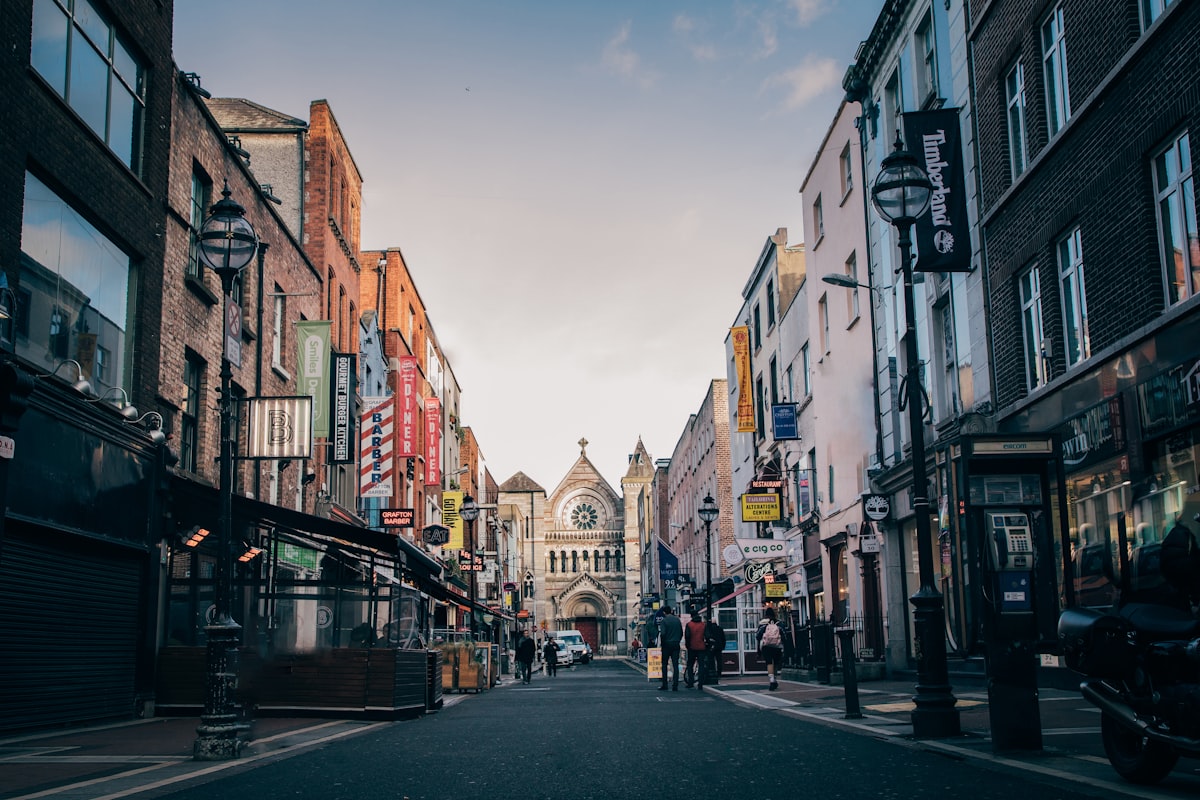
Monthly spending comparison — single person, comfortable lifestyle:
| Category | Dublin | Cork | New York City | Chicago |
|---|---|---|---|---|
| 1BR rent (decent area) | $2,200–$2,800 | $1,400–$1,900 | $3,200–$4,500 | $1,800–$2,600 |
| Groceries | $300–$400 | $280–$380 | $450–$600 | $380–$500 |
| Dining out (3x/wk) | $280–$400 | $220–$330 | $500–$800 | $350–$550 |
| Transit | $120 (Leap card) | $85 | $130 | $105 |
| Utilities + internet | $180–$240 | $160–$220 | $200–$280 | $180–$260 |
| Health insurance | $0–$170 (public + optional VHI) | $0–$170 | $400–$700 | $300–$500 |
| Monthly total | $3,080–$4,010 | $2,145–$3,080 | $4,880–$6,910 | $3,115–$4,515 |
The Dublin-to-NYC gap is $1,800–$2,900/month — roughly $22,000–$35,000/year. Cork vs. Chicago saves $970–$1,435/month ($12,000–$17,000/year). Those are meaningful savings, especially when Ireland includes public healthcare and 20+ days paid leave.
Expatistan's 2026 comparison puts it bluntly: Ireland is 'about the same' as the US overall — but the composition of costs differs dramatically. You pay more for rent and pubs, less for groceries, healthcare, and childcare.
Rent: Dublin's Housing Crisis Is Real
Ireland's housing crisis is the single most important factor in any cost-of-living discussion. The Irish Times reported that fewer than 1,800 rental properties were available nationwide in February 2026 — for a country of 5.1 million people. Dublin rents surpassed EUR 2,300/month average in 2025.
Rent comparison (1BR apartment, 2026):
| City | Center (nice area) | Well-connected suburb |
|---|---|---|
| Dublin | $2,200–$2,800 | $1,600–$2,100 |
| Cork | $1,400–$1,900 | $1,000–$1,400 |
| Galway | $1,300–$1,800 | $1,000–$1,400 |
| Limerick | $1,100–$1,500 | $800–$1,100 |
| Waterford | $900–$1,200 | $700–$950 |
| --- | --- | --- |
| NYC | $3,200–$5,000 | $2,000–$3,000 |
| Boston | $2,600–$3,800 | $1,800–$2,500 |
| Chicago | $1,800–$2,600 | $1,200–$1,800 |
| Austin | $1,600–$2,200 | $1,200–$1,700 |

Cork is increasingly the recommendation for Americans. Ireland's second city is a tech and pharma hub (Apple, Pfizer, Johnson & Johnson all have major operations), with a vibrant food scene, walkable city center, and rents 35–40% below Dublin. Discussions in r/ireland regularly steer Americans toward Cork or Galway over Dublin.
The Dublin rental reality: Competition is brutal. 20+ applicants per property is standard. Landlords require employment letters, Irish bank statements, PPS numbers, and references. New arrivals without an Irish paper trail face a catch-22. Many Americans spend their first 2–4 weeks in short-term accommodation (Airbnb, hostels) while building their documentation.
Irish rental differences Americans should know:
- Rent Pressure Zones: Most of Dublin and major cities are designated RPZs where annual rent increases are capped at inflation or 2%, whichever is lower
- Deposits: Typically 1 month's rent. No government-mandated deposit protection scheme (unlike UK), though one is being developed
- Furnished is common — many Irish rentals come furnished, which saves thousands in setup costs
- Shared accommodation: Many professionals in their 30s share houses in Dublin because solo renting is financially punishing — room shares run $900–$1,400/month
- BER ratings: Energy ratings (A–G) are displayed on all listings. Prioritize A–C rated properties — heating costs in older Irish houses (D–G) can be shocking
Daft.ie is Ireland's dominant property portal. Also browse our Ireland property listings.
Groceries: Cheaper Than America, Better Quality
Irish grocery prices are genuinely lower than the US — one of the few categories where Ireland wins clearly. EU food standards mean higher baseline quality (no chlorinated chicken, fewer additives, stricter animal welfare), and aggressive competition between supermarkets keeps prices down.
Price comparison (2026 averages):
| Item | Ireland | USA | Difference |
|---|---|---|---|
| Loaf of bread (good quality) | $1.80–$2.50 | $3.50–$4.50 | 40–50% cheaper |
| Dozen eggs (free range) | $3.50–$4.50 | $4.50–$6.00 | 20–25% cheaper |
| Whole milk (1 liter) | $1.20–$1.50 | $1.10–$1.50 | Similar |
| Chicken breast (1 kg) | $7.00–$9.00 | $8.00–$11.00 | 10–20% cheaper |
| Cheddar cheese (1 kg) | $8.00–$11.00 | $12.00–$16.00 | 30–35% cheaper |
| Tomatoes (1 kg) | $2.80–$3.80 | $4.00–$5.50 | 25–30% cheaper |
| Wine (decent bottle) | $9.00–$14.00 | $10.00–$18.00 | 10–20% cheaper |
| Beer (6-pack craft) | $9.00–$12.00 | $10.00–$15.00 | 10–15% cheaper |
| Potatoes (1 kg) | $1.00–$1.50 | $2.00–$3.00 | 50% cheaper |

A well-stocked week of groceries for one person costs $60–$85 in Ireland vs. $90–$140 in the US. Irish dairy is exceptional — the butter alone has converted thousands of American expats. As r/expats users frequently note, Irish Kerrygold is a luxury import in the US but a basic supermarket staple at home.
Supermarket landscape: Tesco, Dunnes Stores, SuperValu, Aldi, and Lidl are the main chains. Aldi and Lidl are the budget winners — excellent quality at 15–20% below Tesco. SuperValu is the premium option. Dunnes is the Irish-owned middle ground.
Dining out is expensive by European standards. A pint of Guinness in a Dublin pub: EUR 6.50–8.00 ($7–$9). A dinner for two at a mid-range restaurant: $80–$120. Coffee: $4.00–$5.50. The pub culture is central to Irish social life, and the costs add up. Tipping is 10–15% at restaurants (discretionary), and zero at pubs or cafes.
The Minimum Unit Pricing law (2022) set a floor price on alcohol in shops: roughly EUR 2.10 per standard drink. This makes cheap wine and spirits notably more expensive than in the US, where bottom-shelf options exist at very low prices.
The cost of living in Ireland according to International Citizens puts grocery savings at 12–18% vs. the US nationally.

Healthcare: The HSE — Imperfect but Present
Ireland's healthcare system is a two-tier model: the public Health Service Executive (HSE) covers all residents, supplemented by optional private insurance for faster access. It's not free at point of use for everyone, but it's dramatically cheaper than the US.
Cost comparison:
| Healthcare item | Ireland (public HSE) | USA |
|---|---|---|
| Monthly health insurance | $0 (public) or $170/mo (private VHI/Laya) | $400–$700 |
| GP visit | $65–$85 | $150–$350 |
| Specialist consultation (public) | $0 (but long wait) | $250–$500 |
| Emergency department (A&E) | $150 (free if GP-referred) | $1,500–$5,000+ |
| Hospital stay (per night, public) | $95 (max $950/year) | $2,000–$5,000/night |
| Childbirth (full maternity care, public) | $0 | $5,000–$15,000 |
| Prescription (per item, DPS) | $2 (monthly family cap: $145) | $15–$80+ |
| Ambulance | $0 | $400–$2,500 |
| Dental checkup | $60–$100 | $150–$300 |

The medical card is Ireland's most powerful healthcare tool: if your income is below EUR 184/week (single) or EUR 266.50/week (couple), you get a medical card covering free GP visits, prescriptions, dental, eye care, and hospital treatment. GP Visit Cards (income-tested, higher threshold) cover free GP visits only.
Everyone — regardless of income — gets:
- Free maternity and infant care
- Free treatment in public hospital emergency departments (if GP-referred)
- Hospital stays capped at EUR 80/night, max EUR 800/year
- Prescriptions capped at EUR 80/month per family under the Drug Payment Scheme
Private insurance through VHI, Laya Healthcare, or Irish Life Health costs EUR 100–200/month ($110–$220) and buys faster specialist access, private hospital rooms, and shorter waiting times. Many employers offer private health insurance as a benefit.
The HSE's biggest weakness: waiting times. Public specialist referrals can take 6 months to 2+ years for non-urgent conditions. Emergency and maternity care is immediate. Cancer treatment follows strict timelines. But elective surgery waits are genuinely long — this is the main reason most expats with the means get private insurance.
As Expat Focus notes, the combination of public coverage plus affordable private insurance gives Irish residents better healthcare value than virtually any US plan. A family paying $200/month for private VHI gets comprehensive coverage with no deductible, no co-insurance, and no surprise bills — compared to $1,500–$2,000/month for a similar US family plan.
Transportation: Small Country, Good Connections
Ireland is a small island — Dublin to Cork is 3 hours by car, Dublin to Galway is 2.5 hours. Public transport is decent in Dublin and improving elsewhere, but this is not Switzerland or Japan. Outside Dublin, you'll likely want a car.
Monthly transport costs:
| Category | Dublin | Rest of Ireland | US (major city) |
|---|---|---|---|
| Monthly transit pass | $120 (Leap Card) | $85–$100 | $100–$130 |
| Car payment (avg) | Optional | $300–$500 | $500–$700 |
| Car insurance | N/A | $1,200–$2,400/year | $1,800–$3,000/year |
| Gas (per gallon) | N/A | $7.00–$7.50 | $3.50–$4.50 |
| Parking | $150–$300/month | $50–$100/month | $100–$300/month |

Dublin's Luas (tram), DART (coastal rail), and Dublin Bus network covers the city and suburbs. The Leap Card offers capped daily and weekly fares — roughly EUR 40/week ($44) for unlimited bus/tram travel. The planned MetroLink (underground rail to the airport) has been in development for years but is now under construction.
Intercity travel via Irish Rail is decent but not fast: Dublin to Cork: 2.5 hours. Dublin to Galway: 2.5 hours. Dublin to Limerick: 2 hours. Advance tickets booked online run EUR 15–30 ($17–$33) — cheaper than driving.
Car ownership outside Dublin is near-essential. Irish public transport in rural areas and smaller cities is limited. The costs:
- Insurance: Notoriously expensive in Ireland, especially for new residents without an Irish driving history. Expect EUR 1,500–$3,000/year initially — it drops with no-claims history
- Fuel: EUR 1.70–1.85/liter ($7.00–$7.50/gallon) — significantly more than the US
- Motor tax: EUR 200–800/year based on engine size or CO2 emissions
- NCT (annual inspection): EUR 55 every two years
- Toll roads: M50 (Dublin ring road) and several intercity motorways have tolls
For Dublin-based Americans who don't need a car, transit costs run $120–$150/month vs. $600–$1,200+ for US car ownership — saving $500–$1,000/month. Outside Dublin, the savings evaporate as car ownership becomes necessary, though insurance and fuel costs are still somewhat lower overall.
Cycling is growing in Dublin with expanding bike lanes and the Bleeper Bikes share scheme. Cork and Galway are also adding cycling infrastructure.
Get featured properties in your inbox
A weekly digest of handpicked listings from 20 countries. Free, no spam.
Housing to Buy: A Market Under Pressure
Ireland's property market is among the tightest in Europe. Limited supply, strong demand from tech workers and multinationals, and years of underbuilding have pushed prices to near-Celtic Tiger peaks.
Property prices (2026):
| Location | Median price (3BR house/2BR apt) | Price/sqft |
|---|---|---|
| Dublin (city center) | $500,000–$700,000 | $500–$700 |
| Dublin (suburbs) | $400,000–$550,000 | $350–$500 |
| Cork (city) | $350,000–$450,000 | $300–$400 |
| Galway (city) | $350,000–$450,000 | $300–$400 |
| Limerick (city) | $250,000–$350,000 | $200–$300 |
| Waterford (city) | $200,000–$300,000 | $175–$275 |
| --- | --- | --- |
| NYC (Manhattan) | $1,000,000–$2,000,000 | $1,200–$2,000 |
| Boston (central) | $600,000–$900,000 | $500–$800 |
| Chicago (central) | $300,000–$500,000 | $300–$500 |
| Austin (central) | $350,000–$550,000 | $300–$450 |

A $350,000–$400,000 budget in Ireland buys a solid 3-bed semi-detached house in Cork city or a 2-bed apartment in Dublin's suburbs. That same budget in most US coastal cities gets you less.
Stamp duty: 1% on the first EUR 1 million, 2% above that. First-time buyer schemes include the Help to Buy (HTB) incentive — tax refund up to EUR 30,000 for new-build purchases. Full details at Revenue.ie.
Mortgage requirements: Irish banks (AIB, Bank of Ireland, Permanent TSB) require 10% deposit for first-time buyers, 20% for second-time. Mortgage rates in 2026: 3.5–4.5% — lower than current US rates. Central Bank lending rules cap borrowing at 4x gross income.
For Americans buying in Ireland:
- No restrictions — foreigners can buy freely with no additional permits or surcharges
- Solicitor required — all property transactions go through a solicitor (lawyer), not just an agent. Budget EUR 2,000–$4,000
- Survey essential — Irish housing stock includes many older properties (pre-1960s). Get a structural survey, not just a valuation
- BER certificate — every property has an energy rating. Prioritize A–C; D–G properties will have high heating bills and lower resale value
CSO data shows Irish house prices rose 7.4% in 2025, with Dublin at 5.3% and outside Dublin at 9.2%. Cork is widely cited as the undervalued city with the best 5-year upside.
Browse Irish properties on EscapeFromUSA's Ireland page or search directly on Daft.ie.

Taxes: Higher Headline, More Included
Ireland's tax system is progressive with two main income tax rates, plus Universal Social Charge (USC) and Pay-Related Social Insurance (PRSI). The headline rates look higher than the US — but what's included changes the math.
Irish income tax bands (2026):
- EUR 0–44,000: 20% (standard rate)
- Over EUR 44,000: 40% (higher rate)
USC rates (2026): 0.5% on first EUR 12,012, 2% on EUR 12,013–28,700, 3% on EUR 28,701–70,044, 8% above EUR 70,044.
PRSI: 4.2% of gross income (rising to 4.35% from Oct 2026). Full details at Revenue.ie and Citizens Information.
The effective tax rate on EUR 80,000 ($88,000) is approximately 38–40% — higher than the US federal rate but comparable to US federal + state + FICA combined in high-tax states.
The practical comparison for a tech worker earning $100,000 equivalent:
| USA (Texas, $100K) | Ireland (Dublin, EUR 91K) | |
|---|---|---|
| Federal/national income tax | $14,000 | $23,500 |
| State tax | $0 (Texas) | $0 (no state tax) |
| Social insurance (FICA/PRSI+USC) | $7,650 | $7,200 |
| Health insurance | $5,400 | $0 (HSE) or $2,000 (private) |
| Total tax + mandatory costs | $27,050 | $30,700–$32,700 |
Ireland is about $3,600–$5,600/year more in tax+insurance on comparable income — but you receive public healthcare, 20 days paid leave (minimum), statutory sick pay, maternity/paternity leave, and a social safety net that would cost thousands more to replicate in the US.
Ireland is particularly attractive if your company pays well. The tech sector in Dublin pays EUR 70,000–130,000 for senior roles, and Ireland's 12.5% corporate tax rate is why Apple, Google, Microsoft, Meta, and dozens of other tech companies have European HQs there.
Key tax mechanisms for Americans:
- US-Ireland Tax Treaty: IRS treaty documents prevent double taxation. Irish income tax generates a Foreign Tax Credit against US liability.
- FEIE: Excludes up to $126,500 of foreign earned income from US federal tax.
- Social Security Totalization Agreement: The US-Ireland agreement prevents double social security taxation.
As Taxes for Expats notes, most Americans in Ireland pay zero additional US tax after the Foreign Tax Credit, because Irish rates typically exceed US rates on the same income.
Quality of Life: Craic, Culture, and Community
Ireland's quality of life goes beyond spreadsheet comparisons. For Americans, the cultural familiarity — English language, shared media, similar humor — makes it one of the easiest countries to integrate into.
Paid leave: Irish employees get a minimum of 20 days paid annual leave plus 10 public holidays. Most professional employers offer 22–25 days. Statutory sick pay: 5 days per year at 70% pay (increasing annually).
Parental leave: 26 weeks maternity leave (paid at EUR 274/week by the state). 2 weeks paternity leave. 7 weeks parent's leave for each parent. Not as generous as Scandinavia, but infinitely better than the US's zero.
Safety: Ireland's violent crime rate is roughly one-fifth of the US rate. Gun violence is virtually nonexistent. The An Garda Siochana (police) don't routinely carry firearms. School shootings don't happen. Walking alone at night in Cork or Galway feels genuinely safe.
Community: The Irish pub isn't just a bar — it's a community center. Americans consistently report that making friends in Ireland is easier than in most European countries, thanks to the cultural emphasis on conversation, humor, and hospitality. The concept of craic (fun, conversation, good times) is a genuine cultural value, not a tourism slogan.
Weather: Ireland's weather is mild but wet. Dublin gets 750mm of rain per year (less than Seattle's 950mm, but spread across more drizzly days). Winters are mild (5–8°C / 41–46°F) — no snow in coastal cities. Summers are pleasant (15–20°C / 59–68°F) with long daylight hours (sunrise at 5 AM in June). If you can handle Pacific Northwest weather, you'll be fine.
Childcare: Irish childcare costs have dropped significantly thanks to government subsidies. The National Childcare Scheme provides up to EUR 2.14/hour subsidy per child. Typical creche costs: EUR 800–1,200/month in Dublin, EUR 600–900 elsewhere — compared to $1,500–$2,500/month in US cities. As r/expats users note, childcare savings alone can offset Ireland's higher tax rate for families.
Education: Free primary and secondary education (public schools are high-quality). University fees for EU/EEA residents: EUR 3,000/year (registration fee only — no tuition). For non-EU students: EUR 10,000–25,000/year. This is a fraction of US college costs.
For the full picture of daily life, read our moving to Ireland guide.
Visa Options for Americans Moving to Ireland
Ireland offers several visa pathways for Americans, with the tech sector providing the most accessible route.
Critical Skills Employment Permit: The golden ticket. For occupations on Ireland's Critical Skills List (ICT professionals, engineers, healthcare workers, financial analysts, etc.). Requires a salary of at least EUR 40,904/year (if on the list) or EUR 68,911/year (if not on the list but not ineligible). Issued for 2 years, after which you can apply for Stamp 4 (unrestricted work rights). Full details at DETE and Citizens Information.
General Employment Permit: For occupations not on the Critical Skills list and not on the Ineligible list. Minimum salary EUR 34,000/year. Requires labor market needs test (employer must advertise the job in Ireland/EEA first). After 5 years, eligible for Stamp 4.
Stamp 4 (Unrestricted Residence): After 2 years on a Critical Skills permit or 5 years on a General Employment permit. Allows you to work for any employer, be self-employed, or start a business. Renewable every 2 years. The pathway to Irish citizenship.
Stamp 0 (Private Means): For retirees or financially independent people who can demonstrate EUR 50,000/year in income from pensions, investments, or other passive sources, plus private health insurance. You cannot work in Ireland on Stamp 0. Details at Irish Immigration Service.
Irish Heritage Route: If you have an Irish-born parent, you're automatically an Irish citizen. Irish-born grandparent? You can register for citizenship through the Foreign Births Register. Great-grandparent? You may qualify if your parent registered before your birth. This is the easiest path — and more Americans qualify than realize it.
Spouse/Partner: If your partner holds an Irish work permit, they can apply for a Stamp 1G permission allowing unrestricted employment — no separate work permit needed.
Ireland does not offer:
- A digital nomad visa
- A golden visa or investor visa (the Immigrant Investor Programme closed in 2023)
- Youth mobility for Americans (available to Australians, Canadians, etc.)
As discussed in r/IWantOut, the Critical Skills permit is the most realistic path for Americans — and Ireland's booming tech sector means employer sponsorship is relatively achievable compared to most EU countries.

The Verdict: Who Should (and Shouldn't) Make the Move
Ireland makes financial sense if you:
- Can secure a Critical Skills Employment Permit (tech, pharma, healthcare, finance)
- Have Irish heritage (citizenship by descent is the fastest path)
- Earn EUR 60,000+ (where the total package — HSE, leave, pension — outweighs higher taxes)
- Want English-speaking integration from day one
- Have children (free schooling, subsidized childcare, affordable university)
- Value safety, walkability, and community culture
- Want EU freedom of movement for future career options (after Stamp 4 or citizenship)
- Plan to explore Europe (Dublin has direct flights to 180+ destinations)
Ireland might NOT make sense if you:
- Can't handle the housing crisis (especially Dublin — finding a rental is genuinely difficult)
- Want a big, affordable house (Irish homes are smaller than American ones, and Dublin is extremely tight)
- Earn a remote US salary you want to keep — Ireland will tax you as a resident on worldwide income
- Want sunshine (Ireland averages 1,400 hours/year vs. 2,500+ in California or Spain)
- Hate rain (it rains frequently, though rarely heavily)
- Need affordable car ownership (insurance for new residents is painful)
- Are looking for dramatic cost savings (Ireland is comparable to the US, not dramatically cheaper)
The bottom-line math for a single tech worker earning EUR 80,000 ($88,000) in Ireland vs. $100,000 in the US:
| USA (Austin, $100K) | Ireland (Cork, EUR 80K) | Annual difference | |
|---|---|---|---|
| Take-home after tax | $75,000 | $52,000 (EUR 47,200) | -$23,000 |
| Health insurance | -$5,400 | $0 (HSE) | +$5,400 |
| Rent (1BR, nice area) | -$21,600 | -$19,200 | +$2,400 |
| Other living costs | -$22,000 | -$18,000 | +$4,000 |
| Net savings | $26,000 | $14,800 | -$11,200/year |
Ireland costs roughly $11,200/year more on a lower absolute salary — but you get: 20+ days paid holiday, public healthcare, EU freedom of movement, and one of the safest, most culturally rich countries in Europe. For many Americans — especially those with children, Irish heritage, or values-driven motivations — that tradeoff is worth it.
For Americans earning US-level salaries at Ireland-based multinationals (which is increasingly common in tech), the math improves dramatically. A $130,000 salary at a Dublin tech company, combined with Cork or Galway living, creates a lifestyle that $180,000 barely achieves in San Francisco.
Start browsing real Irish property listings on EscapeFromUSA and check out our guides on things to do in Ireland and the full moving to Ireland guide.
Ready to explore?
Browse Destinations