Melbourne vs Brisbane vs Perth: Where Americans Get the Best Value in Australia

Sydney absorbs most of the attention in any Australian property conversation and is the most expensive major city on earth outside of Hong Kong. Melbourne, Brisbane, and Perth are the three cities where Americans with realistic budgets actually end up looking. Each has a different economic base, climate, and real estate trajectory, and the 2026 picture is substantially different from the 2020 one. Brisbane has rocketed; Perth has quietly outperformed; Melbourne has cooled.
This post runs the three-way comparison on 2026 prices, Australia's Foreign Investment Review Board (FIRB) rules that shape every foreign purchase, per-state stamp duty differences, and the practical setup for American buyers. Prices cross-checked against Domain, realestate.com.au, and CoreLogic's home value index. For the broader Australian picture, pair this with our cost of living in Australia post and moving to Australia guide.
FIRB: The Rule That Shapes Everything
Before any price comparison, understand Australia's Foreign Investment Review Board (FIRB) framework. It is the single most important constraint on American buyers and differs fundamentally from how foreign ownership works in Europe or Latin America.
Key FIRB rules for residential property (2026):
- Non-resident foreigners can generally only buy NEW (never-before-occupied) properties, not established (existing) homes. The established-dwelling pathway exists only for temporary residents meeting specific visa and occupancy conditions.
- FIRB approval is mandatory for any residential purchase by a foreign person. Applications are lodged through the Australian Taxation Office FIRB portal. Standard processing time is 30 days.
- Application fees are substantial: for residential properties, fees scale with purchase price. A purchase up to AUD $1 million incurs approximately AUD $14,700; AUD $2 million incurs approximately AUD $29,400. These are non-refundable and paid on application, not close.
- Temporary residents (holders of a substantive visa valid for more than 12 months) can buy one established dwelling, but must use it as their primary residence and sell within 3 months of ceasing to hold a qualifying visa.
- Vacancy fee: Foreign owners who do not occupy or rent out their Australian property for at least 183 days per year pay an annual vacancy fee equivalent to the FIRB application fee. This is a strong incentive to rent, not leave vacant.
- Foreign buyer stamp duty surcharges apply on top of standard stamp duty in all three states (Victoria 8 percent, Queensland 7 percent, Western Australia 7 percent).
The practical bottom line: For non-resident Americans, Australian property purchase is heavily restricted to new construction, comes with a 7-8 percent stamp duty surcharge on top of standard rates, and requires paying FIRB application fees that can easily run AUD $15,000-$30,000. For temporary residents (those with a 457, 482, or student visa valid 12+ months), one existing dwelling is allowed as a primary residence, which is the route most actual American buyers use. FIRB's residential property guidance is the authoritative source, and ATO's FIRB residential fees page publishes the current fee schedule.
Threads on r/AusPropertyChat FIRB and r/australia foreign buyer document current buyer experiences, including the common frustration that new-build-only restriction funnels foreign buyers into the least attractive part of the Australian market (developer-sold apartments in high-rise towers).
Melbourne Prices in 2026

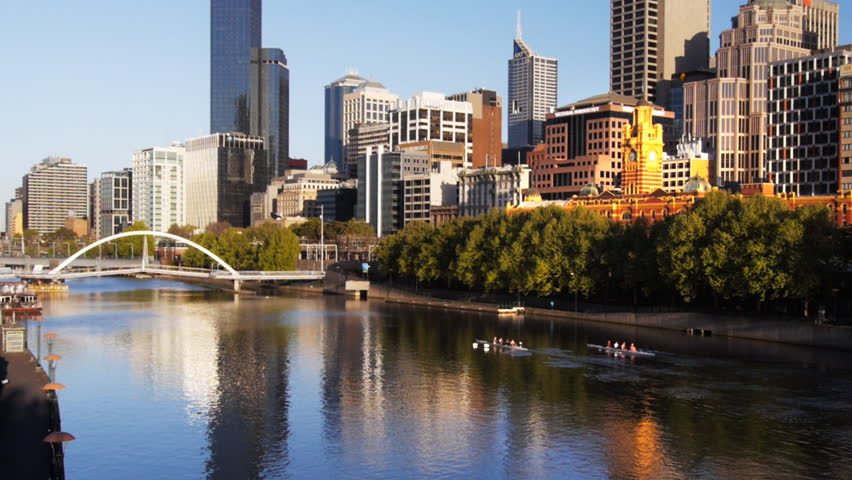
Melbourne (~5.1 million population) is Australia's second-largest city and the only major Australian city to experience genuine price decline during 2022-2024 before stabilizing in 2025-2026. The median Melbourne house price sits around AUD $860,000 in early 2026.
Melbourne neighborhoods for American buyers (2026):
- Inner north (Fitzroy, Carlton, Brunswick): Family homes AUD $1.3-2.0M; apartments AUD $550-850K
- Inner east (Richmond, Hawthorn, Kew): Family homes AUD $1.5-3.0M; apartments AUD $600K-1.2M
- Inner south (St Kilda, Port Melbourne, South Yarra): Apartments AUD $550K-1.1M; houses rare under AUD $2M
- Inner west (Footscray, Yarraville, Williamstown): Houses AUD $900K-1.6M; gentrifying
- Middle east (Box Hill, Doncaster, Glen Waverley): Houses AUD $1.1-1.8M; Chinese-Australian concentration, top schools
- Bayside (Brighton, Hampton, Sandringham): Houses AUD $1.8-5M; prestige beach suburbs
For a USD $600,000 budget (approximately AUD $920,000): a house in the inner west (Footscray, Yarraville) or middle north (Preston, Coburg) or a 2-3 bedroom apartment in the inner north or inner east. The sticker shock for Americans comparing to US equivalents is real but partially reflects Melbourne's much stronger public transport and land scarcity.
Domain Melbourne reports and CoreLogic Melbourne monthly update publish current figures. The Age property section covers weekly market movement.
Brisbane Prices in 2026
Brisbane (~2.6 million) is the city that has changed most dramatically for buyers. Between 2020 and 2025, Brisbane's median house price rose approximately 50-60 percent, driven by interstate migration from Melbourne and Sydney, the confirmed 2032 Summer Olympics, and the relatively affordable 2020 baseline. The median Brisbane house price is approximately AUD $900,000 in early 2026 - essentially on par with Melbourne for the first time in modern history.
Brisbane neighborhoods for American buyers (2026):
- Inner city (New Farm, Fortitude Valley, West End, Teneriffe): Apartments AUD $550K-1.1M; houses AUD $1.3-2.5M
- Inner south (South Brisbane, Kangaroo Point, Woolloongabba): Apartments AUD $500-900K; homes AUD $1.1-1.9M
- Eastern suburbs (Bulimba, Hawthorne, Balmoral): Houses AUD $1.5-3M; prestige Queenslander homes
- Western suburbs (Toowong, Indooroopilly, St Lucia, University): Houses AUD $1.2-2.2M; leafy established family
- Northern suburbs (Chermside, Nundah): Houses AUD $850K-1.4M
- Southern mid (Mount Gravatt, Coorparoo): Houses AUD $900K-1.5M
For a USD $600,000 budget (approximately AUD $920,000): a house in the northern or southern mid suburbs (Chermside, Mount Gravatt), or a 2-3 bedroom apartment in West End, South Brisbane, or Fortitude Valley. Brisbane's sweet spot is arguably the best in the country for Americans because the Queenslander style (raised wooden house, verandas, large lots) delivers a specific aesthetic that is hard to replicate elsewhere.
Climate advantage: Brisbane is subtropical, with hot humid summers and mild winters. Average January 29C (84F), July 15C (59F). For Americans coming from Florida or Southern California, Brisbane's climate is the most familiar of the three cities.
Domain Brisbane reports, Courier Mail property, and Brisbane Times property cover the local market.
Perth Prices in 2026
Perth (~2.2 million) is the outlier Australian city - geographically isolated (Australia's west coast, essentially the world's most remote major city, five hours by plane from the east coast), economically tied to mining and the China commodity cycle, and priced very differently from the east coast markets. Perth's median house price is approximately AUD $720,000 in early 2026, the cheapest of the Big 4 Australian cities by a meaningful margin.
Perth neighborhoods for American buyers (2026):
- Central (Perth CBD, East Perth, West Perth): Apartments AUD $450-800K
- Inner west (Subiaco, Leederville, Mt Lawley, Mt Hawthorn): Houses AUD $900K-1.7M; cafes, walkable
- Western suburbs (Cottesloe, Mosman Park, Nedlands, Claremont): Houses AUD $1.5-5M; prestige beach/river
- Inner south (South Perth, Como, Victoria Park): Houses AUD $850K-1.5M
- North (Northbridge, Scarborough, North Beach): Houses AUD $700K-1.3M; beach access
- South (Fremantle, Bicton, Applecross): Houses AUD $900K-1.8M; historic port city character
For a USD $600,000 budget (approximately AUD $920,000): a freestanding house in inner north (Mt Lawley, North Perth), central south (Victoria Park, Como), or the northern beach suburbs (Scarborough, North Beach). This is genuinely more than Melbourne or Brisbane offers at the same price - Perth gives you a full family home in good areas for what gets you an apartment in Melbourne's inner east.
The Perth catch: Remoteness is real. Flights to Sydney and Melbourne are 4-5 hours. Flights to the US are via Singapore, Dubai, or Doha - 20+ hours minimum. If you have US family obligations, Perth is logistically the hardest Australian city.
Climate: Mediterranean, the most similar to Southern California of any Australian city. Dry summers (January average 31C/88F), mild wet winters (July average 18C/64F), approximately 3,000 hours of sunshine per year. For Americans prioritizing climate, Perth is the most likely to feel familiar to a Californian.
The West Australian property coverage and REIWA Perth market reports track the local market, which moves on very different timing from the east coast.
Stamp Duty and Closing Costs
Stamp duty is set by each state and is the dominant closing cost. Foreign buyer surcharges are on top of standard rates.
Victoria (Melbourne):
- Standard stamp duty on AUD $920,000: approximately AUD $50,000
- Foreign purchaser additional duty: 8 percent of price = AUD $73,600
- Total stamp duty for a foreign buyer: AUD $123,600
Queensland (Brisbane):
- Standard stamp duty on AUD $920,000: approximately AUD $30,000
- Foreign purchaser surcharge: 7 percent = AUD $64,400
- Total: AUD $94,400
Western Australia (Perth):
- Standard stamp duty on AUD $920,000: approximately AUD $39,000
- Foreign buyer duty: 7 percent = AUD $64,400
- Total: AUD $103,400
The foreign buyer surcharge is the crusher. It is non-negotiable and it effectively penalizes foreign ownership by 7-8 percent of the purchase price on top of the already substantial standard stamp duty. A temporary resident (12+ month visa holder) buying as a primary residence is exempt from the foreign surcharge in all three states, but must meet the occupancy requirements.
Other closing costs for all three cities:
- Conveyancer / solicitor fees: AUD $1,500-$3,000
- Building and pest inspection: AUD $500-$900
- Loan application and valuation: AUD $500-$1,500 (if financing)
- Title transfer and registration: AUD $300-$1,000
- FIRB application fee: AUD $14,700-$29,400 depending on price band
Total closing costs on AUD $920,000 for a non-resident American buying new construction:
- Melbourne: approximately AUD $143,000 (15.5 percent)
- Brisbane: approximately AUD $114,000 (12.4 percent)
- Perth: approximately AUD $123,000 (13.4 percent)
Victoria's State Revenue Office, Queensland Revenue Office, and WA Department of Finance - RevenueWA publish the current stamp duty tables.
The FIRB application fee can be avoided by becoming a temporary resident first, buying as a resident, and skipping the foreign buyer surcharge entirely. This is the most tax-efficient path and the one most actual American buyers pursue.
Climate and Lifestyle Comparison
Melbourne: Oceanic climate with genuine four seasons. Winters are cold and grey by Australian standards (July average 6-13C/43-55F) but mild by Northern Hemisphere comparison. Summers mild to hot (January 14-26C/57-79F) with occasional heat waves. Famously unpredictable ("four seasons in one day"). Dense cafe culture, strongest arts and food scene in Australia, genuine public transport. Most European of the three cities in feel.
Brisbane: Subtropical. Hot humid summers (January 21-30C/70-86F), mild winters (July 9-21C/48-70F). Significant rainfall concentrated November-March, often as intense storms. River-based city, outdoor culture, car-oriented for most of the metro. More relaxed than Melbourne, growing international food scene, strong outdoor sports culture.
Perth: Mediterranean. Long, dry, hot summers (January 18-31C/64-88F), mild rainy winters (July 8-19C/46-66F). Among the sunniest major cities in the world. Beach culture is dominant - the Swan River and Indian Ocean coast define daily life. Smaller, more laid-back than Melbourne or Brisbane, genuinely isolated, car-dependent outside the CBD.
Healthcare: All three cities have excellent public (Medicare) healthcare for permanent residents. Temporary residents need private health insurance. Quality is uniformly high across all three; Melbourne has the strongest teaching hospitals, Perth has the fewest but still genuine world-class facilities.
Schools: Melbourne has the strongest private school ecosystem (Scotch College, Melbourne Grammar, Ruyton, Methodist Ladies). Brisbane has strong grammar schools (Brisbane Grammar, Anglican Church Grammar, Brisbane Girls Grammar). Perth has solid private schools (Scotch, Aquinas, Presbyterian Ladies) but fewer total options.
International flights: Melbourne (MEL) has the widest international route network after Sydney. Brisbane (BNE) has growing international routes, especially to Asia. Perth (PER) has limited direct long-haul but includes Qantas's direct PER-LHR flight to London.
Head-to-Head Verdict
Buy in Melbourne if:
- You want the most European/urban Australian city
- You value cultural depth, cafes, dining, arts, genuine public transport
- You are working in finance, professional services, or consulting with Melbourne-based employers
- You accept that Victoria has the highest foreign buyer stamp duty surcharge
- You can target an inner-west or middle-north house rather than an inner-east or bayside postcard
Buy in Brisbane if:
- You want the best per-dollar family housing (Queenslander-style homes on real lots)
- You prioritize subtropical climate and outdoor lifestyle
- You want lower total closing costs than Melbourne
- You see the 2032 Olympics as a long-term appreciation driver
- You are willing to accept Brisbane's car-dependent, less-walkable character
Buy in Perth if:
- You want Mediterranean climate (the most similar to California)
- Your budget gets genuinely more in Perth than in Melbourne or Brisbane
- You work in mining, energy, or resources
- You do not have urgent US travel needs (Perth's isolation is real)
- You value beach/river lifestyle and space
Skip all three if:
- You are a pure non-resident investor (the new-build-only restriction plus 7-8 percent foreign surcharge plus FIRB fees makes the math brutal)
- You cannot commit to living in Australia as a temporary or permanent resident
- You are looking for cheap real estate (Australia is one of the most expensive developed markets)
- You need a European-style walkable center outside of inner Melbourne
The sequencing that works: apply for an Australian work or skilled migration visa first, spend 6-12 months on the ground to understand neighborhoods, engage a buyer's agent and a conveyancer before offering, apply for FIRB approval in parallel with the purchase process, and use Wise for USD to AUD transfer. For the broader Australian picture, our cost of living in Australia post and moving to Australia guide are the natural next reads. For live inventory, see our Melbourne page, Brisbane page, and Perth page. Threads on r/AusPropertyChat and r/australia buying document current buyer experience.
Ready to explore?
Browse Destinations