Zurich vs Geneva vs Basel: Swiss Property Prices for Foreigners

Switzerland is the European country most Americans fantasize about owning property in and least actually buy in. The reasons are specific: Lex Koller, the 1983 federal law that restricts foreign property ownership, is genuinely binding; Swiss prices are the highest in continental Europe; and Swiss cantons have meaningfully different rules even within the same federal framework. Zurich, Geneva, and Basel are the three cities where most American buyers end up looking, and the differences between them are substantial.
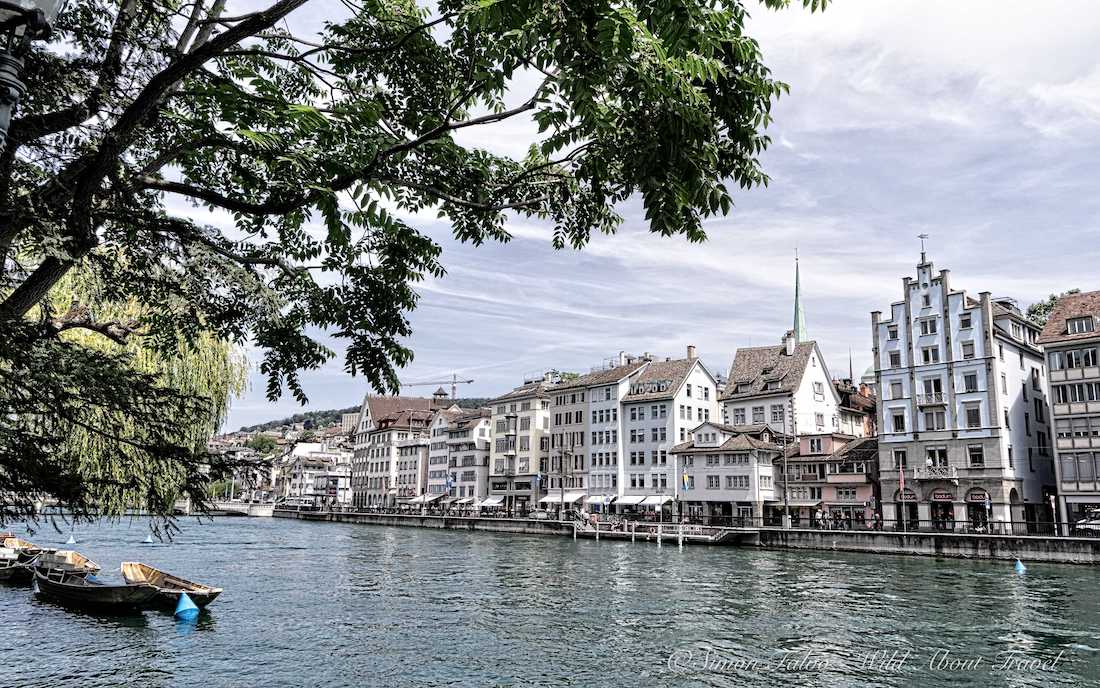
This post runs the direct three-way comparison on 2026 prices, Lex Koller's actual practical bite, closing costs, and cantonal tax differences. Prices cross-checked against Homegate.ch, ImmoScout24.ch, and the Swiss Federal Statistical Office's real estate price index. For the broader Swiss picture, pair this with our cost of living in Switzerland post and moving to Switzerland guide.
Lex Koller: The Real Rule That Shapes Everything
Switzerland's Federal Act on the Acquisition of Real Estate by Persons Abroad (Lex Koller, 1983, amended multiple times) is the single most important piece of context for any non-resident property purchase in Switzerland. You cannot understand the Swiss market without understanding what Lex Koller does and does not allow.
What Lex Koller prohibits: Non-resident foreigners (including Americans) generally cannot purchase residential real estate in Switzerland without a cantonal authorization that is granted only in specific, narrow circumstances.
What Lex Koller allows:
- Primary residence exemption: Foreign nationals legally resident in Switzerland (B or C permit holders) can buy a primary residence without authorization. This is the path most American buyers use: move to Switzerland first, establish residency, then buy.
- Commercial real estate exemption: Pure commercial property (office, retail, industrial) is broadly exempt from Lex Koller restrictions.
- Cantonal vacation home quotas: Certain tourist-designated cantons (Valais, Graubunden, Ticino, Vaud, Bern in mountain areas) have annual quotas of vacation home authorizations. Quotas are small (federal total around 1,500/year across all cantons), demand is high, and most are consumed by German, French, and British buyers. Zurich, Geneva, and Basel are NOT in the quota system - you cannot buy a vacation home in these cities as a non-resident.
- EU/EFTA residency bypass: Non-residents with EU/EFTA passports have fewer restrictions. American passport holders do not qualify.
The practical bottom line for American buyers: If you want to buy property in Zurich, Geneva, or Basel, you essentially must become a Swiss resident first. There is no meaningful non-resident path to a Zurich apartment. This is the central constraint. The Swiss Federal Office of Justice's Lex Koller guide is the authoritative source. Swiss firms like CMS Switzerland, Baker McKenzie Zurich, and Schellenberg Wittmer publish English-language Lex Koller summaries.
Threads on r/Switzerland and English Forum Switzerland document the actual experience of Americans navigating Lex Koller.
Zurich Prices in 2026

Zurich is Switzerland's economic capital and the most expensive city in continental Europe for residential property. Per-sqm prices in 2026 for existing apartments:
Zurich districts (CHF per sqm):
- District 1 (Altstadt, historic core): CHF 18,000-$28,000
- District 2 (Enge, Wollishofen, lakeside): CHF 15,000-$22,000
- District 6 (Unterstrass, Oberstrass, university area): CHF 13,000-$18,000
- District 7 (Hottingen, Witikon, wealthy hillside): CHF 15,000-$24,000
- District 8 (Seefeld, lakeside prestige): CHF 17,000-$25,000
- District 3 (Wiedikon, family-oriented central): CHF 12,000-$16,000
- District 4 (Langstrasse, gentrifying): CHF 11,000-$15,500
- District 11/12 (outer north/east): CHF 9,000-$13,000
For a USD $1,000,000 budget (approximately CHF 870,000): a 60-80 sqm 2-bedroom apartment in districts 3, 4, 11, or 12 is achievable for qualified residents. Central prestige districts (1, 7, 8) are essentially out of reach at this level.
Zurich's Goldkueste (gold coast, the municipalities of Kusnacht, Zollikon, Zumikon, Meilen along the lake's eastern shore) is the wealthy suburban extension. Houses here run CHF 3-15 million. American buyers with Swiss employment in finance or pharma often end up here.
Homegate.ch Zurich search, ImmoScout24.ch Zurich, and the Swiss Real Estate Institute's Zurich market report publish current data. UBS's global real estate bubble index regularly flags Zurich as one of the most overvalued markets in the world.
Geneva Prices in 2026
Geneva is smaller than Zurich (~200,000 in the city, 600,000 in the metro) but hosts the United Nations, WHO, WTO, CERN, Red Cross, and a dense international diplomatic and NGO community. Prices reflect the permanent influx of high-income international workers.
Geneva districts (CHF per sqm):
- Eaux-Vives (lakeside, central): CHF 16,000-$23,000
- Champel (wealthy residential, hospital district): CHF 14,500-$21,000
- Old Town (Vieille-Ville): CHF 17,000-$25,000
- Carouge (bohemian southern suburb): CHF 13,000-$18,000
- Plainpalais (central, diverse): CHF 12,000-$17,000
- Plan-les-Ouates (modern western): CHF 11,000-$15,000
- Onex, Meyrin (cheaper western suburbs): CHF 9,500-$13,500
Geneva has the most international population of any Swiss city, making English-speaking real estate agents, lawyers, and buyer services easier to find than in Zurich or Basel. The trade-off is that Geneva's permanent housing shortage (driven by the Lake, the French border restricting growth, and a population that keeps growing because of international organizations) makes Geneva a genuinely tight market. Prices on par with Zurich, availability worse.
Geneva advantage: the city is close enough to French suburbs (Annemasse, Saint-Julien, Thonon) that many American workers at international organizations rent or buy in France and cross-commute daily. This halves housing costs at the cost of a tax and bureaucratic complexity layer. Threads on r/geneva document the approach.
Naef Immobilier Geneva, Geneva-Living Relocation, and Tribune de Geneve property coverage track the local market.
Basel Prices in 2026
Basel (~180,000 in the city, 830,000 in the trinational metro spanning Switzerland, France, and Germany) is Switzerland's third city, dominated by pharma (Novartis, Roche headquartered here), chemicals, and logistics. Basel is noticeably cheaper than Zurich or Geneva and is the Swiss city with the strongest American industrial presence.
Basel districts (CHF per sqm):
- Grossbasel (city center): CHF 12,000-$17,500
- Kleinbasel (east of the Rhine, gentrifying): CHF 10,500-$15,000
- St. Alban (wealthy central residential): CHF 13,000-$18,500
- Bachletten (family-oriented southwest): CHF 11,000-$16,000
- Gundeldingen (near SBB station, walkable): CHF 10,000-$14,500
- Bruderholz (wealthy southern hill): CHF 13,000-$19,000
Basel is approximately 15-25 percent cheaper than Zurich per sqm in comparable neighborhoods. For Americans working for Novartis, Roche, or their upstream/downstream chemical partners, Basel is the most practical Swiss buy. The trinational border means daily cross-border commuting is common (French Alsace and German Baden towns are both within 20 minutes), and many pharma employees live in French St-Louis or German Weil am Rhein.
Basel's advantage for Americans: it has the least frictional Swiss real estate market because its lower total demand and higher foreign employer concentration produce more motivated sellers and more English-speaking brokers.
Homegate Basel and Basler Zeitung property cover the local market.
Closing Costs and Cantonal Taxes
Swiss closing costs are moderate but vary by canton. The three cities are in different cantons with different rules.
Zurich canton:
- Property transfer tax: Abolished in Zurich canton! You pay no transfer tax on property purchases in Zurich. This is unusual federally.
- Notary fees: Approximately 0.1-0.5 percent depending on deal size
- Land registry: Approximately 0.1-0.25 percent
- Total buyer closing costs on CHF 1 million: approximately 0.3-1 percent, possibly the lowest in Europe
Geneva canton:
- Transfer tax (droit de mutation): 3 percent of purchase price
- Registration fees: 1 percent
- Notary fees: approximately 0.5-1 percent
- Total buyer closing costs on CHF 1 million: approximately 4.5-5.5 percent
Basel-Stadt canton:
- Transfer tax (Handanderungssteuer): 3 percent of purchase price (split half each historically, but often borne by buyer in negotiation)
- Notary and registry fees: approximately 0.5-1 percent
- Total buyer closing costs on CHF 1 million: approximately 3.5-4.5 percent
The practical comparison on a CHF 1 million purchase:
- Zurich: CHF 3,000-$10,000 in closing costs
- Basel: CHF 35,000-$45,000 in closing costs
- Geneva: CHF 45,000-$55,000 in closing costs
This is the single biggest financial surprise in Swiss real estate: Zurich's closing costs are essentially a rounding error, while Geneva's are higher than most of continental Europe. The Swiss Federal Tax Administration cantonal tax comparison publishes the current rates.
Annual property tax: Switzerland has no federal property tax. Cantonal and municipal property taxes exist but are modest - typically 0.05-0.3 percent of assessed value per year. Zurich canton does not levy a dedicated property tax; Geneva's annual property tax runs approximately 0.1 percent; Basel-Stadt charges approximately 0.4 percent on a base value.
Swiss Mortgage Access and Wealth Tax
Mortgage access: Swiss banks actively lend to Swiss residents, including resident foreigners, at highly competitive rates. 2026 fixed rates run approximately 1.8-2.5 percent for 10-year fixed, among the cheapest in the world. UBS, Credit Suisse (now part of UBS), Raiffeisen, and PostFinance are the major residential lenders.
The down payment rules: Swiss lending requires a minimum 20 percent down payment, of which at least 10 percent must come from sources other than pension funds. This is a hard federal rule and is why Swiss homeownership rates are among Europe's lowest (~36 percent nationally).
Wealth tax: Switzerland levies an annual wealth tax at the cantonal level. Rates vary:
- Zurich: approximately 0.1-0.3 percent
- Geneva: approximately 0.5-1.0 percent (highest in Switzerland)
- Basel-Stadt: approximately 0.3-0.8 percent
The tax applies to net worth including real estate at an often lower "fiscal value" than market price. For an American resident in Geneva with a CHF 2 million property and CHF 500,000 in other assets, the annual wealth tax could run CHF 15,000-$25,000 per year, a meaningful ongoing cost with no US equivalent.
This is one reason many high-net-worth Americans specifically choose Zurich canton (or Zug canton, slightly further south) over Geneva: Zurich's wealth tax rates are notably lower. KPMG Switzerland's cantonal tax comparison publishes current rates. Threads on r/Switzerland wealth tax discuss the practical bite.
Head-to-Head Verdict
Buy in Zurich if:
- You have Swiss tax residency (B/C permit) or are about to
- Your budget is CHF 900,000+ (below this you are compromising severely on location and size)
- You work in finance, tech, or insurance
- You value Zurich's zero-transfer-tax closing cost advantage
- You want the lowest ongoing wealth tax among the three cities
- You want the best Swiss infrastructure and international flight connectivity (ZRH is Swiss's main hub)
Buy in Geneva if:
- You work for the UN, WHO, WTO, CERN, Red Cross, or a diplomatic mission
- You value French-speaking daily life and proximity to France
- You accept Geneva's higher wealth tax and transfer tax as the cost of working internationally
- You want a smaller, more walkable city with a more directly international daily feel
Buy in Basel if:
- You work in pharma, chemicals, or life sciences (Novartis, Roche, Lonza are all here)
- Your budget is CHF 600,000-$900,000 (Basel delivers more for less)
- You value the trinational border and easy daily access to France and Germany
- You prefer German-speaking environments but want lower prices than Zurich
Skip all three if:
- You are not planning to become a Swiss tax resident (Lex Koller blocks you from these cities as a non-resident vacation home buyer)
- You cannot afford the 20 percent minimum down payment
- You are uncomfortable with annual wealth taxation
- You want a warmer climate or lower cost of daily living
The sequencing that actually works: get a Swiss work permit first, relocate, spend 6-12 months renting, understand which canton suits your tax profile, then buy. Do not try to buy as a non-resident. Engage a Swiss attorney (avocat/Rechtsanwalt) and a Swiss buyer's agent before making offers. Use Wise for CHF transfers. For the broader Swiss picture, our cost of living in Switzerland post and moving to Switzerland guide are the natural next reads. For live Swiss inventory, see our Zurich page, Geneva page, and Basel page. Threads on English Forum Switzerland property document real buyer experiences, and r/Switzerland buying is the current community discussion hub.
Ready to explore?
Browse Destinations