
Can an American Buy a House in Switzerland? The Lex Koller Rules, Explained

Switzerland is the most closed property market in Western Europe for non-resident foreigners, and it's been that way on purpose since 1961. The statute Americans will hit repeatedly is the Federal Act on the Acquisition of Immovable Property in Switzerland by Persons Abroad — the Bundesgesetz über den Erwerb von Grundstücken durch Personen im Ausland, known universally by its last name: Lex Koller. It classifies you as a "person abroad" unless you meet specific residency criteria, and if you're classified as a person abroad, you cannot freely buy Swiss property. There are narrow exceptions — most notably a small annual quota of holiday homes in designated tourist resorts — but the door is mostly shut unless you relocate to Switzerland first.

This is the full legal breakdown of Lex Koller and what Americans can and cannot buy, pulled from the Federal Office of Justice guidance, canton-level enforcement rules, and the practical experience of Americans who have actually navigated the process. For peer-verified takes, r/Switzerland, r/expats, and r/AmerExit have active threads from Americans who've looked at this market and either bought, failed to buy, or gave up and rented instead. The controlling federal body is the Federal Office of Justice (Bundesamt für Justiz / BJ), which publishes the official Lex Koller guidance in English.
The Core Rule: Are You a 'Person Abroad'?
Lex Koller divides the entire world into two groups: people who can buy Swiss property freely (Swiss nationals and qualifying residents) and "persons abroad" who need explicit cantonal authorization for every transaction. The distinction is residency-based, not nationality-based, and it's what every American wants to understand first.
You are NOT a person abroad (full buying rights) if:
- You are a Swiss citizen, or
- You are an EU/EFTA national legally and actually resident in Switzerland with a valid B permit (initial residence permit) or C permit (permanent residence), or
- You are a citizen of any other country (including the USA) holding a valid C permit (permanent Swiss residence, typically after 10 years of continuous legal residence, or 5 for US citizens under the treaty of 1850).
You ARE a person abroad (restricted) if:
- You are a non-EU/EFTA national (including American) without Swiss residency, or
- You are a non-EU/EFTA national with only a short-term L permit or initial B permit (in most cases).
For most Americans shopping Swiss property, the answer is: you are a person abroad, and Lex Koller applies to your purchase. The practical implication is that you cannot walk into a Swiss bank, get a mortgage, bid on an apartment in Zurich, and close 60 days later. Every purchase by a person abroad requires upfront cantonal authorization, and in the major cities — Zurich, Geneva, Basel, Bern, Lausanne, Lugano — that authorization is effectively never granted for residential property.
The Engel & Völkers Lex Koller guide and the Lindemann Law Lex Koller primer both lay out the residency tests in English, and the EY Switzerland real estate guidance covers the cantonal variations. The official federal text (in English) is at BJ.admin.ch.
The Holiday Home Quota — Your One Real Option
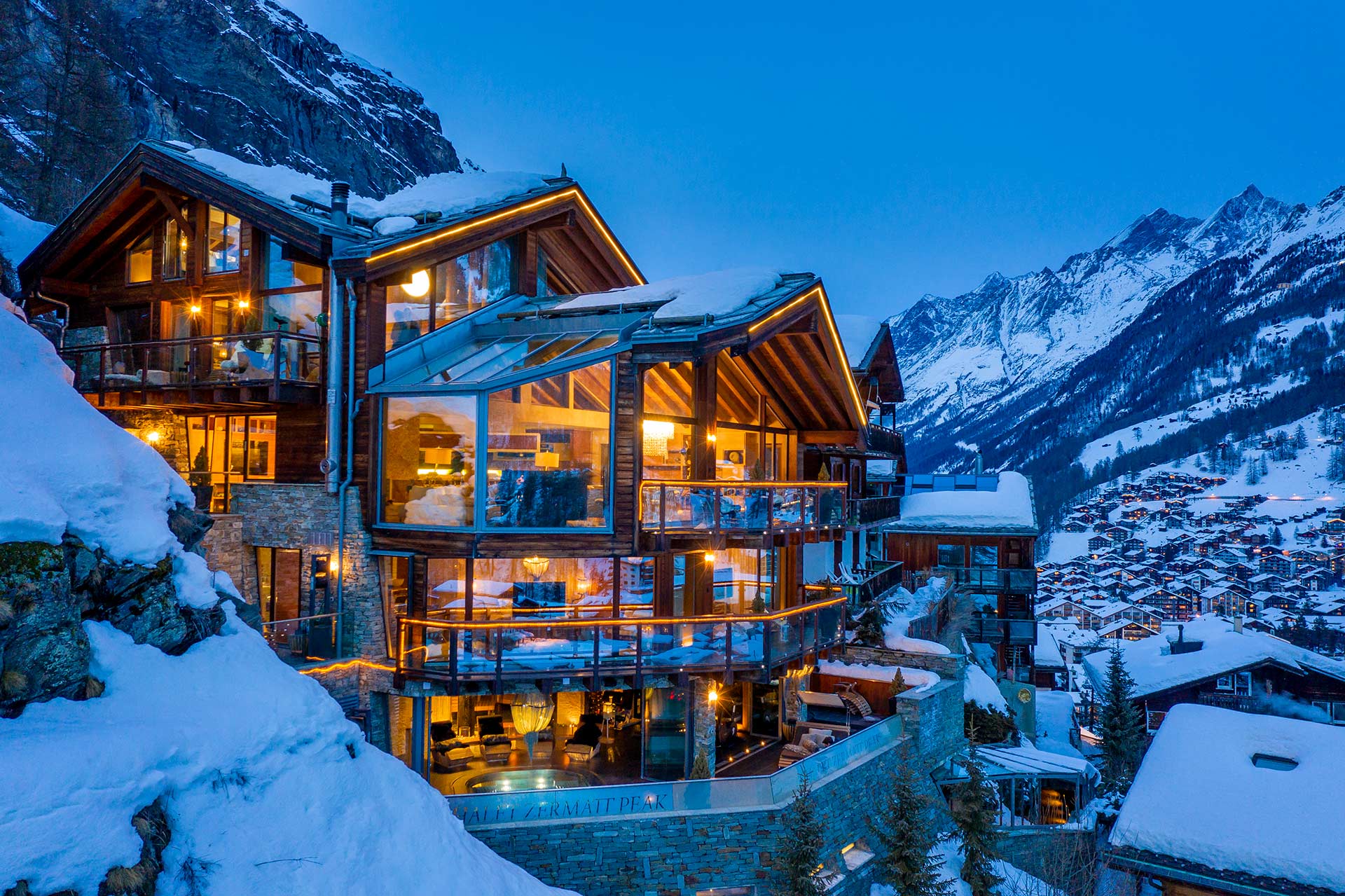
Lex Koller creates one narrow exception for non-resident foreigners: the holiday home quota. Each year, the Swiss federal government allocates about 1,500 holiday home purchase authorizations nationally, distributed among designated "tourist cantons" — primarily Valais (including Verbier, Crans-Montana, Zermatt), Vaud (including Villars, Les Diablerets, Leysin), Graubünden (including St. Moritz, Davos, Arosa, Flims-Laax), Ticino (including Lugano, Ascona, Locarno), and Bern Oberland (including Gstaad, Interlaken, Grindelwald). Non-tourist cantons — Zurich, Geneva, Basel, Bern city, Lausanne — have zero holiday home quota.
What you can actually buy under the quota:
- Net habitable floor area up to 200 sqm (with a case-by-case extension allowed up to roughly 250 sqm for families with demonstrated need)
- Plot size up to 1,000 sqm (extendable to 1,500 sqm in limited cases)
- Only in communes designated as tourist resorts by the canton
- Only as a holiday home, not a primary residence — you cannot claim the property as your main home and cannot rent it out year-round (limited seasonal rentals are typically allowed under the communal regulations)
- Subject to a minimum 5-year holding period before you can resell; reselling before 5 years requires canton approval and can trigger a clawback
How the quota actually works: Each authorized canton gets an annual allocation (e.g., Valais typically receives ~330, Graubünden ~290, Vaud ~175, Ticino ~175, Bern ~140). Within each canton, the quota is divided by commune. Popular resorts — Verbier, St. Moritz, Zermatt, Crans-Montana, Gstaad — often exhaust their local quota within the first few months of the calendar year. If you want to buy in Verbier in 2026, you apply through a local licensed broker who knows which units in which developments still have quota spots available, and you commit quickly. In less fashionable resorts — Leukerbad, Les Diablerets, Bivio — quota is rarely the binding constraint.
Prices for qualifying holiday homes in 2026 run roughly CHF 800K-3M for a 2-3BR apartment in the mid-tier resorts, CHF 1.5M-8M+ in premium resorts (Zermatt, St. Moritz, Verbier, Gstaad), and substantially less in smaller communes. See our Swiss ski chalet cost breakdown for current per-square-meter prices by resort. The Ski Property and Alpine Property Agency portals specialize in Lex Koller-compliant inventory; Homegate is the general Swiss portal.
The full list of authorized tourist communes is maintained by each canton and published on the BJ.admin.ch site. Active Reddit threads on r/Switzerland holiday home and r/ski property in Europe give current on-the-ground intel from people who've actually closed these deals.
Why Most Americans Never Qualify for Urban Property
If your dream is a flat in Zurich's Seefeld, a townhouse in Geneva, a Basel river apartment, or a Lausanne lakeside condo, Lex Koller is effectively going to block you. These cities are not in authorized tourist cantons for the holiday home quota. The only way to own residential property in them as an American is to first relocate to Switzerland and obtain a residence permit that lets you escape "person abroad" status.
The main residency paths for Americans:
1. L permit (short-term employment): You get a Swiss work contract, the employer sponsors an L permit for 3-12 months. This does NOT escape Lex Koller — L permit holders are still treated as persons abroad for property purchase purposes. You can rent, but not buy.
2. B permit (initial resident, typically 1-5 year): Issued to Americans with qualifying employment, family reunification, or (rarely) via lump-sum taxation / independent means. A B permit for a non-EU/EFTA national still leaves you as a "person abroad" for Lex Koller purposes UNTIL the permit has been continuously renewed for 5+ years AND you can demonstrate effective center of life in Switzerland. In practice, cantonal authorities apply this strictly — a B permit is not a green light to buy urban property.
3. C permit (permanent residence): This is the one that unlocks free property purchase. Americans can generally apply for a C permit after 5 years of continuous legal residence under the 1850 US-Swiss bilateral treaty (faster than the standard 10 years for other non-EU nationals). Once you hold a valid C permit, you are no longer a person abroad under Lex Koller. You can buy any property — urban, rural, primary residence, investment — without federal restrictions. Swiss banks will underwrite mortgages on standard terms, typically up to 80% LTV.
4. Lump-sum taxation (Pauschalbesteuerung): For wealthy Americans, a specific canton-level tax regime lets you pay annual taxes based on living expenses rather than worldwide income, in exchange for committing not to work in Switzerland. This does not automatically grant Lex Koller relief, but cantons offering this regime (Valais, Vaud, Graubünden, Ticino, several others; Zurich and Basel-Stadt have abolished it) sometimes issue B permits that progress to C permits on an accelerated basis. Our Switzerland lump-sum tax guide explains the full mechanics and which cantons still offer it.
The Swiss State Secretariat for Migration (SEM) is the federal body for residence permits. Each canton's migration office handles the actual applications. Our moving to Switzerland guide walks through the full relocation process. Active threads on r/Switzerland C permit and r/AmerExit Switzerland residence track how long the process actually takes for American applicants.

Commercial Property: The Back Door That Sometimes Opens
Lex Koller was amended in 1997 to exclude commercial real estate from the "person abroad" restrictions. This means a non-resident American can legally buy office buildings, retail space, hotels, warehouses, and certain types of commercial real estate in Switzerland without needing cantonal authorization, as long as the property is used "permanently for a commercial purpose" and not for residential purposes.
This commercial carve-out is well-known in Swiss real estate circles and gets used regularly by American family offices and private investors who want exposure to Swiss real estate but can't meet the residency bar for residential. The catch: it has to be real commercial property, not a disguised residential investment. An office building rented to commercial tenants qualifies; a "commercially held" apartment building does not. Mixed-use buildings with residential units on upper floors are tested on the residential portion — the residential part remains subject to Lex Koller, the commercial part isn't. An apartment building where all units are rented as residential housing is not eligible for the commercial exemption, even if you structure the ownership as a corporate entity.
Hotels and hotel-apartments (Hotelwohnungen) sit in a special zone. True operating hotels are commercial and fall outside Lex Koller. Hotel-apartment projects — where individual units are sold to investors who rent them back to the hotel operator for nightly rental — are a gray area, and most cantons treat them as residential for Lex Koller purposes unless the contract is structured so that the owner has essentially zero personal use rights. If you're looking at a "branded residence" at a Swiss ski resort (e.g., Ritz-Carlton, Six Senses, Mandarin Oriental branded residences in St. Moritz or Verbier), verify with a Swiss lawyer whether it qualifies for the commercial exemption or falls under the holiday home quota.
For peer intel, r/SwitzerlandFinance, r/expats commercial property switzerland, and the Private Banker International commercial Switzerland coverage are useful starting points. Swiss law firms Bär & Karrer and Homburger handle most of the significant cross-border commercial property deals for American buyers.
Closing Costs, Taxes, and Actually Operating the Property
Swiss real estate transactions are expensive on the front end but cheap on the carry. Closing costs for a person abroad buying under the holiday home quota typically run 4-8% of the purchase price, with wide canton variation.
Transfer tax (Handänderungssteuer): 1-3.3% depending on canton. Zurich has abolished it. Valais charges about 1.4%. Graubünden charges 2%. Vaud charges 3.3%. Ticino charges 1.1%. Bern charges 1.8%. Some cantons split the tax between buyer and seller; others put the full amount on the buyer. Your lawyer will tell you which.
Notary fees (Notargebühren): 0.1-0.5% of transaction value. Required by law — all Swiss real estate transfers must be notarized by a canton-registered notary. Fees are regulated.
Land registry fees (Grundbuchgebühren): 0.15-0.4% depending on canton.
Lex Koller authorization fee: CHF 500-3,000 paid to the canton for processing the foreign-buyer permit. Non-refundable if denied.
Your independent lawyer: CHF 3,000-10,000 for a straightforward holiday home purchase in a resort. Mandatory for any non-German/French/Italian speaker.
Mortgage setup fees (if applicable): 0.3-1% of the loan amount.
Total closing costs, buyer side, on a CHF 1.5M holiday apartment in Valais: Roughly CHF 65,000-100,000 (4.3-6.7%). See the Engel & Völkers cost breakdown for canton-by-canton numbers.
Ongoing costs are the pleasant surprise. Swiss property tax (Liegenschaftssteuer) is levied by the canton and runs 0.03-0.3% of cadastral value per year. On a CHF 1.5M holiday apartment that's roughly CHF 1,500-4,500/year. Federal wealth tax applies to worldwide assets for Swiss residents but not to non-residents on Swiss real estate (though the property is included in the Swiss cantonal imputed income calculation for non-resident owners — check with your tax advisor). The biggest ongoing cost is usually the resort HOA/building fees, which in premium Valais and Graubünden resorts run CHF 3,000-15,000/year for a 100-150 sqm apartment, covering central heating, pool access, concierge, and snow removal.
Imputed rental income (Eigenmietwert). This is the Swiss tax quirk that catches Americans off guard. Swiss tax authorities treat self-occupied property as generating a "notional rental income" — typically 60-70% of the market rent the property would command — and tax that imputed income on your Swiss cantonal tax return even if you don't actually rent it out. Offsetting deductions for mortgage interest and maintenance costs partially neutralize this, but for a holiday home owner with no mortgage, the imputed income tax can run CHF 5,000-15,000/year on a mid-tier resort property. Reform to abolish the Eigenmietwert has been debated for years and keeps failing at the national referendum stage. Our Swiss property tax guide walks through the math.
Mortgages for Americans: A Swiss mortgage for a non-resident American buying under the holiday home quota typically tops out at 50-60% LTV at rates of 1.8-3.5% fixed (varies with the SNB policy rate). Cantonal and private banks in resort areas — Raiffeisen Valais, Banque Cantonale du Valais, Graubündner Kantonalbank — are the most experienced with foreign-buyer underwriting. Major banks like UBS and Credit Suisse (now part of UBS) will typically handle holiday home mortgages for wealth management clients but not for walk-ins. Homegate's mortgage comparison tool and the MoneyPark broker are standard starting points.
The Bottom Line
Switzerland is not the market to pick if your goal is "buy a European house." For 99% of non-resident American buyers, the realistic options are:
1. Buy a holiday home in a designated tourist commune. This is legal, straightforward, and the path thousands of foreign buyers take every year. Expect to pay premium prices (Switzerland is not cheap), accept the ~200 sqm size cap, and understand that you're buying a vacation asset, not a year-round residence. Budget CHF 1M+ for anything in a desirable resort. The Verbier and St. Moritz tourist offices have useful property-market snapshots. Our Swiss ski chalet guide covers the current market by resort.
2. Relocate to Switzerland first, then buy. If you can secure employment, family reunification, or qualify for lump-sum taxation, you can obtain a residence permit, live there, and eventually reach C-permit status where Lex Koller no longer applies. This is a multi-year process but opens up the entire urban market. Our moving to Switzerland guide has the full roadmap.
3. Buy commercial real estate. If your goal is investment exposure to the Swiss market, commercial property is unrestricted. This is the path used by American family offices and private wealth groups. It's not the path for a retiree looking for a ski condo.
4. Don't buy Swiss property. This is the answer for a surprising number of Americans who start the research and realize that the combination of Lex Koller friction, high prices, Swiss bureaucracy, and imputed rental tax makes the numbers not work. If you want Alpine property, Austria, France's Haute-Savoie and Savoie, and northern Italy's Valle d'Aosta are all significantly more open and cheaper per square meter. For mountain living without Lex Koller, these are the obvious alternatives.
For ongoing updates on the Swiss market and Lex Koller case law, follow Investropa's Switzerland property coverage, the Lindemann Law blog, and the r/Switzerland housing subreddit for real-time experience reports.
Ready to explore?
Browse Destinations