
Malta vs. Cyprus: EU Residency Through Property in 2026

When Portugal and Spain killed their property-based golden visas, the remaining English-speaking EU residency-by-property options narrowed to two small island nations: Malta and Cyprus. Both use English as an official language. Both are EU members with Schengen access. Both offer residency — not citizenship, after the European Court of Justice's 2025 ruling — through a structured investment that includes a property component. And both are relentlessly marketed by relocation firms that rarely compare them head-to-head because they typically specialize in one or the other.
We're going to do the head-to-head. The two programs are closer than they look from the outside but differ in a few ways that matter enormously depending on your goals: Malta costs nearly twice as much total, requires more documentation, but gives you permanent residency for life. Cyprus is cheaper and faster but has a new-build requirement that narrows your property options and a non-dom tax regime that's more attractive for high-income Americans than Malta's. Pick wrong and you waste €200,000 plus two years.
This post walks through the structures side by side, prices the total outlay with realistic 2026 numbers, and matches each program to the American profiles that actually fit. We'll also address what happened with Malta's citizenship program after the April 2025 ECJ ruling, because that changed the landscape for anyone who was chasing a second passport rather than just residency.
The Two Programs in One Page
Malta Permanent Residence Programme (MPRP), launched March 2021, replacing the older MRVP. Governed by Agency for Community Services Regulation and administered by Residency Malta Agency. Core requirements in 2026:
- Buy property ≥ €375,000 (southern Malta/Gozo) or €425,000 (elsewhere), OR rent property at ≥ €14,000/year (south/Gozo) or €18,000/year (elsewhere)
- Government contribution: €60,000 if you buy, €30,000 if you rent
- €50,000 administrative fee (raised from €40,000 in 2024)
- €2,000 donation to a registered Maltese philanthropic/cultural/sport/scientific/artistic/environmental NGO
- Net assets requirement: ≥ €500,000 total, with €150,000 of that in financial instruments
- Clean background + health + character checks
- Outcome: permanent residency for life (subject to annual compliance), renewable every 5 years
- No minimum stay requirement
- Does NOT lead to citizenship automatically — separate naturalization process after 5 years of actual residence
Cyprus Category F / Fast-Track Permanent Residency, under Regulation 6(2) of the Aliens and Immigration Regulations. Administered by Cyprus Civil Registry and Migration Department. Core requirements in 2026:
- Buy one or two new-build properties in Cyprus totaling ≥ €300,000 net of VAT
- Annual foreign income ≥ €50,000 (plus €15,000 per dependent spouse and €10,000 per child)
- €30,000 deposit in a Cypriot bank, held for at least 3 years
- Clean criminal record
- Outcome: permanent residency indefinitely (card renews every 10 years, no expiration of status)
- Must visit Cyprus at least once every 2 years
- Naturalization available after 7 years of cumulative residence (requires real physical presence)
For official references, see the Residency Malta Agency MPRP application page and the Cyprus Civil Registry immigration permit page. For private-sector explainers, Chetcuti Cauchi on Malta and Oxford Tax Solutions on Cyprus are reliable.

Total Cost, Head to Head
Here's the realistic total out-of-pocket for each program, assuming you buy the cheapest qualifying property and don't economize on attorney or compliance fees:
Malta MPRP (buy, south/Gozo option):
- Property purchase: €375,000
- Property closing costs (5% stamp duty, notary, registration): ~€21,000
- Government contribution: €60,000
- Administrative fee: €50,000
- Philanthropic donation: €2,000
- Due diligence fees (included in admin fee in most cases)
- Attorney fees: €12,000-20,000
- Translations, apostilles, background checks: €2,000-3,000
- Total:
€522,000-531,000 ($570,000-580,000 USD)
Malta MPRP (rent, south/Gozo option):
- Rent: €14,000/year × 5 years minimum commitment: €70,000
- Government contribution: €30,000
- Administrative fee: €50,000
- Donation: €2,000
- Attorney fees: €12,000-20,000
- Translations + apostilles: €2,000-3,000
- Total first 5 years:
€166,000-175,000 ($180,000-190,000 USD)
The rent route is cheaper upfront but you're just renting — you have no asset at the end. The buy route is more expensive but the €375K property has residual value (though it's locked as a MPRP asset for at least 5 years).
Cyprus Fast-Track PR (€300K route):
- Property purchase: €300,000 (net of VAT, so actual cost ~€357,000 with standard 19% VAT, or ~€315,000 with the reduced 5% VAT available for primary residences up to 200 sqm)
- Property closing costs (stamp duty + transfer fees + legal): ~€8,000-12,000
- Bank deposit (€30,000, held not spent): €30,000 locked
- Attorney fees: €6,000-12,000
- Due diligence and application fees: €500-2,000
- Translations + apostilles: €500-1,500
- Total cash out (excluding locked bank deposit):
€329,000-371,000 ($360,000-405,000 USD)
Cyprus wins on total cost by a wide margin — roughly €150,000-200,000 cheaper than Malta's buy route. That's a full year's salary for most people. But see the next section for why Malta is still what some Americans pick anyway.
The New-Build Requirement and What It Does to Your Options
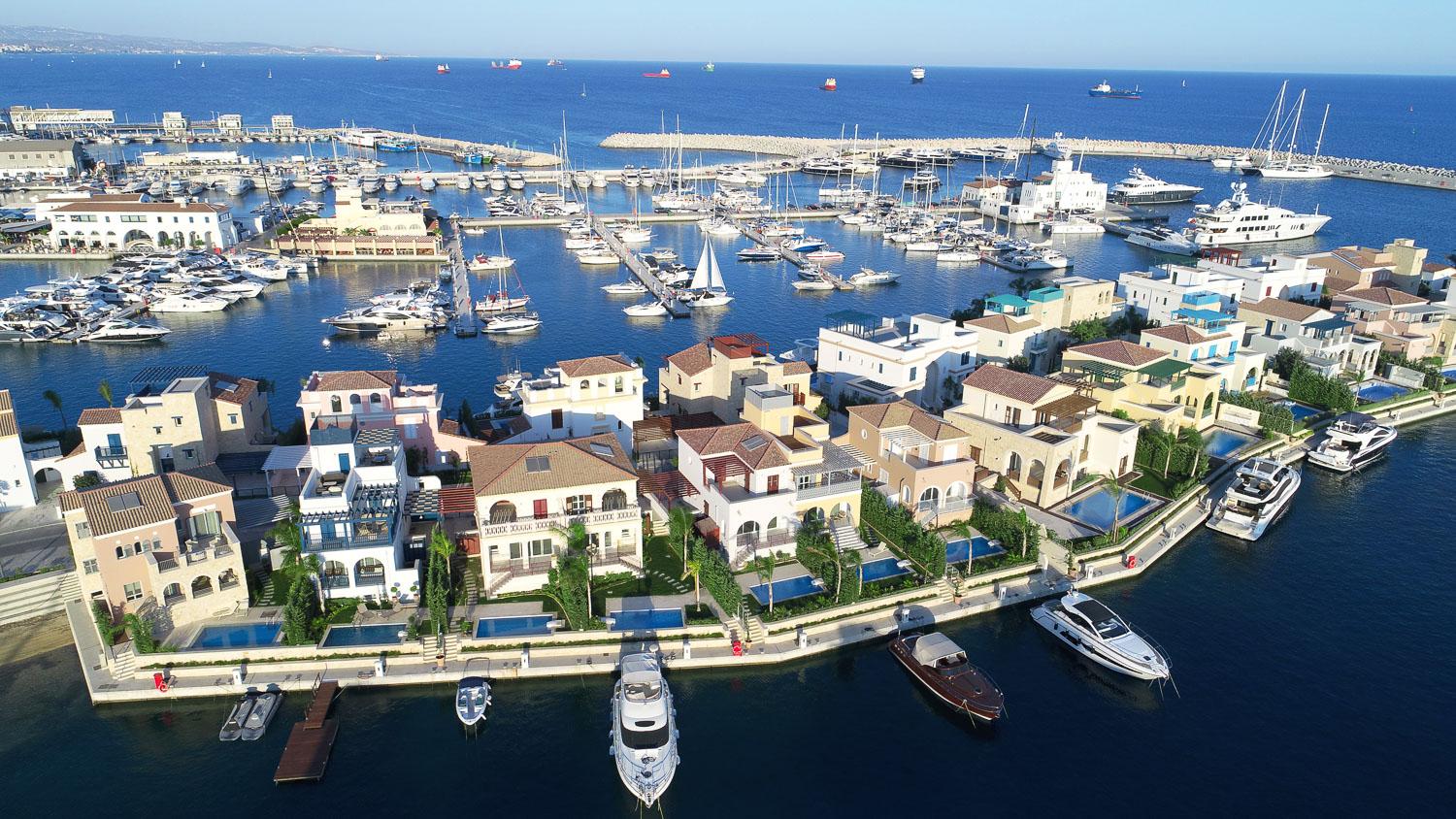
Cyprus's biggest catch is easy to miss until you're already deep in property shopping: the €300K fast-track residency route only counts new-build property — specifically, property purchased directly from a developer, never previously registered to an individual owner. Resale property, however beautiful, does not qualify.
This narrows your shopping dramatically. In the most expat-friendly parts of Cyprus — Paphos, Limassol, Larnaca — a lot of the best-located and best-built housing stock is older. Buying a 10-year-old 3-bedroom villa near Paphos Old Town at €320,000 won't qualify. Buying a brand-new 2-bedroom apartment in a Limassol tower at €320,000 will, even if the tower is in a less desirable location or has developer-quality issues.
The practical effect has been that Cyprus's fast-track residency buyers end up concentrated in new developments, often in emerging areas where developers are actively marketing to the visa crowd. Some of these projects are good; some are visa-bundled with 15-30% markups on similar non-visa units in the same building. We wrote about this pattern in the which countries still offer residency by property investment overview — it's consistent across most golden-visa-linked property markets, and Cyprus is no exception.
Malta does not have a new-build restriction. You can buy any qualifying property at or above the €375K/€425K threshold, new or resale, from any seller. You have more freedom to buy a well-located, well-built, properly-inspected property without developer friction.
The r/cyprus new-build warnings thread and PropertyInvestorToday Cyprus developer articles both document specific horror stories — particularly from buyers who purchased off-plan (before construction completion) and ended up waiting 3-5 years for title, with the property technically "new" only on paper until the title is registered. For Cyprus, buy completed, not off-plan, even if you have to pay more.

The Tax Difference (Which Is Actually Bigger Than the Cost Difference)
Both programs come with favorable tax regimes, but the structures are different and the winner depends on your income profile.
Cyprus non-dom status is the real draw for high-income Americans. If you become a Cypriot tax resident but are not "domiciled" (a British legal concept Cyprus inherited), you pay zero Cypriot tax on worldwide dividends and interest for 17 years. You also don't pay Defence Contribution (the parallel Cypriot tax that would otherwise hit investment income). Capital gains on non-Cypriot property are generally exempt, and foreign pension income can be taxed at a flat 5% under a special election (Article 20(3) of the Cyprus Income Tax Law). The full details are at taxforcyprus.gov.cy and summarized cleanly at Deloitte Cyprus Tax Facts and EY Cyprus Tax Guide.
This is the single most attractive feature of Cyprus for wealthy Americans. If you retire at 55 with a $5M portfolio generating $200K/year in dividends and interest, Cyprus non-dom lets you pay zero local tax on that income for 17 years. The US still taxes it (you're always a US tax resident as a US citizen), but the Foreign Tax Credit means Cypriot residency is tax-neutral on the US side. You're not getting a cut; you're avoiding a penalty. For the mechanics, see our avoid double taxation on property abroad post.
Malta's tax system is more complex and less generous. Malta uses a remittance-based system for non-domiciled residents: foreign income is only taxed if remitted to Malta (brought into the country). This works, but it has two catches that Cyprus doesn't have: (1) there's a minimum annual tax of €15,000 for most non-doms, and (2) the "High Net Worth Individual" status and Global Residence Programme (GRP) — which historically offered the best Maltese tax deal — are separate from the MPRP residency visa. You'd need to qualify for both, which adds paperwork and cost.
In practice, for a high-income American, Cyprus's 17-year tax holiday on dividends and interest is worth more than Malta's remittance system plus €15K annual tax — often by a lot. For a modest-income retiree living on Social Security, the difference is negligible and Malta's MPRP might be preferable because the residency is unambiguously permanent.
The Deloitte Malta tax facts guide and PWC Malta individual tax summary are the cleanest professional breakdowns. The r/ExpatFIRE Cyprus vs Malta thread has specific American FIRE numbers that are worth reading.
The Citizenship Question (and the April 2025 ECJ Ruling)
Before 2025, both countries had citizenship-by-investment programs in parallel to their residency programs. Both have now been effectively killed by EU-level intervention.
Malta: On April 29, 2025, the Court of Justice of the European Union ruled in Case C-181/23 (Commission v. Malta) that Malta's Citizenship by Naturalisation for Exceptional Services by Direct Investment (CES) was incompatible with EU law because it effectively traded EU citizenship for cash without requiring a "genuine link" to Malta. The ECJ held that Malta must stop processing new applications under the program. Malta's government initially resisted but formally suspended new applications by late 2025. See the ECJ press release 50/25 for the full ruling.
Cyprus: Killed its own citizenship program in November 2020 after the "Cyprus Papers" Al Jazeera exposé revealed that applicants with criminal backgrounds had been granted passports. The program was replaced by the current Category F / Fast-Track residency-only structure, which is what remains.
What this means for Americans looking for a second passport: neither Malta's CES nor Cyprus's old citizenship program are options in 2026. If you want EU citizenship specifically, you'll need to naturalize through residency, which requires:
- Malta: 5 years of actual residence (183+ days/year each year), Maltese language test (now enforced), civic knowledge test. Naturalization has become harder under post-2025 political pressure.
- Cyprus: 7 years of cumulative residence (at least one year uninterrupted before application), Greek language test (A2), civic knowledge, and a clean background. Cyprus citizenship by naturalisation page.
Both are genuinely 5-8 year projects if you pursue citizenship rather than just residency. Neither has an easier alternative in 2026. For Americans specifically, the r/IWantOut Malta/Cyprus naturalization threads suggest that Cyprus is modestly easier on the language test side because Greek, while hard, has more learning resources and a larger diaspora community. Malta's language requirement (Maltese, which is a Semitic language with Italian/English loanwords) is genuinely difficult.
If your goal is a second passport, neither country is a great path in 2026. If your goal is permanent EU residency with optional citizenship after a decade, either works and your choice comes down to the cost and tax factors above.
Which Fits Which American
After all that, the decision tree is roughly:
Choose Cyprus fast-track if you:
- Want the cheapest EU residency that still includes a property asset
- Have significant dividend/interest income and want the non-dom tax shield
- Can accept the new-build constraint
- Are OK visiting only once every 2 years (you don't have to live there)
- Want Schengen access without the full Schengen treaty (Cyprus is an EU member but not in Schengen — see below)
Choose Malta MPRP (buy) if you:
- Want to actually live in the country for substantial parts of the year
- Prefer Schengen access (Malta is in Schengen; Cyprus is not)
- Have enough capital that the €150K-200K cost difference isn't painful
- Want a tax regime with a simpler compliance story (remittance system is straightforward once set up)
- Plan to eventually naturalize — Malta's 5-year residency requirement is faster than Cyprus's 7
Choose Malta MPRP (rent) if you:
- Want the cheapest path to permanent Maltese residency (under €200K total)
- Are OK with no residual property asset
- Have enough income to support the €14-18K/year rent for 5+ years
- Want optionality without a major real estate commitment
Neither, really, if you:
- Want cheap EU residency and don't need English — look at Latvia (€262.5K) or Greece at the €400K non-Athens tier
- Want lower-tax options without the EU constraint — look at UAE or Panama
- Want a pure tax play without residency obligations — Cyprus non-dom is great, but other structures (Cayman, Bermuda) may suit better if residency isn't the goal
One subtle point Americans often miss: Cyprus is not in the Schengen zone. It's an EU member, so you have EU-level mobility rights for work and settlement, but traveling from Cyprus to, say, France still technically requires a passport stamp. If your goal is to use EU residency to live freely anywhere in Schengen Europe, Malta gives you that day-one and Cyprus will only give it to you when Cyprus eventually joins Schengen (which has been pending since 2010 and is not imminent). The EU Schengen enlargement page has the current accession status.


Due Diligence: What Americans Actually Ask in the MPRP/Cyprus Threads
Reading the last two years of American-focused threads across r/IWantOut, r/expats, r/ExpatFIRE, and r/cyprus, the recurring questions are:
-
"Can I do both?" Technically yes. Several Americans hold both Maltese and Cypriot residency simultaneously, usually because they started with one program and found the other had better tax or mobility features. Costs compound, obviously. This is uncommon and usually excessive — pick one.
-
"What happens if I stop owning the property?" Malta: you must maintain the property (or equivalent qualifying rent) for at least 5 years; selling earlier voids residency. Cyprus: you must maintain the property indefinitely as long as you want to keep the residency on the fast-track basis; selling triggers reassessment.
-
"Will my US children/grandchildren inherit the residency?" Both programs include spouse and dependent children up to a certain age, but residency is a personal status, not heritable. Children can be included on the initial application; grandchildren generally cannot.
-
"Is the bank account requirement a problem?" Cyprus's €30K locked deposit is easy for most Americans. Malta's €500K net assets requirement is document-intensive — you need to show statements from brokerage and bank accounts, and Maltese due diligence is genuinely thorough about source of funds. Budget extra time for compliance.
-
"What about Turkey or the Caribbean citizenship programs instead?" Different product. Turkey is $400K for actual citizenship, not residency — see our Turkey citizenship by real estate post. Caribbean CBI (St. Kitts, Dominica, Grenada) is $200-400K for passport, but those passports don't give you EU mobility. They're not substitutes for Malta or Cyprus; they're different products.
For a broader EU residency comparison, our cheapest countries where Americans can still buy residency post ranks the cheapest 8 options. For the currency and transfer mechanics of moving €300-600K to Europe, read how to transfer $1M to Europe and the best currency strategy when buying in euros.
Bottom Line
Malta and Cyprus are the two remaining English-speaking EU residency-by-property programs in 2026. They're not interchangeable. Cyprus is cheaper (~€360K vs ~€525K total), faster (2-4 months vs 6-12 months processing), and has a dramatically better tax regime for high-income investment earners (17-year non-dom). Malta is more expensive, slower, has a complex remittance-based tax system, but gives you Schengen access day-one, no new-build property restriction, and a slightly faster path to naturalization.
For wealthy Americans with dividend/interest income, Cyprus is almost always the better financial choice. For Americans who actually want to live in EU Europe part-time and travel freely in Schengen, Malta is the better practical choice despite the higher cost. Neither is a good second-passport play in 2026 because both citizenship programs are effectively gone.
Before writing any checks, get an independent property valuation (not the developer's), verify the latest thresholds on the official government sites, and run the tax scenarios with a CPA who understands US-Malta or US-Cyprus tax treaties. Both treaties exist and both are functional, but the planning complexity is real and the stakes — €360K to €580K — justify professional help.
Ready to explore?
Browse Destinations