
How Long Does It Take to Close on a House in Spain as a Foreigner?

The real answer to 'how long does a Spanish closing take' is: 4 to 6 months from the day you decide to buy to the day your registered deed is back from the Registro de la Propiedad, assuming you are an American starting from zero — no NIE, no Spanish bank account, no pre-existing paperwork. The fastest realistic close is 6 to 8 weeks for buyers who already have the NIE and the bank account set up and who find a clean-title property with a motivated seller. The worst case is 8 to 12 months when diligence turns up urbanismo problems, inheritance chain gaps, or mortgage cancellation issues on the seller's side.

This article gives American buyers a realistic, week-by-week timeline with the things that go wrong at each phase. It complements our longer closing timeline Spain article, which covers the phases in sequential detail. Here the focus is on what specifically adds foreigner-only delays to each step and how to collapse them. For related reading, see our moving to Spain guide, our hidden costs of buying in Spain article, and our Spain visa to buy property article. Peer sources: r/Spain, r/Barcelona, r/expats, r/AmerExit, and r/GoingToSpain. Primary sources: the Spanish consular network for NIE processing and the Registro de la Propiedad national registry for deed registration.
The Four Clocks Running in Parallel
A Spanish closing is not one timeline — it's four overlapping timelines that must all finish before you get keys. The trick to closing fast is to run them in parallel, not serially. Most Americans run them serially by accident and their 8-week close turns into 20 weeks.
Clock 1: Foreigner paperwork — the NIE, the Spanish bank account, the Wise or currency broker account, and the power of attorney if you won't fly in to sign. This should start 8-12 weeks before you make any offer and runs entirely in parallel with property searching.
Clock 2: Property search and offer — finding the property, negotiating the price, getting the reservation contract signed. Typically 2-8 weeks of active searching in your target city.
Clock 3: Legal due diligence and arras — nota simple, cédula de habitabilidad verification, IBI and community fee clearance, ITP calculation, mortgage cancellation coordination if the seller has one, and the arras contract itself. Runs 2-6 weeks between accepted offer and arras signing, then another 4-8 weeks from arras to closing.
Clock 4: Post-closing registration — ITP payment within 30 days, deed filing at the Registro de la Propiedad, typically 2-6 weeks from filing to your registered deed coming back.
Add the slowest paths through each clock and you get your realistic total time. Skip Clock 1 and you will spend 8 weeks in the middle of the closing waiting for the NIE that you should have started three months earlier. Spain-Easy's 2026 mortgage guide for US citizens walks through the same parallel-tracks model from a lender perspective.
Clock 1: The NIE and Bank Account — 4 to 10 Weeks
The NIE is the critical-path item for most Americans. You cannot sign a Spanish property deed, open a long-term bank account, pay ITP, or register at the Catastro without one. If you learn nothing else from this article, learn: start the NIE process before you book your first property viewing trip, not after.

Applying at a US consulate. Costs €10-15 and takes 2-8 weeks depending on the post. NYC and Miami consulates are the slowest (8 weeks is normal, 10+ weeks during peak season). LA, San Francisco, and Boston are faster. Houston and DC are moderate. The Spanish Ministry of Foreign Affairs consular index has booking links for each post. Book the appointment as your first move — some consulates have 4-week waits just to get the appointment to apply. Bring: passport, completed EX-15 form, a written reason stating the property-purchase intent, and cash or card for the fee.
Applying in Spain at a Policía Nacional Extranjería office. Requires a cita previa appointment. Barcelona and Madrid appointments are typically 4-8 weeks out, sometimes longer. Smaller cities — Valencia, Alicante, Murcia, Zaragoza — often have appointments within 1-2 weeks. Some Americans fly to Valencia specifically to get the NIE in a day or two and then travel back to their target city. With the appointment, you pay the fee via Modelo 790 at a participating bank branch, appear at the appointment, and receive the NIE the same day or within a few days. Cheaper and faster than the consulate route if you can already be in Spain.
Power of attorney to a Spanish lawyer. €250-600 plus notary and apostille. The lawyer applies for the NIE on your behalf. Slower than applying yourself in Spain but doesn't require your presence. Idealista's NIE guide explains the PoA route.
Opening the bank account. Once you have the NIE in hand, opening a Sabadell, BBVA, CaixaBank, or Santander Openbank non-resident account takes 30 minutes to 2 days. Bring NIE, passport, and proof of address. Monthly fees run €5-15. Non-resident accounts are standard Spanish banking and every major bank offers them. Some Americans also use Openbank (Santander's online brand) which handles non-residents well. See r/Spain threads on non-resident bank accounts.
Total time for Clock 1: 4-10 weeks. Start now, worry about the property later.
Clock 2: Searching and Offering — 2 to 8 Weeks
Active property searching runs entirely in parallel with Clock 1. The main Spanish portals are Idealista, Fotocasa, Pisos.com, and (for foreigners) Kyero, which is English-language and curates listings that welcome international buyers. Kyero's data is sometimes a few weeks behind the Spanish portals but its English-first presentation is useful for first-time buyers.
How long searching takes varies hugely by what you're looking for and where. In Barcelona and Madrid the market moves fast enough that serious buyers in hot segments (2-bed centric apartments under €400K) need to view listings within 3-5 days of posting or they're gone. In Valencia, Málaga, Seville, Bilbao, and smaller cities the pace is slower but still faster than American markets. Rural and Costa-del-Sol second homes can sit for months.
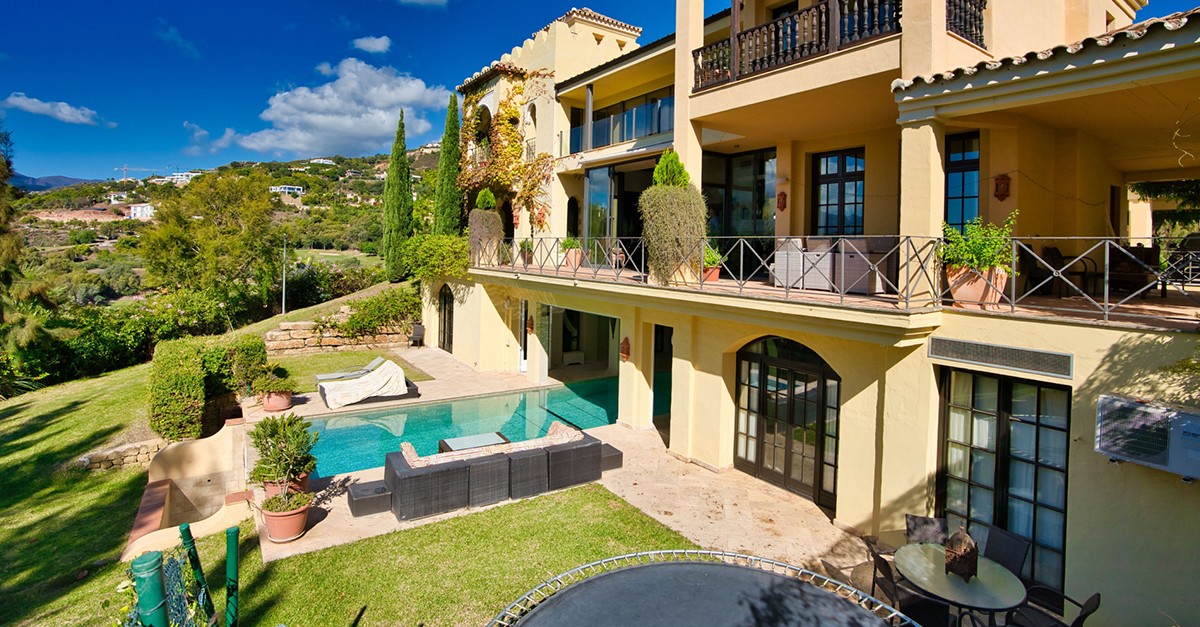
A typical American buyer viewing trip. Fly to Spain for 7-10 days, view 15-25 properties across 2-3 shortlists, make an offer on the one you want. A good Spanish buyer's agent (agente del comprador) will line up viewings, handle the Spanish-language communication, and negotiate on your behalf for 1-2% of purchase price. Agents in Barcelona, Madrid, and Málaga who specialize in English-speaking clients — Lucas Fox, Engel & Völkers, and the local branches of international firms — are the easiest entry point. Blevins Franks' Spain property guide lists buyer agent patterns.
Making the offer. Spanish offers are usually verbal first, then reduced to a reservation contract (contrato de reserva) with a small deposit (€3,000-10,000) to hold the property for 1-2 weeks while your lawyer runs initial diligence. The reservation deposit is typically refundable if diligence turns up legitimate problems and is low-risk. r/Barcelona threads on first offers have examples.
Total time for Clock 2: 2-8 weeks from start of active searching to signed reservation.

Clock 3: Legal Diligence to Arras to Closing — 6 to 14 Weeks
This is the longest phase and the one foreign buyers most often underestimate. Between the reservation deposit and the signing of the escritura pública at the notary, the following needs to happen:
Week 1-2 after reservation. Your Spanish abogado pulls the nota simple from the Registro de la Propiedad — a one-page summary showing current owner, charges, encumbrances, and outstanding debts. Cost €10-25. Time 1-3 days. Reviews the seller's cédula de habitabilidad and energy performance certificate. Verifies the catastral reference against the physical property.
Week 2-4. Your lawyer confirms with the ayuntamiento that no back IBI is owed, confirms with the administrador de fincas that community fees are current, and reviews any urbanismo issues. Pulls the valor de referencia from Catastro to calculate ITP correctly. Identifies any fuera de ordenación issues on extensions or alterations. If the diligence comes back clean, you move to arras.
Week 3-5. Negotiate and sign the contrato de arras — the formal earnest money contract under Article 1454 of the Spanish Civil Code. You pay 10% of the purchase price to the seller's account. The contract specifies:
- Purchase price in euros
- Closing deadline (usually 30-60 days from signing)
- Arras penitenciales clause (if buyer walks, forfeits deposit; if seller walks, owes double)
- Any contingencies (financing, remaining diligence, etc.)
Do not sign an arras contract you cannot read. Either your lawyer produces a line-by-line English translation or you use a certified bilingual agreement. This is the most common preventable foreign-buyer mistake after not starting the NIE early.
Weeks 5-12. Full legal diligence runs in parallel with financing preparation and scheduling the notary appointment. Your lawyer covers the complete title history (20+ years), urbanismo compliance, mortgage cancellation coordination with the seller's bank (if applicable), and the final ITP calculation. Rural properties add water rights, livestock rights, and easement verification, adding 2-3 weeks.
Week 12-14. Notary appointment. You (or your attorney via PoA) appear at the notary's office. The notary reads the escritura pública de compraventa aloud, both parties sign, and you transfer the balance of purchase funds. The notary gives you a copia autorizada — your original closing document. The appointment itself takes 45 minutes to 2 hours.
Things that stretch this clock.
- Cedula de habitabilidad problems on older rural properties — +2-6 weeks
- Fuera de ordenación discoveries on unpermitted extensions — +4-8 weeks and may kill the deal
- Seller mortgage cancellation delays (the seller's bank is slow to release its charge) — +2-4 weeks
- August — +3-4 weeks if the deal crosses August because most of Spain stops working
- Holidays around Christmas/New Year, Easter week (Semana Santa), and local fiestas — +1-2 weeks
Total time for Clock 3: 6-14 weeks from reservation to notary appointment, typical case ~10 weeks.
Clock 4: Post-Closing Tax and Registration — 2 to 8 Weeks
The closing doesn't end at the notary. Two more things need to happen before you're a fully-protected legal owner.
ITP payment within 30 days. Impuesto de Transmisiones Patrimoniales is the regional transfer tax, paid to your autonomous community's tax office via Modelo 600. Rates vary 6% to 10% depending on the region: Madrid is 6%, Catalonia is 10%, Andalusia is 7-8%, Valencian Community is 8-10%. Your gestoría or lawyer handles the filing. Miss the 30-day deadline and penalty interest surcharges kick in — 5% in the first month, escalating to 20% over longer delays. The Agencia Tributaria Modelo 600 page has current forms.
Registration at the Registro de la Propiedad. After ITP is paid, the escritura is submitted to the local property registry. Registration takes 2-6 weeks in most cities, sometimes longer in congested registries (Barcelona and Madrid are typical bottlenecks). The registry fee runs €400-1,000 for a typical residential property. Until registration is complete, your ownership is technically not fully protected against third-party claims — in theory a second deed could be registered first and take precedence. In practice this essentially never happens because notaries verify status before closing, but it's the reason Spanish attorneys push for prompt filing.
Total time for Clock 4: 2-8 weeks from notary appointment to registered deed in hand.
The Realistic Calendar — Three Scenarios
Fast case: 6-8 weeks. You already have your NIE (you got it on a previous trip), you already have a Spanish bank account, you find a property quickly, the title is clean, the seller is motivated, and the deal doesn't cross August. Cash buyer. This happens often with repeat Spain buyers — Americans who bought a Madrid apartment in 2019, loved it, and bought a second one in Valencia in 2024. First-time buyers essentially never close this fast.
Typical case: 4-6 months. You start from zero on the NIE, do a property viewing trip, find a property on the third visit, sign arras 4-6 weeks later, close 8-10 weeks after that, and have the registered deed in hand another 4-6 weeks after closing. This is the honest average for a first-time American buyer.
Slow case: 8-12 months. Something in the diligence goes wrong. Urbanismo problems on the property. A missing heir in the seller's chain of title. Cedula de habitabilidad can't be produced. The seller's bank drags on mortgage cancellation. You started the NIE late and then the deal crossed August. The autumn rentrée in Spain is slow. r/Spain threads on slow closings have recent examples of 10-month-plus closings.
What materially speeds things up.
- NIE done before you start searching. Saves 4-10 weeks.
- Hire a lawyer who actively runs the post-offer phase rather than waiting for you to push each step. Saves 2-4 weeks on diligence.
- Power of attorney to your lawyer for the notary signing — you don't have to fly back to Spain. Saves 1-3 weeks.
- Cash purchase rather than Spanish mortgage. Spanish mortgages for non-residents take 6-12 weeks for underwriting alone.
- Don't target August for any of your closing phases.
What materially slows things down.
- Expecting the seller to produce documents on US timelines.
- Not having the funds pre-positioned in your Spanish bank account when closing is scheduled.
- Arguing over the ITP base calculation with your lawyer instead of the tax office (you'll almost always lose).
- Trying to negotiate with a seller who is also inheriting the property in an unresolved herencia.
- Buying in Catalonia, which has its own slower procedural quirks on top of the national baseline.

Finance Timing: Where Non-Residents Really Lose Weeks
If you're paying cash, skip this section. If you're taking a Spanish mortgage as a non-resident American, add 6-12 weeks to your total timeline and plan carefully.
Spanish non-resident mortgages are offered by all the major banks (Santander, BBVA, CaixaBank, Sabadell, Openbank) but underwriting for non-resident Americans is slow and document-heavy. Typical non-resident terms in 2026:
- LTV: 60-70% (vs. 80-90% for residents)
- Rates: Variable rates tracking Euribor + 2.0-3.5%, fixed rates 3.5-5.5% depending on bank and term
- Term: 15-25 years max, must finish by age 75 for most lenders
- Documentation: 3 years of US tax returns, 3 years of US bank statements, US credit reports (which Spanish underwriters can't read), employment verification, proof of US assets, and FBAR filings demonstrating compliance with US cross-border banking rules
Spain-Easy's 2026 non-resident mortgage guide walks through the current lender landscape. The processing timeline is 6-12 weeks from initial application to binding offer, much longer than a Spanish resident purchase. This runs in parallel with Clock 3 but if the mortgage is delayed, closing is delayed — banks will not let the notary appointment proceed until the mortgage deed is ready.
The practical recommendation for most American buyers is to avoid Spanish non-resident mortgages on first purchases. Pay cash if you can, use US-side financing (HELOC on your American property, portfolio margin, or brokerage loan) if you can't. Our wiring money foreign property article and euro currency strategy article cover the cash-transfer mechanics, which are simpler and faster than dealing with Spanish underwriting.
What to Do the Week Before Your Target Closing Date
The week leading up to notary is high-stress for foreign buyers. Here is the checklist.
T-7 days. Confirm with your lawyer that the updated nota simple is clean and unchanged since the arras. Confirm the seller's mortgage cancellation documents are ready (if applicable). Confirm the notary appointment is locked. Confirm the ITP amount your lawyer will submit.
T-5 days. Transfer the balance of purchase funds to your Spanish bank account. Use Wise or a dedicated FX broker, not a US bank wire. Allow 2-4 business days for the funds to clear. For six-figure transfers, the FX broker route can save you 1-2% versus a bank wire, which is real money.
T-3 days. Verify the funds have arrived and are available in your Spanish account. Request a cashier's check (cheque bancario) or pre-authorize the wire to the seller for the day of closing. Your lawyer will coordinate.
T-1 day. Review the final escritura draft with your lawyer. Review any last-minute changes. Confirm the seller will physically attend (or has signed a PoA to their own lawyer). Confirm your translator is booked if your Spanish isn't fluent.
Closing day. Appear at the notary's office. Present your NIE and passport. Review the escritura one more time. Wire or hand over the balance. Sign. Receive the copia autorizada. Receive keys. Take photos of everything.
T+1 to T+30 days. File Modelo 600 and pay ITP through your gestoría. Register the utilities to your name (electricity, water, gas). Notify the community administrator of the change of ownership. Register for IBI at the ayuntamiento.
T+30 to T+60 days. The deed filing at the Registro de la Propiedad completes. Your lawyer sends you the final registered deed certification. You are now the fully-protected, legally-registered owner. For the cross-country comparison of what to do after offer acceptance, see our offer accepted on a house abroad article. And for real Spanish listings, browse our country page for Spain and the city pages for Barcelona, Madrid, Valencia, Seville, and Málaga.
Ready to explore?
Browse Destinations