
Virtual House Tours for Foreign Buyers: Which Portals Offer Them in 2026

Virtual tours were a pandemic novelty in 2020. In 2026 they have quietly become essential infrastructure for foreign buyers who cannot afford to fly to three countries to shortlist. The question is no longer 'do portals offer virtual tours' but 'which portals offer tours that actually reflect the property as built.' The answer varies enormously by country and even by listing within a country, and the cost of getting it wrong — showing up to view a property you already bought because the virtual tour hid a structural issue — is thousands of dollars in airfare and weeks of wasted time.
This article walks through the state of virtual tour technology on the major international property portals Americans actually use in 2026, what a good tour looks like, what a bad tour hides, and the specific questions to ask a listing agent before you commit to viewing a property only virtually. For related reading see our buying property sight unseen article, our offer accepted on a house abroad article, and our power of attorney for buying property overseas guide. Peer sources: r/RealEstate, r/expats, r/AmerExit, r/IWantOut, and r/digitalnomad.
What 'Virtual Tour' Actually Means in 2026
The marketing language around virtual tours is deliberately vague, and the actual experiences vary wildly. Here are the four things portals mean when they say 'virtual tour,' from worst to best for a foreign buyer's purposes.
1. Stitched photo gallery. A sequence of still photos presented in a slideshow, sometimes with room labels. Not a virtual tour — just photos in a different wrapper. Most portals still use this as a default and call it a 'tour.' Useless for buying decisions beyond what you'd learn from plain photos.
2. 360° panorama room views. Individual rooms captured as 360° panoramas you can pan around in. Better than photos because you can see what's behind the camera, and you can look at the floor and ceiling. Easy to fake with carefully chosen camera positions that hide damage, moldy corners, crooked window frames, or unfinished joinery. Commonly produced with consumer equipment like a Ricoh Theta or Insta360 camera.
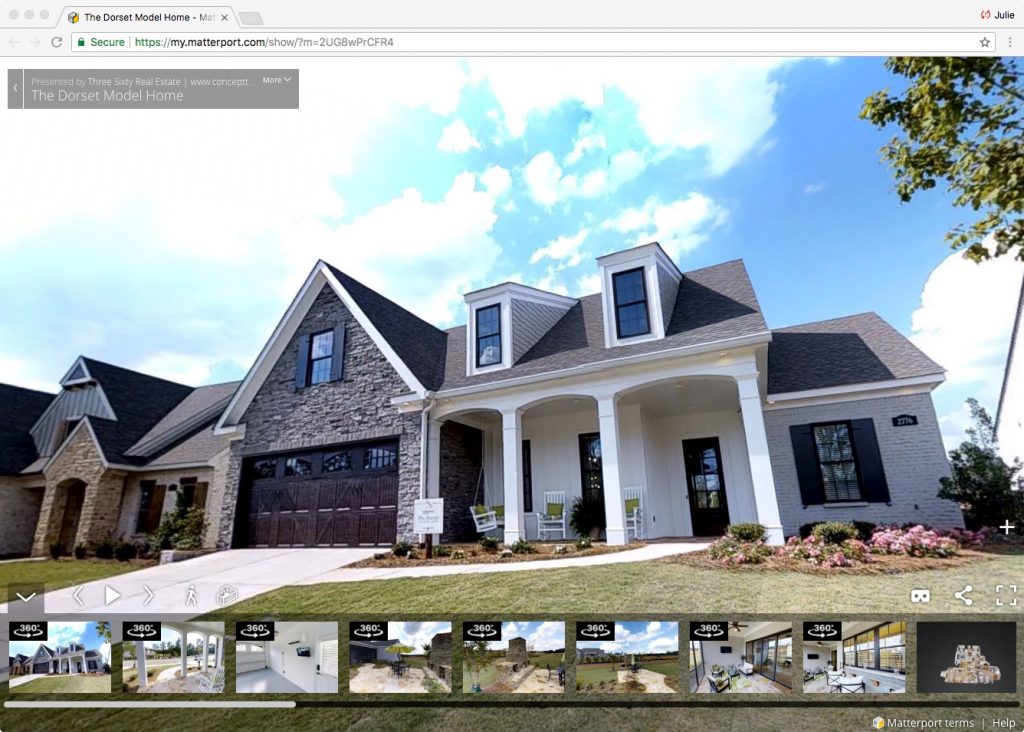
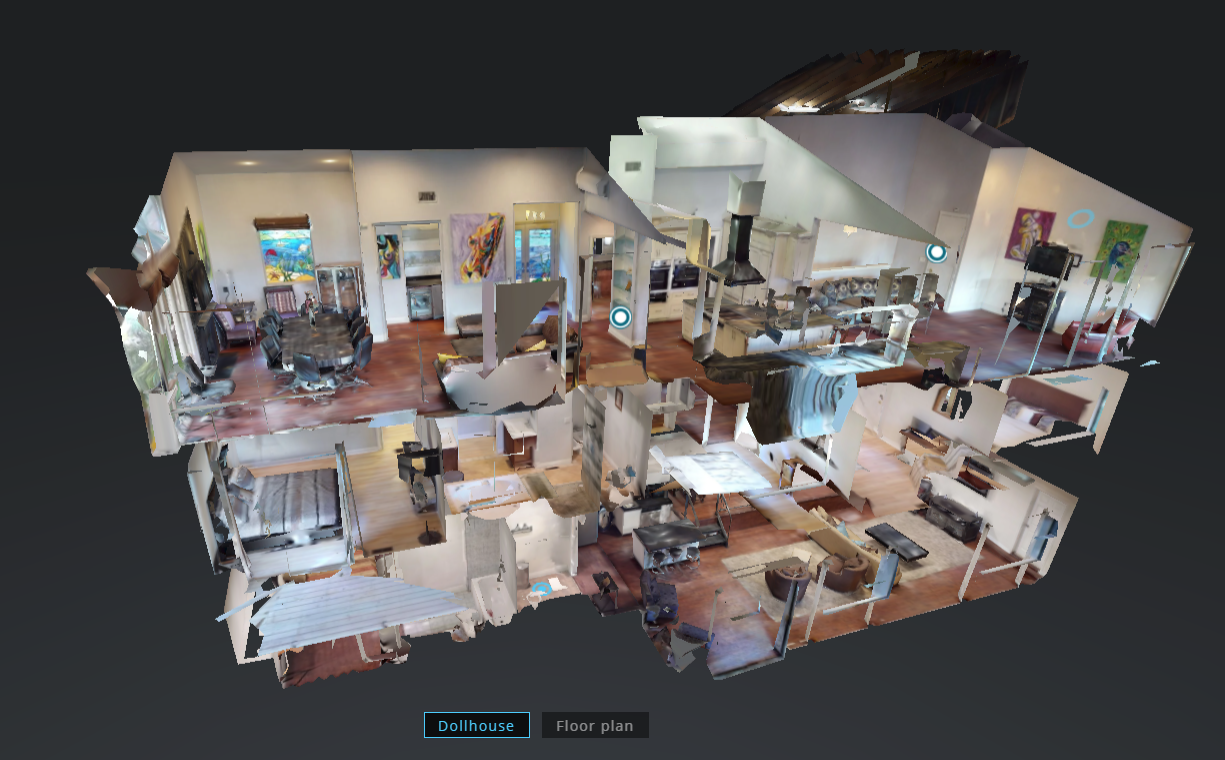
3. Matterport (or equivalent) 3D walkthroughs. A true 3D scan of the property produced with a multi-camera LiDAR rig. You can navigate room to room, see a floor plan view, measure distances, and look at the property from angles the photographer didn't choose. This is the gold standard for foreign buyers — good Matterport tours show what's actually there, including defects the agent would rather you not see. Typical Matterport tours include about 50-200 scan points per property. Matterport's platform page has examples.
4. Live video tour. A real-time video call where the agent walks through the property answering your questions. The best single thing a foreign buyer can do after finding a promising Matterport tour. Most reputable international agents will do this on request for serious buyers. Takes 30-90 minutes. Costs the agent real time, so expect them to qualify you first.
A good foreign-buyer workflow: filter portal listings by 'has 3D tour,' view the top candidates in Matterport, shortlist to 3-5 properties, and then request live video tours for the shortlist before committing to a physical trip. This can compress a multi-month cross-country research process into 2-3 weeks.
Country-by-Country State of Virtual Tours in 2026
The adoption of 3D walkthroughs varies enormously by market. Here is the 2026 picture.
United Kingdom — Rightmove and Zoopla. The UK is the clear leader for foreign buyers. Both major portals support embedded virtual tours, and high-end agents in London, Edinburgh, Manchester, and the Cotswolds routinely commission Matterport scans for listings above £400,000. Coverage is thinner for properties under £250,000. The filter 'has virtual tour' works on both portals. Quality is generally good because the UK estate agent industry adopted Matterport aggressively during 2020-2022 and never reversed course. See r/HousingUK threads on virtual tours.
Spain — Idealista, Fotocasa, Kyero. Idealista is the dominant portal and supports virtual tours, but adoption is uneven — about 30-40% of Madrid and Barcelona listings have some form of virtual tour, mostly 360° panoramas rather than full Matterport. Coastal markets (Málaga, Alicante, Costa Blanca, Mallorca) have higher adoption because the foreign-buyer segment demands them. Kyero, the English-first Spain portal, aggregates listings from multiple sources and sometimes the tour links are missing even when the source portal has them.
France — SeLoger, Leboncoin, Bien'ici. French portal adoption of virtual tours lags the UK and US. Paris has moderate coverage for premium listings; rural properties in Dordogne, Provence, and Brittany usually have only photos. French agents more often offer live video tours on request than pre-recorded Matterport. Bien'ici is generally considered the most modern of the three French portals.
Italy — Immobiliare.it, Casa.it, Idealista Italy. Virtual tour adoption is low by European standards — under 20% of listings even in Milan and Rome. Italian sellers culturally prefer in-person viewings and many listing agents actively discourage virtual alternatives. Tuscany and Puglia properties marketed to international buyers are more likely to have tours; local-market listings rarely do. Workaround: WhatsApp video tours, which many Italian agents will do on request for serious buyers.
Germany — ImmoScout24, Immowelt, Immonet. German portal tour adoption is moderate and growing. Matterport is used for premium listings in Berlin, Munich, Hamburg, and Frankfurt; 360° panoramas are common for mid-market. Cultural note: German real estate listings are unusually data-rich compared to most markets (square meters, year built, energy rating, heating type, insulation year, etc.) which partially compensates for thinner virtual tour adoption. See r/germany threads on property portals.
Netherlands — Funda.nl. Funda dominates Dutch listings and has very high virtual tour adoption — over 50% of Amsterdam, Rotterdam, and Utrecht listings have at least a 360° tour and many have full Matterport. The Dutch market is one of the best for a foreign buyer relying on virtual tours.
Ireland — Daft.ie and MyHome.ie. Virtual tour adoption is moderate. Urban Dublin listings often have tours; rural properties in the west of Ireland often don't. Both portals support embedded tours but don't filter strongly. See our buying off-market Irish property article for the rural reality.
Portugal — Idealista Portugal, Imovirtual. Adoption is low but growing fast in Lisbon and Porto. Algarve properties marketed to foreign buyers have better tour coverage. Wait-and-see in 2026.
Japan — Suumo, Homes.jp, At Home. Japanese tour adoption is surprisingly high for new-build condominiums but low for resales and akiya. The Japanese preference for detailed 2D floor plans (which Japanese listings always include, professionally drawn, with precise measurements) is an unusual substitute — they often reveal more than a Matterport would. See our how to buy a house in Japan without speaking Japanese article.
Mexico — Inmuebles24, Vivanuncios, Point2Homes. Tour adoption varies by listing and by agent. Mexico City and San Miguel de Allende premium listings often have Matterport; coastal resort markets (Tulum, Puerto Vallarta, Cabo) have moderate coverage; Mérida and Oaxaca have thin coverage.
Canada — Realtor.ca, Zillow Canada. Canadian tour adoption is comparable to the US — high for premium listings, moderate for mid-market, thin for rural. The MLS system supports embedded tours standardized across provinces.
What a Good Matterport Tour Shows You That Photos Don't
Once you have access to a real Matterport tour, the actual due diligence value depends on knowing what to look for. Here is the foreign-buyer checklist.
1. Ceiling and wall alignment. Pan up and down in each room. Look at the intersection of ceiling and wall — crooked lines, visible patch marks, and uneven surfaces suggest settlement, water damage, or poor renovations. Photos almost always hide these because photographers don't shoot the ceiling.
2. Floor condition. Look straight down in the middle of each room. Wood floor unevenness, tile cracks, buckling laminate, or water staining near exterior walls are all visible in Matterport but rarely show in staged photos.
3. Window frames and sills. Crucial in European property. Old single-pane wooden frames, signs of rot at the base, condensation trails, black mold patches — all show in a Matterport scan but are routinely cropped out of photos. In Germany, France, and the UK, replacing single-pane windows in an old building is a five-figure expense. Knowing this before an offer matters.
4. Bathroom and kitchen condition. The most commonly staged rooms in listings. Zoom in on tile grout, caulking, behind-the-toilet wall sections, under-sink cabinets, and kitchen joinery. Matterport captures these; professional photos don't.

5. Exterior details visible through windows. Look out each window in the Matterport scan. See what the actual view is. Photos of the view from the 'best' window often misrepresent the typical view from the property. The Matterport shows you every view.
6. Walls between rooms, especially in converted properties. Unusual wall thickness, stepped floors, or awkward ceiling transitions often indicate the property was converted or extended, sometimes without permits. European jurisdictions care about this — an unpermitted extension in Spain can invalidate the whole deed.
7. Storage, closets, and mechanical rooms. These are the rooms staged listings never photograph. Matterport captures them and shows you whether the boiler is 3 or 30 years old, whether the electrical panel is modern or knob-and-tube, whether the attic shows signs of water damage or pest intrusion.
8. Square footage reality check. Good Matterport scans include a measured floor plan view. Compare it to the listing's advertised size. A property listed at '120 m²' that measures 98 m² in the Matterport is a red flag — either the listing is wrong or there's unpermitted floor area not being disclosed. This catches a surprising percentage of listings.
The general rule: a listing that supports a full Matterport tour is telling you they have nothing to hide. A listing that only offers still photos in a premium market where Matterport is standard is telling you something is being hidden. Use this as a filter.

Live Video Tours: The Single Best Pre-Offer Step
After the Matterport, the next step for any serious shortlist property is a live video tour with the listing agent. This is more useful than a pre-recorded tour because you control what the agent shows, you can ask questions in real time, and you can verify specific details (the view from a specific window, the noise from a specific street, the appearance of a specific bathroom).
How to book one. Email the listing agent with a concrete request: 'I am an American cash buyer seriously considering this property. Before I plan a trip to [city], could we schedule a 45-minute live video walkthrough on [date]? I would like to see specifically [list].' Most serious agents will agree to this. Time zones are usually the only obstacle — budget 6am or 11pm your time.
What to ask during a live tour.
- 'Can you walk me to the window and show me the view for 30 seconds from each window?'
- 'Can you open each door and show me what's behind it — closets, utility rooms, storage?'
- 'Can you show me the boiler, fuse box, and water meter?' (In European buildings, the condition of these tells you the age and quality of the last renovation.)
- 'Can you show me the bathroom wall behind the toilet and under the sink?'
- 'Can you go outside and show me the front and back of the building from the street?'
- 'Can you show me the shared hallway and the main entrance?' (For apartment buildings, the common areas tell you about building management.)
- 'Can you show me the EPC / energy rating document on camera?' (European properties only; confirms the listing rating matches the actual document.)
- 'What's the biggest defect of this property? If you had to name one, what would it be?' (Many honest agents will actually answer this in a live video because it's hard to lie in real time.)
Red flags in a live tour.
- Agent refuses to point the camera where you ask
- Agent's connection 'drops' exactly when asked about a problem area
- Agent rushes through a specific room
- Agent gives different numbers for square footage than the listing
- Agent cannot answer basic questions about service charges, community fees, or energy rating
- Agent speaks a language they weren't advertised as speaking, and translation is garbled
If a live tour produces a red flag, walk. The Matterport plus live tour pair is typically enough to shortlist to one or two properties that genuinely warrant a physical trip. See r/RealEstate threads on video tours for current practice. r/digitalnomad threads have the remote-buyer angle.
What Virtual Tours Don't Show
Even the best Matterport tour misses things that matter for a foreign buyer's decision. Knowing what the tour can't tell you is as important as knowing what it can.
Noise. No tour captures street noise, neighbor noise, plumbing noise, or the rattle of a nearby train. Spend 30 minutes on the property's street during your physical visit — or ask the agent to do a 10-minute silent walk through the property with the phone's microphone on. You'll learn more than from 50 photos.
Smell. Mold, damp, pets, smoking, cooking, sewage — the nose tells you things the eye misses. This is the single best reason for at least one physical viewing before closing on any foreign property.
Neighbor quality and community dynamics. The Matterport shows you your future neighbors' front door, not whether they have four screaming children and a drum kit. Read r/[city] or r/[country] threads on the specific neighborhood, and consider renting an Airbnb on the same street for a weekend before committing.
Structural defects hidden behind walls. A Matterport captures surface condition but cannot see into walls. A 19th-century European property can have wet rot, dry rot, electrical problems, and plumbing problems entirely hidden behind freshly painted walls. This is why a physical building survey (by a qualified local surveyor) is non-negotiable for older properties.
Legal and title defects. The tour tells you nothing about title, liens, easements, urbanismo compliance, or unpermitted extensions. These are the job of your lawyer's diligence.
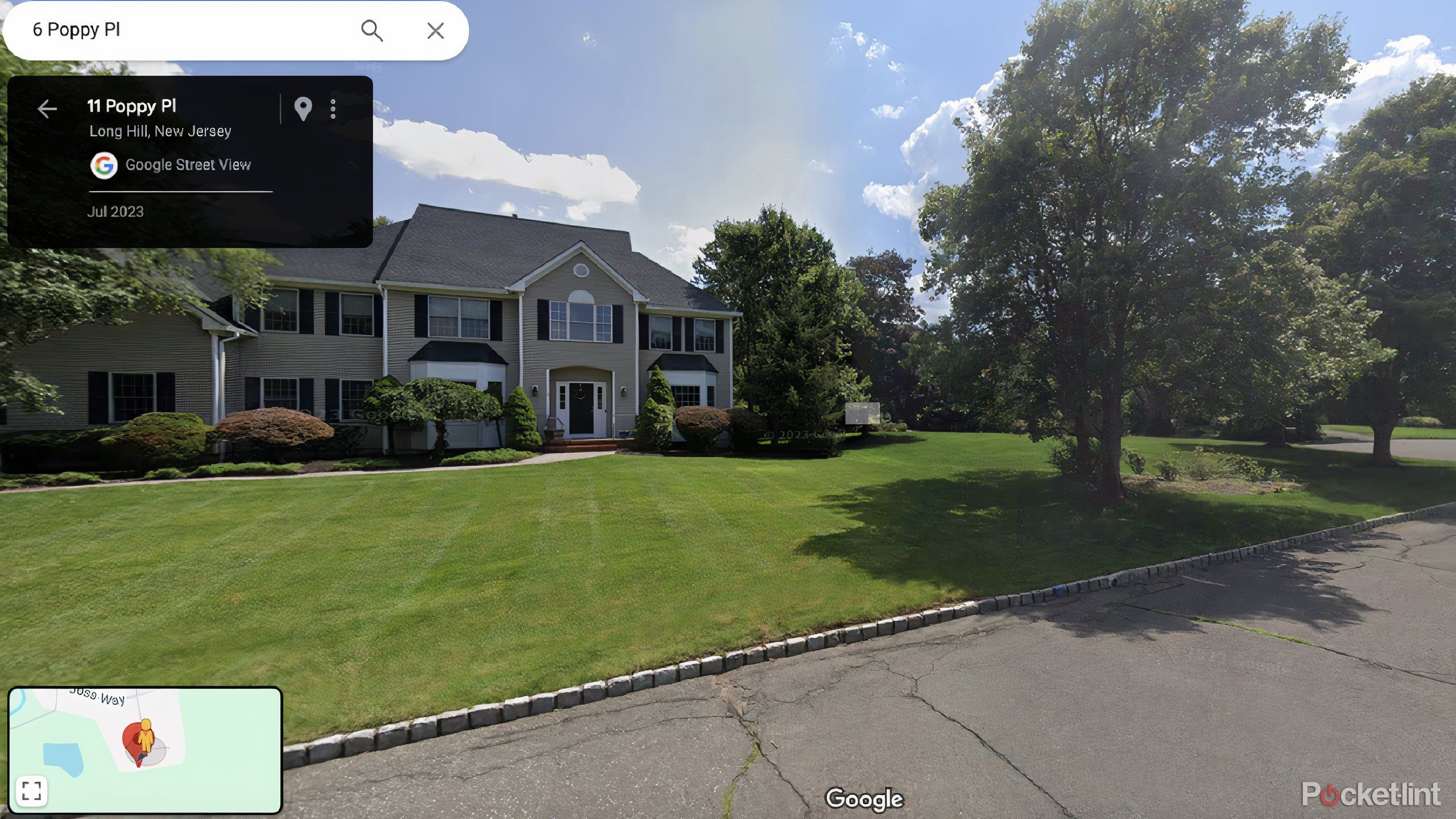
Actual commute times, walkability, amenities. Google Maps and Street View cover this better than any property portal. Spend 20 minutes on Street View 'walking' from the front door to the nearest train station, market, and coffee shop before offering. Our buying property sight unseen article has the full list of checks you should run from your desk.
Microclimate and light. A north-facing Madrid apartment in January is much darker than photos suggest. A ground-floor flat next to a tall building may never see direct sun. Use sun path tools like SunCalc to verify the property's actual sun exposure throughout the year.
The Realistic Foreign-Buyer Virtual Tour Workflow
Putting everything together, here is a workflow that compresses foreign property research into 2-4 weeks of desk work and one efficient in-country trip.
Week 1: Portal filtering. Identify your 2-3 target portals for the country. Filter to 'has virtual tour' + your price range + your size range. Save 30-80 listings to a spreadsheet. Pull the Matterport tours on your 20 favorites.
Week 2: Matterport review. Spend 15-30 minutes in each Matterport. Eliminate anything with red flags (ceiling damage, unrealistic measurements, mismatched floor plans). Shortlist to 8-12.
Week 3: Live video tours. Schedule 45-minute video tours with the listing agents of the 8-12 shortlisted properties. Ask the specific questions listed above. Eliminate anything where the agent evades or the video confirms a red flag.
Week 4: Final shortlist and trip planning. You should now have 3-5 properties genuinely worth physical viewing. Book a viewing trip to the country of 5-10 days. Allow 2-3 days for each major property (view, sleep on it, re-view, neighborhood walk, lawyer consultation, offer).
On the trip. Physically view the shortlisted properties. Visit each twice — once in the morning, once in the evening — to catch light and noise differences. Make offers on the 1-2 that match expectations. Return to the US for the closing phase.
After return. Run the closing through your lawyer and if possible via power of attorney. You've saved one or two redundant international trips and shortlisted more efficiently than any pre-virtual-tour buyer could have.
The virtual tour revolution has not made physical viewing obsolete — it has made it focused. A 2026 American buyer using this workflow can realistically close on a European, Japanese, or Latin American property with one in-country trip totaling 7-10 days. Before virtual tours, the same buyer needed 3-4 trips. For the broader sight-unseen buying framework, see our buying sight unseen article.
Ready to explore?
Browse Destinations