
Buying a House Sight Unseen Abroad: How Americans Actually Do It in 2026

Every few weeks a thread pops up on r/IWantOut or r/expats that goes something like this: I found a house in Portugal / Spain / Italy / Mexico on Idealista for $180,000. I can't fly out right now. Can I just buy it from my couch?
The answer is yes. Americans close on property sight unseen in dozens of countries every single month. What they rarely admit on Instagram is how many of them regret it, how many get partially scammed, and how many discover at signing that the "renovated farmhouse" has a collapsed roof, the "quiet cul-de-sac" backs onto a motorway, or the "ocean view" requires standing on a chair in the upstairs bathroom.
This guide is the honest version. You can buy a home abroad without setting foot on it, but only if you replace your own eyeballs with a stack of paid professionals and contractual safeguards that together cost more than a plane ticket. Here is how it actually works in 2026, what it costs, what goes wrong, and when you should just go ahead and book the flight.

Why people do it anyway
The romantic version is that somebody fell in love with a listing photo and couldn't wait. The real version is usually one of three things. First, the buyer already lives in a high-cost U.S. metro, has a narrow window to deploy cash or 1031-exchange proceeds, and can't burn a week of vacation flying to Valencia to tour six apartments. Second, the buyer is chasing a specific window — a Golden Visa deadline in Portugal before rules change, a probate sale in rural Ireland, an akiya auction in Japan — and physically visiting would mean missing it. Third, and most common, the buyer has visited the country before, fell in love with a region on vacation, went home, and is now buying from back home with a very rough mental map of what the place looks like in person.
All three are legitimate. What they share is that the buyer is making a five- or six-figure decision based on representations from strangers who are paid to sell. That is the entire risk in one sentence. Everything that follows in this article is about making the people who represent the property accountable to you instead of to the seller.

Anyone who tells you sight-unseen buying is "basically the same as normal buying" is either lying or has never done it. The r/RealEstate and r/ExpatFIRE subs are full of people who figured out the hard way that the one thing an international seller's agent will never volunteer is what's wrong with the house.
The team you need before you even make an offer
A remote purchase requires four separate people whose loyalty is to you, not to the listing. In order of importance:
1. A bilingual buyer-side lawyer in-country. This is non-negotiable. Not a notary, not the seller's lawyer, not the agency's recommended lawyer — your own independent attorney admitted to practice in the country where the property sits. Expect to pay 1%–1.5% of purchase price plus VAT, with a minimum fee usually starting around €1,500–€2,500 in Europe. Guides from firms like Judicare and the Law Society of Ireland consistently stress the same thing: the single biggest mistake Americans make abroad is using the seller's or agent's lawyer to save money. See our bilingual real estate lawyer guide for how to vet one.
2. An independent buyer's agent (buyer's advocate). In the U.S. we take buyer representation for granted. In most of the world the listing agent works for the seller and the buyer has no one. In the UK you can hire a Property Finder through the Association of Professional Buying Agents. In France look for a chasseur immobilier licensed under the Loi Hoguet. In Italy agencies like Gate-Away and independent buyer's agents fill the role. Budget 1%–3% of purchase price. A good buyer's agent will walk the property with a phone camera before you sign anything and ask the questions the seller's agent won't.
3. A licensed property surveyor or structural engineer. In the UK this is the RICS Home Survey Level 2 or Level 3 described on the Royal Institution of Chartered Surveyors site. In France it is a diagnostic technique. In Spain a tasación plus an independent arquitecto inspection. In Italy a geometra or ingegnere inspection. In Japan a jūtaku kashi hoken inspection. Budget €400–€1,200 for a meaningful report. Do not skip this line item to save money — it is the single cheapest insurance policy you can buy.
4. A translator or notary-side interpreter for signing day. Some countries (Spain, Italy, France) legally require a sworn translator at the notary if you don't speak the language. Others just strongly recommend one. Budget €300–€600 for the signing session.

Total cost of the team before you close: €3,000–€8,000 depending on country. That is the price of replacing your own eyeballs. It is also roughly the cost of two round-trip flights to Europe, which is why many sensible buyers just fly.
The offer-to-contract stage: where most remote deals go sideways
Once you have identified a property, the critical moment is between the verbal offer and the first legally binding document. In most countries that first binding document is not the deed of sale — it is an earlier commitment that locks in your deposit.
In Spain it is the contrato de arras penitenciales — you pay 10% and if you walk away you lose it. In France it is the compromis de vente — after the statutory 10-day cooling-off window you are locked in. In Italy it is the proposta d'acquisto irrevocabile followed by the compromesso with caparra confirmatoria. In Portugal it is the contrato promessa de compra e venda (CPCV) with its own 10%–20% deposit. In Ireland there is no binding contract until the formal contracts are signed and exchanged, but gazumping is legal and common. See our Italian timeline article, Spanish timeline piece, and French notaire guide for the mechanics.
The rule for remote buyers is simple: no money wired until your own lawyer has read every word of the preliminary contract in its original language and confirmed what conditions suspensive (subject-to clauses) have been written in. The non-negotiable subject-to clauses for a sight-unseen buyer are: (a) subject to satisfactory independent inspection by a surveyor of the buyer's choosing, (b) subject to clear title confirmed by buyer's lawyer, (c) subject to confirmation of planning/zoning status with the municipal planning office, (d) subject to buyer obtaining a tax number (NIE, codice fiscale, PPSN, NIF) if not already held, and in financed cases (e) subject to mortgage approval.
Reddit threads in r/IWantOut and r/ExpatFIRE are full of Americans who skipped one of those clauses to "show they were serious" and ended up stuck with a deposit they couldn't recover when the survey came back ugly. Don't.

The virtual tour — what it actually proves
Anybody buying remote in 2026 will be offered a virtual tour. These range from professionally stitched Matterport walkthroughs to a WhatsApp video call with the listing agent holding a phone sideways while narrating in broken English. See our full virtual house tours article for the country-by-country state of play.
For sight-unseen buying, the only tour that should influence your decision is a live video walkthrough conducted by your independent buyer's agent or surveyor, not by the listing agent. The difference is who is holding the camera and who is asking the questions. A good live tour covers:
- Exterior all four sides of the building, roofline, gutters, visible cracks, subsidence indicators
- Every room at every corner, pointing the camera at the ceiling (water stains), the floor-to-wall junction (rising damp), behind the furniture, inside the cabinets
- Every window opened and closed, every tap run for thirty seconds hot and cold, every toilet flushed
- The electrical panel with a close-up of the ratings and any visible wiring
- The boiler/furnace/heat-pump serial plate and its service sticker
- A 360° pan from the front door showing what is across the street (critical: a listing photo never shows the motorway, the nightclub, or the derelict building opposite)
- Standing on the balcony or in the garden, listening for 60 seconds without narration (this is how you pick up traffic noise, church bells every fifteen minutes, dogs, trains)

A Matterport is a sales tool. A phone video from your own agent is evidence. Save it. You will want it when the deed description later claims the property has 95 square meters and the Matterport file metadata disagrees.
The inspection: the single most valuable thing you will pay for
Here is the uncomfortable truth about Europe: inspections are not standard the way they are in the United States. In many countries the legal principle is caveat emptor — buyer beware — and the seller has no duty to disclose defects that were not actively concealed. France is an exception: the seller must provide a dossier de diagnostic technique covering lead, asbestos, termites, energy, electricity, gas, and natural-risk exposure. You can read what is required directly on service-public.fr. But even that is a reporting-only document, not a structural survey.
For a sight-unseen buyer the inspection line item is what stands between you and a six-figure mistake. Hire local, hire independent, pay cash, and insist on a written report in English or officially translated. In the UK use the RICS Find a Surveyor tool. In Spain ask for an arquitecto técnico with experience surveying for foreign buyers. In Italy ask for a relazione tecnica from a licensed geometra. In Portugal the Ordem dos Engenheiros maintains a register. In Ireland use a member of the Society of Chartered Surveyors Ireland. In Japan ask for a jūtaku kashi hoken (defect insurance) inspection, which is both an inspection and a warranty program regulated by the Ministry of Land, Infrastructure, Transport and Tourism.
If the inspection comes back with material defects, this is where your subject-to clauses earn their keep. You either walk (and get your deposit back), renegotiate (typical in Ireland, the UK, and Japan), or ask the seller to complete specific remedial work before the final deed. Sellers in most continental European markets will not budge on price after the preliminary contract is signed — which is why the inspection has to happen before that contract, not after.
Wiring the money: the mechanics nobody warns you about
Sight-unseen buyers wire money across borders twice, sometimes three times. The mechanics matter because every wire is a chance to get scammed, a chance to trigger an FBAR reporting requirement, and a chance to eat a 3%–4% hidden currency spread from your U.S. bank.
Where the money goes. In most European countries the deposit does not go to the seller. It goes to the buyer's lawyer's client account (escrow) or, in France and Italy, directly to the notary's compte séquestre. The final purchase amount is wired the day of signing to the notary, who distributes it to the seller, the agent, the tax authority, and the land registry. Never wire purchase funds directly to a seller's personal account. Never. The UK's Solicitors Regulation Authority and Ireland's Law Society both issue regular scam alerts about exactly this — fraudsters who intercept email threads and send fake wire instructions at the last minute.
Email interception is the #1 scam vector. The playbook: a fraudster compromises the seller-side agent's email, waits until the day before closing, then sends you a message from a domain that looks identical to the real one, asking you to wire to a "new" account. Every year Americans lose tens of thousands of dollars this way. The defense is simple: confirm wire instructions by voice, using a phone number you obtained independently (from the law firm's website, not from the email signature), and do it within an hour of sending the wire.
FX savings. Use a specialist FX broker, not your U.S. retail bank. Firms like Wise, OFX, and Moneycorp typically save 2%–3% on a six-figure transfer compared to a Chase or Bank of America wire, which is real money on a $300,000 purchase. The Consumer Financial Protection Bureau has remittance-transfer disclosure rules that require the U.S.-side provider to disclose the total cost in advance — read the disclosure.
FBAR and IRS reporting. If you ever hold more than $10,000 combined across foreign accounts at any point in the year (including the brief moment while funds are parked in your lawyer's client account waiting to close), you owe an FBAR filing that year. The IRS also treats mortgage currency gains as taxable under Section 988. Americans buying abroad discover these two rules the hard way every April. See our seven hidden costs article.
Power of attorney: signing without being there
The one mechanical problem with buying sight unseen is that most civil-law countries require the buyer to physically attend the notary for the final deed. The workaround is a limited power of attorney (POA) granted to your in-country lawyer or a trusted representative, authorizing them to sign on your behalf.
The POA itself has to be executed in the U.S., notarized, apostilled under the Hague Apostille Convention, and in some cases translated by a sworn translator. For countries that are not Hague signatories, you need consular legalization — a slower, more expensive process through the foreign country's U.S. embassy or consulate.

The whole process takes two to six weeks and costs $150–$400 depending on your state and the country. Start early — the most common reason remote closings are delayed is that the buyer only starts the POA process after the preliminary contract is signed, runs into the deadline, and loses their deposit. See our power of attorney guide for the step-by-step.
Scope matters. A good POA is narrow: it authorizes your representative to sign a specific deed for a specific property at a specific notary, to pay specific taxes, and to register the title in your name. A bad POA is a general power that lets the holder do basically anything. Never grant a general power of attorney to somebody you've never met in person. Every year expat Facebook groups have a new horror story of a buyer who handed a general POA to an agent and watched their property end up titled to the agent's cousin.
The closing day and what happens after
On closing day your lawyer or agent sits in the notary's office with a translated copy of the deed, your POA, and the wire confirmation. The notary reads the deed aloud, the parties sign, the funds release, the keys exchange hands, and you become the owner of a property you may have never walked through.
Post-closing is where remote buyers often lose steam. There is a surprising amount of follow-through: utility transfers (electricity, water, gas, internet), tax registration with the local municipality, insurance binding, possibly a tax-registry number for future non-resident returns, and — critically — a first-visit checklist of everything that needs verification within the first 30 days. Get a property manager or a trusted local to do a physical walkthrough in the first week and send you photos of every room. This is the moment you discover whether the washing machine the seller said was "included" is actually there.
Set up automatic payments for utilities in local currency, set calendar reminders for annual non-resident tax filings (Modelo 210 in Spain, IMU in Italy, council tax in the UK, taxe foncière in France), and book your first actual visit within 90 days. The first visit is the one where you find out what you really bought.
When you should just book the flight
After all of the above, it is worth asking: when is buying sight unseen a bad idea regardless of how airtight your team is?
-
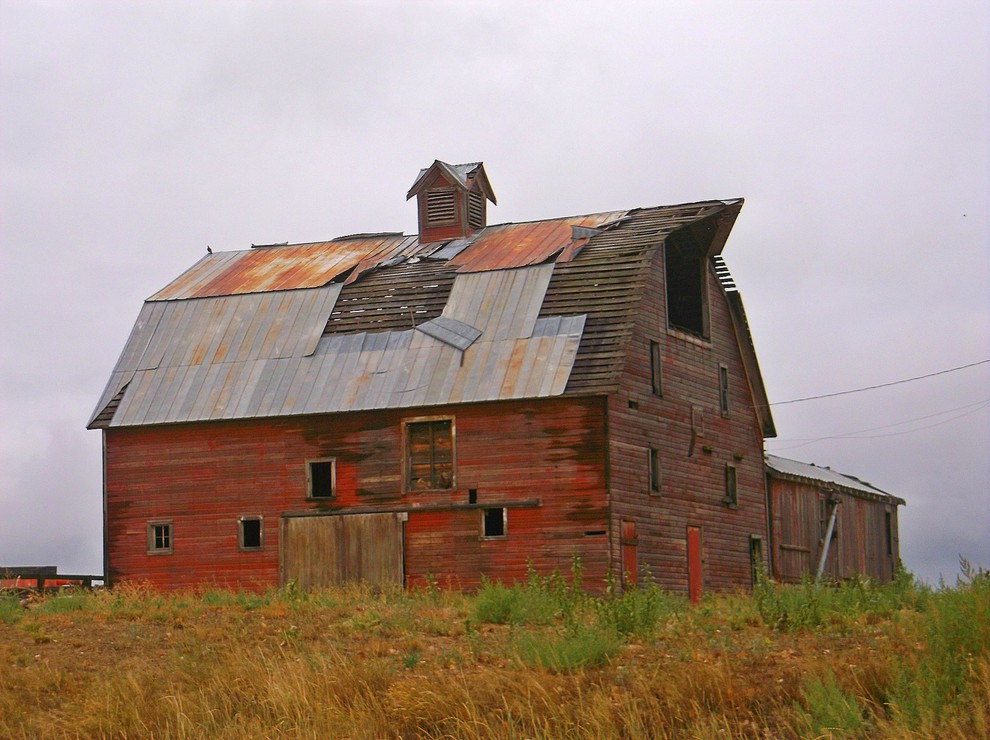
Rural or non-standard properties. Anything agricultural, anything with shared access roads, anything described as a "renovation project," anything in a village of fewer than 2,000 people, anything labeled an Italian €1 house or Japanese akiya. These almost always have something the photos don't show — a crumbling neighbor wall, an undocumented extension, an inheritance dispute, a right-of-way across your garden, a septic tank the size of a bathtub.
-
Anything on the coast of Costa Rica, Mexico, or other countries with restricted-zone rules or maritime-zone concessions. The paperwork problems on these are rarely visible from photos.
-
Anything being sold by the agent-as-owner (the agent also owns the property). The conflict of interest is too structural to paper over.
-
Anything that has been on the market less than two weeks at a price 20%+ below the zone average. If the deal looks too good, assume there is a reason you can't see from a plane ticket away.
For a standard apartment in a well-documented building in a major city — a flat in Lisbon, a piso in Valencia, a Victorian terrace in Sheffield, a condo in Panama City — a careful remote purchase with a full professional team is well within the range of what ordinary people do every day and don't regret. For anything else, fly out. A $1,200 round-trip flight is cheap insurance on a $250,000 decision.
As the old thread on r/ExpatFIRE put it: the money you save by not visiting is the money you will spend fixing what you didn't see.
Ready to explore?
Browse Destinations