
What a French Notaire Actually Does (and Why You Need One)

American buyers approaching their first French property purchase almost always get confused about the notaire. In the US, a 'notary' is a clerk who stamps signatures at a bank branch. In France, a notaire is a public legal officer — somewhere between a judge, an attorney, and an escrow agent — and French law requires one for every real estate transaction. You cannot buy French property without a notaire. You cannot close at a title company. There is no American-style closing attorney. The notaire is the entire system.
This article explains exactly what a notaire does, why the French state built the system this way, what it costs (the infamous frais de notaire that includes a lot more than the notaire's actual fee), how to choose one as an American, and the specific things notaires do that American buyers should actively cooperate with. For related reading see our moving to France guide, our cost of living in France article, and our hiring a bilingual real estate lawyer abroad article. Primary source: Notaires de France — the official profession portal. Peer sources: r/France, r/AskFrance, r/expats, r/AmerExit, and r/frenchimmigration.
What a Notaire Is, Legally
A French notaire is a officier public ministériel — a public officer appointed by the French Minister of Justice, operating under the authority of the state, and invested with certain sovereign powers that ordinary private attorneys do not have. There are about 17,000 notaires in France, organized into local chambers under the Conseil Supérieur du Notariat (CSN). Notaires are required by law to have studied law (typically a master's degree in law followed by a specialized notariat program), to hold a certified professional license, and to post a mandatory insurance bond.
The role is unusual from the American perspective because the notaire is simultaneously the buyer's legal advisor, the seller's legal advisor, and an agent of the French state. The notaire is not advocating for one side against the other. They are legally neutral. Their job is to ensure the transaction is legally valid, that all parties have proper title and capacity, that the state receives its transfer taxes, and that the transaction is properly recorded in the public registers.
This creates a structural difference from US closings. In the US, the buyer and seller each typically hire their own attorney (or title company representative), who negotiate against each other to protect their client's interests. In France, one notaire typically handles the whole transaction. You can hire your own notaire in addition to the seller's notaire — and you should, if the stakes are high — but it costs nothing extra because the fees are fixed by law and are split between the two notaires. More notaires doesn't mean more fees.
The Savills Riviera explainer on the notaire's role and the Home Hunts notaire guide are both written for English-speaking buyers and walk through this system in detail.
What a Notaire Does for You
The notaire's workload during a French property purchase covers the entire legal, administrative, and financial core of the transaction. Here is what actually happens on the notaire's desk.
Verification of the seller's title. The notaire pulls the property's entry from the service de publicité foncière (the French land registry) and traces ownership back at least 30 years. This is longer than the comparable title search in most US jurisdictions. The notaire verifies that the seller is the sole legal owner, that all heirs (if inherited) have validly consented, that there are no outstanding mortgages, easements, or legal charges, and that the cadastral description matches the physical property.
Verification of the buyer's capacity and funds. The notaire verifies your identity (passport for Americans), your capacity to buy (not under legal disability), and the legality of your funds under French anti-money-laundering rules. For American buyers this means providing the notaire with documentation of where the money is coming from — typically US bank statements, US tax returns, and if proceeds are from a home sale, the US closing statement. Without this, the notaire cannot close.
Drafting and supervising the compromis de vente. The compromis de vente (sometimes called promesse synallagmatique) is the preliminary sales contract, roughly equivalent to a US purchase agreement. It is signed by both parties with a 10-day cooling-off period afterward during which the buyer can walk away without penalty. A 10% deposit is paid to the notaire's escrow account at this stage. The notaire drafts the compromis with all necessary conditions, clauses, and contingencies.
Running all mandatory pre-purchase checks. The notaire coordinates the property's mandatory disclosure package (dossier de diagnostic technique) — lead paint check, asbestos, termites, gas and electrical installations, energy performance (DPE), natural risks, and a few others depending on region and property age. The DPE is particularly important in 2026 because France has been progressively banning the rental of energy-inefficient homes, and properties rated F or G may be difficult to rent out or sell in the near future. French-Property.com's diagnostic guide has current requirements.
Handling all transfer taxes and registration. The notaire calculates, collects, and remits all transfer taxes (droits de mutation, sometimes called frais de notaire), registration fees, and state stamps. This is the single largest component of the total cost — more on that below.
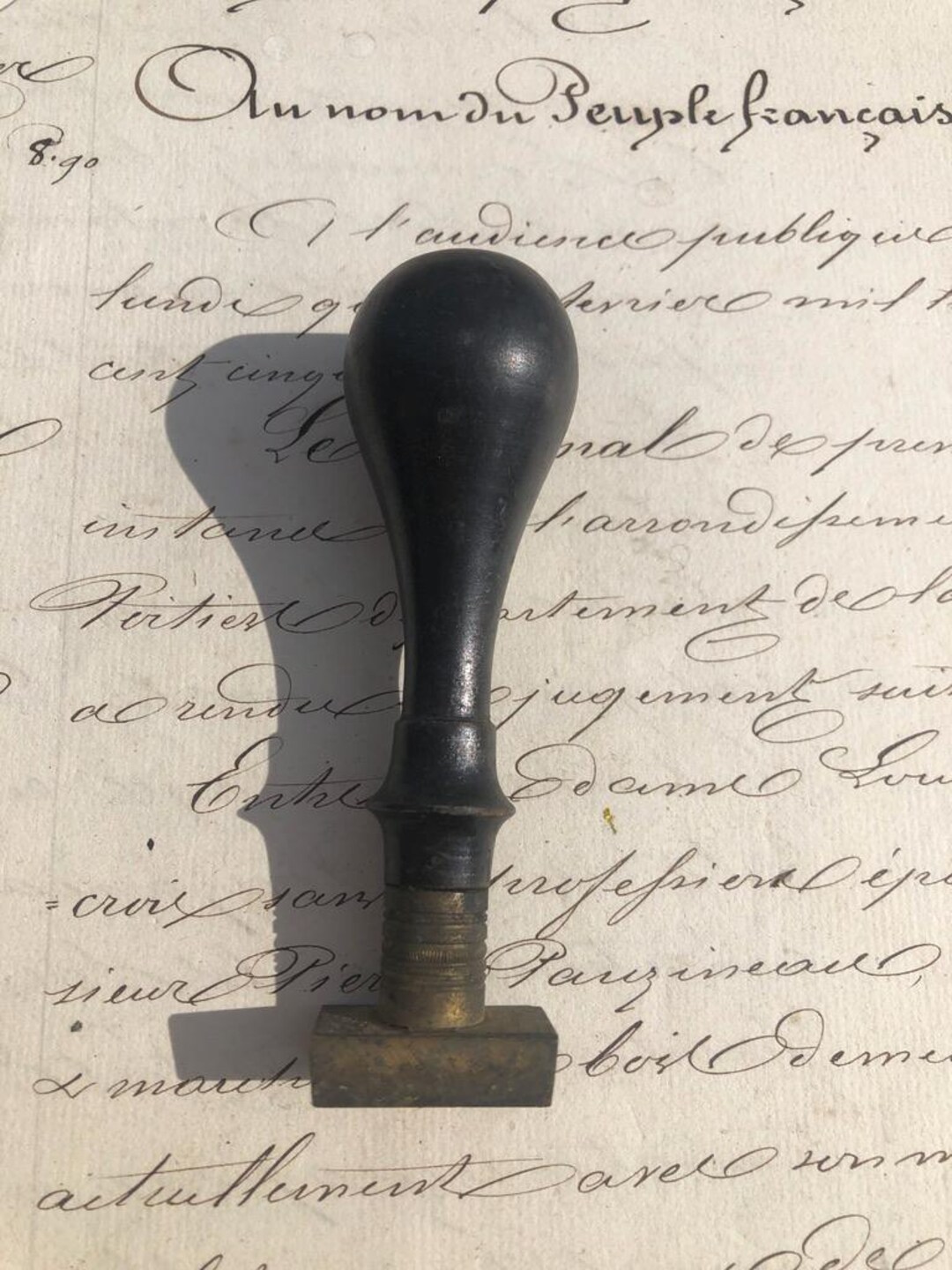
Conducting the closing (acte authentique). At the closing appointment, the notaire reads the acte authentique de vente aloud, confirms both parties' understanding, takes the signatures, and then — with a unique legal power — affixes the notarial seal that makes the deed authentic. An authentic act has the same legal force as a court judgment in France. This is the moment ownership transfers.
Recording the deed. After closing, the notaire files the deed with the local service de publicité foncière. Registration is typically complete within 4-12 weeks, after which the notaire delivers to you the final stamped copy (titre de propriété).
Post-sale advice on inheritance and wealth structuring. Notaires in France also handle inheritance. Many American buyers work with their notaire to plan how the French property will pass to heirs, including whether to use a French usufruit/nue-propriété split or rely on the US-France inheritance treaty. This is a real value-add for long-term owners.
Frais de Notaire: Why the Notaire's 'Fee' Is Actually Mostly Tax
The phrase frais de notaire ('notaire's fees') is a misnomer — it covers the total closing costs passed through the notaire, of which the notaire's actual compensation is a small fraction. For an existing property (ancien), the frais de notaire are typically 7-8% of the purchase price. For a new build (neuf — less than 5 years old or first resale), they are 2-3%. The big difference is not the notaire's fee itself but the transfer tax regime, which is much lighter on new builds (which already paid VAT during construction).
Breaking down the 7-8% frais de notaire on an existing French property purchase:
- Droits de mutation à titre onéreux (DMTO) — the transfer tax. This is the big one. Set by the département (county) and typically 5.09% to 5.81% of the purchase price as of 2025-2026. As of April 1, 2025 departments were authorized to raise the DMTO by up to 0.5 percentage points, and most high-cost départements (Paris, Alpes-Maritimes, Hauts-de-Seine, Bouches-du-Rhône) took the full increase. Check with your notaire for the current rate in your département.
- Contribution de sécurité immobilière — the land registration fee. 0.1% of the purchase price.
- Émoluments du notaire — the notaire's actual professional compensation. ~0.8 to 1% of the purchase price, on a regulated scale (notaires cannot freely set their fees). Notaires de France publishes the scale.
- Déboursés — out-of-pocket expenses the notaire advances on your behalf (property cadastral extracts, certified copies, postage, etc.). Typically €800-2,000.
- VAT (TVA) on the notaire's émoluments — 20% VAT is charged on the émoluments portion only.
Worked example. On a €500,000 existing Parisian apartment purchase:
- DMTO at 5.81%: €29,050
- Contribution de sécurité immobilière: €500
- Émoluments du notaire: ~€4,500
- Déboursés: ~€1,200
- VAT on émoluments: ~€900
- Total frais de notaire: approximately €36,150 (7.23%)
Of that, only about €4,500-5,400 is actually the notaire's compensation. The rest is tax that the notaire collects on behalf of the state. Understanding this matters because American buyers sometimes try to 'negotiate' the frais de notaire — you cannot. The fees are set by law and regulated. Frais de notaire calculators like Ibanista's 2026 estimator and Frenchpropertycentre's notaire calculator give you exact amounts by département.
For a cross-country comparison of closing costs see our seven hidden costs of buying property abroad article.

Choosing a Notaire as an American
You can use the seller's notaire and it costs you nothing, but most legal advisors recommend appointing your own notaire — ideally one who speaks English and has handled American buyers before.
How to find an English-speaking notaire. The Notaires de France official directory lets you search by city and by language spoken. In Paris, the 7th, 8th, and 16th arrondissements have notaire offices that regularly handle international clients. On the Riviera, Nice, Cannes, and Antibes have several international-client specialists. In Provence, Aix-en-Provence and Avignon have notaires who work with English-speaking buyers. In the Dordogne (heavy American and British expat area), every town of any size has at least one notaire used to international clients.
What to ask in your initial conversation.
- Have you handled American clients before? (You want someone who has.)
- Are you comfortable communicating via email in English? (Critical for someone buying remotely.)
- What is your typical timeline from compromis to acte authentique? (Benchmark: 10-14 weeks for a clean purchase.)
- Do you offer the full buyer representation or only the 'shared notaire' role? (Either works but be clear which you want.)
- Will you accept electronic signatures where legally permitted, or do you require in-person? (Post-2020, remote closings via electronic authentic acts have become common.)
When to insist on having your own notaire separate from the seller's. Always, if you can. There is no extra cost. The two notaires split the regulated fee pool, and the French system has a name for this split — partage des émoluments. If the seller protests that 'one notaire is enough,' they are either trying to save the seller's notaire the inconvenience or they don't understand the fee system.
Power of attorney to handle the closing remotely. Most American buyers who don't want to fly to France for the closing sign a procuration (power of attorney) giving their notaire authority to sign the acte authentique on their behalf. The procuration must be signed in front of a US notary, apostilled, and translated into French by a sworn translator. Allow 2-4 weeks to set up. See our power of attorney for buying property overseas article.
The Closing Timeline Through a Notaire's Lens
A French property closing from a notaire's perspective runs roughly as follows.
Week 0 (Day of offer acceptance). Buyer and seller agree on price. Either party's notaire is appointed (or both, if each side has one).
Week 1-2. Notaire drafts the compromis de vente. This includes all conditions precedent (conditions suspensives) — typically financing (clause suspensive d'obtention de prêt), clean diagnostics, and clear title. The buyer has the right to cancel if any condition is not met.
Week 2. Compromis is signed. The 10-day cooling-off period begins, during which the buyer can unilaterally withdraw without penalty. After day 10, the buyer is legally bound. Deposit of 10% (sometimes 5%) is paid to the notaire's escrow account, not to the seller directly.
Weeks 3-10. Notaire runs all legal verifications, including:
- Land registry search at the service de publicité foncière
- Cadastral extract
- Seller's proof of title (acte de propriété) and chain of ownership
- Mortgage cancellation (if the seller has one) — coordinated with the seller's bank
- Verification of municipal rights of first refusal (droit de préemption urbain) — the municipality has 2 months to decide whether to pre-empt the sale at the contract price. In practice this is rarely exercised but cannot be skipped.
- Diagnostics review
- Buyer's mortgage finalization (if financing)

Week 10-14. Notaire schedules the acte authentique appointment. Buyer (or PoA) and seller appear at the notaire's office. Notaire reads the deed aloud, confirms understanding, and collects signatures. Buyer's funds are wired to the notaire's escrow account; notaire then disburses to seller after final verification. Buyer receives the signed deed and the keys.
Weeks 14-26. Notaire files the deed with the land registry. Registration typically completes in 4-12 weeks. Notaire sends buyer the final titre de propriété — the stamped and registered deed. Buyer is now the fully-recorded legal owner.
Total elapsed time: 10-16 weeks from compromis to acte authentique, plus 1-3 months from acte to registered title in hand. This is faster than Spain, comparable to Italy, and slower than the UK. For the week-by-week comparison with other countries, see our offer accepted on a house abroad article.
Common American Mistakes with French Notaires
A few patterns recur in American buyer stories on r/France and r/AskFrance. Most are avoidable.
Mistake 1: Treating the notaire like an adversary. Americans used to US attorney-led closings sometimes treat the notaire as an obstacle, pushing back on every request. This is counterproductive. The notaire is a neutral public officer doing their legally required job, and cooperating speeds everything up.
Mistake 2: Not providing source-of-funds documentation promptly. French AML rules require the notaire to verify the origin of the purchase funds before closing. Americans who drag their feet on producing US bank statements, tax returns, and proof of fund origination delay their own closings by weeks. Prepare a 'source of funds dossier' (US bank statements for 6-12 months, most recent 2 years of tax returns, explanation of any large deposits) as your first step when the compromis is signed.
Mistake 3: Signing the compromis without reading it. The compromis is the binding document. Americans who rely on the estate agent's verbal summary and sign without a line-by-line translation sometimes find conditions suspensives they didn't agree to, or the absence of conditions they thought were included. Get the compromis translated before signing.
Mistake 4: Expecting a US-style closing disclosure. There is no TILA-RESPA in France. The notaire will give you a final figure for frais de notaire on closing day but does not produce the itemized line-by-line disclosure Americans are used to. Ask for the breakdown in writing in advance if you want it.
Mistake 5: Underestimating the time to wire funds. French notaires do not accept same-day funds on closing day. Your wire needs to arrive in the notaire's escrow account at least 2-5 business days before the appointment. For American buyers, this means initiating the international wire 7-10 days before closing to account for both the FX broker leg and the bank clearing leg. Our wiring money foreign property article covers the mechanics.

Bottom Line: The Notaire Is Your Friend
The French notaire system is genuinely different from American closings, and it takes American buyers by surprise. But it is also one of the most reliable and corruption-free real estate closing systems in the developed world. The notaire's sovereign legal authority, the public nature of the office, and the regulated fee structure remove much of the room for bad-faith behavior that exists in less formal systems. A French purchase, once the notaire is working on it, almost never ends in title fraud or undisclosed liens — the notaire's liability under French law is such that errors result in personal professional penalties, which is a strong incentive to be thorough.
The tradeoff is cost (the 7-8% frais de notaire on existing properties is high by international standards, though most of it is transfer tax rather than professional fees) and speed (10-16 weeks for a typical closing, slower than the UK but faster than Italy or Spain). For Americans willing to accept those tradeoffs, France is one of the safest places in Europe to buy property as a foreigner.
For the broader buying process by country, our moving to France guide covers the whole relocation picture, our cost of living in France article covers the ongoing cost side, and our countries Americans can't buy property gives the cross-country restriction overview. For real French listings, browse our France country page and the city pages for Paris, Nice, Lyon, Marseille, and Bordeaux.
Ready to explore?
Browse Destinations