
How to Buy a House in Japan Without Speaking Japanese

Japan is one of the most legally open real estate markets in the world for foreign buyers. There is no nationality restriction, no residency requirement, no visa requirement, no quota, no cap on how many properties a foreigner can own, and no geographic restriction except for a small number of border and military zones. In principle, an American tourist on a 90-day visa-waiver entry can legally walk into Tokyo, view houses on Monday, sign a purchase agreement Wednesday, wire funds from the US Friday, and close the following month. The system is that open.
The problem is never the law — it's the language. Every contract, every title document, every bank form, every tax filing, every correspondence from the seller's side is in Japanese. Japanese legal documents are written in a specific formal register (much harder than conversational Japanese) and a translation error can cost real money. This article walks through how an American buyer who speaks zero Japanese can actually close on a Japanese house in 2026 — who to hire, what they cost, what to expect, and the specific things that go wrong when the language barrier meets the Japanese legal system.
For related reading see our moving to Japan guide, our cost of living in Japan article, our akiya Japan risks article, and our hiring a bilingual real estate lawyer abroad guide. Primary sources: Housing Japan's expat buyer guide, Plaza Homes on foreign purchase, and the Japan Ministry of Land, Infrastructure, Transport and Tourism real estate page. Peer sources: r/japanlife, r/movingtojapan, r/JapanFinance, r/japanresidents, and r/AmerExit.
The Legal Baseline: Japan Is Open
Japanese property law does not distinguish foreign buyers from Japanese citizens in any material way. Article 25 of the Foreign Exchange and Foreign Trade Act requires a post-purchase report to the Ministry of Finance through the Bank of Japan when a foreign buyer acquires real estate (but not for residential purchases under certain thresholds), but the report is administrative — not a permission regime. Nobody gets denied. Wise Japan's foreigner property guide and Taxes for Expats' Japan country guide both confirm there are no legal barriers.
One 2026 change worth knowing. Starting in fiscal year 2026 (April 2026), new property owners in Japan will be required to disclose their nationality in the real estate registry database under a new administrative rule. This is a registration requirement, not a restriction on purchasing. It does not affect whether you can buy; it affects what gets recorded when you do. American buyers should be aware of it but it changes nothing about the process. See the MLIT 2026 registry disclosure announcement for the formal notice.
What the legal framework means in practice. You can buy:
- A single-family house anywhere in Japan (Tokyo, Osaka, Kyoto, Sapporo, Okinawa, remote Hokkaido)
- A condominium unit (mansion) in any building
- A traditional kominka or akiya (abandoned country house)
- Agricultural land (with some extra permitting through the local agricultural committee)
- Commercial or mixed-use property
- A combination purchase of land and building
And you can do all of this:
- Without a Japanese visa
- Without Japanese tax residency
- Without a Japanese guarantor (except for mortgages — see below)
- Without renouncing US citizenship or opening a US tax complication
- Without any language test
The only thing you cannot do without Japanese fluency, a local guarantor, and Japanese tax residency is finance the purchase through a Japanese bank. For that reason, most foreign buyers of Japanese property pay cash.
The Team You Need: Three Specific People
A successful foreign purchase in Japan typically involves three professionals working together — each playing a specific role that the others cannot. Americans who try to skip any of them usually regret it.
1. Bilingual real estate agent (fudosan gyosha). Not just any Japanese agent — one who has specifically handled foreign buyers before. These are concentrated in Tokyo (Plaza Homes, Housing Japan, Ken Corporation, Kimi Information Center, Tokyo Portfolio Realty), Kyoto (Japan Property Central, Nippon Tradings International), Okinawa (a few military-market agents), and Fukuoka. Outside major cities the English-speaking agent pool thins dramatically and you may need to rely on your agent in Tokyo to coordinate with a local Japanese-only agent near the property.
Fees: Japanese agent fees are regulated under the Real Estate Brokerage Act (Takuchi Tatemono Torihiki Gyoho) and are 3% of purchase price + ¥60,000 + consumption tax (10%) for properties above ¥4 million. The fee is paid by whichever party the agent represents — the seller pays if they hired the agent, the buyer pays if they hired the agent. In practice most Japanese transactions split: the seller's agent takes 3% from the seller and the buyer's agent takes 3% from the buyer. A foreign buyer typically pays the full 3% + ¥60,000 to their own English-speaking agent. See the Plaza Homes agency commission explanation.
2. Judicial scrivener (shiho shoshi). A Japanese legal professional who handles property registration. Scriveners are unique to Japan — they are licensed legal specialists, not lawyers, and they have a statutory monopoly on filing real estate ownership transfers with the Legal Affairs Bureau. Every legitimate Japanese property closing involves a shiho shoshi. Their job is to verify the seller's identity and title, prepare the registration documents, file the transfer of ownership with the Legal Affairs Bureau (Homukyoku), and confirm to the buyer that the registration is complete. Fees: ¥80,000 to ¥300,000 depending on property value and complexity. The scrivener's role is administrative but essential — without them, you cannot legally record ownership. The Japan Judicial Scrivener Association has an English page.
3. Certified sworn translator (tsuyakunin) for contract review. Most American buyers' biggest mistake is relying on the English summary their real estate agent provides and not getting the full Japanese contract independently translated. The Japanese purchase agreement (baibai keiyakusho), the important matters disclosure (juyo jiko setsumeisho), and the final registration form (shoyuken iten toki) are all in Japanese only and contain material terms that routinely get lost in summary.
Hire a certified sworn translator — typically ¥15,000 to ¥30,000 per page — to produce a side-by-side English translation of the three main documents. For a typical residential contract set, budget ¥100,000 to ¥200,000 (roughly USD $700-1,400) for independent translation. This is the single best money you can spend as a non-Japanese-speaking buyer. Skipping it is how Americans end up with contract terms they didn't know they agreed to. r/japanlife threads on contract translation have recent recommendations for good sworn translators in Tokyo.
The Process: Step by Step for a Non-Japanese Speaker
A typical foreign-buyer Japanese property purchase in 2026 follows this sequence.
Step 1: Find the property. Major Japanese portals — Suumo, Homes.jp, and At Home — are Japanese-only but the listings can be auto-translated through Chrome or DeepL. Foreigner-focused portals include Real Estate Japan, Plaza Homes, Housing Japan, and Nippon Tradings International. For the akiya (abandoned country house) market, Akiya & Inaka and Cheap Houses Japan are English-native.
Step 2: Property viewing trip. Fly to Japan for a 7-14 day viewing trip. Your bilingual agent arranges viewings. In Tokyo you can see 15-25 properties in a week; in smaller markets the pace is slower. Bring a notebook and photograph everything — you will not remember the details of individual properties once you're back in the US trying to compare them.

Step 3: Make an offer. Japanese offers are typically made through the buyer's agent to the seller's agent. Negotiation usually happens in 2-4 rounds over 1-2 weeks. Japanese sellers are, on average, less flexible on price than American or European sellers — expect 0-5% negotiation off the asking price, not the 10-20% common in some other markets.
Step 4: Receive the 'Important Matters Disclosure' (juyo jiko setsumeisho). This is a legally mandated pre-contract disclosure that the seller's licensed agent must deliver to you, covering title, zoning, access, utilities, structural condition, known defects, and material facts about the property. It must be delivered to you at least some days before contract signing and the agent must read it to you in person, explaining each item. This is a one-hour minimum meeting. If you don't speak Japanese, your bilingual agent translates in real time — but insist on having the full document separately translated by your sworn translator before the meeting.
Step 5: Sign the purchase agreement (baibai keiyakusho). Typically 7-14 days after the offer is accepted. At signing you pay an earnest money deposit (tetsukekin), usually 5% to 10% of the purchase price. The deposit is paid by bank wire or certified check to the seller (in Japan, escrow is not common — deposits go directly). Like the Italian caparra confirmatoria or the Spanish arras, the tetsukekin is forfeit if the buyer defaults and is owed double by the seller if they default.
Step 6: Scrivener verification. The shiho shoshi runs title verification at the Legal Affairs Bureau, pulling the koseki tohon (registry certificate) and confirming the seller is the true owner, that no liens exist, and that the boundaries match the cadastral records. Typical time: 1-2 weeks.
Step 7: Closing (hikiwatashi). Usually 4-8 weeks after signing. On the day of closing, the buyer transfers the balance of the purchase price — typically by same-day wire to the seller's bank — the scrivener files the transfer of ownership at the Legal Affairs Bureau, the seller hands over the keys and the koseki tohon, and the transaction is complete. There is no notary role in Japanese residential closings. The whole on-the-day process takes 1-3 hours and typically happens at the scrivener's office or at the seller's bank branch.
Step 8: Post-closing registration. The scrivener files the transfer with the Legal Affairs Bureau on closing day. Registration is typically complete within 1-2 weeks, after which the scrivener delivers the final registration certificate (toki kanryosho) to the buyer. You are now the legally recorded owner.
Total elapsed time: 60-90 days from offer to registered ownership for a straightforward cash purchase. Faster than Spain or Italy, comparable to France, slower than the UK.
Taxes and Fees: What to Budget
Japanese property transaction costs are meaningful but not extreme by international standards. A typical American cash buyer budgets 8-10% of purchase price in total closing costs and first-year taxes.
At closing:
- Registration tax (toroku menkyo zei) — 2% of the assessed value for land, 0.3% to 2% of assessed value for buildings depending on age. Assessed value is typically 60-70% of market value, so effective rate on market is lower.
- Stamp duty on the contract — ¥5,000 to ¥60,000 depending on price bracket
- Real estate acquisition tax (fudosan shutoku zei) — 3% of assessed value for land and residential buildings. Paid several months after closing, not at closing.
- Scrivener fees — ¥80,000 to ¥300,000
- Agent commission — 3% + ¥60,000 + 10% consumption tax
- Property insurance — ¥20,000 to ¥80,000/year depending on coverage and earthquake inclusion
Annual ongoing:
- Fixed asset tax (kotei shisan zei) — 1.4% of the assessed value. The primary Japanese property tax, paid annually to the municipality. For a ¥50,000,000 house with an assessed value of ¥30,000,000, the annual fixed asset tax is ¥420,000 (~USD $2,800). Our cost of living in Japan article has the recurring-cost breakdown.
- City planning tax (toshi keikaku zei) — 0.3% of assessed value in urban areas. Additional to fixed asset tax.
- Management fees and reserves for condos — ¥15,000 to ¥40,000/month for typical Tokyo condominiums, significantly more in luxury buildings.
- Consumption tax (10%) — applies on building portion of new builds only, not resales.
Taxes on sale. Japanese capital gains on property are taxed on a sliding scale: 30% + 9% resident tax for holdings under 5 years, 15% + 5% resident tax for holdings over 5 years. Non-residents are taxed at the same rates. See the National Tax Agency English page for current rates. Our capital gains foreign property article covers how this interacts with US taxation.

Worked example. A ¥50,000,000 Tokyo condo (~USD $335,000) bought by an American cash buyer:
- Registration tax: ~¥500,000
- Stamp duty: ¥30,000
- Agent commission: ~¥1,716,000
- Scrivener: ¥150,000
- Acquisition tax (paid later): ~¥900,000
- Total closing-era costs: ~¥3.3 million (about 6.6% of purchase price)
- Annual taxes after closing: ¥420,000 (fixed asset) + ¥90,000 (city planning) = ~¥510,000/year
Why Most Foreign Buyers Pay Cash (and How to Get a Mortgage If You Must)
Japanese banks technically offer mortgages to foreigners but the criteria are strict. Most American non-residents cannot qualify. Specifically:
- Japanese tax residency is usually required. You need to be in the country on a valid long-term visa (Permanent Resident, Highly Skilled Professional, Spouse, or specific employment visas that allow a long stay).
- Japanese income history. Typically 2-3 years of Japanese payroll on tax records.
- Permanent residency is often required for the best rates. PR holders get the same rates as Japanese citizens; non-PR foreign residents can sometimes get mortgages but with higher rates and shorter terms.
- Japanese guarantor (hoshounin) — often required, though being phased out at some banks.
- Japanese language proficiency. Not legally required but practically expected at most banks for the loan interview and document understanding.
If you do not meet these criteria — and most American non-residents do not — you have three options:
- Pay cash. Dominant approach for American buyers. Wire funds from the US (use Wise or a broker, not a US bank wire — see our wiring money foreign property article).
- Use US-side financing. Take a HELOC against your US home, a portfolio margin loan against your brokerage, or a family loan, and bring cash to Japan.
- Pursue a mortgage from one of the foreigner-friendly Japanese lenders. SBI Shinsei Bank, Prestia SMBC Trust Bank, and Sony Bank have foreigner-lending programs, but still require Japanese tax residency for most products. Housing Japan's mortgage for expats page has the current lender list.
r/JapanFinance threads on foreign mortgage access are the best peer source for which bank is currently most open to which profile.
The practical conclusion: if you don't already live in Japan on a long-term visa with Japanese income, plan to pay cash. This constrains budget but simplifies the process enormously.
The Akiya Question: Cheap Country Houses and Their Risks
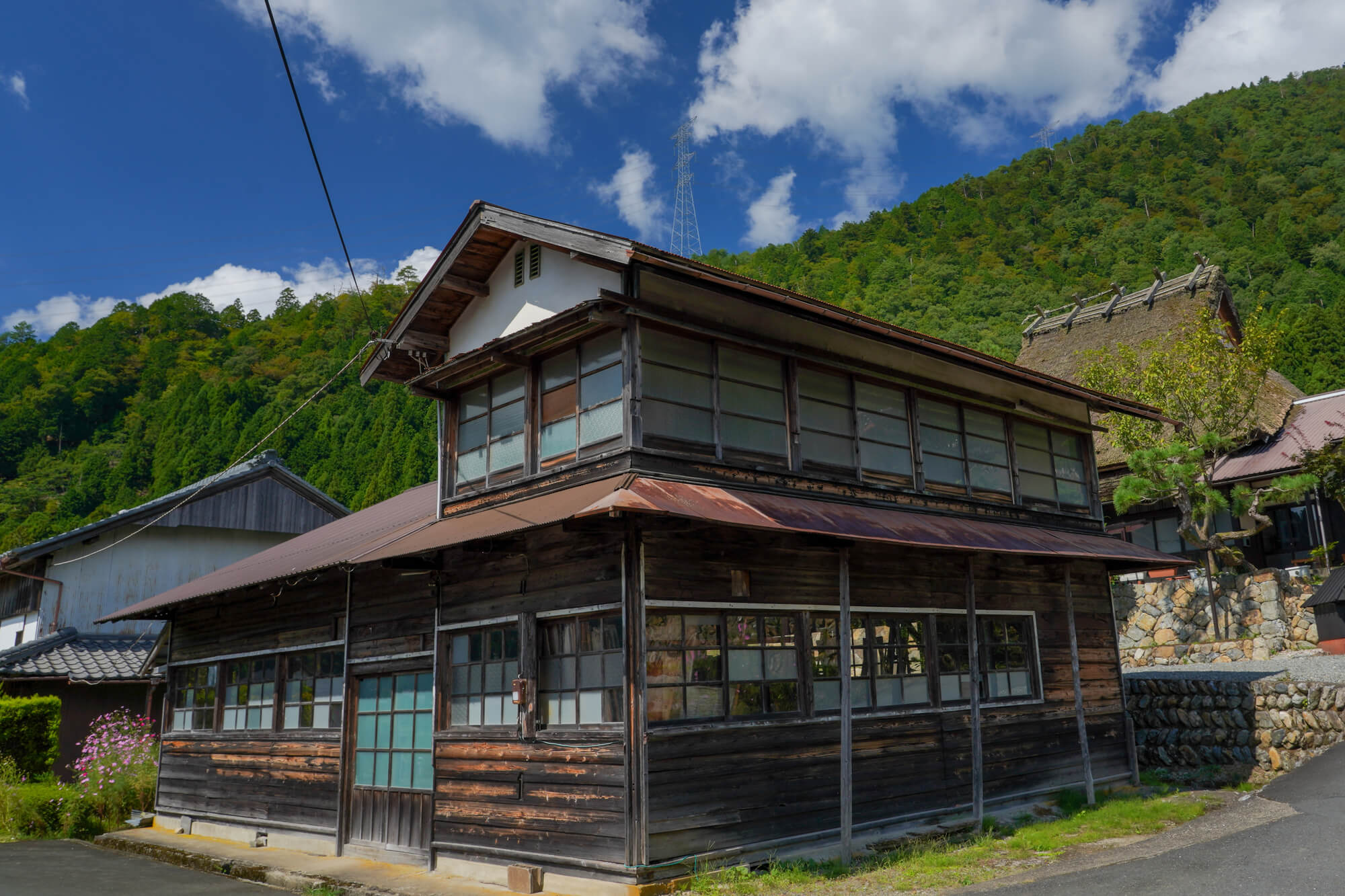
A subset of American buyers arrive in Japan specifically to buy an akiya — a vacant rural house, often decades-old, sometimes priced under USD $30,000. The phenomenon is real and genuinely produces remarkable cheap country houses. It also genuinely produces regret for buyers who didn't understand what they were getting.
Why akiyas are so cheap. Japan has an estimated 9 million vacant houses, a quarter of them truly abandoned, concentrated in rural areas with aging populations and outbound internal migration. Local municipalities run akiya banks (vacant house registries) to try to re-populate dying villages. A typical rural akiya in Nagano, Yamanashi, Gifu, Kagoshima, or rural Hokkaido can be bought for ¥500,000 to ¥5 million — USD $3,500 to $35,000 — in original condition.
What you're actually buying. Most akiyas need substantial renovation. Budget ¥5 million to ¥20 million (USD $35,000-140,000) for a full restoration, sometimes more if the foundation or roof is compromised. You're also buying rural isolation: distance to stores, distance to healthcare, distance to English-speaking services, very limited rental income potential, and a reality that the local community may or may not welcome new foreign residents.
The language compounding effect. Akiya purchases happen overwhelmingly in small towns where essentially no one speaks English and your bilingual Tokyo agent is three hours away. The seller's agent is Japanese-only, the local government office is Japanese-only, the utility company is Japanese-only, and the renovation contractor is Japanese-only. Running an akiya project from a US desk without fluent Japanese is genuinely hard.
For a deeper dive on the risks see our akiya Japan risks article which is dedicated to this topic.
The Practical Playbook for a Non-Japanese-Speaking American
Putting it all together, here is the realistic process for an American who speaks zero Japanese and wants to buy Japanese property in 2026.
- Decide region and budget. Tokyo, Kyoto, Osaka, Fukuoka, and Sapporo are the main markets where English-speaking professionals are available. Rural areas demand either Japanese fluency or a committed bilingual advocate who can travel with you.
- Engage a bilingual Tokyo-based real estate agent before committing to anything else. They become your quarterback for the whole transaction. Plaza Homes, Housing Japan, Ken Corporation, and Tokyo Portfolio are the main English-native players. Ask specifically: 'Have you worked with American cash buyers who don't speak Japanese? Can you provide three recent references?'
- Plan a viewing trip of 7-14 days. Book your agent to line up 15-25 viewings.
- Engage a sworn translator for the pre-signing document translation. This is a line item most agents won't push you on because it doesn't benefit them; you should push yourself to do it.
- Engage a shiho shoshi (judicial scrivener) — your agent will typically recommend one, but verify independently that they are licensed and insured.
- Open a Japanese bank account if you plan to receive any rental income or hold Japanese funds for taxes. SMBC Trust Prestia is the most foreigner-friendly. Bring your passport and an address in Japan (your agent's office often works as a temporary address).
- Wire funds via Wise or a dedicated FX broker. Plan 2-5 business days for the wire to clear. For very large transfers (¥30 million+), work with your Japanese bank on the receiving end rather than trying to use only Wise.
- File the post-purchase report to the Ministry of Finance under the Foreign Exchange and Foreign Trade Act if required. Your scrivener handles this.
- File US tax reporting: FBAR if your Japanese accounts exceed USD $10K, FATCA at higher thresholds, Schedule E if you rent the property out. See IRS Publication 54 and our seven hidden costs of buying property abroad article.
The overall experience: if you engage the right people, a Japanese purchase is one of the smoother closings available to an American in the developed world. The system is honest, the title is clean, the courts work, fraud is rare, and everyone involved takes their professional obligations seriously. The language barrier is the only real friction, and it can be fully bridged with about USD $2,000-3,000 in professional translation and bilingual-agent fees. For the broader country context see our moving to Japan guide. For real listings browse our Japan country page and the city pages for Tokyo, Osaka, Kyoto, Fukuoka, and Sapporo.
Ready to explore?
Browse Destinations