
Buying Off-Market Property in Ireland as an American: Is It Possible?

The idea of an 'off-market' real estate purchase has a specific meaning in Ireland that doesn't quite match the American version. In the US, off-market usually means a pocket listing the agent is shopping privately before MLS. In Ireland, off-market covers at least three distinct things — probate sales that never make it onto Daft.ie, rural auctioneer 'back book' listings that sit in a small-town office window for weeks, and direct-to-owner approaches where a buyer simply writes to the homeowner. All three exist, all three can save you from the wilder bidding wars of Daft.ie and MyHome.ie, and all three are harder for a non-resident American to access than a Dublin-based buyer — but not impossible.
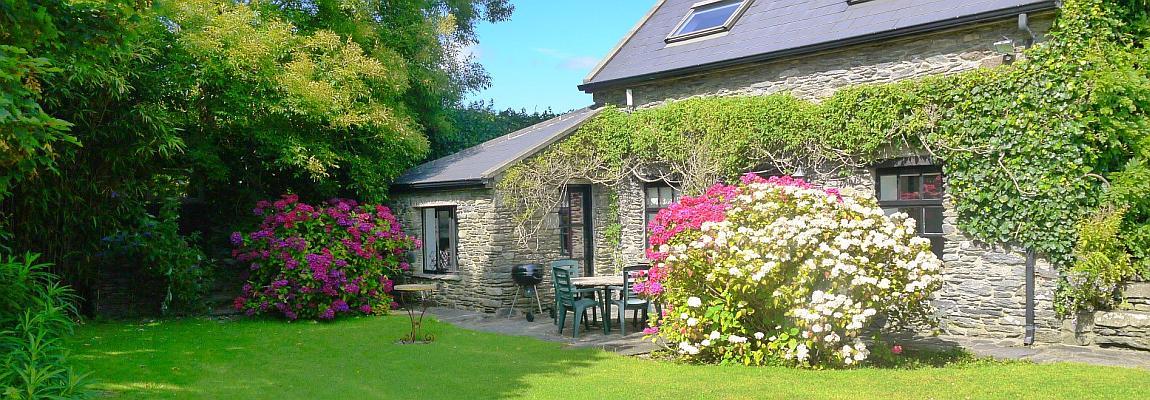
This article walks through how off-market Irish property actually works, how Americans can plug into the back-channels from abroad, and what the trade-offs are compared to the open-market process. For related reading see our moving to Ireland guide, our can an American buy a house in Ireland without residency article, our cost of living in Ireland article, and our bilingual real estate lawyer abroad guide. Peer sources: r/ireland, r/AskIreland, r/irishpersonalfinance, r/AmerExit, and r/IWantOut.
The Three Kinds of Off-Market in Ireland
Probate sales. When someone dies owning Irish property, the estate typically passes through the probate process at the Probate Office of the High Court or a district registry, and the personal representative (usually a solicitor acting as executor) eventually lists the property for sale. Many probate sales never go on the public portals — the executor-solicitor approaches a handful of auctioneers they know, the property is shown to 2-3 serious local buyers, and it closes quietly. The reason is speed: executors are often under pressure to close the estate and distribute funds to beneficiaries, and a private sale to a known buyer can avoid the 4-8 week listing window and multiple-bidder complications.
Rural auctioneer back books. Country solicitors and rural auctioneers in small towns — Ballinasloe, Westport, Kilkenny, Dingle, Carrick-on-Shannon, Enniskerry — often have properties in their window or on their clipboard that never make it to Daft or MyHome. The reason is that many rural sellers are older and trust the local auctioneer to find a buyer the traditional way. Walking into the office of a small-town auctioneer and asking what's currently available will often produce 3-5 properties that never appeared online. See the Institute of Professional Auctioneers & Valuers (IPAV) directory for member auctioneers by county.
Direct-to-owner approaches. The rarest type but the one that produces the best stories. An interested buyer writes a letter to a specific homeowner saying 'I love your house, would you consider selling?' A minority of such letters receive a response, and an even smaller minority lead to a sale — but the properties that turn over this way are often the ones that would never be listed otherwise. This pattern is less common in Ireland than in the US because the Irish title system makes it harder to quickly identify the owner of a specific address (the land registry is public but requires fees and searches, not a single click).
None of these are the same as the 'pocket listing' pattern more common in the US or UK where an agent deliberately holds a property off-market to find a buyer from within a personal network. Irish estate agents do sometimes do this for high-end Dublin listings but it's less common than the three categories above.
Why Americans Have a Structural Disadvantage — And Why It Matters Less Than You Think
The honest answer is that an American sitting in Seattle has a harder time accessing off-market Irish property than a Dublin-based Irish buyer for a simple reason: relationships. Off-market deals run on local networks. A Dublin accountant who knows three rural solicitors who know four probate auctioneers can get access to a steady flow of quiet listings that a foreign buyer cannot.
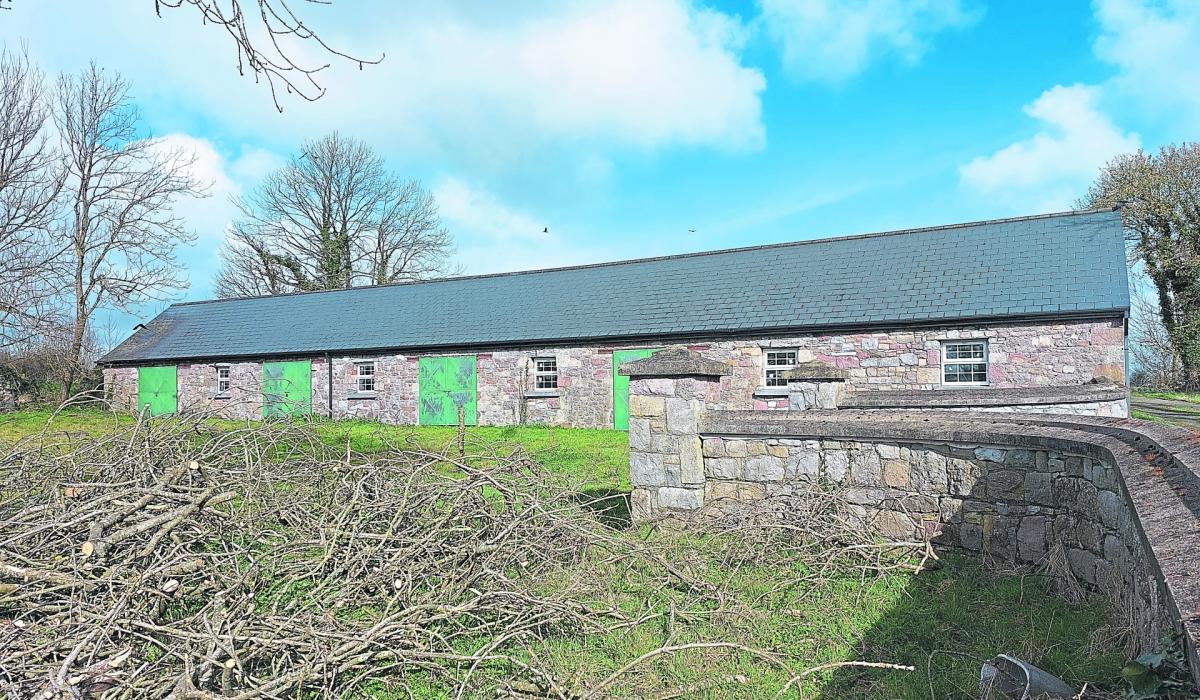
Three things partially flatten this disadvantage in 2026:
1. Bilingual/dedicated non-resident buyer agents. A small number of Irish estate agents specialize in working with international buyers. They run the same network-building work that a local buyer would do, on behalf of their clients, for a fee. Fees typically run 1% to 2% of purchase price and include running the local auctioneer relationships, filtering probate listings, and sometimes running the direct-to-owner outreach. Firms include DNG Auctioneers, Sherry FitzGerald, Lisney, and a handful of boutique buyer-only agents in Dublin, Cork, and Galway. None advertise this service heavily — you have to ask.
2. The probate solicitor pipeline. Irish solicitors who regularly handle probate work often maintain a list of properties that will come to market over the next 3-12 months and will send quiet pre-listing notices to buyers who have established a relationship. Engaging an Irish probate solicitor who knows your buying criteria puts you into that pipeline without needing a local presence. The Law Society of Ireland solicitor directory lets you search by practice area.
3. The non-resident buyer email introduction. Americans who have written ahead to auctioneers in their target towns — with a clear email, a target price range, a description of exactly what they want, and the word 'cash buyer' somewhere in the first sentence — report much better response rates than those who arrive cold. Auctioneers receive dozens of vague queries and prioritize the ones that sound serious. See r/ireland threads on cold-contacting auctioneers for real examples.
The key word through all of this is cash buyer. Irish off-market sellers overwhelmingly prefer cash buyers because the alternative — financing contingent on non-resident Irish mortgage underwriting — adds 12+ weeks and considerable uncertainty. An American with verified cash has a significant advantage over an Irish buyer who needs a mortgage, and off-market is where that advantage converts to actual access.
Probate Sales: The Most Realistic Off-Market Channel for Americans
If an American has the most realistic shot at any off-market channel, it's probate. Probate properties have a specific profile that foreign buyers can actually access without a deep local network.
Why probate is the most accessible. The executor-solicitor is running the sale, not a traditional estate agent. The solicitor has a fiduciary duty to achieve the best price reasonably available, but the definition of 'reasonable' includes timeliness. A non-resident cash buyer who can close in 6-8 weeks is often more valuable to an executor than a local Irish buyer who needs a 16-week mortgage underwriting cycle. This tilts the selection in the foreign buyer's favor.
How to get into the flow. Identify Irish probate solicitors in your target county. County-by-county directories exist at the Law Society of Ireland. Write a short introduction (one page max) describing your target criteria — region, price range, type of property, cash buyer status, any flexibility on closing timeline. Follow up every 3-6 months. Most probate solicitors will not call you back immediately but will file your request and send notice when a matching property appears. Over 12-18 months this approach typically produces 2-5 genuine opportunities.
What a probate sale looks like in practice. The executor-solicitor presents you with a title history showing the decedent's ownership, the grant of probate, and the authority to sell. A licensed surveyor has usually already valued the property for probate purposes. You make an offer, negotiate directly with the solicitor, sign a contract for sale within 2-3 weeks, and close 4-6 weeks later. The pace is often faster than a public-market Irish sale because the executor wants to distribute funds.
What can go wrong. Probate sales sometimes turn up title defects that weren't obvious from public records — a missing heir, a disputed will, an unregistered charge on the property from a loan the decedent took out decades earlier. Your solicitor's pre-contract diligence should catch these. But probate sales are not the cleanest title in the world, and you should budget for more uncertainty than an equivalent arm's-length transaction. McKenna & Co.'s relocation guide for US buyers touches on probate due diligence.


Rural Auctioneer Back Books: The West Cork and Mayo Angle
The second most accessible off-market channel is the rural auctioneer back book. This works particularly well in areas where Americans have been buying for years — West Cork, North Kerry, County Clare, Connemara, rural Mayo, parts of Leitrim and Donegal, the Boyne Valley in County Meath, and the Wicklow Gap.
How to work a rural auctioneer from abroad. Identify the 3-5 main auctioneers in your target town or area. Small-town auctioneers are often family firms that have been in business for generations — some are IPAV members, some are SCSI members, some are neither. Send each a short introductory email with your criteria and state you are a cash buyer willing to travel to Ireland for viewings. Follow up with a phone call in the morning their time (5am ET). Voice contact matters more in rural Ireland than in Dublin.
When you travel to Ireland for a viewing trip, do the walk-in. Spend a morning visiting the physical offices of your target auctioneers. Many rural auctioneer offices display their 'back book' properties in window cards that never make the digital portals. A 30-minute conversation with an auctioneer in their own office will reveal properties they don't volunteer over email. This is old-fashioned but it is how a lot of rural Irish property still changes hands.
The price negotiation reality. Off-market rural properties are often priced slightly above their fair market value because the seller knows they are foregoing the competitive bidding of an open listing. Expect to negotiate 5-15% off the quoted asking price. This is different from the public-market Irish pattern where bidding up from the asking is standard. In off-market, the asking is the ceiling, not the floor. r/ireland threads on rural property bidding have current negotiation anecdotes.
What rural properties you'll see. Typical off-market rural inventory in 2026 includes 19th-century cottages that need modernization, small farmhouses on 1-5 acres, converted creameries and barn buildings, pub properties with living accommodation above, and the occasional larger estate house being sold by an elderly owner who doesn't want the fuss of a public listing. Prices range from €90,000 for a 'needs significant work' cottage in Leitrim to €600,000+ for a larger farmhouse in Kerry. BER (Building Energy Rating) is usually G on these older properties, meaning running costs are high — see our cost of living in Ireland article for the operating cost math.
Direct-to-Owner Approaches: The Long Shot
Writing directly to an owner you don't know is the rarest form of off-market buying in Ireland and the one most likely to produce zero results — but when it works, it produces properties that would never appear on the market otherwise.
Why it's rare. Irish owners of attractive rural properties are, on the whole, reluctant sellers. Many of the best cottages and farmhouses in the west are owned by people who have held them for generations, use them seasonally, or keep them as family retreats. They are not actively looking to sell, and a letter offering to buy often feels intrusive. Response rates to cold owner-contact letters in Ireland are reported at under 5%.
When it works. Owners who are older, who have stopped maintaining the property, whose children have moved abroad and show no interest in the place, or whose property is caught up in an inheritance dispute, are the profile most likely to respond to a sincere letter. The trigger for them is typically not the offer — it's the relief of having someone solve a problem they were quietly thinking about.
How to identify owners. The Property Services Regulatory Authority (PSRA) Residential Property Price Register lists every residential sale since 2010 with price and address. You can work backwards from a street address to historic ownership, but the tool does not give you current owner names. To find the current owner you need to pull a title search from Tailte Éireann / Land Registry Services, which costs about €5-20 and takes a few days. Your solicitor can do this for you faster.
What the letter should say. Short (one page, max), specific, sincere. State who you are, why you specifically love this property (not 'your area'), what you would pay, that you are a cash buyer, and that you will respect their decision if they are not interested. Do not include high-pressure tactics. Do not send to many owners at once — handwritten or personally-addressed letters get the best response rate.

What Americans usually do wrong. Send the same template to 50 owners. Offer well below market. Include 'I'm ready to move quickly' as if that pressure is appealing to an elderly owner who isn't in any hurry. Include an expiration date on the offer. All of these are counterproductive in the Irish rural context. The only approach that works is patience, sincerity, and respect for the owner's timeline.
The Non-Resident Buyer's Practical Checklist
If you are an American planning to buy off-market Irish property from abroad, here is the sequence that actually works.
Months -12 to -6 (a year out). Apply for a PPSN (Personal Public Service Number) through Revenue. See our can an American buy a house in Ireland without residency article for details — the PPSN is not technically required to make an offer but is required to close, and a 4-6 week processing window can kill a fast off-market deal if you don't already have one. Simultaneously engage an Irish solicitor who will act as your buyer's counsel and probate-pipeline contact.
Months -6 to -3. Write introductory emails to probate solicitors and rural auctioneers in your target county. Be specific about criteria. Expect a slow drip of responses over weeks.
Months -3 to 0. Plan a viewing trip to Ireland of 7-14 days. Use the trip to walk into physical auctioneer offices, view shortlisted properties, meet your solicitor in person, and open an Irish bank account if you haven't already. Some American buyers also use the trip to apply for a PPSN in person at an Intreo Centre, which is faster than the non-resident postal route.
During the viewing trip. If you find a property you like, make an offer immediately. Do not wait until you're back in the US. Off-market sales often move quickly once a serious buyer signals interest.
Contract and closing. Your solicitor runs the standard Irish conveyancing process: signs the contract for sale, pays the 10% deposit, conducts pre-contract inquiries and title searches, and closes typically 4-8 weeks later. Off-market sales often close faster than public-market sales because there is no competing bidder and both parties have motivation to finalize. For the broader buyer playbook after an accepted offer see our offer accepted on a house abroad article.
Funds. Ireland's solicitors will not close on a funds-in-the-mail basis. Your solicitor will want cleared euros in their client account at least 2-3 days before closing. Use Wise, CurrencyFair, or a broker like Moneycorp to move the funds — not a US bank wire, which costs 1-3% in hidden spread. See our wiring money foreign property article.

The Honest Trade-Offs
Off-market Irish property is not unambiguously better than public-market property. There are genuine trade-offs and Americans should be clear about them before committing a year of effort to the off-market approach.
Pro: no gazumping. Off-market sellers are typically committed to a single buyer once serious discussions start. The gazumping risk that plagues the public-market Irish process is much lower.
Pro: lower competitive bidding. You're typically negotiating against an asking price, not against other buyers. This can mean significant savings versus the public market in hot areas.
Pro: access to properties that would never be listed. Some of the best Irish rural properties simply do not appear on Daft or MyHome. Off-market is the only way to see them.
Con: slower to find deals. The public market generates new listings daily. Off-market generates matching opportunities every 2-6 months. If you are in a hurry, off-market does not work.
Con: title defects are more common. Public-market Irish estate agents filter out clearly defective titles before listing. Off-market properties come to you with their full history, defects included. Your solicitor's diligence workload is higher.
Con: no price discovery. Public-market properties have bids that reveal their true market value. Off-market properties are sold at a price that may be 10-20% above or below fair value, and you have no easy way to benchmark. Use the PSRA Residential Property Price Register to find comparable recent sales in the specific townland.
Con: the time investment is real. A year of writing letters, emails, and phone calls, with no guarantee of a single successful transaction. If you are not prepared to spend that time and accept the risk of zero outcomes, the public market is a better fit.
For most American buyers the right answer is: try the off-market approach as a second channel running in parallel with the public market, not as a replacement for it. You browse Daft.ie daily for active listings, and you also have 3-5 probate-solicitor and auctioneer relationships that might surface an off-market opportunity over 6-12 months. Whichever produces the first usable property, you pursue. For real current listings on the public market, browse our Ireland country page and the city pages for Dublin, Cork, Galway, and Limerick.
Ready to explore?
Browse Destinations