Canada's Foreign Buyer Ban: What It Means for Americans in 2026

Canada is the most consequential property market restriction Americans have faced in a generation, and it is also the one most commonly misunderstood. The Prohibition on the Purchase of Residential Property by Non-Canadians Act took effect January 1, 2023, was scheduled to sunset January 1, 2025, and was extended two more years to January 1, 2027. For most of 2026 and all of 2027 it remains the governing rule on what Americans can and cannot buy in Canada.

But the word 'ban' is doing a lot of work in the name. In practice the Act is narrow, heavily exception-ridden, and applies only to specific property types inside specific geographic boundaries. There are whole categories of Canadian real estate that Americans can still buy freely — some of them the categories most retirees actually want. This article unpacks exactly what is and isn't covered, walks through the exemptions, shows how the geography works, and explains the fines for getting it wrong.
If you're earlier in research, start with our countries Americans can't buy property cross-country guide, our moving to Canada guide, and our cost of living in Canada article. Primary sources for verification: the CMHC page on the Prohibition Act, the federal Justice Laws consolidated text, and the Canada Revenue Agency Underused Housing Tax guidance which interacts with the Act. For peer experience, r/PersonalFinanceCanada, r/canadahousing, r/AmerExit, and r/ExpatFIRE are the most active discussions.
What the Act Actually Prohibits
The statute is short. Section 4 of the Prohibition on the Purchase of Residential Property by Non-Canadians Act says: 'Despite section 34 of the Citizenship Act, it is prohibited for a non-Canadian to purchase, directly or indirectly, any residential property.' Everything interesting is in the definitions of 'non-Canadian,' 'residential property,' and the regulations carving out exceptions.
'Non-Canadian' means anyone who is not a Canadian citizen, a permanent resident, or a person registered under the Indian Act. This clearly includes most Americans. It also includes corporations that are not incorporated in Canada, and Canadian corporations that are 'controlled' by a non-Canadian — importantly, the 2023 regulations redefined 'control' from 3% foreign ownership to 10% foreign ownership, which lets many real-estate holding companies with small foreign minority stakes continue to transact.
'Residential property' is defined narrowly: a detached house, a semi-detached house, a rowhouse, or a condominium unit, provided the building has no more than three dwelling units. Anything with four or more units is not 'residential property' under the Act and is outside the ban entirely. This is the reason four-plexes and small apartment buildings are still being sold to Americans.
Geographic limit — the CMA/CA rule. The regulations specify that the prohibition applies only within a Census Metropolitan Area (CMA) or Census Agglomeration (CA). Areas outside CMAs and CAs are not subject to the ban. The Statistics Canada 2021 Census CMA/CA map is the authoritative reference for what's inside and outside. In practice, almost every major city and suburb in Canada is inside a CMA or CA, but huge swaths of rural Canada — cottage country, interior BC, the Maritimes outside of Halifax — are outside.
So the true scope of the ban is: non-Canadians cannot buy a detached house, townhouse, or condo inside a city or substantial town, unless they qualify for one of the exemptions. That's narrower than 'foreigners can't buy Canadian real estate' — but inside its scope, it is real and enforced.
The Exemptions That Most Americans Miss
The Regulations Amending the Prohibition on the Purchase of Residential Property by Non-Canadians Regulations were amended twice — first on March 27, 2023 and again in February 2024 with the extension. The amendments made the ban materially narrower than the original 2023 version. Bennett Jones' practitioner analysis is the best English-language walkthrough.
The main exemptions Americans can use:
1. Work permit holders with substantial Canadian tax history. If you hold a valid Canadian work permit (or have work authorization) and have filed Canadian tax returns in 3 of the 4 years preceding the purchase, you can buy. The original 2023 rules required 5 years; the March 2023 amendment cut it to 3 of 4. This is the single most common Americans-actually-use-it exemption, and it catches cross-border tech workers on intra-company transfers and American professionals on NAFTA/CUSMA work permits.
2. International students meeting specific criteria. Full-time students enrolled in a Canadian designated learning institution who have filed Canadian tax returns in each of the 5 years preceding the purchase can buy. Cap on purchase price: CAD $500,000. Mostly not useful for Americans since few American students on study permits are in that long tax filing window.
3. Refugee claimants. Not typically relevant to American buyers.
4. Temporary residents from specific categories. Holders of temporary resident visas (TRVs) married to or in common-law with a Canadian citizen or permanent resident can buy jointly.
5. Purchases outside CMA/CA boundaries. Not an 'exemption' per se but a geographic carve-out: anything outside a Census Metropolitan Area and Census Agglomeration is unrestricted. This is why cottage country around Muskoka, the Kawarthas, most of Prince Edward Island (except Charlottetown), Nova Scotia's South Shore outside Halifax, the BC Interior outside Kelowna and Kamloops, and rural Quebec outside Montreal/Quebec City/Sherbrooke are all still open.

6. Recreational properties zoning exemption. Even within some CMAs, properties zoned for recreational rather than year-round residential use can be exempt. This is fact-specific — ask a Canadian real estate lawyer before relying on it.
7. Commercial and multi-unit properties. As noted, the ban only covers up to 3-unit residential. A 4-plex, a small apartment building, a strip mall, a commercial lot, a farm without a residential structure — all open.
What Americans Can Still Buy in 2026
Here is the realistic inventory for an American buyer today.
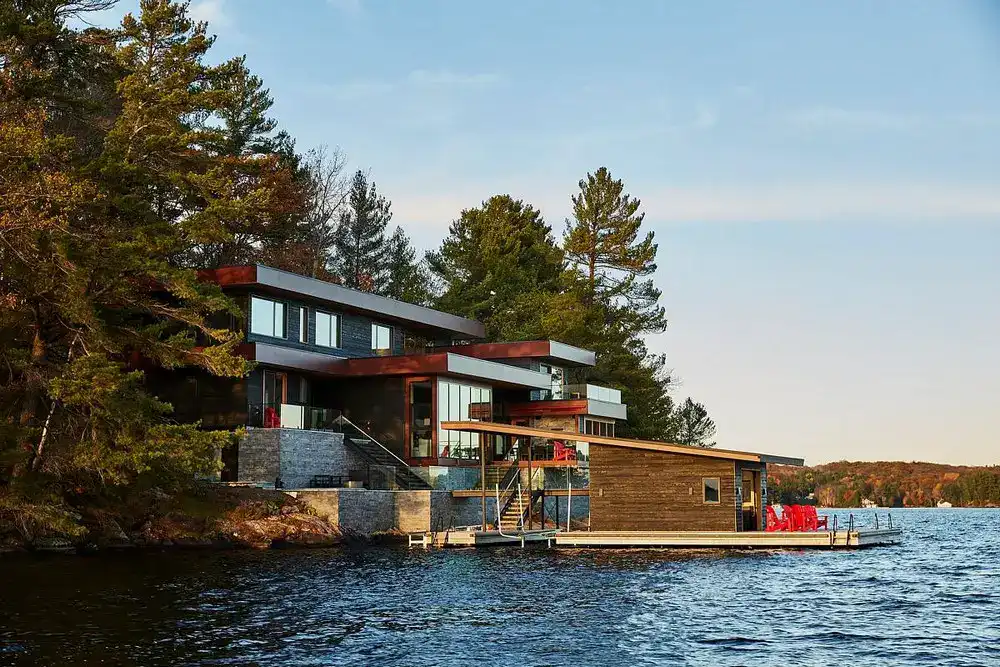
Cottage country outside CMAs. The biggest American buyer story since the ban took effect has been Ontario cottage country — the Muskokas, Kawartha Lakes, Haliburton — which sits outside the Toronto CMA and most of which is in smaller CAs or rural territory unaffected by the Act. Waterfront cottages in these regions run CAD $450,000 to $2M+ and have remained accessible to American buyers throughout the ban. r/ontario cottage threads have first-hand stories.
Nova Scotia and PEI outside Halifax. The Maritimes have seen a quiet American buying wave since 2020, accelerated rather than slowed by the federal ban because so much of the rural Maritimes is outside any CMA or CA. The Nova Scotia non-resident deed transfer tax of 5% applies on purchases by non-residents, but the federal ban does not. Rural Cape Breton, the South Shore, the Annapolis Valley, and most of PEI remain open.
Interior British Columbia outside CMAs. The Kootenays, Vancouver Island outside the Victoria/Nanaimo CMAs, parts of the Okanagan outside Kelowna, much of northern BC — all outside the ban. American buyers looking for a ski cabin near a smaller mountain, or a lake cottage in the BC interior, have options.
Purpose-built multi-unit properties and small apartment buildings. A 4+ unit building is not 'residential property' under the Act, so buying a small apartment building is unaffected by the ban. A few American investors have used this to enter the Canadian rental market.
Commercial real estate. Fully unaffected. Offices, retail, industrial, warehouses, hotels — all open to American buyers with no federal restriction.
New builds in specific conditions. Pre-construction condos bought before the ban took effect and delivered after are typically grandfathered. The March 2023 amendment clarified this.
What you cannot buy: a detached home or condo inside Toronto, Vancouver, Montreal, Calgary, Edmonton, Ottawa, Winnipeg, Quebec City, Hamilton, Kitchener-Waterloo, London, Victoria, Halifax, Saskatoon, Regina, and the other Census Metropolitan Areas — unless you qualify for an exemption. The CMHC CMA list has the complete enumeration.

Provincial Surcharges: The Layer Everyone Forgets
Even before the federal ban, Canada had two major provincial foreign buyer taxes that still apply to Americans who buy in exempted situations or outside the ban. These are not the federal Act; they are separate provincial levies, and they stack on top of normal taxes.
Ontario Non-Resident Speculation Tax (NRST). Currently 25% of the purchase price, applied to foreign buyers on residential property anywhere in Ontario (not just the GTA). It was raised from 15% to 20% in March 2022 and again to 25% in October 2022. The Ontario Ministry of Finance NRST page has current rules. If you qualify to buy in Ontario despite the federal ban (e.g., via a work permit exemption), you still owe this 25% surcharge unless you also qualify for an NRST exemption. Some work permit holders and specific other categories get NRST rebates; the rules are fact-specific.
British Columbia Additional Property Transfer Tax. 20% foreign buyer surcharge, applied in specific regions (Greater Vancouver, Fraser Valley, Capital Regional District around Victoria, Nanaimo, Central Okanagan). See the BC Additional Property Transfer Tax page. Like the Ontario tax, it applies whether or not the federal ban applies.
Nova Scotia Non-Resident Provincial Deed Transfer Tax. 5% on the purchase price for non-residents of Canada. Introduced 2022. Lower than Ontario and BC but still material on a CAD $500K cottage.
Quebec — no province-level foreign buyer tax as of early 2026, though Montreal has debated one.
Federal Underused Housing Tax (UHT). 1% annual tax on the value of vacant or underused residential property owned by non-resident non-Canadian owners. Applies even after the federal ban sunsets, applies even in rural areas, and applies even to properties you bought legitimately. See the Canada Revenue Agency UHT page. You file annually whether or not you owe — failure to file triggers minimum penalties of CAD $5,000. This catches Americans who bought cottages in 2019 and forgot about the 2022 UHT.
Stack it up: an American buying a CAD $800,000 Toronto condo who somehow qualifies to buy (via a work permit) pays 25% NRST on top of normal land transfer tax plus the regular Toronto municipal LTT — effectively doubling the purchase price in transfer taxes. This is why most Americans who qualify to buy in Ontario ask whether it makes any financial sense.
Enforcement and Penalties
The Act is not toothless. Section 6 authorizes fines up to CAD $10,000 per violation against any non-Canadian who purchases residential property in contravention, and the same fine against anyone who 'counsels, induces, aids or abets' a contravention — which explicitly includes real estate agents, lawyers, and notaries. Worse, Section 7 authorizes a court on application by the Minister to order the sale of the property. Net proceeds after costs go to the government, not the buyer. CMHC's Prohibition Act page has the enforcement framework.
In practice, enforcement has been light in the first two years of the Act — a handful of cases, mostly focused on obvious corporate structures designed to evade the ban. But the legal exposure is real, and Canadian real estate lawyers generally refuse to close transactions they believe may violate the Act. The bigger risk is that your Canadian lawyer will simply refuse to proceed once they identify the issue, costing you the deposit and the deal. This happens most often with Americans who start on the buyer path thinking 'there must be a way' and only get blocked at the point of retaining counsel.
Title insurance companies (Stewart Title, FCT, Chicago Title) have published advisories on the Act and generally require the buyer to sign an affidavit of compliance at closing. A false affidavit is independently actionable under provincial law.
The Canadian Bar Association's practice advisories on the Act are a good source if you want the practitioner-level view.
What Happens on January 1, 2027?
The federal Act is currently scheduled to sunset January 1, 2027. Whether it actually sunsets depends on political conditions in late 2026. The Liberal government extended it in 2024 with the stated goal of aligning housing-supply policy with the ban; if supply conditions have improved meaningfully by late 2026, sunset is possible. If affordability is still the top political issue — which is likely — some form of extension or permanent law is possible. The CBC's coverage of the extension debate is a reliable ongoing source.
Even if the federal Act sunsets, the provincial surcharges (Ontario NRST, BC Additional PTT, Nova Scotia NRDTT) are independent provincial law and will not automatically end. And the federal Underused Housing Tax is a separate statute unrelated to the Prohibition Act; it will continue regardless.
A realistic read for Americans planning a 2027 or 2028 Canadian purchase: the big prize (Toronto, Vancouver condos and houses) may become available again, but will remain expensive both in price and in provincial surcharges. The smarter move for most American retirees and lifestyle buyers is the same one that's worked through the entire ban: buy outside the CMAs in the Maritimes, Ontario cottage country, or BC interior, where the ban was never an obstacle and provincial surcharges are lower or nonexistent.
Practical Playbook for American Buyers in 2026
If you want to buy Canadian residential real estate in 2026, here is the realistic decision tree.
Step 1: Decide if you want urban or rural/cottage. If urban (Toronto, Vancouver, Montreal, Ottawa, Calgary), the federal ban applies unless you qualify for an exemption. Don't proceed until you've confirmed exemption status in writing with a Canadian real estate lawyer.
Step 2: If rural/cottage/Maritime, pull up the Statistics Canada CMA map and verify the specific property address is outside a CMA and CA. Your Canadian lawyer will verify this at closing, but it's easier to filter upfront.
Step 3: Hire a Canadian real estate lawyer licensed in the province of the property before making offers. A lawyer in Ontario cannot close a Nova Scotia deal; each province is separate. Plan for CAD $1,500-3,500 in legal fees plus disbursements. Our hiring a bilingual real estate lawyer abroad article has general advice; in Canada, bilingual isn't the issue but province-licensed is.
Step 4: Budget the provincial foreign buyer surcharge. Ontario: 25%. BC: 20% in specified areas. Nova Scotia: 5%. Quebec: 0%. PEI: 0%. New Brunswick: 0%.
Step 5: Budget the federal Underused Housing Tax — 1% annual, filed with CRA each year whether occupied or vacant, with minimum $5,000 penalties for failure to file. This is not a one-time cost; it is permanent as long as you own the property.
Step 6: Open a Canadian bank account. RBC, TD, BMO, CIBC, and Scotiabank all have cross-border programs for Americans. Banks that have a US affiliate (BMO Harris, TD US, RBC Bank) are the easiest for Americans because they will open a Canadian account remotely based on the US relationship. See our foreign bank accounts for American home buyers article.
Step 7: Currency strategy. See our wiring money foreign property article. For CAD specifically, Wise, Knightsbridge FX, and RBC's US/Canada platform are all reasonable. Avoid US-bank wire because the CAD spread is punishing.
Step 8: File your US tax reporting. As an American citizen you still file FBAR if your Canadian accounts exceed $10K, and FATCA if the aggregate foreign asset threshold is met. Canadian property rental income flows to your US 1040 Schedule E with a foreign tax credit for Canadian tax paid. See IRS Publication 54.
The overall picture in 2026: Canada is still closed to the casual American buyer who wanted a Toronto condo. It remains open to the buyer who wants a Muskoka cottage, a Nova Scotia homestead, or a Cape Breton seaside property — and in many ways those are more interesting purchases than the Toronto condo was. For the broader context see our countries Americans can't buy property guide.
Ready to explore?
Browse Destinations