
Can Americans Buy Property in New Zealand After the 2018 Ban?

For seven years, New Zealand was effectively closed to non-resident foreign home buyers. The 2018 amendment to the Overseas Investment Act, championed by then-Prime Minister Jacinda Ardern, classified existing residential land as "sensitive" and required overseas buyers to obtain consent from the Overseas Investment Office — consent that, for standard residential purposes, was essentially never granted. The rule turned New Zealand into a case study that other countries (notably Canada) later followed.

In 2025, the current coalition government amended the rules again, creating a carve-out for holders of the Active Investor Plus (AIP) visa — essentially an HNW fast-track — allowing them to purchase a single home valued at NZD 5 million or more (~USD 3 million) subject to OIO approval. This has meaningfully reopened New Zealand to the high end of the American market. For anyone buying below $5M, the ban is still in place. This guide walks through the current 2026 rules, the AIP visa path, what the OIO actually approves, and the alternatives for Americans who want NZ exposure but can't or won't meet the AIP threshold. For peer-verified experiences, r/newzealand, r/AmerExit, and r/expats NZ are the most useful sources.
The 2018 Ban, Explained
The Overseas Investment Amendment Act 2018 reclassified residential and "lifestyle" properties as "sensitive land," bringing them within the consent regime of the Overseas Investment Office (OIO). Under the amended rules, any purchase of existing residential real estate by an "overseas person" required OIO consent, which was only granted if the buyer committed to either: (a) increase the housing supply on the land (i.e., develop new dwellings), (b) hold the property for commercial purposes, or (c) qualify as a permanent resident who had lived in NZ for most of the prior 12 months. For the typical American wanting to buy a second home in Queenstown or an Auckland apartment, none of these conditions applied, and purchases were effectively banned.
Exemptions in the 2018 rules: Australian and Singaporean citizens were exempted due to existing bilateral trade agreements (the Closer Economic Relations agreement and the NZ-Singapore CEP). New Zealand permanent residents could buy freely. Everyone else — Americans, British, Canadians, Europeans — was blocked.
The impact on market volumes was real but modest. Foreign buyers had only represented 2-3.5% of New Zealand property sales before the ban, concentrated in Queenstown, Auckland, and the Bay of Islands at the premium end. Removing them took meaningful pressure off premium markets but had little effect on general affordability. The Spinoff's ban analysis and Bloomberg's 2024 coverage both documented how the Queenstown luxury market stagnated under the ban, with some homes sitting unsold for 18+ months because the Kiwi buyer pool for $10M+ lakefront wasn't deep enough.
The 2025 Active Investor Plus Exception
The current National-led coalition government, which took power in late 2023, campaigned on easing foreign investment rules. In mid-2025, Parliament passed amendments to the Overseas Investment Act creating a targeted exception for holders of the Active Investor Plus visa.
Under the new rules, holders of an AIP visa — which requires qualifying investments into New Zealand growth-oriented assets — can apply to the OIO to purchase one residential property valued at NZD 5 million or more for their personal use, subject to standard consent conditions. The NZD 5M floor is explicit policy: the government's stated position is that the exception is for "ultra-wealthy" foreign investors who are contributing capital to the New Zealand economy via AIP, not for ordinary overseas buyers.
Active Investor Plus visa requirements (2026):
- Investment threshold: NZD 5M in "direct" investments (growth NZ companies, managed funds focused on NZ growth assets) over a 3-year period, or NZD 10M in "passive" investments (bonds, listed equities, philanthropy), scaled for mixed portfolios.
- Residency commitment: At least 117 days in New Zealand over the 3-year investment period (lower than the prior 438-day requirement).
- English language: Must meet an English language requirement.
- Good character: Standard background checks.
AIP applicant demographics (2025 data from Immigration New Zealand): Americans represent roughly 40% of all AIP applications, the largest single nationality, with Chinese nationals as the second largest. The AIP category has processed roughly 200-300 applications per year since the policy change. Approval rates are relatively high — around 80-90% — for applications that meet the minimum investment and character requirements.
What this means practically: If you have $3M+ USD of liquid investable assets and genuine interest in New Zealand, the AIP visa plus the $5M+ property exception is a workable path to owning a premium New Zealand home. If you don't have that scale of capital, or if you don't want to commit $3M of investments to qualify, the 2018 ban still effectively applies. Our New Zealand residency by investment guide walks through the AIP mechanics in detail. Active coverage on r/newzealand AIP and r/AmerExit New Zealand wealthy tracks current application timelines.
Other Paths to NZ Property for Americans
Beyond the AIP exception, the 2018 ban still leaves several narrower paths available to Americans who want to own New Zealand real estate.

1. Permanent residency first, buying second. If you obtain a New Zealand Permanent Resident Visa through any path — skilled migration, partnership, family reunification, or the AIP — and then live in NZ for the majority of the 12 months preceding the property purchase, you're no longer an "overseas person" for OIO purposes and can buy freely. This is the cleanest long-term path for Americans actually moving to NZ. Our moving to New Zealand guide covers the main residency routes.
2. New dwelling development. Overseas buyers can still obtain OIO consent for vacant land or existing land where the purchase is linked to a commitment to develop new dwellings that increase housing supply. This was the original 2018 exemption and remains in place. In practice, it's used by developers and commercial-scale buyers, not individual homebuyers — you're not buying a house, you're funding a development project that will create new homes, most of which you won't own. Small-scale "build one or two new units to live in" applications are technically allowed but rarely pursued due to the OIO application cost (NZD 26,000+ just to file) and complexity.
3. Buying through an NZ-citizen or NZ-resident spouse. Joint ownership with a New Zealand citizen or permanent resident is unrestricted for the NZ partner's share and requires OIO consent only for the overseas share (which for a spousal purchase is typically granted). Many Americans in mixed-citizenship relationships use this structure.
4. Commercial and industrial property. OIO rules for commercial property are significantly more permissive than for residential. If your goal is income-producing investment real estate — offices, industrial, retail, hotels — the commercial regime applies and consent for typical-sized purchases is routine. The Overseas Investment Office commercial guidance publishes the thresholds.
5. Buying in the Australian carve-out. If you hold Australian citizenship or permanent residency, you qualify for the Australia-NZ exemption and can buy NZ property without OIO consent. Americans who have naturalized as Australian citizens can use this path, though becoming an Australian citizen to buy a New Zealand house is an unusual amount of effort. IMI Daily tracks the program-level updates on NZ investment rules.
6. Skip buying, rent instead. For many Americans considering NZ, particularly those who want flexibility or aren't sure about a long-term commitment, renting is the pragmatic choice. Queenstown, Auckland, and Wellington have functional rental markets, and NZ tenancy law provides reasonable tenant protections. Our moving to New Zealand guide and New Zealand cost of living guide cover rental market realities.

The OIO Consent Process and Costs
For the purchases that are legally available — AIP visa holders buying $5M+ homes, development projects, spousal joint purchases — the OIO consent process is a bureaucratic reality you need to plan for.
Application fee: NZD 26,000-46,000 depending on the category (residential with AIP is at the higher end). Non-refundable. Yes, just to apply. This is in line with Australia's FIRB fees and is a deliberate policy design — the fees are meant to ensure the administrative costs of the OIO are fully covered by applicants.
Processing timeline: 30-60 working days for straightforward residential applications under the AIP exception; 3-6 months for development-project applications or anything involving "sensitive" characteristics (adjacent to conservation land, iwi-significant sites, etc.).
Documentation required: Proof of AIP visa status (if applicable), source-of-funds documentation going back 5 years (this is thorough — the OIO wants to trace the capital back to its origin), good character references, and a statement of intended use of the property.
Standard consent conditions: The OIO typically attaches conditions requiring you to reside in the property for a minimum period each year, not rent it out commercially beyond limited seasonal rentals, and notify the OIO of any future transfer. Breaches can trigger forced-sale orders.
Stamp duty: This is the pleasant surprise. New Zealand does not levy stamp duty on property purchases. There is no transfer tax, no stamp duty surcharge for foreign buyers (unlike Australia), and the main government revenue from a property purchase comes from the standard income-tax-like treatment of any future capital gains.
Capital gains tax: The 2025 government abolished the previous "bright-line test" that treated gains on properties held less than 10 years as taxable income, replacing it with a 2-year bright-line. Property held more than 2 years is generally not subject to income tax on capital gains, though the "intention to resell" test still applies and speculative flipping can be taxed. For the typical American buyer holding long-term, this is favorable. See IRD's property investment tax guide for current rules.
Legal and transaction costs: NZD 3,000-8,000 for solicitor fees on a straightforward residential purchase, plus LINZ registration fees of a few hundred NZD. Total transaction costs on a $5M home purchase through AIP typically run 1.5-3% once you account for OIO fees and legal — dramatically lower than Australia's 20%+ for non-residents.
Reddit threads on r/newzealand OIO consent and r/AusProperty NZ comparison compare the two markets for American buyers. The Duncan Cotterill AIP property guide and the Outbound Investment Group NZ briefing are useful deep dives.
Market Snapshot and Where Americans Actually Buy
Even with restrictions, there's a concentration of American interest in three New Zealand markets.
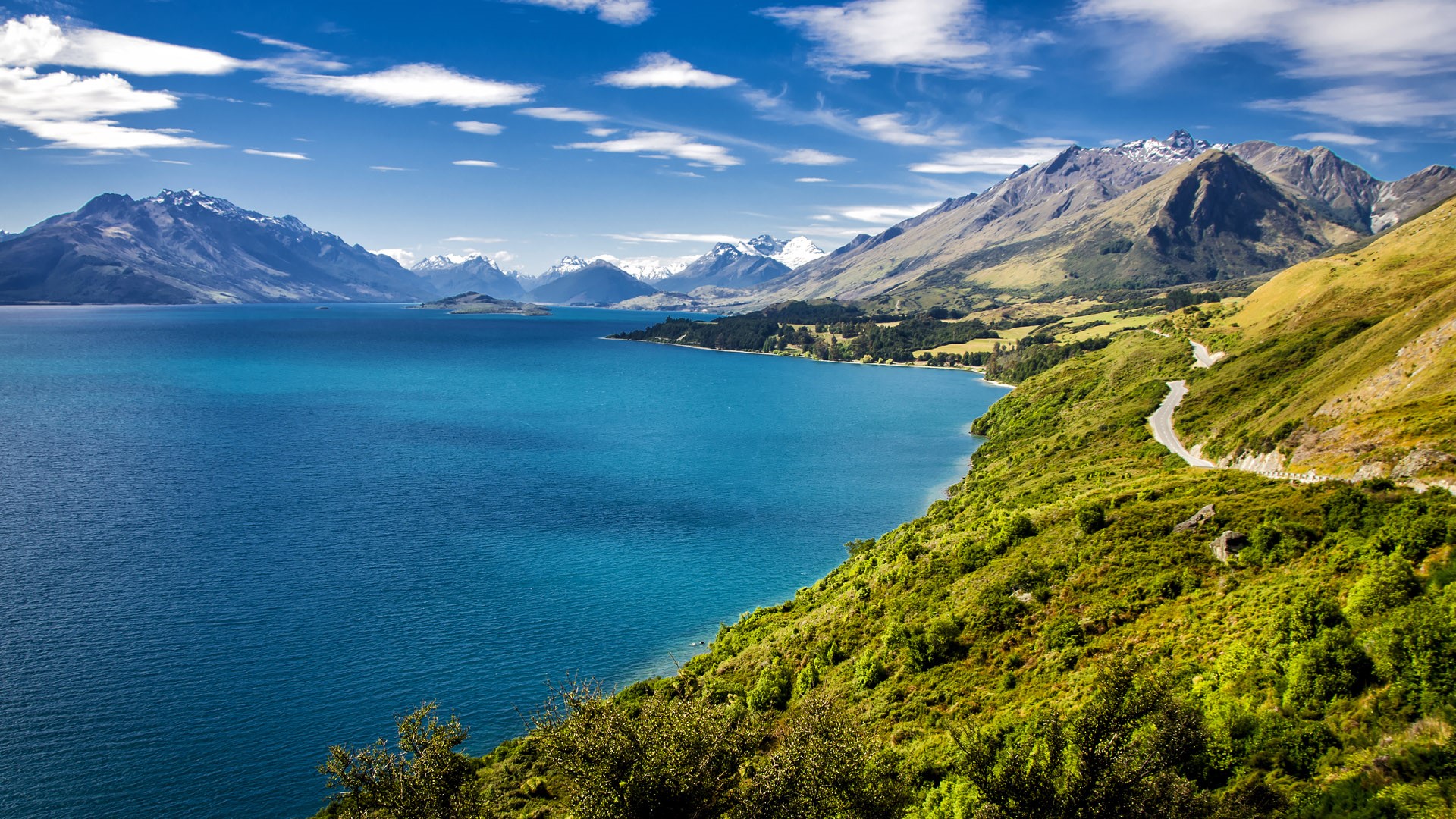
Queenstown / Wanaka / Central Otago: The archetypal "American buying New Zealand" region. Lakes, mountains, world-class skiing, wine country, a small English-speaking community of foreign residents. Premium lakefront properties run NZD 5-25M and fit squarely within the AIP exception bracket. Sub-$5M inventory (which is still most of the market) is not available to non-resident Americans under the current rules. Our New Zealand cost of living guide covers Queenstown-specific numbers.
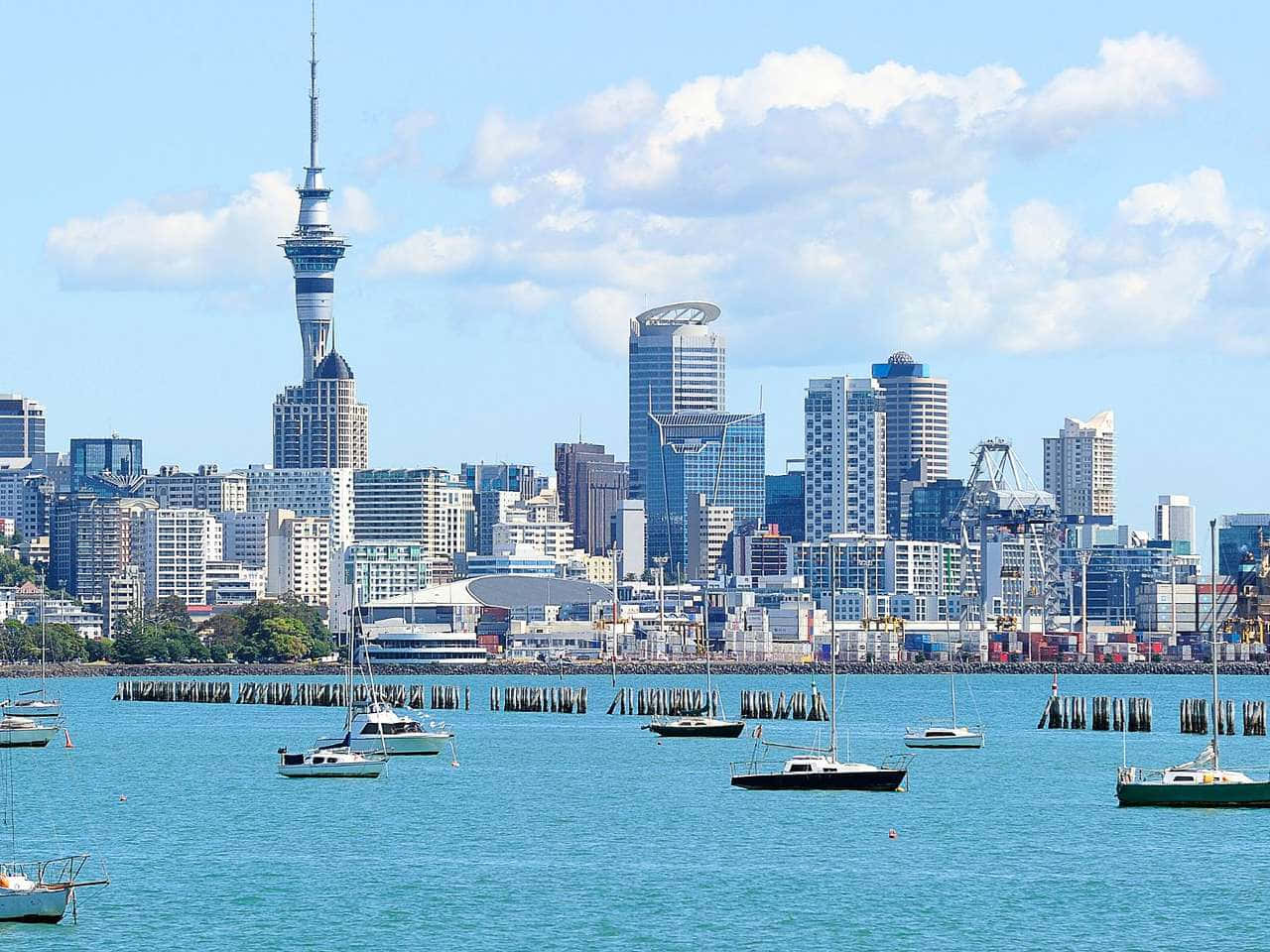
Auckland: New Zealand's largest city, most diverse job market, and the preferred base for Americans working for multinationals with NZ offices. Auckland's central and North Shore suburbs — Ponsonby, Grey Lynn, Mount Eden, Devonport, Takapuna — are where the expat community concentrates. Median prices sit around NZD 1.0-1.5M for a 3BR house, with premium inner suburbs running NZD 2-5M+. The AIP $5M threshold excludes most Auckland inventory; for below-$5M, the residency path (PR first, then buy) is the only option.
Wellington: The capital. Smaller than Auckland, more bureaucratic job base (government and NGOs), and a strong creative/tech community. Prices run NZD 800K-1.8M for most of the central residential stock. Again, below-$5M inventory requires permanent residency.
The Bay of Islands / Coromandel: The second-home holiday market. Historically popular with foreign buyers, largely shut out under the current rules unless you qualify for AIP.
Christchurch / Dunedin / the rest of the South Island: More affordable, more Kiwi-focused market, minimal American buyer presence. These regions aren't targeted by the foreign buyer regime one way or the other, but also aren't where Americans typically shop.
For peer-verified market snapshots, r/newzealand housing, r/queenstownNZ, and r/auckland property are the most active sources. The Real Estate Institute of New Zealand (REINZ) publishes monthly median price data by region. OneRoof and Trade Me Property are the dominant listing portals.
The Bottom Line
New Zealand remains one of the more closed developed-world property markets for non-resident Americans, though the 2025 AIP carve-out has opened a meaningful high-end path that didn't exist a year ago. For American buyers, the 2026 decision tree looks like this:
Buying a $5M+ Queenstown lakefront or premium Auckland home? The AIP visa + OIO consent path is now viable. Budget 3-6 months for the process and 3-5% of purchase price in total transaction costs. This is the most straightforward path for high-net-worth buyers and it's being actively used — Americans are 40% of AIP applicants.
Moving to New Zealand long-term? Get permanent residency through skilled migration, partnership, or the AIP program first, live in NZ for 12 months, then buy freely. This is the clean long-term path. Our moving to New Zealand guide walks through residency options.
Married to an NZ citizen or permanent resident? Joint purchase works, subject to OIO consent on your portion, and is the standard path for mixed-nationality couples.
Looking for an investment property without residency? Commercial property is workable. Residential is mostly blocked. Our Australia vs. New Zealand buyer guide compares the two Antipodean markets and New Zealand vs. Australia property ban gets into the specific Wellington/Auckland price action.
Below $5M and not planning to move? You're effectively shut out of the residential market. The alternatives are renting (perfectly viable long-term in NZ's rental market), shifting focus to commercial real estate, or picking a different country. Ireland, Portugal, and Spain all have significantly more open regimes for American buyers at comparable English-language comfort levels (well, two of the three).
For ongoing tracking, the Land Information NZ (LINZ) foreign investment page, the Beehive policy announcements, and MinterEllisonRuddWatts' OIO updates publish current changes. The US Embassy Wellington maintains attorney referral lists for Americans.
Ready to explore?
Browse Destinations