
Buying Real Estate in South Korea as a Foreigner: The Rules Nobody Tells You

South Korea quietly became one of the more interesting property markets for Americans in 2024-2025, and then in August 2025 the Seoul Metropolitan Government dropped a permit regime that rewrote the entire playbook. If your research is more than six months old, most of what you think you know about buying in Korea is wrong.

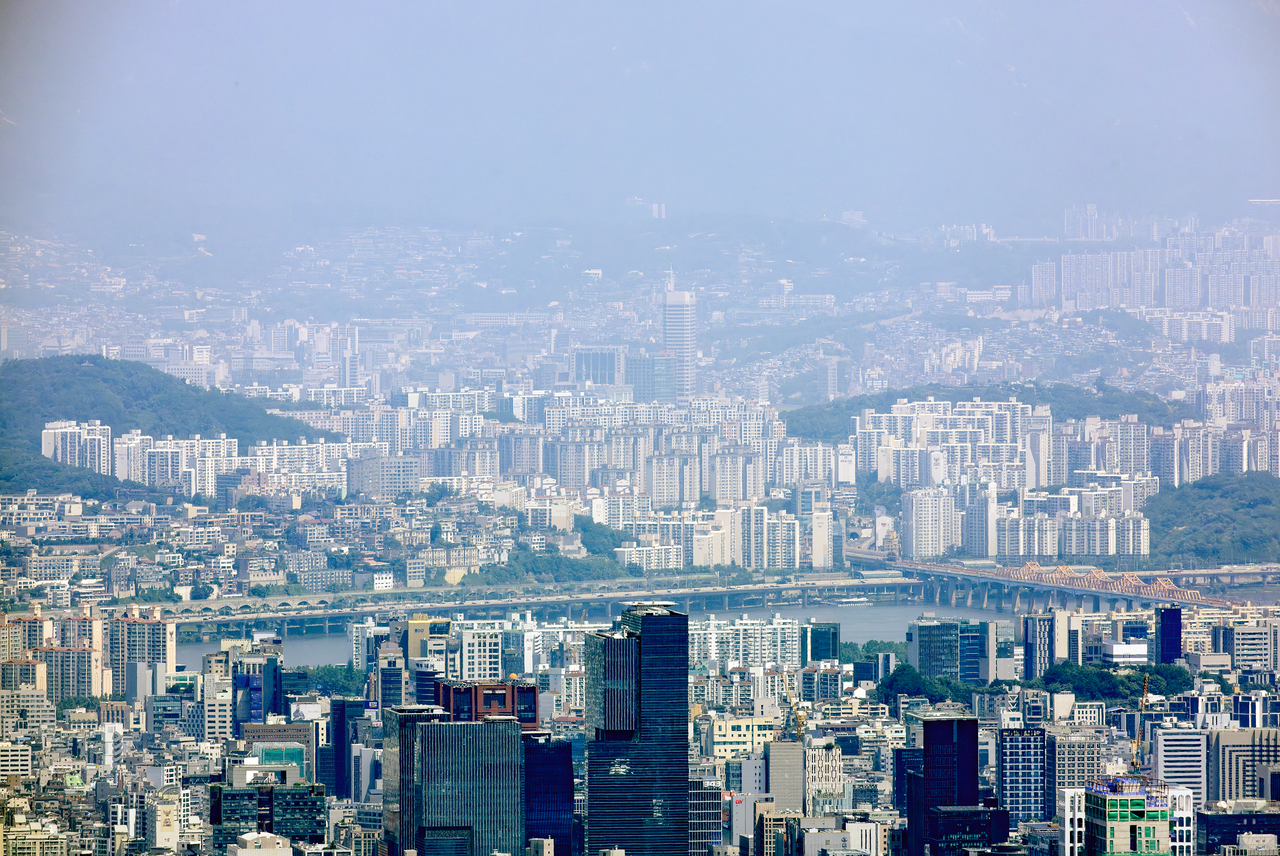
Here's the short version. Korea still lets foreigners own real estate on almost the same terms as Koreans, land included — a genuinely rare thing in Asia. But since August 26, 2025, Seoul, seven districts in Incheon, and 23 cities and counties in Gyeonggi have been designated 'foreign land transaction permit zones,' meaning Americans now need prior government approval before signing a contract, must move in within four months, and must live in the home for at least two years. Outside those zones — Busan, Daegu, Jeju, Daejeon, Gwangju, most of the country — the traditional 60-day post-closing reporting regime still applies and Americans can buy with close to zero friction.
This guide walks through the actual process, the taxes nobody warns you about, the Korean-speaking lawyer you cannot skip, and the reasons a lot of Americans who set out to buy in Gangnam end up closing in Busan instead. Good related reading on our site: countries Americans can't buy property in 2026, moving to South Korea guide, and hiring a bilingual real estate lawyer abroad. For peer experience, r/korea, r/Living_in_Korea, r/teachinginkorea, and r/IWantOut are where most real buyer stories end up.
The Core Rule: Foreigners Can Own Land in Korea
Start with the thing that makes Korea unusual. Unlike Thailand, Indonesia, Vietnam, and China — all of which either ban foreign land ownership or restrict it severely — South Korea lets foreigners own real estate, including the land underneath a detached house, on essentially the same footing as citizens. This has been true since the 1998 Foreign Investment Promotion Act modernized the regime, and the Korean Ministry of Justice page on foreign real estate acquisition remains the authoritative source.
The governing statute is the Act on Report on Real Estate Transactions (부동산 거래신고 등에 관한 법률), which creates two distinct regimes depending on where the property is:
- Report-only zones — most of the country. You sign a contract, close normally, and file a post-closing report within 60 days. No prior permission.
- Permit zones — since August 26, 2025, all of Seoul, 7 Incheon districts, and 23 Gyeonggi cities/counties. You must obtain prior permission from the local district office (gu-cheong) before signing a purchase contract. KED Global's coverage of the permit system is the best English-language summary.
Foreign buyers need to know which regime applies to the exact address they're considering — the difference in process is huge. A Korean-licensed lawyer is non-optional on a permit-zone purchase; on a report-zone purchase you can technically do it yourself, but we would still recommend one.
The August 2025 Permit System: What It Actually Says
If you're reading an older guide — anything dating from before September 2025 — throw it out for Seoul purposes. The new permit regime is in force for at least one year from August 26, 2025 and is widely expected to be extended through 2027 given the political reception.
The rules, as described in K-Law Consulting's breakdown of the new system and Bamboo Routes' 2026 foreign ownership update for Seoul:
- Prior permission required. You cannot sign a binding purchase contract in a permit zone before the local district office (gu-cheong) approves your application. Processing typically runs 4-8 weeks depending on district. Gangnam-gu, Seocho-gu, and Yongsan-gu — the three richest — are reported to be processing more slowly.
- Proof of funds upfront. You must submit bank statements and a source-of-funds explanation. The government is trying to filter Chinese and Hong Kong speculative capital, but the same filter applies to Americans.
- Residential intent required. You must declare you're buying for personal residence, not investment. Corporate purchases are heavily restricted.
- 4-month move-in. You must physically move into the property within four months of closing. Failure triggers a fine and potentially a forced-sale order.
- 2-year minimum occupancy. You must live in the property for at least two years before you can sell or rent it out. Selling inside the two-year window without exceptional circumstances triggers penalty taxation and a possible fine up to 30% of the transaction value.
- One home per foreigner. In permit zones, the foreign buyer and their household cannot hold more than one residential property.
This is a genuinely restrictive regime. It does not ban Americans from buying in Seoul, but it does rule out the common scenarios — the absent investor, the person buying for family, the pied-à-terre — that used to make Seoul attractive. The Korea Economic Daily English edition has ongoing coverage as the rules evolve, and r/korea threads on the new property permit system have real accounts from American buyers caught in the first cohort.
The Report-Only Zones: Busan, Daegu, Jeju, and Why They're Now the Default
Outside the permit zones, South Korean property remains remarkably open to American buyers in 2026. Busan (the second-largest city and a coastal boom market), Daegu, Daejeon, Gwangju, Jeju Island, Ulsan, and every small-and-mid city in the southern half of the country still run under the pre-2025 system.

What the report-only process looks like in 2026:
- Find the property — typically through Naver Real Estate (네이버 부동산) or Dabang (다방), the two dominant Korean portals. Coverage in English is thin but improving, and bilingual Korean-American agents are common in Busan and Jeju.
- Negotiate price and sign a contract (gye-yak-seo) — you pay 10% of the purchase price as earnest money (gye-yak-geum) at signing. Like the Spanish arras, this is the moment the deal becomes real.
- Pay the balance at jan-geum (closing) — typically 30-60 days after signing. You wire the remaining 90% and the seller hands over the keys and the signed transfer documents.
- Register the transfer at the court registry (deung-gi-so) — your lawyer (or a licensed judicial scrivener, beopmusa) files the transfer at the local registry within 60 days. Registration is constitutive — you are not legally the owner until it's filed.
- File the foreign-acquisition report with the local gu-cheong — within 60 days of closing. This is the step that used to be Seoul's whole regime; outside permit zones it still is.
- Pay acquisition tax within 60 days — usually handled by your scrivener as part of registration.
The whole elapsed time is typically 8-12 weeks for a straightforward Busan or Jeju purchase. This is actually faster than a typical Spanish or Italian closing. Multilaw's Korea real estate guide walks through the specifics. r/Busan and r/jeju have active expat threads.

Taxes: Acquisition, Annual, and Capital Gains
Korean real estate taxation is not light. Budget realistically and you will not be surprised.
Acquisition tax (취득세) applies at closing. The base rate is 1% on homes under KRW 600 million, 2% between 600 million and 900 million, and scales up to 3% above 900 million. For higher-end apartments the combined acquisition tax plus surtaxes (rural development tax, local education tax) typically runs 3.5% to 4.6% of the purchase price. For luxury homes above KRW 1.2 billion the marginal rate can go higher. The Global Property Guide Korea tax summary has a current table.
For multi-home buyers — if you own two properties after the purchase — the acquisition tax rate can jump to 8% or 12% depending on zone. This is the government's primary anti-speculation tool and it applies to foreign buyers identically to Korean buyers.
Registration tax and judicial scrivener fee — about 0.5% to 1% combined. Included in the "closing costs" line on most estimates.
Annual property tax (재산세) runs 0.15% to 0.35% of assessed value for owner-occupied residential property. Higher-value homes also trigger Comprehensive Real Estate Tax (종합부동산세) — an additional layer on properties above KRW 1.2 billion (about USD $900K at 2026 exchange rates), running 0.6% to 3.2% on the excess. This is the tax most expensive Seoul apartments hit.
Capital gains tax on sale is where Korea gets expensive. Short-term holdings (under 1 year) are taxed at 70%. One to two years: 60%. Over two years: progressive rates from 6% to 45% depending on gain. Non-resident foreigners who sell within two years of purchase hit the highest marginal brackets. See our capital gains foreign property article for how this interacts with US taxation and FEIE. The National Tax Service (국세청) English page has official rates.
Total round-trip tax cost for a typical American purchase-to-resale of a Busan apartment over 3-5 years runs 6-9% of purchase price plus capital gains on any appreciation. Not cheap, but comparable to Germany and better than France.
The Money Question: Financing, Bank Accounts, and Wiring USD to Korea
Most American foreign buyers in Korea pay cash. This is not because financing is illegal but because it is functionally hard.
Korean bank mortgages for non-residents. The major Korean banks (KB Kookmin, Shinhan, Woori, Hana) technically offer mortgages to foreigners, but in practice non-resident foreigners without a Korean income, ARC, and credit history get declined. Residents on F-series visas (F-2, F-4, F-5, F-6) with verifiable Korean income can get 50-60% LTV on an owner-occupied primary residence. E-series visa holders (E-2 English teachers, E-7 specialists) get told no.
Using a US mortgage. Impractical. US lenders do not accept Korean real estate as collateral.

Wiring funds into Korea. This is the real friction. You cannot walk into a closing with a foreign wire on the day of; Korean banks and scriveners require funds to already be in a Korean KRW account in the buyer's name, with proper documentation of the source. Plan for:
- Open a Korean bank account as a foreigner. You need an Alien Registration Card (ARC) for most banks, which means you need some kind of visa that gets you registered. A short-term visa (B-2 tourist, C-3 short visit) will not get you an ARC, which creates a catch-22. Some banks (KEB Hana is typically the most foreigner-friendly) will open a 'foreign currency' account without an ARC, but the rules change constantly. r/Living_in_Korea threads on opening bank accounts have the most current reports.
- Wire from US in USD to the KEB Hana foreign currency account, then convert to KRW in country. Use Wise for the conversion leg if the amount is under the Korean reporting threshold (KRW 200 million from a single transfer, per the Bank of Korea foreign exchange rules). For larger wires, go through a Korean bank directly.
- Source-of-funds documentation. For permit-zone purchases this is mandatory. Bring several years of US tax returns, a letter from your US bank stating the origin of funds, and if the money came from a house sale, the US closing statement. The gu-cheong application requires this evidence.
For more on the cross-border money side, our currency strategy when buying abroad article covers the general principles and our power of attorney for buying property overseas guide is useful if you're trying to complete a closing without flying to Korea multiple times.
The Lease Trap: *Jeonse* and Why It Matters to Foreign Buyers
This is the Korea-specific thing nobody warns Americans about. Jeonse (전세) is a uniquely Korean rental system where a tenant pays the landlord a massive lump-sum 'deposit' — typically 50-80% of the apartment's purchase price — instead of monthly rent. The landlord invests or lends out the deposit for the lease term (usually 2 years) and returns it in full at the end. No monthly rent is paid.
Why does this matter if you're buying, not renting? Three reasons.
First, many Korean apartments come with an existing jeonse tenant. If you buy one, you are buying a property you cannot move into until the jeonse contract expires — which can be up to two years — and you are stepping into the legal obligation to return the jeonse deposit to the tenant when the lease ends. If you don't have the cash to pay that deposit back, you are in serious legal trouble. In permit zones, buying a property with an existing jeonse tenant is essentially incompatible with the 4-month move-in rule — so you can't do it at all in Seoul anymore.
Second, the 2023-2024 Korean 'jeonse scam crisis' (전세 사기) made international news. Thousands of tenants lost their deposits when landlords went underwater. See Yonhap News coverage of the jeonse crisis and Korea Times English reporting. If you're buying from a seller whose only reason to sell is that they can't return the jeonse, you are walking into the same disaster.
Third, even if the property you buy is not on jeonse, the jeonse market affects your rental yield calculations. Most Koreans pay no monthly rent; the 'rental yield' on a Korean apartment is much lower than the nominal market price suggests because monthly rentals (wolse) are a smaller minority of the market.
Before any purchase, demand a copy of the property's full registry certificate (deung-gi-bu-deung-bon, 등기부등본) and verify there are no outstanding jeonse liens (jeonse-gwon, 전세권) or senior mortgages. A Korean lawyer does this in 20 minutes. Skipping it is the single most common American buyer mistake in Korea. The Korea Legal Aid Corporation has English resources on jeonse disputes.
The Visa Angle: Why 'Just Buy a House' Doesn't Get You Residency
Korea does not have a golden visa tied to real estate in the way Portugal used to or Greece still does. Owning property does not grant you a residence permit. You can own a beautiful apartment in Haeundae and still be limited to 90 days of visa-free tourist entry per visit.
The visa paths Americans actually use, from most to least common:
- F-4 Overseas Korean visa — for ethnic Koreans, by ancestry. Broadly generous.
- F-6 marriage visa — for spouses of Korean citizens.
- D-8 investment visa — requires KRW 100 million in a Korean business, not real estate.
- F-2-7 points-based long-term residency — for high-skilled workers.
- F-5 permanent residency — after 5+ years on a qualifying visa.
- Digital nomad visa (F-1-D, introduced 2024) — for remote workers earning a Korean minimum threshold from foreign employers. Capped duration. See the Korea Immigration Service's digital nomad page for current rules.
None of these are unlocked by property ownership. If your whole plan is 'buy a Busan apartment and live there,' you will still need an independent visa basis. The r/IWantOut Korea megathread has regular discussion of which visa path is realistic for various American profiles. See also our moving to South Korea guide for the full visa breakdown.
The Checklist: What a Smart American Buyer Actually Does in 2026
Here is the real playbook for an American who wants to buy Korean residential real estate today.
- Decide Seoul vs. everywhere else. If Seoul, accept the permit system and its constraints (move in within 4 months, live there 2 years, proof of funds, single-home cap). If those constraints don't fit your life, Seoul is out. Consider Busan, Daegu, Jeju, Daejeon, or a provincial city.
- Verify you have a workable visa basis for the occupancy requirements if buying in a permit zone. Tourist entry will not satisfy the 4-month move-in rule.
- Hire a bilingual Korean attorney and a licensed judicial scrivener (법무사) before signing anything. Attorney does the diligence and permit application; scrivener handles registration. Total cost typically KRW 3-8 million (USD $2,200-6,000) for an average purchase.
- Open a KEB Hana foreign-currency account on a pre-purchase trip. Bring your passport, US proof of address, and several months of bank statements. Plan for a half-day.
- Run the registry check. Pull the deung-gi-bu-deung-bon on any property you're serious about and confirm no jeonse liens, mortgages, or tax liens. Your attorney does this.
- Wire funds to Korea in the buyer's name with clear source-of-funds documentation. Do this at least 2 weeks before closing.
- Close and register within the 60-day window. Your scrivener handles this; your job is to be present (or execute a Korean-compliant power of attorney) and pay the closing costs.
- File your US tax reporting. FBAR (if you held more than $10K in the Korean account at any point in the year), FATCA Form 8938 if your overseas assets exceed the threshold, and IRS Form 1040 Schedule E for any rental income. See IRS Publication 54 for US citizens abroad.
The overall experience of buying in Korea as an American is slow but not hostile. The system is honest, the title is clean, the courts work. The problem is the learning curve, and the 2025 Seoul permit regime has flattened a lot of buyers who started planning before the law changed. If you take one thing from this article, let it be: do not rely on anything you read about Korean property that was published before September 2025. The rules are genuinely different now. For the broader context on where Americans can and can't buy in 2026, read our countries Americans can't buy property guide alongside this one.
Ready to explore?
Browse Destinations