
Can US Citizens Actually Buy Property in Mexico in 2026? The Full Legal Breakdown

The short answer is yes. Americans have been buying property in Mexico for decades, and millions of US citizens currently own homes, condos, and land from Tulum to Tijuana. The longer answer is that how you buy depends almost entirely on where you buy, and the difference between getting it right and getting it wrong can be the difference between owning a paradise and losing a six-figure deposit to a lawyer who never filed the paperwork. This is the full legal breakdown — the constitutional restrictions, the fideicomiso bank-trust workaround, the ejido land trap, the realistic closing costs, and the stuff American buyers keep getting burned by because their US real estate instincts don't translate.
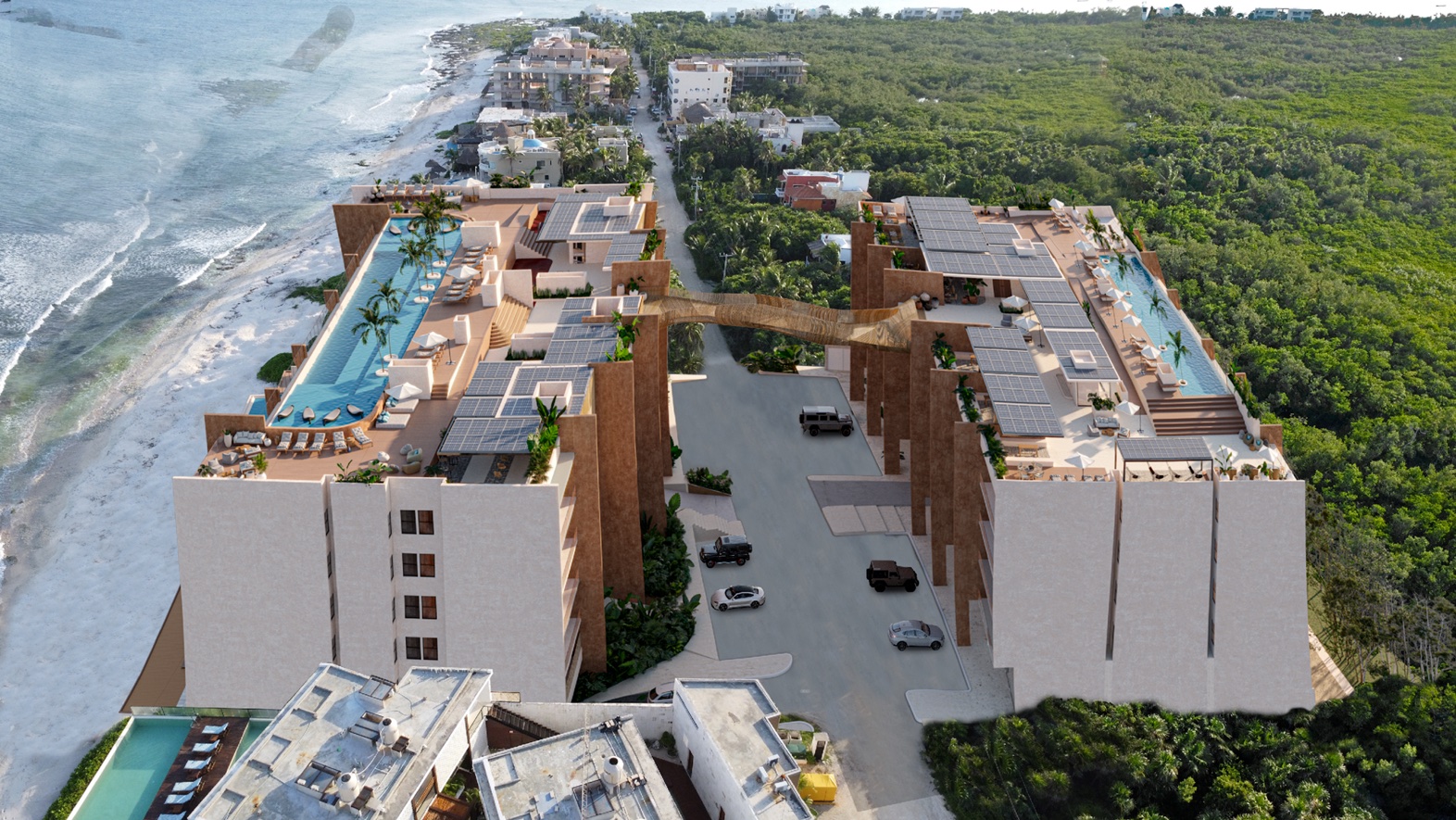
The most important thing to understand is that Mexico's property laws were written to protect Mexican sovereignty, not to keep foreigners out. The 1917 Constitution, still in force, prohibits foreigners from directly holding title to land within 100 kilometers (62 miles) of any international border or 50 kilometers (31 miles) of any coastline — the so-called zona restringida. This was a reaction to the 19th-century land grabs that cost Mexico half its territory to the United States. But in 1973, Mexico introduced the fideicomiso bank trust, and in 1993 it was formalized under the Foreign Investment Law, creating the fully legal structure under which hundreds of thousands of Americans now own beachfront and border-zone property. Outside the restricted zone — Mexico City, Guadalajara, San Miguel de Allende, Querétaro, Mérida, Oaxaca City — you can hold title directly in your own name with no trust, no corporation, and no middleman. The practical realities, the numbers, and the war stories are covered in active threads on r/expats, r/mexicocity, and r/expatfire, which are worth a scroll before you sign anything. The US Embassy also maintains a property purchase advisory with a list of vetted bilingual attorneys in every major region.
The Constitutional Restriction and the Restricted Zone
Article 27 of the Mexican Constitution is the entire source of the confusion Americans have around buying here. It states that foreigners cannot directly acquire "dominion over lands and waters" within 100 km of a land border or 50 km of a coastline. That's a strip of land that covers every single beach town Americans actually want to buy in — Cabo, Puerto Vallarta, Playa del Carmen, Tulum, Cancún, Mazatlán, Rosarito, Ensenada, Puerto Escondido, Sayulita. The carve-out is also why San Diego snowbirds can't just buy a Tijuana house in their own name — the entire northern border strip is restricted.

The legal fiction that lets you own anyway is the fideicomiso, a 50-year renewable bank trust authorized by the Foreign Investment Law of 1993. A Mexican bank (Banco del Bajío, Scotiabank, Banorte, Santander, Intercam and CIBanco are the major trustees) holds bare legal title to the property. You, the foreign beneficiary, get every practical right an owner has: you can live in the property, rent it, remodel it, mortgage it, leave it to your heirs, and sell it to the next buyer (foreign or Mexican). The bank is a fiduciary, not a landlord, and it cannot refuse a legitimate instruction from the beneficiary. The trust is automatically renewable for successive 50-year terms with no limit.
The Foreign Investment Law text (Ley de Inversión Extranjera) is the controlling federal statute — it's in Spanish but readable with Google Translate and should be reviewed by any lawyer helping you. The Mexican Ministry of Foreign Affairs (SRE) is the agency that issues the fideicomiso permit authorizing the bank to hold the property. Your notario (more on that below) handles the SRE permit application on your behalf. It takes 30-90 days and is almost always granted — denials are rare and usually involve national security zones or ejido land the seller doesn't actually have clean title to.
For broader context on every country's foreign-buyer rules, see our property buying rules guide. The classic reddit primer threads on this are searchable under r/expats Mexico fideicomiso and the Mexico Relocation Guide fideicomiso explainer, both of which get into the realities that the sales offices in Cancún leave out.
Fideicomiso: What It Costs, How It Works, Where It Bites
People pitch the fideicomiso like it's a scary workaround. It isn't. It's a boring banking product that thousands of foreigners open every year, and the costs are fully knowable in advance.
Setup cost: $1,500-3,000 one-time. Broken down: SRE permit fee (~$1,500 USD), bank setup fee ($500-1,000), notarization and registration ($300-500). Scotiabank and CIBanco tend to sit at the low end; Banorte and Santander at the high end. Some resort developers bundle the setup into "turnkey" closing packages at marked-up prices — check line items.
Annual fee: $550-1,000 per year, paid to the trustee bank. This covers the bank's fiduciary administration. It is not a tax. The IRS does not see this as a foreign trust requiring Form 3520 reporting (per longstanding Rev. Proc. 2013-14 guidance — confirm with your US CPA, but fideicomisos have been exempted from Form 3520/3520-A since 2013). If your trustee is raising the annual fee aggressively, you can transfer the fideicomiso to another bank for roughly $1,500-2,500 — it's a nuisance but not uncommon. Buy Playa's fideicomiso cost breakdown walks through the actual receipts.
50-year term: Renewable indefinitely. Renewal is administrative and costs roughly $1,000-1,500 at the 50-year mark. The idea that the bank "takes your property" at year 50 is a myth.
Who sets up the trust: Your notario público (see next section) coordinates with the trustee bank and the SRE. You do not need a separate corporate attorney. English-speaking notarios are standard in Cancún, Playa del Carmen, Cabo, Puerto Vallarta and San Miguel; in smaller markets you may want to bring your own bilingual attorney — International Living's Mexico team and Expats in Mexico both maintain attorney referral lists.
Can you buy in a Mexican corporation instead? Yes — if the property is not strictly residential (e.g., rental investment, Airbnb business, commercial use), you can form a Mexican SA de CV or S de RL de CV with 100% foreign shareholders and have the corporation hold title directly in the restricted zone. This costs more up front ($2,000-3,500) and requires filing annual corporate tax returns in Mexico, plus you'll owe IVA on rental income. For a single-family vacation home, fideicomiso is cheaper. For a portfolio of rental condos, the corporation starts to make sense. MEXLAW's comparison lays out the math. The tax reporting wrinkles are also covered in our US taxes on Mexico rental income guide.
The Notario Público: Not What It Sounds Like
This is the single biggest cultural mismatch American buyers hit. In the US, a "notary" is someone at UPS who stamps your signature for $10. In Mexico, a notario público is a government-appointed attorney with quasi-judicial authority. They are not a party to the deal — they represent the legal correctness of the transaction itself, on behalf of the Mexican state. No real estate sale closes without one.

The notario does the full due diligence: runs the title through the public registry (Registro Público de la Propiedad), confirms there are no liens or unpaid property taxes (predial), verifies the seller's legal capacity to sell, prepares and signs the public deed (escritura pública), calculates and collects all the transfer taxes, and files the new deed with the registry and the cadastre. Their fee is regulated by the state where the property sits and typically runs 1-2% of the transaction value, with a minimum around $1,500-2,500 USD for smaller deals. They are the only party who can make a transfer legally binding.
What the notario does not do: represent your interests. They don't negotiate price, flag whether you're overpaying, warn you the property floods in October, or tell you the seller's ex-wife still has a claim. That's what your own buyer's attorney is for. Budget another $1,500-3,500 for a separate bilingual real estate attorney whose entire job is to read every document before you sign and push back on anything sketchy. Every experienced expat in the Riviera Maya subreddit (r/rivieramaya) says the same thing: never let the seller's notario pick your attorney, and never skip the attorney step to save money. Threads like this Playa del Carmen notario warning discussion and the Mexico Life notario FAQ are must-reads.

Closing Costs: The Full Line Item Breakdown
American buyers consistently underestimate Mexican closing costs. They're not brutal — most real estate transactions in the US come with closing costs too — but they're front-loaded, paid in pesos, and non-refundable if the deal collapses. Budget 6-10% of the purchase price for a fideicomiso purchase, 4-7% for a direct-title purchase outside the restricted zone.
Typical closing cost breakdown on a $300,000 USD fideicomiso beach property purchase:
- Acquisition tax (ISAI / Impuesto Sobre Adquisición de Inmuebles): 2-4.5% of assessed value, varies by state. Quintana Roo is 3%, Baja California Sur is 2%, Jalisco is 2%. On a $300K property, that's roughly $6,000-13,500.
- Fideicomiso setup: $1,500-3,000 one-time.
- Notario fees: 1-2% of transaction value → $3,000-6,000.
- Public registry and cadastre fees: $500-1,500.
- Appraisal (avalúo): $300-600. Required and commissioned by the notario.
- Your bilingual buyer's attorney: $1,500-3,500.
- Foreign investment registry fee (SRE): ~$1,500 (bundled into fideicomiso setup at most banks).
- Title insurance (optional but recommended): 0.5-0.7% → $1,500-2,100. Stewart Title and First American both operate in Mexico; this is a US-style owner's policy that pays out if a prior claim invalidates your title.
- Bank wire fees, document translations, certified copies: $300-800.
Running total: roughly $18,000-35,000 on a $300K purchase, or 6-12%. The wide range is driven almost entirely by the state (ISAI rates), whether you buy title insurance, and which notario you use. The Latinvestor Mexico property fees guide and Taxes for Expats Mexico 2026 guide both have up-to-date closing cost tables by state.
Ongoing costs are the pleasant surprise after closing. Predial (annual property tax) runs 0.05-0.3% of the cadastral value — typically $200-800/year on a $300K property. That's not a typo. Our Mexico vs. California property tax comparison goes deep on why your annual bill falls 80-95% when you move south. HOA fees in beach condo buildings are the real monthly line item: $150-600/month depending on the development, with pool, concierge, beach club, and hurricane-hardening built in.
The Ejido Land Trap — How Americans Still Lose Money
If there's one way foreign buyers still get wiped out in Mexico, it's ejido land. Ejido is a form of communal agrarian land established after the 1910 Revolution, collectively owned by a community of peasant farmers. Roughly half of Mexico's land area is still classified as ejido. It is legally impossible for anyone — Mexican or foreign — to buy ejido land outright until the community has voted to "regularize" it through the PROCEDE program and convert it to private title. Until that conversion is recorded in the Public Registry, any "sale" is legally a transfer of use rights, not ownership, and it can be unwound by the local asamblea ejidal or a future government.
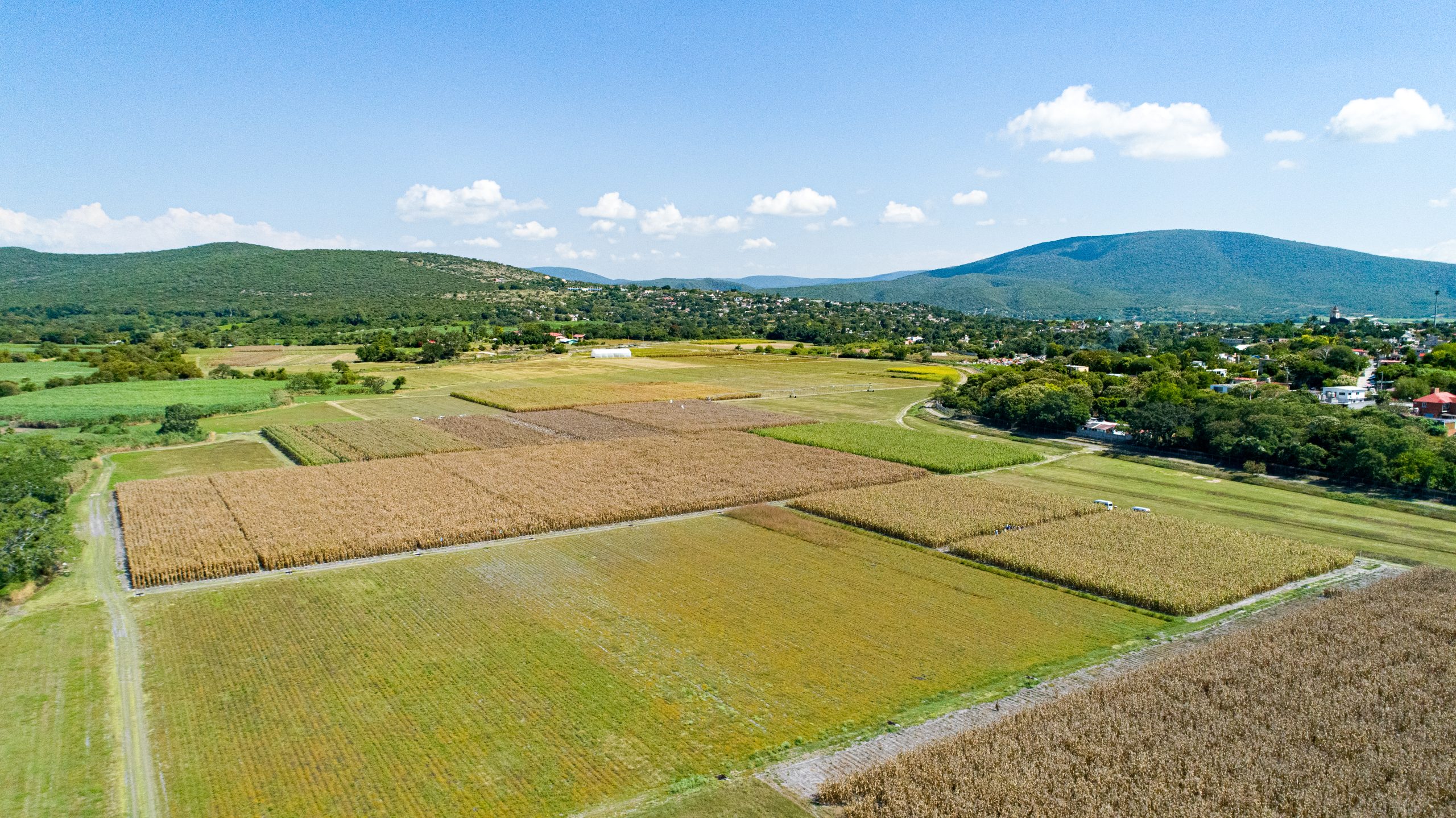
US buyers routinely get pitched ejido land in Baja, Tulum's backcountry, the Riviera Nayarit hills, and the Yucatán interior as "raw land opportunities" at 30-70% below market. The offer sheet says "clean title after conversion," the deposit gets paid, the conversion never happens, and the buyer has no recourse. The single best filter is: if your notario can't pull a clean title from the Registro Público de la Propiedad in the name of the current seller, walk away. No exceptions. No "we're working on it." No "PROCEDE is almost done." Walk away.
The Mexican Agrarian Attorney's Office (Procuraduría Agraria) is the federal body that oversees ejido regularization. Their site (Spanish) shows whether a given polygon is still ejido. Your attorney should pull this before you wire any deposit. The Live and Invest Overseas Mexico ejido warning is one of the clearer English-language primers on this. And the subreddit threads — try r/expats Mexico ejido and r/tulum ejido — are full of people who lost $50K-$300K deposits on ejido parcels they thought were freehold. Nobody in those threads got their money back.
Financing and Wiring the Money
Most American buyers in Mexico pay cash. Not because mortgages don't exist, but because they're expensive and slow and most buyers just refinance US property or pull from investment accounts instead.
Mexican mortgages for foreigners: Rates run 9-12% MXN or 7-9% USD-denominated with Mexican banks that lend to non-residents (Scotiabank, HSBC Mexico, Intercam). LTV caps are typically 50-65% for foreigners, versus 80-90% for Mexican citizens. Loan terms up to 20 years. Closing fees add another 2-3%. Global Mortgage Mexico specializes in cross-border loans for Americans and publishes current rate sheets. You'll need US tax returns, bank statements, proof of income, and a credit check run through a US bureau (Mexico's bureau doesn't have your file).
US-based cross-border lenders: A handful of US lenders will finance Mexican property — these are niche and usually require the property to be in a fideicomiso that already exists. See our US-based lenders for foreign property guide for the current shortlist. Rates are higher than US conforming loans but the process is in English.
Wiring the funds: This is where Americans panic and shouldn't. For a beach condo, you'll typically wire USD to the notario's trust account (cuenta de confianza) or to the trustee bank's fideicomiso setup account. Wires over $10,000 trigger standard US bank reporting (not a problem, just paperwork). Mexico's FIU (UIF) receives the incoming transfer report — again, not a problem for a legitimate real estate purchase, and the notario is responsible for documenting the source of funds. Our wiring $500K abroad guide covers how to do this without getting your account frozen.
People consistently recommend Wise for smaller transfers (under $50K) because the FX spread is ~0.4% versus 2-3% at Chase or Wells Fargo. For larger wires (property-purchase scale), specialists like OFX and Convera beat Wise on rate and handle the documentation cleanly. Never wire USD from a US bank directly at their retail FX rate — you'll lose $5,000-$15,000 of spread on a $300K transfer for no reason. See r/expatfire Mexico wiring threads for the current consensus on which service is winning.
Residency Through Property: Reality Check
Buying property in Mexico does not automatically grant you residency. This is one of the most persistent myths American buyers carry into the process. Property ownership is a legal right for foreigners; residency is a separate immigration status issued by the Instituto Nacional de Migración (INM). You can own a $2 million beachfront villa and still be on a 180-day tourist visa.
That said, property ownership helps one specific application: the Residente Temporal visa under the "economic solvency" track. If you own real estate in Mexico with a declared value of at least roughly MXN 8-9 million (~$450,000 USD) — the exact multiple of Mexico's UMA resets every January — a Mexican consulate in the US will usually approve temporary residency on the strength of the escritura alone, with minimal income documentation. Temporary residency is valid for 1 year initially and renewable up to 4 years, after which you can convert to Residente Permanente. Our Mexico temporary residency through real estate guide walks through the actual consulate interview.
For lower-value properties, the other paths to residency are the income track (pension/Social Security of ~$4,300/month or investment balance of ~$70,000+ averaged over 12 months) and the family unity track (marriage to a Mexican citizen or having a Mexican citizen child). The property itself is a factor, not a ticket. The consulates in San Diego, Houston, Dallas, and Los Angeles are the ones Americans use most — each has slightly different documentation quirks and current wait times are reported in r/mexicoexpats and on Mexperience.com. The US-based Mexico Relocation Guide also maintains a consulate scorecard.
The Actual Step-by-Step Timeline
Start to finish, a straightforward beach condo purchase takes 60-120 days from offer to keys. Here's what actually happens, in order:
Week 1-2 — Offer and deposit. You sign an oferta de compra or contrato de promesa de compraventa (promise to purchase). Earnest money deposit of 5-10% goes into either the notario's trust account or the listing broker's escrow. Read this contract carefully — some sellers try to include a clause that forfeits the deposit if the SRE permit is delayed (not your fault, not okay).
Week 2-4 — Title search and due diligence. Notario pulls the public registry title, tax records, water and utility debts, HOA status, and any open lawsuits. Your separate attorney double-checks the results. You inspect the property physically (hire a bilingual home inspector — $300-700, the AMPI Mexico directory has certified ones).
Week 3-8 — SRE permit for fideicomiso. If restricted zone, the notario files with the Secretaría de Relaciones Exteriores for the foreign investment permit. This is 30-60 days. Parallel to this, the trustee bank is running its KYC/AML on you — expect to provide US passport, US tax returns, bank statements, and a source-of-funds letter. This is the slowest step and the most common source of closing delays.
Week 8-12 — Closing (escrituración). Final funds wire in. Notario prepares the escritura pública, all parties sign (buyer can sign via power of attorney if you can't fly down — see our power of attorney abroad guide). Notario collects transfer tax and fees, files the new deed at the public registry. You walk out with a certified copy of the escritura. A few weeks later, the final registry-stamped version arrives in the mail.
Post-closing: Register your ownership with the local cadastre for predial (property tax), set up utilities in your name (CFE for electric, local water authority, internet provider), and if you plan to rent on Airbnb, register with SAT (Mexican IRS) and get an RFC tax ID. Property in a fideicomiso can be rented legally — you just owe Mexican income tax on rental income at 25% of gross (withheld by the platform under the new SAT rules). For the full pipeline of operating the property as a rental, see our rental property Mexico tax guide.
The Gotchas Nobody Warns You About
A short list of the things buyers learn the hard way, compiled from attorney blogs, expat forums, and reader emails to our country desk.
1. Gringo pricing is real. The same 2BR condo in Playa del Carmen can be listed to a Mexican at MXN 3.8M and an American at $260,000 USD (MXN 5.2M at current rates). Always check Mexican-language portals (Inmuebles24.com, Vivanuncios, Mercado Libre Inmuebles) for the price the same unit is listed at in pesos. Our gringo pricing guide walks through the spread by market.
2. HOA documents are in Spanish and binding. The reglamento interno of a condo building can ban Airbnb, restrict pet sizes, mandate specific tile colors for renovations, or require approval from the HOA board before any resale. Read it — translated — before the deposit.
3. Utilities debts stay with the property. Water debts (adeudos de agua) and electricity debts in Mexico are tied to the meter, not the person. If the seller skipped out on 18 months of CFE bills, you inherit them at closing. Notarios catch this, but verify.
4. The predial has to be current to close. Sellers must produce a constancia de no adeudo predial (no-debt certificate) at closing. If they haven't paid in years, the back taxes come out of their proceeds — but it can delay closing by weeks.
5. ZOFEMAT — the maritime federal zone. The first 20 meters of beachfront in Mexico is federal land and cannot be privately owned by anyone. What you "own" is a concesión (concession) to use it, renewable every 15 years, issued by SEMARNAT / ZOFEMAT. The concession transfers with the property but you pay a small annual fee. If a listing promises "private beach," the private beach is a concession. This isn't a scam — it's the law — but it's worth understanding before you pay a premium for beachfront. Our beachfront property restricted zone guide goes deeper.
6. Off-plan deposit risk. Buying pre-construction in Tulum or Mérida carries real risk — developers go bankrupt, permits get revoked, delivery slips years. Never put more than 20% down before topping out, and insist on a fideicomiso de garantía that holds your money until milestones are hit. r/tulum has a running list of projects that collapsed.
7. Inheritance and succession. A fideicomiso can name successor beneficiaries — make sure yours does. Without designated successors, your heirs inherit under Mexican inheritance law, which can be slower and more expensive than a US-style beneficiary designation. Ask your notario about adding a sustituto clause when the trust is set up. Our inheritance and foreign property guide has the cross-border tax implications.
If you read this far, you know more than 90% of Americans who end up buying here. The buying process in Mexico is entirely manageable — just don't skip the attorney, don't buy ejido, and don't fall in love with a view before the notario finishes due diligence. For what $300K actually buys you in today's market, see our Mexico City $300K guide and our Playa del Carmen beach condo cost breakdown.
Ready to explore?
Browse Destinations